
Sabitlenmiş Tweet
Tom
326.7K posts

Tom
@tggleeson
Master Datasmith. Elsewhere at https://t.co/5Rnp8FzZDk and https://t.co/Ymx42npj2l
Kildare, Ireland Katılım Aralık 2006
1.6K Takip Edilen2.1K Takipçiler
Tom retweetledi
As a connoisseur of fraud, i feel comfortable saying this is one of the greats
Daily Mail@DailyMail
Everest poisoning scandal: Guides 'secretly lace climbers' food to trigger costly helicopter rescues' as part of £15million insurance scam trib.al/DK6tZ25
English
Tom retweetledi
J.D. Vance in April 2025: “I think a lot of European nations were right about our invasion of Iraq. Frankly, if the Europeans had been a little more independent, and a little more willing to stand up, then maybe we could have saved the entire world from the strategic disaster that was the American-led invasion of Iraq…I don’t want the Europeans to just do whatever the Americans tell them to do. I don’t think it’s in their interest, and I don’t think it’s in our interests, either.”
unherd.com/2025/04/transc…
English
Tom retweetledi

Tom retweetledi

Tom retweetledi
The US pulling out of NATO was part of the plan all along ... Putin’s plan that is. He just got lucky with who he helped to make US president. It really is time for Europe to get serious about the withdrawal of the US from credible global leadership or reliable alliance
English
Tom retweetledi

These are the people who are always forgotten: the seafarers from India, the Philippines and other countries who we rely on to take goods around the world, but are underpaid and frequently abandoned at sea.
Shanaka Anslem Perera ⚡@shanaka86
JUST IN: Three thousand ships are anchored in and around the Strait of Hormuz. Twenty thousand seafarers are aboard them. Fresh food ran out two weeks ago. Perishables are rotting in refrigerated holds whose generators are burning through the last reserves of diesel. Water is rationed. Mental health is deteriorating. No mass evacuation plan exists. No humanitarian corridor has been negotiated. No international body has the authority or the means to move twenty thousand people off three thousand ships through a five-nautical-mile channel controlled by the IRGC. These are the people who move the global economy. Every barrel of oil that reaches a refinery was carried by a seafarer. Every container of goods that stocks a shelf was loaded by one. Every tonne of fertiliser that feeds a field was shipped by one. The war has trapped the invisible workforce that makes globalisation function, and the world has not noticed because the world never notices seafarers until the shelves are empty. The ships themselves are worth tens of billions. The cargo aboard them is worth more. Crude oil, liquefied natural gas, urea, ammonia, consumer electronics, automotive parts, and 200 cryogenic containers of helium that are boiling off at a rate that no engineer can reverse. The stranded fleet is a floating warehouse of every molecule the global economy needs, and the molecules are degrading while the crews ration drinking water. The cargo is valued higher than the people guarding it, and neither can move. The IRGC’s Larak corridor clearance system does not only control entry. It controls exit. A vessel that wants to leave the anchorage zone must obtain the same clearance code, submit the same documentation, and receive the same pilot escort as a vessel seeking to transit. The customs border works in both directions. These crews are not stranded by geography alone. They are stranded by bureaucracy, the same bureaucracy Iran wrapped in the language of sovereign maritime governance when the parliamentary committee approved the Hormuz Management Plan. The toll booth charges for passage through. It also charges for passage out. No centralised evacuation exists because evacuation at this scale would require IRGC approval, and requesting approval would legitimise the system the United States refuses to recognise. So the crews wait. The International Transport Workers Federation issues statements. P&I clubs cover individual medical evacuations by helicopter. Flag states, predominantly Panama, Liberia, and the Marshall Islands, register ships but do not operate navies. The system that made global shipping cheap by divorcing flag from nationality has left twenty thousand people without a government willing to retrieve them. The seafarers are from the Philippines, India, Bangladesh, Myanmar, Indonesia. Countries whose workers crew the world’s merchant fleet because the monthly pay of $1,500 to $3,000 exceeds anything available at home. They signed contracts to deliver cargo across oceans. They did not sign contracts to become indefinite residents of a war zone, rationing water on a ship whose cargo of ammonia could feed a million people if it could reach a port that is 40 nautical miles and one IRGC clearance code away. The helium boils off. The fertiliser waits. The crude oil sits. And the people who carry it all drink less water today than yesterday. The supply chain has a human body at the very bottom of it. The body is thirsty. open.substack.com/pub/shanakaans…
English
Tom retweetledi
Tom retweetledi

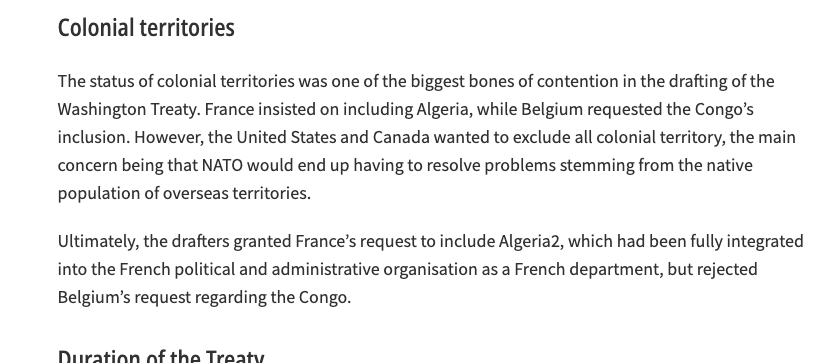
By design, indeed by American design, Article Six of NATO limits the geographic scope of the alliance. It was shaped by the US (and Canadian) concern that it would be dragged into European colonial wars. The broader issue of US bases in Europe is not a new issue. See Libya 1986.
Department of State@StateDept
SECRETARY RUBIO: NATO wasn’t just about defending Europe, but allowing us to have military bases in Europe for our national security. If we’ve reached a point where the NATO alliance means that we can’t use those bases to defend our interests, then it’s a one-way street.
English
Tom retweetledi

and that’s why Saigon is called Ho Chi Minh City
Aaron Rupar@atrupar
Rep. Rich McCormick: "We were horrible in Vietnam until we did Rolling Thunder One and Rolling Thunder Two, and then we won. As soon as we do half-measures, we lose. The faster we get this over the better. If we seize Kharg Island, it's technically boots on the ground. It could be done almost flawlessly. If we have enough firepower, it would be very easy to defend."
English
Tom retweetledi

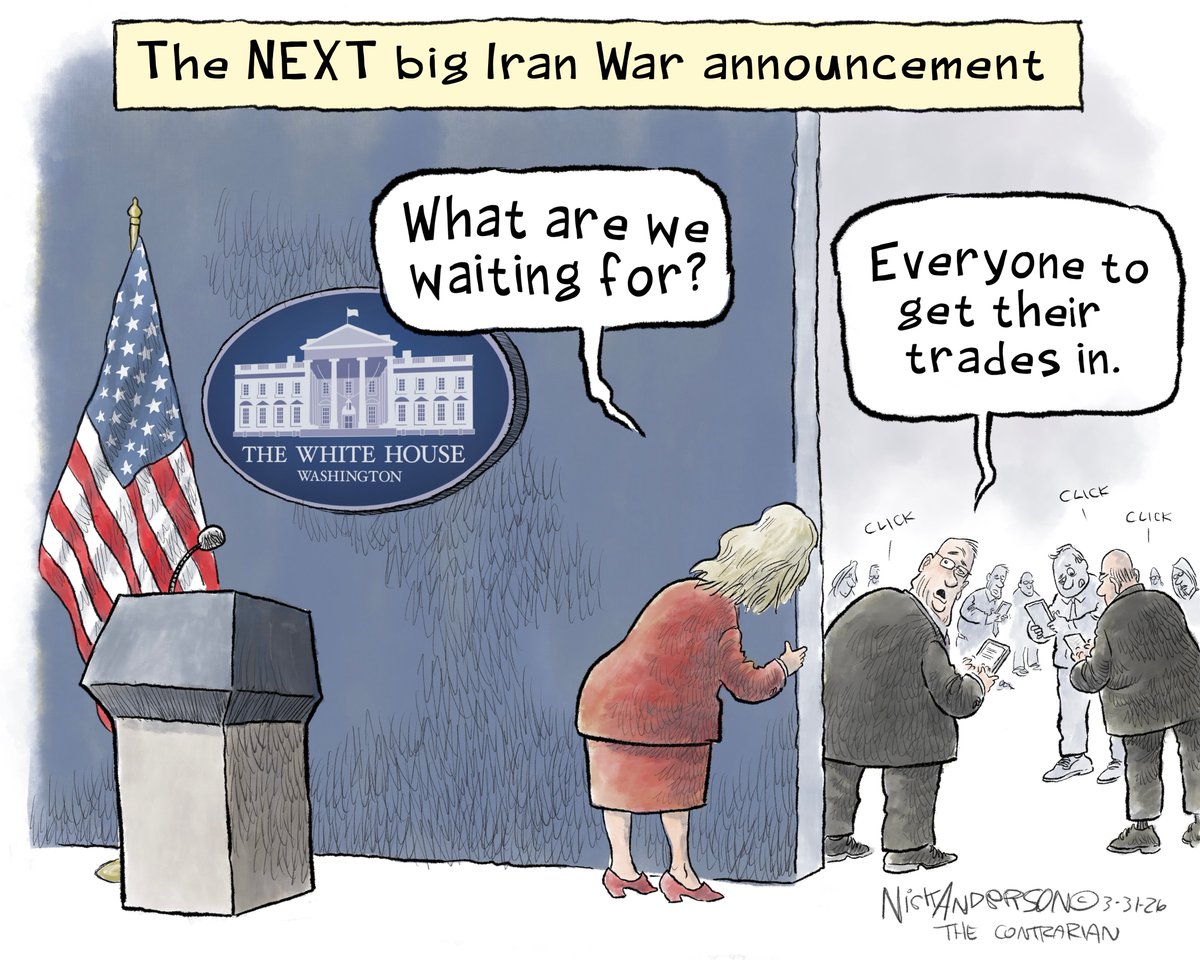
Iran War Announcements
Link in comments...
English
Tom retweetledi

European nations will not go to war to open the Strait of Hormuz that has fallen under Iranian control because of a war that Trump launched without asking them for their opinion. A war that has dramatically damaged their own economies and security.
If the SoH remains under Iranian rule after the war, the Europeans will conclude that America lost and Iran won, and will try to accommodate the winner to get access to the Gulf’s oil and gas. Japan, Korea etc will have the same incentives.
And yes, for many Europeans, this is also about Memento Groenlandiae.
Yaroslav Trofimov@yarotrof
@Mij_Europe A Europe fully divorced from America would have a very different view of the Middle East, and of Iran.
English
Tom retweetledi

Trump's second term really is the American Brexit. A catastrophic failure to understand the world fuelled by vanity, lies and nationalist delusion
English
Tom retweetledi
It took a almost a century for the United States to build a global system of trade, security, and cooperation, and these guys are going to throw it away because they screwed up and have to save face.
Aaron Rupar@atrupar
Hegseth indicates reopening the Strait of Hormuz is not a core US objective: "We've been willing to lead, President Trump has led the entire time, but it's not just us. You might want to start learning how to fight for yourself."
English
Tom retweetledi
I'm glad I lived through the high-water mark of American power in the 80s and 90s, because they idea that we'd go mewling to the Brits to fix our mistakes seemed unthinkable then.
Aaron Rupar@atrupar
Hegseth: "The president was clear this morning in his Truth that there are countries around the world who ought to be prepared to step up on this critical waterway as well. Last time I checked there was supposed to be a big bad Royal Navy that could be prepared to do things like that."
English
Tom retweetledi

WOW. Having worked in this field, I cannot overstate how remarkable this is.
Glioblastoma is one of the most aggressive, deadly brain cancers we know.
THIS is why we fund science.
Massimo@Rainmaker1973
A single dose of a new cancer drug made a brain tumor almost disappear – in just five days. Doctors at Massachusetts General Hospital reported “dramatic and rapid” tumor regression in the first patients treated with a next-generation form of CAR T-cell therapy for glioblastoma, one of the most aggressive brain cancers known. The therapy, called CARv3-TEAM-E, was developed to overcome a major hurdle in treating solid tumors: their ability to hide from the immune system. The personalized treatment reprograms a patient’s immune cells to attack the tumor, and in one extraordinary case, nearly eliminated the cancer within just five days. This novel therapy is designed to target multiple features of the tumor at once, a strategy that may help overcome the common challenge of treatment resistance in solid tumors like glioblastoma. Although the tumors eventually returned, the early outcomes were described as unprecedented. One patient saw a 60% reduction in tumor size that lasted for half a year—an impressive result in a cancer known for its aggressiveness. The trial’s success marks a major step forward for immunotherapy in brain cancer and raises new hopes for long-term control or even a cure. Researchers are now working to refine the treatment and extend its effects, with the ultimate goal of turning a once-terminal diagnosis into a survivable condition.
English
Tom retweetledi

You really couldn't make this up...
MAV's (Hungarian Railways') IT contractor forgot that the clocks went forward on Saturday night...
Result? MAV ends up paying automatic 1 hour delay compensation for Sunday morning trains that were on time...
Yurii Kazakov@YuriiKazakov
Esto parece de chiste... La empresa de ferrocarriles húngaros "se ha olvidado" de que esta noche era el cambio de hora... 😱😱😱 Bueno, la cosa es más complicada, claro, quien se ha olvidado es la empresa que desarrolló la aplicación informática, así que muestra todos los trenes
English
Tom retweetledi

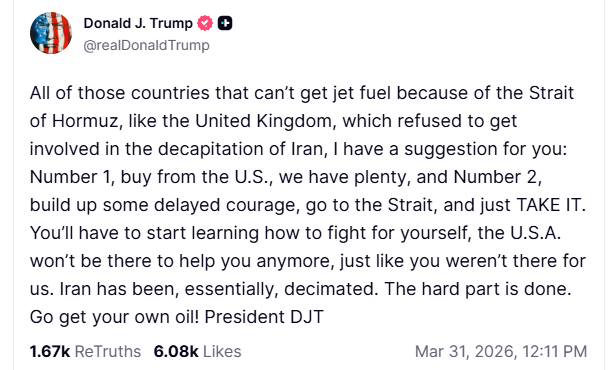
Worth noting that Donald Trump just announced the end of NATO and the Special Relationship in one tweet.
English
Tom retweetledi

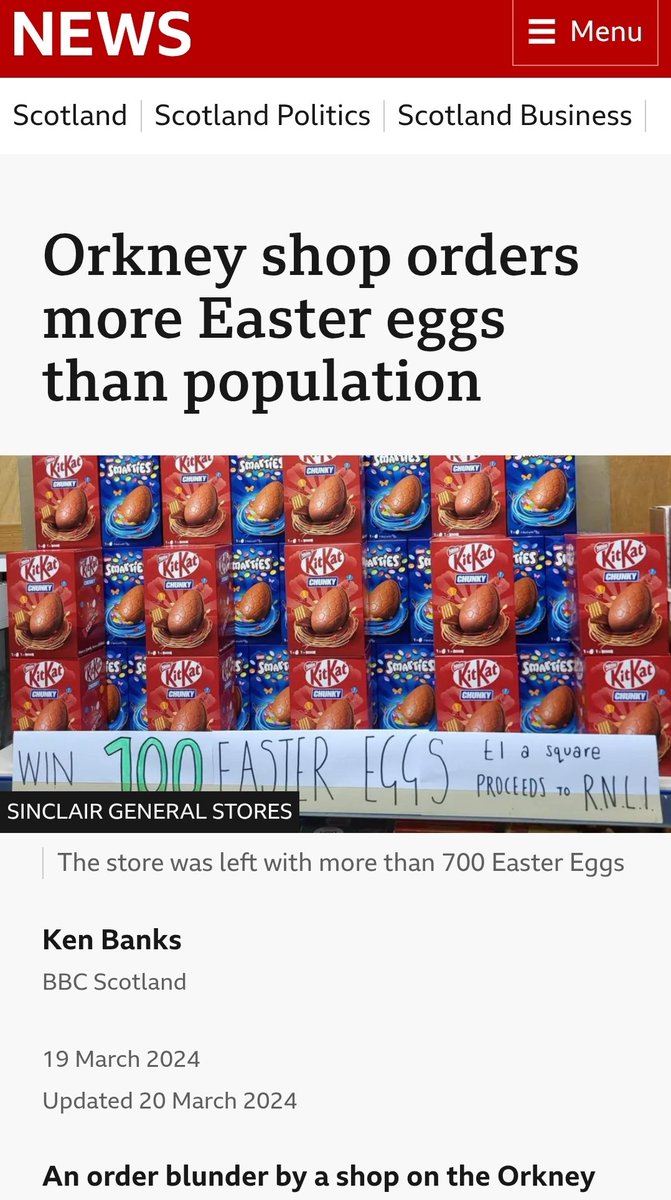
I wouldn't be surprised if those KitKats turn up on Orkney.

English
Tom retweetledi

Google has discovered that future quantum computers could break the encryption protecting cryptocurrencies much sooner and with far less power than previously thought.
Specifically, their research shows that a quantum computer with about 500,000 physical qubits could crack the standard security used by most blockchains in just a few minutes.
This represents a 20-fold reduction in the resources required compared to earlier estimates, significantly accelerating the "quantum threat" to digital assets.
To address this, Google is urging the crypto community to transition to Post-Quantum Cryptography (PQC), which is designed to withstand these advanced attacks.
Because this transition takes years to implement, Google updated its own migration timeline to 2029 to stay ahead of the risk.
They shared this data using a "zero-knowledge proof", a method that proves the vulnerability is real without giving hackers a "roadmap" on how to actually perform the attack.
nic carter@nic_carter
Many are wondering "what Google saw" that caused them to revise their post-quantum cryptography transition deadline to 2029 last week. It was this: research.google/blog/safeguard…
English
Tom retweetledi

Google is basically saying:
“We’ve cut the quantum resources needed to break Bitcoin’s encryption by 20x. We can now break it. We can prove it. We’re just not going to tell you how.
We’ve slowed down research to give crypto a chance. You have until 2029 to figure out a solution. Good luck.”
nic carter@nic_carter
Many are wondering "what Google saw" that caused them to revise their post-quantum cryptography transition deadline to 2029 last week. It was this: research.google/blog/safeguard…
English