Tom Wright
23.2K posts

Tom Wright
@thomaswright08
Senior Fellow @BrookingsFP. contributing writer @TheAtlantic, Formerly Biden NSC, Author of All Measures Short of War, co-author of Aftershocks. Views my own.


There was once a time when such an event would drive the news cycle

It’s hard to overstate how deeply Netanyahu views this moment as a possible personal and political defeat. A U.S.–Iran agreement under Trump would be a major blow to him mainly diplomatically, but above all politically. For years, Netanyahu built his political identity around being “Mr. Iran,” the leader who insisted that only pressure, deterrence, and force could stop the Iranian regime. And now, after multiple rounds of operational successes but one resounding strategic failure, and after finally succeeding in drawing the United States into direct confrontation with Iran, he may be forced to accept an agreement that not only legitimizes the very regime he sought to weaken, but also exposes the collapse of his long-standing Iran doctrine. His approach was based on the belief that more pressure, more military power, and tighter coordination between Israel and the United States would eventually either force Iran into submission or destabilize the regime itself. Instead, the result has been a more radicalized, more resilient, and more dangerous Iran, one that even Washington now hesitates to confront militarily again. If this confrontation ends with an agreement, an even bigger strategic question emerges: what future American president would be willing to commit U.S. forces to another major Middle Eastern conflict after seeing the political and military costs of this one? Netanyahu had what may have been his greatest opportunity to prove his central strategic theory: that a close Israeli-American military partnership could fundamentally reshape Iran and perhaps even threaten the regime’s survival. By every indication, that assumption failed. Against this backdrop, reports of a tense conversation between Trump and Netanyahu become much easier to understand. They also help explain the extraordinary level of pressure now coming from Jerusalem, and the extent to which Netanyahu is trying to persuade, or pressure, the administration not to move toward a deal with Tehran. The bottom line is that a U.S.–Iran agreement would not only signal the failure of the military confrontation Netanyahu pushed for, but also the collapse of the broader strategic doctrine he has championed since entering Israeli politics, all on the eve of what could be the most critical election of his career. In that sense, the next Israel’s leadership need to learn the fundamental lessons of this war. More than ever, this conflict demonstrates the urgent need for Israel to develop a different long-term strategy for dealing with Iran and especially to understand the following: Israel’s confrontation with Iran will not bring normalization with the Arab world, nor will it resolve Israel’s most fundamental security challenges, first and foremost, the Palestinian issue. The belief that regime change in Iran would transform Israel’s position in the Middle East was always detached from reality. In fact, the consistent opposition of Gulf leaders and major Arab states to further escalation against Iran has demonstrated this repeatedly throughout the conflict. Israel will not be able to use the “Iran card” as a substitute for addressing the core political issues shaping the region. Anyone arguing that military confrontation with Iran alone can unlock normalization is mistaken and, more importantly, misleading others about the strategic reality of the Middle East. Because despite the undeniable tactical and operational achievements of the campaign, this failure may ultimately leave Israel facing a more dangerous strategic reality, one that has not fundamentally improved its position in the Middle East. #IranWar

🚨 Breaking: Details of the agreed MOU, based on my sources: - Formal end of the war on all fronts (Lebanon included) - The Strait of Hormuz will fully reopen - Iran will not charge transit fees - The US will not pay any money to Iran - Partial sanctions relief on Iranian oil - 60 days to negotiate nuclear issues and sanctions relief (the two are tied together: more sanctions relief for more nuclear concessions) - Iran declares it will not develop nuclear weapons - Both sides acknowledge understanding the other's demands on nuclear issues Trump's rationale is that if an agreement on nuclear issues is not reached, all options will be on the table, and Iran will be significantly weaker economically and militarily than before the war.

The new White House policy requiring green card applicants to apply from outside the US is a capricious attack on legal immigration. It will hurt families, leave us with fewer doctors, teachers and scientists, and hurt American competitiveness in AI.


NEW: Trump asked Hegseth in a recent phone call why the troop deployment to Poland was canceled. Trump told Hegseth that the U.S. shouldn’t treat Poland poorly, given it is an American ally with close ties to the White House. wsj.com/politics/natio…

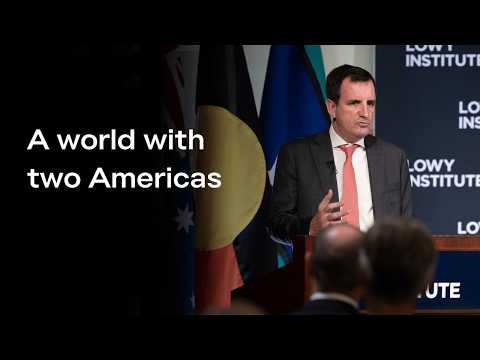
My new Penguin e-book, Inflection Point: Biden, Trump, and the Future World Order, is now available to buy (for $6). This is a part of @LowyInstitute's wonderful Penguin paper series. Many thanks to @mfullilove and @SamRoggeveen. The overall argument of the book is that there are now two Americas—an internationalist America that will likely focus on strategic competition and deepening alliances and an America First movement that will be much more skeptical of allies, favorable to punitive tariffs and predatory. Unlike strategies of containment in the Cold War, these are largely antithetical. Each will compete with, but will never fully vanquish, the other—at least not for some time. If you look at all US presidential elections since 1944, Republicans are currently in their 42nd year and Dems have had 40. So it splits 50:50. The challenge for the world is to hedge against this dramatic fluctuation. Two of the chapters are on my time in the Biden administration. Two are on Trump’s second term. And one looks at where we go from here. The two Biden chapters offer my reflections on our Ukraine and Indo-Pacific policies in particular. Some specifics that you all might find interesting: My account of the risk of Russian nuclear use in October 2022. How we actually thought about escalation and military assistance to Ukraine. What we thought of the Global South’s peace efforts (some were legitimate and sincere, some were not). How we thought about the diplomatic endgame in Ukraine. My account of the balloon incident of 2023 and the trajectory of our China policy. How AUKUS came to be—why it might not have happened if the president knew how France would react but why it was still the right thing to do. The lessons Democrats are learning from Biden’s foreign policy and where it is likely to go from here. And what America First may look like after Trump. I hope you all get a chance to read Inflection Point. I will be in Australia next week for a series of events to launch it. amazon.com/Inflection-Poi…


The Financial Times reports that during his talks with Xi Jinping Donald Trump floated the idea that the US, China and Russia should co-operate against the International Criminal Court.

“Trump abandoned the strategy of managed competition and replace it with a leader-to-leader bond. His posture is one that strengthens America’s top rival, leaves its vulnerabilities unaddressed, and makes a U.S.-China crisis more likely rather than less” theatlantic.com/international/…

Trump’s China strategy offers the illusion of stability but in reality it fails to advance US interests. My latest for @TheAtlantic : Donald Trump’s Nixon Moment that Wasn’t theatlantic.com/international/…


Q: Did you talk to Xi about the cyber attacks that he's done in the United States? TRUMP: I did. And he talked about attacks we did in China. You know, what they do, we do too. We spy like hell on them too. I told him, 'we do a lot of stuff to you that that you don't know about.'