theV

354 posts

theV banner
theV

theV

@theveloperseu

Your reliable engineering partner in critical blockchain and AI systems | Trusted by @StackRworld @arkivnetwork @dfinity @arcanaDigital @starknet

Warsaw Katılım Temmuz 2024
139 Takip Edilen253 Takipçiler
mati
mati@sernique_·
jak tam młody weekend? było coś: - kodowane - wajbowane - modzone - claudowane - doportfoliowane ?
Polski
33
20
1.1K
40.7K
theV
theV@theveloperseu·
@BarefootStudent 9 of them will fail. Happy to be in this 10%.
English
0
0
4
258
Barefoot Student
Barefoot Student@BarefootStudent·
9 in 10 companies are comfortable sacrificing employees to fund AI, per Resume Builder survey.
English
37
47
354
11.9K
theV
theV@theveloperseu·
@Polymarket Great to see France taking a huge lead here!
English
0
0
0
35
Polymarket
Polymarket@Polymarket·
BREAKING: Yann LeCun raises $1,030,000,000.00 seed round for his new AI startup.
English
191
79
1.9K
227.7K
theV
theV@theveloperseu·
Anthropic gave 16 AI agents $20,000 and 2 weeks. No human wrote a single line of code. They built a program that can compile the Linux operating system from scratch. Here’s why the coordination matters more than the result. Imagine 16 workers renovating the same house simultaneously. Without rules, they’d paint over each other’s walls. Solution: before starting a job, each agent writes their name on a sign-up sheet. If someone already claimed “fix the kitchen,” you pick something else. Simple file in a shared folder. First come, first served. Any problems? Yes. The system broke when they hit one massive task: compiling the Linux kernel. Think of it like 16 cooks trying to fix one broken recipe at the same time. Each one tastes the soup, adds salt, but the next cook doesn’t know salt was already added. They kept undoing each other’s work. The fix was clever. They brought in a professional chef (GCC, an existing compiler) to cook most of the meal. The AI agents only handled random portions. When something tasted wrong, they could pinpoint exactly which portion the AI messed up. Some would call that cheating. But the agents decided to do this themselves, no human told them to. And honestly, knowing when to use existing tools instead of reinventing everything from scratch? That’s what good engineers do too. What they built: 100,000 lines of code. Can compile Linux, PostgreSQL, Redis, FFmpeg, and even run Doom. 99% pass rate on standard tests. What they can’t do: “Hello World” sometimes fails. Now the reality check. The GitHub repo has 41 open issues. Titles include: “can’t even compile linux as the description says,” “big words with nothing to back them up,” and simply “F*** off.” People who actually tried using the compiler found parser errors, missing tests, and broken basic features. The methodology, 16 agents coordinating via git locks, splitting work, self-organizing, that’s genuinely forward-thinking. But the output today remains a toy, not a tool professionals would trust. The approach is the future. The result isn’t there yet. And that gap is exactly where the interesting work happens next. ------ source: anthropic.com/engineering/bu…
theV tweet media
English
0
4
5
286
theV
theV@theveloperseu·
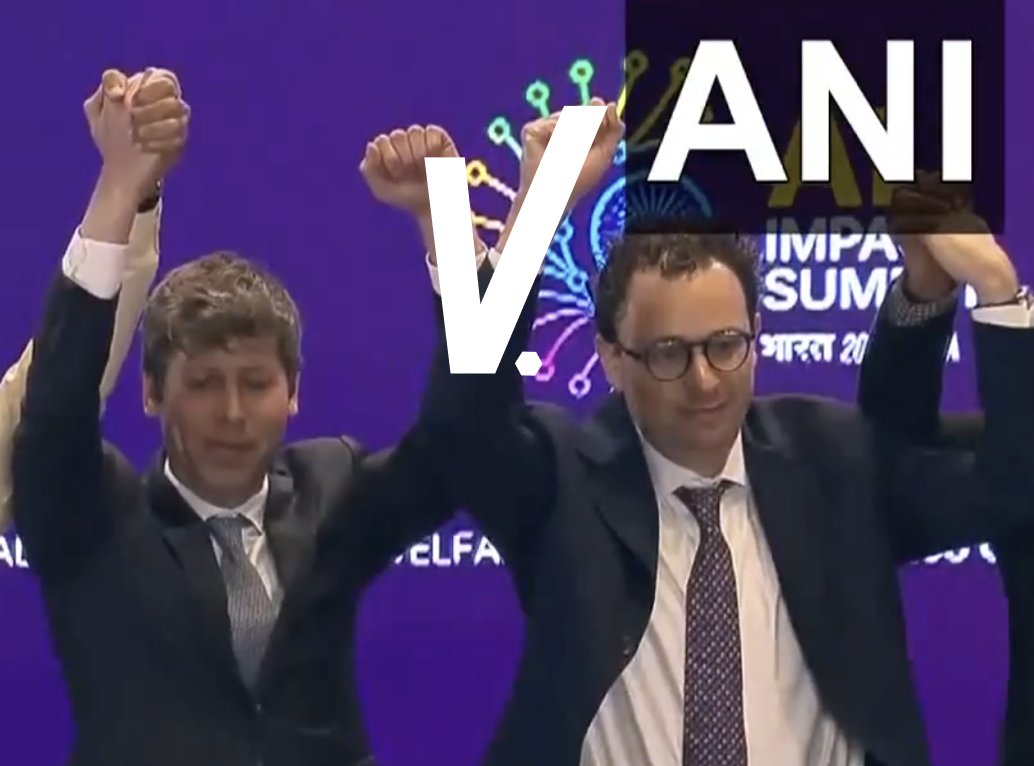
The V is for Victory – but only if it's shared. Relax, @sama @DarioAmodei ✌️
theV tweet media
English
0
3
4
158
Patryk
Patryk@Solofunk·
Life Update: My chapter at @MessariCrypto has come to a close These past 3.5 years were filled with growth. Starting as an analyst and becoming crypto-native through research, writing, and osmosis of working alongside the brilliant folks who have passed through Messari's doors. More recently, I've had the privilege of leading a team of analysts (shoutout @immutablejacob, @NaytheForceBwU, @Degenerate_DeFi, @AJalooli, @jonnytoshi), managing several key partnerships and client relationships, and contributing to the strategy and operations of our research function. I can proudly say that in the depths of a bear market in 2022, just months before FTX, I followed an emerging passion for crypto and made the career jump in search of something more meaningful. I'm grateful for the people who shaped the years that followed (shoutout @luisri_, @DrxlEth, @AvgJoesCrypto, @Cole_Muench, @KreiserMatt, @0xbaba, and many others). This has been a great place to work, and I'll continue cheering for Messari from the sidelines. As for what's next, I’m excited to share soon enough! Until then, I'll be in the land of the Incas, recentering and appreciating the beauty of Peru’s Sacred Valley 🌄
Patryk tweet media
English
33
1
100
5.2K
theV
theV@theveloperseu·
Today, we are at Crypto Talks Warsaw, discussing the future of the crypto market in an era of increasing regulation. We’re also exploring how the Baltic countries can cooperate to better serve and benefit their citizens.
theV tweet mediatheV tweet mediatheV tweet media
English
0
2
5
93
theV
theV@theveloperseu·
Eurostack
English
0
0
2
57
theV retweetledi
Arkiv Network
Arkiv Network@arkivnetwork·
''The decentralized renaissance is coming, and you can be part of making it happen.'' - @VitalikButerin This is the space [ ARKIV ] is a part of. Not fads, not short term narratives that take over CT. Web3 databases within an Ethereum infra tech stack.
vitalik.eth@VitalikButerin

In 2014, there was a vision: you can have permissionless, decentralized applications that could support finance, social media, ride sharing, governing organizations, crowdfunding, potentially create an entire alternative web, all on the backs of a suite of technologies. Ethereum: the blockchain. The world computer that could give any application its shared memory. Whisper: the data layer. Messages too expensive for a blockchain, that do no need consensus. Swarm: the storage layer. Store files for long-term access. Over the last five years, this core vision has at times become obscured, with various "metas" and "narratives" at various times taking center stage. But the core vision has never died. And in fact, the core technologies behind it are only growing stronger. Ethereum is now proof of stake. Ethereum is now scaling, it is now cheap, and it is on track to get more scalable and cheaper thanks to the power of ZK-EVMs. Thanks to ZK-EVM + PeerDAS, the "sharding" vision is effectively being realized. And L2s can give additional and different kinds of gains in speed on top. Whisper is now Waku ( docs.waku.org ), and already powers many applications (eg. railway.xyz, status.app just to name two I use). Even outside of Waku, the quality of decentralized messaging has increased. Fileverse (decentralized Google Docs and Sheets alternative: fileverse.io ) has seen massive gains in usability over the past year. IPFS is now highly performant and robust as a decentralized way of retrieving files, though IPFS alone does not solve the storage problem. Hence, there is still room to improve there. All of the prerequisites for the original web3 vision are here, in full force, and are continuing to get stronger over the next few years. Hence, it's time to buidl, and buidl decentralized. Fileverse is an excellent example of the right way to do things: * It uses Ethereum and Gnosis Chain for what they are good for: names, accounts and permissioning, document registration * It uses decentralized messaging and file storage to store documents and propagate changes to documents * The application passes the walkaway test: github.com/fileverse/walk… (even if Fileverse disappears, you can still retrieve them and even keep editing them with the open source UI) This is what we mean by "build a hammer that is a tool you buy once and it's yours, not a corposlop AI dishwasher that requires you to register for a google account and charges a subscription fee per month for extra washing modes, and probably spies on you and stops working if you get politically disfavored by a foreign country". If you think this criticism of corposlop is hyperbolic, well turns out, it's literally a concatenation of these three: * mein-mmo.de/en/user-buys-n… * theguardian.com/technology/202… * irishtimes.com/world/us/2025/… In 2014, decentralized applications were toys, hundreds of times more difficult to use in web2. In 2026, fileverse is now usable enough that I regularly write documents in it and send them to other people to collaborate. The decentralized renaissance is coming, and you can be part of making it happen.

English
0
2
11
1.3K
theV
theV@theveloperseu·
The shift in AI development is being "manufactured" in real-time. Have you noticed the surge in "I haven't coded in weeks" posts? This is often a conspiracy of convenience. On one side, Big Tech benefits from narratives that prioritize "AI replacement" over skill. They are building the habits they need to lock you into monthly enterprise subscriptions where you trade your autonomy for their tokens. On the other side, "AI Gurus" play on your fear of job loss, shilling "100-agent" setups that look great in a demo but fail in production. The result is a knowledge scam. Companies are burning millions on AI subscriptions to "learn AI" from people who only know how to prompt, not how to build. Here is the reality: If you are merely a "code writer", someone who outputs syntax without soul, Claude will replace you. But if you are an artist who treats code as a passion and a craft, you will not be replaced. The worst case scenario is simply a change in your toolkit. You might need to switch to different instruments, but you will keep doing what you are passionate about: building production grade things that work. At theVelopers, we see through the noise. We aren't prompt-pushers; we are AI mess debuggers and AI-code-artists. We specialize in production grade engineering: turning vibe-coded prototypes into resilient, secure systems.
theV tweet media
English
1
4
10
157
theV
theV@theveloperseu·
We all talk about how AI will improve our lives, but we rarely talk about the price tag of this change. It’s not just the $20/month subscription; it’s the hardware paywall being built around us. Memory prices have seen significant volatility since 2025 as manufacturers prioritize High Bandwidth Memory (HBM) for AI data centers over consumer components. This pivot is forcing major PC manufacturers to adjust margins, with memory now accounting for a staggering portion of the total bill of materials. This creates a "compute tax." If you can’t afford a high-end workstation with enough VRAM/RAM to run models locally, you’re forced to rent compute from the Big Three (AWS, Azure, Google). In the future, we won’t just rent our software; we will be perpetual subscribers of compute. This effectively locks individual devs out of high-end local RAG or fine-tuning, trading ownership for dependency.
theV tweet media
English
1
0
8
106