JD

1.2K posts

JD

JD

@thisisbamboo

Everyone is entitled to my opinion.

Belgium Katılım Şubat 2008
487 Takip Edilen66 Takipçiler
Glenn De Backer
Glenn De Backer@BenIerNietGraag·
@vrtnws Dat is typisch Voka denken… er is ongelooflijk veel onderzoek naar gedaan waar blijkt dat mensen meer productief zijn, gelukkiger,… de enige die niet gelukkig zijn, dat zijn de micromanagers
Nederlands
2
0
7
452
JD retweetledi
R/GA
R/GA@RGA·
Myers-Briggs is business astrology
English
17
296
2.3K
69.8K
JD retweetledi
S.🎧
S.🎧@1ssve·
Corporate culture is promoting the loudest person in the room and wondering why nothing improves
English
41
315
2.6K
67K
JD retweetledi
Ive Marx
Ive Marx@IveMarx·
Het verschil kennen tussen een bruto-loonkloof en een loonkloof gecorrigeerd voor werktijd en andere objectieve kenmerken zoals functieniveau is essentieel om bij ons een examen te passeren en een diploma te halen. Als minister mag je gelukkig om het even wat vertellen.
Nederlands
17
57
533
11.8K
JD
JD@thisisbamboo·
@st173n @stavrosklprs Verbruik is verbruik, of dit nu door een laadpaal is of niet. Zou voor Fluvius niet moeten uitmaken.
Nederlands
0
0
0
18
StevenSc
StevenSc@st173n·
@stavrosklprs Beetje nuance, ze vermoeden het sterk op basis van verbruik. Dus jij wilt dat ze bij elk vermoeden gewoon zeggen 'jij hebt een laadpaal'. Vermoedelijk dat je dan bij het artikel waarin 'ten onrecht geviseerde' gebruikers dit aankaarten terug commentaar hebben.
Nederlands
2
0
0
798
Stavros Kelepouris
Stavros Kelepouris@stavrosklprs·
Fluvius weet dus dat die mensen een laadpaal hebben, maar gaat desnoods duizenden mensen beboeten omdat ze niet het formuliertje hebben ingevuld om Fluvius te vertellen wat Fluvius zelf al weet. vrt.be/vrtnws/nl/2026…
Nederlands
37
40
333
12.3K
JD retweetledi
Steve Huynh
Steve Huynh@ALEngineered·
A surprising amount of “tech leadership” is just being the adult in the room when everyone wants to work on shit that doesn’t matter.
English
26
79
1.7K
88.7K
JD retweetledi
NICK
NICK@nickrgrs·
im convinced that 90%+ of people working in offices don’t do anything there’s 10% of people driving things forward and 90% of people sending emails, jumping on zoom calls and pushing paper pretending to look busy
English
658
538
10.3K
571.9K
JD retweetledi
Simons
Simons@Simon_Ingari·
Your boss’s insecurity can cost you your career growth.
English
36
451
2.9K
66.4K
JD
JD@thisisbamboo·
@VincentVandep8 De grootste groep niet-gevaccineerden die spijt hebben van hun beslissing zijn overleden en kunnen niet op de poll antwoorden. Iemand die niet gevaccineerd is zal geen spijt meer hebben nu het gevaar grotendeels geweken is (á la 'zie je wel, ik leef nog).
Nederlands
0
0
0
10
Vincent Vandeputte
Vincent Vandeputte@VincentVandep8·
Ik denk dat tijdens Covid de meeste mensen keuzes hebben gemaakt waarvan zij op dat moment dachten dat het de juiste keuze was. Ik geef daar geen oordeel over (ik heb het niet over zij die willens nillens anderen hebben gedwongen om keuzes te maken). Maar wat mij opvalt na enkele jaren: 1.Ik ken gevaccineerden die zich nog steeds graag opnieuw laten inspuiten. 2.Ik ken gevaccineerden die geen nieuwe spuiten meer willen. 3.Ik ken gevaccineerden die vandaag twijfelen of ze de juiste keuze maakten. 4.Ik ken zelfs gevaccineerden die het vaccin liever uit hun lijf zouden halen. 5.Ik ken geen niet-gevaccineerden die spijt hebben dat ze zich niet lieten inspuiten. Uit nieuwsgierigheid en oprechte vraag, zonder waarde oordeel: hoe zit dat bij jou? P.S. ik ben vooral benieuwd of er iemand is die zich destijds niet heeft laten vaccineren als bewuste keuze en die daar nu spijt van heeft.
Nederlands
473
75
469
41.1K
Yves Panneels
Yves Panneels@yvespanneels·
Een leefloon als hangmat = een voorbeeld van totaal fout, asociaal beleid. En daar maken ze nog reclame voor ook.
Yves Panneels tweet media
Nederlands
85
93
484
16K
JD retweetledi
Pinar Akbas
Pinar Akbas@AkbasPinar1980·
Ik ga liever in debat met iemand van rechts dan met een linkse hypocriet die in een witte middenklassebuurt woont en denkt dat af en toe Turkse appelthee drinken genoeg is om te begrijpen hoe migrantengemeenschappen echt werken.
Yungskie@YungFierens

Waanzin hoe personen met een migratie-achtergrond die oproepen tot een strengere aanpak van wangedrag op straat én in de huiskamer agressief benaderd en beledigd worden door de woke elite. Neokolonialisme en paternalisme is niet (alleen) te vinden op rechts, het zit òòk op links!

Nederlands
5
10
172
10.6K
JD retweetledi
Khalid Benhaddou
Khalid Benhaddou@BenKhalud·
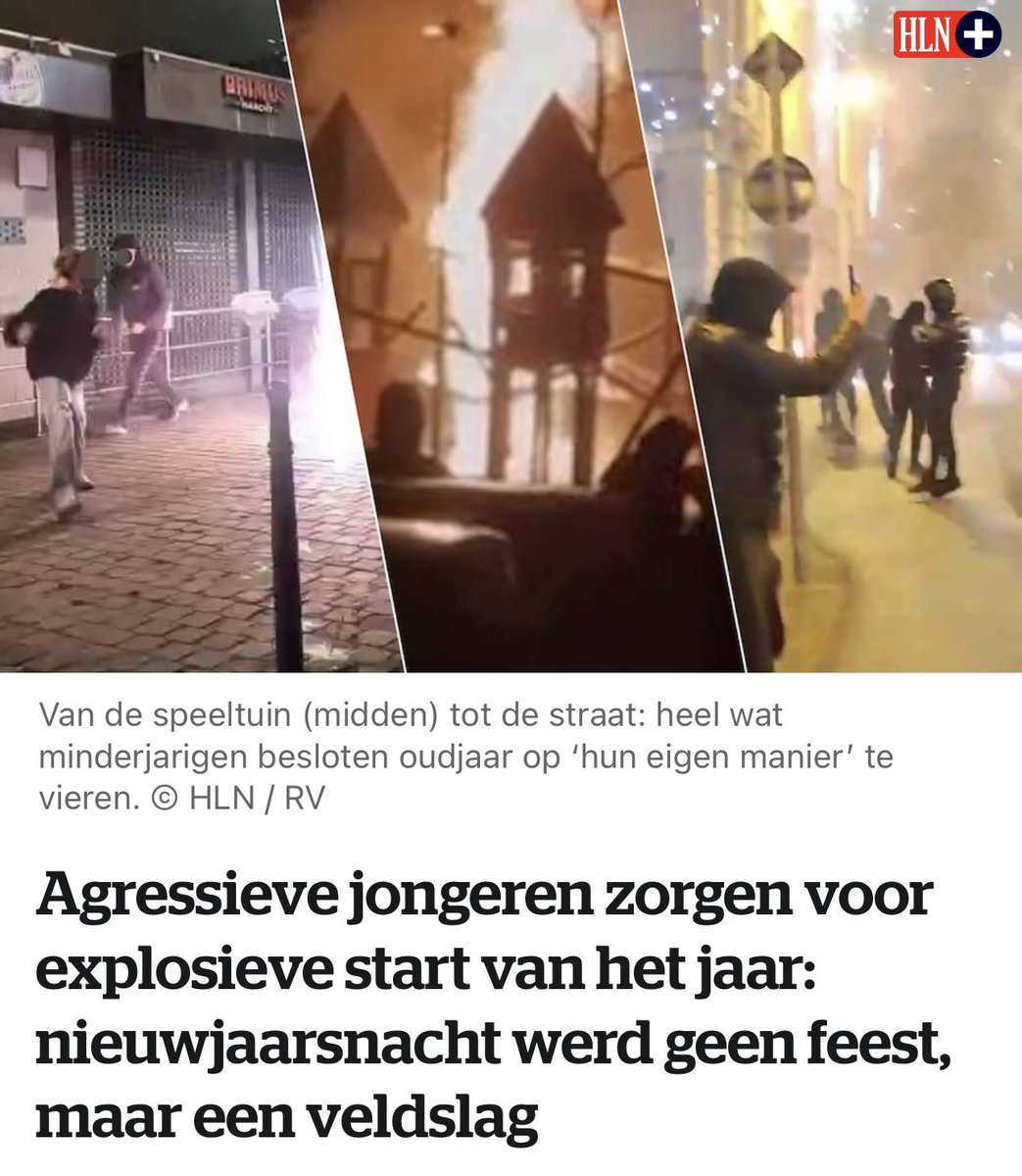
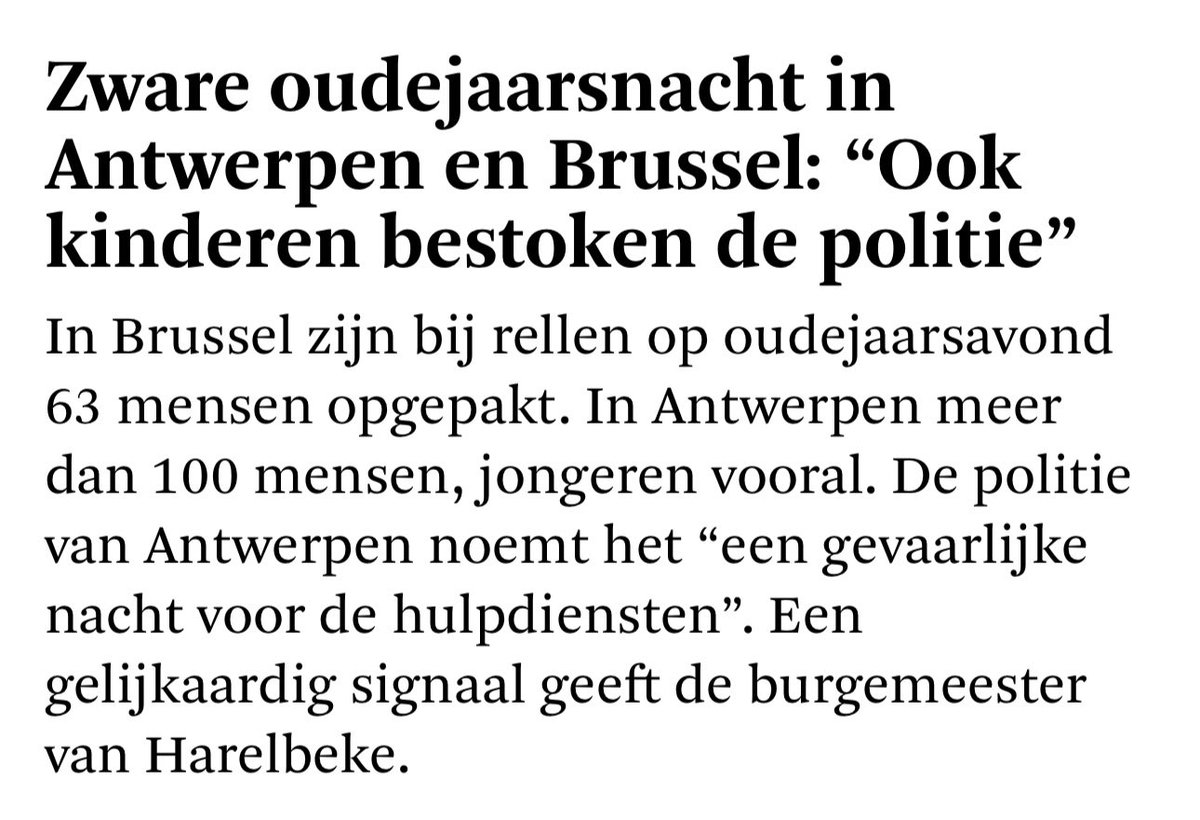
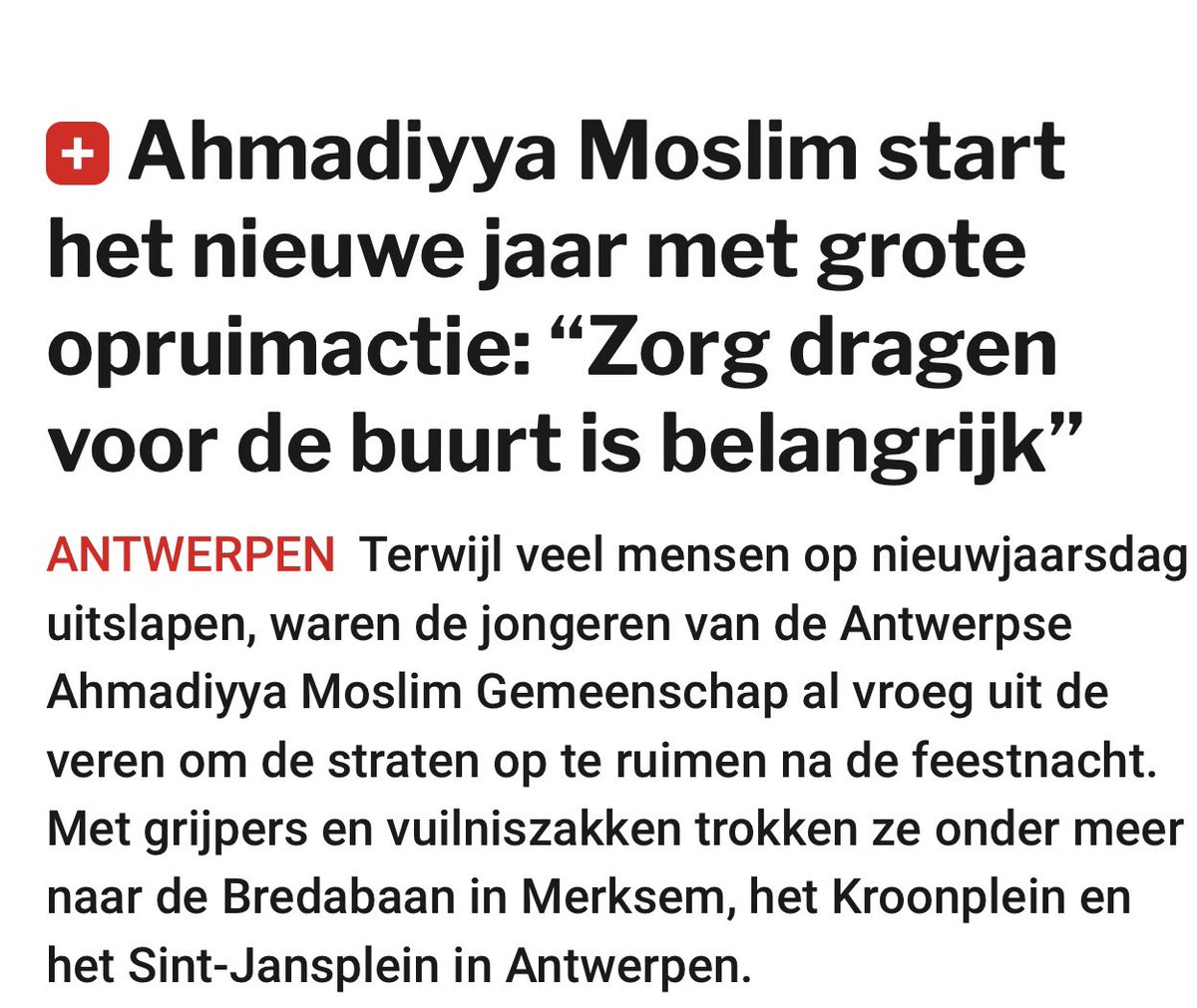
Ik ben het beu. Beu om elk jaar opnieuw dezelfde beelden te zien. Beu om telkens weer te doen alsof we ‘verrast’ zijn. Beu om analyses te horen die alles verklaren, behalve verantwoordelijkheid. Na een overwinning. Na oudjaar. Auto’s in brand. Ramen ingeslagen. Straten vernield. Buren geïntimideerd. Alsof elke gelegenheid een vrijgeleide is voor chaos. Laten we stoppen met onze kop in het zand te steken. Een aanzienlijk deel van deze jongeren heeft een migratie- én moslimachtergrond. Het verzwijgen ervan is lafheid. Zeker wanneer diezelfde achtergrond wél wordt opgevoerd als diversiteit een troef moet zijn. Als cultuur en religie relevant mogen zijn bij rechten en faciliteiten, dan mogen ze ook benoemd worden bij plichten en ontsporing. Tegelijk weten we dat de overgrote meerderheid van de mensen in dit land - ook zij met een migratie- en moslimachtergrond - dit gedrag resoluut afwijst. Net daarom mogen we dit niet laten passeren. Want deze minderheid verpest, telkens opnieuw, het beeld van een hele groep. Diversiteit kan alleen gedragen worden als we ook durven spreken wanneer ze ontspoort. Armoede. Uitsluiting. Kwetsbaarheid. Ja, die realiteiten bestaan. Maar ze bestaan binnen een samenleving die vele kansen biedt. Onderwijs. Gezondheidszorg. Sociale bescherming. Werkmogelijkheden. Rechten. Geen perfecte samenleving, maar wel een die perspectief geeft. Er zijn mensen vandaag die hun leven riskeren op de Middellandse Zee, die hun kinderen in gammele boten zetten, om toegang te krijgen tot deze kansen. Niets - werkelijk niets - rechtvaardigt daarom het vernielen van een stad die ook de jouwe is. Wie zijn eigen straat kort en klein slaat, toont vooral totale vervreemding. En dan stel ik mij de vraag, waar zijn de waarden die zo vaak worden gepredikt? Waar is het respect voor het openbaar domein? Voor buren? Voor hulpdiensten? Waar is de islam die spreekt over zelfbeheersing, waardigheid en zorg voor de omgeving? Geloof is geen uiterlijk vertoon. Geen vlag om te zwaaien wanneer het uitkomt. Geen schild om achter te kruipen wanneer men aangesproken wordt. Geloof blijkt in daden. In beheersing. In zorg voor wat niet alleen van jou is. En waar is de opvoeding? Ja, ouders hebben vandaag minder controle dan vroeger. Ja, de straat, het scherm en de (vrienden)groep wegen zwaar. Maar verantwoordelijkheid verdwijnt niet omdat ze moeilijker is geworden. Opvoeding is bovendien nooit alleen de taak van ouders geweest. Ze leeft in gezinnen, maar ook in scholen, verenigingen, buurten en gemeenschappen. Een samenleving die opvoeding laat verarmen, oogst ontsporing. En wie denkt dat repressie alles zal oplossen, vergist zich. Je kunt geen waarden afdwingen met waterkanonnen. Het meest confronterende is dat zelfs in Marokko - waar de Africa Cup wordt gespeeld - grootschalige rellen uitbleven. Wie werkelijk om zijn ploeg geeft, viert. En wie om zijn stad geeft, beschermt haar en breekt haar niet af. En het is niet allemaal kommer en kwel. Er zijn ook jongeren die wél tonen hoe het moet, zoals de jongeren van de Ahmadiyya Muslim Gemeenschap Antwerpen, die na nieuwjaar vrijwillig de straten opruimen. Dat is geloof in daden. Zo ziet verantwoordelijkheid eruit.
Khalid Benhaddou tweet mediaKhalid Benhaddou tweet mediaKhalid Benhaddou tweet mediaKhalid Benhaddou tweet media
Nederlands
292
496
2.9K
149.1K
Jay in Kyiv
Jay in Kyiv@JayinKyiv·
Belgium is now Putin's bitch.
English
529
675
4.4K
62.8K
Mike Sapiton 🇺🇦
Mike Sapiton 🇺🇦@sapitonmix·
Dear Belgians. Don’t worry. You will have your Russians happy. Maybe you will even get a compliment from Putin. It will all be good. You don’t need other European countries, they only steal from you. You need only Moscow, they are loyal and good partners.
English
127
52
479
10.7K
JD
JD@thisisbamboo·
@JulienHoez you're still here??
English
0
0
0
162
Julien Hoez
Julien Hoez@JulienHoez·
The fact that everybody who likes Russia or Putin is suddenly a fan of Bart De Wever tells you a lot
English
65
101
871
20.2K
JD
JD@thisisbamboo·
@HannoLustig Can't be more on the hook than when these Russian assets would have been used. De Wever didn't just protect Belgians but all EU citizens.
English
0
0
6
145
Hanno Lustig
Hanno Lustig@HannoLustig·
De Wever. Penny wise and pound foolish. Yes, he protected Belgian taxpayers from the risks of Russian attempts to claw back their assets, but Belgian taxpayers are now likely on the hook for much more in the future: he set a precedent for more joint borrowing by the EU without extra sources of revenue, at a time when countries have no fiscal capacity left, pushing the EU closer to an improvised fiscal union without any serious guardrails.
Pieter Cleppe@pietercleppe

"Dossiervreter De Wever wist waarover hij sprak, andere leiders hebben de kwestie logischerwijs minder in de vingers. Sommigen van hen dreigden bovendien langs hun nationale parlementen te moeten passeren als de herstellening de eindstreep zou halen – in die zin speelde ook de tijdsdruk uiteindelijk in het voordeel van De Wever." knack.be/nieuws/wereld/…

English
19
24
100
5.1K
JD
JD@thisisbamboo·
@klaus_adam who's 'we'? you tool.
English
0
0
0
19
JD
JD@thisisbamboo·
@JanHellqvist @POLITICOEurope Apparently it is totally representative as long as you only count the intelligent Europeans...
English
0
0
0
21
Jan Hellqvist
Jan Hellqvist@JanHellqvist·
@POLITICOEurope He represents a nation of 11 million, so not exactley a representative sample size of the EU or Europe
English
4
0
3
1.3K
Anton Gerashchenko
Anton Gerashchenko@Gerashchenko_en·
Bart De Wever, Prime Minister of Belgium, has strongly reacted to Politico's questions about securing finances for Ukraine (Belgium was strongly opposed to using frozen Russian assets): Politico, you published some very nice articles with some very nice titles. Claiming that I was Russia's most valuable asset. I like that one a lot. I will remember that one. There's always division at the European table. This is Europe. 27 countries, different interests, different public opinions close to Russia, far from Russia. We're not all playing in the same ballgame. But at the end of the day, there's a decision with unanimous support. We found a solution for the financing of Ukraine, and we were unanimous. Three countries don't want to be implicated? Okay, fine. But we're there. But now I have to go to my dacha in St. Petersburg, where my neighbor is Depardieu, and then across the street there is Assad. And I think I can become mayor of that little village. Maybe that could be your title.
Anton Gerashchenko@Gerashchenko_en

EU leaders are meeting in Brussels these days for a European Council summit. Among other issues, the Council has already sent two telling signals about how the EU views the war and its own role in it. • First, EU leaders agreed on a financial framework to support Ukraine in 2026-2027 in the form of a large loan, aimed at ensuring predictability of assistance and reducing the scope for annual crisis bargaining. This matters not just in terms of the amount of money involved, but as a political signal: support for Ukraine remains a strategic priority that requires planning "for years ahead," not reactive "from summit to summit" decisions. • Second, at the level of the summit conclusions, the EU more clearly outlined its response framework for hybrid attacks, with an emphasis on resilience, protection of critical infrastructure, and readiness to apply additional restrictive measures. This is also significant, as it shifts the discussion from "isolated incidents" toward an understanding of systematic pressure on European societies. At the same time, both signals lead to the central question: is European leadership ready to speak honestly about this reality - so that societies understand the scale of the threat and support the necessary decisions? This question points to a much deeper problem: a crisis of leadership in European democracies. And it concerns not just security, but democracy itself - the ability to speak frankly with one’s own society and to obtain a mandate for decisive action. ▪️ The EU lacks a shared "threat map" Let us start with the obvious: EU countries perceive both Russia and the cost of confronting it differently. For some, this is a matter of survival and long-term confrontation. For others, it is a manageable risk that should not be "inflated" because of domestic politics, economic concerns, or elections. As a result, joint decisions are hard to reach: the disagreements are not technical, but political. ▪️Language is also a security tool There is another factor that is discussed less often, yet explains a great deal: narrative. In democracies, words carry weight. How leaders name events determines what society considers normal, what it is willing to support, and what costs it is prepared to bear. Language, therefore, is part of security policy. ▪️ The "glossary" problem: euphemisms instead of clarity Today, European politicians often describe Russian attacks using language that: • softens reality ("hybrid threats," "incidents," "interference"); • sounds overly bureaucratic - as if the issue were regulations rather than conflict; • fragments the picture into isolated episodes that people do not connect into a coherent story. This is partly deliberate. The moment a situation is called a war, a logical question arises: "What are you going to do next?" That, in turn, implies costs, priorities, and unpopular decisions. Euphemisms seem to "lower the temperature," but at the price of long-term weakness. ▪️ Distrust of citizens is a dangerous vulnerability for democracy This brings us to a painful issue: many leaders appear not to trust their own voters. As if they fear that society cannot handle an honest conversation - that people will be frightened, exhausted, or unwilling to pay the price of security. Sometimes the problem is also that elites themselves are not ready for the next step: there is no agreed plan, no package of decisions, no social safeguards. But the outcome is the same - careful formulas instead of a direct conversation. ▪️ Why silence makes everyone less secure The worst part is that this tactic is not neutral - it increases risks. When events are framed as mere "incidents," the response becomes reactive rather than strategic. People are not prepared - neither psychologically nor practically. When reality becomes undeniable through a serious shock, a sense emerges that "we were not warned," and trust erodes. Externally, this looks like indecision - and indecision invites provocation. In other words, silence does not reassure; it gradually undermines trust and makes democracies more vulnerable. ▪️ An honest conversation - without a permanent state of emergency At the same time, honesty does not mean a constant state of alarm or emergency. It is crucial not to cross the line where, under the banner of security, democracy itself begins to shrink - where opposition is restricted, space for debate is narrowed, and dissent is labeled "disloyalty." That is why what is needed is an honest but democratically responsible conversation. It should include: • clear criteria: what we consider an attack and how we respond; • transparency and oversight, including parliamentary control; • an honest "social contract": what the costs will be and how the state will protect people; • the role of citizens: what each individual can do to make society more resilient. So, today, the main challenge for leadership in Europe is not only to find the right tools to counter threats, but to restore democracy’s key resource: trust. And trust starts with language. It is time to call reality by its name - not to frighten people, but to become more resilient. When Russian border guards in uniform physically enter EU and NATO territory, as happened on 17 December in Estonia, things must be called by their proper names. Russia is a threat. Russia behaves in a hostile manner toward the EU. And people must be aware of this.

English
78
87
439
98.9K
Michael MacKay
Michael MacKay@mhmck·
Belgian Prime Minister Bart De Wever is a die-hard supporter of the russian terrorist state. He cloaks his loyalty to the enemy in the meaningless bafflegab of a managerial politician – a man who will never be a true leader of his people.
English
252
127
629
23.3K