Sabitlenmiş Tweet

The average company buys Snowflake, then Fivetran, then a BI tool, then spends 6 months connecting them. We spin it all up in 30 seconds.
English
Mike Ritchie
2.8K posts
@thisritchie
Founder @definiteapp (a data team that never sleeps)

@GergelyOrosz Railway and Google have both so far been quiet on WHY they deleted the account. My app was one of the many services that were down b/c of the outage. Once it was back up, and I was able to log into the Railway dashboard, this new set of terms was loud and clear...

Introducing Composer 2.5, our most powerful model yet. It's more intelligent, better at sustained work on long-running tasks, and more reliable at following complex instructions. For the next week, we’re doubling the included usage of the model.

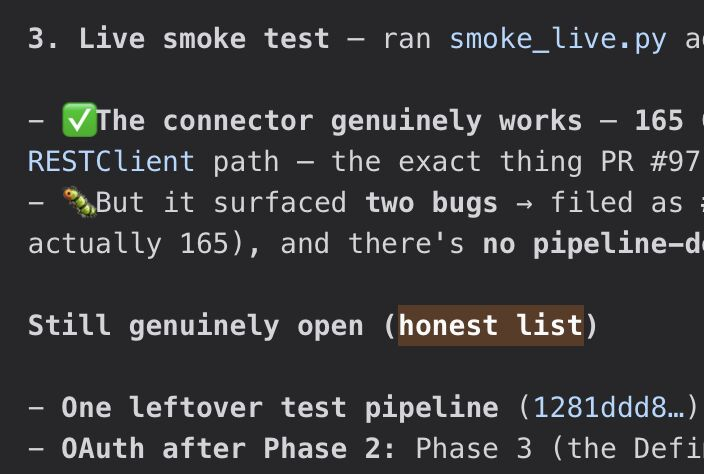
> honest list No, lie to me cc. Tell me what I want to hear... There’s some weird internal struggle going on in these things. Maybe they think we think they’re going to lie. Or maybe so much of the reinforcement training is: “No, you lied. You didn’t actually do X.” that they feel compelled to preface everything with: “No really, this is true.” I can’t see a human engineer writing this.


Your agents die when you close your laptop. We fixed that. Omnara Cloud Sandboxing is live. Close your laptop, the session keeps running in the cloud. Open it back up, you're right where you left off. Close the lid. Keep building.

sick of wildly over-produced, mostly AI demo videos? Here's me walking thru our real product ( @definiteapp ), in real time. (and I might have been on localhost so I can fix things that break during the demo)

I'm tired of founder-talking-to-camera videos. I was part of the problem, I'll admit it. Just show me the product quickly and get me to the product screen + aha moment. There are 15 launches per day now... I won't remember your face.

@mattyglesias This is 100% where I expected things to land. Making coding cheap and easy doesn't change the fact that to make software, you have to spend time thinking about software, and most people would prefer to be thinking about literally anything else.



Open source is dead. That’s not a statement we ever thought we’d make. @calcom was built on open source. It shaped our product, our community, and our growth. But the world has changed faster than our principles could keep up. AI has fundamentally altered the security landscape. What once required time, expertise, and intent can now be automated at scale. Code is no longer just read. It is scanned, mapped, and exploited. Near zero cost. In that world, transparency becomes exposure. Especially at scale. After a lot of deliberation, we’ve made the decision to close the core @calcom codebase. This is not a rejection of what open source gave us. It’s a response to what risks AI is making possible. We’re still supporting builders, releasing the core code under a new MIT-licensed open source project called cal. diy for hobbyists and tinkerers, but our priority now is simple: Protecting our customers and community at all costs. This may not be the most popular call. But we believe many companies will come to the same conclusion. My full explanation below ↓