Thomas Massena
58 posts

Thomas Massena
@thomasmassena
PhD-ing in Toulouse or Paris


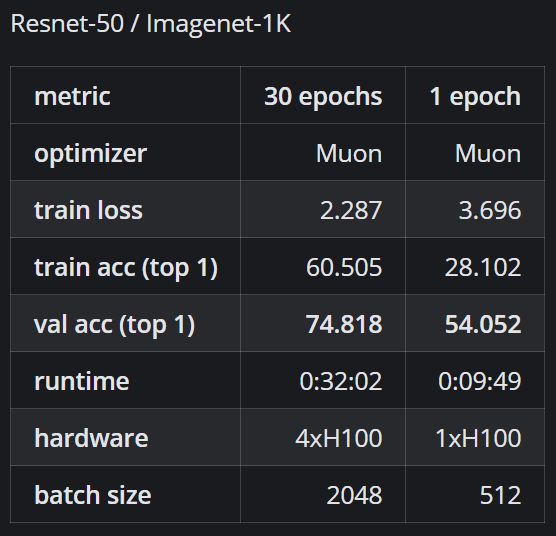
@VukRosic99 Not sure Muon would help for CNNs.

The most popular way to interpret AI is missing the bigger picture. Models think in curved shapes. But sparse autoencoders (SAEs) work with straight lines. Can they still capture models’ curved neural geometry? Yes, but not how you might think! (1/7)

Neural networks might speak English, but they think in shapes. Understanding their rich *neural geometry* is key to understanding how they work – and to debugging and controlling them with precision. Starting today, we’re releasing a series of posts on this research agenda. 🧵


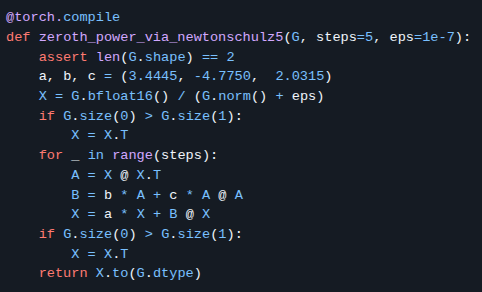
We made Muon run up to 2x faster for free! Introducing Gram Newton-Schulz: a mathematically equivalent but computationally faster Newton-Schulz algorithm for polar decomposition. Gram Newton-Schulz rewrites Newton-Schulz such that instead of iterating on the expensive rectangular X matrix, we iterate on the small, square, symmetric XX^T Gram matrix to reduce FLOPs. This allows us to make more use of fast symmetric GEMM kernels on Hopper and Blackwell, halving the FLOPs of each of those GEMMs. Gram Newton-Schulz is a drop-in replacement of Newton-Schulz for your Muon use case: we see validation perplexity preserved within 0.01, and share our (long!) journey stabilizing this algorithm and ensuring that training quality is preserved above all else. This was a super fun project with @noahamsel, @berlinchen, and @tri_dao that spanned theory, numerical analysis, and ML systems! Blog and codebase linked below 🧵


Today, we are emerging from stealth and launching PrismML, an AI lab with Caltech origins that is centered on building the most concentrated form of intelligence. At PrismML, we believe that the next major leaps in AI will be driven by order-of-magnitude improvements in intelligence density, not just sheer parameter count. Our first proof point is the 1-bit Bonsai 8B, a 1-bit weight model that fits into 1.15 GBs of memory and delivers over 10x the intelligence density of its full-precision counterparts. It is 14x smaller, 8x faster, and 5x more energy efficient on edge hardware while remaining competitive with other models in its parameter-class. We are open-sourcing the model under Apache 2.0 license, along with Bonsai 4B and 1.7B models. When advanced models become small, fast, and efficient enough to run locally, the design space for AI changes immediately. We believe in a future of on-device agents, real-time robotics, offline intelligence and entirely new products that were previously impossible. We are excited to share our vision with you and keep working in the future to push the frontier of intelligence to the edge.


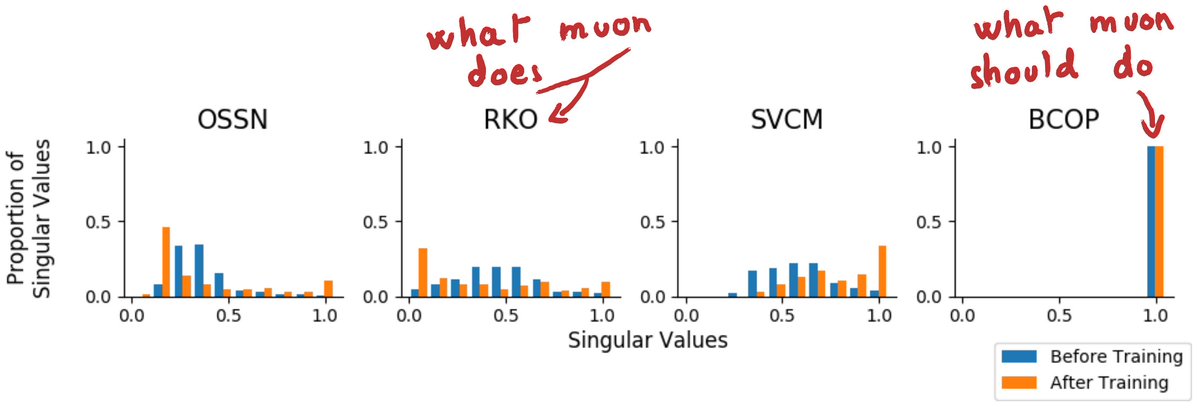
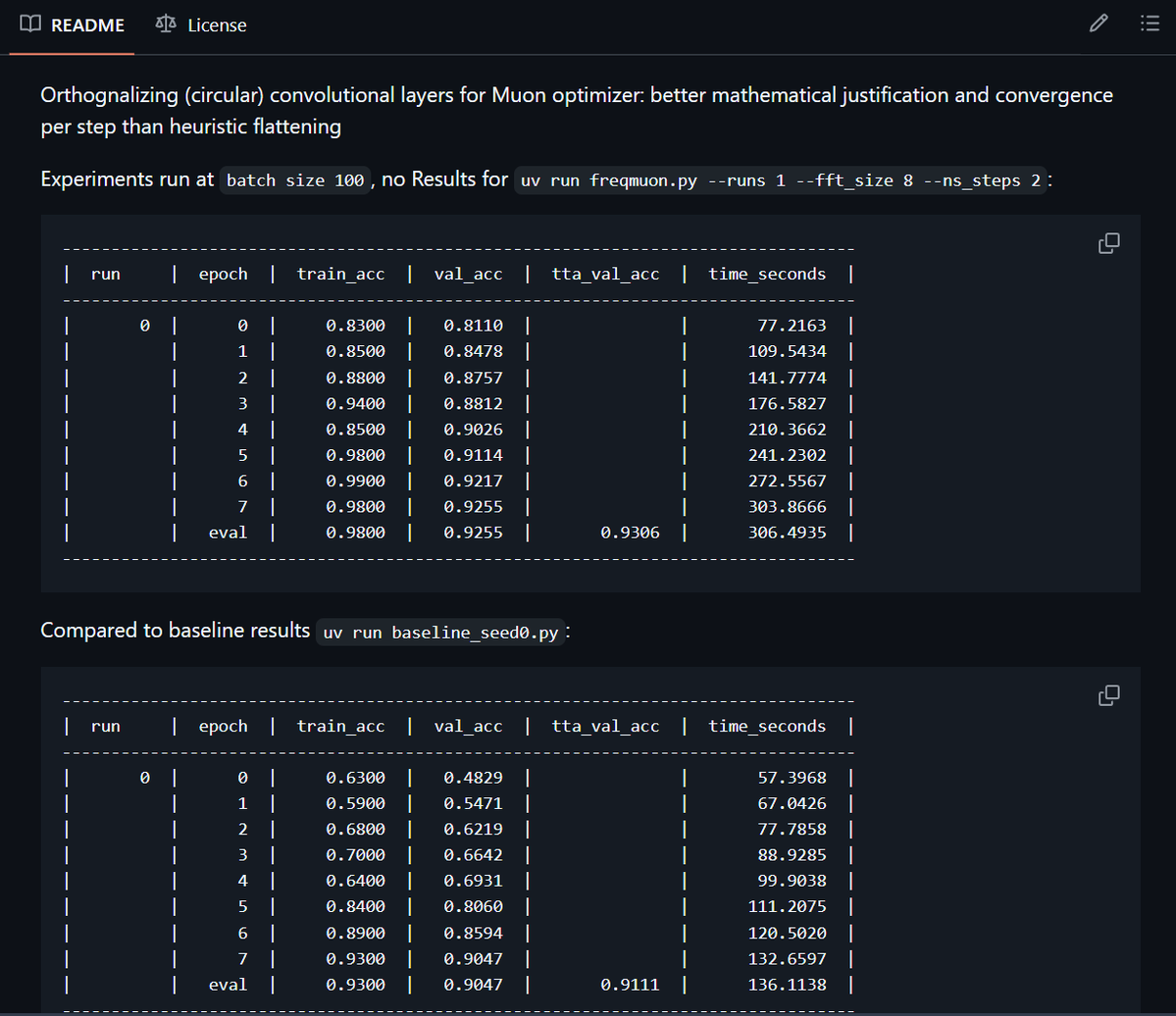
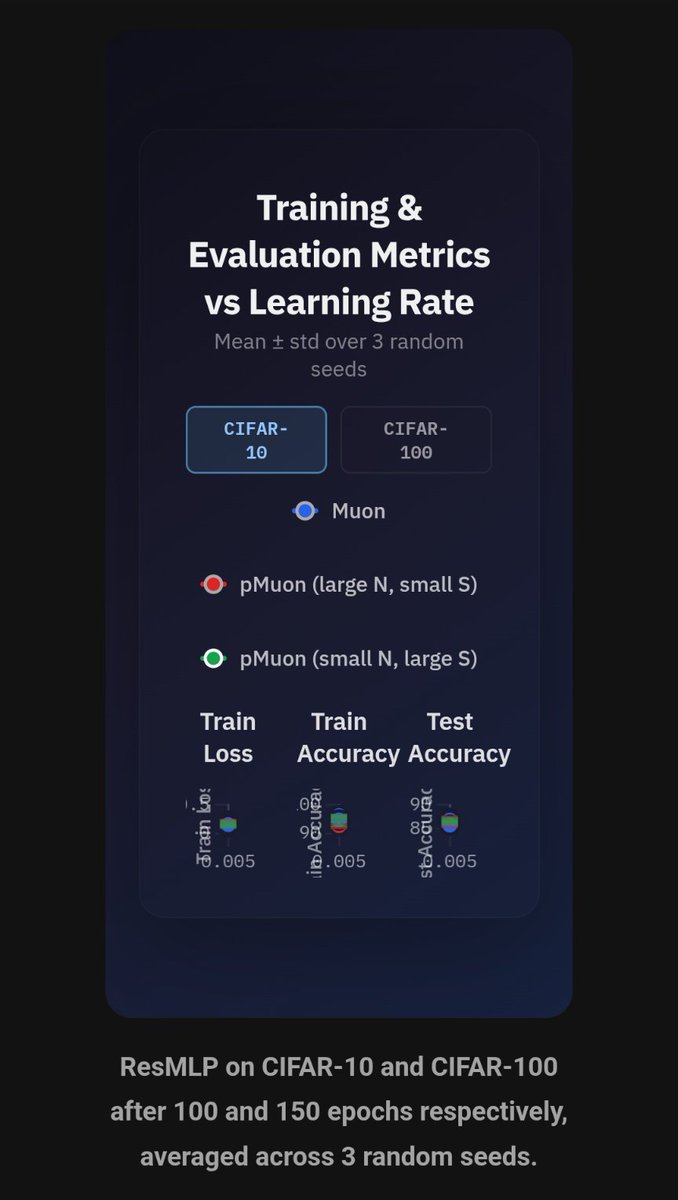
How to ("properly") orthogonalize convolutional layers for Muon optimizer Trick: Assume circular kernels to allow diagonalization Blog post + proof of concept CIFAR10 speedrun fork (unoptimized and slow for now but better convergence per step)