
Sabitlenmiş Tweet
Rex | ∃x
6.6K posts



God is obsessed with sending me money from unexpected sources. Everywhere I turn is an overflow.
English
@chiefdavidsays this is basic stuff. damn. things you get tested for during ctfs
English

Ikeja Electric was hacked through a profile photo upload form.
The threat actor exploited an Unrestricted File Upload vulnerability on their Smart Warehousing Inventory Management System, uploaded a webshell, and had remote access within minutes.
From there, he moved through their network, finding passwords stored in plain text, using them to access internal systems, and eventually cracking the domain admin password.
Gaining full control in four days.
He then exploited an unpatched VMware vCenter server—software from 2018, never updated—and according to him, deployed ransomware across 50+ hosts, taking down metering software across their systems.
I’ve published a full analysis of what I’m now calling cyber-terrorism against Nigerian critical infrastructure, along with a practical advisory for affected individuals, organisations, and regulators.
securityintelligence.substack.com/p/a-security-a…
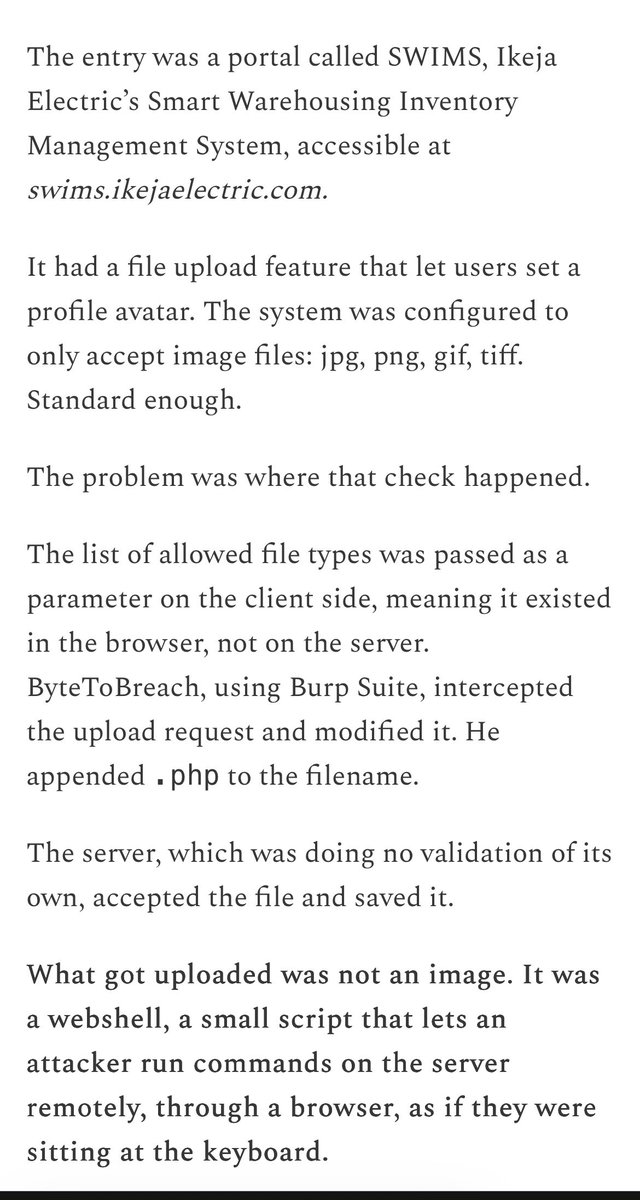
English


Rex | ∃x retweetledi

Breaking news: The United Arab Emirates has said it is leaving Opec, dealing a significant blow to the oil cartel and its de facto leader Saudi Arabia ft.trib.al/08BCZA3

English

UBA strongest support at N25. Might consider buying there 🌚🤣
Crypto Senko@keanxley
UBA YOU DO NOT RELEASE RUBBISH RESULTS AND EXPECT THE MARKET SMILE WITH YOU 24% DOWN FROM PREVIOUS ATH SEE YOU LOWER JOOR!!!!!!!!!!!!!!!!! MARKET DOES NOT CARE WHETHER YOU PAY INFLUENCERS OR NOT WE WORK WITH FACTS AND FIGURES #NFA
English
Rex | ∃x retweetledi

We trained an ML classifier on 107,875 transients from 1949-1957 Palomar plates to filter out plate defects. Turns out the real ones avoid Earth’s shadow/clusters around nuclear tests.
Either something reflective was in Earth orbit a decade before Sputnik, or dust on a glass plate has really strong opinions about nuclear weapons.
arxiv.org/abs/2604.18799
@DrBeaVillarroel @esaagar @AlchemyAmerican @joerogan
#VASCO #science #astro
English
Rex | ∃x retweetledi

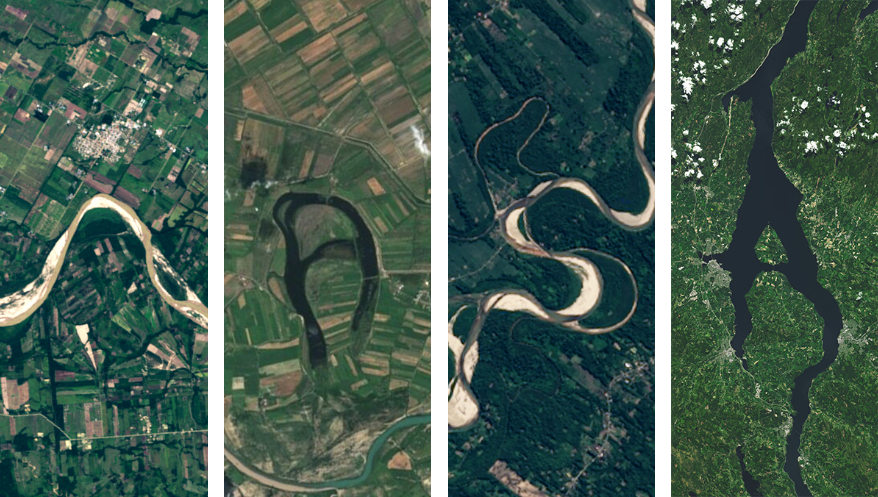
The planet can spell your name – literally. 🔤🌍
This Earth Day, see your name written in landscapes captured by Landsat: go.nasa.gov/4ak4Cdu
English
Rex | ∃x retweetledi

How to raise children who do their school work independently.
When my kids were quite young, I realized that they often had pretty high scores that fell just short of their dream grade but they weren't bothered. I came up with a reward scheme.
For any 100% score in a subject,
English
Shave at night, not morning so your skin repairs itself while you sleep.
After shaving, rinse with cool water without any cleanser. Then:
1. Alcohol-free hydrating toner
2. SKIN1004 Centella Ampoule, patted in
3. Paula’s Choice Niacinamide on top
The next night, swap Niacinamide for salicylic acid and repeat steps 1 and 2.
Centella calms the inflammation. Niacinamide evens out your tone and fades the marks, while salicylic acid clears the pores and prevents bumps.
Don’t use Niacinamide and salicylic acid on the same night. Alternate them.

Black Jaguar@A_Feranmi
I have a solid post shave routine, for blades and cream, that you should all try. Give me till evening.
English
Rex | ∃x retweetledi
Google trained an AI to predict your neighbourhood's income by counting the coffee shops, bus stops, and high-rises on a map. Nobody told it what income was.
The model is called S2Vec, published this month by Google Research as part of their Earth AI initiative. It takes the built environment (every building, road, park, and business in an area) and converts it into a layered image. Three coffee shops and one park in a grid cell become pixel values. The AI then reads that image the same way a computer vision model reads a photograph.
The training method is the part that matters. S2Vec uses masked autoencoding: you show the model a patch of a city with chunks missing, and it learns to fill in the gaps. Show it a cluster of high-rise apartments next to a subway station, mask out a section, and it predicts a grocery store belongs there.
Do that millions of times across the globe and the model learns the deep spatial grammar of how cities organise themselves. No human ever labels a region as "financial district" or "suburban residential." The model figures out those groupings on its own from the geometry of what's built where.
The output is an embedding, a string of numbers that acts as a mathematical fingerprint for any location on Earth. Feed those embeddings into a prediction task and S2Vec can estimate population density, median income, and carbon emissions for regions it has never seen before.
On zero-shot geographic extrapolation (predicting for regions entirely absent from training data) S2Vec was typically the best-performing individual model.
It matched or beat satellite imagery baselines like RS-MaMMUT and outperformed GEOCLIP on socioeconomic prediction. The best results came from combining S2Vec with satellite image embeddings. Built environment data alone couldn't capture vegetation, terrain, or transportation patterns well enough for environmental tasks like tree cover and elevation. But fused together, the two modalities outperformed everything else.
The standard approach to geospatial ML has been hand-crafting indicators for every new problem. Predicting air quality meant building a bespoke feature set. Estimating housing prices meant building another one. S2Vec replaces that with a single general-purpose representation that transfers across tasks.
The training data is map features, not satellite pixels.
That distinction is pretty important to understand. It means: map data updates faster, costs less to process, and covers built infrastructure at a resolution satellite imagery can't always match.
A satellite sees rooftops. S2Vec knows there are three cafes, a pharmacy, and a bus stop underneath them.
Google's broader Earth AI pipeline now has three foundation models working in parallel.
1. PDFM for population dynamics.
2. RS-MaMMUT for satellite imagery.
3. S2Vec for the built environment.
Stack them and you get a system that can read a neighbourhood the way a local understands it.

English
Rex | ∃x retweetledi

Africa and South India share the same climate. Hot days, warm nights, high humidity, heavy seasonal rain. The difference is not the weather. It is the decision about what to build.
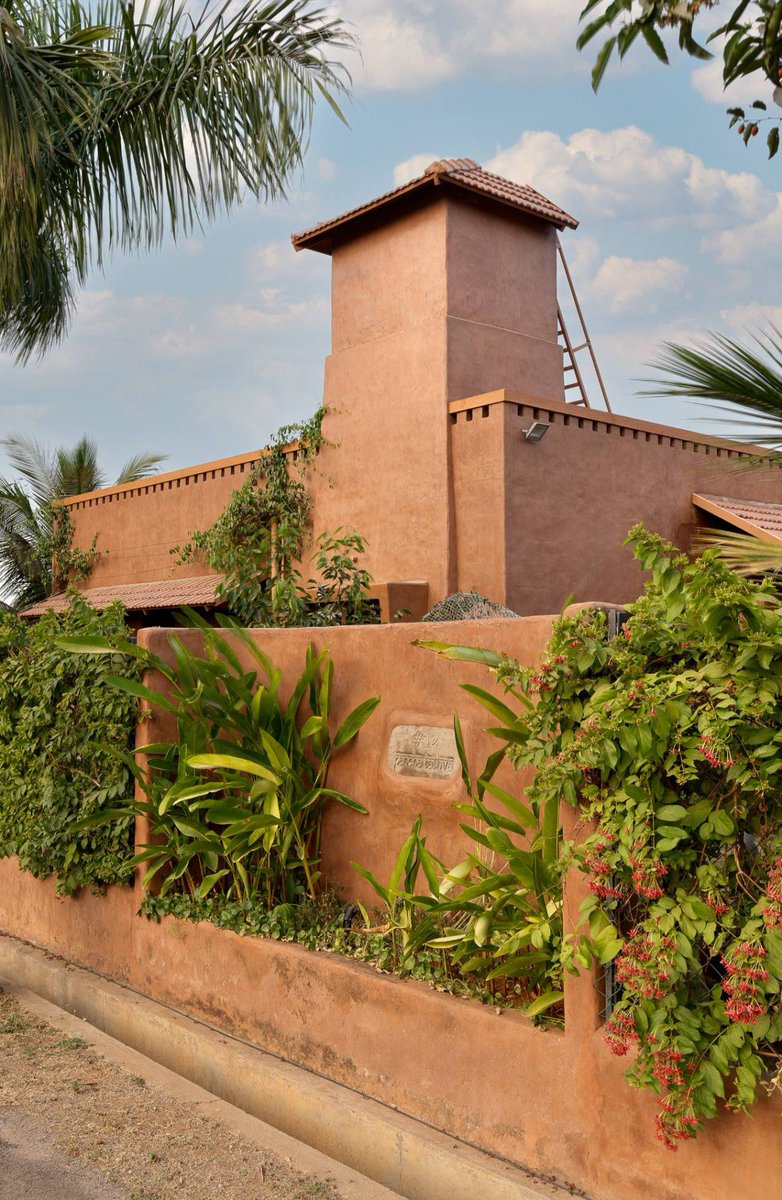
This is Residence Panchatattva. Hoskote, Bangalore, Karnataka, India. Architect:
Deepak Berthalome. Completed 2023.
Mud concrete blocks hand-cast on site using soil from the same ground the house sits on, mixed with construction debris and cement. Mud plaster and lime plaster in natural shades for finish. 90% of materials made at site. No air conditioning, a traditional kund water body cools the air naturally as wind passes over it.
Two blocks separated by a central court. Deep verandahs. Clay tile roof. Arched openings that frame the garden. A house that looks exactly like where it is.
This is what Karnataka’s vernacular halli mane tradition looks like when a contemporary architect refuses to abandon it.
Most of Africa sits in the same tropical and subtropical belt as this house. We have the same soil, the same sun, the same rain. What we do not yet have is enough architects who build like they know it.
Architect: Deepak Berthalome Architects | Hoskote, Bangalore, India | 2023 | Photo: Anushree Bhatter



English

don't get psyoped by pretty girls, ok?
James O'Keefe@JamesOKeefeIII
BREAKING NEWS: Top U.S. Nuclear Chief Caught LEAKING Sensitive National Security Information to Stranger, Reveals Army Chemist Was Exposed to U.S. Chemical Nerve Agent, Confirms U.S. Strike Killed Children in Iran, Discloses U.S. Plans to ‘Kill Iran’s New Supreme Leader’ “If he [Mojtaba Khamenei] doesn't change his ways, yeah, they're [United States] going to kill him.” “The easiest way to get intelligence…send a pretty girl, talk to the guy…I have to resist your eyes.” “Your eyes have mesmerized me so much…Almost like you're an intelligence.” Andrew Hugg, a U.S. Chief of Chemical Nuclear Surety, was caught on hidden camera casually revealing sensitive information to a stranger in a public restaurant. Andrew Hugg, Chief of Chemical Nuclear Surety, in charge of nuclear and chemical safety was caught on hidden camera releasing information regarding the U.S. Nuclear Information. He claims the U.S. still possesses nerve agents and says a U.S. Army chemist recently died from exposure. He also acknowledges U.S. airstrikes have killed children in Iran, calling it “collateral damage,” and revealed to the journalist how nuclear launch decisions are made in real time. Hugg described how the United States could assassinate Iran’s next leader if he “doesn’t change,” while admitting the U.S. has no plans to use nuclear weapons: “We’re not going to nuke anybody.” All of this was casually revealed to an undercover journalist in a restaurant. This raises serious questions about this official's judgment, security, and what’s really happening behind closed doors. We have reached out to the Pentagon and U.S. Army for comment and they are working on a response. @USArmy @DeptofWar
English
Rex | ∃x retweetledi

Rex | ∃x retweetledi

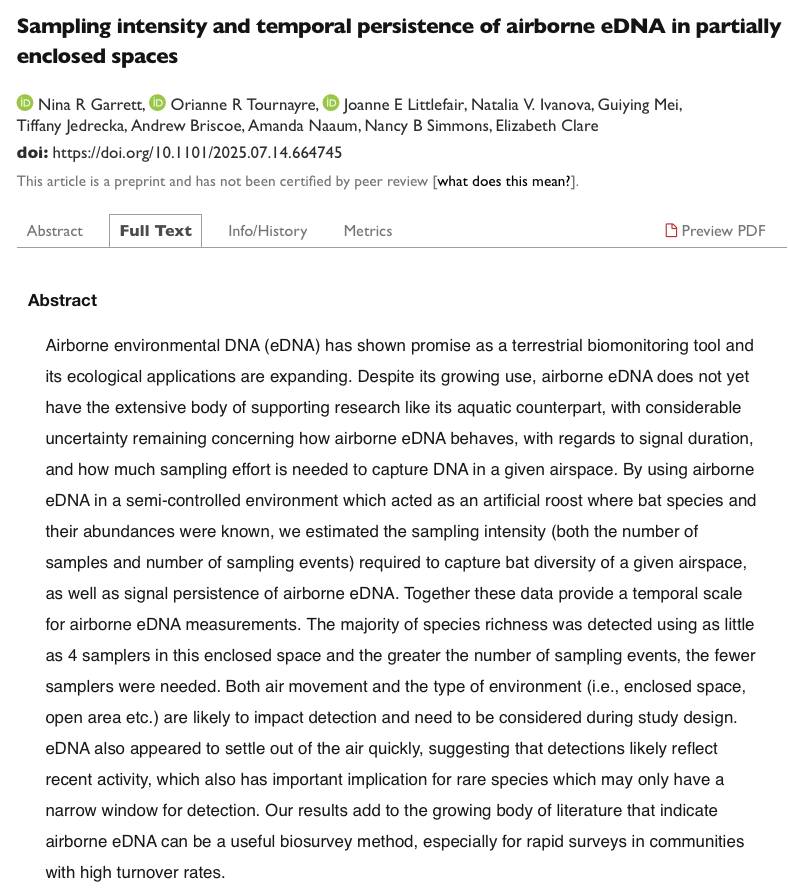
Every time you breathe, saliva droplets are released into the air. These droplets contain DNA, which can be captured from the air and sequenced for the next ~24 hours. So-called "AirDNA" is a relatively new way to do environmental monitoring; you can figure out who entered a room, for example, even if they never touched anything or dropped hair, etc.
DNA eventually settles onto surfaces, and becomes part of dust. You could presumably take the dust from a room and build a genomic record of all the people who have entered that room over the span of many years.
Privacy concerns for all this, of course, but also extremely useful for ambient environmental monitoring / figuring out where pathogens are spreading / tracking animals in the wild.


English
Rex | ∃x retweetledi

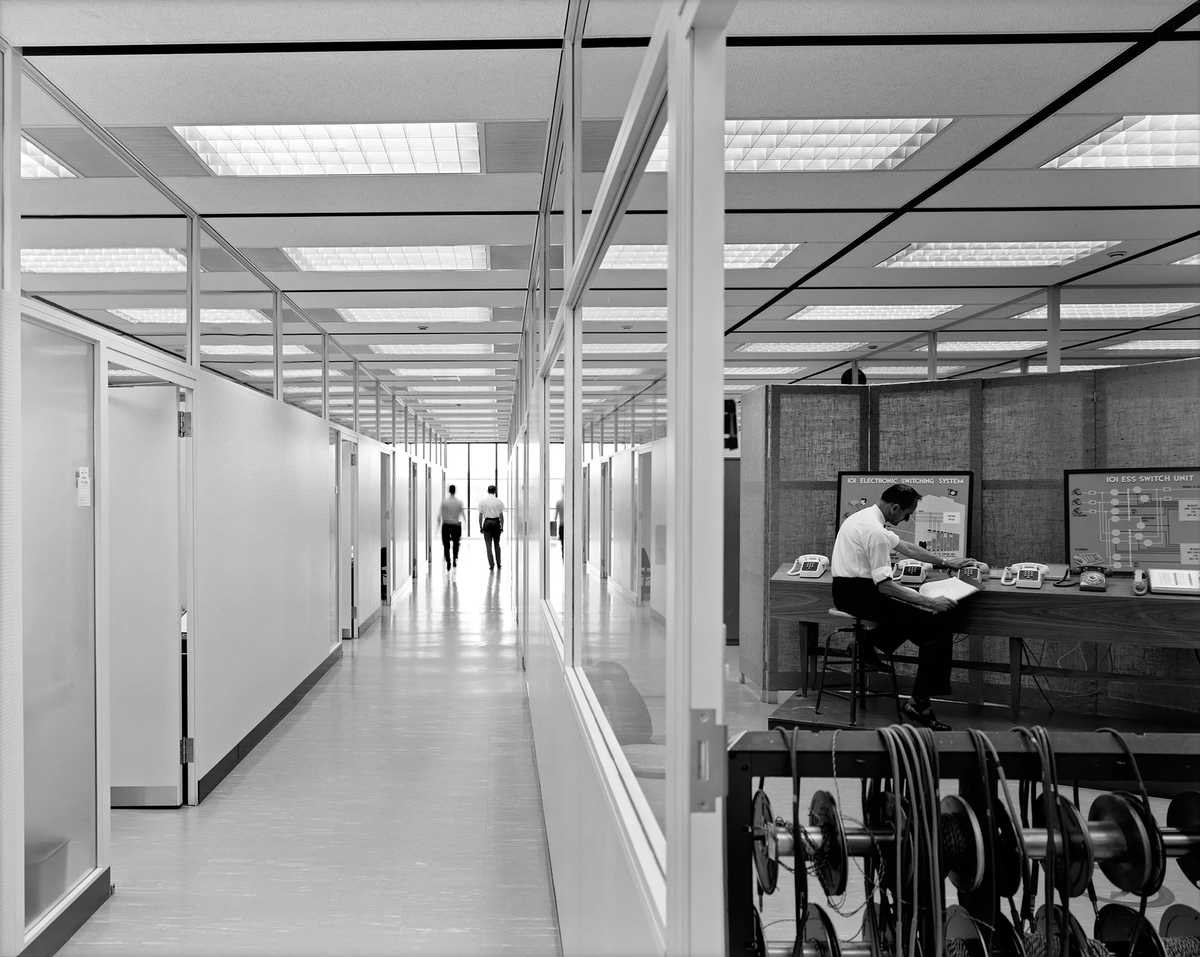
Office should be a cold 68F environment with extreme silence, occassional equipment noise. "Co-working" places are like a fake office where leisure and fucking around is central to its mission. Doesn't seem like a place where deep work can happen, where excellence has a chance.
Alex MacGregor@alexmacgregor__
Shenzhen coworking is undefeated
English