Till retweetledi

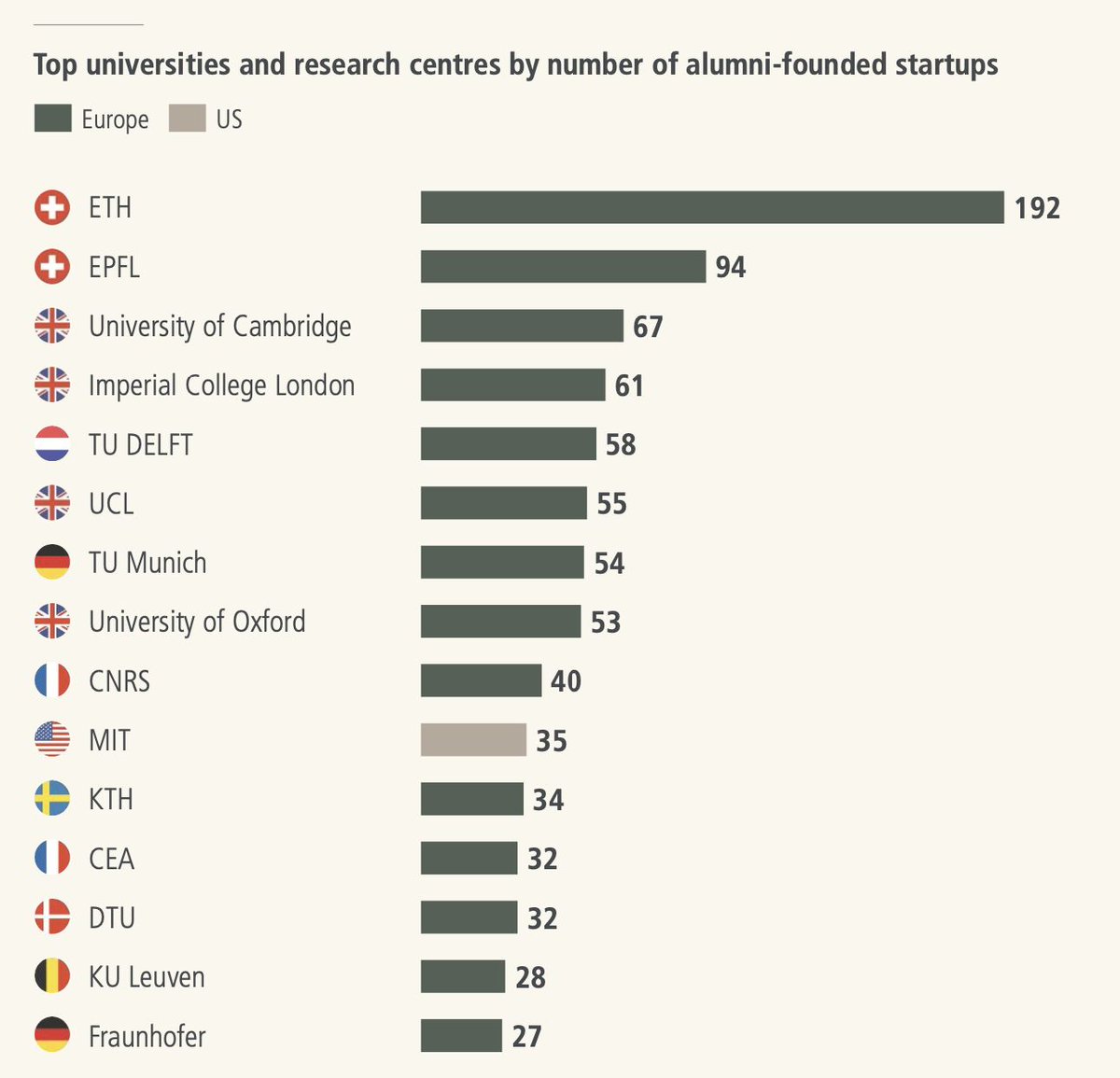
there's another reason to study the ETH and EPFL models closely 🇨🇭
both universities are also European leaders in spawning startups
English
Till
3.6K posts


@tmdq
co-founder @zerofynet. Formerly @mapillary / Meta, Apple, Qualcomm, kooaba, ETH Zürich. History in CV and ML. EV/renewable enthusiast. Father of two.




Fantastic roundtable this morning in London with @AshPrabaker (@AnthropicAI ), @sivesh_sukumar (@balderton ), 🦄 @steipete (@openclaw /@OpenAI)! ...plus engineering leaders from Stripe, NVIDIA, Microsoft, Google DeepMind, xAI, Apple, Scale AI, and some of the most interesting early-stage companies in London. We talked about the step change in software engineering agents over the last few months — and what that's actually doing to organisations of every size. A few takeaways: - The ratio has flipped. Six months ago, the rough consensus in the room was ~20% AI-assisted code, 80% hand-written. Today several teams described workflows where agents produce the majority of PRs. Anthropic has published research showing their engineers use Claude in ~60% of their work with a self-reported ~50% productivity lift — and the sense in the room was that the frontier has moved well past that already. - Review is shifting, not disappearing. Human review is still the norm, but the emphasis is moving towards defining what "good code" means for review agents to enforce. That's an open, fast-moving question. The upside of agents is obvious — the real design work is limiting the downside, so critical paths are getting disproportionate attention. - Lower-level languages are having a moment. Languages that used to have a steep accessibility cost are suddenly more tractable when an agent handles the boilerplate. Several people mentioned reaching for Rust or C++ where they'd have defaulted to Python a year ago. - The biggest blocker is memory, not capability. The main thing slowing adoption is that people's intuitions were calibrated on agents from six months ago — and those intuitions are now wrong. The fix that came up repeatedly: internal hackathons that deliberately include non-technical people. Nothing updates priors faster than watching a PM ship a working tool in an afternoon. - Adoption runs on champions. The pattern across almost every org: it's driven by internal champions — often more junior, often true believers — who find the edge of what agents can do for that specific codebase and pull everyone else along. Hiring for "AGI-pilled" is becoming a real thing. - Dev tools are getting rebuilt first. Internal dev tooling is the category most likely to be ripped out and rebuilt agent-first. Most companies could build a lot of this in-house now — it's a prioritisation question, not a capability one. Thanks to everyone who joined — one of those conversations where you leave with more questions than you arrived with, which is the good kind.

Solar is now the dominant source of new U.S. power capacity and is on track to surpass coal in total installed capacity before the end of 2026. 70 GW of new solar capacity is scheduled to come online in 2026–2027 → a 49% increase in operating solar capacity from the end of 2025.

‼️The Eurozone is becoming less relevant in the global economy: Eurozone GDP as a percentage of world GDP is down to 14.80%, the lowest EVER. A -8 percentage point decline since 2004. This comes as the EU imposed overly restrictive regulations, destroyed its industrial base, and made catastrophic energy policy mistakes. The EU abandoned nuclear power, banned fossil fuels prematurely, and failed to build renewable capacity at scale. Nothing will stop this decline until something resets.





I have no idea how to explain to my rear passengers how to get out of my Tesla Model S Plaid in case of an emergency and there’s no power.



Wieso sollten die Schweizer sich auf die EU einlassen?

French nuclear power carries the entire continent of Europe on its back Imagine the world if Boomers never sabotaged nuclear energy.