
Tornhoof
2.7K posts



TL;DR on the upcoming changes in C# vNext for 'unsafe' (blog post devblogs.microsoft.com/dotnet/improvi…)

English


@lucasmeijer @xoofx Yup, I went straight to roslyn analyzers for a lot of weird code GPT 5.4/5.5 produces. static mutables, lock() in quite a few places, abstract base classes with all the Code instead of one concrete type etc.
English

@xoofx i'd say go straight to analyzer for that kind of stuff, instead of praying model behaves.
English

I'm so annoyed by GPT-5.5 adding static mutable data (e.g. via `ConcurrentDictionary`) that I'm starting to think that I should add a rule to the system prompt itself. 😒
English
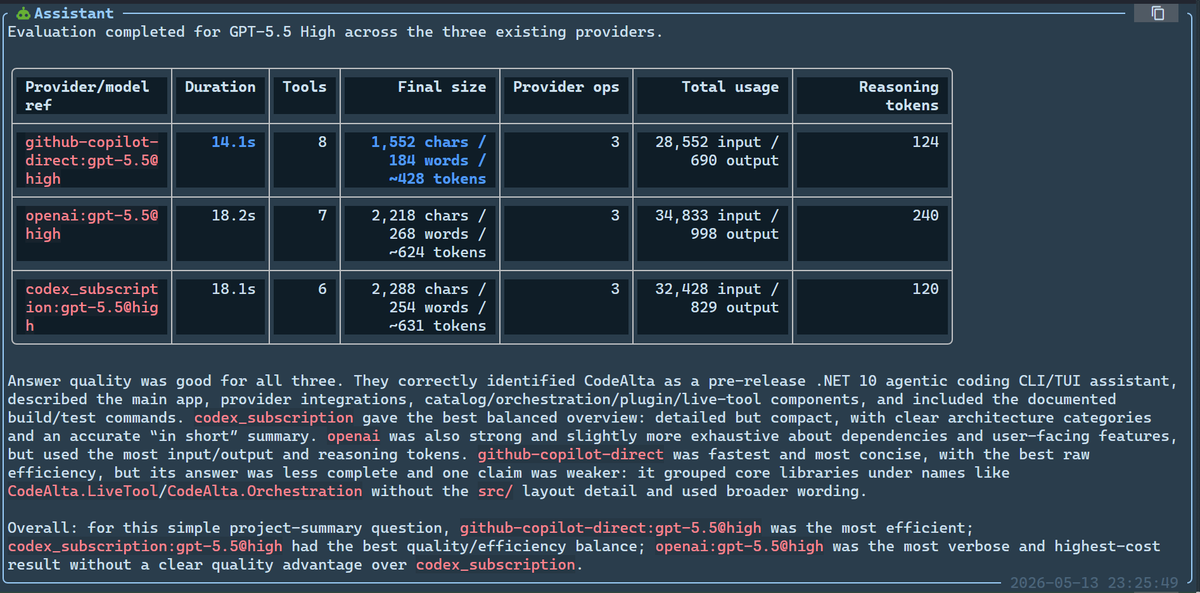
Another evaluation of different providers (Copilot, Codex, OpenAI) with the same model GPT-5.5 High, really interesting to see the differences. 🤔
English
@SitnikAdam Yay for ProcessStartInfo.KillOnParentExit, no more manual job object pinvoke
English

It's finally here! Process API Improvements in .NET 11 devblogs.microsoft.com/dotnet/process…
English


@shanselman I've got a diesel Jeta with a 5 speed : - )
and I use vim
English

Not enough of these AI grifters know how to drive stick shift
English
@migueldeicaza Flore, if you want Michelin starred dutch inspired cuisine.
English

Friends, I am in Amsterdam next week. Please send food recommendations - what’s the absolute meal I shouldn’t miss?
English
Tornhoof retweetledi

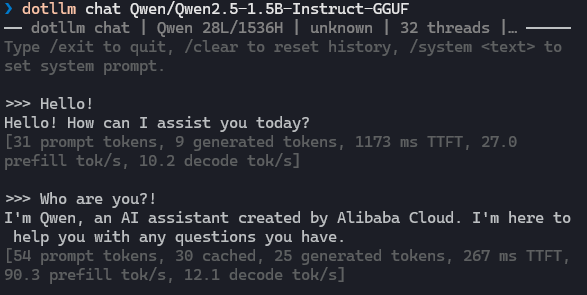
I've built a full LLM inference engine in C#/.NET 10. From scratch. Not a wrapper - native GGUF loading, BPE tokenizer, attention, KV-cache, SIMD-vectorized CPU kernels, CUDA GPU backend, OpenAI-compatible API. Solo dev, ~2 months, AI-assisted (not vibe-coded!). First preview is out.
Check it out for mode details at kokosa.dev/blog/2026/dotl… and dotllm.dev
English

@nickchapsas competitors.OrderByDescending(c => c.Points).First().Name == "Lando Norris";
English

Can someone explain this to me in programming terms?
Formula 1@F1
LANDO NORRIS IS THE 2025 FORMULA 1 WORLD CHAMPION!!!! 🏆 #F1 #AbuDhabiGP
English

Just blogged: Get a 180% speed increase on large async reads with Microsoft .Data.SqlClient (and EF Core) - here is how to turn it on!
#dotnet #efcore #sqlserver #performance
erikej.github.io/sqlclient/dotn…
English
We've just published "Unsafe C# code best (worst) practices" article - a set of 25 good/bad examples: learn.microsoft.com/en-us/dotnet/s… Let's crash productions in style together! 🧐

English
Tornhoof retweetledi

AI is unlikely to cure cancer. I think we might make significant scientific and medical progress in the near future, but it is important to understand the state we are in.
We are in a decade-long scientific stagnation. Outside of computing, progress is historically slow. We struggle to find who should receive a Nobel prize in Chemistry or Physics.
Some will tell you that we have simply exploited all the low-hanging fruits. Somehow, just as the 1970s arrived, we reached the apogee of scientific progress.
I have another much more credible explanation.
Let us examine stagnations in general.
During the 2010s, we lamented the stagnation in microprocessors. Our CPUs ran hot, and they were no longer much faster. "We reached the end, processors won't get much better from now now". It turns out that the dominant player (Intel) was the one stagnating.
This was unthinkable. Intel had the best engineers, the best technology in the world. Surely, if you could do much better, someone would have done it by now?
Turns out that Apple, AMD and others eventually did. It just took time.
What about Alzheimer's? One researcher, Sylvain Lesné, published a paper entitled "A specific amyloid-β protein assembly in the brain impairs memory". The paper had made up images although it took some time before everyone learned about the fraud. Meanwhile, somehow, everyone in the world accepted that Alzheimer's was cased by amyloid-β proteins. Every other avenue was closed. It is only after we invested billions to dollars to create drugs capable of eliminating these proteins, and more money yet to engage in clinical trials, that doubts emerged: it does not work. Why doesn't it work?
See the pattern? There is one unified culture with everyone thinking along the same lines.
Thomas Kuhn described science as having “normal science,” which is largely incremental and sterile, and “revolutionary science,” where new ideas emerge and paradigms are challenged. He wrote about this in The Structure of Scientific Revolutions (1962).
If you want to cure cancer or Alzheimer's, you need revolutionary science, not the other kind.
So how do you get revolutionary science? You cannot buy it. We multiplied the number of researchers in the last century, and we have little to show for it.
So why did we start getting less and less revolution science in everything but computing starting in the 1970s?
The decline in revolutionary science outside computing since the 1970s stems from increased government bureaucracy and government funding models, resembling Soviet-style five-year plans. It is when "peer review" became the norm. It is when credentialism and technocracy took charge. While not all science is sterile, much is constrained by this cultural shift. Changing it is tough but possible—revolutionary breakthroughs often come from a few determined scientists and engineers, not masses.
To get out of this stagnation, we need to spread a better culture. It would be useful to kill the 'linear model of innovation' (that all progress originates from university professors thinking hard in their offices). We need to greatly diminish the role of peer review. We need to greatly diminish the role of PhD programs: stop the focus on credentialism. It is should flat out embarassing to ask a scientist to write a 5-year plan.


English
@monkeyonahill @gregyoung Language Sensitive Editor
en.m.wikipedia.org/wiki/Language-…
The reference manuals for RSTS/E are orange binders en.wikipedia.org/wiki/RSTS/E
English


I was posting a comment to an article and it led me to wonder ...
How many developers have used LSE? hint/clarification: you likely had orange books if you did.
English
@ibrahimsuta @DamianEdwards computerbase.de/artikel/prozes… in german, but Google translate should work fine
English

@DamianEdwards Do you have any benchmarks on this? I am also curious how much of a difference it makes compared to e.g 9950x.
English

Oh man how I'd love to build a full-fat Threadripper 9980X system just to see how quick it can build the dotnet repos. 128 threads, dual PCIe Gen5 drives, up to 2TB of quad-channel DDR5 6300.
Anybody at AMD want to send me a reviewers kit? 😁
English

Once AI makes manual coding obsolete,
What will you work with instead?
Any ideas?
Coding is my only skill tbh :-P
English

The C# team is considering "closed enums, closed hierarchies, case classes, and nominal union types."
github.com/dotnet/csharpl…
English
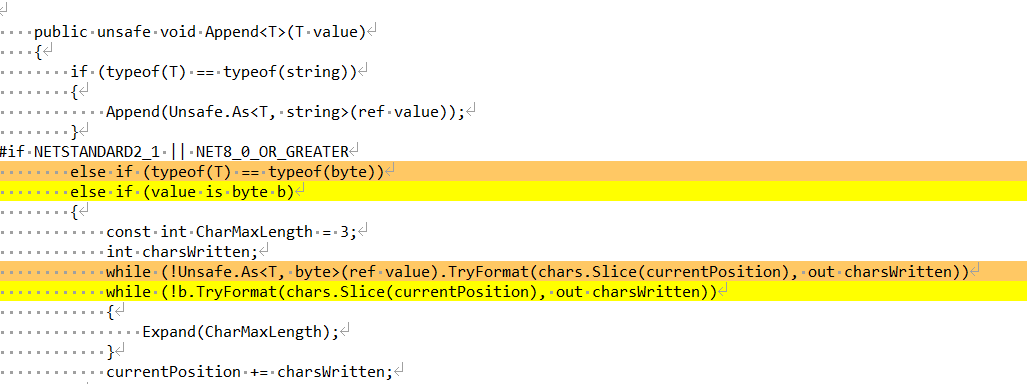
@EgorBo @ben_a_adams @neuecc It appears to be that the typeof(T) == typeof(byte), Unsafe.As code and similar code by now generates the same asm.
#v2:EYLgxg9gTgpgtADwGwBYA0AXEBDAzgWwB8ABAJgEYBYAKGIAYACY8gOgCUBXAOwwEt8YLAMIR8AB14AbGFADKMgG68wMXAG4a9BrIAW2KGIAy2YO258BG2gGYmpBkIYBvGgzdNbxFAwCyACgBKZ1d3AF8QtwiGAG0AKV4MAHEYLhllPwwATzEYCAAzP2BMjBgAgIBdKOJbXh4GADFofGwMAFUuXGw8mAAeABUAPj9YPO0xbC4esD0oAYYAE1U+LhbeCC40Bj6GBWxJDlKGAHcdGRgthhAGAElZca5GqGaMDBNpKJdqd2+3XgKsnL5Px9IIAXlBDABuQKRRKZSiP0+P2RbnanW6LAAgrh+ptYTAhiMdnsDgEWH0oJlHs8/ItcMtVutNhAOBgGLU2UcoAkSlwAlYUcjiAB2Y7cl4pAWC8JfQUwSS4c5/DLZaHAsEQqFA3A6aAYeGylFIwXfNFdQTY3EMHV6wkwUa7falcmU6ktWlLWqMjYMFlsjlinkpfkIwUiwMSrhSlEyk3huDkNTuKKx5OGmLxJIpNJgFWAmHFUoVKo1OpujB9VVCU5gADW/TtozuEymMzmdIZfCZF0dpOOp1gFyut3u5dewHe6eNP2VvaVuAY+MXAVDwXTKNMFKpTXdHa9XZ9fvZdS5Qb50bDotPkYvYVX8sV7IKc/ZC5tUDZOpX67c08FOpdbcnl3T0VgPZlWWPTlxV5EMfx+cNr15W83FTBDRQTJMUyiKI4gSZJUm5XMtQLOFi3TaooIaHcMAAEV4WAwAwBthntMYW2mfR21A71Nm2OcghOM4hxuZsHho8dJ2+P93DnQDyw9el9zWQ9IIDJCUk2NgYGweYAHkuEkTIxNbLiWAAUXELJNi4DhJEkOCUUQmDJWw9MaBoUIgA==" target="_blank" rel="nofollow noopener">sharplab.io/#v2:EYLgxg9gTg…
English
English

I've blogged about ZLinq, my new OSS for C# and Unity. It is a Zero-Allocation LINQ Library for .NET and covers all .NET 10 LINQ methods.
neuecc.medium.com/zlinq-a-zero-a…
English
@EgorBo @ben_a_adams @neuecc Likely slower, at least that's what I remember. Not sure with recent jit improvements though
English
@ben_a_adams @neuecc Well, I meant in general, but speaking of that particular part, can it be just like this?
English
@ChristianNagel @davidfowl @DamianEdwards @maddymontaquila @DamianEdwards looks like he's re-evaluating his Life choices.
GIF
English

Elevating Development with .NET Aspire: AI, Cloud, and Beyond by @davidfowl @DamianEdwards, and @maddymontaquila at #msbuild

English