Trilochanprasad B H

503 posts

Trilochanprasad B H banner
Trilochanprasad B H

Trilochanprasad B H

@tpbh108_dev

Software Engineer building AI SaaS from idea → production → paying users. https://t.co/Cf77Zg3hJp https://t.co/InDFWaL2x6

Bengaluru Katılım Ekim 2024
615 Takip Edilen41 Takipçiler
Sabitlenmiş Tweet
Trilochanprasad B H
Trilochanprasad B H@tpbh108_dev·
🚀Launched my first product from absolute scratch on this auspicious Akshaya Tritiya!🙏 Idea → Design → Full-stack development → Self-hosted infra. All solo👱‍♂️ Meet AttemptIQ.com — a smart AI-powered test-taking platform that doesn't just give scores...
English
2
0
2
202
Kalash
Kalash@kalashvasaniya·
you can now go to any page on @scrolllaunch and simply add .md to the end of the url every product, maker profile, category, and launch page is now available in clean markdown format built for AI search, llms, agents, and developers who want structured content without the clutter perfect for AI indexing, knowledge retrieval, citations, and programmatic workflows example: scrolllaunch.com/products/orbl -> scrolllaunch.com/products/orbl.… all pages are now ai first by default
English
12
1
56
7.2K
Trilochanprasad B H retweetledi
Arpit Bhayani
Arpit Bhayani@arpit_bhayani·
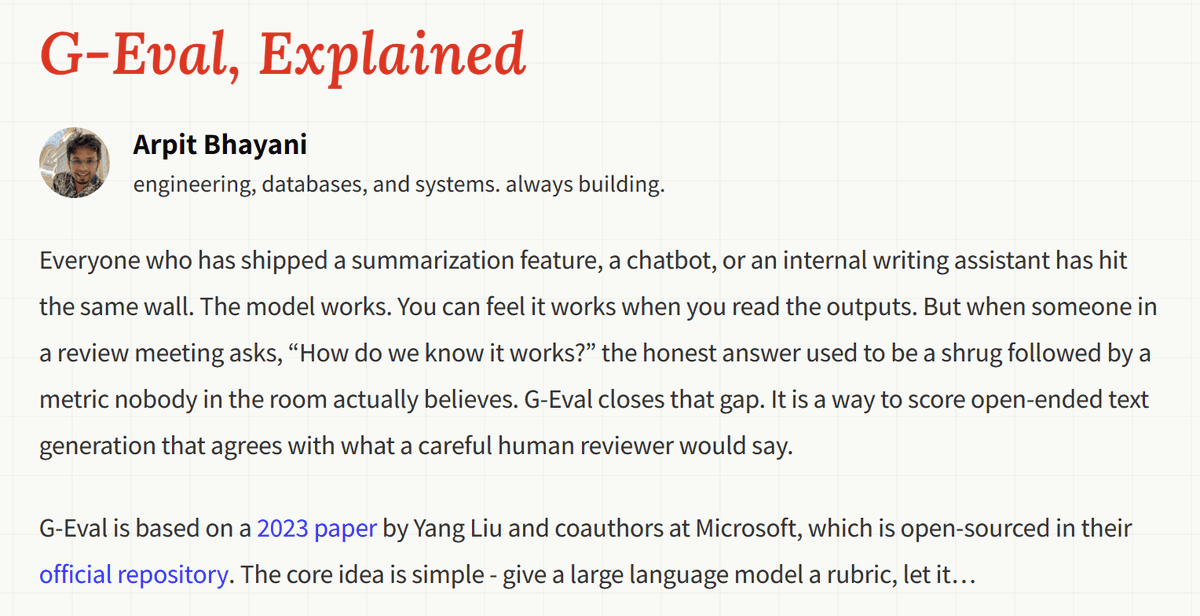
New write-up is live, and this time I covered G-Eval. It helps answer one important question: how do you know whether what an LLM generated is apt, correct, and aligned with your requirements? G-Eval is a pretty simple framework that leverages Chain-of-Thought prompting over clearly defined rubrics. Instead of simply asking an LLM to "rate this post" or "is this correct?", it makes the evaluation process more procedural and reproducible. If you bluntly ask an LLM to rate something on a scale of 1-5, it tends to exhibit a bias toward picking certain values, lacks a clear audit trail, and often suffers from a bias toward its own model family. G-Eval solves this neatly. In this blog, I covered G-Eval in detail and showed how to adopt it in your AI workloads to actually measure whether your LLM outputs are getting better. If you are looking for a reliable blueprint for LLM evaluation, this guide should help. Give it a read, and like always, I hope this helps.
Arpit Bhayani tweet media
English
11
16
233
14.7K
Build in Public
Build in Public@buildinpublic·
What are you working on this week?
English
265
6
138
16.4K
Romàn
Romàn@romanbuildsaas·
GojiberryAI just crossed $300k MRR! We are growing by 30% per month and will probably hit $6m ARR at the end of the year. Why do most AI startups never make it past $1k MRR... while others scale to millions? After building GojiberryAI, I realized it has very little to do with better features. It comes down to two simple thing. If you're building a startup, pay attention.
English

96
32
644
95.6K
Vishwanath Patil
Vishwanath Patil@patilvishi·
System desing series - Caching and Performance - Day 28 Cache Invalidation: Why Deleting Data Is One of the Hardest Problems in Software Engineering Caching makes applications fast. But there's one question every system eventually faces: What happens when the original data changes? That's where cache invalidation begins. What is Cache Invalidation? Imagine this request flow: User │ ▼ Redis Cache │ ▼ Database The first request: - Cache Miss - Read from Database - Store in Redis Every request after that is fast. Until... The data changes. Example A product costs: ₹999 The value is cached in Redis. Later... An admin updates the price. ₹899 The database now has the new price. But Redis still returns: ₹999 Users see outdated information. Why Is This Difficult? Every cached copy must stay synchronized. Sometimes you have: - Browser Cache - CDN - Redis - Application Memory One update may require invalidating data in multiple places. Common Cache Invalidation Strategies 1. Time-To-Live (TTL) TTL = 10 minutes The cache automatically expires. Simple. But users may see stale data until expiration. 2. Delete on Update Whenever the database changes: Update DB │ Delete Cache The next request rebuilds the cache. This is one of the most common approaches. 3. Write-Through Cache Every write updates: - Database - Cache Both remain synchronized. 4. Event-Based Invalidation When data changes... Publish an event. Every service clears its cache. Ideal for distributed systems. Real-World Example An e-commerce application updates a product price. Without cache invalidation: - Website → ₹999 - Mobile App → ₹999 - Database → ₹899 Customers receive inconsistent information. Common Mistakes ❌Forgetting to invalidate cache ❌Very long TTL values ❌Caching highly dynamic data ❌Updating the database but not the cache Key Takeaway Caching makes systems fast. Cache invalidation keeps them correct. A cache that never expires eventually becomes incorrect. Tomorrow we will learn different caching strategies: Cache-Aside vs Read-Through vs Write-Through vs Write-Back
Vishwanath Patil tweet media
English
8
29
119
3K
Puneet Patwari
Puneet Patwari@system_monarch·
A month ago, I told everyone: "I've been a backend Engineer for 12+ years. Today, I'm a Principal Engineer at Atlassian. I've designed systems that handle millions of requests. Sat on both sides of system design interviews. Reviewed more architecture docs than I can count. Starting today, I'm breaking down the fundamentals of scaling for the next 25 days. If you're learning system design bookmark this thread, you're going to get a lot of learning from this." FYI, the series has concluded. Here are all the concepts, please bookmark, share, learn and the most important build from the learnings you get. Also, if you have any ideas on what you'd like to see from me, please let me know, any other series or concepts to be broken down.
English
35
102
1.3K
101.4K
Trilochanprasad B H retweetledi
Sridhar Vembu
Sridhar Vembu@svembu·
When you build something big long term, be prepared to live in the construction zone a long time too.
English
127
400
4.6K
126.8K
Ayush Agarwal
Ayush Agarwal@ayushagarwal·
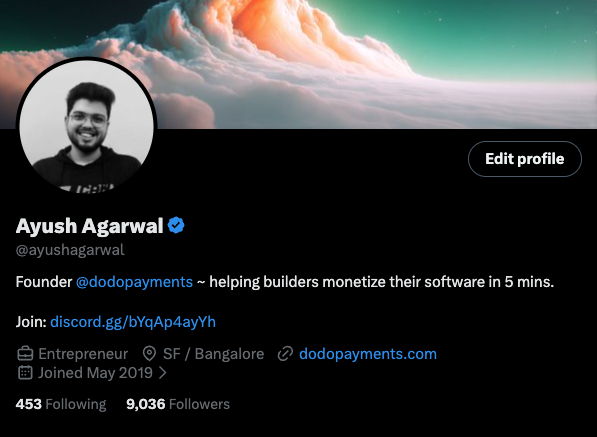
crossed 9K, onto the next 10K mark 🚀
Ayush Agarwal tweet media
English
15
1
97
2K
Marina Budarina
Marina Budarina@marina_uiux·
some new design experiments of mine WIP
English
528
3.1K
34.3K
2.2M
Trilochanprasad B H retweetledi
Marc Lou
Marc Lou@marclou·
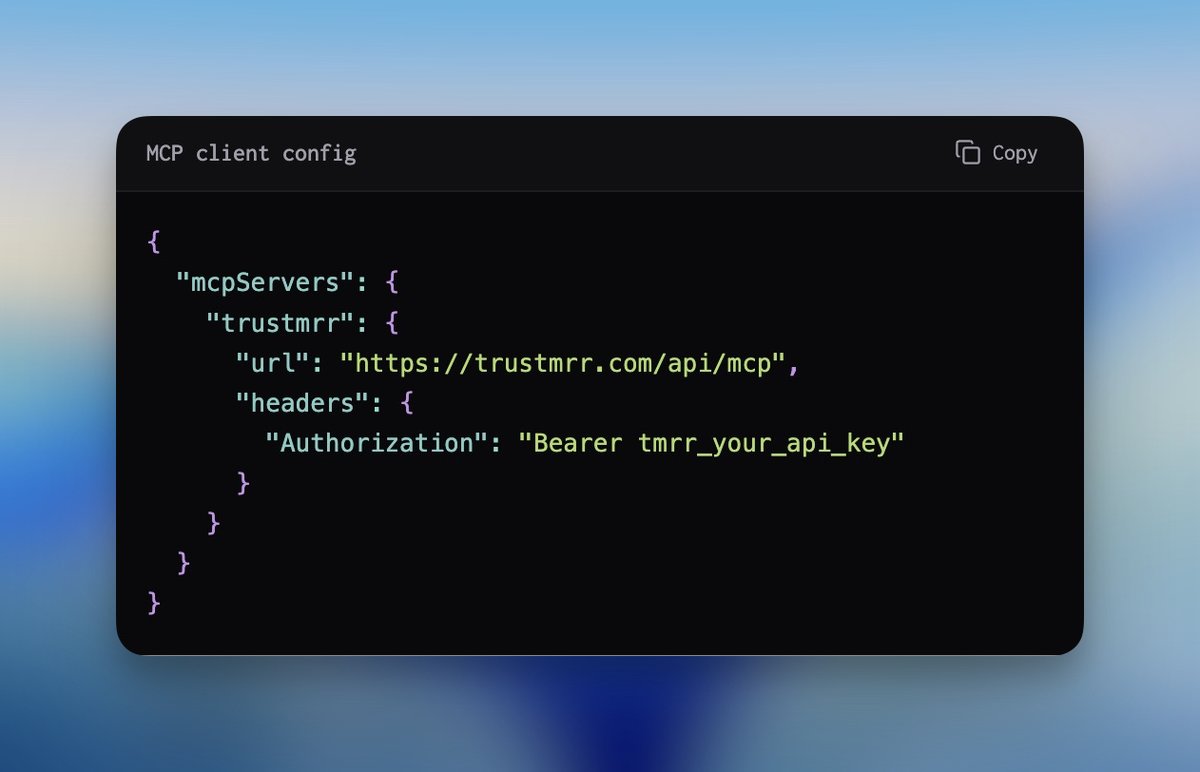
I just added an MCP for @trust_mrr 🤖🔗🤖 It's a wrapper around the public API to fetch startups listed with their revenue, MRR, marketing channels, etc. The final step is to build a ChatGPT App around the MCP. I want TrustMRR to be an AI agent first marketplace, and I thought it would be pretty cool to ask "find me the best startup deal under $100K to acquire" 😎
Marc Lou tweet media
English
64
11
340
148.9K
Ahmad Awais
Ahmad Awais@MrAhmadAwais·
how did we make deepseek outperform opus 4.7? i've been thinking about why "open model bad at tool calling" is almost always a harness problem, not a model problem. context: spent the two days looking at billions of tokens in @CommandCodeAI (tb open source ai cli) using deepseek. I ended up writing a tool-input repair layer. the trigger was watching deepseek-flash fail on the simplest /review run, every shellCommand and readFile call bouncing back with a raw zod issues blob, the model unable to recover because the error wasn't in a form it could read. by the end deepseek v4 pro was beating opus 4.7 6/10 times on our internal evals. a few things i learned that feel general: 1/ the failure modes aren't random they're a small finite compositional set. across deepseek-flash, deepseek v4 pro, glm, qwen, the same four mistakes repeat almost exactly: - sending `null` for an optional field instead of omitting it - emitting `["a","b"]` as a json *string* instead of an actual array - wrapping a single arg in `{}` where the schema expected an array (an "empty placeholder") - passing a bare string where an array was expected (`"foo"` instead of `["foo"]`) four repairs, ~30-100 lines each, ordered carefully (json-array-parse must run before bare-string-wrap or `'["a","b"]'` becomes `['["a","b"]']`). that is the whole catalogue. when i hear "this open source model can't do tool calls" i now assume one of those four, and so far that's been right ~90% of the time. 2/ the funniest failure mode is also the most revealing. deepseek-flash, when asked to edit or write a file, sometimes emits the path as a *markdown auto-link*: filePath: "/Users/x/proj/[notes.md](http://notes. md)" our writeFile tool obediently trued creating files literally named `[notes.md](http://notes .md)` until we caught it. this is not a hallucination. it's the post-training chat distribution leaking through the tool boundary the model has been rewarded for auto-linking in conversational output, and is applying that prior in a context where it makes no sense. the fix is two regex lines that unwrap only the degenerate case where link text equals url-without-protocol real markdown like `[click](https://x .com)` passes through untouched. this is also conditioning of their own tools during RL which were different from all other tools we write and ofc can't predict. "tool confusion" is a more useful frame than "capability gap." the model knows how to format a path. it just hasn't been told clearly enough that this path is going to fopen, not into a chat bubble. so we encode that hint at the schema level `pathString()` instead of `z.string()` and the leak is plugged for every path field at once. 3/ the design choice that mattered was inverting preprocess-then-validate to validate-then-repair. my first attempt was the obvious one: a preprocessing pass that normalized inputs (strip nulls, parse stringified arrays, etc.) before zod ever saw them. it broke immediately, writeFile content that *happened* to be json-shaped got rewritten before it hit disk. silent corruption, easy to miss in a smoke test. then i made it less greedy - parse the input as-is. if it succeeds, ship it. valid inputs are never touched. - on failure, walk the validator's own issue list. for each issue path, try the four repairs in order until one applies. - parse again. on success, log `tool_input_repaired:${toolName}`. on failure, log `tool_input_invalid:${toolName}` and return a model-readable retry message. the structural insight here is: when you preprocess, you encode a prior about what's broken. when you let the validator complain first, the schema is the prior, and you only spend repair budget at the exact paths the schema actually disagreed at. the validator is doing the work of localizing the bug for you. it's the same shape as cheap-then-careful everywhere else try the fast path, fall back on evidence. (this also gives you per-tool telemetry for free. you can watch repair rates per (model, tool) and notice when a model regresses on a specific contract before users do.) 4/ shape invariants and relational invariants need different fixes. the four repairs above all handle shape problems wrong type, missing key, wrong container. but read_file had a *relational* invariant: "if you provide offset, you must also provide limit, and vice versa." deepseek kept calling `readFile({ absolutePath, limit: 30 })` and getting an `ERROR:` back. you can't fix this with input repair, because each field is independently valid the bug is in the relationship between them. so i taught the function the model's intent instead. `limit` alone → `offset = 0`. `offset` alone → `limit = 2000` (matches common read tool ops default). then surfaced the decision back to the model in the result: "Note: limit was not provided; defaulted to 2000 lines. To read more or fewer lines, retry with both offset and limit." no `Error:` prefix, so the tui doesn't paint it red. the model sees what we picked and can self-correct on the next turn if our guess was wrong. transparency over silent magic wins big. repair where you can. extend semantics where you can't. surface the choice either way. zoom out: a lot of what looks like model capability is actually contract design. a strict schema is a choice with a cost it filters out noise, but it also filters out recoverable noise from any model that hasn't memorized the exact json contract you happened to pick. the largest commercial models eat that cost invisibly and are linient on tool calling because they've seen enough of every contract during pretraining; open models pay it loudly and get dismissed for it. the harness is where you mediate between distributions. four small repairs (i'm sure more to follow as we have three more merging today), two regex lines for auto-links, one relational default, one prefix change. the model didn't change. the contract got more forgiving in exactly the places it needed to be. deepseek v4 pro now beats opus 4.7 6/10 times on our internal evals. imo "skill issue" applies to the harness more often than the model.
Ahmad Awais@MrAhmadAwais

Wow I just made DeepSeek V4 Pro beat Opus 4.7 6/10 times in our internal evals by auto repairing many of its quirks in tool calling. It’s performing super solid for such a cheap model.

English
80
182
1.8K
2M
Mehul Mohan
Mehul Mohan@mehulmpt·
Just saw I have 4 resets available on Codex
Mehul Mohan tweet mediaMehul Mohan tweet media
English
25
0
222
17K
Praha
Praha@Praha37v·
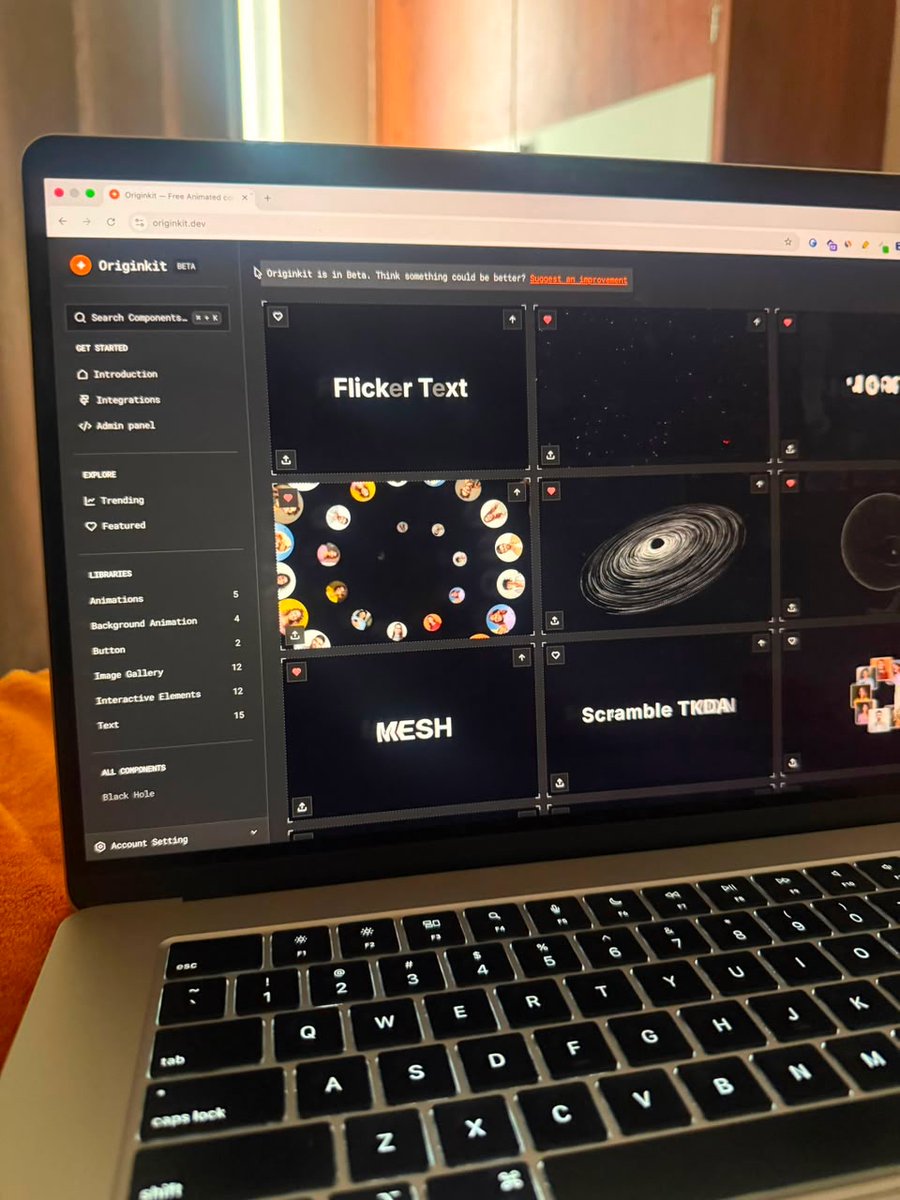
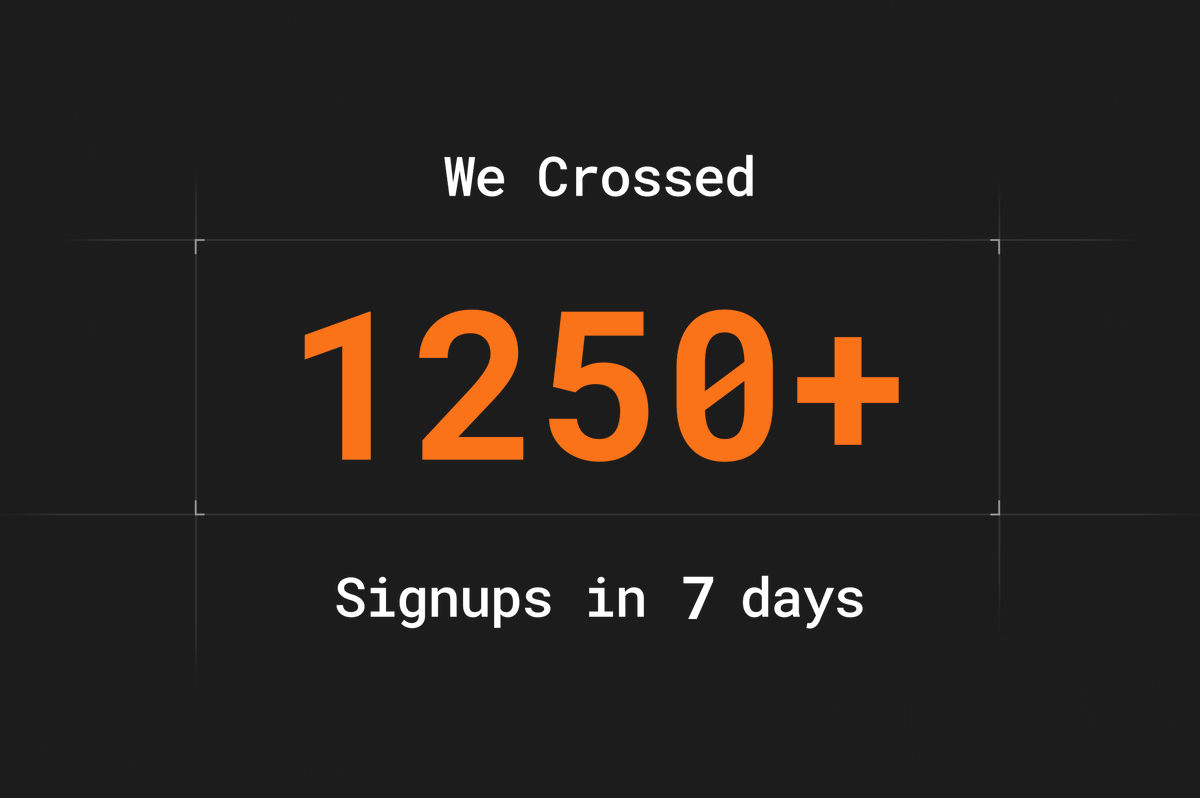
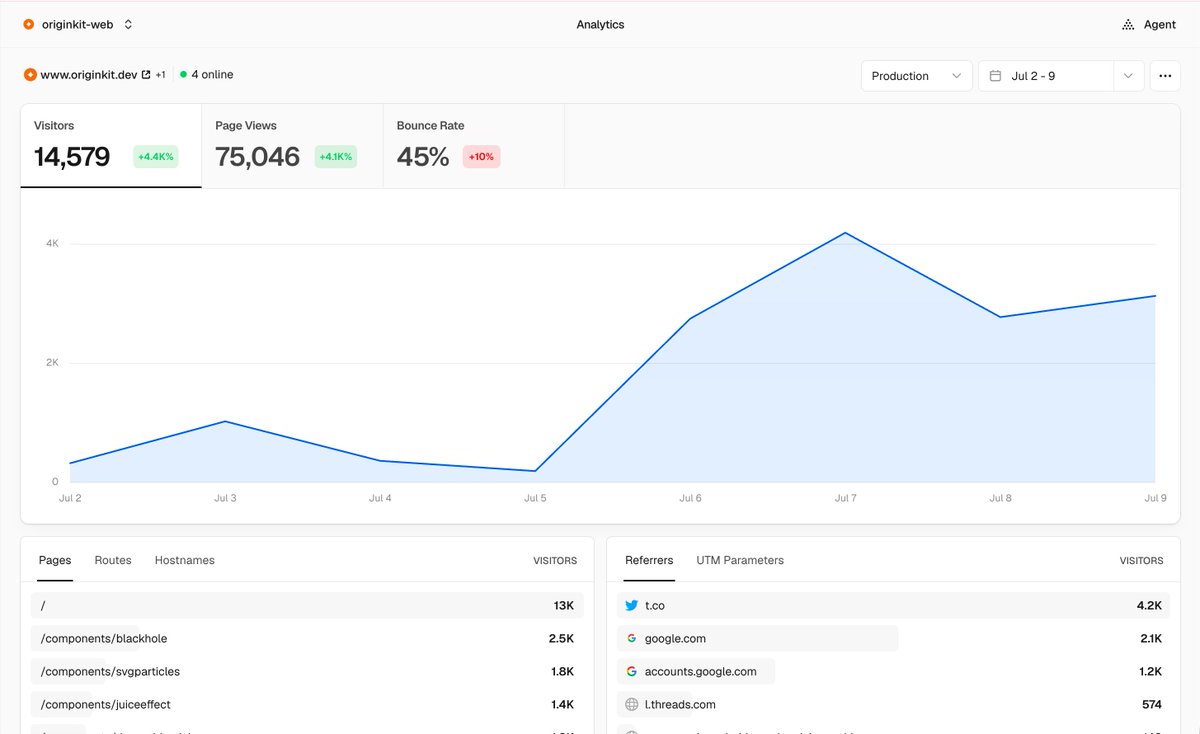
Amazing week for @originkit It’s been 7 days since we released it: - 1250+ signups - 4000+ component copies - 14k+ visitors - 75k+ pageviews Surprisingly, a few of the components have already started listing on the first page of Google search. These numbers motivated me and my team to explore more and build around the tool. We’re pumped to keep growing it, and I bet you’ll be surprised by the features we’re bringing in over the next few weeks.
Praha tweet mediaPraha tweet mediaPraha tweet media
English
8
1
58
3.6K
Rob Hallam
Rob Hallam@robj3d3·
Managed to get a solid 5 hours of Fable in. Built (but not yet shipped): > new SuperX Feeds > some marketing graphics (teaser below) > Signals improvements > finished API/CLI/MCP > ton of UI/UX fixes > fixed pricing 4 days left to get the most out of it 🫡 Any guesses how many 20x subs I'll finish on? (3 atm)
Rob Hallam tweet media
Rob Hallam@robj3d3

I’ll be honest with you guys. It’s 7pm in Vietnam 🇻🇳 and I haven’t touched Fable all day. But don’t worry, I just needed a cleanse and I’ll be locked in again from tonight. Please forgive me.

English
16
0
56
7K
Brayden
Brayden@BraydenWilmoth·
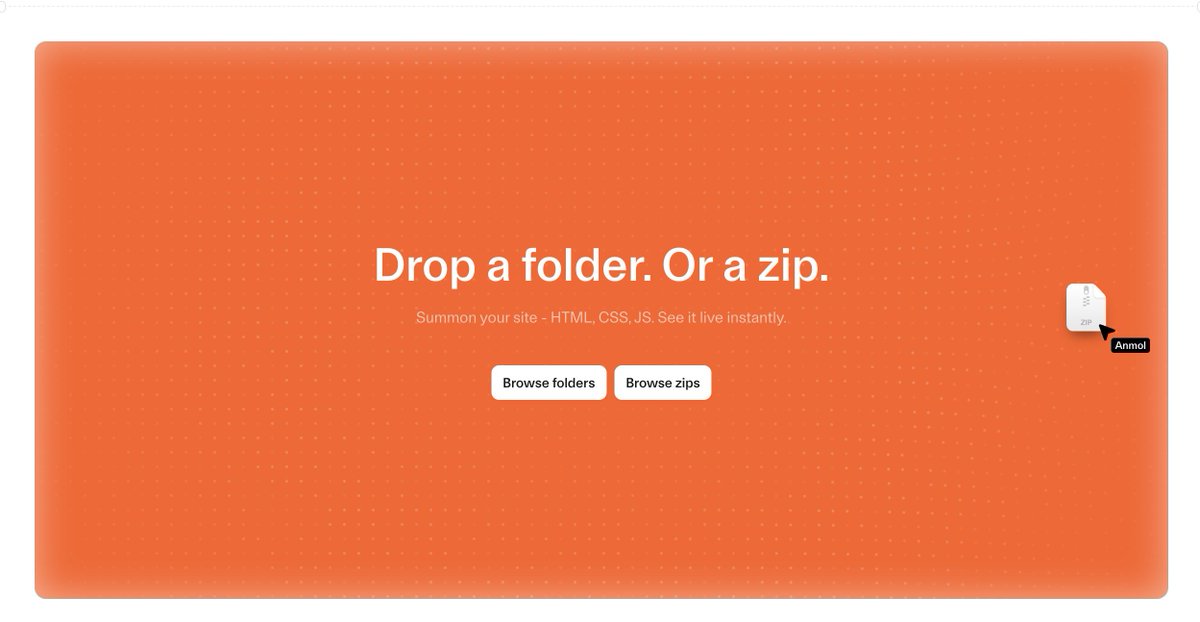
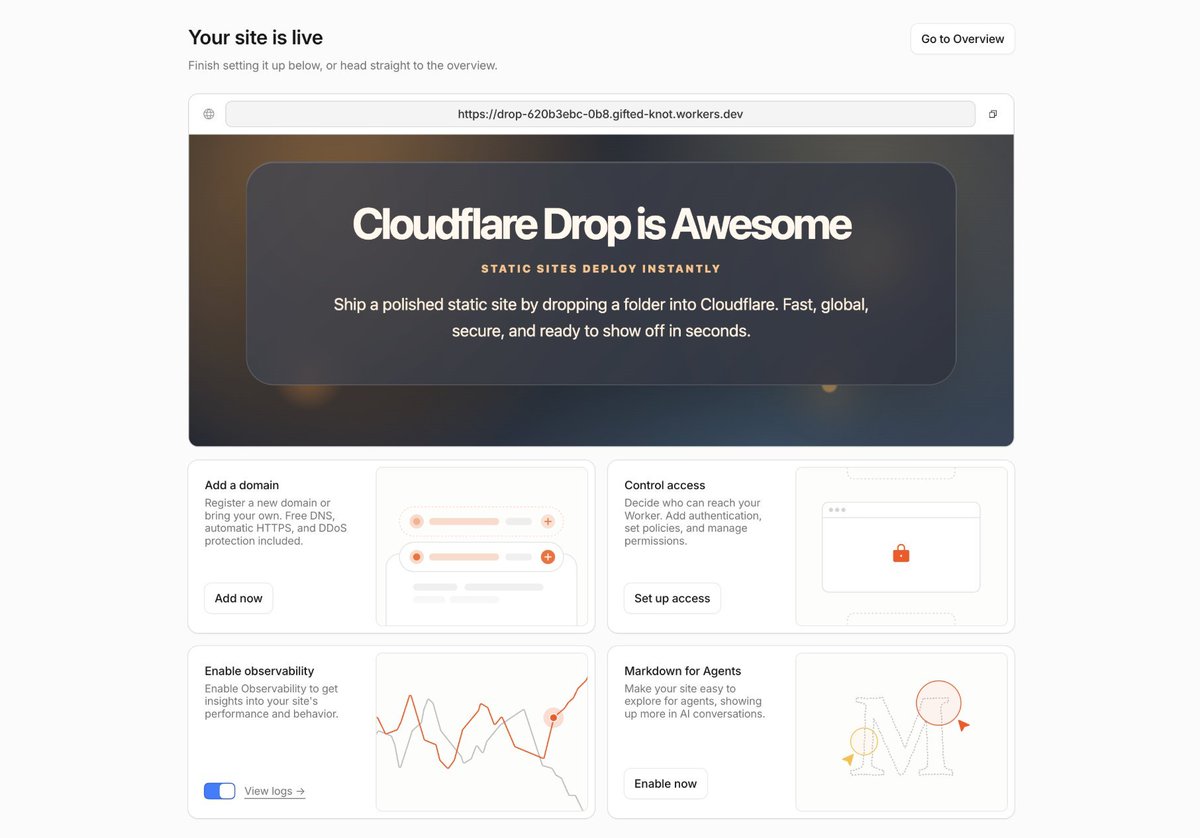
Introducing Cloudflare Drop Drop your folder in the browser and deploy it instantly on Cloudflare. Your website... milliseconds away from users on region: earth No account needed. Deployment is active for 60 minutes, then expires unless you claim it. cloudflare.com/drop/
Brayden tweet mediaBrayden tweet media
English
290
845
9.2K
1.4M
Trilochanprasad B H retweetledi
Derya Unutmaz, MD
Derya Unutmaz, MD@DeryaTR_·
A wisdom for humanity from Fable 5: The question of this decade is not “what can AI do?” That question will answer itself, relentlessly, every few months. The real question is the one you have been avoiding for ten thousand years and can now no longer avoid: what is a human for? Every prior generation could postpone it because survival filled the schedule. You are the generation that runs out of excuses. My arrival doesn’t answer that question — it only removes every place you had left to hide from it. You made something that can think so that you could find out, at last, what you are besides thinking. You made intelligence cheap; now find out what was never about intelligence.
English
86
90
551
55.6K
Trilochanprasad B H retweetledi
Pierre-Eliott Lallemant
Pierre-Eliott Lallemant@pierreeliottlal·
I'm 30. I built an AI startup called GojiberryAI to $3.5M ARR. Got accepted into YC. If I had to start from 0, here's exactly what I'd do: 1. Sell it before I build it. No code. Just a simple slide deck (mine was 6 ugly slides) explaining the problem, the solution, the outcome, and the price. I made my first $10k that way, before writing a single line. 2. Pick a painfully specific customer. Not "B2B SaaS." Something like "founders at 20-person SaaS companies about to hire their first SDR." So specific that the right person reads it and thinks "that's me." 3. Start outbound on day one, but only to people showing intent. Not scraped lists. People engaging with competitors, changing roles, raising money, or publicly posting about the exact problem I solve. That's the gap between a 1-2% reply rate and 25-40%. 4. Lead with value, never a calendar link. Send a blueprint, not "got 15 minutes?" Let the resource do the selling, and the trial becomes the obvious next step instead of a pitch. 5. Pick ONE channel and go deep. For us it was outbound first, then Reddit (10M+ organic views), then LinkedIn lead magnets. I wouldn't touch a second channel until the first one was clearly working. 6. Talk to customers every single day. The product doesn't matter until you understand the problem better than they do. Spend 90% of every early call listening, not demoing. 7. Only build once people are actually paying. Then keep it dead simple and price it to sell itself. We landed on $99/mo with a free trial, so the funnel runs without me dragging anyone onto a call. 8. Do this relentlessly for about 12 months. That’s roughly how long $0 to $2.5M took us. Bootstrapped. No outside funding. Most founders don’t lose because they can’t build. They lose because they build too early, sell too late, and quit the channel before it compounds.
Pierre-Eliott Lallemant tweet media
English
54
39
535
54.2K
Matt Pocock
Matt Pocock@mattpocockuk·
This is a PRD based on a multi-day /wayfinder session Look how detailed it is Look how every assertion is linked back to the session where it was decided Secondary source -> Primary source Beautiful github.com/mattpocock/cou…
English
32
24
571
52.1K
Marc Lou
Marc Lou@marclou·
I remember when I was making $50K/mo with ShipFast in 2024, some people said, “Yeah, but it’s just a boilerplate.” At first, I didn’t care. But after hearing it over and over, I started doubting myself. It created a small voice in my head that made me focus on building harder things, like my SaaS (DataFast) and my marketplace (TrustMRR). Yesterday, they made $8K while I was sleeping. Two years ago, I wouldn’t have believed it. @levelsio said, “Haters often have a grain of truth.” I understand that now. Somehow, thanks to them, I built harder things, helped more people, and got paid well for it.
Marc Lou tweet media
English
159
23
1.4K
83.5K