Sue Sheard 💙

3.8K posts

Sue Sheard 💙 banner
Sue Sheard 💙

Sue Sheard 💙

@trakkabase

Rtrd biomed scientist, Volunteer Librarian, wife, keen gardener, expert in all things as required. Cloud watcher 4 gliding. [email protected]

Leighton Buzzard area Katılım Nisan 2009
235 Takip Edilen90 Takipçiler
Sue Sheard 💙
Sue Sheard 💙@trakkabase·
@Leica_Archers Hint of Downs baby with mention of the Nuchal translucency test?
Slapton, England 🇬🇧 English
0
0
0
12
Sue Sheard 💙 retweetledi
Lily Craven
Lily Craven@TheAttagirls·
Woman of the Day Mary Ellis born OTD 1917 in Leafield, Oxfordshire, one of the last surviving Air Transport Auxiliary pilots who delivered Spitfires and bombers to RAF airfields during WW2 and one of the first women to fly the UK’s first jet fighter, the Gloster Meteor. Born into a farming family close to RAF bases, Mary’s father paid a flying circus to take her up in a biplane as a special treat for her 11th birthday. That was it. “It sealed my fate forever." Mary started flying lessons as soon as she turned 16, achieved her pilot’s licence and flew for pleasure until the outbreak of WW2. In 1941, she heard a radio advertisement seeking female pilots to join the ATA. She became an Attagirl at the age of 24, a year after Britain allowed women to fly military aircraft but still prohibited them from combat missions. The decision to allow women to fly Spitfires and bombers during the war was met with widespread resistance in Britain. The farseeing editor of The Aeroplane magazine declared in 1940, “Women anxious to serve their country should take on work more befitting their sex instead of encroaching on a man's occupation.” Mary recalled in a BBC interview: “Girls flying airplanes was almost a sin at that time.” Her meticulously compiled logbook said otherwise. From 1941 onwards, Mary spent over 1100 hours flying over 1,000 planes of 56 different types including Hurricanes, Spitfires, Tempests and Wellington Bombers, from factories to RAF airfields and from the airfields to the frontline. Sometimes she delivered up to four aircraft in a day and often, she never knew until she walked out onto the tarmac which type of aircraft she was required to fly next. It didn’t matter. She could fly them all. Mary described flying her first Spitfire on 15 October 1942, "a date and time etched in my memory." "I decide to pull back on the power to plus-four boost and 2,400rpm and I fly away from the airfield at around 150mph to the delight of an enthusiastic ground crew waving in celebration at my successful takeoff. I soon realise the ailerons are very quite weighty but very responsive and the elevators refreshingly light in pitch. "I look down from the neat cockpit and for a few moments enjoy the view below. I see fields, tiny random houses and then a cluster of buildings, a small village and the lanes to and from it. I listen to the thumping hum of a happy Merlin flexing its power in the sky where it belonged. "But while my heart was completely fulfilled, my mind was busy in the cockpit of the fastest, most beautiful fighter aircraft in the world, as I was responsible for its safe journey to the RAF pilots who needed it." Attagirls were among the first women in Britain to achieve equal pay. 168 women including volunteers from Canada, Poland, the Netherlands and the US, served in the ATA. Fifteen women ATA pilots were killed during WW2 including one who returned to duty very soon after giving birth. Make no mistake, the RAF could not have won the Battle of Britain without the vital work of the Attagirls in the fight against the Nazis. When WW2 ended and the ATA was disbanded, Mary was seconded to the RAF and became one of the first women to fly the UK’s first jet fighter, the Gloster Meteor. In 1950, Mary moved to Sandown on the Isle of Wight, managing the island’s airport, helping to introduce passenger flights to and from the IoW to Europe, becoming the first female air commandant in Europe, and setting up the flying club. She employed Vera Strodl, a sister Attagirl, as the chief flying instructor. Mary died in 2018 at the grand old age of 101. "Everybody was flabbergasted that a little girl like me could fly these big airplanes all by oneself.”
Lily Craven tweet media
English
17
100
312
4.2K
Sue Sheard 💙
Sue Sheard 💙@trakkabase·
#TheArchers Kenton not sleeping well, CCTV footage wiped. Umm?! I wonder if there's a connection.
Slapton, England 🇬🇧 English
0
0
2
184
Sue Sheard 💙
Sue Sheard 💙@trakkabase·
#TheArchers which bottle of wine from the Bull is unaccounted for?
Slapton, England 🇬🇧 English
0
0
1
94
Sue Sheard 💙
Sue Sheard 💙@trakkabase·
#TheArchers Iwonder who was listening to Emma and Amber's conversation about Mikey in the locker room
Slapton, England 🇬🇧 English
0
0
0
120
Sue Sheard 💙
Sue Sheard 💙@trakkabase·
@CroydonAirport Are there tickets available to the talks at the Aerodrome Hotel?
Slapton, England 🇬🇧 English
0
0
0
5
Historic Croydon Airport
Historic Croydon Airport@CroydonAirport·
Join us for Amy 95 x Flying High Weekend, a celebration of 95 years since Amy Johnson’s historic solo flight to Australia 🗓 When: 3&4 May 2025 📍 Where: Croydon Airport + Aerodrome Hotel 🎟 Tickets: ow.ly/lRve50VGs9y Spaces are limited so book your ticket now
Historic Croydon Airport tweet media
English
1
6
5
412
Sue Sheard 💙 retweetledi
DKMS UK | We Delete Blood Cancer
"Finding a donor would give me a chance to see my newborn son grow up." Syed, 30, from #London has a rare blood cancer. A stem cell transplant could save his life but he has no matching donor. Help us find Syed's hero! Register as a stem cell donor: dkms.org.uk/Syed_tw
DKMS UK | We Delete Blood Cancer tweet media
English
5
43
31
31.2K
Sue Sheard 💙 retweetledi
Sam Ghali, M.D.
Sam Ghali, M.D.@EM_RESUS·
Here's a video I made breaking down the resuscitation of a 50-year-old man who went into cardiac arrest due to #Hyperkalemia #FOAMed
English
30
173
710
505.6K
Sue Sheard 💙 retweetledi
Martin Lewis
Martin Lewis@MartinSLewis·
Pls help me spread word tomorrow (tue) 8pm on ITV I'll be talking you through how to check if you can boost your State Pension by possibly £10,000s. There is an urgent deadline coming after which many lose the opportunity. This is a must watch for anyone age 40 to 73.
English
269
1.8K
5.7K
1.7M
Sue Sheard 💙 retweetledi
Sam Ghali, M.D.
Sam Ghali, M.D.@EM_RESUS·
Here’s a video I made breaking down this case of a young woman who was involved in a motor vehicle collision #FOAMed
English
118
540
2.3K
1.4M
Janice Bardwell🌻🇺🇦
Janice Bardwell🌻🇺🇦@janice_bardwell·
@BBCr4today We no longer drive at night due to these blinding oncoming lights. The economy loses money we don’t spend going out now. Agree issue of automatic dipping lights is contributory factor , especially on country roads, they don’t dip fast enough or account for whats round the bend.
English
1
0
3
213
BBC Radio 4 Today
BBC Radio 4 Today@BBCr4today·
Have you ever been dazzled while driving at night? As some insurance companies suggest nearly 1 in 10 accidents are caused by headlights, Baroness Hayter is urging government action to try to reduce glare. #R4Today
BBC Radio 4 Today tweet media
English
50
28
133
15.9K
Sue Sheard 💙 retweetledi
tern
tern@1goodtern·
Ten things every person in the world should know about airborne disease transmission *before* bird flu goes human to human:
English
164
3.2K
11.8K
883.6K
Sue Sheard 💙 retweetledi
Cat in the Hat 🐈‍⬛ 🎩 🇬🇧
Can we just take a moment to reflect on this horrifying statistic… Out of all the people currently in hospital with COVID in Wales, at least 72% of them were admitted for another reason and were infected with Covid SINCE THEY WERE ADMITTED. Why is nothing done to prevent this?
Gwladwr@gwladwr

Nosocomial Covid in Wales 'Number of inpatient Covid-19 cases in hospital in Wales' On 15 December 2024, at least 72% of inpatient Covid cases in Wales were the result of hospital-acquired SARS-CoV-2 infection... (PHW data and table)

English
54
725
1.9K
84.7K
Sue Sheard 💙 retweetledi
Cat in the Hat 🐈‍⬛ 🎩 🇬🇧
During her testimony, Dr @Cathy_Finnis from Clinically Vulnerable Families perfectly articulated the terrible situation which clinically vulnerable patients face when needing to access healthcare. The question she asks at 1:05 in this clip left the whole room speechless.
English
7
162
336
21.3K
Sue Sheard 💙 retweetledi
IBMS #AtTheHeartOfHealthcare
IBMS #AtTheHeartOfHealthcare@IBMScience·
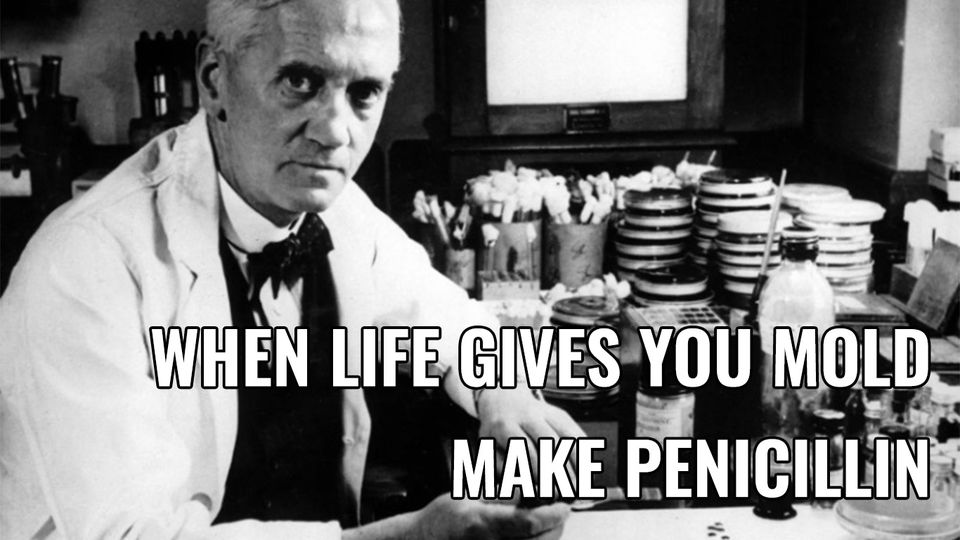
After today's deep dive into how penicillin changed the world, it's only right to end the day with some classic Alexander Fleming life advice! 🍄✨💊 A huge shout-out to our microbiologists — keeping that Fleming spirit alive! 🧫🙌 Happy Friday, everyone! 🎉 #FridayFun #MicrobiologyHeroes #BiomedicalScience
IBMS #AtTheHeartOfHealthcare tweet media
English
0
5
14
595
Sue Sheard 💙 retweetledi
Lily Craven
Lily Craven@TheAttagirls·
Woman of the Day Polish Air Force Captain and Air Transport Auxiliary pilot Barbara Wojtulanis born OTD in 1912 in Warsaw. Her WW2 undercover work was crucial to the formation of the No. 303 Squadron RAF and she was the first Polish woman to jump with a parachute and to fly 1,000 hours in combat aircraft. Her real name was Stefania but she was Basia to her Polish colleagues and Barbara to her British ones. As a girl, Basia lived close to the airport and watched planes rising into the sky from her bedroom window. Flying lessons were expensive, places were limited to men as potential wartime pilots, but there was a way in. The only other group with priority on training lists were the students of the Warsaw University of Technology. That’s why she chose to go there. She studied mechanical engineering. By 1939, she held glider, balloon and motor aircraft pilot licences, and was a parachute instructor. Germany invaded Poland on 1 September 1939. There was a scramble to get Polish pilots and planes to safety so that they could regroup in England. Basia had volunteered for the Army and on 3 September, was listening to the news of the invasion at the Warsaw Aeroclub. When an order came through for one of the pilots to deliver an urgent Army communication to Dęblin, south of Warsaw, she was the only pilot there. "I knew the airport near Dęblin very well, so when after a calm flight I found myself above the city, I was surprised that I couldn't recognize anything…I soon realised that Dęblin had been completely bombed and there was no sign of life anywhere.” She managed to deliver the order and set off back to Warsaw. "I felt strange, I started crying. I think I understood then what war was, real war, which I couldn't see on the flight to Dęblin." The next task was to evacuate Polish planes from Warsaw to Romania. Basia - along with sister ATA pilot Anna Leska - helped to fly them out. It meant saying goodbye to her mother and sister and it was the last time she saw them. They died in the Warsaw Uprising. Basia’s next assignment on behalf of the Polish Embassy in Romania was highly dangerous; posing as a fiancée searching for her beloved, she had to bribe her way into internment camps, identify Polish pilots, give them false passports and help them get to the West. It meant that the RAF was able to form No. 303 Squadron. She wanted to be a fighter pilot but in the Polish Armed Forces, she could only carry out admin duties. Basia made a pragmatic decision. The British were already organising the ATA and would take women pilots with sufficient flying hours. She managed to reach England via France. On 1 January 1941, Basia became Barbara, ATA pilot, along with sister Poles Anna Leska and Jadwiga Piłsudska, a friend from university. Some of the requirements were baffling: women pilots were ordered to fly around in skirts and black silk stockings, wholly impractical. The women took no notice. Think I’m joking? In May 1943, a male RAF officer with too little to do submitted a formal complaint to Commanding Officer Pauline Gower because First Officer Margaret Fairweather wore grey stockings not black. Pauline, always a staunch defender of her women, treated it with the gravity it deserved; she File 13’d it. Training was carried out in categories. Barbara was one of just twelve women cleared to fly Hudson and Wellington bombers and also flew Spitfires and Mustangs. Like all women ATA pilots, she flew in all weathers, without maps or radar, in strict radio silence. The bombers she flew were not armed until after she delivered them so she had no defence against the Luftwaffe. By the time she finished her service in the ATA on 31 May 1945 to rejoin the Polish Air Force in the demob department, she had clocked up 898 flying hours in British skies ferrying 830 aircraft and was the first Polish woman to fly more than 1,000 hours in combat aircraft. Barbara received the Silver Medal of Merit with glaive for the September Campaign, the Silver Medal of Merit for flying in Britain, the Polish Air Force Cross with four bars, the English Defence Medal and War Medal. She died in 2005, aged 92.
Lily Craven tweet media
English
25
122
333
4.7K
Sue Sheard 💙 retweetledi
Prof. Christina Pagel - @chrischirp.bsky.social
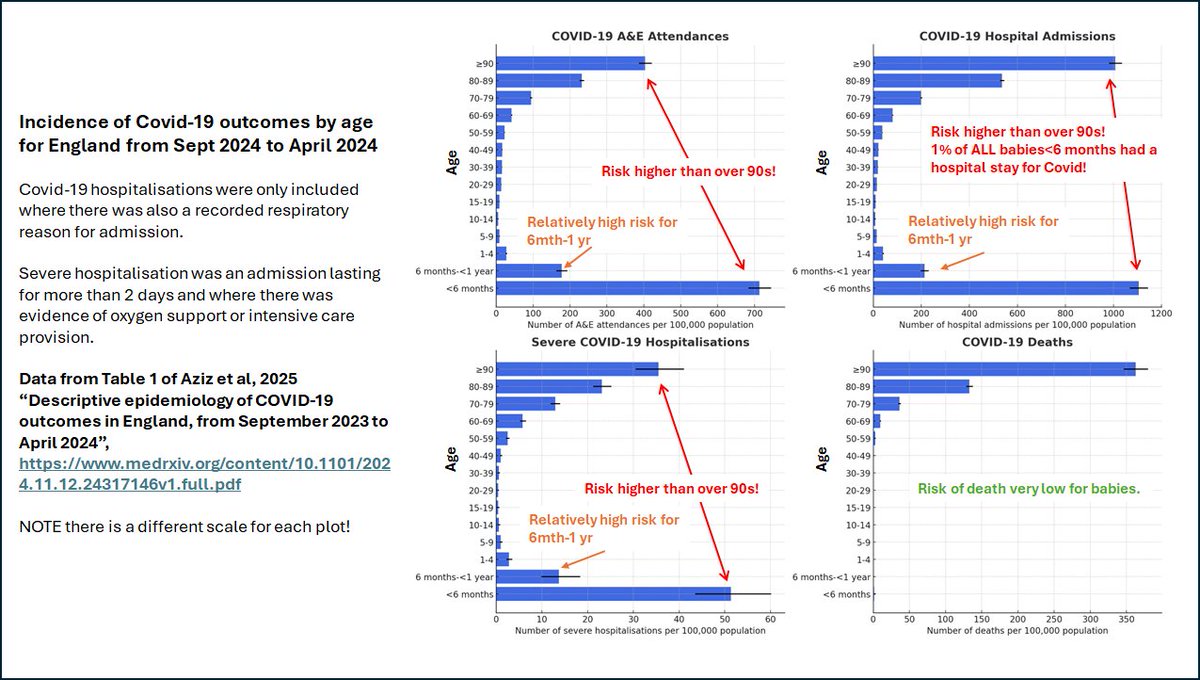
We urgently need to talk about Babies and Covid again following a new paper by Aziz and colleagues looking at covid outcomes in England from sept 2024 - Apr 2023 by age. Apart from death, outcomes are worst for babies<6mths across ALL ages. My thread here bsky.app/profile/chrisc…
Prof. Christina Pagel - @chrischirp.bsky.social tweet media
English
8
39
77
14.3K
Sue Sheard 💙 retweetledi
Holly Stortholme
Holly Stortholme@hollystortholme·
If you are pregnant and you don’t mask and watch who you share your air with, it really is no different to you smoking or drinking alcohol. You take a risk with your baby’s health and wellbeing.
Tatiana Prowell, MD@tmprowell

NEW: Maternal #COVID19 infection changes levels of CD4 proliferating T-cells, leading to alterations of astrocytes, endothelial cells, & excitatory neurons & an increased risk of neurodevelopmental disorders in the offspring. #ObGyn #MedTwitter #Neurology nature.com/articles/s4138…

English
17
220
1.1K
26K