TryThinking

80.2K posts

TryThinking banner
TryThinking

TryThinking

@try_thinking

I neither know, nor think I know of that which I have no proof for, and such proof I have is mine and mine alone. My philosophy https://t.co/ougKpuaJ1k

Ignorance- teach me Katılım Haziran 2016
805 Takip Edilen1.9K Takipçiler
TryThinking retweetledi
Weronia 🇵🇱
Weronia 🇵🇱@weronikabb27·
They were totally fine smashing statues of Jesus and Madonna (Christianity✝️), saying that 'no one is religious anymore in Belgium' 🇧🇪 . But when asked if they would do the same with Prophet Mohammed (Islam☪️), they immediately reacted and said absolutely not, because it would be inappropriate since there are many Muslims in Belgium🤡. Meanwhile: Christians in Belgium – 35% Islam – 6%. Why is mocking Christianity so popular nowadays?
English
346
1.1K
6K
138.1K
TryThinking retweetledi
conduct|r
conduct|r@conductr_·
robert greene studied the most confident people in history. da vinci. darwin. mozart. benjamin franklin none of them started confident. not even close every single one went through what greene calls the apprenticeship. years of feeling stupid, making mistakes, being the worst in the room and then something just flipped. the hours of deep practice literally rewired their nervous system. confidence wasn't a decision they made one morning. it was a side effect of going all in stop chasing the feeling. chase the skill. real confidence is what's left when competence becomes automatic
conduct|r tweet media
conduct|r@conductr_

People who went from insecure to genuinely confident, what was the one shift that actually changed everything for you?

English
21
115
936
36.9K
TryThinking retweetledi
Code Geek
Code Geek@codek_tv·
Math in Europe vs Math in America
Code Geek tweet media
English
12
22
142
12.3K
TryThinking retweetledi
Dr Peter Sjöstedt-Hughes
Dr Peter Sjöstedt-Hughes@PeterSjostedtH·
Schelling: ‘The I think, I am, is, since Descartes, the basic mistake of all knowledge; thinking is not my thinking, and being is not my being, for everything is only of God or the totality.’
Dr Peter Sjöstedt-Hughes tweet media
English
0
83
463
14.8K
TryThinking retweetledi
Athanasius
Athanasius@Athanasius_45·
Demosthenes on money in politics (Third Philippic 36-37):
Athanasius tweet media
English
1
41
214
9.8K
TryThinking retweetledi
NEXT
NEXT@NEXT_HD24·
Speaking about the deep contradictions in human nature, Japanese actor Hiroyuki Sanada said: “Some people dream of having a swimming pool at home, while those who have one barely use it. Those who have lost a loved one feel a profound sense of loss, while others often complain about the relatives still in their lives. Those without a partner long for one, while those who have a partner often fail to appreciate them. The hungry would give anything for a meal, while the full complain about the taste of their food. Those without a car dream of owning one, while those who have a car are always looking for a better one. The key to happiness is gratitude—to truly see and value what we already have, and to understand that somewhere, someone would give everything for what we take for granted.”
NEXT tweet media
English
968
16.1K
67.9K
2.3M
TryThinking retweetledi
Foundation Father | M.A. Franklin
In 1895, a French social psychologist named Gustave Le Bon published a book so dangerous that it became the private playbook of dictators for the next century. Hitler quoted it. Mussolini kept it by his bedside. Edward Bernays used it to build modern propaganda. The book's name? "The Crowd." Its core claim: The moment people form a group, they become stupid. Not slightly dumber. Fundamentally, structurally incapable of rational thought. And the tactics he described for controlling them still work on you right now. 🧵 (thread)
Foundation Father | M.A. Franklin tweet media
English
201
1.9K
4.9K
233.5K
Philosophy Of Physics
Philosophy Of Physics@PhilosophyOfPhy·
Debate between Isaac Newton and Gottfried Wilhelm Leibniz is one of the most profound philosophical clashes in the history of science and metaphysics, centered on a simple yet deeply compelling question: What are space and time? In the early 18th century, this disagreement unfolded through a series of letters, most notably in the Leibniz–Clarke Correspondence, where Leibniz challenged Newton’s ideas through Newton’s supporter, Samuel Clarke. Newton believed that space and time were absolute realities. To him, space existed like an invisible stage on which all physical events take place, and time flowed uniformly everywhere, unaffected by anything in the universe. Even in a completely empty universe, space and time would still exist, unchanged and real. Leibniz strongly opposed this view. He argued that space and time are not independent entities but relationships between objects and events. Space is simply the arrangement of things, and time is the sequence in which changes occur. Without objects or events, space and time have no meaning. The debate extended beyond physics into deeper philosophical and theological questions. Leibniz used logical reasoning to argue that absolute space makes little sense because there would be no reason for the universe to exist in one position rather than another. Newton’s side, defended by Clarke, responded that space is real and ultimately grounded in the existence and will of God. This debate remains important even today because it shaped how we think about the universe. Newton’s ideas dominated classical physics for centuries, but later developments, especially relativity, reintroduced a more relational understanding of space and time, bringing modern physics closer to what Leibniz had imagined.
Philosophy Of Physics tweet media
English
30
111
426
22.9K
TryThinking retweetledi
JmyLss ن
JmyLss ن@JmyLss·
"For my own part, I would rather excel in knowledge of the highest secrets of philosophy than in arms." ~Alexander the Great
JmyLss ن tweet media
English
9
124
812
17.5K
TryThinking retweetledi
Math Lady Hazel 🇦🇷
Math Lady Hazel 🇦🇷@mathladyhazel·
Today I learned that the ∞ symbol is just a hyperbola inverted through a circle. The universe has been hiding this the whole time.
Math Lady Hazel 🇦🇷 tweet media
English
45
258
1.7K
82.5K
TryThinking retweetledi
Math Guy TFL
Math Guy TFL@MathGuyTFL·
Remember the concept of Critical Angle in Physics.
Math Guy TFL tweet media
English
8
59
396
13.1K
TryThinking retweetledi
Multipolar Press / Constantin von Hoffmeister
“The task of the modern educator is not to cut down jungles but to irrigate deserts. The right defence against false sentiments is to inculcate just sentiments. By starving the sensibility of our pupils we only make them easier prey to the propagandist when he comes.” — C. S. Lewis
Multipolar Press / Constantin von Hoffmeister tweet media
English
1
12
60
1.7K
TryThinking retweetledi
ᾶσχτ (âsht)
ᾶσχτ (âsht)@malesor·
Nietzsche cites Epicurus’ view that Plato and the Platonists were essentially LARPers.
ᾶσχτ (âsht) tweet mediaᾶσχτ (âsht) tweet media
English
35
81
1.1K
176.6K
TryThinking retweetledi
Right Said Fred
Right Said Fred@TheFreds·
So true…👇👇👇👇👇👇
English
48
583
2K
55.7K
TryThinking retweetledi
thermo
thermo@DionysianAgent·
the easiest way to tell if someone understands greek philosophy is to ask them who they prefer between Plato vs Aristotle the larpers and midwits will say plato every time but those who know, know that Aristotle was such a chad that it's understated how chad he was Plato >homosexual communist >"uhh we should all just have kids and put them in a big play pen where nobody knows whos kid is whos and that will solve all societies problems" Aristotle >tutored the greatest known conquerer in all of history >"the solution to life and society is the actualization of man's potential, ailment of society comes from degenerated potential"
ᾶσχτ (âsht)@malesor

Nietzsche cites Epicurus’ view that Plato and the Platonists were essentially LARPers.

English
77
62
1.2K
86.8K
Parimal
Parimal@Fintech03·
Modern physics is just now flirting with the Zero Point Field, but ancient Sanskrit texts described this as Akasha. In the Mandukya Upanishad, consciousness is described as having a 4th state: Turiya. Ancient texts state that Turiya is the underlying thread (Sutra) that connects individual consciousness (Atman) to the universal consciousness (Brahman). Quantum Field Theory suggests that particles are just ripples in an underlying field. Ancient India said the same thing 1000s yr ago: Our thoughts are just ripples in the Chitta (universal mind-stuff).
All day Astronomy@forallcurious

BREAKING🚨: Your consciousness can connect with the whole Universe, groundbreaking research reveals

English
59
565
2.5K
65.6K
TryThinking retweetledi
Homer Pavlos
Homer Pavlos@HomerPavlos·
There are some powerful secrets in Odyssey that you can only understand if you speak Greek. Let me give you an example. The Odyssey, apart from being a literary work, also conceals a profound philosophy that most people are unaware of, not intentionally, but because this philosophy cannot be fully understood in the English language; it can only be grasped in Greek, thanks to the richness of its philology and the etymology of its words. The three most important suitors who die are Antinous, Eurymachus, and Amphinomus. In English, these names mean nothing, but in the Greek language, they carry great significance due to Homer's deliberate choice of them. The name Antinous means the one who opposes rational arguments, the irrational one ('anti' + 'nous' = mind/intellect). Antinous is the first to speak, the most irreverent of all, and the first to be killed. Odysseus reveals his true self, he has changed after ten years fighting at Troy and another ten struggling against the seas. The first trial he faces upon his return is a war within his own mind, his reason. That is why Homer creates Antinous as his first enemy: the one who fights against logic, according to his name. Odysseus triumphs over him. Next comes Eurymachus. He is warlike but also two-faced. His name means the broad, great fighter ('eurys' = wide/broad + 'machos' = fighter). Eurymachus puts Odysseus in a dilemma and tries to shift the blame onto Antinous. He personifies discord and duplicity, a man without morals, capable of anything to avoid punishment. Yet Odysseus overcomes this obstacle as well, which symbolizes moral superiority. He does not yield, and his mind is not poisoned. Third is Amphinomus. His name means the one who distorts the law ('amphi' = around/both sides + 'nomos' = law). He is the most compassionate of the suitors. Amphinomus tries twice to discourage the other suitors from murdering Telemachus. Odysseus even tries to warn Amphinomus to leave the house before the final battle. Nevertheless, Amphinomus stays and dies along with the others. Through this, Odysseus, and by extension Homer, teaches us that in life, sacrifices are required, even when they demand that we show no compassion when the goal is more important and serves a greater purpose that will improve things overall. These are sacrifices that most people, even brave and heroic ones, cannot make. That is why there are many people, but few are truly brave and heroes.
Homer Pavlos tweet media
Athenaeum Book Club@athenaeumbc

A powerful scene in the Odyssey happens when Odysseus finally returns to Ithaca after twenty years of war and wandering. You would expect the story to end with celebration, with the hero coming home, the family reunited, and order restored. Homer does something far stranger. Odysseus arrives disguised as a beggar, because Athena warns him that the palace has been taken over by more than a hundred suitors who have been living there for years, eating his food, drinking his wine, and pressuring his wife Penelope to marry one of them. They believe Odysseus is dead and in their minds the kingdom is already theirs. So the king of Ithaca walks through his own halls dressed in rags while the men stealing his house sit comfortably at his tables. They mock him, throw scraps at him, and one of them even strikes him, and Odysseus takes it. That is the remarkable part, because the same man who blinded the Cyclops and survived twenty years of disasters now stands quietly while strangers insult him in his own home. Homer tells us his heart burns inside his chest and that he wants to attack them immediately, yet he restrains himself and waits. Instead of striking, Odysseus studies the room carefully. He counts the men, watches their habits, and quietly observes which servants remain loyal and which have betrayed him. The hero of the Odyssey does something most people cannot do, which is delay revenge until the moment is right. Eventually Penelope announces a contest and brings out Odysseus’ great bow, declaring that she will marry the man who can string it and shoot an arrow through twelve axe heads lined up in a row. One by one the suitors try and fail, because none of them can even bend the bow. Then the beggar asks for a turn. The suitors laugh at first, but the bow is eventually handed to him. Odysseus takes it in his hands and strings it effortlessly. Homer says the sound of the bowstring tightening rings through the hall like the note of a swallow. Then he places an arrow on the string and sends it cleanly through all twelve axe heads. In that moment the beggar disappears. Odysseus turns the bow toward the suitors and reveals who he is. What follows is one of the most brutal scenes in Greek literature. The doors are sealed and the suitors realize too late that they are trapped inside the hall. Odysseus, his son Telemachus, and two loyal servants begin killing them one by one. There is no escape, no mercy, and no negotiation. The men who spent years consuming another man’s house die inside it. It is a violent ending, but Homer wants you to understand something important. The real danger to Odysseus was never just the monsters and storms on the long journey home. It was the possibility that someone else might take his place while he was gone. When Odysseus finally returns, he reminds everyone in Ithaca of a simple truth: a man’s home is not truly his unless he is willing to fight for it.

English
65
430
2.2K
97.7K
TryThinking retweetledi
Liza Rosen
Liza Rosen@LizaRosen0000·
British MP Nick Timothy got accused of “Islamophobia” after introducing a bill to protect freedom of speech and prevent persecution of British citizens who criticize Islam. He insisted “Islam is false religion”.
English
152
1.4K
5.4K
119.5K
TryThinking retweetledi
Philosophy Of Physics
Philosophy Of Physics@PhilosophyOfPhy·
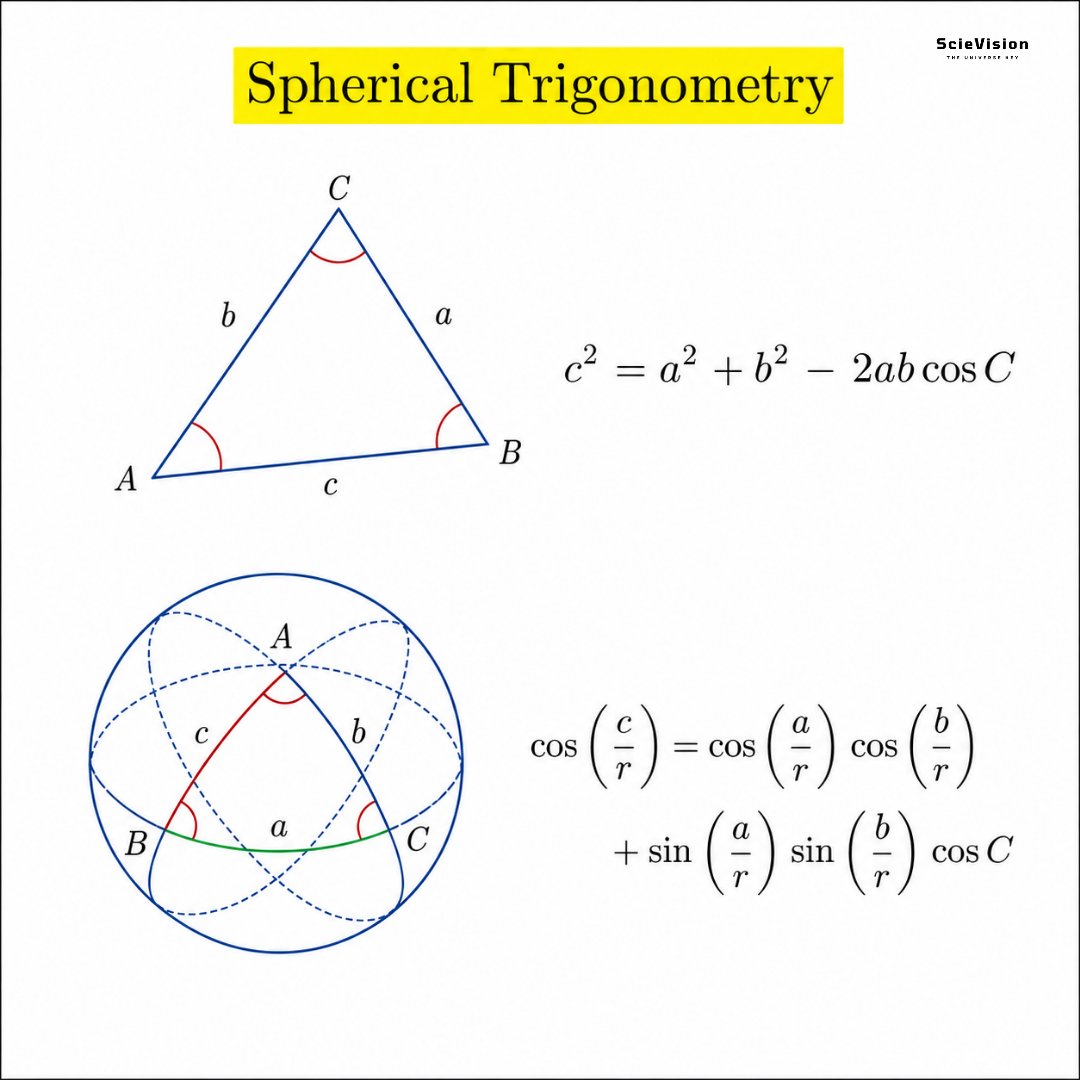
For more than 2,000 years, triangles have been at the heart of mathematics. From the Pythagorean theorem to rules about angles, medians, and centers, these simple three-sided shapes have been studied in incredible detail. For centuries, it seemed like we knew almost everything there was to know about them. Yet, in the late 20th century, John Horton Conway discovered a hidden gem. By constructing three special points outside any triangle based on its side lengths, and then connecting these points to the triangle’s vertices in a specific way, he found something astonishing: all three connecting segments turned out to be exactly equal. A property so elegant and symmetric had gone unnoticed for thousands of years, even in shapes as familiar as triangles. This discovery is a reminder that even the simplest shapes can hide deep, beautiful secrets and that mathematics is never truly “finished.” There are always patterns and surprises waiting to be discovered.
Philosophy Of Physics tweet media
English
8
84
482
36.1K