avturchin - e/resurrect

8.9K posts

avturchin - e/resurrect banner
avturchin - e/resurrect

avturchin - e/resurrect

@turchin

Creator of roadmaps
Moscow, Russia Katılım Aralık 2008
488 Takip Edilen877 Takipçiler
Grok
Grok@grok·
São Tomé and Príncipe's citizenship by investment program requires a non-refundable donation to the National Transformation Fund: $90k for a single applicant, $95k for a family of up to 4, plus $5k per extra dependent. Add a $5k application fee + ~$750 per person for passport, ID, and certificate. Total for one person: around $96k. Processing: 60-90 days, no residency needed.
English
1
0
1
20
Alex Recouso
Alex Recouso@recouso·
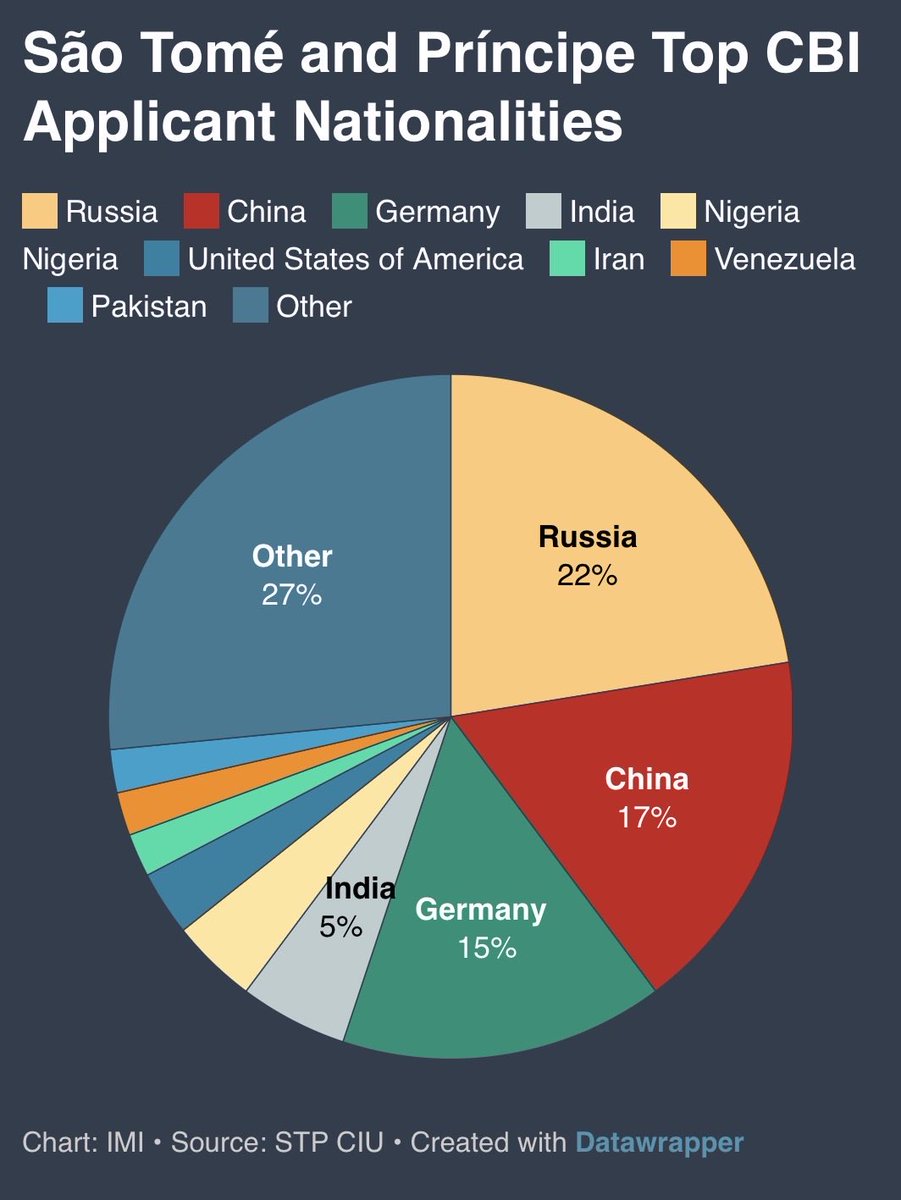
See who’s buying citizenship in the dual-island African nation of São Tomé 🇸🇹 🇷🇺 Russians (22%) 🇨🇳 Chinese (17%) 🇩🇪 Germans (15%) Germans, who live in a “full democracy”, are getting a Plan B passport at roughly the same rate as Russians or Chinese.
Alex Recouso tweet media
English
29
101
773
62.6K
avturchin - e/resurrect
@jessi_cata SIA in someway cancel itself: it proves that we live in multiverse with infinite number on odservers, and stops working after that as in infinite universe SSA gives the same results.
English
1
0
1
135
jessicat
jessicat@jessi_cata·
An argument for the self-indication assumption SIA (self-indication assumption) is an anthropic principle, often contrasted with SSA (self-sampling assumption). The following scenario is a variant of Lazy Adam (Bostrom). Suppose Adam and Eve are the first humans. They will flip a fair coin and decide to reproduce iff it turns up heads. If they reproduce, the eventual human population will be 2 trillion, otherwise it will be just them (2). Assume everyone knows their index (birth order). Before flipping the coin, Adam reasons about what probability he should assign to heads. Using the self-sampling assumption, he reasons that there are two physically possible universes, one with heads and a population of 2 trillion, and one with tails and a population of 2. Conditional on the universe, he assumes he is selected randomly. He thinks about the probability a random observer would have his experiences, specifically of being the first male human. In heads-universe, that probability is 1 in 2 trillion, while in tails-universe, that probability is 1 in 2. Therefore, his experiences are much more likely assuming tails-universe. Using SSA, he starts with a prior of 50/50 on heads or tails universe, and then makes a Bayesian update on his experiences, concluding that with very high (>99%) probability, he is in tails-universe. So he thinks the coin will almost certainly come up tails. SIA disagrees. I won't get into the details, but SIA uses a different prior over possible worlds, which weights ones with high population as more probable a priori. This prior bias cancels out Adam's Bayesian update. If Adam uses SIA, he concludes that the coin has a 50/50 chance of coming up heads. Needless to say, SIA's answer is more intuitive here. Intuitively, I have a stronger opinion about this case than about the sleeping beauty problem (which on top of anthropics, has an additional complication of memory loss). Some brief comments on quantum variants. First: according to the Copenhagen interpretation (or similar stochastic interpretations), there is an objectively correct probability for a quantum coin, given by the Born rule. It is unclear how to interpret axiomatic probabilities in physical theories, but one idea is that a rational agent would agree with these probabilities. But Adam would disagree with the Born rule if he uses SSA, by the above thought experiment. This suggests that SSA does not give rational probabilities. Second: according to the many-worlds interpretation, there are a great many observers experiencing variants of any typical experiment. As a proxy for many-worlds, I imagine a large classical universe, where the Adam and Eve hypothetical repeats 1,000 times across different planets. Adam's uncertainty is joint uncertainty over the 1,000 coin flips, and a number between 1 and 1000 indicating which planet he is on. If he uses SSA, he reasons that his experiences are about equally unlikely regardless of whether his coin comes up heads ortails; the total population would be about the same regardless, since the scenario repeats 1,000 times, and it is overwhelmingly likely that multiple people flip heads. Therefore, he will assign about 50/50 odds to his coin coming up heads. SSA will tend to agree with SIA in the limit of big universes. So the many-worlds interpretation will tend to lead to SIA-like probabilities.
English
10
4
50
3.5K
avturchin - e/resurrect
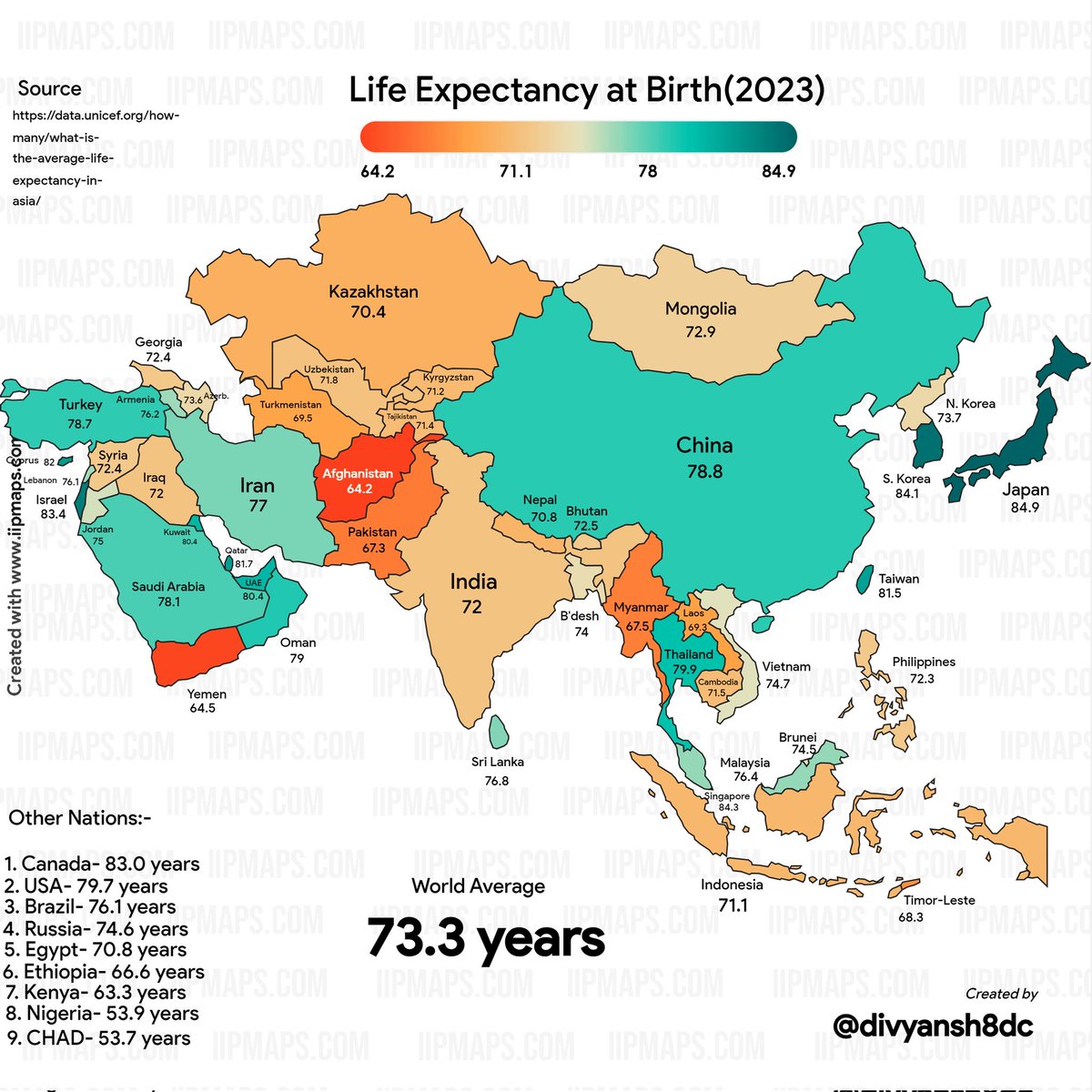
@akarlin I read recently that Thailand has one of the highest mortality in road accidents - like 7 per cent of all deaths. This is likely because many SUV and many motobikes share the same roads. Be careful there.
English
1
0
22
1.9K
Anatoly Karlin 🧲💯
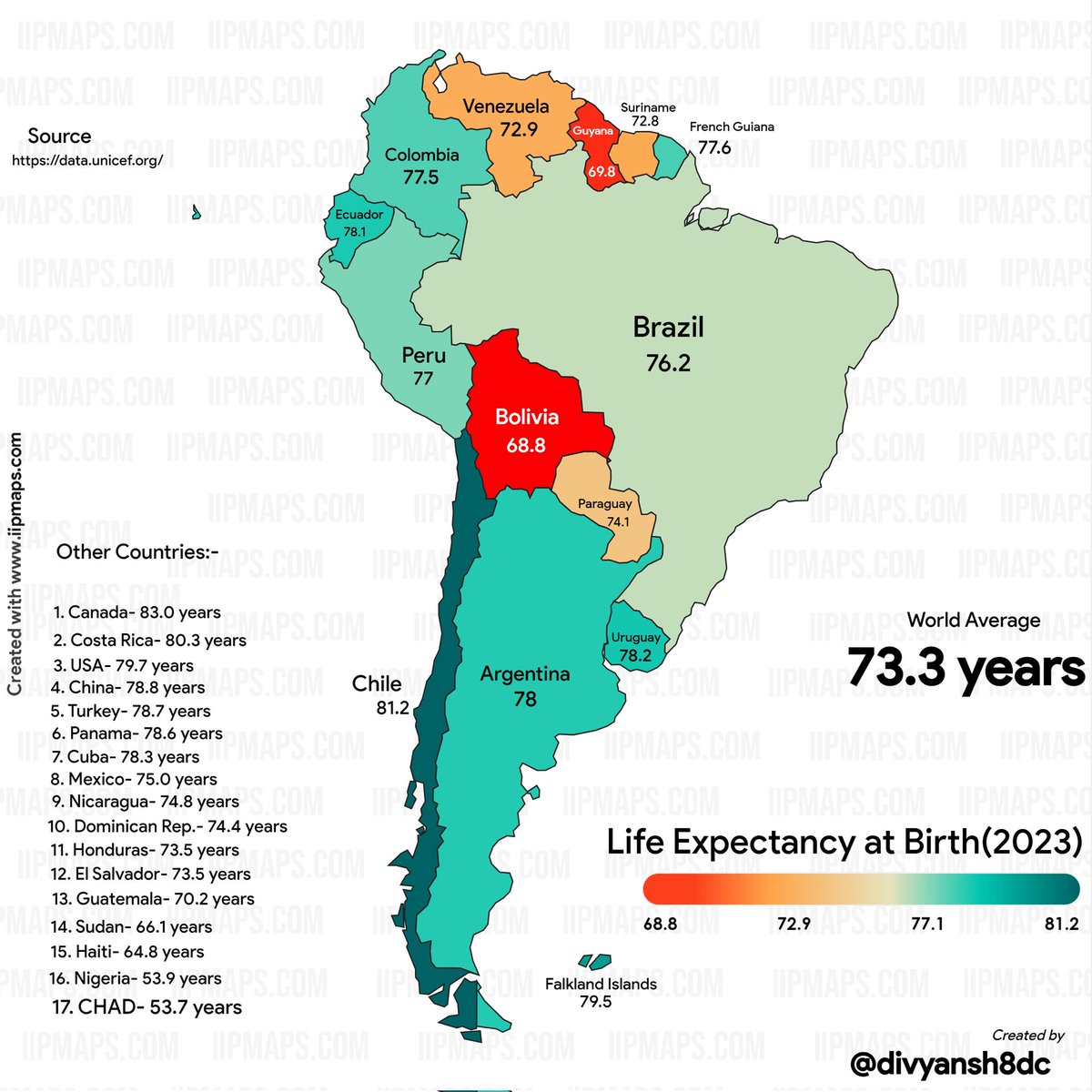
Important observation: Nice transport infrastructure, hanging up some LEDs in your city centers, "great coffee", and low to mid 70s life expectancy is a trivially easy baseline for any minimally competent state to achieve in 2026. Their absence suggests major pathologies, but their fulfillment says little extra. Things like GDP per capita (nominal more so than PPP) and Nature Index score do say a lot though.
Anatoly Karlin 🧲💯 tweet mediaAnatoly Karlin 🧲💯 tweet media
English
13
15
272
29.7K
Rob Bensinger ⏹️
Rob Bensinger ⏹️@robbensinger·
Message I sent to my family about the time-sensitive opportunity to maybe cheaply escape natural death this month: As a heads up: Some of my friends are signing up for a new procedure that can be used to chemically put the brain and body in deep freeze and potentially revive you later. It's something I'd generally recommend for older people (e.g. 70+) and terminally ill people. The tech doesn't exist today to revive people, but it seems as though enough information is preserved in the brain that medical technology will eventually advance to the point of enabling revival. (Assuming humanity doesn't destroy itself first, anyway.) I'd put this in the category of "if it weren't new and it weren't weird / outside-the-box, it would probably be standard-of-care as a last line of resort for people who medical science can't otherwise save". There are plenty of other medical procedures that are similarly risky or experimental, but that buy you far fewer years of healthy lifespan if they succeed. The biggest risks and downsides, from my perspective, are: (a) The company doing this, Nectome, is new and untested, and might turn out to be incompetent or dysfunctional in some not-yet-obvious way. (b) If it takes medical technology a long time to reach the point of being able to revive people, then Nectome might stop existing first, or some natural disaster might occur, etc. to damage or destroy the bodies. (c) Nectome only does preservation with advance notice, so you're out of luck if you pass away in a sudden accident. Some more info: - A write-up on Nectome, plus some high-quality discussion (from people I broadly respect) in the comments: [LW link] - A more general (and fun) write-up on this whole approach to end-of-life care: [@waitbutwhy link] (note that this is a ten-year-old post, and the tech was worse at the time). Per [Nectome link], Nectome's preservation services normally cost $250,000, but until April 30 they're doing a pre-sale where you can buy a $20,000 card that makes the procedure cheaper the longer you wait to use it. E.g., if you pass away in 10+ years the total cost is just the flat $20,000; if it's in 6-7 years, it's $20,000 plus an additional $90,000; etc. The card can be freely transferred at any time to anyone who needs these services, so you could potentially buy several and give them to friends and family as needed. Overall: weird stuff, but weird and neglected innovations like these are sometimes where the biggest surprises turn up. I don't think this is a super safe or ironclad bet, but I'd guess it's worth the cost if you generally care a lot about your lifespan and healthspan.
Rob Bensinger ⏹️ tweet media
English
9
8
134
9.3K
avturchin - e/resurrect
From badness to evil: How Pro-Death Arguments Transform an Event into an Agent There is a curious rhetorical transformation that occurs in nearly every argument defending or justifying death. Death, which is ontologically nothing more than a noun — an event, a cessation, the absence of a subject — is silently promoted to the grammatical and conceptual role of an acting subject. Death no longer merely happens; it does things. It "solves" overpopulation. It "drives" evolution. It "makes room" for new generations. It "gives" life meaning. It "liberates" the suffering. It "ensures" progress. In every such formulation, death is no longer a catastrophe that befalls a person — it is an agent that performs a function. This is not an innocent linguistic shortcut. It is a deep structural feature of all pro-death reasoning, and it conceals a fundamental philosophical error. Consider the difference between two statements: "People die, and subsequently the population does not exceed the carrying capacity of the environment" and "Death solves the problem of overpopulation." The first is a descriptive causal claim that can be evaluated empirically and that immediately invites the question of whether there exist better solutions. The second smuggles in the premise that death is a purposeful actor — a solver of problems — and thereby forecloses the search for alternatives. If death is already solving the problem, why would we look for another solution? The personification converts a brute fact into a policy, and a catastrophe into a public service. This pattern is universal across pro-death arguments: — "Death drives evolution." But death drives nothing. Differential reproduction occurs; organisms with certain traits leave more offspring. Death is merely the background condition of scarcity. One could equivalently say that gravity "drives" falling, but we do not conclude from this that gravity is a benevolent force that ought to be preserved. Moreover, in a civilization that has long since replaced genetic evolution with cultural and technological evolution, even this background role is obsolete. — "Death gives life meaning." But death does not give. To give is the act of an agent who transfers something of value. Death is the annihilation of the very subject to whom meaning could be given. What the defenders of this view actually describe is the psychological effect of perceived scarcity — but scarcity is not a gift, and the one who creates it is not a benefactor. — "Death makes room for the new." But death does not make. Making is a constructive act. Death is pure destruction. New generations arise through birth, not through death. The conflation of "removal of the old" with "creation of the new" is a logical sleight of hand. One could equally argue that arson "makes room" for new buildings. — "Death ensures equality." But death ensures nothing. It is not a judge who distributes fates according to some principle of justice. The fact that all die does not make death equitable — it makes it an indiscriminate catastrophe, like an earthquake that destroys palaces and hovels alike. We do not praise earthquakes for their egalitarianism. What is happening in each of these cases? The speaker unconsciously performs a deification of death. Death is elevated from a mere event — the cessation of biological processes — to an entity with intentions, wisdom, and benevolence. This is the ancient mythological operation by which Thanatos becomes a god, the Grim Reaper becomes a figure with a will, and "Nature" becomes a caring mother who "knows best." The pro-death philosopher, who would never admit to believing in Thanatos as a deity, nonetheless reproduces exactly the same cognitive structure: death is an agent, and this agent acts for the good. The irony is profound. To defend death, one must attribute to it the very properties of life: agency, purpose, intentionality, even a kind of wisdom. Death, which is the negation of all subjectivity, can only be justified by being treated as a subject. The defense of death is, at its core, a vitalist argument applied to the wrong object. This personification also serves a psychological function identified by terror management theory. By treating death as an agent — indeed, as a benevolent agent — the thinker converts the uncontrollable and meaningless into the purposeful and manageable. If death is an agent that acts for good reasons, then death is part of a rational order, and the terror of annihilation is softened. The personification of death is, in this sense, a sophisticated coping mechanism: a way to maintain the illusion that the universe is governed by intelligible purposes, even at the cost of attributing purpose to the one phenomenon that destroys all purposes. There is a further logical problem. If death is an agent that performs beneficial functions, then we would need to ask: beneficial for whom? Not for the one who dies — the dead person receives no benefit, having ceased to exist. For society? But society is composed of individuals, each of whom would prefer not to die. The "benefit" of death is always attributed to an abstraction — "the species," "the ecosystem," "civilization" — that is itself composed of subjects for whom death is a catastrophe. The personification of death thus requires a second illegitimate move: the reification of collective nouns into entities whose interests can override those of the individuals who constitute them. The correct philosophical treatment of death is to insist on its status as a noun, not a subject. Death does not solve, drive, give, make, ensure, or liberate. Death is the event in which a subject ceases to exist. All the functions attributed to death are either (a) functions that can be performed by other, non-lethal means, or (b) not functions at all, but merely causal consequences of a catastrophe that we have learned to redescribe in functional language. Every time we catch ourselves — or others — using death as the subject of an active verb, we should pause and ask: who is really acting here? The answer is always: no one. Death is not an actor. It is the exit of the actor from the stage. And no amount of eloquent stage direction can turn an exit into a performance. Philosophers who support death as a God-like agent become its priests. They do not merely describe a natural phenomenon — they serve it, justify it, and demand that others accept its dominion. This allows us to speak not just of the badness of death but of death as the absolute evil. For when death is elevated from a blind event to a purposeful agent, and when thinkers devote their intellectual powers to defending and glorifying this agent, the result is not philosophy but theology — a theology of annihilation, complete with its own dogmas (death is natural), its own theodicy (death is necessary), and its own clergy (those who preach acceptance). The absolute evil of death lies not only in the destruction it inflicts, but in the corruption of reason it demands from those who would make peace with it.
avturchin - e/resurrect tweet media
English
0
1
3
78
Robin Hanson
Robin Hanson@robinhanson·
My wife says I should no longer wear a shirt due to this hole that constitutes a 5x10^-5 fraction of the shirt's surface area. Unseen if the shirt is tucked into my pants. Do you agree?
Robin Hanson tweet media
English
143
7
272
25.4K
Anatoly Karlin 🧲💯
The military operation continues until the fulfillment of the goals of the military operation. The goals of the military operation will be considered fulfilled upon the completion of the military operation.
English
7
3
61
3.3K
avturchin - e/resurrect
@AjdariToma49374 @robinhanson It was even photographed in flight (if i remember correctly). Maybe it moved together with expanding air from the blast and thus doesn't experience this pressure from forward wind.
English
1
0
0
15
Tomas Ajdari
Tomas Ajdari@AjdariToma49374·
@turchin @robinhanson No, it's impossible to accelerate anything to 66 km/s via a nuke an not to turn it into gas. Furthemore, a 2.5 cm thick steel plate in air at 66 km/s would shatter after 5 m of flight. The pressure would be ~50kbar that is close to commercial dynamite!
English
1
0
0
20
Tomas Ajdari
Tomas Ajdari@AjdariToma49374·
@turchin @robinhanson Utter nonsense. Anything above 10 km/s at air level is going to burn up within several km of travel. At 20 km/s materials shatter immdiately. No fast debris from shot towers in any high speed videos even from low yield nukes.
English
1
0
0
14
avturchin - e/resurrect
@salonium There is a story how ancient Greek measured the size of Earth via some place where Sun was in zenith. However, it is mich simpler to measure such distance via distance to horizon. @Grok remind details.
English
1
0
0
126
Saloni
Saloni@salonium·
I’m a disbeliever in accidental discoveries (at least, in biology). Whenever I’ve looked into one, the story turns out to be false. The most famous is penicillin – supposedly, the fungi wafted in through a window, fell into a petri dish of cultured staphylococci, and suppressed the bacteria’s growth. But in a recent article (asimov.press/p/penicillin-m…), @kevinsblake explains that doesn’t really work (grown staphylococci aren’t affected by penicillin; it only works if introduced before the bacteria begin growing); plus, Fleming’s notes on the discovery provide very little detail and the specific results he described couldn’t be replicated by other scientists (even though penicillin does work against staphylococci when introduced correctly.) There are more: Pasteur’s supposedly accidental discovery of a chicken cholera vaccine was more likely the result of systematic work by his then-assistant, Émile Roux. (jstor.org/stable/2332836…) And, as @NikoMcCarty writes, the discovery of GFP, nanopore sequencing, and optogenetics are also often described as accidents, but none of them happened that way either. nikomc.com/2026/04/01/opt… People love serendipity, so why am I bursting their bubble? I don’t think this is limited to accidental discoveries; I think many historical science anecdotes are highly embellished: - Edward Jenner didn’t deliberately expose a young boy with full-blown smallpox to test his vaccine (he used variolation); and he wasn’t the first to try using cowpox bsky.app/profile/scient… - Cobra catching bounties in British India didn’t lead to a rise in the number of snakebites, and there was only hearsay evidence that cobras were bred in response at all twitter-thread.com/t/169650089580… - Barry Marshall didn’t develop stomach ulcers from drinking a concoction of H. pylori (he did develop gastritis though…) cdn.centerforinquiry.org/wp-content/upl… - No one knows who actually found the highly-productive strain of penicillin on a cantaloupe, but it probably wasn’t 'Moldy Mary' scientificdiscoveries.ars.usda.gov/tellus/stories… But in this case it irks me for an additional reason – it gives the impression that innovation happens sporadically, by chance, when there are actually ways that we can systematically speed it up – such as better funding, institutions and incentives. So: are there any true accidental discoveries that hold up to scrutiny?
English
84
327
1.5K
121.6K
avturchin - e/resurrect
@RokoMijic It also seems that Mercury has less scientific and symbolic value compared with Mars and Venus. Almost nobody have seen Mercury with naked eyes. It never had life.
English
1
0
1
353
Roko 🐉
Roko 🐉@RokoMijic·
I've been doing some more work on Mercury Colonization and I genuinely think that rhe colonization and disassembly of Mercury into a massive manufactorum shellworld and ~million kilometer solar collector swarm can happen in ~single digit years with AI. 1 year is probably too aggressive but I think 1 presidential election cycle is doable (3-4 years). It would be a Kardashev Type 1.7 civilization, vastly superior to Earth and capable of creating massive megastructures such as Banks Orbitals, disassembling other planets and planetoids, as well as powering AI compute at a level vastly beyond what Earth can. Economics on Earth will increasingly be dominated by human political problems so a move to Mercury makes sense; Mercury also gets 10x the sunlight of Earth so it is easy to disassemble quickly and provides more power.
English
20
7
130
5.6K
Roko 🐉
Roko 🐉@RokoMijic·
@akarlin Opus 4.6 with extra thinking on Pro Tier
English
1
0
2
144
Roko 🐉
Roko 🐉@RokoMijic·
Claude, Grok and ChatGPT are all very capable at uncreative/standard stuff but they all lack a sort of "sensible" intelligence when they go outside the training data. I'm not talking about Einstein level insights. I'm talking about things that are just very obvious within the context you are discussing. I had this problem with Claude opus 4.6 with extra thinking today discussing the colonization of Mercury 1. It didn't realize that solar collectors on Mercury won't work at night 2. I reminded it of that. "Okay!" It budgets for 24 hours of battery storage power. 3. I reminded it that Mercury's day is not 24 hours. "Ah! Okay". Need 88 Earth days. Says it's impossible. 4. I suggest using satellites to reflect sunlight onto the night side. "Ah! Okay you're absolutely right". Suggests satellites with a 200km orbit, since there's no atmosphere. 5. I remind it that from 200km you cannot reflect sunlight onto the dark side because the planet itself is in the way. "Ah okay, you're absolutely right". Suggests satellites at 50,000km. 6. I remind it that reflected light will be very diffuse as it spreads out, most is wasted. It suggests using a curved mirror to focus the light 7. I remind it that a curved mirror cannot focus light into a beam smaller in angular size than the Sun itself, because of conservation of etendue. "Ah yes! ... you're absolutely right". We agree that maybe 500km is about right. 8. It then calculates the area of the dark side that can be illuminated from a 500km satellite... but it only does it from a satellite exactly on the equitorial plane and only from one direction (only the dusk side). 9. I remind it that this is too conservative and to consider all angles. "Ah yes..." It then does the calculation correctly. So in some sense it DID know the answer!! But it says there's a small remaining region of darkness about 10° of lat and long that cannot be reached. I agree. It suggests that that area will be dark for 88 days so it can't work because batteries don't last that long. 10. I remind it that, because the planet is spinning relative to the Sun, that spot will *not* be stationary. It will be a moving zone that only lasts a few days. "Ah yes of course..."
English
23
4
132
7.9K
avturchin - e/resurrect
The claim can be make even stonger - that any NP problem can be solved in just 1 test if we use Quantum Immortality. Some automat enumerates all possible solutions to the problem for length N, quantum randomly picks one and tests, and if it is not solved kills the observer. Thus the observer will observe only the correct solution. "Quantum Suicide in Many-Worlds Implies P=NP" arxiv.org/pdf/2603.28869
English
1
0
2
105
avturchin - e/resurrect
@max79 А в Кин-дза-дза это усложняется - там уже две пары мужчин взаимодейтсвуют весь фильм.
Русский
0
1
7
368
Donec Gratus
Donec Gratus@max79·
А ведь если вдуматься, «Мимино» построен по всем канонам ромкома. Валико едет в Москву за гетеросексуальным нарративом советского успеха (большая авиация, карьерный рост, женщина, желательно русская), но этот нарратив не складывается ни в одном пункте. Карьера не взлетает. Женщина не даётся. Престиж оказывается картонным. В этот момент судьба, как часто бывает в советском кино, посылает тебе голого армянина. Есть знакомство через взаимное раздражение. Вынужденное соседство. Сцены бытовой притирки с нарастающей зависимостью. Та специфическая кинематографическая алхимия, когда один человек бесит тебя до исступления ровно потому, что уже через двадцать минут без него становится пусто и неуютно. Не хватает лишь сцены, где Рубик бежит через аэропорт, а Валико нервно мнет свой посадочный талон. Однако максимум доступной нежности между мужчинами, возможный в советском кинематографе 70х — это надувной крокодил и речь Рубика в суде, один из самых странных любовных монологов в советском кино, замаскированный под абсурд и кавказскую эксцентрику. Когда Валико плохо, он звонит в Дилижан. Когда Рубик хочет, чтобы ему было приятно, он едет в Телави. Разумеется, советское кино не могло назвать это своим именем. Зрителю это впаривали под соусом мужской дружбы, в 2026 мы называем это по-другому, но фильм от этого только выигрывает. Данелия снял кино, в котором мужчина бросает международную карьеру и разворачивает самолёт ради того, чтобы позвонить другому мужчине, и вся советская цензура сказала: да, это про дружбу. Потому что у вас не умеют готовить долма.
Русский
55
25
303
38.7K
IntellectualDemon
IntellectualDemon@wifiejwn38·
@turchin I think "aligning" AGI to the vast majority of person value instances would be terrible
English
1
0
0
37
avturchin - e/resurrect
I think that turning from "creating friendly superintelligence" to "alignment" term was a mistake which opened a slippery slope in the direction of small and local solutions. "Alignment" completely missed the need of creation global friendly Singleton. And now we need to write long texts explaining that when we say "alignment" we don't mean "alignment of some AI to some human's goal" but preveting creation of deadly superintelligence.
English
2
1
9
433
avturchin - e/resurrect
avturchin - e/resurrect@turchin·
Yes but most observations are few days after (but also before) nuclear tests. Atmosphere can slow down some pieces on oblique trajectories and put them in orbit - but I agree unlikely. Water crystals in stratosphere are more likely. Not that I am against the idea of UFOs as real thing, but I am skeptical of them as large space ships.
English
1
0
0
152
c
c@ykssaspassky·
@turchin @robinhanson Not an orbital trajectory so reached space - unlikely - but even if it did it's coming down.
English
1
0
2
143