Today is a monumentous day for quantum computing and cryptography. Two breakthrough papers just landed (links in next tweet). Both papers improve Shor's algorithm, infamous for cracking RSA and elliptic curve cryptography. The two results compound, optimising separate layers of the quantum stack. The results are shocking. I expect a narrative shift and a further R&D boost toward post-quantum cryptography.
The first paper is by Google Quantum AI. They tackle the (logical) Shor algorithm, tailoring it to crack Bitcoin and Ethereum signatures. The algorithm runs on ~1K logical qubits for the 256-bit elliptic curve secp256k1. Due to the low circuit depth, a fast superconducting computer would recover private keys in minutes. I'm grateful to have joined as a late paper co-author, in large part for the chance to interact with experts and the alpha gleaned from internal discussions.
The second paper is by a stealthy startup called Oratomic, with ex-Google and prominent Caltech faculty. Their starting point is Google's improvements to the logical quantum circuit. They then apply improvements at the physical layer, with tricks specific to neutral atom quantum computers. The result estimates that 26,000 atomic qubits are sufficient to break 256-bit elliptic curve signatures. This would be roughly a 40x improvement in physical qubit count over previous state-of-the-art. On the flip side, a single Shor run would take ~10 days due to the relatively slow speed of neutral atoms.
Below are my key takeaways. As a disclaimer, I am not a quantum expert. Time is needed for the results to be properly vetted. Based on my interactions with the team, I have faith the Google Quantum AI results are conservative. The Oratomic paper is much harder for me to assess, especially because of the use of more exotic qLDPC codes. I will take it with a grain of salt until the dust settles.
→ q-day: My confidence in q-day by 2032 has shot up significantly. IMO there's at least a 10% chance that by 2032 a quantum computer recovers a secp256k1 ECDSA private key from an exposed public key. While a cryptographically-relevant quantum computer (CRQC) before 2030 still feels unlikely, now is undoubtedly the time to start preparing.
→ censorship: The Google paper uses a zero-knowledge (ZK) proof to demonstrate the algorithm's existence without leaking actual optimisations. From now on, assume state-of-the-art algorithms will be censored. There may be self-censorship for moral or commercial reasons, or because of government pressure. A blackout in academic publications would be a tell-tale sign.
→ cracking time: A superconducting quantum computer, the type Google is building, could crack keys in minutes. This is because the optimised quantum circuit is just 100M Toffoli gates, which is surprisingly shallow. (Toffoli gates are hard because they require production of so-called "magic states".) Toffoli gates would consume ~10 microseconds on a superconducting platform, totalling ~1,000 sec of Shor runtime.
→ latency optimisations: Two latency optimisations bring key cracking time to single-digit minutes. The first parallelises computation across quantum devices. The second involves feeding the pubkey to the quantum computer mid-flight, after a generic setup phase.
→ fast- and slow-clock: At first approximation there are two families of quantum computers. The fast-clock flavour, which includes superconducting and photonic architectures, runs at roughly 100 kHz. The slow-clock flavour, which includes trapped ion and neutral atom architectures, runs roughly 1,000x slower (~100 Hz, or ~1 week to crack a single key).
→ qubit count: The size-optimised variant of the algorithm runs on 1,200 logical qubits. On a superconducting computer with surface code error correction that's roughly 500K physical qubits, a 400:1 physical-to-logical ratio. The surface code is conservative, assuming only four-way nearest-neighbour grid connectivity. It was demonstrated last year by Google on a real quantum computer.
→ future gains: Low-hanging fruit is still being picked, with at least one of the Google optimisations resulting from a surprisingly simple observation. Interestingly, AI was not (yet!) tasked to find optimisations. This was also the first time authors such as Craig Gidney attacked elliptic curves (as opposed to RSA). Shor logical qubit count could plausibly go under 1K soonish.
→ error correction: The physical-to-logical ratio for superconducting computers could go under 100:1. For superconducting computers that would be mean ~100K physical qubits for a CRQC, two orders of magnitude away from state of the art. Neutral atoms quantum computers are amenable to error correcting codes other than the surface code. While much slower to run, they can bring down the physical to logical qubit ratio closer to 10:1.
→ Bitcoin PoW: Commercially-viable Bitcoin PoW via Grover's algorithm is not happening any time soon. We're talking decades, possibly centuries away. This observation should help focus the discussion on ECDSA and Schnorr. (Side note: as unofficial Bitcoin security researcher, I still believe Bitcoin PoW is cooked due to the dwindling security budget.)
→ team quality: The folks at Google Quantum AI are the real deal. Craig Gidney (@CraigGidney) is arguably the world's top quantum circuit optimisooor. Just last year he squeezed 10x out of Shor for RSA, bringing the physical qubit count down from 10M to 1M. Special thanks to the Google team for patiently answering all my newb questions with detailed, fact-based answers. I was expecting some hype, but found none.
SO excited! redantasia.com We built the Red Ant Asia website site. Thye are an Award Winning Chinese Marketing Agency. Creative Led, Impact Driven. #chinamarketing#china#agency
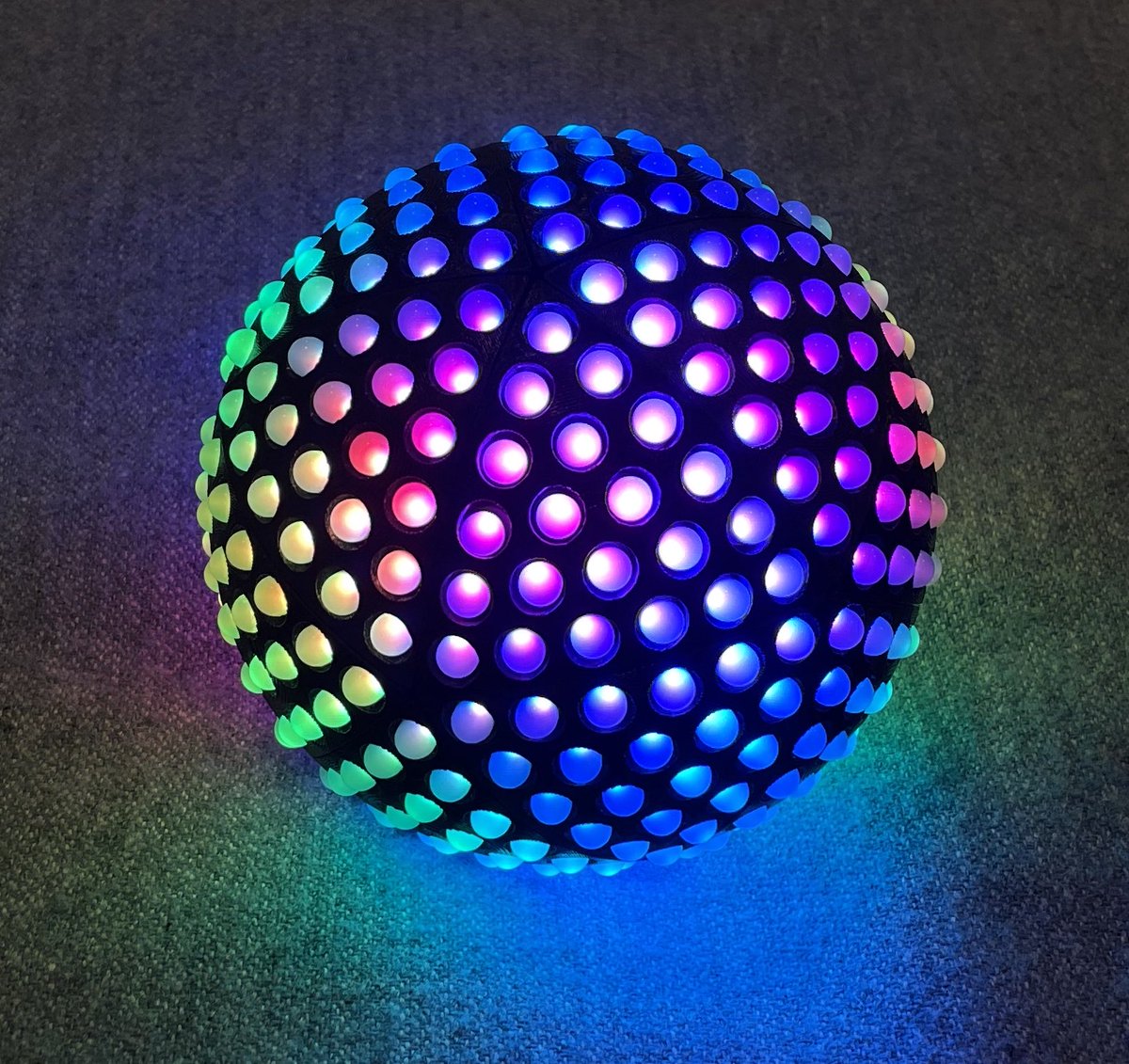
I wish I could share the beautiful x-ray view of my LED sphere at Burbank airport. Unfortunately no pictures allowed at the TSA secondary inspection station, so you’ll have to make do with this one. The project has run its course, all that’s left now is a lengthy blog writeup.
visionOS 26.2 expands travel mode to cars and buses
Funny enough, I recorded this clip about two weeks ago during an earlier 26.2 beta. I felt that it was way more stable in this use case than ever before
But today’s release candidate patch notes confirmed I wasn’t crazy
I just played “Gears & Goo” for Apple Vision Pro for the very first time and I’m already addicted.
The game is a strategic battle game where you control workers to gather supplies in order to build your defence system against your enemy, the evil Oozers.
Granted, I don’t play many games on Vision Pro, but I also always forget how much fun they actually are. I’m already seeing myself playing this all the time during the holidays.
Tomorrow night #HKWD has a break from our usual tech heavy program. We explore a topic that can help everyone... Personal brand and self promotion. We have Michael Tam (@Infinideas) of preface.ai speaking #hkwd#hkwebdevlu.ma/s3619ha9
15-year evolution of frontend: From screens & styles to performance-aware, integrated, scalable systems 🚀💻🔄⚙️. Embrace Frontend System Design and Micro Front Ends 🤝 #webdev#hongkong#developers#meetup 🌐📈🔥👉 lu.ma/70y5qkq6
It's only been just over a week since OpenAI dropped o3-mini.
And people are already doing crazy things with it!
10 wild examples:
1. Create visually stunning demo of the Big Bang Theory in three.js
Last video I did something pretty stupid. You might've already seen it, but maybe not so I'll address it here. There was a clip with the action cam of me test driving a car and going way to fast. Absolutely inexcusable and dangerous.
I've since cut it out of the video with YouTube's editor tool. I also understand that this looks like covering it up, but I think it's the right thing to do.
There's no reason to leave that clip in (there was no reason to include it in the first place) and I would never want to make it seem ok by leaving it in the video. I'm well aware of the Streisand effect, and I know everything on the internet lives forever, but I think that's the best decision right now.
All I can do apologize and promise never to do anything close to that stupid again. That's a terrible example to set and I'm sorry for it.
"Las Meninas" is one of the most revolutionary (and mysterious) paintings in history.
At first glance it might not be obvious why.
But when you notice its little details, everything unravels… (thread) 🧵