🔥 🤝 New Partner @ Tela Network: Matthias Isler, Fractional CTO
🔹 "As an entrepreneur, your most valuable resource is often time." - Matthias Isler
📖 Read about Matthias Isler on Tela Blog:
telablog.com/matthias-isler…
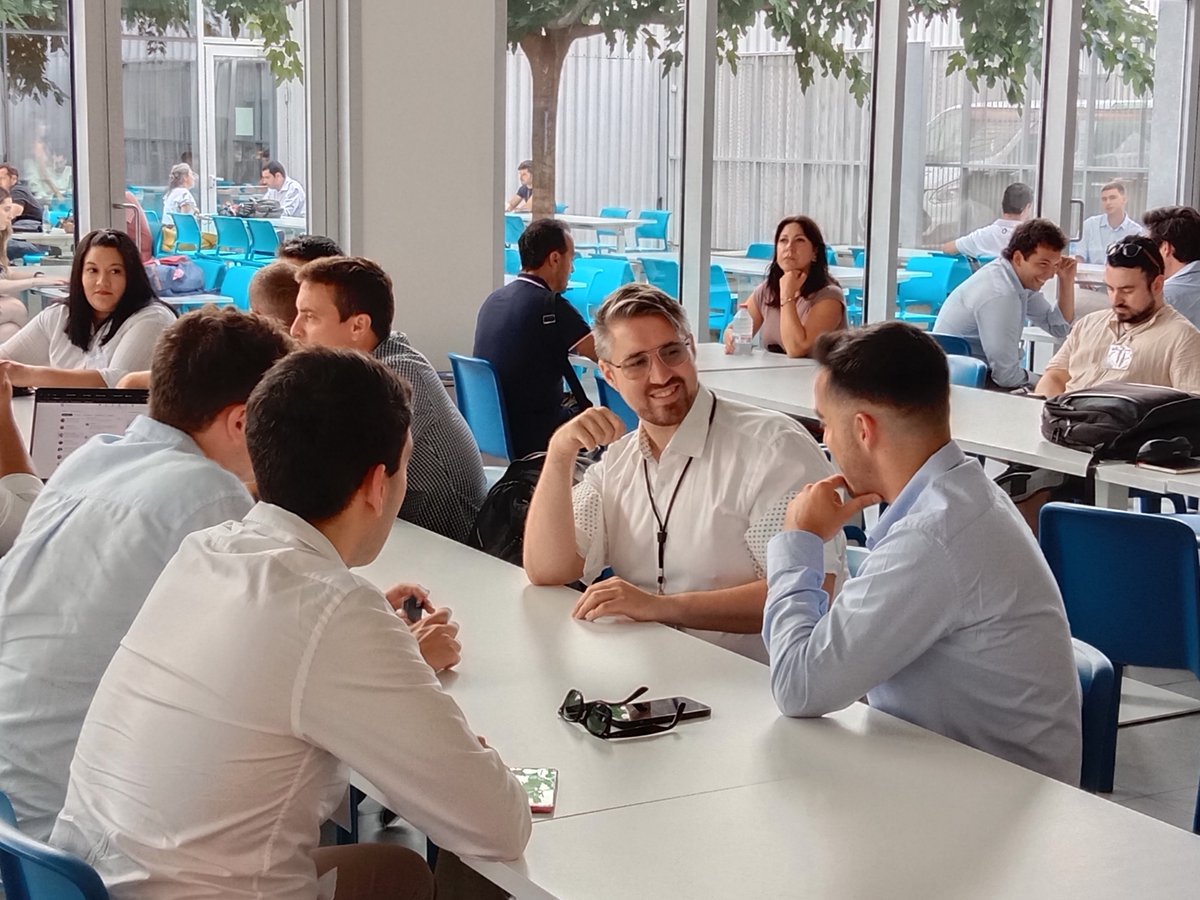
🔥 🚀 ➡️ Tela Network visits Lanzadera Startup Accelerator (29 July 2024).
Tela Network members pictured:
🔹 Nicholas Piano @two_pianos : CEO
🔹 StJohn Piano @StJohnPiano : CMO
🔹 Guillermo Pablos Murphy @NobleVibesOnly : CCO
It's very difficult to:
1) Work to build a large crypto company
2) Constantly stay on top of X + keep mindshare focused on the company
Any founders have any tricks?
I'm considering drafting tweets once a week and blasting them throughout the week.
@Mudit__Gupta Hi Mudit,
More than anything else, I want to minimise the snakeoil.
I'm a member of a group called Tela Network, which built a messaging app with built-in crypto payments from sender to receiver.
Spam goes to zero.
80% of web2 security products are snakeoil.
90% of web3 security products are snakeoil.
Most of them just replace one hard to exploit attack vector with an easy to exploit one.
I'm yet to see a good security product for gnosis safe. Most of them make it more unsafe.
@APompliano Hi Anthony,
You're right, and no one values advice like they should.
I'm a member of a group called Tela Network that has a messaging app with built-in crypto payments from sender to receiver to make sure good advice is valued.
Attention isn't free.
Wall Street is where millionaires go to get advice from non-millionaires.
Twitter is where non-millionaires go to critique the investments of billionaires.
@DarenMatsuoka Hi Daren,
Thanks for the great write-up.
I'm a member of a group called Tela Network, which has built a messaging app with built-in crypto payments from sender to receiver.
It's inspired by many of the ideas you discuss here.
I would be interested in your thoughts / feedback.
Here are some (broadly-defined) areas where I believe crypto can make a difference in the world.
1/ Payments
Problem: Payments are highly inefficient, especially when sending them across borders. People spend $647 billion on remittances every year, with an average cost of 6.25%.
Solution: Blockchains create a new global standard that cuts out all of the middlemen involved in a transaction. Payments can be extremely cheap (<$0.01), instantly settled, and global by default - just like sending an email.
2/ Digital Identity
Problem: Internet services (e.g., Facebook, YouTube, Spotify) have full control over their users’ identities and the data (e.g., followers, usernames, digital goods) they earn, purchase, or create. Consumers have no choice but to rely on these companies to safeguard this data, since they can’t exit the network while retaining their identity and everything built around it.
Solution: Blockchains empower users to control their identity and data across all their interactions online. If one service provider acts maliciously or becomes overly extractive, users can exit the system while porting their identity and all the data they contributed.
3/ Fair Marketplaces
Problem: Profit-motivated companies are extractive. For example, Apple charges up to 30% in fees on purchases made in mobile apps by consumers. YouTube takes a 45% cut of ad revenue before paying out its creators. Spotify has a 30% take rate.
Solution: Blockchain-based network architecture leads to much lower take rates and better outcomes for consumers. This is not just true in theory but also in practice – for instance, NFT marketplace OpenSea charges 2.5%.
4/ Decentralized Social Networks
Problem: Biased operators can decide the rules and reach of social networks, or even deplatform individual users. Developers are scared to build new products and experiences on top of these networks, since they can be shut down at any time.
Solution: Decentralized social networks cannot unilaterally make decisions or change their rules for users or developers. These open protocols allow users to choose among apps while letting them easily move (and own) their data.
5/ Video Games -> Metaverse
Problem: Gaming companies are incentivized to build walled gardens that trap users inside their ecosystem. The games are created to maximize profits, at the expense of players, leading to fragmented closed economies.
Solution: Digital items and reputation earned in video games are owned by the players and can be ported outside of the game, leading to more robust economies and experiences.
6/ Decentralized Physical Infrastructure Networks (DePIN)
Problem: Physical resources – like GPUs, storage, or telecom infrastructure – are scarce and therefore end up being costly for consumers. A significant amount of idle resources are wasted each day.
Solution: Using blockchain networks to coordinate a broader set of participants, we can unlock additional resources and democratize access to them.
7/ New Governance Structures
Problem: Legacy organizations, such as corporations, nonprofits, and local governments, are often highly inefficient when it comes to their governance.
Solution: Using blockchains, large groups of people can now coordinate trustlessly. This allows us to experiment with new token and reputation-based governance designs.
8/ AI Democratization and Transparency
Problem: We must rely on Big Tech companies, who have access to the most compute resources and data, to safely develop AI technology in a black box.
Solution: We can democratize AI innovation by using blockchain networks and crypto technology to decentralize access to key resources, while also increasing transparency and auditability. Moreover, consumers can own the data they (already) contribute, and get rewarded for it.
🔥 New Consultant @ Tela Network
Georgi Kovachev is Co-Founder & Data Scientist @ Clouddo
Ask Georgi Kovachev about Data Science, Machine Learning / AI, Business Intelligence, and Personal Development.
telablog.com/georgi-kovachev
"Messaging overload is not just about the total number of messages. It's also that so many messages are of such low quality."
Casey Flaherty on Messaging Overload
Article: (5 mins to read)
telablog.com/casey-flaherty…
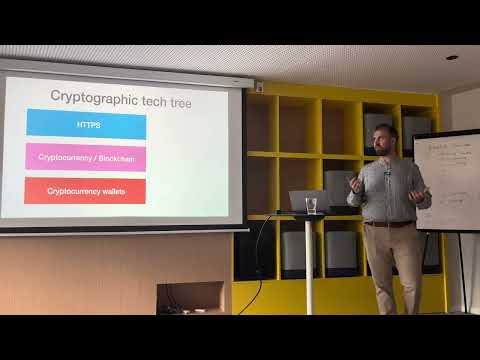
Nicholas Piano (@two_pianos), Blockchain Researcher at Tela Network, has given a talk on User Authentication with Cryptocurrency Wallets.
"... in 1851 we lost perfect security and we have never
gotten it back..."
Video: (23 mins + 6 mins of questions)
youtube.com/watch?v=wGrd4b…