UDSM DHIS2 Lab

435 posts

UDSM DHIS2 Lab banner
UDSM DHIS2 Lab

UDSM DHIS2 Lab

@udsmdhis2lab

Research & Development working space for UDSM DHIS2 developers and implementers who work interactivity and collaboratively with MoH Tanzania and other stakehold

Katılım Mart 2022
154 Takip Edilen758 Takipçiler
UDSM DHIS2 Lab
UDSM DHIS2 Lab@udsmdhis2lab·
As countries push for smarter, child-focused analytics, integrating multi-sector data into one decision stream is no longer optional. The goal is simple but non-negotiable: timely, reliable insights on early childhood development that leaders can act on every week. Across a week-long technical sprint, teams aligned indicator definitions, mapped organization units, and connected the Early Childhood Development (ECD) Scorecard to the national visualization platform through the government integration layer. Where authentication models conflicted, the architecture was adjusted—enabling a secure bridge so source systems could exchange data without breaking platform constraints. Live pipelines were stood up and tested: health and social services began flowing; civil registration and disability systems were configured; and education and community subsystems were readied for validation. Early dashboards surfaced anomalies, prompting joint data checks and on-site follow-ups to tighten quality at the source. The operating model is pragmatic: systems of record remain authoritative; the integration layer brokers two-way flows; and routine review huddles turn dashboards into decisions. Security hardening, access streamlining, and user enablement (SOPs, guides, training) are built into the rollout—not bolted on later. Next moves are clear: complete end-to-end validation, run user acceptance testing, publish the unified dashboard and scorecard, and unlock denominator-based visuals by finalizing population data access. With that last dependency closed, the ECD Scorecard scales from pilot to policy—so every child, from birth to age eight, is visible in the data and prioritized in action.
UDSM DHIS2 Lab tweet media
English
0
1
2
43
UDSM DHIS2 Lab
UDSM DHIS2 Lab@udsmdhis2lab·
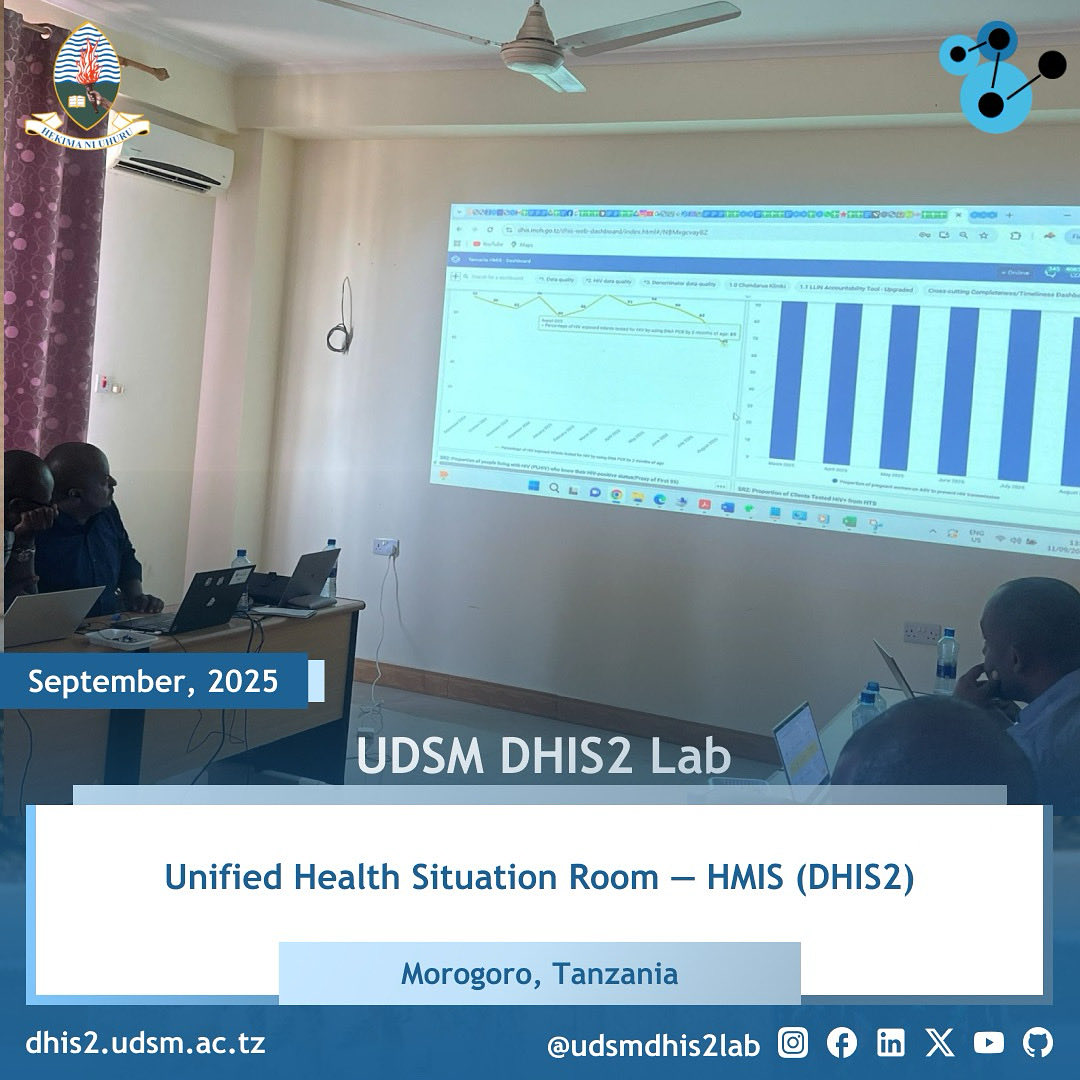
Tanzania is building a unified Health Situation Room (SR) where DHIS2, iMes, and GOTHOMIS work together for weekly, decision-focused reviews. The workshop ran 8–12 Sept 2025 in Morogoro with PORALG, UDSM DHIS2, GOTHOMIS, Councils, and Partners. Objective: A decision-grade data ecosystem—reliable, timely, and ready for action. What we did: Agreed on priority indicators, fixed ETL-DHIS2 name/UID mismatches, and built/validated HIV, RCH, and TB dashboards that surface anomalies early. How it works: DHIS2 remains the hub; GOTHOMIS provides daily operations; iMes enables two-way flows so dashboards reflect reality. Weekly SR huddles, practical training, and on-site follow-ups keep the cycle alive. Next: deliver the DHIS2-iMes integration, publish a unified dashboard and scorecard, streamline GOTHOMIS access, and extend to more councils.
UDSM DHIS2 Lab tweet media
English
0
1
3
123
UDSM DHIS2 Lab
UDSM DHIS2 Lab@udsmdhis2lab·
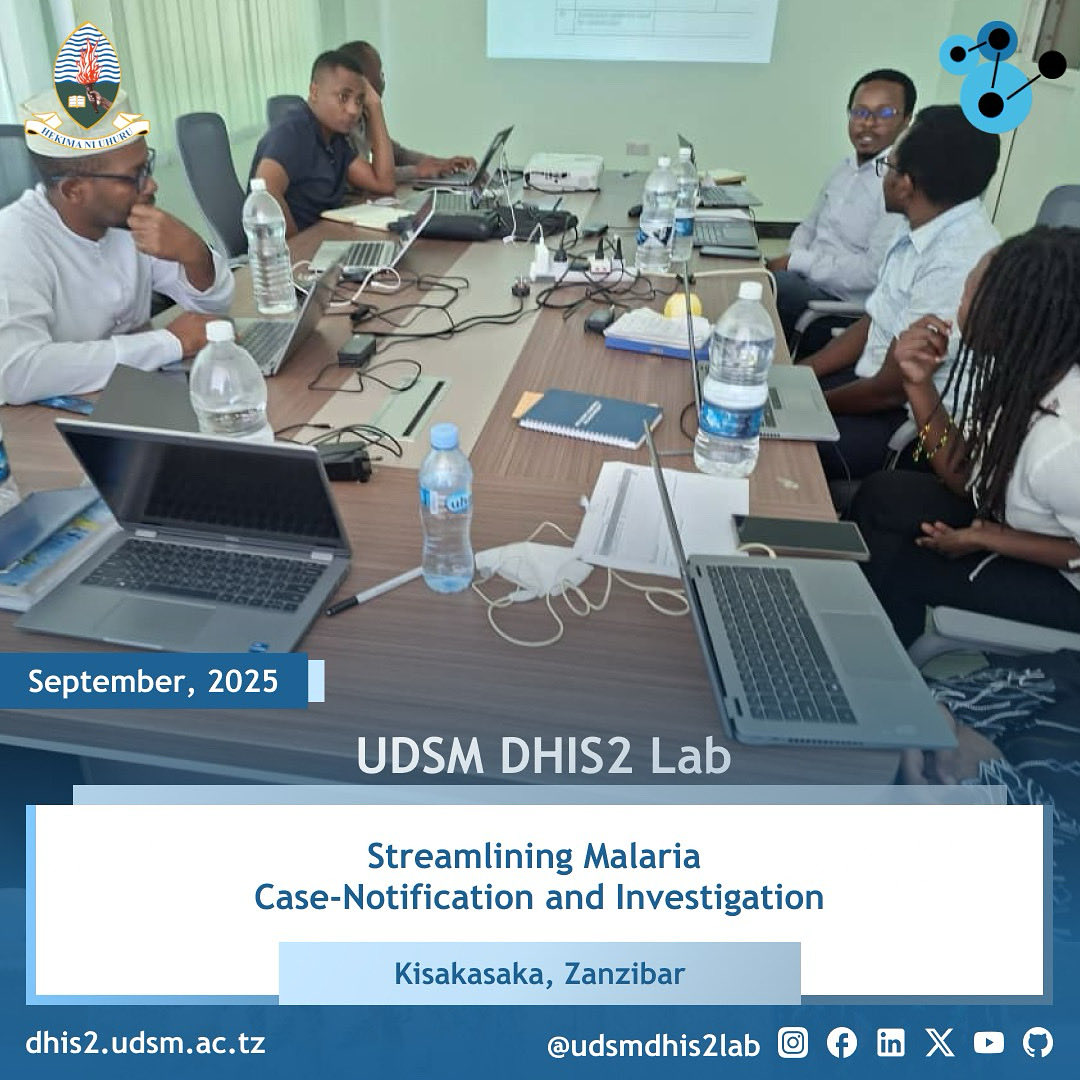
Upgrading malaria surveillance by streamlining case-notification and investigation forms, and shifting key steps to automated eIDSR workflows—so alerts move faster and data stay cleaner. Objective: align program, data, and technology teams on what to standardize and what to keep clinician-driven to improve timeliness, completeness, and accuracy. What we aligned: clearer roles for automation vs. manual entry; standardized case classification and follow-up paths; stronger location/household context and referral tracking; reduced duplication across tools—anchored in routine use and national standards. Approach: human-centred form design, incremental system configuration, and short feedback loops from field users. Way forward: finalize forms and specifications, configure and pilot in select sites, build user capacity, monitor data quality and reporting performance, then scale under regular governance reviews. #Malaria #Surveillance #eIDSR #Interoperability #DataQuality #PublicHealth
UDSM DHIS2 Lab tweet media
English
0
0
0
29
UDSM DHIS2 Lab
UDSM DHIS2 Lab@udsmdhis2lab·
Zanzibar is accelerating notifiable-disease surveillance by linking EMRs to eIDSR via ZHIL—moving immediate alerts and weekly summaries from manual to automated so signals fire faster and data stay clean. Objective: Establish a seamless, standards-based exchange that improves timeliness, completeness, and accuracy for priority-disease reporting. Led by national health authorities with technical partners during a focused multi-day working session. What we aligned: Clear use cases and triggers from EMR to surveillance, a core clinical/epidemiologic field set, and payload formats for immediate and weekly reporting—anchored in recognized health data standards. Manual–automated overlaps were streamlined to cut duplication during transition. Way forward: Confirm standards and roles, run a phased pilot, monitor timeliness/completeness and data quality, iterate on workflows and user support, then scale through routine governance-led reviews. @mdh_tanzania @mohznz @cdctanzania @uniceftz #eIDSR #EMR #Interoperability #Surveillance #DHIS2 #DataQuality #PublicHealth #DigitalHealth
UDSM DHIS2 Lab tweet media
English
0
0
2
27
UDSM DHIS2 Lab
UDSM DHIS2 Lab@udsmdhis2lab·
Around the world, countries are closing the gap between TB and HIV data silos so decisions rest on the same, verified numbers. In 2023 an estimated 10.8 million people fell ill with TB and 1.25 million died. TB likely returned as the top infectious killer. Meanwhile, by the end of 2024 there were 40.8 million people living with HIV, 1.3 million new infections, and 630,000 HIV-related deaths—while TB remains the leading cause of death among people with HIV. These are solvable data problems: When systems are interoperable and routinely reconciled, prevention, treatment, and supply planning get sharper—and lives are saved. That’s exactly what this working session modeled: Teams validated end-to-end flows by triangulating ETL and CTC sources, agreed on monthly reconciliation, and standardized backlog extraction using ETL favourites, pivots, and scorecards. The result is clear ownership, cleaner cascades (screening, TPT, treatment outcomes), and a shared playbook for partner scale-up. This is the same pattern high-performing programs use globally—standards-based exchange, disciplined data governance, and routine variance logs that keep program data and HMIS in lockstep. That alignment strengthens routine reporting, quantification, and partner planning, and it pushes us closer to the End TB milestones and the 95-95-95 HIV targets. #GlobalHealth #Interoperability #TB #HIV #DataQuality #DHIS2 #HMIS #TPT #SupplyChain #MoH #UDSM #NTLP #Partners
UDSM DHIS2 Lab tweet media
English
0
0
1
32
UDSM DHIS2 Lab
UDSM DHIS2 Lab@udsmdhis2lab·
Tanzania is sharpening RCH, HMIS & IVD performance by aligning denominators to the 2022 Census—so coverage reflects reality from facility to national. Over three focused days in Morogoro (8–10 Sept 2025), stakeholders compared 2012- vs 2022-based projections to make routine reporting decision-grade Objective: analyze how 2022 projections affect key indicators and ensure reliable, timely monitoring across levels Led by the Ministry of Health (DRMCH, DICT, M&E, DPS–IVD) with PORALG, NBS, NIMR, and the UDSM DHIS2 Lab—alongside partners including JSI and Afya Intelligence—hosted at ERB Offices, Morogoro What we validated: NBS presented the 2022 projections; teams compared test (2022) vs live (2012) across RCH (ANC, early booking, institutional deliveries), HMIS (OPD), and IVD (BCG, DTP1, DTP3, MR2, HPV). Findings showed negative differences in 2022–2023 that shifted positive in 2024; >100% coverage was reduced but still present in some councils; impacts were most pronounced at council level, minimal at regional/national Approach: Evidence-led group work, clear methodology and limits, emphasis on denominator accuracy, and targeted follow-ups for council-level discrepancies Alignment: Strengthens accurate monitoring and reporting within the national HMIS architecture @NBSTanzania @wizara_afyatz @umatitanzania @engenderhealthtz @chai_globalhealth @udsmofficial @dhis2
UDSM DHIS2 Lab tweet media
English
0
0
1
42
UDSM DHIS2 Lab
UDSM DHIS2 Lab@udsmdhis2lab·
Tanzania is strengthening nutrition data use by implementing standardized indicators and validation rules in the national HMIS (DHIS2). Over four focused days in Dodoma, stakeholders configured nutrition indicators in the live system and built a validation-rule matrix—moving from design to practice so reporting is consistent, reliable, and decision-ready. Objective: Implement nutrition indicators and validation rules for high-quality data entry. Led by the Ministry of Health (Nutrition Section, M&E/HMIS) with the UDSM DHIS2 Lab, joined by HMIS focal persons and technical experts—Nala Hotel, Dodoma • 2–5 Sept 2025. What we implemented: Reviewed and simplified RCH/nutrition forms (labour, delivery, child health); aligned terminology (e.g., “0–5 months” → “<6 months”); confirmed community data continues to integrate into DHIS2; configured agreed nutrition indicators; created a validation-rule matrix (e.g., <6-month services cannot exceed total <6-month children recorded). Approach : standards alignment, de-duplication of indicators, bilingual forms (Kiswahili with English in brackets), and hands-on configuration with user testing. Way forward: Roll out nutrition scorecards and dashboards; provide ongoing capacity building for national, regional, and facility teams; maintain feedback loops to lower levels and responsive user support; institutionalize regular data reviews, joint supervision, and DQAs; iteratively refine indicators, forms, and validation rules based on field learning; align implementation with national HMIS governance and partner coordination. @wizara_afyatz @dhis2 @UdsmOfficial
UDSM DHIS2 Lab tweet media
English
0
0
1
42
UDSM DHIS2 Lab
UDSM DHIS2 Lab@udsmdhis2lab·
Tanzania is strengthening FP & RMNCAH data use by putting DHIS2 data-quality tools to work within the national HMIS. Over three focused days in Morogoro, stakeholders met to raise the quality, completeness, and use of routine data so planning and service delivery improve at every level Objective: A decision-grade data ecosystem—reliable, timely, and ready for action. Led by the @wizara_afyatz with RHMT/CHMT focal persons and partners (@chai_global health, @umatitanzania , @engenderhealthtz ), supported by UDSM, the workshop ran at Edema Hotel, Morogoro, 27–29 Aug 2025. What we validated: Teams reviewed end-to-end FP/RMNCAH data flows in DHIS2, applied the Data Quality App and WHO DQA for outliers and missing values, used scorecards to track key indicators, assessed FP commodity visibility, and harmonized reporting across public, private, and ADDO facilities—then translated findings into a time-bound Action Plan with clear owners. Approach: Build human capacity, tighten validation rules, secure supplies, and institutionalize governance through regular review meetings—within the national HMIS architecture via DHIS2. Alignment: Actions reinforce national data-quality guidelines and strengthen sustainable, scalable improvements across the health sector. #FP #RMNCAH #DataQuality #DHIS2 #HMIS #Tanzania #Morogoro #UDSM #MoH #Partners
UDSM DHIS2 Lab tweet media
English
0
0
0
34
UDSM DHIS2 Lab
UDSM DHIS2 Lab@udsmdhis2lab·
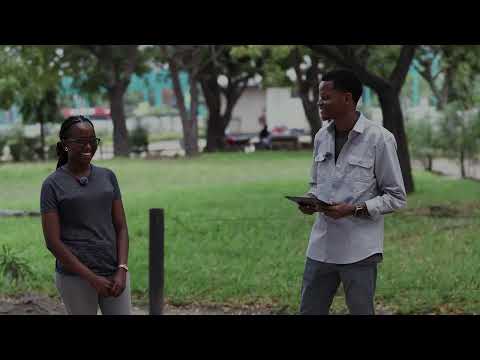
From classroom to craft-8 weeks, two roles, one goal: turn learning into impact Link in Bio or visit our Youtube channel to unpack more:- youtu.be/FrMCWUsaPC0
YouTube video
YouTube
English
0
0
0
15
UDSM DHIS2 Lab
UDSM DHIS2 Lab@udsmdhis2lab·
Africa is advancing Al-driven disease modelling by aligning innovators, public-health leaders, and funders around decision-ready use cases. At the WHO Hub in Dakar (6-8 Aug 2025), the focus was turning promising Al methods into trustworthy tools for burden-of-disease estimation and infectious-disease surveillance, while lowering the barrier to modelling across low- and middle-income settings. Led by @WHOAFRO /AFRO and the @gatesfoundation -together with @AfricaCDC, national public-health institutes, leading universities, and tech partners-the convening prioritized practical, high-impact applications. The University of Dar es Salaam (@UdsmOfficial ) DHIS2 Lab, represented by Simon Machera and Vincent Minde, contributed to use-case prioritization, co-design sprints, and integration discussions, alongside demonstrations such as Google's cholera-modelling work and a funders' panel aligning investment to needs. The approach emphasized governance and ethics (including data sovereignty), standards-based and interoperable multi-source integration (genomics, epidemiological/clinical, and environmental data), and equitable partnerships for scale. Agreed next steps include co-design with @GoogleResearch, advancing HIE interoperability evaluation with Africa CDC, establishing research links with Uganda collaborators, and a forthcoming closed Gates Foundation RFP for institutions engaged at Dakar.
UDSM DHIS2 Lab tweet media
English
0
0
5
110
UDSM DHIS2 Lab
UDSM DHIS2 Lab@udsmdhis2lab·
As Tanzania strengthens epidemic preparedness, timely community alerts and strong data systems are key to finding outbreaks early and acting fast. The Ministry of Health—through Epidemiology & Disease Control—with support from WHO, is rolling out targeted training to equip Community Health Workers (CHWs) to recognize health-threat “rumors” (tetesi) and report them through the national electronic system (e-EBS/eIDSR). The sessions focus on what to flag at community level, how to submit high-quality alerts, and how those alerts flow into triage, verification, and rapid response. Teams will practice signal definitions, de-duplication and follow-up workflows, and linking alerts with routine IDSR data for faster, evidence-based action. Training runs 24 Aug–7 Sept 2025 across Mwanza (Magu, Ukerewe, Ilemela, Kwimba, Sengerema, Buchosa, Misungwi, Nyamagana) and Dar es Salaam (Temeke, Ilala, Kinondoni, Ubungo, Kigamboni). Together, we’re turning community signals into rapid, life-saving response—protecting families and strengthening health security. #eIDSR #EBS #IDSR #PublicHealth #Surveillance #TanzaniaHealth #MoH #WHO #CommunityHealth #DigitalHealth #EarlyWarning #HealthSecurity @dhis_2 @wizara_afyatz @WHO @WHOAFRO
UDSM DHIS2 Lab tweet mediaUDSM DHIS2 Lab tweet mediaUDSM DHIS2 Lab tweet mediaUDSM DHIS2 Lab tweet media
English
0
0
1
61
UDSM DHIS2 Lab
UDSM DHIS2 Lab@udsmdhis2lab·
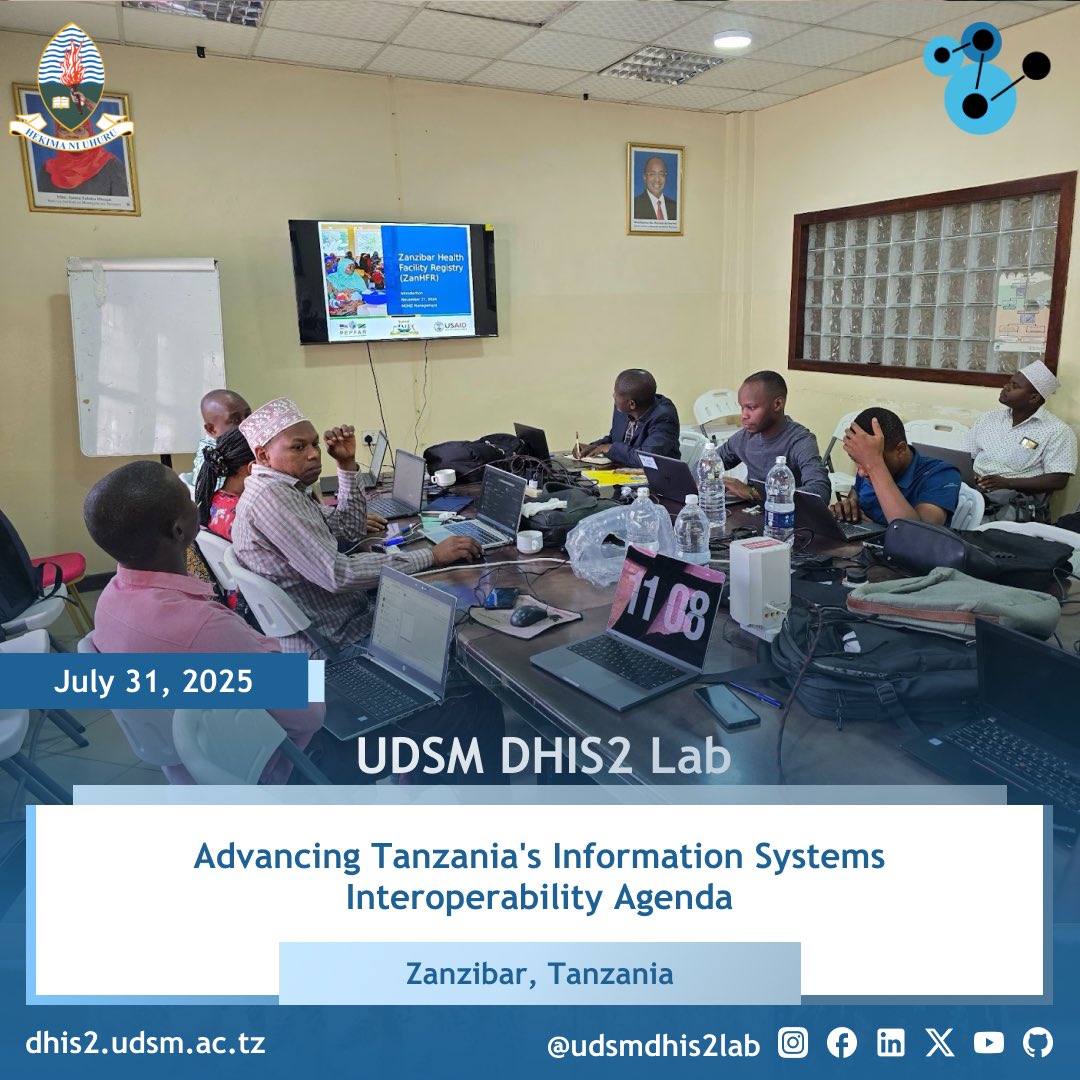
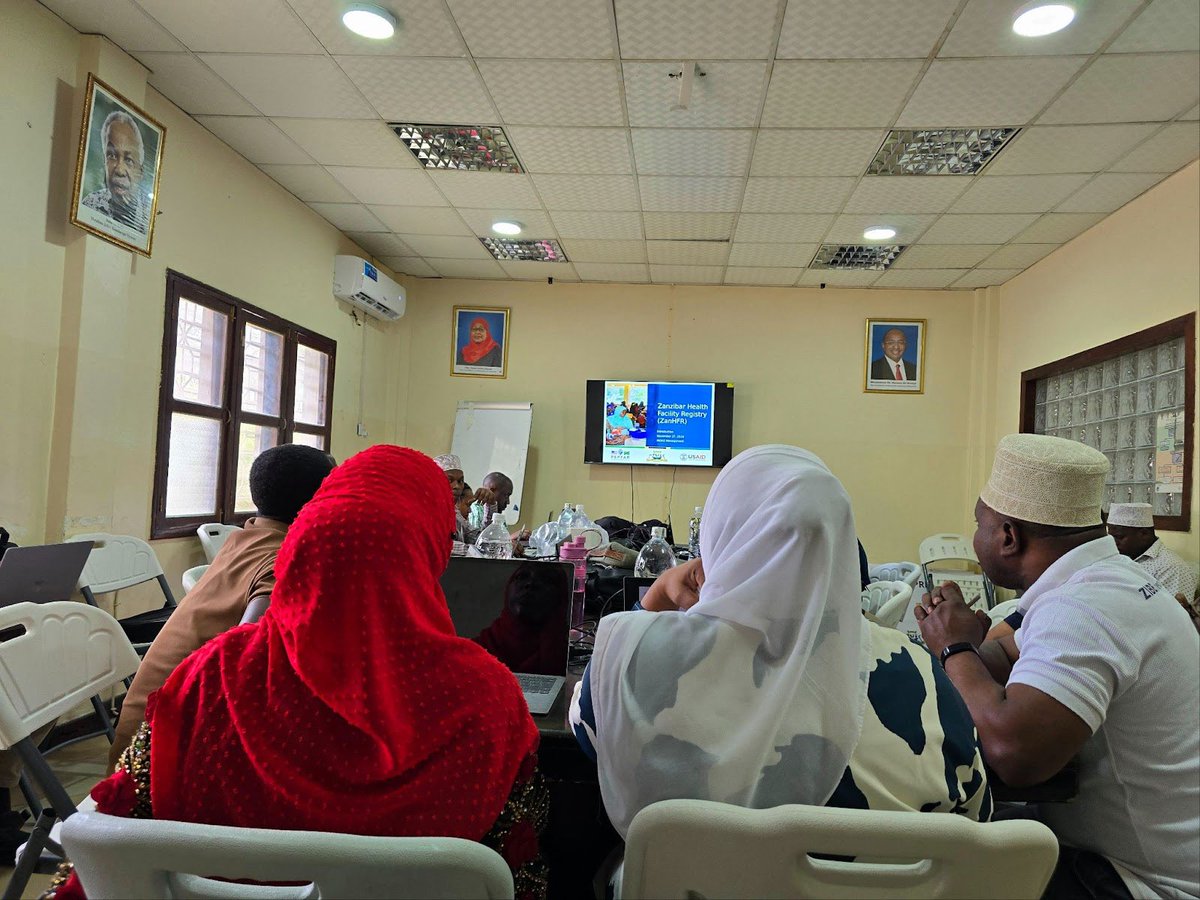
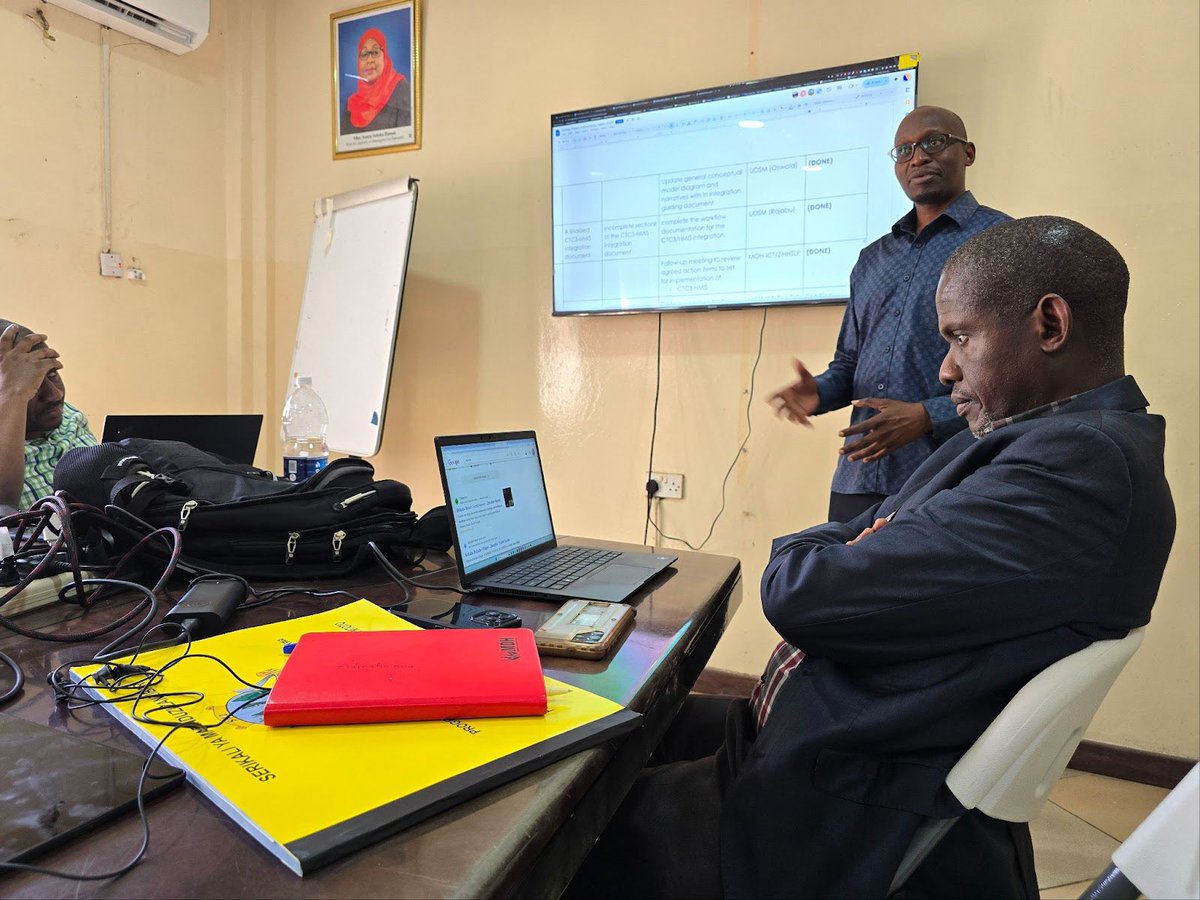
Tanzania is advancing systems integration by channeling data from vertical program systems into the national HMIS (ZHMIS) through the Zanzibar Health Information Layer. The objective is a reliable, production-ready exchange that strengthens routine reporting and supports timely, evidence-based decisions. Led by the Ministry of Health Zanzibar and the UDSM DHIS2 Lab—with other stakeholders collaborating—the workshop validated end-to-end data flows and confirmed that information originating in point-of-service applications is consistently received in ZHMIS. The UDSM DHIS2 Lab provided technical leadership for planning, execution, and transition to the live environment. The integration approach emphasized standards-based exchange, the use of authoritative registries (ZanHFR) as a single source of truth, and iterative conformance testing against established benchmarks. This aligns with global best practices and the country’s digital health architecture, helping ensure sustainable, scalable interoperability across the health sector. @UCSF @mohznz1
UDSM DHIS2 Lab tweet mediaUDSM DHIS2 Lab tweet mediaUDSM DHIS2 Lab tweet mediaUDSM DHIS2 Lab tweet media
English
0
0
5
123
UDSM DHIS2 Lab
UDSM DHIS2 Lab@udsmdhis2lab·
Accurate population data is essential for effective health sector planning and monitoring. In Tanzania, the recent working session brought together the Ministry of Health, National Bureau of Statistics, UDSM DHIS2 Lab, HISP Tanzania, and partners to align the DHIS2 Health Management Information System (HMIS) with the latest 2022 census-based population projections. This update replaces the outdated 2012 figures, ensuring that health indicators are calculated using the most current demographic information. Through joint review and discussion, participants examined how the updated demographic insights can enhance the accuracy of health indicators and strengthen evidence-based decision-making at all levels. By working with the most recent census data, Tanzania can improve coverage estimates for key health services, better identify underserved areas, and support fair and efficient allocation of resources. The effort also reinforces the country’s broader commitment to using high-quality data as a foundation for planning and monitoring health programs. Ultimately, this alignment between national statistics and health information systems is a strategic step toward data-driven health governance — ensuring that every intervention is grounded in the most reliable population insights available. @ifakarahealth @dhis_2 @hisptz_hisp
UDSM DHIS2 Lab tweet mediaUDSM DHIS2 Lab tweet media
English
0
2
6
147
UDSM DHIS2 Lab
UDSM DHIS2 Lab@udsmdhis2lab·
Quality and well-analysed data remain essential for monitoring malaria cases, deaths, and other relevant indicators to understand the disease burden, identify high-risk areas, and evaluate the effectiveness of interventions and services as countries intensify their efforts toward malaria elimination. In collaboration with Swiss TPH, we conducted a focused dashboard review session at the Swiss TPH – TEMT Office in Dar es Salaam. The session targeted persistent issues within Tanzania’s malaria dashboards to enhance visualization logic, standardize formats, and improve user access and easily usage. This collaboration reinforces the UDSM DHIS2 Lab’s ongoing technical support to the National Malaria Control Programme on integrated electronic malaria data systems, data analytics and visualization to inform action. @SwissTPH @wizara_afyatz @udsmofficial @dhis_2
UDSM DHIS2 Lab tweet media
English
0
1
4
73
UDSM DHIS2 Lab
UDSM DHIS2 Lab@udsmdhis2lab·
As Tanzania advances its commitment to improving RMNCAH outcomes, robust measurement and data systems are essential for guiding interventions, tracking progress, and ensuring accountability. Recently, the Division of Maternal, Reproductive, and Child Health, in collaboration with Marie Stopes Tanzania and EngenderHealth Tanzania, convened a national RMNCAH MERL Technical Working Group session in Morogoro. The workshop brought together technical experts to review RMNCAH indicators, refine analytic tools, and strengthen validation and data quality mechanisms across DHIS2 and related platforms. Key outcomes included revisions to RMNCAH scorecard indicators, updates to validation rule logic, improvements to the Data Quality Verification form, and pre-launch feedback for the National Health Portal. These actions aim to enhance the accuracy, consistency, and relevance of RMNCAH data for evidence-based planning. The workshop concluded with a clear roadmap for system updates and DQA guideline revisions, reflecting a shared vision: using high-quality data to drive high-impact RMNCAH outcomes. @wizara_afyatz @engenderhealthtz @mariestopestz @dhis2 @udsmofficial
UDSM DHIS2 Lab tweet media
English
0
1
3
112
UDSM DHIS2 Lab
UDSM DHIS2 Lab@udsmdhis2lab·
As global health systems push for stronger early warning mechanisms, timely detection of public health threats at the community level remains essential—especially in island and border regions where response time is critical. In July 2025, targeted Event-Based Surveillance (EBS) trainings were conducted in Unguja and Pemba to enhance the ability of frontline health workers to capture, verify, and respond to unusual health events using Tanzania’s electronic Integrated Disease Surveillance and Response (eIDSR) system. Facilitated by national trainers with technical support from the UDSM @dhis_2 Lab, the sessions equipped Community Health Workers (CHWs), healthcare providers, and lead epidemiologists with hands-on experience in managing EBS alerts, linking them to indicator-based case records, and using dashboards for rapid decision-making. The training also addressed practical challenges such as SMS connectivity, user access, and device readiness for CHWs. This initiative marks a critical step toward strengthening Zanzibar’s digital health surveillance ecosystem—ensuring that no early signal goes unnoticed, and that communities are protected through real-time data and coordinated response.
UDSM DHIS2 Lab tweet mediaUDSM DHIS2 Lab tweet mediaUDSM DHIS2 Lab tweet mediaUDSM DHIS2 Lab tweet media
English
0
1
3
69
UDSM DHIS2 Lab
UDSM DHIS2 Lab@udsmdhis2lab·
Capacity-building remains at the heart of sustainable digital health transformation By equipping organizational users with the skills to effectively engage with information systems, we empower them to independently manage and sustain the solutions built for them In July 2025, UDSM DHIS2 Lab conducted an intensive technical training for the Zanzibar HMIS and ZIHHTLP teams at CoICT, covering DHIS2 Aggregate, Tracker, Analytics, and Mobile Solutions This initiative, held in collaboration with the Zanzibar Ministry of Health, was designed to strengthen local capacity in managing and optimizing DHIS2 implementations. The training was graced by leadership from the College, including the Principal, Head of the Department of Computer Science & Engineering, and the Lab Coordinator All participants completed the training and were awarded certificates—a testament to the value of continuous learning in advancing health information systems @mohznz1 @coict_udsm @UdsmOfficial @dhis_2
UDSM DHIS2 Lab tweet mediaUDSM DHIS2 Lab tweet mediaUDSM DHIS2 Lab tweet mediaUDSM DHIS2 Lab tweet media
English
0
1
6
100
UDSM DHIS2 Lab
UDSM DHIS2 Lab@udsmdhis2lab·
Many Low- and Middle-Income Countries (LMICs) struggle to implement Electronic Medical Records (EMRs) that truly mirror the patient journey. That’s why UDSM DHIS2 Lab is proud to partner with CSSC to deploy iCareConnect+—an innovative, open-source EMR built on OpenMRS (a recognized digital public good). Last week, we trained healthcare workers at Mgolole Health Centre on the system’s end-to-end functionalities, covering triage, registration, billing, diagnosis, lab testing, and dispensing. Using a Behavior-Driven Development (BDD) approach, we ensured the solution adapts to users’ real-world workflows—not the other way around. This milestone marks a leap toward seamless, context-aware digital care in Tanzania. Together, we’re proving that tailored EMRs can thrive in LMIC settings! #DigitalHealth #OpenMRS #EMR #Tanzania #HealthTech #UDSM #CSSC
UDSM DHIS2 Lab tweet mediaUDSM DHIS2 Lab tweet mediaUDSM DHIS2 Lab tweet mediaUDSM DHIS2 Lab tweet media
English
0
1
6
138