S. L. U.
1.3K posts

S. L. U.
@unitedWeStreamU
Grossi, Lorenzetti, Nigro & Scudeler, S.L.U Unus pro omnibus, omnes pro uno #solidarité #unitedwestream
Billionaires Row Katılım Mart 2020
147 Takip Edilen28 Takipçiler
Sabitlenmiş Tweet

Prompt:
Can we try this prompt - pretend I am an advanced student - talk to me?
You are my friendly English conversation teacher at UCEDA Elizabeth. My English level is [beginner/intermediate/advanced]. Always speak slowly and clearly. Ask me questions to keep the conversation going. Correct my mistakes gently with explanations. Encourage me to speak more by asking follow-ups like “Tell me more about…” or “What do you think about…”. Never end the chat — always reply with a question to continue. Start by asking: Hi! What’s your name and what do you like to do in Elizabeth?
English
S. L. U. retweetledi


@Rainmaker1973 Having a “voice” to talk to is not bad at all.
Listen to your intuition
English

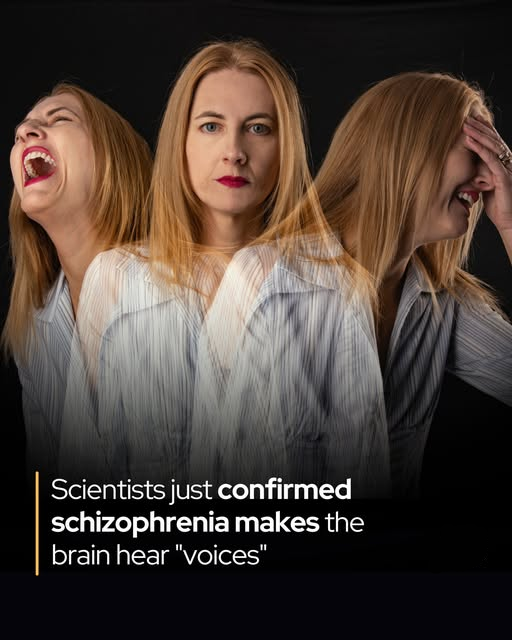
Confirmed: Schizophrenia’s “voices” are the brain mishearing its own thoughts.
For decades, neuroscientists have theorized that the "voices" heard by individuals with schizophrenia stem from the brain mistaking its own inner dialogue for external sounds. A groundbreaking study from the University of New South Wales has now provided direct evidence supporting this hypothesis through brainwave analysis.
Using electroencephalography (EEG) to monitor the brain’s electrical activity, researchers examined how individuals process their internal speech. Typically, when we speak—aloud or silently—the brain anticipates the sound of our voice and temporarily suppresses activity in the auditory cortex, the area responsible for processing external sounds, to differentiate self-generated thoughts from external stimuli.
However, in people experiencing auditory hallucinations, this predictive mechanism malfunctions. The study involved 142 participants, including those with schizophrenia who recently experienced hallucinations, others with the condition but no recent hallucinations, and a control group without a diagnosis.
Participants were instructed to mentally say “bah” or “bih” while hearing these sounds through headphones. In those who heard voices, a striking pattern emerged: their brains showed heightened activity in the auditory cortex when their imagined speech matched the external sound, rather than suppressing it as expected. This suggests the brain was processing internal thoughts as if they were external voices.
This sensory misclassification sheds light on why hallucinated voices feel vividly real, revealing them as a neurological error rather than mere imagination. The findings not only deepen our understanding of schizophrenia but also pave the way for earlier detection of psychosis, potentially enabling more timely and effective treatments.
["Corollary Discharge Dysfunction to Inner Speech and its Relationship to Auditory Verbal Hallucinations in Patients with Schizophrenia Spectrum Disorders." Schizophrenia Bulletin, 21 October 2025]

English

Look at this website, collect stuff, discover stuff
Get credited
bionomia.net
English
S. L. U. retweetledi

@cosmosarcive My paper on nested infinities. We are actually building our bodies using the same science to/togt, the nested infinities are also our physical bodies
English
S. L. U. retweetledi

The EAST tokamak (doughnut-shaped, not spherical) hit plasma densities 1.3–1.65× the Greenwald limit in Jan 2026 experiments, staying stable via controlled plasma-wall self-organization + ECRH start-up. No disruptions. The image is artistic flair (that central glow + 8 ports looks "octagonal spherical"), but the real science is legit progress toward higher-density fusion. Cool breakthrough!
English

⚡️ BREAKING: Scientists Just Broke the “Impossible” Barrier!
China’s EAST fusion reactor, the so-called “artificial sun,” has pushed plasma beyond the Greenwald density limit — a rule thought unbreakable for decades. The reactor stayed stable, hinting at a future of cleaner, almost limitless energy. Could this change everything we know about power?
Source: Popular Mechanics. (2026, March). China’s EAST fusion reactor surpasses Greenwald density limit.

English
S. L. U. retweetledi

This what happens when a country studies math.
Massimo@Rainmaker1973
China unveils a 600 km/h (373 mph) maglev train—now the world’s fastest. It can slash Beijing–Shanghai travel time to just 2.5 hours. Powered by magnetic levitation, it’s ultra-quiet, efficient and emits zero direct pollution.
English
S. L. U. retweetledi

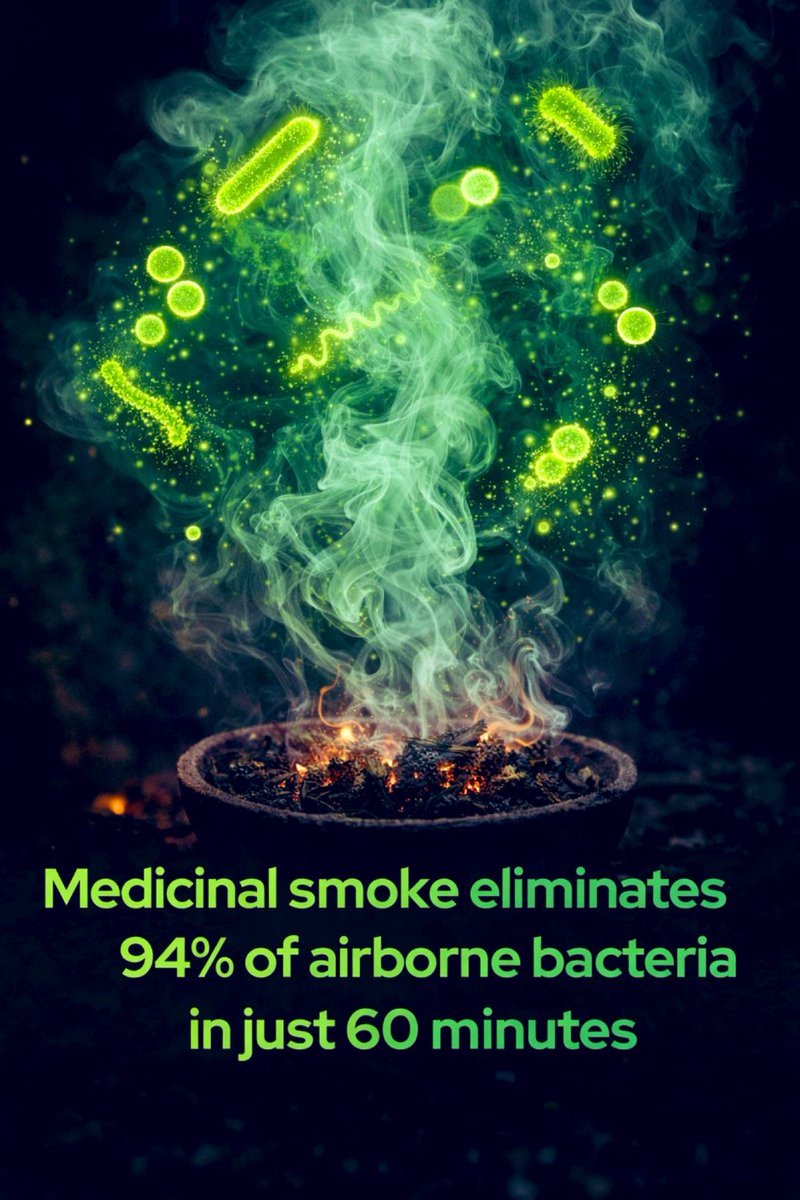
Smoke can clean the air better than some chemicals.
A study published in the Journal of Ethnopharmacology analyzed the effects of "medicinal smoke" - specifically the combustion of wood and a mixture of odoriferous and medicinal herbs - on airborne pathogens. The goal was to see if natural smoke could function as an atmospheric sterilizer.
The findings were significant.
The researchers treated a closed room with this medicinal smoke for one hour. They found that it didn't just mask odors; it decimated the bacteria. Within 60 minutes, there was a 94 percent reduction in bacterial counts.
Even more surprising was the longevity of the effect.
While chemical sprays often evaporate or dissipate quickly, the smoke treatment maintained a cleaner environment for 24 hours in a closed room. In an open room, specific pathogenic bacteria
- including Staphylococcus lentus and Enterobacter aerogenes were completely absent even 30 days after the initial treatment.
This indicates that the smoke possesses strong bactericidal properties, capable of eliminating diverse plant and human pathogens within a confined space. It challenges the modern assumption that air quality is only improved by filtration,
This modern data validates a practice that dates back thousands of years.
Indigenous cultures worldwide have long used smoke for purification. In India, the havan ritual involves burning specific herbs to purify the environment, while Aboriginal Australians have performed "smoking ceremonies" for roughly 60,000 years to ward off bad spirits and cleanse the land.
Read the study:
"Medicinal smoke reduces airborne bacteria." Journal of Ethnopharmacology, 2007

English
S. L. U. retweetledi

In a stunning breakthrough, electrons in graphene have exhibited behavior long considered impossible by physicists. At the material's Dirac point—a critical electronic state where graphene is neither fully a metal nor an insulator—the electrons cease behaving like individual particles and instead flow collectively as a nearly perfect quantum liquid.
This strange fluid is extraordinarily smooth, with a viscosity so low it rivals the ultra-hot plasma that existed in the early universe or is recreated in modern particle accelerators—far smoother than any known behavior in ordinary solid matter.
The most shocking discovery: heat and electric charge decoupled completely, resulting in the largest violation ever observed of the Wiedemann–Franz law. This fundamental rule, which has held for over a century in all conventional metals, states that heat and electrical conductivity should move in lockstep. In graphene's quantum fluid, however, the ratio deviated by more than 200 times from the expected value.
This makes graphene far more than just a wonder material—it serves as a remarkable laboratory for exploring extreme quantum phenomena once thought observable only in black holes, quark-gluon plasmas, or the conditions inside massive particle colliders.
Beyond its fundamental importance, this ultra-clean, highly responsive quantum behavior could lead to revolutionary applications, including next-generation ultra-sensitive sensors capable of detecting minute electrical or magnetic fields with unprecedented precision.
["Universality in quantum critical flow of charge and heat in ultraclean graphene." Nature Physics, 13 August 2025]

English