@useoneonly@rian_vlbt Though there are instances where Vishnu decides to end the Kaivalya state of a Mukta & brings him out to give him a functional existence
One of the things I like most about the Trika approach, especially as interpreted by Abhinavagupta, is its notion of hierarchical inclusivism. It's because there are at least three possible approaches to the differences between religious traditions:
1. We can become dogmatic exclusivists and try to claim a monopoly on truth, insisting that my own tradition is the only valid one and that all others must be rejected. This is the sort of thing we see in many Abrahamic sects and, unfortunately, among some followers of Madhva, for example.
2. We can become relativists and say that all positions, even if they contradict each other, are equally correct and that there’s no fact of the matter to settle the issue. This is a view that sounds appealing to modern ears but comes with serious costs in terms of plausibility and consistency.
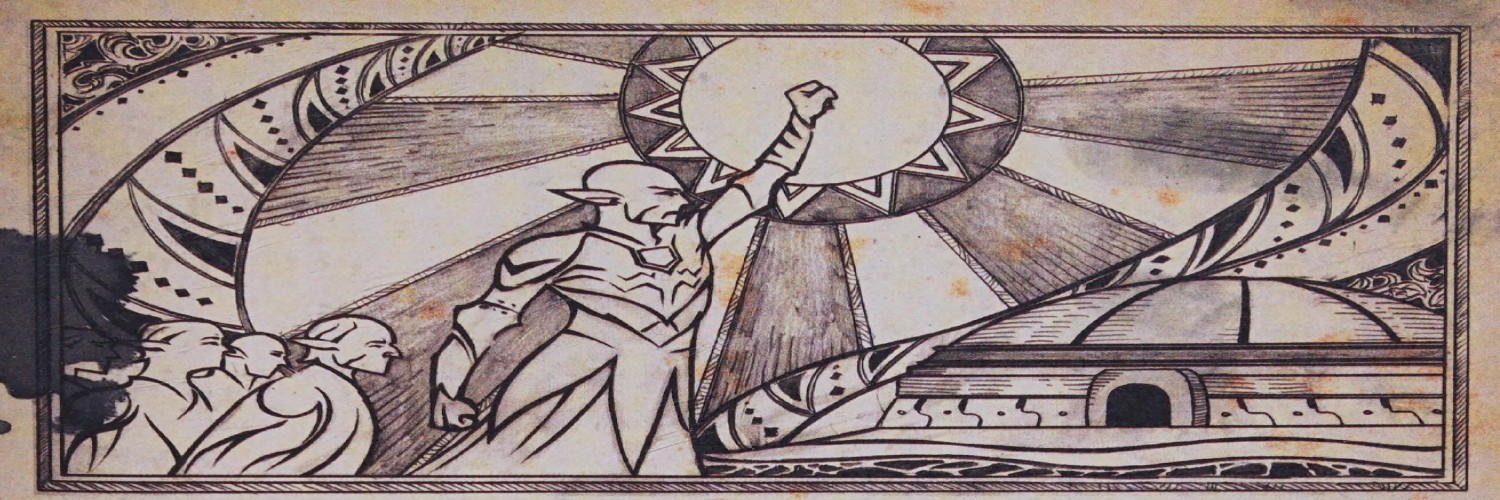
Or we can take the third option and say that all traditions contain something valid from which we can learn, without clinging to any dogmatic fixation, even if one of them (perhaps mine, perhaps not) goes deeper than the others. This implies some kind of hierarchy, but it’s an inclusive rather than exclusive one. I think this is the healthiest approach available and that, regardless of which tradition one sees as closer to the truth, it’s an admirable attitude and enjoys prima facie plausibility (as David Peter Lawrence explains in the print below).
Mark Dyczkowski also notes this in his Doctrine of Vibration:
"This understanding of reality allows for a range of insights into its nature which complement and sustain each other without conflict. Almost every school of Indian thought aspires to lead us to a plane of being and an experience which it believes to be the most complete and satisfying. This is the liberation it offers. All these views are correct insofar as they correspond to an actual experience. But this is because the absolute, through its inherent power, assumes the form of all the levels of realisation (bhūmikā) which correspond to the ultimate view (sthiti) each system upholds. Dualism is not an incorrect view of reality although it corresponds to only one of the levels within the absolute.
Citing the well-known Jaina example, Abhinava explains that the exponents of different systems are like blind men who, presented with an elephant, touch one part or another and argue amongst themselves about what it could be. This is not because they disagree completely but because their agreement is only partial. Ultimately, differing views of reality are the result of the capacity (śakti) of the absolute to appear in different forms. Rather than reject all views as incorrect because they are not completely true, the Kashmiri Śaiva prefers to accept them all because they are partially true. System builders are all equally concerned with reality, but are like children of feeble intellect (sukumāramati) who have not yet reached the supreme summit (parakāṣṭhā) of the absolute, the experience of Supreme Oneness. They cannot, as yet, look down to the lower planes and see their role within the whole. Accordingly Maheśvarānanda says:
Not accepting each others’ point of view they talk of Your universal nature in terms of that which is to be refuted and that which refutes it in order to reject [their] opponents’ position."
@TenpayNyima@O1A2S3D@rian_vlbt a following among certain families and monastic institutions. As centuries progress, erudite scholars like Sakya Pandita begin to pick up these views and perhaps just as importantly, the families aligned with these views become politically powerful, eventually dominating their
@accelerator00_@rian_vlbt Furthermore from a more philosophical POV, non-Vaishnava-s have to conform their doctrine to attain mukti, while for the Mantramarga, each school attains its state as they describe it
@accelerator00_@rian_vlbt On the other hand, the GV doctrine will slot most mukta-s into permanently inferior states, including the states approximate to KA which is described as functional non-existence
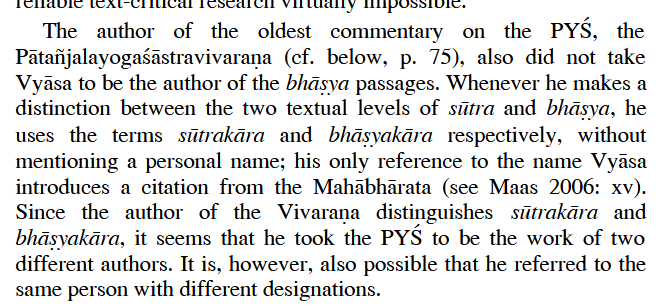
@YuvrajS2012P@agnimaan@rian_vlbt Instead he says references in PYS manuscripts to Vyasa are sparse, and variations of the mula come from different authors determining what is bhashya and mula in different ways
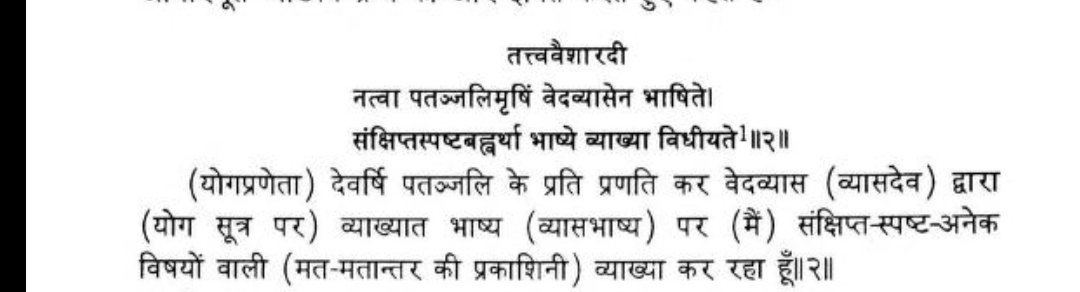
@useoneonly@agnimaan@rian_vlbt Hmm.. well as far as Vācaspati is concerned, then he in his maṅgalācaraṇa of Tattvavaiśāradī has clearly said that Sūtra is by Patañjali and bhāṣya by Veda Vyāsa.
"natvā patañjalimṛṣiṁ vedavyāsena bhāṣite / saṅkṣiptaspaṣṭabahvarthā bhāṣye vyākhyā vidhīyate // "
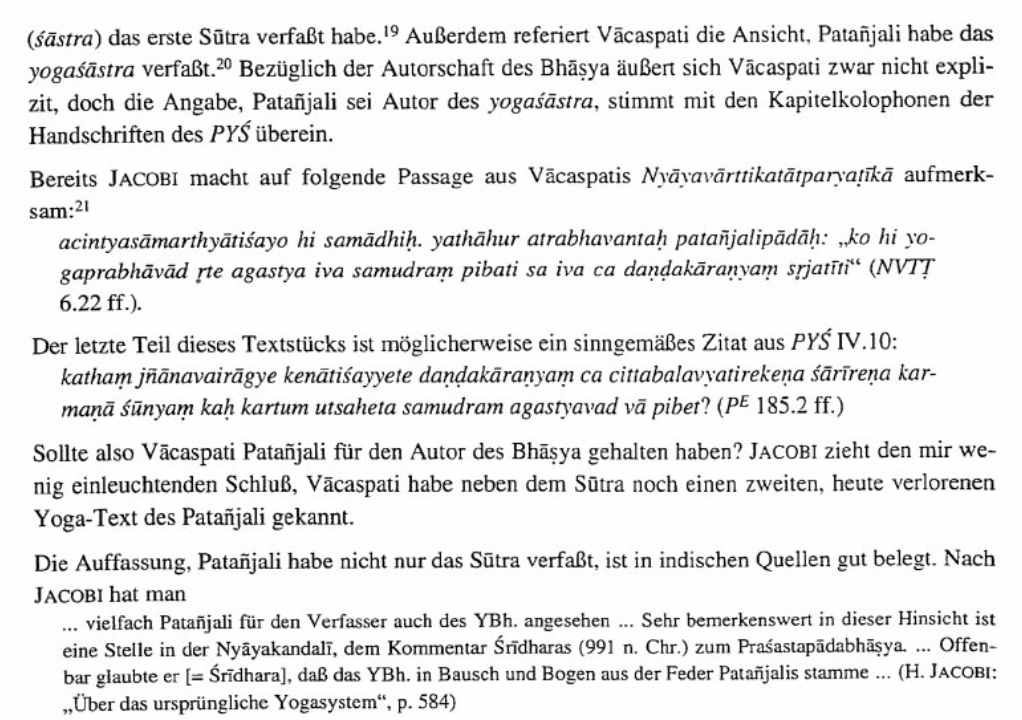
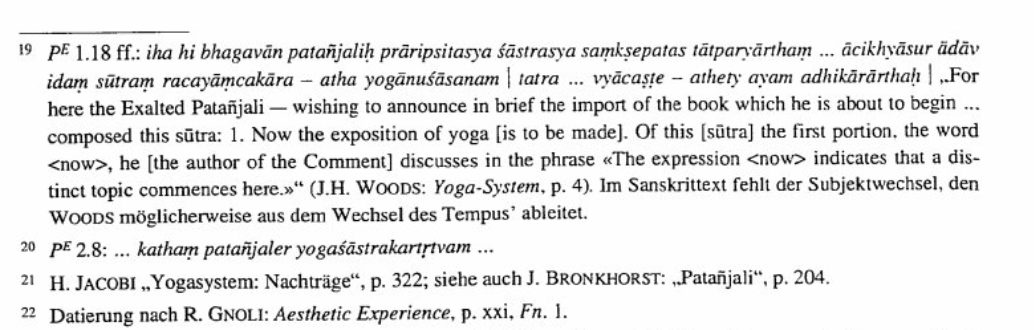
@YuvrajS2012P@agnimaan@rian_vlbt Yeah Trevor assumes the bhashya is from Vyasa, hence the translation, but that's not particularly clear. Even in some of Vachaspati Mishra's works, like the NVTT, it's claimed he refers to the Yogabhashya as Patanjali's work only
@YuvrajS2012P@agnimaan@rian_vlbt If he's quoting the Mbh, he's quoting the Mbh. There's no point in trying to read into a quotation if it's not from the bhashya. As Maas says, he is silent on the authorship
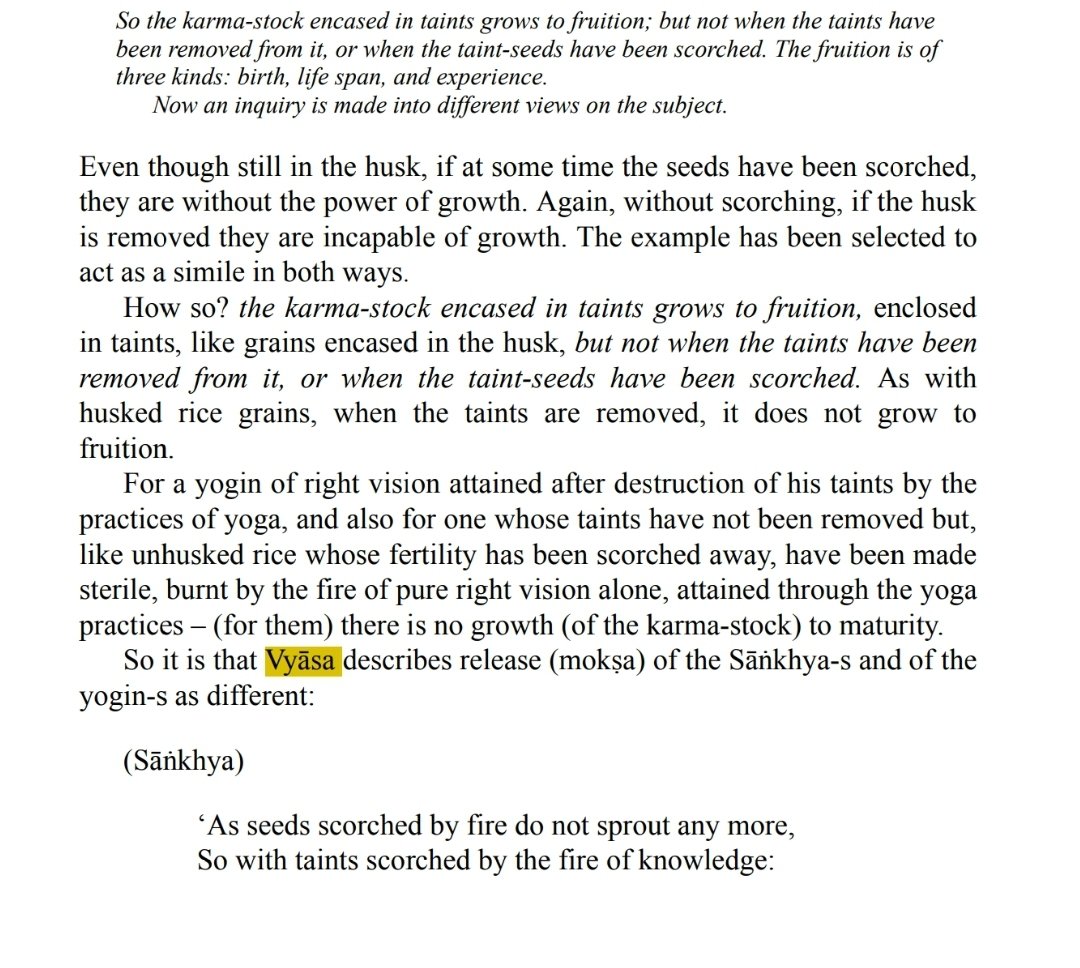
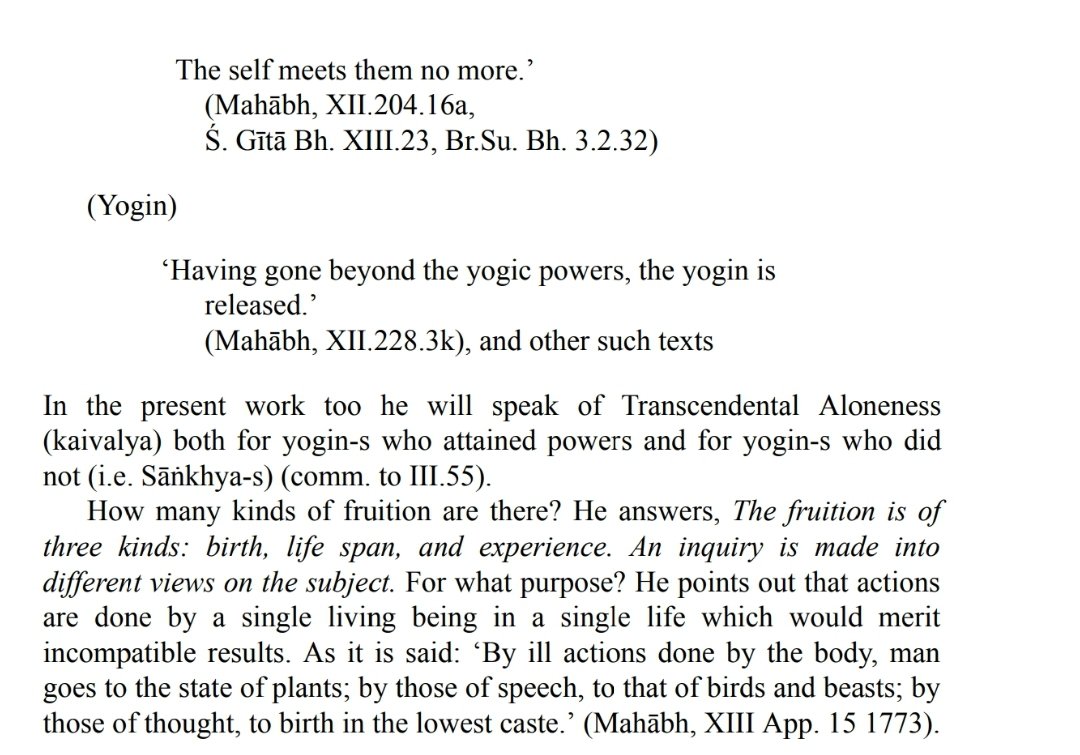
@useoneonly@agnimaan@rian_vlbt But as per Trevor's translation it's in Mahābhārata [though it's not clear imo]. The question is whether Śaṅkara equated this Vyāsa with Veda Vyāsa or not.
There's no clear answer, but there's chances that he did.