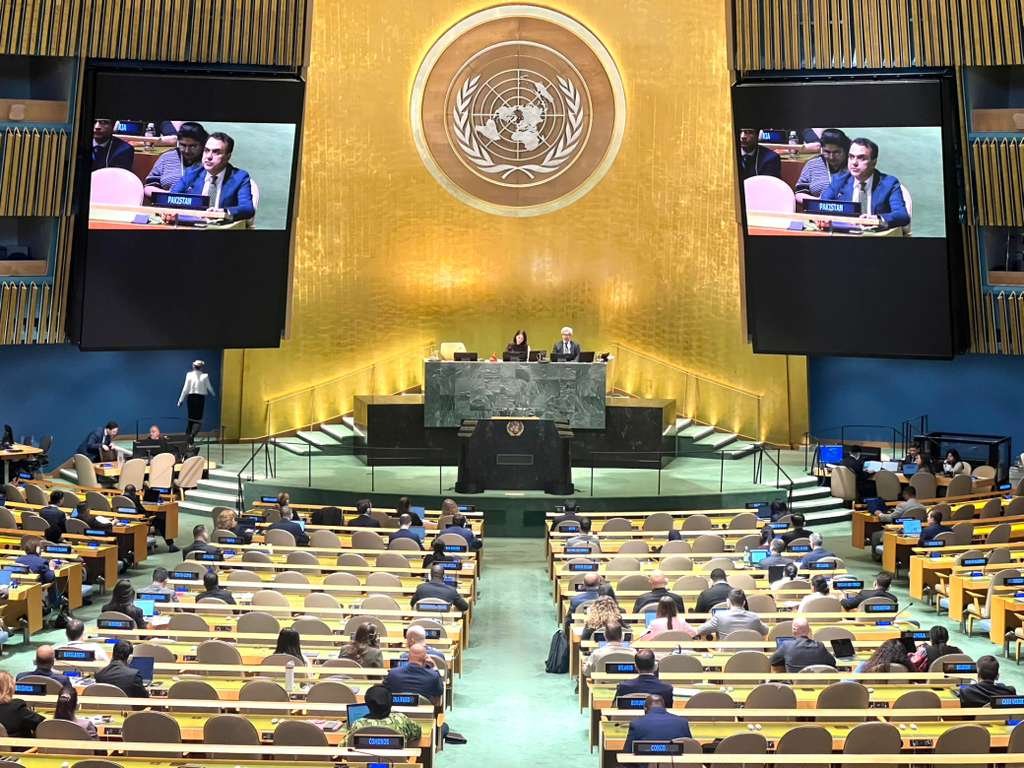
Usman Jadoon

565 posts

Usman Jadoon banner
Usman Jadoon

Usman Jadoon

@usmanjadoon_fsp

Pakistani diplomat. Ambassador / Deputy Permanent Representative of Pakistan to the UN, New York. Previously served in Geneva & Vienna

New York, USA Katılım Nisan 2016
188 Takip Edilen2.4K Takipçiler
Usman Jadoon retweetledi
Permanent Mission of Pakistan to the UN
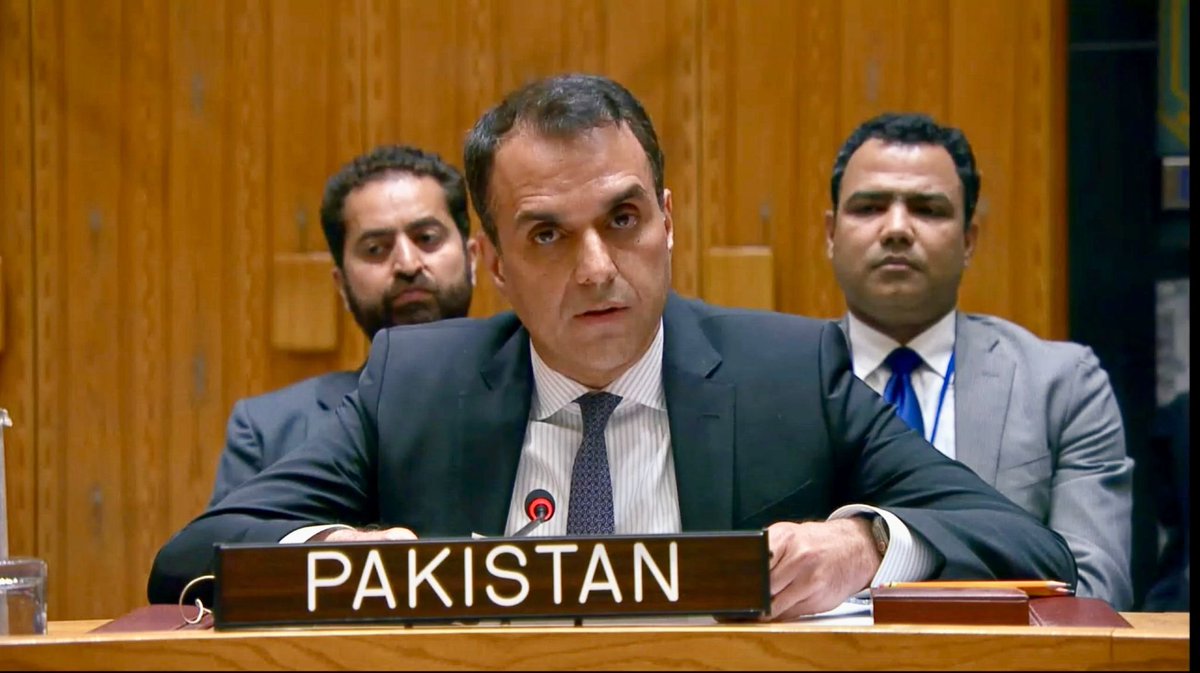
Pakistan strongly condemns the 13 December drone attack on the UNISFA logistics base in Kadugli, which killed six Bangladeshi peacekeepers. We extend our deepest condolences to Bangladesh and the families of the victims. Those responsible must be held accountable. Accountability for crimes against peacekeepers is key to deter such attacks in the future. Financial considerations must not undermine protection, safety and security and accountability for crimes against peacekeepers. We must not place a cost ceiling on the safety of those who serve the mandates assigned by this Council. Statement by Ambassador Usman Jadoon, Deputy Permanent Representative of Pakistan, at the Security Council Briefing on the Situation in Abyei (UNISFA) @UNISFA_1 @UNISFA_PAKBATT3 @UNPeacekeeping @Pakpeace_UN @usmanjadoon_fsp
English
0
14
38
1.2K
Usman Jadoon retweetledi
Permanent Mission of Pakistan to the UN
Statement by Ambassador Usman Jadoon Deputy Permanent Representative of Pakistan, At the Security Council Briefing on the Situation in Abyei (UNISFA) (7 May 2026) ****** Mr. President, Pakistan thanks ASG Martha Pobee and Special Envoy Guang Cong for their briefings. 2. We commend the mission and UNISFA peacekeepers for implementing the mandate under exceptionally difficult conditions. The situation in Abyei remains fragile and increasingly complex, shaped by the conflict in Sudan, instability in South Sudan, intercommunal tensions, arms proliferation, criminality, and the presence of unauthorized armed actors, including the Rapid Support Forces. 3. In this environment, UNISFA remain a stabilizing factor in Abyei. The mission continues to protect civilians, support intercommunal dialogue, and facilitate humanitarian access. Civilians seeking refuge in UNISFA bases underscores both the volatility of the situation and the Mission’s critical value. Around 600 Pakistani peacekeepers are actively contributing to peace through community engagement and efforts to prevent escalation. President, 4. We welcome the recent news regarding movement on the political track. While both Sudan and South Sudan face serious internal challenges, we encourage them to continue engagement, including through the Joint Political and Security Mechanism and the Abyei Joint Oversight Committee, with support from the United Nations, the African Union, IGAD and other regional partners. A sustainable resolution of the final status of Abyei requires sustained political dialogue. Mr. President, 5. Pakistan strongly condemns the 13 December drone attack on the UNISFA logistics base in Kadugli, which killed six Bangladeshi peacekeepers. We extend our deepest condolences to Bangladesh and the families of the victims. Those responsible must be held accountable. Accountability for crimes against peacekeepers is key to deter such attacks in the future. Financial considerations must not undermine protection, safety and security and accountability for crimes against peacekeepers. We must not place a cost ceiling on the safety of those who serve the mandates assigned by this Council. President, 6. The Council has repeatedly emphasized the deployment of formed police units and police personnel as essential to UNISFA’s mandate. Now that conditions exist for such deployment, adequate resources must be provided for the deployments. It would be difficult to justify treating the deployments of these police elements as a necessary condition for the Mission’s future continuation, while failing to provide the financial means to deploy them. The prompt deployment of these FPUs is critical for strengthening law and order and protecting civilians. Mr. President, 7. The Mission’s continued presence helps preserve fragile peace and prevents backsliding, while sustaining conditions necessary for political engagement. Pakistan reaffirms its strong support for the Mission and pays tribute to all peacekeepers serving under difficult and dangerous conditions. I thank you.
Permanent Mission of Pakistan to the UN tweet media
English
0
7
10
414
Usman Jadoon retweetledi
Permanent Mission of Pakistan to the UN
Explanation of Vote (EoV) by Ambassador Usman Jadoon, Permanent Representative of Pakistan to the UN, At the adoption of UNMISS mandate renewal resolution (30 April 2026) **** Mr. President, Pakistan has voted in favor of the UNMISS mandate renewal resolution primarily to express our support for the peacekeeping mission. 2. However, we share many of the concerns expressed by our African colleagues, China and others. I wish to highlight some of them: 3. First, the proposed reduction of the troop ceiling to 12,500 is not justified by the deteriorating political and security situation in South Sudan. Also the troop ceiling is being reduced while the mandate remains focused on protection of civilians and humanitarian access across a wide geographic area – which requires robust presence. This reduction could negatively affect the implementation of the protection of civilians’ mandate and the safety and security of peacekeepers. We have consistently emphasized that mandates must be matched with adequate capabilities and resources. 4. Second, the resolution significantly curtails the Mission’s political role. UNMISS core task was to support implementation of the Revitalized Agreement and help sustain the transition in South Sudan. At a time when progress on key benchmarks has stalled or reversed, the Mission’s political engagement should remain central rather than peripheral. This goes against the principle that peacekeeping missions should support political solutions. It should also be noted that Political engagement plays an important role in the protection of civilians. 5. Third, while several functions of the Mission appear to have been streamlined in light of financial considerations, reporting requirements have expanded. This places additional expectations on the Mission without corresponding political support and reflects a misalignment of priorities. 6. Fourth, Pakistan also regrets the removal of language on consultations with troop- and police-contributing countries in the context of the Military and Police capability study. Pakistan has consistently advocated meaningful consultations with those who implement the mandates of the Council on the ground, and have better understanding of the challenges in field. 7. Finally, linking future adjustments to the Mission’s configuration to the level of host-State cooperation raises important concerns. While host state’s cooperation with UNMISS is essential, and we encourage South Sudan to address the obstructions and facilitate the mission in its mandate implementation, peacekeeping operations are instruments of the Security Council and require sustained and predictable political and financial support from this Council, particularly in fragile environments where continuity of presence contributes directly to stability. I thank you.
Permanent Mission of Pakistan to the UN tweet media
English
0
11
19
663
Usman Jadoon retweetledi
Permanent Mission of Pakistan to the UN
The situation in North-East Asia continues to remain a matter of concern for international community. Coercive or provocative actions as well as threats and heated rhetoric must come to an end. These developments are detrimental to regional and international peace and security. Pakistan support the objective of denuclearization of the Korean peninsula, the implementation of the relevant Security Council resolutions and the goals of global non-proliferation and disarmament. Statement by Ambassador Usman Jadoon, Deputy Permanent Representative of Pakistan to the UN, at the Security Council briefing on non-proliferation/ Democratic People’s Republic of Korea Please watch the full statement below
English
0
11
22
847
Usman Jadoon retweetledi
Permanent Mission of Pakistan to the UN
Statement by Ambassador Usman Jadoon, Deputy Permanent Representative of Pakistan to the UN At the Security Council Briefing on Non-proliferation/Democratic People’s Republic of Korea (30 April 2026) ****** Thank you, Mr. President, I thank USG DiCarlo for their insightful briefings on the evolving situation in the region. We also take note of the remarks delivered by Mr. Byrne. The situation in north-east Asia continues to remain a matter of concern for international community. Coercive or provocative actions as well as threats and heated rhetoric must come to an end. These developments are detrimental to regional and international peace and security. Pakistan is concerned on the tensions in the Korean peninsula that continue to pose a serious challenge to regional peace and international stability. Pakistan supports the objective of denuclearization of the Korean peninsula, the implementation of the relevant Security Council resolutions and the goals of global non-proliferation and disarmament. Mr. President, The challenges confronting the Korean peninsula should be resolved through diplomatic engagement and dialogue. It is incumbent on all parties to refrain from actions that escalate the situation, to exercise restraint and respond positively to constructive proposals. We strongly support the calls for revival of talks among the relevant parties. Recent overtures may be reciprocated and followed up with resumption of diplomatic engagement to address underlying disputes through peaceful means. Mr. President, The Security Council has a responsibility to act with unity and clear purpose to promote peace and stability in the Korean peninsula. The Council must find ways to contribute to stabilizing the situation in the region through supporting a robust political process and exploring all possible confidence building measures. Unfortunately, the Security Council’s important work including within the 1718 Committee is being hampered by the lack of agreement on the chairs of subsidiary bodies. We hope that with the agreement on the chairs of the subsidiary bodies at the earliest the normal functioning of all subsidiary bodies of the Council will resume without further delay. One of the critical functions of the 1718 Committee is processing of humanitarian exemptions. We believe that humanitarian exemptions should continue to be processed in accordance with humanitarian principles and humanitarian requirements on the ground and without political considerations. We will continue to support the Committee’s efforts to facilitate humanitarian assistance to the DPRK through a robust exemptions mechanism. I thank you.
Permanent Mission of Pakistan to the UN tweet media
English
0
9
15
689
Usman Jadoon retweetledi
Permanent Mission of Pakistan to the UN
Pakistan today voted in favor of the UNMISS mandate renewal resolution primarily to express our support for the peacekeeping mission. Speaking during the adoption of UNMISS mandate renewal resolution, Ambassador Usman Jadoon, Deputy Permanent Representative of Pakistan to the UN, highlighted the following major points: ✅ The proposed reduction of troop levels to 12,500 is unjustified given the worsening security situation in South Sudan and risks undermining civilian protection and peacekeeper safety. ✅ There is a mismatch between mandate and resources, as the mission’s broad responsibilities require sufficient personnel and capabilities. ✅ The resolution weakens UNMISS’s political role, despite the need for strong political engagement to support the peace process and protection of civilians. ✅ Expanded reporting requirements, alongside reduced operational capacity, reflect misaligned priorities and add pressure without adequate support. ✅ Concerns include the removal of consultations with troop- and police-contributing countries and the conditionality tied to host-state cooperation, which may affect the mission’s effectiveness and stability. Please watch the complete statement below @unmissmedia @Pakpeace_UN @UNPeacekeeping
English
0
19
39
1.3K
Usman Jadoon retweetledi
Permanent Mission of Pakistan to the UN
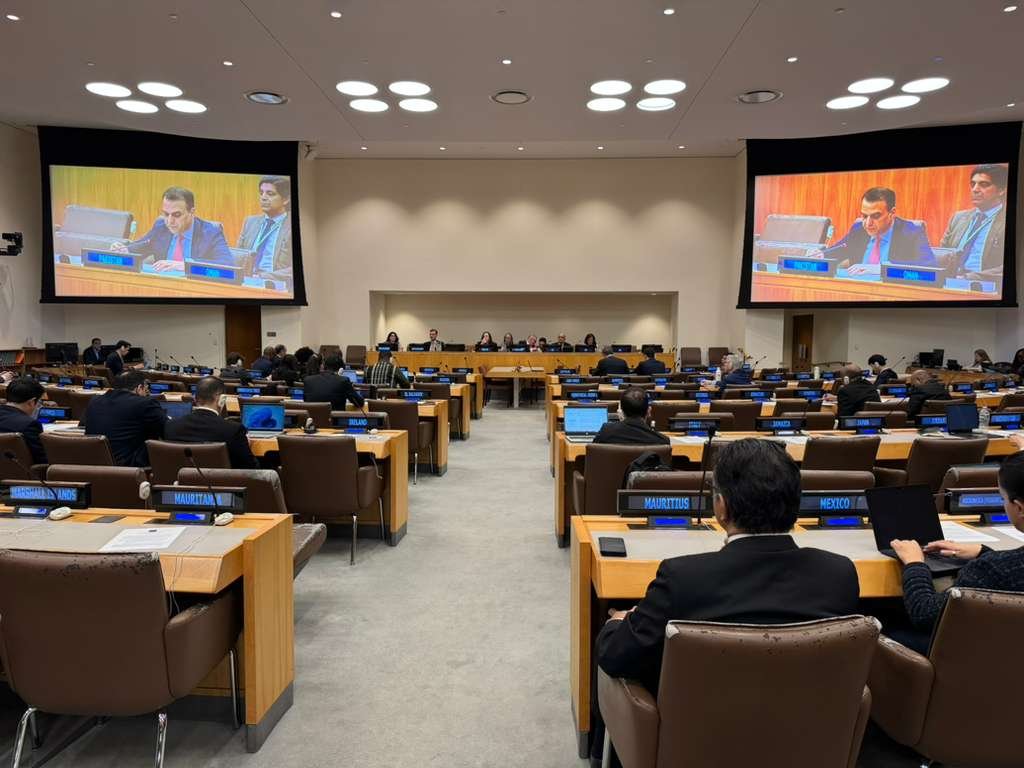
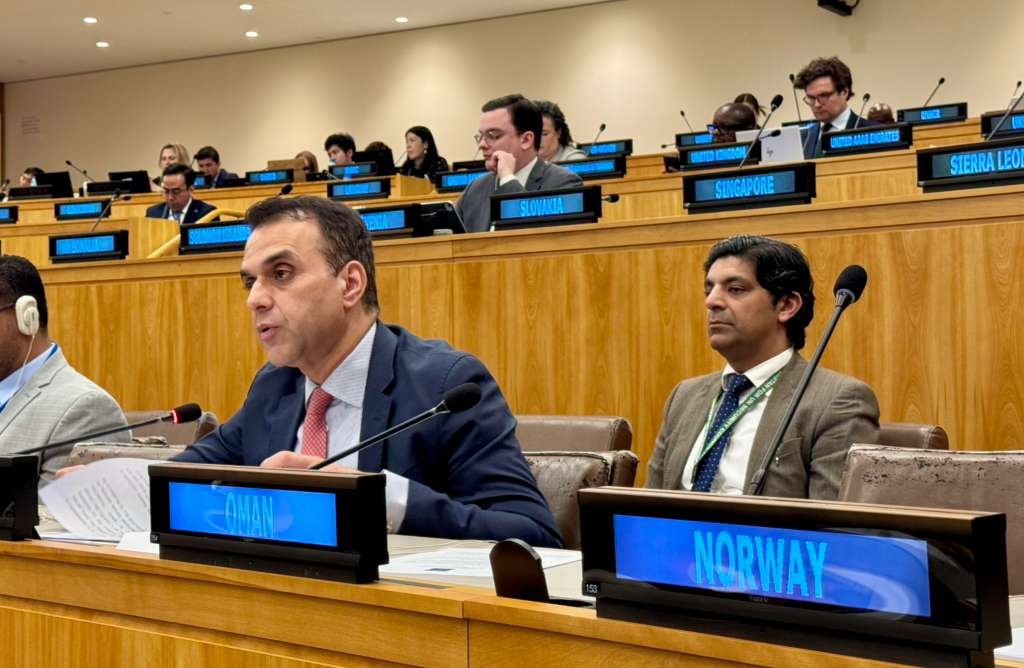
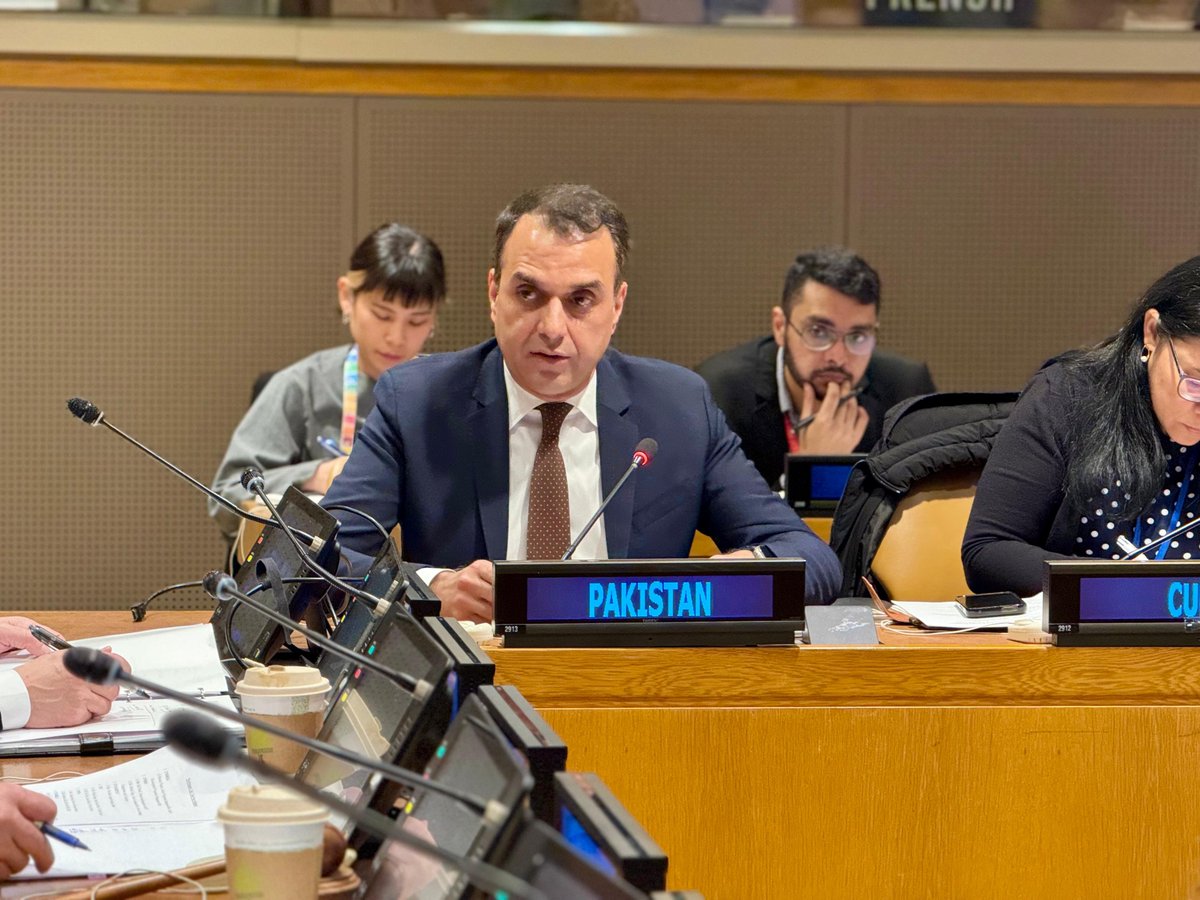
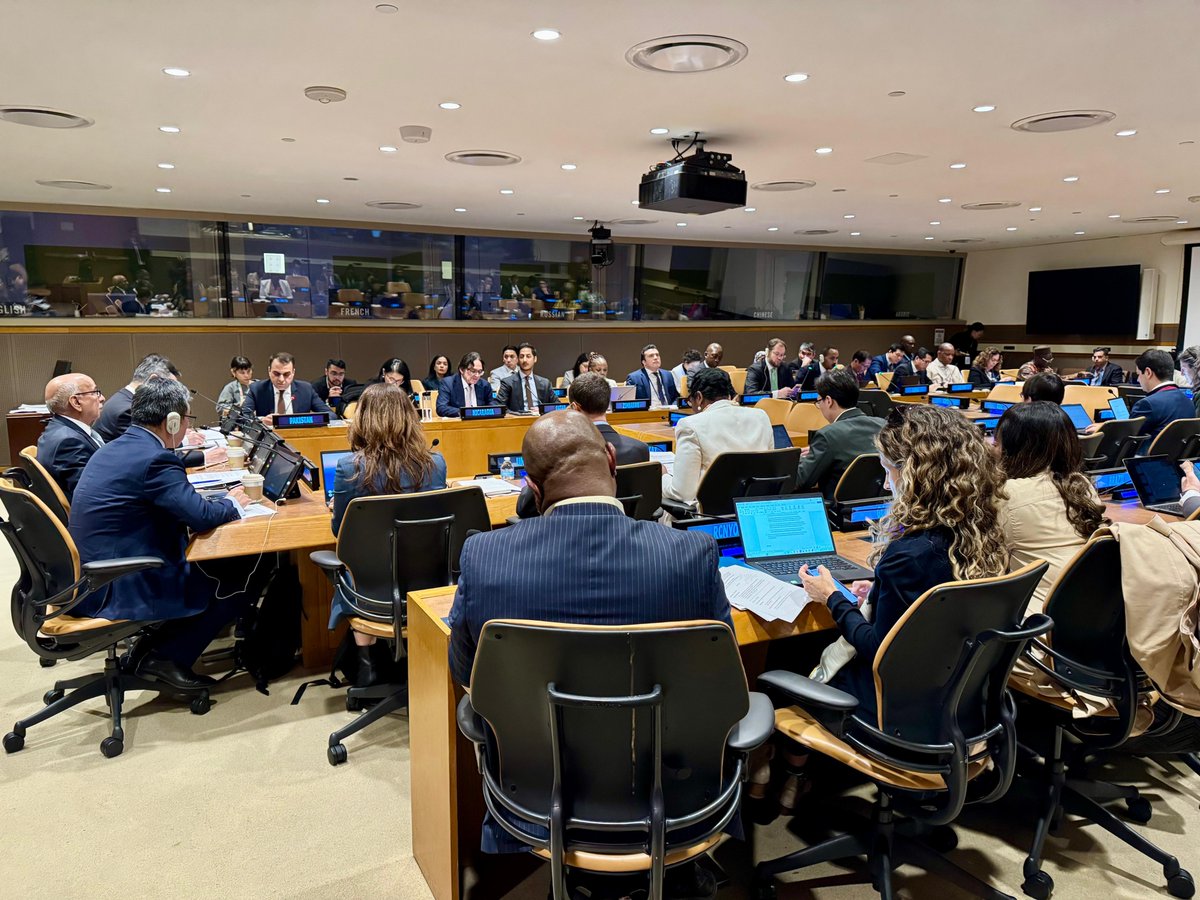
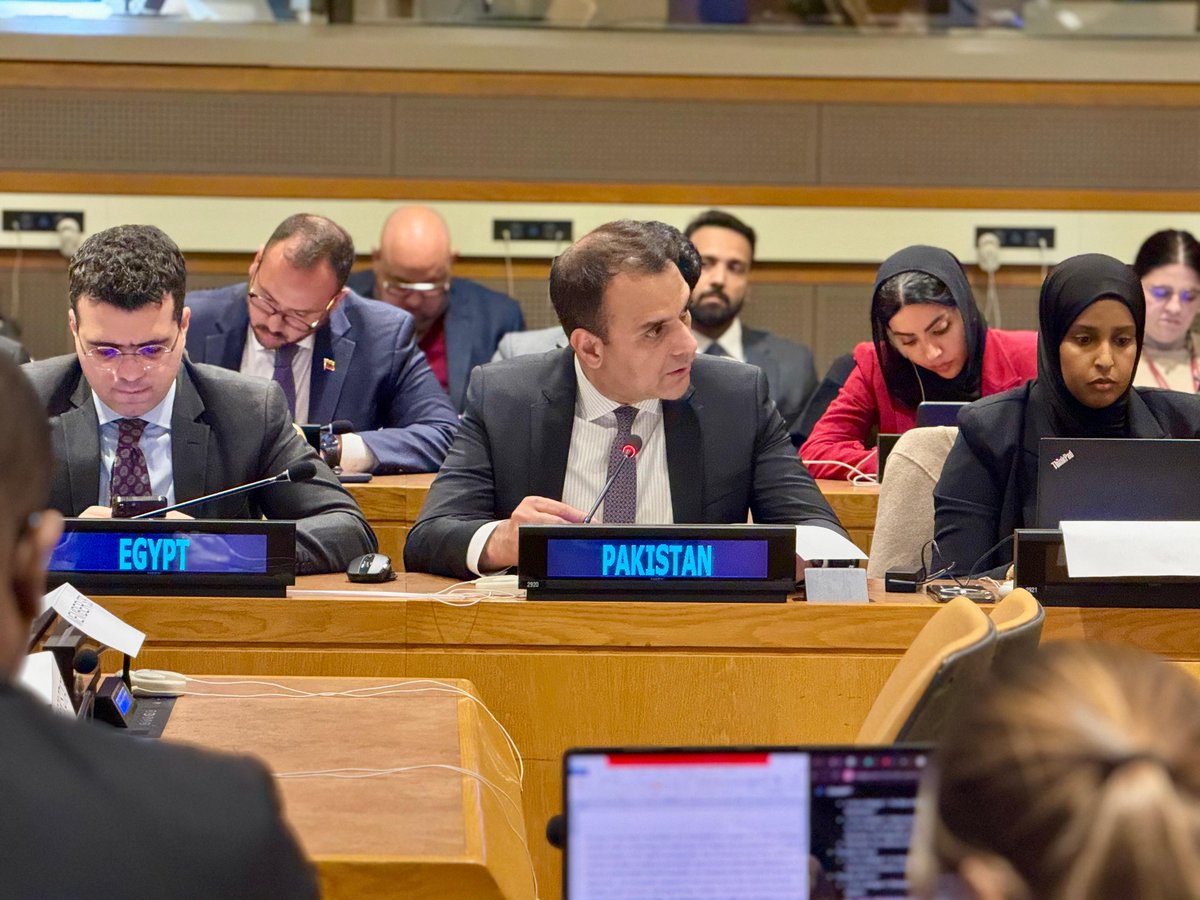
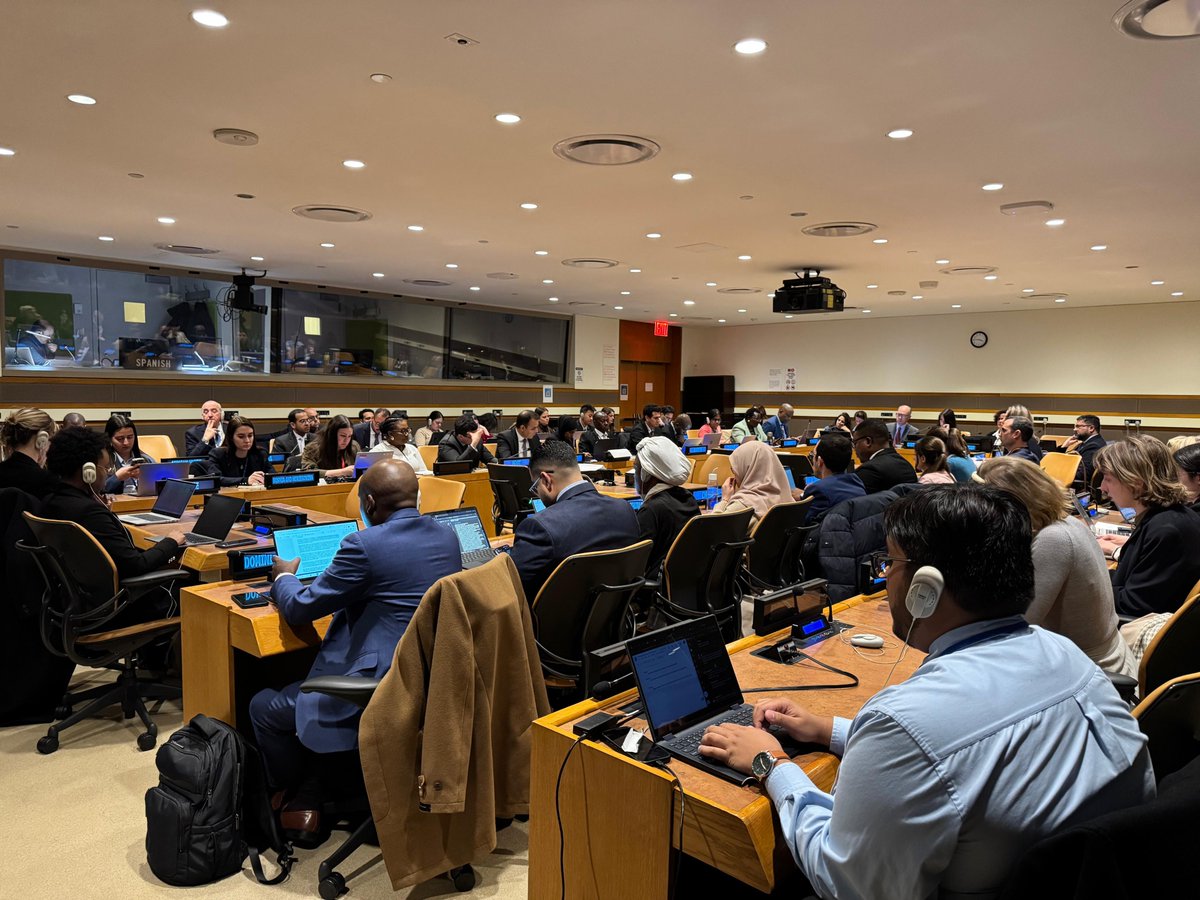
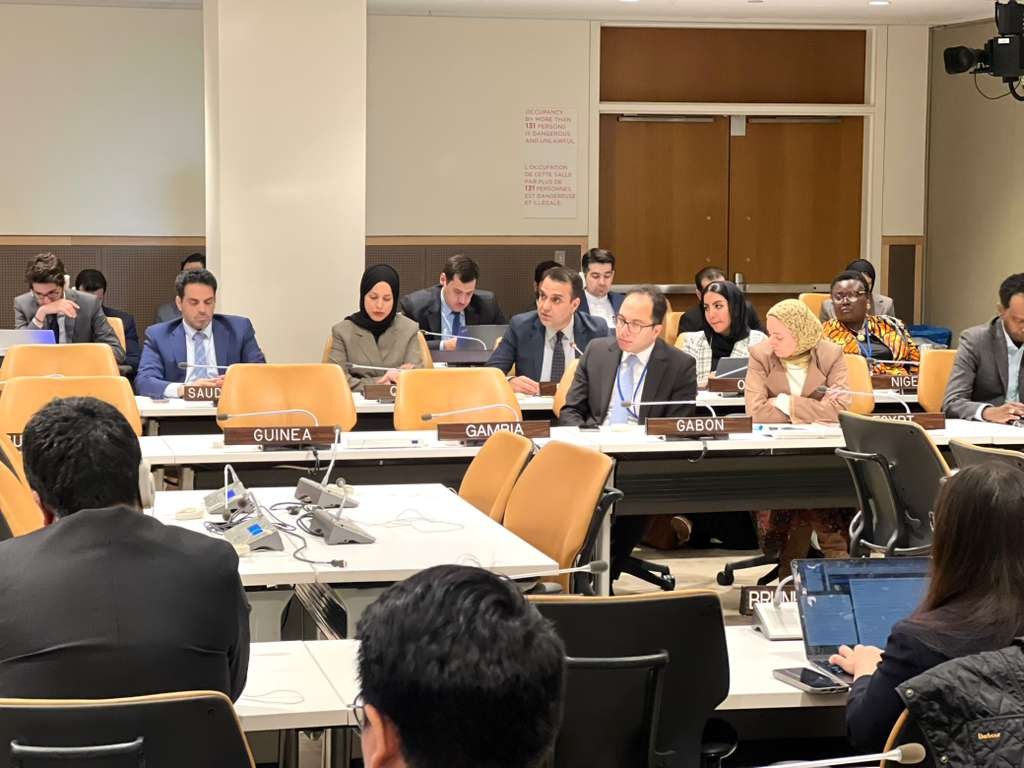
Remarks by Ambassador Usman Jadoon Deputy Permanent Representative of Pakistan to the UN During the UN Office of Counter Terrorism (UNOCT) Ambassadorial Level Briefing to Member States at Conference **** I commend Acting USG Mr. Alexander Zouev for his leadership of the UNOCT and for chairing this important briefing today. My delegation fully supports the work of UNOCT and its activities. At the outset, allow me to express our strong condemnation of the recent terrorist attacks in Mali and Nigeria. Mr. Chair, 2. This briefing comes at an important time as the 9th review of the Global Counter Terrorism Strategy (GCTS) is taking place under difficult geo-political circumstances. 3. Pakistan has remained at the forefront of global counter terrorism efforts, and has been a principal target of externally sponsored terrorist attacks from terrorist groups such as the TTP, Daesh and Majeed Brigade which receive active support and patronage from across our borders. According to the latest Global Terrorism Index, Pakistan was amongst the worst affected countries by terrorism in 2025, losing at least 1,235 precious lives. 4. We support the UNOCT’s role for implementation of its most comprehensive mandate that covers all four pillars of the GCTS. Consistent with our established position, we reiterate our call to fund this office through the regular budget for greater transparency, accountability and effectiveness towards executing the balanced implementation of all four GCTS pillars at the operational level. 5. While we thank the top financial contributors to UNOCT.We believe that the UNOCT should work on a model that is more demand based, than donor driven. 6. On 24th April, Pakistan, together with the UNOCT hosted a joint event on “new and emerging trends in terrorism” in line with Pillar II of the GCTS that call upon member states to take appropriate measures to address the new and emerging threats. We thank the UNOCT and you, Acting USG Zouev for partnering with us on this initiative. Mr. Chair, 7. We take note of the unified results framework to measure impact of the UN in support of the GCTS. 8. While we appreciate these efforts, we regret to observe that they do not present a balanced implementation of the four pillars of the GCTS, particularly when it comes to the various elements that are contained in the strategy – a long standing demand of the OIC Group that includes countries worst hit by terrorism. 9. Certain aspects have been focused in great detail on the one hand, whereas some other aspects, also equally important, have found no space in the outcomes. This approach does not adequately reflect the needs and priorities of the general UN membership, let alone countries like Pakistan that are worst affected by terrorism. 10. To highlight just a few examples, thematic areas such as foreign occupation, xenophobia, racism or other forms of intolerance, found little to no space in the outcomes of the unified results framework. On the contrary, the gender theme has been referenced for a total of 93 times. Such examples indicate the unbalanced nature of how entities have approached the GCTS. The SG’s report reflects a similar trend unfortunately. Mr. Chair, 11. Without operational direction to UN compact entities and a substantive analysis of qualitative and quantitative impacts, the needs and priorities of countries most affected by terrorism will remain unaddressed. 12. This cannot be a static process and must be built upon further for regular reporting and implementation through a member state led oversight mechanism, with a concrete set of recommendations, necessary changes and reform of the UN’s CT architecture and sanctions regimes to adapt to new and emerging trends in terrorism, with adequate checks and balances. 13. The UNOCT must also analyze the underlying root causes of terrorism such as poverty, injustice and prolonged unresolved conflicts while clearly differentiating between the legitimate struggle against foreign occupation and denial of the right to self determination in accordance with international law and UNGA resolution 46/51. 14. It is also important to prevent violations of human rights and international law especially in situations of foreign occupation and the denial of the right to self determination under the garb of concocted counter terrorism narratives. 15. We reiterate our call for the creation of a subsidiary body of the General Assembly, led by member states, to promote the comprehensive and balanced implementation of all four pillars of the GCTS. 16. We look forward to hearing from the UNOCT on these recommendations and on UNOCT’s planned activities for 2026. I thank you. ****
Permanent Mission of Pakistan to the UN tweet mediaPermanent Mission of Pakistan to the UN tweet mediaPermanent Mission of Pakistan to the UN tweet media
English
0
5
14
666
Usman Jadoon retweetledi
Permanent Mission of Pakistan to the UN
We remain deeply concerned at the misuse of digital platforms to amplify falsehoods, deepen polarization, and target vulnerable communities. The persistence of hate speech, racism, xenophobia, and Islamophobia in digital spaces is particularly alarming, often translating into real-world harm. Equally concerning is the use of disinformation in situations of foreign occupation and conflict. False narratives are deployed to obscure human rights violations, demonize lawful struggles for self-determination, and silence affected populations. Statement by Ambassador Usman Jadoon, Deputy Permanent Representative of Pakistan to the UN, at the 48th Session of the UN Committee on Information (COI) Please watch the full statement below
English
2
10
20
927
Usman Jadoon retweetledi
Permanent Mission of Pakistan to the UN
Statement by Ambassador Usman Jadoon, Deputy Permanent Representative of Pakistan to the UN, At Second Policy Dialogue between the Group of Friends of the GDI and the UN Task Force on Leveraging Partnerships towards the Implementation of the 2030 Agenda, “Accelerating SDG Implementation in the Final Five Years”, (27 April 2026) ***** H.E Sun Le, ASG Navid Hanif, Pakistan is pleased to participate in this second Policy Dialogue. We thank the Permanent Mission of China to the UN for convening this timely exchange and thank the Secretariat for their efforts in preparing the preliminary list of projects. 2. With only five years remaining to the 2030 deadline, progress on the SDGs is severely off-track. Initiatives rooted in solidarity and South-South cooperation, such as the GDI, are essential. 3. Pakistan has been a committed member of the GDI since its inception and we commend President Xi Jinping’s visionary leadership in placing development at the center of the global agenda. 4. Turning to the Task Force portfolio before us today, Pakistan welcomes the breadth and operational maturity of the 51 submitted initiatives. We agree that our focus must now be on clustering and integration, and applying clear prioritization criteria when shaping the flagship pipeline of projects. 5. Such criteria could include implementation maturity and readiness to scale; geographic balance across all developing regions; projects covering countries at different levels of development; and projects which include integrated financing alongside technical support and demand-driven design. Thematically, we support a focus on industrialization, urbanization, climate resilience, food security and digitalization. 6. We suggest shortening the preliminary list of projects to a tier-one list of no more than ten flagship initiatives. We would offer the preliminary comments on the following: • First, on South-South industrial cooperation: Pakistan welcomes UNIDO’s proposal to scale the GDI Industrialization, Digital Economy and Connectivity Track under UCSSIC China Phase 4, as well as the BRI Industrial Cooperation component. Pakistan’s CPEC Phase-II, with its focus on special economic zones and agro-industrial processing is a ready vehicle for both. We would support scaling up of the initiative to include South Asian countries. • Second, on urban and water initiatives, we note with interest the Global Water Operators Partnerships Alliance and the WaterWorX Programme and the UN-Habitat UNITAC digital tools, particularly the informal settlement mapping tool and the URPS post-disaster reconstruction system, which are of acute relevance to countries facing recurring floods and would support their scaling up. • Third, we are also interested in the projects related to climate resilience and on food security and education and stand ready to share Pakistan’s experiences and expertise in this regard. Colleagues, 7. The final five years of the 2030 Agenda demand that we move from policy dialogue to partnership implementation. Pakistan remains fully committed to working hand in hand with China, the Group of Friends, and the UN system to deliver results for the people we represent. I thank you.
Permanent Mission of Pakistan to the UN tweet mediaPermanent Mission of Pakistan to the UN tweet media
English
0
8
28
829
Usman Jadoon retweetledi
Permanent Mission of Pakistan to the UN
Statement by Ambassador Usman Jadoon, Deputy Permanent Representative of Pakistan to the UN at the 13th Session of the Expert Mechanism on the Right to Development ***** Mr. Chair, We appreciate the continued work of the Expert Mechanism on the Right to Development and take note of the thirteenth session, taking place at a moment of particular significance. This year marks the fortieth anniversary of the adoption, by the General Assembly, of the Declaration on the Right to Development through resolution 41/128 (1986) - a landmark affirmation that development is neither charity, nor discretion, but an inalienable human right belonging to all peoples. This anniversary must be more than an occasion for commemoration; it should serve as a call for renewed commitment, implementation, and political resolve. 2. Four decades on, the normative clarity of the Declaration stands in stark contrast to the lived realities across much of the developing world. Persistent inequalities, unsustainable debt burdens, climate vulnerability, widening technological divides, and the continued under-representation of developing countries in global decision-making processes continue to impede the realization of this right. If the right to development is to be meaningful, it must be reflected not only in national policies, but also in the structure and functioning of the international system –including the regimes governing finance, trade, debt, and technology. 3. In this regard, the work of the Expert Mechanism remains highly valuable. By providing thematic expertise, identifying best practices, and advancing operationalization of the right to development, the Mechanism plays an important role in bridging the gap between principle and practice. The focus of this session, including on artificial intelligence, peace and security, regional cooperation, non-discrimination, and migration, is timely and forward-looking, underscoring the need for an integrated, inclusive and development-centered approach. 4. We wish to underscore, in particular, the importance of the ongoing efforts towards an International Covenant on the Right to Development. The completion of the draft by the Working Group chaired by Ambassador Zamir Akram of Pakistan and its transmission to the General Assembly mark a significant milestone in the long journey from normative recognition to effective realization of this right. This process comes at a time when the right to development continues to face serious and persistent challenges. The right to development cannot remain only a declaratory principle; it requires stronger legal grounding and more coherent institutional support. 5. In this context, the consideration of the draft covenant presents a historic opportunity that should not be missed. A legally binding instrument would not replace the Declaration; rather, it would build upon it by providing greater legal clarity, strengthening collective commitment, and establishing a framework for implementation, cooperation, and accountability. It would also send an important message that the international community remains committed to placing development at the center of the multilateral agenda. Mr. Chair, 6. While the states bear the responsibility for promoting development through inclusive and people-centered policies, the international community and the United Nations has a central role to play in advancing dialogue, fostering consensus, supporting capacity-building, and promoting international cooperation for the realization of right to development. Greater solidarity is also needed to ensure fairer access to finance, technology, trade, and development opportunities, while emerging challenges, including those arising from artificial intelligence and other new technologies, must be addressed in a manner that prevents new forms of exclusion and ensures that innovation becomes a tool for inclusion rather than division. Mr. Chair, 7. The right to development remains one of the most transformative principles of the international human rights framework. Its promise is clear: that human dignity must be at the center of development, and that the benefits of progress must be shared equitably among all peoples. Pakistan remains firmly committed to the realization of the right to development and continues to pursue policies aimed at its effective operationalization at the international and national level. 8. As we mark forty years of the Declaration, let us ensure that this milestone becomes a turning point - bridging the gap between recognition and realization, and advancing both the implementation of the Declaration and meaningful progress toward the adoption of the covenant. I thank you! @usmanjadoon_fsp
Permanent Mission of Pakistan to the UN tweet mediaPermanent Mission of Pakistan to the UN tweet media
English
0
4
14
624
Usman Jadoon retweetledi
Permanent Mission of Pakistan to the UN
At OIC Meeting, Pakistan Condemns Israeli Strikes in Lebanon, Urges De-Escalation and Humanitarian Access United Nations, April 13, 2026: Ambassador Usman Jadoon, Deputy Permanent Representative of Pakistan to the UN, attended the OIC Ambassadorial meeting held at the UN headquarters today to discuss the current humanitarian conditions in Lebanon. Speaking during the meeting, he said that the humanitarian situation in Lebanon is catastrophic and deteriorating by the day. He said that the recent Israeli bombardment, especially in the South and across densely populated areas, has caused devastating civilian harm. He said that Pakistan reiterates its full support for the sovereignty, unity, and territorial integrity of Lebanon, and condemned in the strongest terms Israel’s continued military aggression. "The large-scale destruction of civilian infrastructure and the blatant disregard for international humanitarian law must cease immediately," he demanded. Pakistan, on this occasion, also welcomed the efforts of the Government of Lebanon to restore stability and strengthen state authority, including the Cabinet Decision of the 2nd March to reinforce national security structures. Ambassador Jadoon said that we also note Lebanon’s de-escalation initiatives, including the four-point plan advanced by its leadership to restore calm and stability. Pakistan, he said, strongly condemns attacks on UN peacekeepers serving with UNIFIL who have been injured in Israeli strikes. He said that the emergency plan must be funded and reliable humanitarian access across all affected areas must be provided. He said that at this critical juncture, de-escalation, restraint, and renewed diplomatic engagement are urgently required to prevent further deterioration of the regional security environment. "Only through sustained political dialogue and respect for international law can the region move toward stability and peace," he maintained. @OIC_OCI @OICatUN @PakistanPR_UN @usmanjadoon_fsp
Permanent Mission of Pakistan to the UN tweet mediaPermanent Mission of Pakistan to the UN tweet mediaPermanent Mission of Pakistan to the UN tweet mediaPermanent Mission of Pakistan to the UN tweet media
English
1
14
47
1.3K
Usman Jadoon retweetledi
Permanent Mission of Pakistan to the UN
The sustained engagement remains fundamental to advance the goal of a comprehensive political settlement, supported by a stable regional environment and complemented by robust humanitarian assistance. That is the only viable path forward. The Security Council must continue to play a constructive and unified role in advancing these efforts, with a clear focus on peace, stability, and the well being of the Yemeni people. Statement by Ambassador Usman Jadoon, Deputy Permanent Representative of Pakistan to the UN, at the UN Security Council briefing on Yemen
English
0
38
128
11.7K
Usman Jadoon retweetledi
Permanent Mission of Pakistan to the UN
Statement by Ambassador Usman Jadoon, Deputy Permanent Representative of Pakistan to the UN, At the UN Security Council Briefing on Yemen (14 April 2026) ********* I thank Special Envoy Hans Grundberg and OCHA Director Edem Wosornu for their comprehensive briefings. We appreciate the sustained efforts of the Special Envoy in advancing stability and supporting a peaceful resolution in Yemen. 2. The situation in Yemen remains deeply concerning and continues to demand sustained international attention. Despite ongoing engagement by the United Nations, the political process continues to face persistent challenges. There is genuine expectation that efforts toward a comprehensive settlement must deliver tangible progress, while also carefully accounting for the evolving realities on the ground. 3. Unfortunately, Yemen’s internal dynamics further complicate the peace process. The Presidential Leadership Council is the internationally recognized and legitimate authority. However, the presence of competing actors with divergent political agendas, particularly in the south, continues to undermine unity and hinder efforts to establish a coherent national framework. This fragmentation risks weakening state institutions and obstructing progress toward a comprehensive political settlement. 4. In this context, it is essential that all parties and Yemeni stakeholders demonstrate renewed political will, engage constructively with the Special Envoy, and participate in an inclusive, UN-facilitated, Yemeni-led and Yemeni-owned political process. Such a process must move beyond incremental measures and preserve the unity, sovereignty, and territorial integrity of Yemen, while reflecting the legitimate aspirations of the Yemeni people. 5. At the same time, developments in Yemen cannot be viewed in isolation from the evolving regional security environment. Yemen must not be adversely affected or drawn into a regional conflict. It is also important to stress that attacks targeting maritime routes are unacceptable, as they disrupt global trade flows, heighten risks to energy and food supply chains, and would accentuate the growing regionalization of the conflict. The free and unimpeded flow of commercial shipping through the Bab el-Mandeb must not be impeded. 6. The risk of Yemen becoming further entangled in wider regional confrontations, including through the involvement of non-state actors must be avoided. It is therefore essential that all parties exercise the utmost restraint, refrain from actions that could escalate tensions, and fully comply with their obligations under international law. 7. The humanitarian situation remains dire and requires urgent, coordinated and sustained action. According to OCHA’s 2026 Humanitarian needs and Response Plan, 22.3 million people require humanitarian assistance and protection, while 18.3 million face acute food insecurity and 19.3 million need access to essential health service. This is a serious humanitarian crisis. In this regard, it is incumbent: upon international donors, to urgently increase predictable and flexible humanitarian funding; upon all parties on the ground to ensure safe, rapid and unhindered humanitarian access; and upon UN and OCHA to continue coordinating and delivering assistance effectively to those most in need. Without these coordinated collective and concrete steps, the humanitarian situation risks further deterioration. Mr. President, 8. Pakistan reiterates its strong condemnation of the continued arbitrary detention of UN, humanitarian personnel and diplomatic staff, as well as the unlawful seizure of UN premises and assets in areas under Houthi control. These actions contravene international law and undermine humanitarian work. We call for the immediate and unconditional release of all detained personnel and for full respect for the privileges and immunities of UN personnel, facilities and assets. 9. The sustained engagement remains fundamental to advance the goal of a comprehensive political settlement, supported by a stable regional environment and complemented by robust humanitarian assistance. That is the only viable path forward. The Security Council must continue to play a constructive and unified role in advancing these efforts, with a clear focus on peace, stability, and the well being of the Yemeni people. ****
Permanent Mission of Pakistan to the UN tweet media
English
0
9
25
948
Usman Jadoon retweetledi
Permanent Mission of Pakistan to the UN
What the region urgently needs is meaningful engagement, a firm commitment for the principles of mutual respect, recognition of mutual sensitivities, safeguarding social and economic rights of all peoples, and promotion of the spirit of peaceful co-existence, and inter-communal harmony. The Balkans have suffered enough from the failures of the past. The future, surely, must be different. We, therefore, call upon all parties to choose the path of principle over prejudice, and patience over provocation, to ensure lasting peace and stability in the region. Statement by Ambassador Usman Jadoon, Deputy Permanent Representative of Pakistan to the UN, at the UNSC briefing on the United Nations Interim Administration Mission in Kosovo (UNMIK) Please watch the complete statement
English
1
15
58
1.9K
Usman Jadoon retweetledi
Permanent Mission of Pakistan to the UN
Statement by Ambassador Usman Jadoon Deputy Permanent Representative of Pakistan to the UN At the UNSC Briefing on United Nations Interim Administration Mission in Kosovo (UNMIK) (09 April 2026) ************* President, I thank SRSG Peter Due for his briefing and warmly felicitate him for assuming his duties as the SRSG. We wish him all the success in his new role. 2. I welcome FM Marko Durić and DPM/FM Glauk Konjufca to this meeting. 3. At the very outset, I would like to underscore my country’s sincere and enduring desire to see peace and stability prevail in the Balkans, and to the wellbeing, prosperity and progress of all the peoples in the region. President 4. We commend the Kosovo authorities for the peaceful conduct of local and legislative elections last year. We are confident that the elected representatives would work prudently, cooperatively and constructively for the Presidential election, hopefully, within the period recently granted by the Constitutional court. 5. We recognize the complex and intricate web of challenges that this region has and continues to confront. This further reinforces our conviction that only a sustained and meaningful dialogue process, toning down of political rhetoric and full implementation of commitments made under the 2013 (Brussles) and the 2023 (Ohrid) Agreement, in its entirety and unconditionally, can help overcome these challenges and lead to lasting peace, and stability in the region. 6. My delegation appreciates European Union’s steadfast commitment and efforts to facilitate dialogue between Belgrade and Pristina. We are heartened to note the convening of Joint Commission on Missing Persons, in a trilateral format and the agreement on Law of Foreigners. We hope that both sides will continue to build on the positive momentum, refrain from unilateral actions that stoke tensions, and continue constructive cooperation to resolve all outstanding issues. President, 7. Divisive rhetoric, hate speech, and inter-communal tensions have long plagued this region, with horrid consequences in the past. These trends should not be allowed to take root and disturb peace and tranquillity. 8. We are perturbed by the reports of desecration of religious sites. We unequivocally condemn all such actions, directed against any religion or its people, and hope that relevant authorities would take decisive action to prevent such incidents from happening in the future. In this context, we note with appreciation, UNMIK’s efforts to promote harmony and foster the spirit of co-existence, and tolerance among various communities in Kosovo. 9. Trust building between the two sides remains essential for moving forward. Tangible progress to bring perpetrators of Ibër-Lepenc and Banjskë attack to justice will go a long way in this regard, and hope that relevant authorities, from both sides, would cooperate earnestly towards this end. President, 10. Pakistan enjoys friendly relations with Serbia and Kosovo and remains a resolute supporter of a peaceful, stable and prosperous Balkans. 11. What the region urgently needs is meaningful engagement, a firm commitment for the principles of mutual respect, recognition of mutual sensitivities, safeguarding social and economic rights of all peoples, and promotion of the spirit of peaceful co-existence, and inter-communal harmony. The Balkans have suffered enough from the failures of the past. The future, surely, must be different. We, therefore, call upon all parties to choose the path of principle over prejudice, and patience over provocation, to ensure lasting peace and stability in the region. I thank you.
Permanent Mission of Pakistan to the UN tweet media
English
1
18
72
2.4K
Usman Jadoon retweetledi
Permanent Mission of Pakistan to the UN
Explanation of Position by Ambassador Usman Jadoon, Deputy Permanent Representative of Pakistan to the UN, For Resolution on Mandate Implementation Review, (31 March 2026) ******* Madam President, Pakistan attaches great importance to the UN80 Initiative and has engaged constructively throughout the work of the informal ad hoc working group on mandate implementation review. 2. Since the outset, Pakistan's engagement has been guided by a consistent set of principled concerns, namely: • Avoiding a process that mirrors the 2006 mandate review exercise; • Upholding Member States' sovereign prerogatives across the mandate life-cycle; • Focusing on mandate implementation as per the original intent of the Secretary Genera’s proposal; • Respecting the diverse nature of mandates and avoiding a one-size-fits-all approach; and • Refraining from adding further duplication and bureaucracy to an already complex institutional architecture. 3. The text before us today does not fully address these concerns. However, we acknowledge, and appreciate that the Co-Chairs, the Permanent Representatives of Jamaica and New Zealand, have made sincere and sustained efforts to accommodate the diverse views of delegations. In particular, we welcome the following: First, the principle explicitly recognizing the diverse nature and contexts of mandates; Second, the overall shift in framing towards 'mandate implementation review'; Third, the affirmation in OP20 that mandates remain valid until fully implemented or expired unless otherwise decided by Member States; Fourth, the limitation of criteria development in OP21 to GA mandates; and Fifth, the explicit safeguards in OP25 for mandates relating to norm-setting, the Charter, or ongoing political situations with implications for international peace and security. 4. It is on the basis of these elements that Pakistan has decided to vote in favour of the resolution. Madam President, 5. Pakistan deeply regrets that this is the first time the UN80 Initiative has come to a vote. Resolution 79/318 and Workstream I were both adopted by consensus; a testament to the fact that reform can be undertaken by consensus. That Workstream II has not been able to sustain this record is a matter of serious concern. 6. From our perspective, the principal cause lies in the manner in which this working group was originally established; hastily, without adequate consultation and with an unrealistic timeframe. This left little space for the kind of substantive, expert-level negotiations through which consensus is painstakingly forged among Member States. Instead, delegations were largely confined to stating their positions in small groups or plenary sessions, placing the burden of striking a balance between divergent views primarily on the Co-Chairs rather than emerging from among Member States. 7. We are also of the view that the conditions for consensus were not beyond reach even in the final stages of the process and that this opportunity was not seized. 8. Notwithstanding these concerns, Pakistan wishes to take this opportunity to place on record its expectations for the future working group, which has a full year to complete its work. 9. We urge that established modalities for Member State engagement be followed from the outset, that substantive, expert-level negotiations among delegations be the norm, and that artificial deadlines be avoided. 10. The group's work must also be pragmatic. The 2006 exercise must not be repeated, it should not apply a one-size-fits-all approach to mandates and the safeguards enshrined in OP25 must remain central to all aspects of its work. 11. Pakistan looks forward to engaging constructively from the outset in the deliberations of the future working group. ****
Permanent Mission of Pakistan to the UN tweet mediaPermanent Mission of Pakistan to the UN tweet mediaPermanent Mission of Pakistan to the UN tweet media
English
1
7
23
1.3K
Usman Jadoon retweetledi
Asim Iftikhar Ahmad, PR of Pakistan to the UN
Joined the fellow ambassadors/permanent representatives of Bahrain, Denmark, France, Greece, Latvia, Somalia and United Kingdom, at a joint press stake-out ahead of the UN Security Council briefing on the Middle East (SCR 2334) Please watch our joint statement below
English
9
94
353
5.7K
Usman Jadoon retweetledi
Permanent Mission of Pakistan to the UN
Multilateral export control regimes can play a crucial role in strengthening global non-proliferation efforts. To maintain credibility, these regimes must avoid becoming exclusive syndicates prioritizing political and commercial interests. Selective exceptions diminish the credibility of the global non-proliferation framework and risk further destabilizing regional and global peace and security. Effective non-proliferation requires a non-discriminatory, objective, and criteria-based approach. Such an approach is critical to maintain strategic stability at the regional and global level and avoid arms race. National statement delivered by Ambassador Usman Jadoon, Deputy Permanent Representative of Pakistan, at the Security Council briefing on the 1540 Committee Please watch the full statement below
English
1
8
9
647
Usman Jadoon retweetledi
Permanent Mission of Pakistan to the UN
Explanation of Vote by Ambassador Usman Jadoon, Deputy Permanent Representative of Pakistan to the UN, At the UN Security Council on the Adoption of Resolution for the mandate renewal of UNAMA (16th March 2026) ******** Mr. President, Pakistan has voted in favor of the resolution just adopted, extending UNAMA’s mandate by three months. Pakistan supports UNAMA in promoting peace, security and stability in Afghanistan which confronts multiple challenges, particularly the increasing threat of terrorism, human rights, narcotics and diminishing humanitarian aid. We commend China for its role as penholder and for its sincere efforts to forge consensus by taking on board the concerns of all Council members. We also welcome the unanimous adoption of this resolution. Mr. President, Pakistan has consistently asserted that the foremost among the challenges faced in Afghanistan is the deteriorating security situation and exponential rise in the threat of terrorism emanating from Afghanistan. Elements within the Taliban regime are actively collaborating, let alone providing a permissive environment to several terrorist groups such as the TTP, BLA and Majeed Brigade, ISIL-K, Al Qaeda and ETIM, operating with impunity inside Afghanistan and responsible for cross-border attacks against Pakistani civilians and law enforcement personnel, targeting critical infrastructure and public places. Through this resolution, the Council has expressed serious concern over the presence of terrorist groups in Afghanistan which “continue to constitute a threat to international peace and security” and called on the Taliban “to take active, immediate, demonstrable and concrete measures” to combat terrorism “in all its forms and manifestations, wherever and by whomever committed”. Through this resolution, the Council also outlines its expectation to strengthen “the safe and secure management of weapons and ammunition to prevent their diversion to terrorist groups.” Mr. President, As mandated, UNAMA has a responsibility to effectively “monitor and analyse the security dynamics across the country” that include a “better understanding of the illicit economy”, supporting efforts to “prevent and address the illicit trade and destabilizing accumulation of small arms and light weapons and their diversion in Afghanistan and the region” and supporting “efforts to create conditions conducive” to the reintegration of refugee populations in Afghanistan. We must also remain cautious of disinformation advanced by local Taliban elements who continue to create obstacles for access to UNAMA personnel across the country. At the same time, we hope UNAMA will report objectively about the security developments on ground, by taking into account the legitimate security concerns and expectations of Afghanistan’s immediate neighbors, who are faced with serious threats from Afghan soil. Finally, we hope the next three months will allow us to review UNAMA’s role in Afghanistan in a manner that will help us achieve the long term goals of peace and stability in Afghanistan that is at peace with itself and its neighbors. I thank you. ****
Permanent Mission of Pakistan to the UN tweet media
English
5
13
44
3.6K
Usman Jadoon retweetledi
Permanent Mission of Pakistan to the UN
Through this resolution renewing mandate of UNAMA, the Security Council has expressed serious concern over the presence of terrorist groups in Afghanistan which “continue to constitute a threat to international peace and security” and called on the Taliban “to take active, immediate, demonstrable and concrete measures” to combat terrorism “in all its forms and manifestations, wherever and by whomever committed”. The Council has also outlined its expectation to strengthen “the safe and secure management of weapons and ammunition to prevent their diversion to terrorist groups.” Ambassador Usman Jadoon, Deputy Permanent Representative of Pakistan to the UN, delivers a national statement in the UN Security Council on the adoption of the Resolution for the mandate renewal of UNAMA
English
7
24
52
2.5K