Jon K | Valbitrage

209 posts

Jon K | Valbitrage banner
Jon K | Valbitrage

Jon K | Valbitrage

@valbitrage

Building a clearer way to think about investing Founder @Valbitrage Sharing what I’m learning

New York, USA Katılım Mart 2026
42 Takip Edilen15 Takipçiler
Sabitlenmiş Tweet
Jon K | Valbitrage
Jon K | Valbitrage@valbitrage·
Investing often gets overcomplicated. I’m building a clearer way to think about it — simple frameworks, better questions, and long-term thinking. Follow along if that resonates.
English
1
0
2
261
Marcos Milla
Marcos Milla@MarcosMillaYT·
Google $GOOG is a $500 stock Microsoft $MSFT is a $550 stock Meta $META is a $850 stock You’d be foolish NOT to own these stocks unlike the popular NVIDIA $NVDA , AMD $AMD, and Micron $MU They have insane earnings & revenue growth…
English
35
30
553
174.2K
Brian Feroldi
Brian Feroldi@BrianFeroldi·
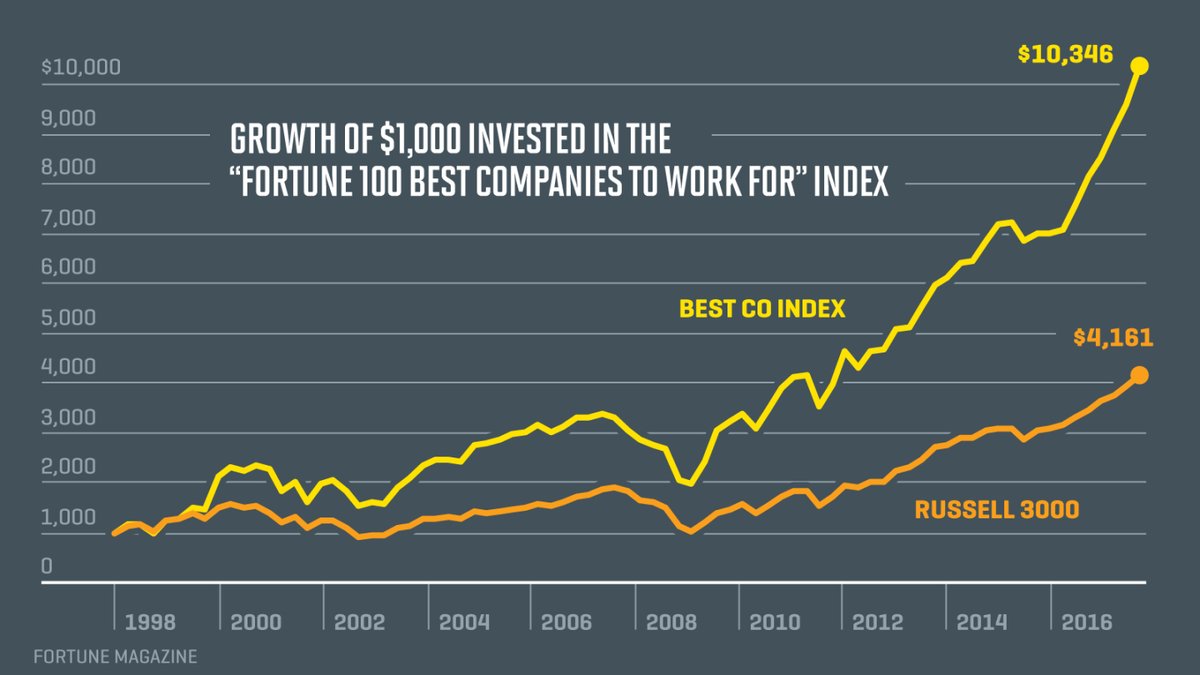
Happy Employees -> Happy Shareholders
Brian Feroldi tweet media
English
10
6
37
9.2K
Jon K | Valbitrage
Jon K | Valbitrage@valbitrage·
Definitely a solid business and sticky product. But also not without some risks/uncertainties. The two I see are 1. changing unit economics of the business (higher production costs -> lower gross margins and new pricing model) and 2. valuation compression of software firms writ large. Thoughts on these?
English
0
0
0
132
FluentInQuality
FluentInQuality@FluentInQuality·
$NOW customer retention: 98–99%. Every year. 80% of revenue from existing customers. 80% of customers use multiple products. Average contract value has DOUBLED in recent years. It started as a help desk ticketing system. Now it sits on top of Workday, Salesforce, Oracle, and ADP simultaneously. The IT department sold it to the rest of the company. Switching costs are so high that ITSM replacements happen every 10–15 years.
English
2
0
61
4.6K
Jon K | Valbitrage
Jon K | Valbitrage@valbitrage·
@realroseceline That’s right and to find something truly mispriced means seeing a future that others haven’t caught onto. Not easy to do.
English
0
0
1
90
Rose Celine Investments 🌹
Rose Celine Investments 🌹@realroseceline·
There’s a big difference between a business and a stock, just like there’s a big difference between price and value. A company can execute perfectly, grow customers, expand margins, increase profits, and still give you a mediocre return. That’s because the stock is not just the business, it’s what you paid for it. If you pay too much, even great execution will deliver underwhelming returns for investors. At the simplest level, your return comes from two things. Earnings growth and the change in valuation. If a company compounds earnings at 15% but the multiple falls from 40x to 20x, you end up going nowhere, 0% returns. The business is doing great, but the stock is worked against you. Think about it like this. You buy a company earning $1 per share at 40x, so you pay $40. Five years later it earns $2, which is an amazing outcome. But if the market now values it at 20x, the stock is still $40 and your return is zero. The business doubled and you didn’t make money. We’ve seen this with $AMZN and $TSLA where the businesses kept improving but the stocks went sideways for 5 years. Even with elite models like $SPGI and $MSCI the returns are terrible if you start from a high valuation. That’s the trap. When everyone already knows a business is great, that greatness is already embedded in the price. From that point on, execution doesn’t create upside, it just justifies the premium you already paid. You’re not earning from surprise, you’re waiting for reality to catch up. This is also why investing feels so confusing sometimes. You can be right about the business and still be wrong about the stock. The headlines look great, earnings beat, margins expand, and yet your portfolio doesn’t move. It’s not because you’re wrong, it’s because you overpaid. The flip side is where it gets interesting. Some of the best returns come from good or even “messy” businesses bought at the right price, ie $CVNA. When expectations are low, you don’t need perfection, you just need things to be a little better than feared. That gap between expectation and reality is where superior returns are made. Great businesses bought at high prices often require time, not brilliance. You’re waiting for the business to grow into what you already paid, which can mean years of sideways returns. Meanwhile, a less loved business with improving fundamentals can outperform because the bar was set lower. So when you look at a stock, the real question isn’t just how good the business is. It’s how much of that goodness is already priced in today. What has to go right from here, and how much upside is actually left? The goal isn’t just to find great businesses. It’s to find mispriced greatness. 🌹
English
17
16
148
9.6K
Jon K | Valbitrage
Jon K | Valbitrage@valbitrage·
@VJNCapital @qualtrim Agreed. The risks are really just operational costs of being giant successful companies (litigation and CAPEX requirements). Not existential threats
English
1
0
1
71
VJN
VJN@VJNCapital·
@qualtrim Microsoft is probably one of the least risky opportunities rn $MA and $META also come in mind
English
1
1
23
3.5K
Qualtrim
Qualtrim@qualtrim·
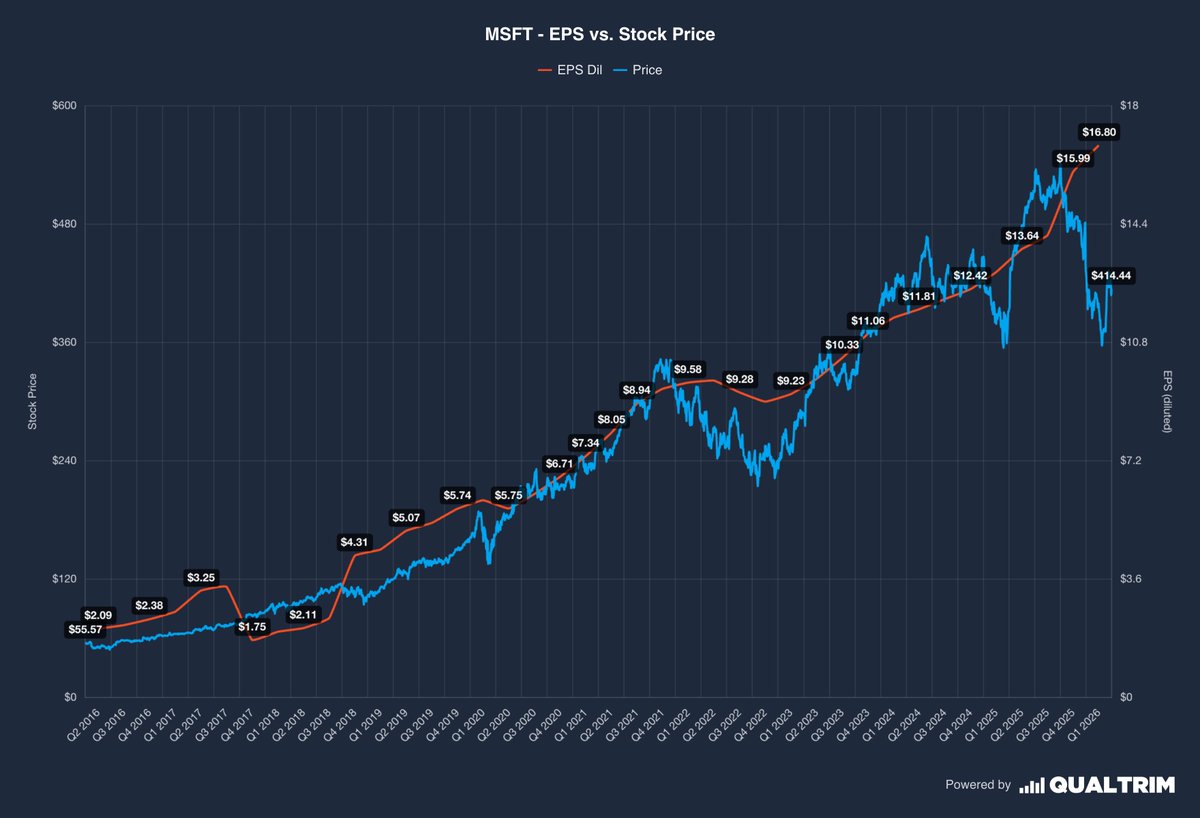
“I don’t people understand. There is 100% correlation between a company's earnings and what happens to the stock.” – Peter Lynch $MSFT
Qualtrim tweet media
English
29
29
558
144.4K
Jon K | Valbitrage
Jon K | Valbitrage@valbitrage·
Good flag on the $37.7B earnings distortion. But don't miss the forest for the trees: even if you ignore the stock portfolio, the core business is accelerating: ✅ Operating Income: $39.7B (+30% YoY) ✅ Cloud: $20B (+63% YoY) ✅ Margins: Expanded to 36%  The "Other Income" had a great period but the Search/Cloud engine is still a fortress
English
0
0
0
14
Finance Jack
Finance Jack@FinanceJack44·
This is why you have to understand what you own. For $GOOGL almost HALF of net income this quarter was from "other" investment paper gains. This is not from Google's core business and has an entirely different risk profile. PE can look cheap on paper if you don't get the full picture.
Finance Jack tweet media
English
26
10
231
34.3K
Jon K | Valbitrage
Jon K | Valbitrage@valbitrage·
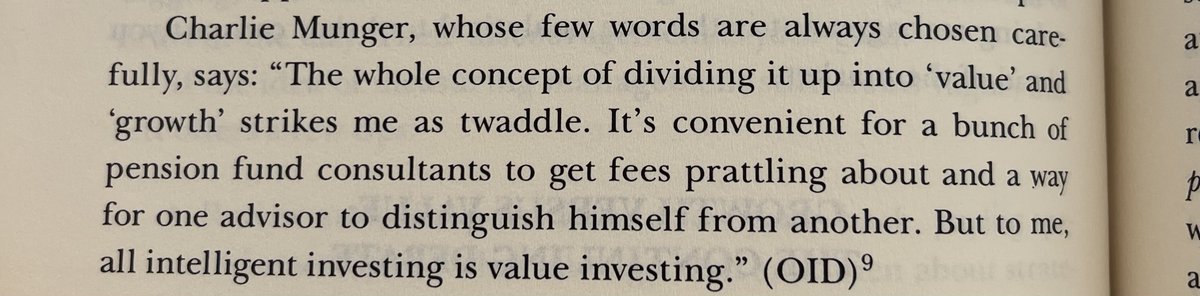
@InvestInAssets Twaddle is right. The best investors don’t draw that distinction, they just buy great companies with wide moats and good long term potential and good prices. That simple
English
0
0
0
46
Invest In Assets 📈
Invest In Assets 📈@InvestInAssets·
Charlie Munger on value and growth investing:
Invest In Assets 📈 tweet media
English
5
10
88
8.3K
Basis Points
Basis Points@basispointpod·
"Microsoft is a deep value play after falling on Q1 earnings." $MSFT
English
6
15
183
18.7K
Jon K | Valbitrage
Jon K | Valbitrage@valbitrage·
The bottom line: Meta is a 20-year-old company that still grows like a startup because it isn't afraid to spend. What’s your take? Is Zuck overextending, or is this a solid entry point? 👇
English
0
0
0
24
Jon K | Valbitrage
Jon K | Valbitrage@valbitrage·
Despite the growth, $META is still the "Value Play" of the Mag 7. Forward P/E: Currently sitting <20x. Historical Mean: The 10-year average is ~30x. The market is pricing in "Capex Risk" but ignoring "Earnings Optionality." At sub-20x forward earnings with 20%+ revenue growth and expanding margins, the math starts to look very familiar to the 2022 bottom.
Jon K | Valbitrage tweet media
English
1
0
0
59
Jon K | Valbitrage
Jon K | Valbitrage@valbitrage·
Wall Street is panicking over $META increasing CAPEX for AI. 📉 Sounds like history’s repeating. In 2022, the narrative was “Zuck is burning money.” Today, it’s the same fear. But here’s the reality: Meta has a history of high-conviction spending followed by massive operational leverage. AI isn't a cost—it's a capital investment with a clear track record of return. 🛠️
Jon K | Valbitrage tweet media
English
2
0
1
102
Jon K | Valbitrage
Jon K | Valbitrage@valbitrage·
Thanks for sharing. Worth noting that Buffett doesn’t really “time” markets in the macro sense. He does pay attention to broad signals like: - Market cap-to-GDP (the “Buffett Indicator”) - Interest rates (opportunity cost of equities vs bonds) - Corporate profit share of GDP - Overall market valuations vs long-term growth But he uses these mainly as context, not to time. At Berkshire Hathaway, cash builds when: 1. valuations are stretched 2. opportunity set is weak 3. or uncertainty is high And it gets deployed when specific businesses become obviously cheap (ie. In 2008). Comparing idle cash to S&P 500 returns misses the point a bit. The cash is optionality, not a benchmarked asset.
English
0
0
0
118
Dividend Growth Investor
Dividend Growth Investor@DividendGrowth·
Warren Buffett has made some incredible market timing calls in his career 1. He closed his partnership in 1969, right before the "lost decade" of the stagflationary 1970s 2. He called US Stocks overvalued in 1999, right before the dot-com bubble imploded 3. He was "Buying American" in late 2008, during the Global Financial Crisis He has been piling up cash at Berkshire Hathaway since 2020, but he has been wrong so far If Berkshire had paid a dividend/done a massive buyback, returns would have likely been much better That excess cash invested in S&P 500 2020 - 2026 would have done better than sitting in T-Bills yielding 4% - 5%. Of course if we get another Great Recession, followed by a lost decade, this stockpiling of cash would seem incredibly smart... I guess we'd see in a few years...
English
12
5
162
29.5K
Jon K | Valbitrage
Jon K | Valbitrage@valbitrage·
@kejca One of my favorite Munger moments! Good reminder of how often we overcomplicate things
English
0
0
5
541
Kevin Carpenter
Kevin Carpenter@kejca·
BUFFETT: There is less risk in owning three easy-to-identify, wonderful businesses than there is in owning fifty well-known, big businesses. MUNGER: What he's saying is that much of what is taught at modern corporate finance courses is twaddle. 🤣
English
10
49
561
42.9K
Jon K | Valbitrage
Jon K | Valbitrage@valbitrage·
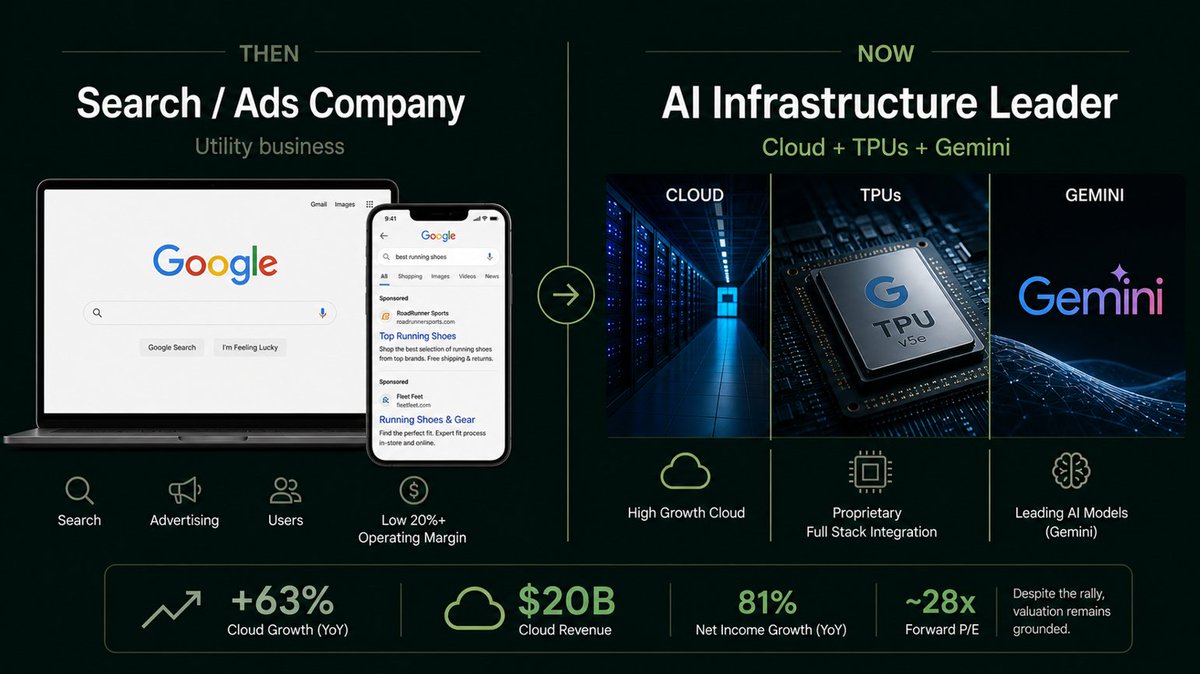
The narrative shift for $GOOGL is officially complete. 🏗️ Q1 2026 earnings solidify what the 2025 rally signaled: Google is no longer just a Search business. It's an AI infrastructure leader. The Key Drivers: Cloud Acceleration: Revenue hit $20 Billion this quarter (+63% YoY). AI isn't just a feature; it's a massive, high-margin hardware and distribution play. ☁️ Vertical Integration: Of the "Mag 7," Google is the only firm with a fully integrated stack: Proprietary LLMs (Gemini) running on proprietary silicon (TPUs). It’s essentially a scaled, profitable version of the Anthropic/OpenAI model. 🧠 Valuation: Despite the rally, it still trades at ~28x earnings. With net income growing 81%, the "Search utility" label feels officially outdated. 📈 The risk isn't the tech anymore. It's simply the entry price. 🎯 #AI #Investing #Mag7 #stockmarkettrading
Jon K | Valbitrage tweet media
English
0
0
0
61
Jon K | Valbitrage
Jon K | Valbitrage@valbitrage·
Exactly. With 3.5B+ daily users, they’ve basically beaten the game on reach. Now it's about the ARPP (Average Revenue Per Person). That Capex is the price of admission to turn a 'scrolling app' into a hyper-efficient AI discovery engine. The Q1 33% revenue jump on only 4% user growth proves the ROI is already there.
English
0
0
0
43
Finance Jack
Finance Jack@FinanceJack44·
How do we know $META CapEx is worth it? Well we won't know for sure for at least a few more quarters. But what we've seen so far is promising. $META is a fairly mature business, and yet the core segment is still seeing substantial growth quarter after quarter. Q1 26: 33% revenue growth Q4 25: 24% revenue growth Q3 25: 26% revenue growth Q2 25: 22% revenue growth While this isn't a direct proxy for CapEx ROI, it is very encouraging to see such strong growth mostly from ad/algorithm optimization. That is exactly the result you would be looking for when investing in these areas.
English
5
4
57
4.1K
Invest In Assets 📈
Invest In Assets 📈@InvestInAssets·
A collection of High-Quality Businesses 📈 Visa ASML LVMH Zoetis Adobe L'Oreal Amazon Alphabet Microsoft S&P Global Mastercard Constellation Idexx laboratories What else?
English
12
10
50
8K
Jon K | Valbitrage
Jon K | Valbitrage@valbitrage·
@NoelWieder That’s right. Peter Lynch famously said: ‘The person that turns over the most rocks wins the game’
English
0
0
1
292
deep value insights
deep value insights@NoelWieder·
"I could make you 50% a year on $1 million." That's Warren Buffett. The greatest investor of all time. And he meant it. So what would he actually do? He'd start with the A's. Go through every publicly traded company he could find. All the way to the Z's. And then do it again. That's literally what he did in the 1950s. He sat down with the Moody's manuals and went through 20,000 pages. Twice. He looked at every single business. Sure, he didn't look very hard at some. But he looked at all of them. And that made it just a question of turning pages. On page 1433, he found Western Insurance trading at $3 while it was earning $20. Ten pages later, on page 1443, he found National American Fire Insurance, trading at $27 while earning $29, with $135 in book value. Nobody told him about these ideas. There was no friendly broker or analyst who flagged this to him. He had to find it himself. And he found it by doing the work that nobody else wanted to do. That's the whole secret, really. The funny thing is, in 2005 he said it might actually be easier today than it was back then. Because information is more accessible. You don't need to dig through physical manuals anymore. Everything is online. The real question is just whether you're willing to do the work. The second point is size. Most investors who have played this game successfully just outgrew it. Their portfolio got too big to buy a $10 million business at 3x earnings. But if you're working with a small account, you can go exactly there. And that's a real structural advantage. Sadly, most people with small accounts don't even realize they have it.
English
8
13
151
21.3K
Quality Compounders
Quality Compounders@QualCompounders·
AI was said to be a bubble but the three top hyperscale's never got the message putting up amazing cloud growth in Q1 2026.🤯 🔵 $MSFT Revenue: $37.0B (+33% ⮕ +40% YoY) Operating Margin: 46.3% (Intelligent Cloud) 🔴 $GOOGL Revenue: $20.0B (+48% ⮕ +63% YoY) Operating Margin: 33.0% (Massive expansion YoY) 🟠 $AMZN Revenue: $37.6B (+24% ⮕ +28% YoY) Operating Margin: 37.8% Which name is your favorite?🤔
Quality Compounders tweet mediaQuality Compounders tweet mediaQuality Compounders tweet media
English
3
2
37
3.8K