Adi Vemuru

19.9K posts

Adi Vemuru banner
Adi Vemuru

Adi Vemuru

@vemuruadi

Founder @DataActions. | Building Decision Intelligent Agents (DIA). |Turning every data stack into a decision stack.

India Katılım Ağustos 2008
734 Takip Edilen1.1K Takipçiler
Adi Vemuru
Adi Vemuru@vemuruadi·
Great points @amitbaid_01 "Systems of record evolve into systems of reasoning" / is the first evolution, & with Agents, this can happen faster. - SoR companies have advantage to build seed context & reasoning faster than startups. - Agents startups have advantage of building decision trances faster, but lack the distribution & business truth advantage. Interesting battles ahead.
English
0
0
0
2
Amit Baid
Amit Baid@amitbaid_01·
Interesting blog by @JayaGup10 However, I think Jaya’s central claim—that incumbents are structurally incapable of winning the “context + decision” layer—overstates the constraint. There is no hard moat preventing these platforms from capturing this opportunity. They already sit at the point of execution, own the transactional graph, and control the compliance boundary. If agents are embedded directly into workflows—triggered from interfaces like Slack or Microsoft Teams but executed through these systems—then the same platforms that record what happened can also capture why it happened. In that world, systems of record evolve into systems of reasoning without requiring customers to rip and replace core infrastructure. The argument that incumbents are disincentivized because they profit from complexity also doesn’t fully hold in a recurring-revenue model. These platforms’ installed bases are already deeply embedded; simplifying workflows via agents does not destroy that revenue—it strengthens retention and expands value per customer. In fact, a context-aware agent layer could increase, not decrease, enterprise-specific complexity by encoding nuanced policies, exceptions, and organizational behaviors. That favors incumbents who already manage customization, governance, and auditability at scale. Rather than being disrupted by this shift, they are well positioned to absorb it into their existing economic model. Nor is there a fundamental capability gap. The tools enabling rapid innovation—LLMs, copilots, and AI-assisted code generation—are broadly accessible. Context may originate in communication layers, but there is nothing structurally preventing incumbents from ingesting that context, especially if agents become the interface between collaboration tools and enterprise systems. The winning architecture is not necessarily one that sits “above” these systems, but one that tightly couples external interfaces with native execution, allowing context to be captured at the moment of action. It is also worth noting that the traditional advantage of startups—access to a small number of elite engineers who drive disproportionate innovation—has materially diminished. With the rise of “vibe coding,” copilots, and AI-driven development, the constraint is no longer the availability of top 20% engineering talent. Both startups and incumbents now have access to the same underlying AI tools. In that sense, incumbents like SAP or others are not inherently slower because of engineering constraints; in theory, they can move just as fast as startups. The playing field on raw development velocity has leveled significantly, shifting the competitive advantage back toward distribution, data access, and workflow ownership. The real battleground, therefore, is not whether incumbents can win, but whether they execute with sufficient speed and clarity. Startups may innovate faster at the edges, but enterprises adopt cautiously, and control ultimately accrues to the system that closes the loop between decision, execution, and learning. If incumbents embed agents into workflows and capture decision traces natively, they retain that loop. The outcome is not predetermined: incumbents are not structurally excluded—they are simply required to evolve.
Jaya Gupta@JayaGup10

x.com/i/article/2039…

English
1
1
1
88
Adi Vemuru
Adi Vemuru@vemuruadi·
This isn’t behaviour vs decision traces — rather it’s a stack of both. Enterprises are systems of state machines (ex: offline retail - SKU, store, customer). State transitions = behavior (what changed) Decisions = why the transition happened (objectives, constraints, context) The atomic unit isn’t behavior or decision — it’s the transition with causality. That’s what compounds into enterprise memory and makes agents actually intelligent. What do you think @charlesli09 @JayaGup10
charles li@charlesli09

x.com/i/article/2039…

English
0
1
0
216
Adi Vemuru
Adi Vemuru@vemuruadi·
This AI shift is redefining durable skills: from knowing to judging & iterating. Decision velocity now beats experience of static memory & patterns. If experience speeds up decision and reversal, it compounds. If experience resists change, it turns into friction—a tax.
Jaya Gupta@JayaGup10

x.com/i/article/2047…

English
1
0
2
67
Adi Vemuru
Adi Vemuru@vemuruadi·
@BrahmaWritings So core 2 todos for analytics are once we define decision objective are - understand driving factors and then simulate/predict the factors. N repeat.
English
1
0
0
37
Brahmareddy
Brahmareddy@BrahmaWritings·
@vemuruadi Hmmm, Adi. it is important to define the decision clearly, use data to understand what drives it, predict what will happen, and keep improving it over time.
English
1
0
0
29
Brahmareddy
Brahmareddy@BrahmaWritings·
Every company collects data.Every company collects data. Very few use it to make better decisions. The gap between dashboards and decisions is the most expensive problem nobody talks about.
English
1
0
0
45
Adi Vemuru
Adi Vemuru@vemuruadi·
@BrahmaWritings Can we frame a decision as: Objective, working on inputs, driving a workflow with some factors? So what are analytics todos on this decision?
English
1
0
0
32
Brahmareddy
Brahmareddy@BrahmaWritings·
@vemuruadi I would start with one decision, not a dashboard
English
1
0
0
27
Adi Vemuru retweetledi
Garry Tan
Garry Tan@garrytan·
Here's YC's official advice about being truthful and precise about what is pilot, bookings, revenue and recurring revenue. Founders, particularly first time founders, need to sear this into their brains. Don't mistake one tier for another. Be precise, and always be truthful.
Garry Tan tweet media
English
234
385
4.5K
674.5K
Adi Vemuru
Adi Vemuru@vemuruadi·
@nilou_salehi Brilliant Insight @nilou_salehi. Every workflow/ process/ decision is about taking inputs -> through a flow of constraints/factors -> convert to outputs... n every company is decision factory with decisions happening across every flow, team, dept. Decision Records are new moat.
English
0
0
0
26
Nilou Salehi
Nilou Salehi@nilou_salehi·
The next major enterprise tech player will take over this layer and own and advance: - a fast way to encode long horizon processes into something an agent can take over and run consistantly - continuously learning agents through advanced memory, model fine tuning, adaptors, etc. - there will be a push and pull on who owns the IP here - traceability, permissions, controls This will make it possible for enterprises to run their processes autonomously and reliably, and a new era will begin.
English
1
0
2
379
Nilou Salehi
Nilou Salehi@nilou_salehi·
💯the primary enterprise moat is forming around who owns the state & long term execution layer. I work with enterprise AI leaders every day, they want control over the execution layer and want to avoid vendor lock-in, particularly with model providers. At the same time they want lightning speed process encoding and agent deployments. The next major enterprise tech player will take over this layer.
Jaya Gupta@JayaGup10

x.com/i/article/2043…

English
5
4
62
26.7K
Adi Vemuru retweetledi
Prashanth Chandrasekar
Prashanth Chandrasekar@pchandrasekar·
@JayaGup10, this nails it. @StackOverflow built the original compounding knowledge loop for devs — every question, answer, and edit turning expertise into trusted context. Stack Internal now brings that same flywheel inside enterprises: capturing reasoning + decisions so agents have reliable context instead of hallucinating. Context graphs + human truth = the B2B compounding loop we’ve all been waiting for.
English
0
2
1
593
Kaps
Kaps@kapardhi200903·
I just published a deep dive into The Efficiency Wall and the shift toward Plastic AI. If you’re interested read the full breakdown here: @kapardhikannekanti/the-efficiency-wall-why-the-next-1-000x-leap-isnt-more-gpus-bb956f83167b" target="_blank" rel="nofollow noopener">medium.com/@kapardhikanne
English
1
0
1
27
Kaps
Kaps@kapardhi200903·
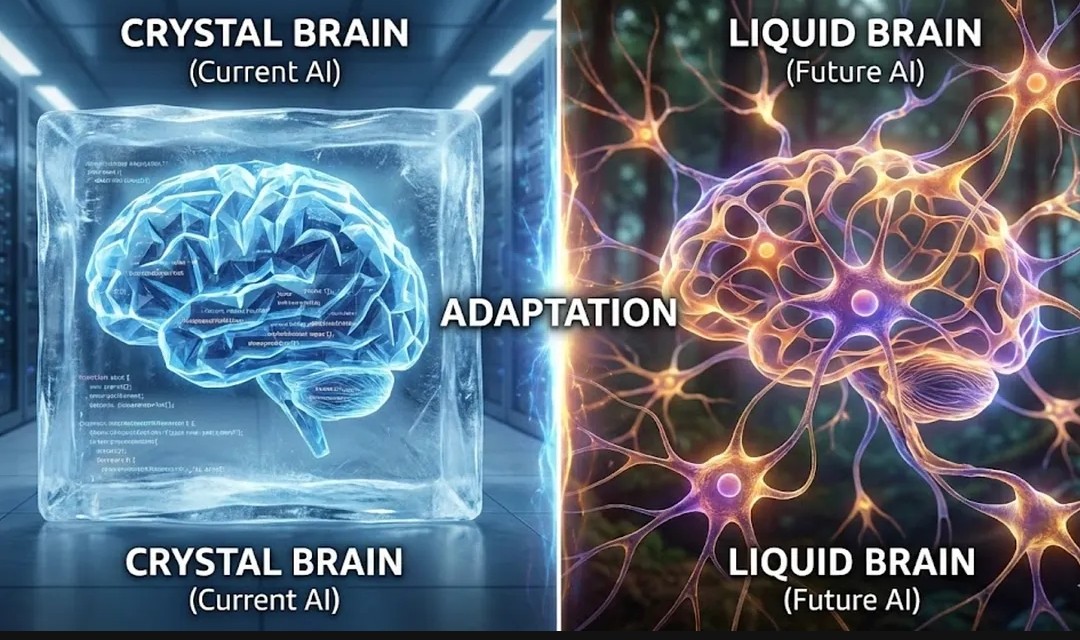
Modern AI is built like a skyscraper, massive and impressive, but rigid. Biological intelligence is liquid. It runs on 20 watts because it’s plastic, not static. The next 1,000x leap isn't more GPUs. It's architecture.
Kaps tweet media
English
1
0
1
91
Adi Vemuru retweetledi
Alfred Lin
Alfred Lin@Alfred_Lin·
Playbook for building a legendary company: - Bring together an outlier team - Have that team come up with a novel and compelling insight - Turn that insight into a product or service offering and iterate that offering until it has a compelling value proposition - Turn that compelling value proposition into a unique one - Take all of those already hard ingredients and weave them into an economic engine that has a sustainable competitive advantage - Do all the above again and again, so the company can compound growth at scale None of these are easy. But if it was easy, everyone would do it.
English
57
134
1.2K
191.4K
Adi Vemuru retweetledi
Kekius Maximus
Kekius Maximus@Kekius_Sage·
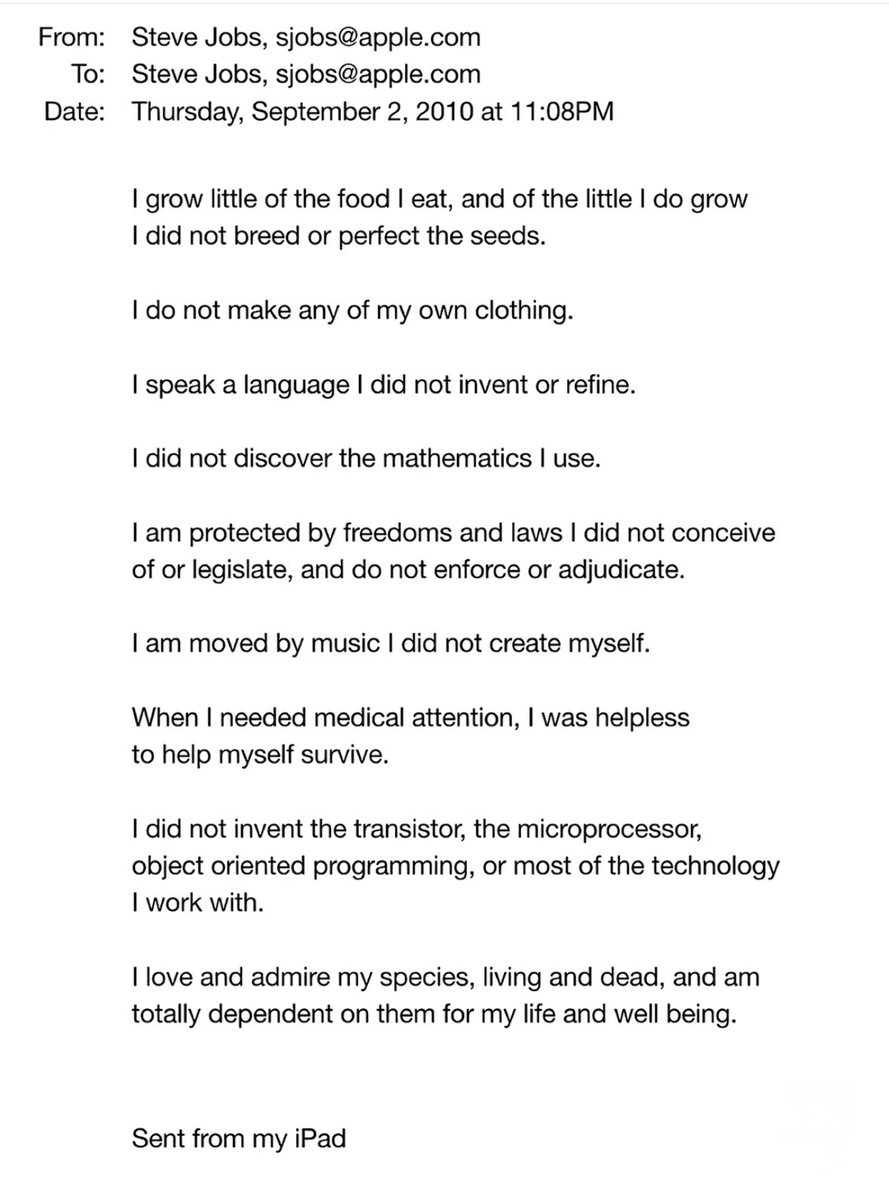
The email Steve Jobs wrote to himself before his death
Kekius Maximus tweet mediaKekius Maximus tweet media
English
156
769
9.6K
896K
Adi Vemuru retweetledi
Kunal Shah
Kunal Shah@kunalb11·
Inefficiency is the largest employer of the world. Remove inefficiency too quickly with tech and you are setup for a major civil unrest.
English
62
389
2K
0
Adi Vemuru retweetledi
Shekhar Kapur
Shekhar Kapur@shekharkapur·
Trekking near Mussoorie. Was drenched from the rain. Cold. And this lady invited me for some hot tea. It’s those with little to offer that are the always the most generous. Her young daughter had just come from her local school and we had a long discussion on AI !! Which she was already learning .. She told me how she was going to use AI to help her mother run shop more efficiently .. and how she was using the AI portal at her school to help her father rediscover his love for music, and how she was already using AI to prepare herself for medical school in the future .. for she wanted to be a doctor and allow her mother to retire .. for she had laboured all her life to support her kids .. Tomorrow India AI Impact Summit will be inaugurated by Hon PM @narendramodi .. and everyone who is anyone in AI in the world will be there. Especially from the West. And the discussions will be about the Trillions of Dollars that are being spent on LLM’s and massive data farms .. and how India may have missed the bus there. But they forget Indian ingenuity .. after all we defied all such prejudices and managed to put the Mars Orbiter at a cost less than Hollywood could make a film on Mars! They also forget that the incredible rise of AI will come from the bottom of the pyramid. Not from the top. it’s young people like this little girl who need to use AI to better their lives. And will flock to it .. it’s this vast population of imaginative, creative and ambitious young people like her that will be the ultimate users of AI. And will make India one of the biggest leaders and developers of AI in the world .. #AI #IndiaAIImpactSummit2026 #India #IndianCreativity
Shekhar Kapur tweet mediaShekhar Kapur tweet mediaShekhar Kapur tweet media
English
139
554
3.5K
136.9K
Manjula K
Manjula K@Manju_manchiDIL·
Check this out regarding the future of data centers 👇🏻🙌👍
Big Brain AI@realBigBrainAI

Perplexity CEO Aravind Srinivas on the biggest threat to the data center industry: It's not competition. It's not regulation. It's decentralisation. "The biggest threat to a data center is if the intelligence can be packed locally on a chip that's running on the device and then there's no need to inference all of it on like one centralized data center." He outlines how this could work in practice. Personalisation doesn't necessarily require on-device model training. Retrieval augmented generation, tool calls, and local data can already tailor AI to individual users. But the real unlock? Test time training. @AravSrinivas describes a future where AI lives on your device, watches how you work and gradually automates your repetitive tasks. "Imagine we crack test time training where the AI watches tasks you repeatedly do on your local system, adapts to you over time and starts automating a lot of the things you do." The key insight: in this model, the intelligence belongs to you. It's your data, your device, your personalised AI brain. And if that future arrives, the economics of centralised infrastructure start to collapse. "That really disrupts the whole data center industry. It doesn't make sense to spend all this money, 500 billion, 5 trillion, whatever on building all the centralized data centers across the world that do a lot of the intelligence workloads for people." The companies spending trillions on centralised infrastructure may want to rethink where intelligence actually needs to live.

English
4
1
8
1.9K
Adi Vemuru
Adi Vemuru@vemuruadi·
@Manju_manchiDIL Great Insight. Hyper-Local Intelligence is what makes AI create many more entrepreneurs and Jobs, than now with central data n software apps. But world models need data centres, hyper local models need edge power and both would co-exist, is my observation.
English
0
0
0
18
Adi Vemuru retweetledi
Chris Tate
Chris Tate@ctatedev·
Introducing json-render AI-generated UI. Deterministic output. 1. Define your component catalog 2. AI steams JSON 3. Render interactive UI Let users prompt dashboards, widgets and apps - safely constrained to components and actions you define
English
252
468
6K
699.9K