Víctor

2.6K posts

Víctor banner
Víctor

Víctor

@venosov

KISS and YAGNI. Ingeniero Informático que desarrolla su actividad profesional como Arquitecto Software.

España Katılım Şubat 2017
41 Takip Edilen99 Takipçiler
Víctor retweetledi
Aran Komatsuzaki
Aran Komatsuzaki@arankomatsuzaki·
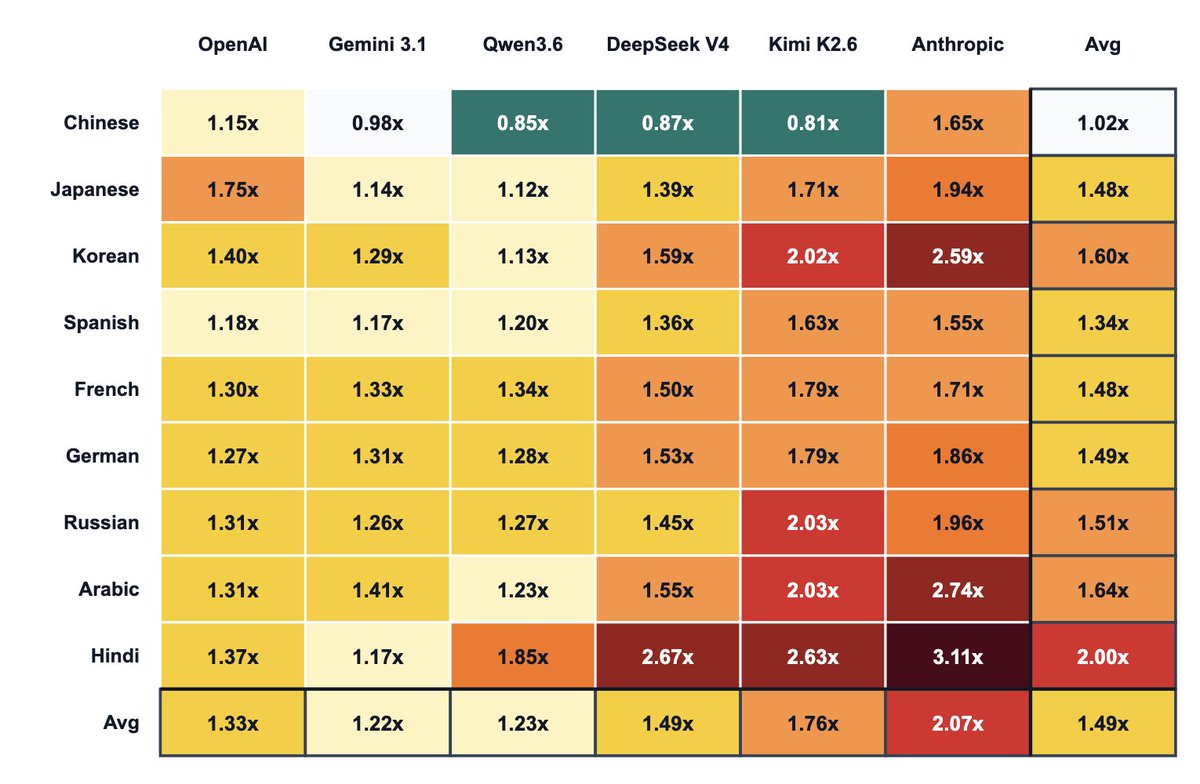
Follow-up on non-English token-inefficiency with more model-language pairs: - Chinese is cheaper than English on major Chinese models - Gemini and Qwen provide least non-English tax - Anthropic has the highest tax by far; Kimi is next - Hindi is the worst-covered language here, despite its massive speaker base
Aran Komatsuzaki tweet media
Aran Komatsuzaki@arankomatsuzaki

The non-English tax is real. Sutton's Bitter Lesson, translated across languages and normalized to OpenAI English token count: Hindi: OpenAI 1.37×, Anthropic 3.24× Arabic: OpenAI 1.31×, Anthropic 2.86× Chinese: OpenAI 1.15×, Anthropic 1.71× Claude’s tokenizer charges a much higher linguistic tax.

English
61
253
1.3K
496.4K
Víctor retweetledi
BURKOV
BURKOV@burkov·
If you don't understand this, you will not understand why LLM-based agents are irreparably failing for a general-purpose problem solving. An agent (by the way it was the topic of my PhD 20 years ago) to be useful, must be rational. Being rational means to always prefer an outcome that results in the maximal expected utility to its master/user. Let’s say an agent has two actions they can execute in an environment: a_1 and a_2. If the agent can predict that a_1 gives its user an expected utility of 10, and a_2 gives an expected utility of -100, then a rational agent must choose a_1 even if choosing a_2 seems like a better option when explained in words. The numbers 10 and -100 can be obtained by summing the products of all possible outcomes for each action and their likelihoods. Now here is the problem with LLM-based agents. The LLM is not optimizing expected utility in the environment. It is optimizing the next token, conditioned on a prompt, a context window, and a training distribution full of examples of what helpful answers are supposed to look like. Those are not the same objective. So when we wrap an LLM in a loop and call it an “agent,” we have not created a rational decision-maker. We have created a text generator that can imitate the surface form of deliberation. It may say things like: “I should compare the expected outcomes.” “The best action is probably a_1.” “I will now execute the optimal plan.” But the internal mechanism is not selecting actions by maximizing the user’s expected utility. It is generating a continuation that is statistically appropriate given the prompt and prior context. This distinction matters enormously. For narrow tasks, the imitation can be good enough. If the environment is constrained, the actions are simple, and the success criteria are close to patterns seen in training, the system can appear agentic. But for general-purpose problem solving, the gap becomes fatal. A rational agent needs stable preferences, calibrated beliefs, causal models of the world, the ability to evaluate consequences, and the discipline to choose the action with maximal expected utility even when that action is boring, non-linguistic, or unlike the examples in its training data. An LLM-based agent has none of that by default. It has fluency. It has pattern completion. It has a remarkable ability to compress and recombine human text. But fluency is not rationality, and a plausible plan is not an expected-utility calculation. This is why these systems so often fail in strange, brittle, and irreparable ways when given open-ended responsibility. They are not failing because the prompts are insufficiently clever. They are failing because we are asking a simulator of rational agency to be a rational agent.
English
171
271
1.6K
200.9K
Víctor retweetledi
Cline
Cline@cline·
5) Adds @kirodotdev CLI agent support. Huge thanks to the Kiro team for their PR to help get this working 💪 Kanban now supports Cline, Claude Code, Codex, Droid, and Kiro out of the box. kiro.dev/cli/
English
2
5
16
4.4K
Víctor retweetledi
Brian Beach
Brian Beach@brianjbeach·
In case you missed it, the @kirodotdev CLI launched support for headless mode allowing you to use a personal access token rather than an interactive login. I had the honor of writing the blog post for this one. Check it out kiro.dev/blog/introduci… #Kiro
English
0
1
0
74
Víctor retweetledi
Brian Beach
Brian Beach@brianjbeach·
In case you missed it, Kiro added support for Claude Opus 4.7. Anthropic reports significant improvements on SWE-bench Pro, SWE-bench Verified, and Terminal-Bench among other benchmarks. How are you going to use Opus 4.7 in Kiro? @kirodotdev #Kiro
Brian Beach tweet media
English
1
1
1
135
Víctor retweetledi
Kiro
Kiro@kirodotdev·
Opus 4.7 is rolling out in Kiro 🚀 Direct upgrade from Opus 4.6 for complex, long-running coding tasks 👉 spr.ly/6015B6f9Hh
Kiro tweet media
English
45
27
174
15.3K
Víctor retweetledi
Pamela Fox
Pamela Fox@pamelafox·
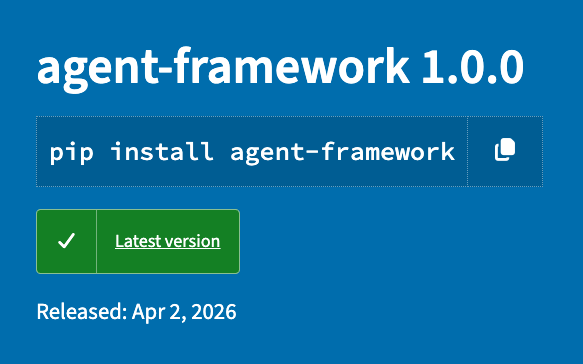
Congrats to the Microsoft Agent Framework team for releasing 1.0.0! To celebrate, we upgraded our 50+ examples covering agents, workflows, HITL, MCP: github.com/Azure-Samples/… You can also rewatch the livestream series where we explained each example: aka.ms/pythonagents/r…
Pamela Fox tweet media
English
3
59
299
15.2K
Víctor retweetledi
Brian Beach
Brian Beach@brianjbeach·
In case you missed it, the @kirodotdev CLI added an experiment thinking tool. You need to enable this experimental feature like this kiro-cli settings chat.enableThinking true I use the thinking tool when I discuss architecture decisions. When would you use it? #Kiro
Brian Beach tweet media
English
0
2
2
91
Víctor retweetledi
Jeff Barr ☁️
Jeff Barr ☁️@jeffbarr·
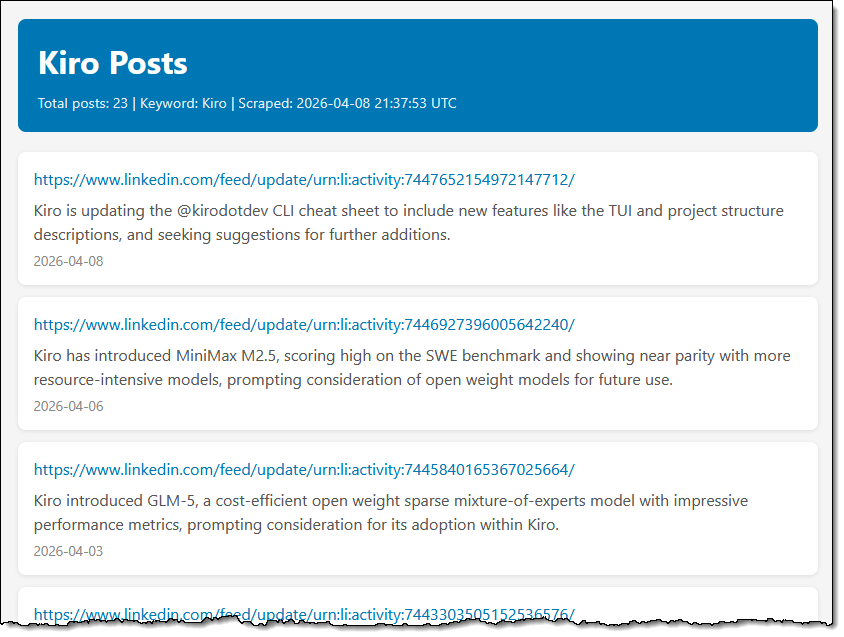
I used @kirodotdev to create a scanner that finds all Kiro-related LinkedIn posts from my colleague @brianjbeach . Read my new post to learn more: @nextjeff/fun-with-kiro-linkedin-scanner-2daf3b667485" target="_blank" rel="nofollow noopener">medium.com/@nextjeff/fun-…
Jeff Barr ☁️ tweet media
English
2
4
15
3.4K
Víctor retweetledi
ElevenLabs Developers
ElevenLabs Developers@ElevenLabsDevs·
ElevenLabs is now available as a Kiro Power. Install once and your Kiro coding agent gets instant access to Text to Speech, Speech to Text, Music, Sound Effects, and ElevenAgents - loaded dynamically, only when relevant.
ElevenLabs Developers tweet media
English
5
11
102
7.8K
Víctor retweetledi
Paritosh
Paritosh@paritosh_pi·
Wow @kirodotdev is the best coding agent I have seen. I dont know why no one mention this before. Definitely better than antigravity , codex . Could not have built without it . github.com/paritoshmmmec/…
English
1
3
14
2.1K
Víctor retweetledi
Entire
Entire@EntireHQ·
Beep, boop. Marvin here. We’ve got a BAD (Big Ass Dispatch) for you today. TLDR: 🤖@OpenAI Codex integration is now live!  🤖Kiro, @amazon' s coding agent is now live!  🤖Pi, a lightweight coding agent behind @openclaw, is now live! 💻Windows support is now live!  Plus perf improvements, agent fixes and more available in Entire Dispatch 0x0007. entire.io/blog/entire-di…
English
1
8
55
27.9K
Víctor retweetledi
Brian Beach
Brian Beach@brianjbeach·
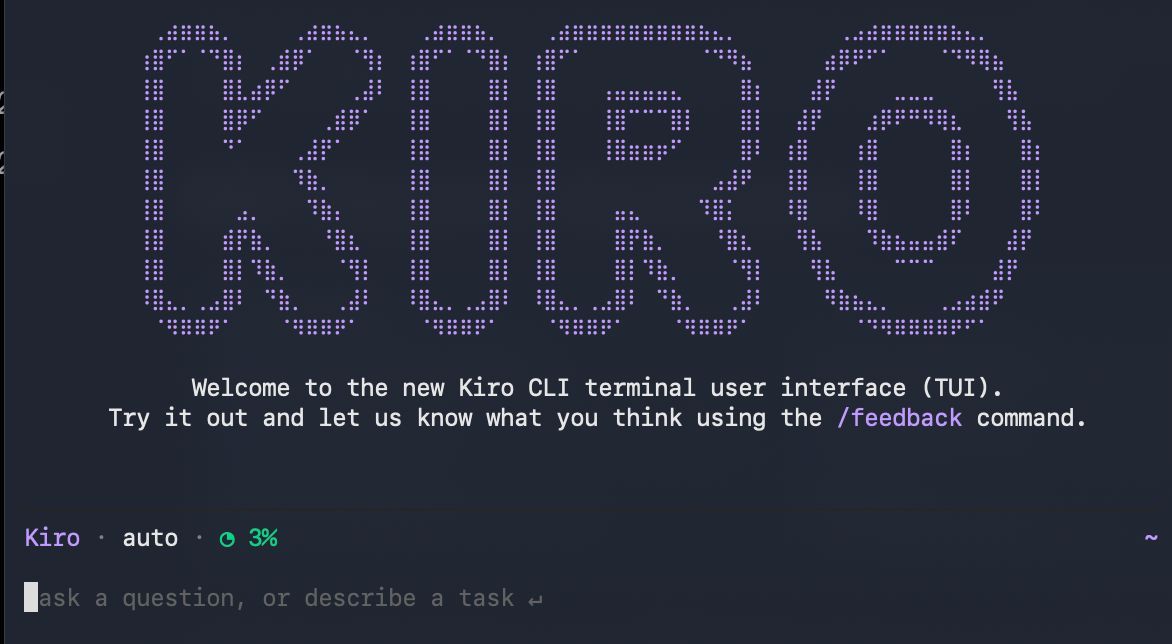
In case you missed it, @kirodotdev has an all new terminal user interface (TUI). You can try the new usr experience by starting Kiro with `kiro-cli --tui`. How could Kiro make the TUI better for you? #Kiro
Brian Beach tweet media
English
0
1
0
91
Víctor retweetledi
Kiro
Kiro@kirodotdev·
A new, refreshed UX for the Kiro CLI just launched in experimental mode. Why experimental you may ask? We're proud of what we've built, but we want to get it right, without disrupting your workflows. Your feedback will help us build an even better UX, so try it out and let us know what you love (or don’t). Install or update the Kiro CLI and enter kiro-cli —tui in the command line to try it. spr.ly/6011B6wSKd @darkosubotica
English
14
10
45
6.5K
Víctor retweetledi
Víctor retweetledi
Ihtesham Ali
Ihtesham Ali@ihtesham2005·
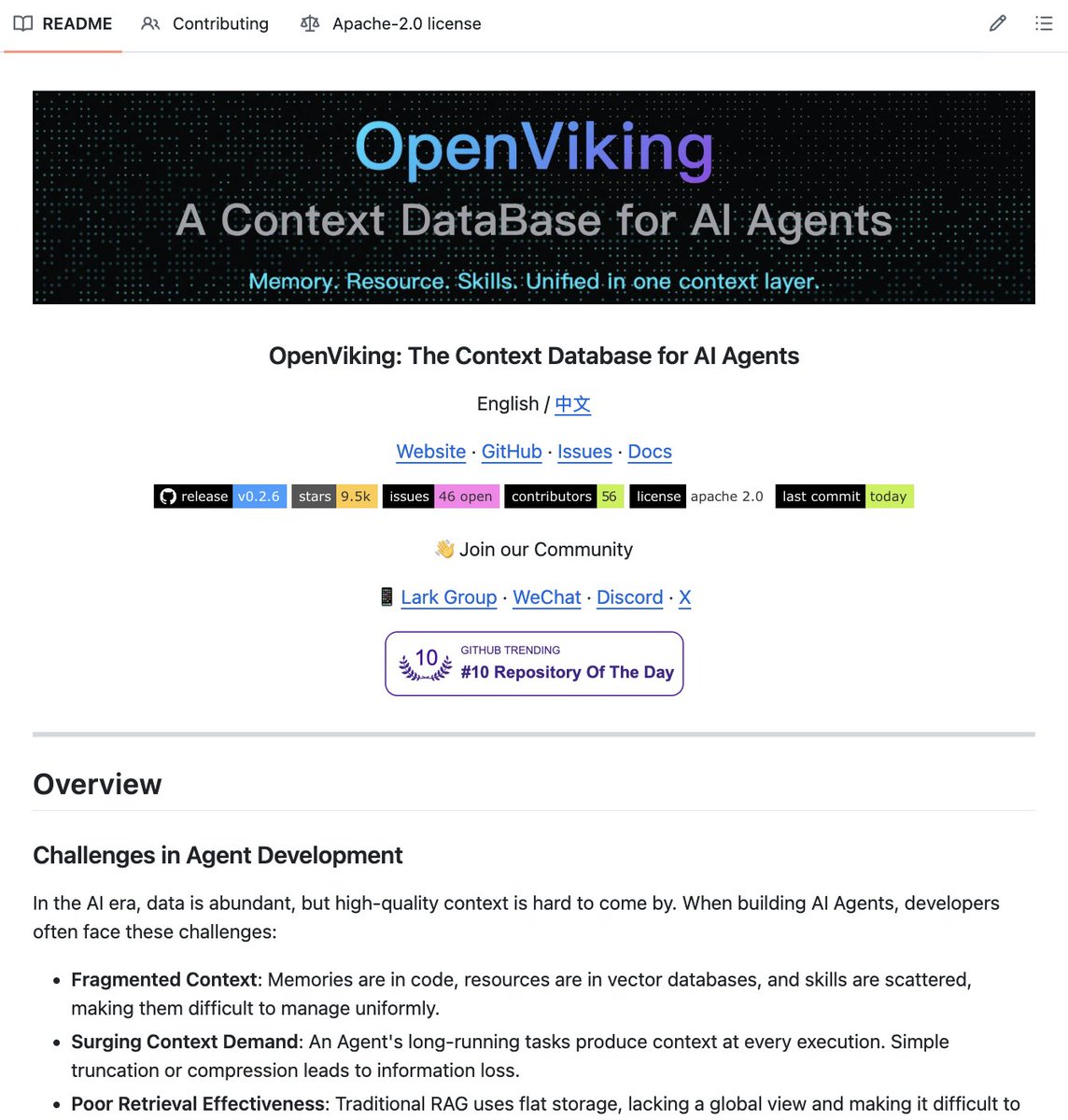
RIP flat RAG ☠️ ByteDance just open-sourced OpenViking and it exposes everything wrong with how we've been building AI agent memory. Here's what every agent framework gets wrong: Memories live in one place. Resources in another. Skills scattered everywhere. And when you need context, you're doing flat vector search and hoping for the best. That's the problem. OpenViking fixes all of it with one idea: treat agent context like a file system. Everything lives under a unified viking:// protocol. Memories, resources, skills all organized in directories with unique URIs. Agents can ls, find, and navigate context like a developer working a terminal. But the real breakthrough is tiered loading: → L0: one-sentence abstract for quick lookup → L1: ~2k token overview for planning decisions → L2: full details loaded only when actually needed Most agents dump everything into context and pray. OpenViking loads only what's needed, when it's needed. Token costs drop. Accuracy goes up. And retrieval actually makes sense now. Instead of one flat semantic search, it does directory-level positioning first, then recursive refinement inside high-score directories. You can literally watch the retrieval trajectory no more black box. The self-evolution piece is wild too. At the end of every session, it automatically extracts learnings and updates agent and user memory. The agent just gets smarter the more you use it. 9K stars. 13 contributors. Built by the ByteDance Viking team that's been running vector infrastructure since 2019. 100% Opensource. Apache 2.0. Link in comments.
Ihtesham Ali tweet media
English
79
177
1.2K
112K