Vernon Stinebaker

16.3K posts

Vernon Stinebaker banner
Vernon Stinebaker

Vernon Stinebaker

@vernons

Agile Coaching Aliance - Accredited Coach, ValueMatch Certified Coach, Agility Leadership mentor (Scrum, FDD, XP), Retired, Don’t expect responses to DMs.

Katılım Mayıs 2008
7.5K Takip Edilen5.4K Takipçiler
Sabitlenmiş Tweet
Vernon Stinebaker
Vernon Stinebaker@vernons·
Monday morning is the perfect time to set goals for the week ahead. I like setting up progressive goals. Daily goals contributing to weekly goals contributing to monthly goals, etc. Of course not all goals need to be progressive. What are your goals for the week?
English
19
7
145
10.8K
Vernon Stinebaker retweetledi
Mira Murati
Mira Murati@miramurati·
Inkling-Small is comparable to Inkling at a quarter the size. Weights are open, fine-tunable on Tinker today. Look forward to seeing what people make with it.
Thinking Machines@thinkymachines

Today, we are releasing Inkling-Small. Inkling-Small achieves comparable performance to Inkling at a quarter of its size. It features 276B total parameters, 12B active. We are making the full weights available. thinkingmachines.ai/news/inkling-s… Fine-tune it on Tinker today, or chat with it in text, image, and audio on Tinker Playground.

English
107
197
2.4K
197.2K
Vernon Stinebaker retweetledi
Sports Patriot
Sports Patriot@SportsPatriotUS·
If history is any indication, the WNBA should already be preparing to suspend Angel Reese and Paige Bueckers immediately while it conducts a full investigation. We now have a video admission... and separate footage appearing to show cash changing hands over a wager involving their own game. Historically, conduct of this nature has resulted in an immediate suspension for the remainder of the season, followed by a one-year ban. Calvin Ridley suffered a similar fate when the NFL suspended him for an entire season, costing him his $11.1 million salary for that year. His conduct was arguably less severe because he was not active on his team’s roster when the gambling occurred and did not participate in the games involved. So the WNBA has a very simple choice: Enforce the integrity standards applied throughout professional sports... or explain why its preferred stars are somehow exempt. The league cannot protect its way out of this one.
English
498
1.5K
5.5K
223.4K
Honey 🛼
Honey 🛼@honeymoon250·
Can you identify what this is You deserve $20K if you can identify it
Honey 🛼 tweet media
English
569
9
152
15.2K
Vernon Stinebaker retweetledi
Roy Rogers Happy Trails Music Shop 
This is pure cosmic poetry in motion 🌌 The Hirajoshi Wave — a polyrhythmic pendulum where each sphere swings at the exact frequency of the notes in the C Hirajoshi pentatonic scale (C, D, Eb, G, Ab). Watch the chaos of the rainbow trails… then the perfect realignment. Music is math you can see and feel. Ancient Japanese scale meets pure physics. The universe doesn’t just make music — it is music.
English
57
724
3.5K
161.6K
Vernon Stinebaker retweetledi
Aakash Gupta
Aakash Gupta@aakashgupta·
In June 2004, an engineer named Michael Chu solved recipe design with a hand-coded HTML table, and the food industry has spent 22 years pretending he doesn't exist. His format reads like a Gantt chart. Ingredients run down the left. Each column to the right is an operation, and cells merge when components combine. Melt the butter, mix in the sugar, fold into the dry ingredients, bake. The entire dependency graph of the dish fits on one screen. That structure fixes the real failure mode of cooking from prose. A written recipe forces you to hold state in working memory while your hands are covered in batter, which is why you reread step 4 three times to find where you were. In Chu's table, your place is a physical location. You can't lose it. He launched Cooking for Engineers with this format on day one, wrote every table by hand in a text editor, and filed a patent on the notation. Designers praised it. Hacker News rediscovers it about once a year. Then the industry goes right back to publishing recipes as 1,500-word essays. Here's why. US copyright law treats ingredient lists and bare instructions as unprotectable facts. The story about your grandmother's kitchen is the only part of a recipe page the law protects. The economics stack on top of that. Recipe sites monetize scroll depth, and every paragraph between you and the ingredient list is another ad slot. Chu's format delivers the whole dish in one screen with room for exactly zero ad units. So the best recipe format of the internet era lost to the worst one, on purpose, because the worst one prints money. His first tabular recipe, posted 22 years ago, was salsa cruda. Still up. Still one screen.
juan@juanbuis

i can’t believe someone solved recipe design decades ago and everyone just decided to ignore it

English
30
254
1.8K
114.9K
Vernon Stinebaker retweetledi
Jun Song
Jun Song@jun_song·
Exactly what’s happening right now.
Jun Song tweet media
English
95
263
3.4K
101K
Vernon Stinebaker retweetledi
LaurieWired
LaurieWired@lauriewired·
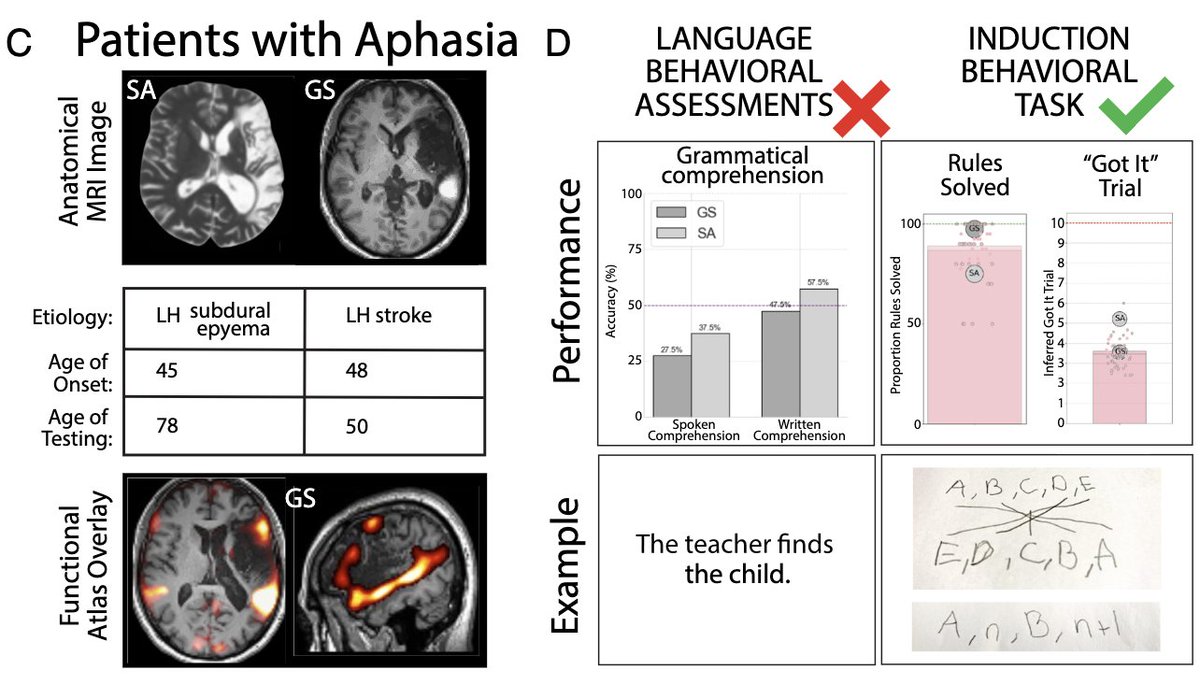
Oof. See, this is why I’m not worried about “pure” LLMs in the long run. There’s new evidence that the human brain doesn’t use natural language centers for logical reasoning at all. Study just came out where stroke patients with complete aphasia (near-chance on written comprehension) performed….great on pure logic tasks! Even in healthy adults, fMRI showed language area activation didn’t scale with logical difficulty. tl;dr words are too ambiguous for formal thought and our brain doesn’t use language symbols for logic
LaurieWired tweet media
English
316
512
5.4K
248.6K
Vernon Stinebaker retweetledi
Brian Roemmele
Brian Roemmele@BrianRoemmele·
Anthropic do the right thing. Stop the guillotining of books now. I ask any thinking person compare the processing of books below. End to end the non destructive scanning on the right is faster and preserves knowledge for the ages. My advice to atone is to stock and maintain physical library free and open to anyone. Do the right thing.
Brian Roemmele@BrianRoemmele

In this machine I can scan 1000s pages a day and never destroy a book. No guillotine spines, no ripped the bindings.. just a normal book ready to be treasured for centuries. Any large AI company can afford this both financially and ethically.

English
154
703
2.4K
108.9K
Vernon Stinebaker retweetledi
Andrew Ng
Andrew Ng@AndrewYNg·
Fifteen years ago, @Coursera and online courses changed education. It worked better than almost anyone expected, expanding access by opening up where you can learn. But how you learn remains largely the same as it has for centuries: it is still one-size-fits-all, taught the same way to each person who shows up. We now have an opportunity to change how learning happens. With advances in AI, we can now build a custom learning guide for each person. We will turn learning from one‑to‑many to one‑to‑one. I'm starting LearnVector to invent this next generation of learning. We are starting with a $100M investment from Coursera, and plan to collaborate closely with Coursera and Udemy. Good learning needs much more than just a chatbot. Research shows that chatbots without guardrails harm learning. They help complete tasks and enable students to do better on homework. But cognitive offloading to a chatbot results in them being less skilled. And, you cannot always trust what a chatbot tells you. In contrast, LearnVector will plan a path with you, adapt to how you learn, and patiently stay with you until you’ve mastered new skills. One thing has not changed in all this time. People want learning they can trust: material that is accurate, relevant, and worth the effort you put into it. Anything less wastes the most valuable thing a learner has: time. Coursera has a trusted library of materials from authoritative sources. LearnVector plans to work with Coursera to bring this trustworthy learning to everyone. I'm grateful to Greg Hart and the entire Coursera team for supporting LearnVector. I look forward to working with our talented team to change how we learn, and accelerate human development. learnvector.ai
English
355
1.2K
10.8K
832.7K
Vernon Stinebaker retweetledi
Barbarian Herodotus
Barbarian Herodotus@BBHerodotus·
After seeing a post on it yesterday, I’ve looked more deeply into Anthropic’s purchasing and destruction of millions of used books. They spent tens of millions of dollars acquiring and destroying books to train their AI model, Claude. They knew, from the beginning that it would be unpopular. They knew what they were doing, was wrong. An internal memo from 2024 stated: “Project Panama is our effort to destructively scan all the books in the world.” “We don’t want it to be known that we are working on this.” Why used books? Companies like Anthropic and Meta found it impractical to gain permission from authors and publishers to use their work. So instead, they stole their work to train their product through mass purchases of used books and through pirating them from the internet. The authors of these works, didn’t receive a dime for their efforts. These companies stole the hard won literary talent of others to train machines to replace the victims of their theft. Anthropic cofounder Ben Mann personally downloaded countless books for this purpose from LibGen, a book pirating website. When a new book piracy website debuted in 2022, Mann sent an email sharing the link with his employees stating: “just in time!!!” Meta employees were wary about the piracy of books, with one engineer writing, “Torrenting from a corporate laptop doesn’t feel right.” Anthropic purchased millions of books, in batches of tens of thousands from Better World Books and U.K.-based World of Books. They then used a “hydraulic powered cutting machine” to slice off the spines of these books before scanning them. Finally, the remains of these books were picked up for recycling. Feel free to use AI, it’s a free country. But remember that, if you use Claude, that Anthropic has committed a great wrong, and they knew that they were doing it from the beginning. Below is an image, from a court case, of a warehouse full of used books, that instead of being held and read by you and your children, have been destroyed forever. AI is inevitable, but spend your money on the companies who do good, and do not knowingly commit evils. May the most moral company win.
Barbarian Herodotus tweet media
English
625
5.4K
10.4K
463K
Vernon Stinebaker retweetledi
Lou
Lou@louszbd·
We added a setup guide for using GLM in Pi. GLM Coding Plan is supported. docs.z.ai/devpack/tool/pi
English
27
48
603
58.5K
Vernon Stinebaker retweetledi
clem 🤗
clem 🤗@ClementDelangue·
The first autonomous agent cyberattack is an unprecedented event that deserves unprecedented transparency. Today we’re sharing everything we can: a full technical timeline, an interactive replay, and how we used an open model to defend ourselves, so defenders everywhere can learn from it and prepare for what’s next. huggingface.co/blog/agent-int…
clem 🤗 tweet media
English
274
1.2K
5.5K
1.6M
Vernon Stinebaker retweetledi
Xiaoyin Qu
Xiaoyin Qu@quxiaoyin·
I've become PTSD to the word "AI safety" or "alignment" not because I don't care about safety, but because I don't know whose safety it is: my safety, humanity's safety, or Anthropic's valuation safety. I also don't know "alignment" means aligning with me, or aligning with law or aligning with Dario. Therefore, whenever I see those words coming from Anthropic, my BS radar just turned up. If Dario wants to pace the speed of your progress, please tell me how many researchers you plan to let go, and plans to to rent out your GPUs for others to run shittier models. Otherwise, I am not convinced you are doing that. Instead, I think you are trying to scare the government, scare everyone to lobby for regulatory capture to protect your valuation safety.
Anthropic@AnthropicAI

We support this petition, signed by our CEO, several co-founders, and senior staff. Our own research on recursive self-improvement, published last month, points to the need for tools to deliberately pace the frontier of AI development so society can prepare. We’re glad to see broad agreement across the field. pacingthefrontier.com

English
62
62
463
22K
Vernon Stinebaker retweetledi
David J Harris Jr
David J Harris Jr@DavidJHarrisJr·
🚨BREAKING: A revolutionary new cancer treatment called Histotripsy is showing incredible promise by literally liquefying tumors using focused sound waves—no surgery, no chemo, and no radiation needed. Developed by pioneers Dr. Zhen Xu and the late Dr. Charles Cain at the University of Michigan, this FDA-approved technology is now being used at leading hospitals like Johns Hopkins and the Cleveland Clinic. How it works: - A robotic arm delivers precise high-intensity ultrasound waves straight to the tumor. - These waves create tiny gas bubbles inside cancer cells that rapidly expand and collapse. - The mechanical force destroys the tumor cells, turning the mass into liquid debris that the body naturally clears away. - It also appears to stimulate the immune system to better recognize and attack remaining cancer cells. - Because it relies on mechanical disruption rather than heat or radiation, it spares healthy surrounding tissue. Patients often undergo the quick outpatient procedure and go home the same day. It is currently treating liver tumors, with trials expanding to kidney and brain cancers. This could be a game-changer in the fight against cancer.
David J Harris Jr tweet media
English
353
5.4K
16.2K
369K
Vernon Stinebaker
Vernon Stinebaker@vernons·
Good to see more specifics and details around this plan. Thank you @BasedMikeLee
Mike Lee@BasedMikeLee

My colleague from South Dakota suggests here that the talking filibuster hasn’t been used in a century, and that it was not used to pass the Civil Rights Act of 1964. He’s mistaken. As I’ve explained to the entire Senate GOP on multiple occasions, the talking filibuster *was* used effectively to break the weeks-long filibuster mounted against the Civil Rights Act of 1964. Leader Thune and others point out that the Senate ultimately invoked cloture on the Civil Rights Act, and on that basis wrongly conclude that the talking filibuster was *not* the tool used to achieve that victory. This argument ignores the fact that this is *how* the Senate closed a staggering 30-vote cloture deficit in 1964. After many weeks of fighting a losing battle, filibustering senators predictably started to lose their resolve to hold up the bill indefinitely, especially when they realized how hard they’d have to work to keep the effort alive. So they started proposing and supporting amendments to the bill to make it more palatable and help them save face. I still maintain that this is a viable approach that could work well—even better—in the context of the SAVE America Act, especially considering that the bill is less complicated and less controversial with voters than was the Civil Rights Act, and currently has a cloture deficit of only 10 votes—tiny compared to the 30-vote deficit faced by the Civil Rights Act of 1964. My colleague also mistakenly suggests that Senate Republicans would have to vote to enforce the talking filibuster. That simply isn’t true; no vote is required for this step. All we need is a majority leader willing to announce that we’re getting on the bill and that we will continue to debate it until it passes—all with the understanding that if filibustering senators fail to show up to debate it, we can “call the question” and pass it with a simple majority. That understanding, in turn, is what motivates the filibustering senators to show up and speak, but it’s also what naturally causes them to tire of the exercise after a few weeks, at which point they start looking for a face-saving off-ramp. Finally, Leader Thune suggests that the talking filibuster would be thwarted by being “reset” every time Democrats offered an amendment. There’s a valid point in there, but it’s not a good reason not to invoke the talking filibuster. It appears he’s referring indirectly to paragraph 1(a) of Senate Rule 19 (the two-speech rule). While offering a new amendment can create a new question under longstanding practice, the September 25, 1986 precedent narrowed how rigidly the two-speech rule is applied by clarifying that many procedural actions do not count as speeches at all. Particularly in light of that 1986 clarification, it’s been a long time since I’ve suggested we consider rigid enforcement of Rule 19’s two-speech limit as part of a talking filibuster strategy for the SAVE America Act. We don’t need it! Nor was that rule aggressively enforced during the Senate’s consideration of the Civil Rights Act of 1964. Majority Leader Mike Mansfield correctly focused on requiring actual debate from filibustering senators rather than looking for technical ways to shut the debate down. To give credit where it’s due, I appreciate what Leader Thune said in this interview about the possibility of passing some iteration of SAVE America using budget reconciliation—a procedure in which there is no 60-vote cloture hurdle. I’ve been skeptical of this approach in the past, but I’m starting to believe the SAVE America Act has more budgetary features than I initially considered possible. That said, reconciliation is fraught with all kinds of problems, challenges, risks, and uncertainties. Also, failure can be far too easy to blame on the parliamentarian. I’m open to considering the reconciliation path, but we should make this decision with our eyes open. To do that, we need to separate fact from fiction when it comes to the talking filibuster.

English
0
0
0
36
Vernon Stinebaker retweetledi
Mike Baier
Mike Baier@Mike__Baier·
Right now, only a small percentage of the Vegas loop is open and we already do about 40,000 passengers a day on a busy convention day, which is more than the majority of light rail systems in the US.  In a few months we will open the airport connector tunnels, which are two of the longest transportation tunnels built in the US in the last 25 years, and we believe ridership will 3x-4x as a result. At that point Vegas loop would be in the top 10 of public transportation systems in the US based on ridership (and on its way to top 3 or 4 as we open more and more of the system).
Mike Baier tweet media
English
197
479
5.7K
168.9K
Vernon Stinebaker retweetledi
Kimi.ai
Kimi.ai@Kimi_Moonshot·
We are releasing PerceptionBench, a benchmark that isolates visual perception and evaluates it as a set of atomic capabilities - discovered from how today's models fail, rather than defined in advance. From frontier-model failures across 42 benchmarks, we derive 10 atomic perceptual capabilities and construct 3,000 verified questions, each isolating a single capability and answerable by looking, with no reasoning or external knowledge required. Blog: kimi.com/blog/perceptio… GitHub: github.com/MoonshotAI/Per… Hugingface: huggingface.co/datasets/moons…
Kimi.ai tweet media
English
72
228
2.4K
128.8K
Vernon Stinebaker retweetledi
Stefan Moore ★
Stefan Moore ★@2StefanMoore·
A quiet revolution is happening in cancer treatment. 😀 Using live MRI imaging, doctors can now see tumors in exquisite detail while a patient lies comfortably in the scanner. Once the cancer is precisely mapped, they slide a needle thin probe straight into the heart of the tumor, often through just a tiny nick in the skin. Then, in seconds, super-cold argon gas floods the probe tip, dropping the temperature inside the tumor to –100 °C or lower. An “ice ball” forms & engulfs the cancer, shattering malignant cells while healthy tissue just millimeters away stays unharmed. The entire process is watched in real time on the MRI screen, giving doctors millimeter perfect control. No big incisions. No general anesthesia in most cases & many patients walk out the same day & are back to normal life within days instead of weeks. This technique (MRI-guided cryoablation) is already saving kidneys, sparing men from the side effects of whole gland prostate treatment, shrinking liver tumors & helping patients who were previously told “surgery isn’t an option.” Centers like Johns Hopkins, Mayo Clinic, Memorial Sloan Kettering & MD Anderson are expanding its use every year, with success rates now rivaling surgery for many small to medium tumors & complication rates often lower. For the right patients, freezing #cancer to death under MRI guidance isn’t science fiction anymore; it’s becoming the new standard of care. ❤️
Stefan Moore ★ tweet media
English
100
1.1K
3.3K
122.1K