Sabitlenmiş Tweet
Vincent Brown
19.9K posts

Vincent Brown
@vinbrown
Inventor, explorer of the mind: pyramid mysteries, robot development, garden plots, AI tinkering, musical delights, & geometrical wonders. Ancient Egypt: @Bennu
Australia Katılım Eylül 2008
3.1K Takip Edilen3.9K Takipçiler
Vincent Brown retweetledi

Blocking archives risks harming the public record.
Some news organizations are restricting access to the @WaybackMachine over fears of AI scraping. @MarkGraham explains why these concerns are unfounded and that blocking archives risks harming the public record.
Get the story on Techdirt 🔗
techdirt.com/2026/02/17/pre…
@techdirt
English
Vincent Brown retweetledi

Apple turns 50 today 💻
The iconic Apple II became home to countless software breakthroughs. "The Print Shop" let anyone create posters, cards, and more from home 🖨️
Celebrate classic software preservation ⤵️ archive.org/details/The_Pr…
#Apple #Apple50 #AppleII #HomeComputing #VintageComputing #SoftwareMilestone
English
Vincent Brown retweetledi

Almost 1,800 years ago, in the shadow of Roman persecution, early Egyptian Christians composed a hymn — a song full of joy, confidence, and worship to the Father, Son, and Holy Spirit.
The Story Behind The First Hymn – with Chris Tomlin & John Dickson: youtube.com/watch?v=dhbE6D…

YouTube
English
Vincent Brown retweetledi

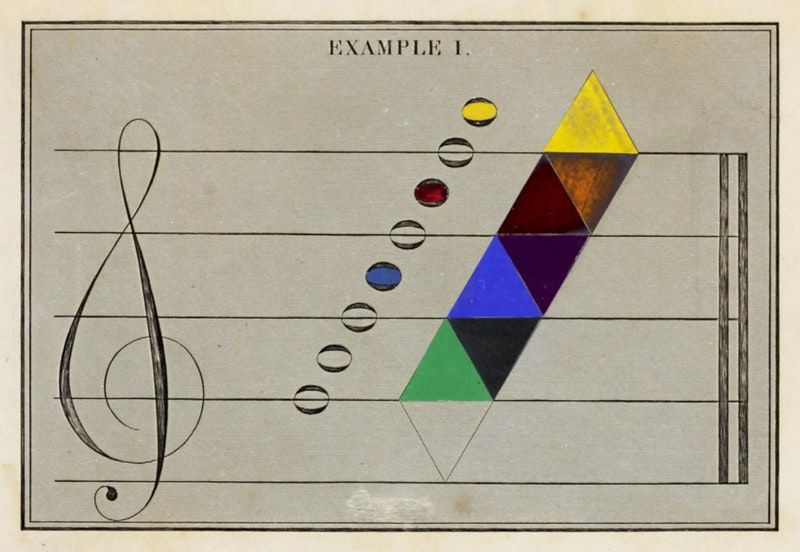
David Ramsay Hay’s mapping of colour onto musical notes, a diagram from his The Laws of Harmonious Colouring (1838).⠀More in @carmelrazmusic's essay “Music of the Squares” on a Hay's attempt to use music theory to evaluate visual beauty — publicdomainreview.org/essay/music-of…

English
Vincent Brown retweetledi

🎸 Tuareg Blues, often referred to as Desert Blues, is a hypnotic and deeply evocative genre of music that originates from the Imazighen people of the Sahara Desert, spanning Mali, Niger, Algeria, Libya, Burkina Faso and many other countries.
Rooted in centuries-old Imazighen traditions, it merges the haunting melodies of North African Imazighen music with the raw energy of American blues and rock.
The Imazighen, have long used music as a means of storytelling, resistance, and cultural preservation. Traditional Imazighen music was played on instruments like the teherdent (a type of lute) and the imzad (a one-stringed violin, traditionally played by women). However, in the late 20th century, as Imazighen communities faced displacement, political struggles, and exile, many young musicians turned to the electric guitar, inspired by the revolutionary sounds of Western blues, rock, and reggae.
This fusion created a distinct style-characterized by pentatonic scales, hypnotic rhythms,
call-and-response vocals, and the steady, trance-like repetition reminiscent of both Saharan folk chants and Mississippi Delta blues. The influence of artists like Ali Farka Touré, whose Malian blues style bridged African and American blues traditions, also helped shape the genre.
The music features driving guitar rhythms, often with reverb-heavy electric guitars that produce a shimmering, almost psychedelic effect. Call-and-response vocals reflect lmazighen oral traditions and communal storytelling. The lyrics are poetic and political, speaking of exile, freedom, rebellion, and the vast beauty of the desert. The hypnotic, repetitive structure of the music creates a trance-like atmosphere, deeply connected to the rhythms of nomadic life and the endless expanse of the Sahara.
by Houssaine Ousbouh
English
Vincent Brown retweetledi

🚨 New episode!
We talked with Jean-Pierre Houdin, architect of the revolutionary internal ramp theory of the Great Pyramid. 🏛️ Discover hidden chambers, massive stone logistics, and ancient engineering genius.
🎧 Spotify
#Egyptology #JeanPierreHoudin #GreatPyramid #Khufu

English
Vincent Brown retweetledi

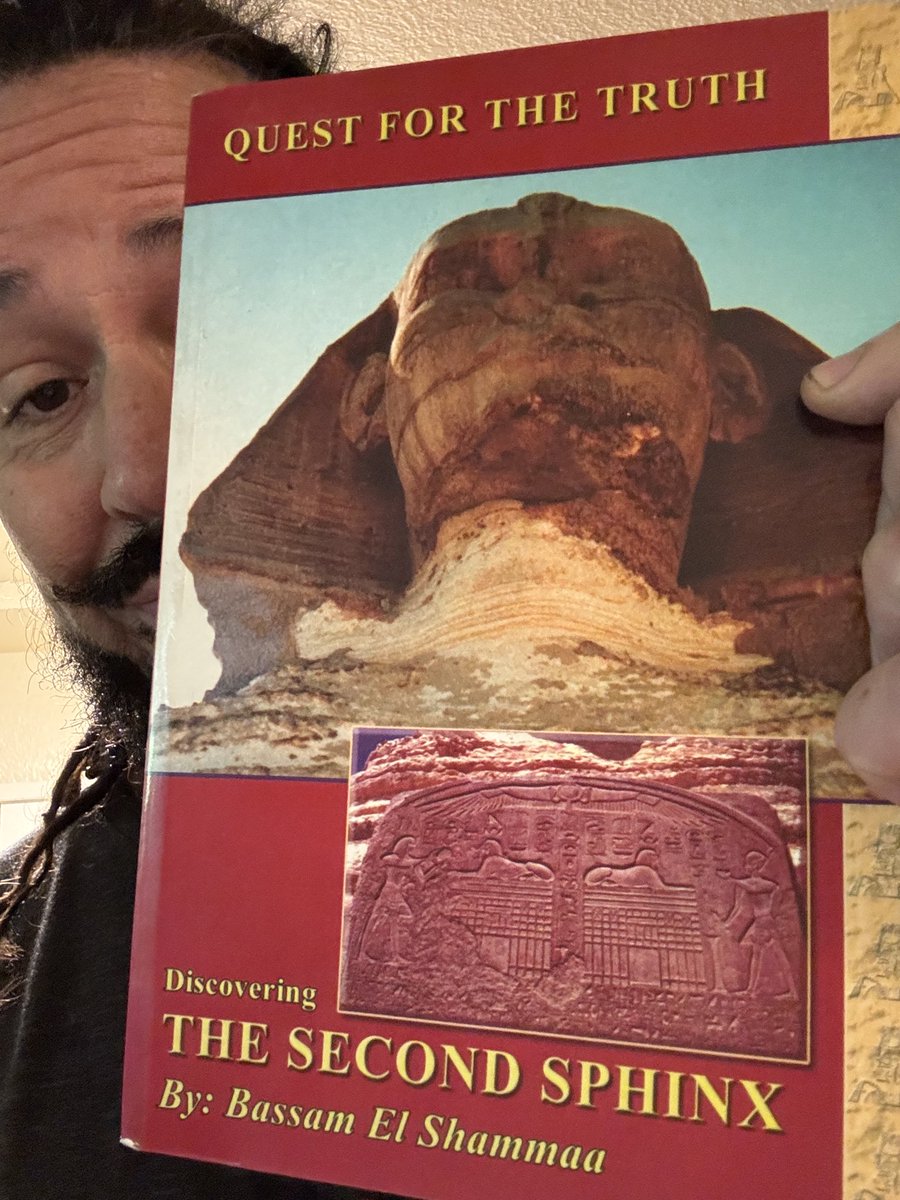
Another 2nd Sphinx?
The Italian team has officially reached the apex of absurdity.
This isn’t groundbreaking—it’s recycled.
The “second Sphinx at Giza” idea has been floating around for decades:
•Dr. Reda proposed a 2nd Sphinx theory
•and before him, Bassam El Shammaa published about the 2nd Sphinx theory l.
•And versions of it go back at least to the 1990s—well before Bauval was even part of the conversation
So no—this isn’t new.
It only feels new if you’re new to this space.
For those of us who’ve been following this for years, it’s just the same unproven theory being repackaged for attention by this team of attention seeking Italians.
Aside from bringing attention to themselves all they’re doing is creating confusion. There’s nothing honorable about that.
They went from claiming scans are proven that there is an underground city beneath Giza with giant corkscrew like structures going miles into the ground to a now hidden 2nd Sphinx.
Sounds fascinating. Yes.
But it’s dishonest and by no means, a genuine effort in raising consciousness.
And that’s really the issue.
There’s a difference between exploring possibilities and knowingly recycling weak, unsupported claims to generate buzz.
That doesn’t move the conversation forward—it muddies it.
And I don’t respect that.
But if you want to credit to anyone for 2nd Sphinx theory, why not give those props to the originators - who happen to actually be Egyptians?
Biondi doesn’t even deserve the late pass for this one.

English
Vincent Brown retweetledi

The church of Porta Panagia in Trikala, Greece, is a prominent Byzantine temple of the thirteenth century, built in 1283. It is characterized by being what remains of an old monastery, standing out for its limestone walls, ceramic decoration and a structure that mixes Byzantine and Western influences.
English