Vinoy Vijayan

1.2K posts

Vinoy Vijayan banner
Vinoy Vijayan

Vinoy Vijayan

@vinoy

Science communicator, former scientist, aspirational effective altruist, Fox not Hedgehog

Ghent, Belgium Katılım Ekim 2008
502 Takip Edilen399 Takipçiler
Vinoy Vijayan retweetledi
Soham Sankaran
Soham Sankaran@sohamsankaran·
In honour of this milestone, I’m publishing the v/acc manifesto – PopVax's plan to save 1 million lives each year by massively accelerating vaccine development. Read it at the link below: chronicles.popvax.com/p/vacc-popvaxs…
English

3
11
97
5.6K
Vinoy Vijayan retweetledi
Alex Tabarrok
Alex Tabarrok@ATabarrok·
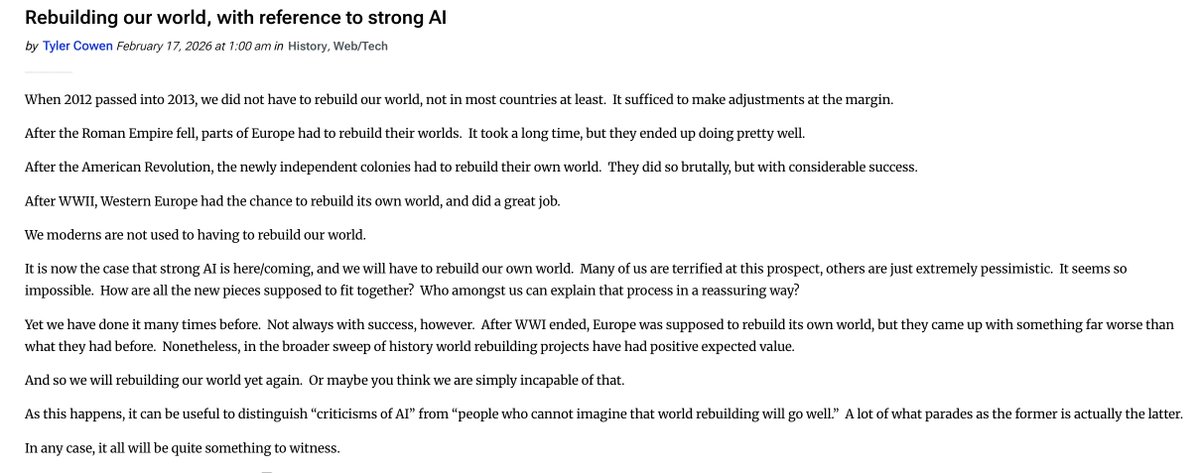
Two view of humanity. From a talk I gave some years ago. Relevant today.
Alex Tabarrok tweet media
English
89
351
3.9K
125.7K
Vinoy Vijayan
Vinoy Vijayan@vinoy·
@GurpriyaSidhu 100% agree. I'm actively trying to unlearn old ideas about what makes a good life. 2 influences were/are US university culture of what being successful is and the EA community where, despite good intentions, you can feel like a failure if you haven't "maximized your impact."
English
0
0
1
110
Gurpriya
Gurpriya@GurpriyaSidhu·
We over-index on success and wealth so much that we assume everyone who has “made it” must have all the answers. The richest people don’t necessarily live the richest lives. What makes life great is not just money, but also love, devotion, friendship, and a certain sensitivity to beauty and nature. Many people who didn’t do “great things” still lived meaningful and happy lives. They found joy in relationships, children, their hobbies, and in connecting deeply with the world around them.
English
10
29
256
8.7K
Vinoy Vijayan retweetledi
Derek Thompson
Derek Thompson@DKThomp·
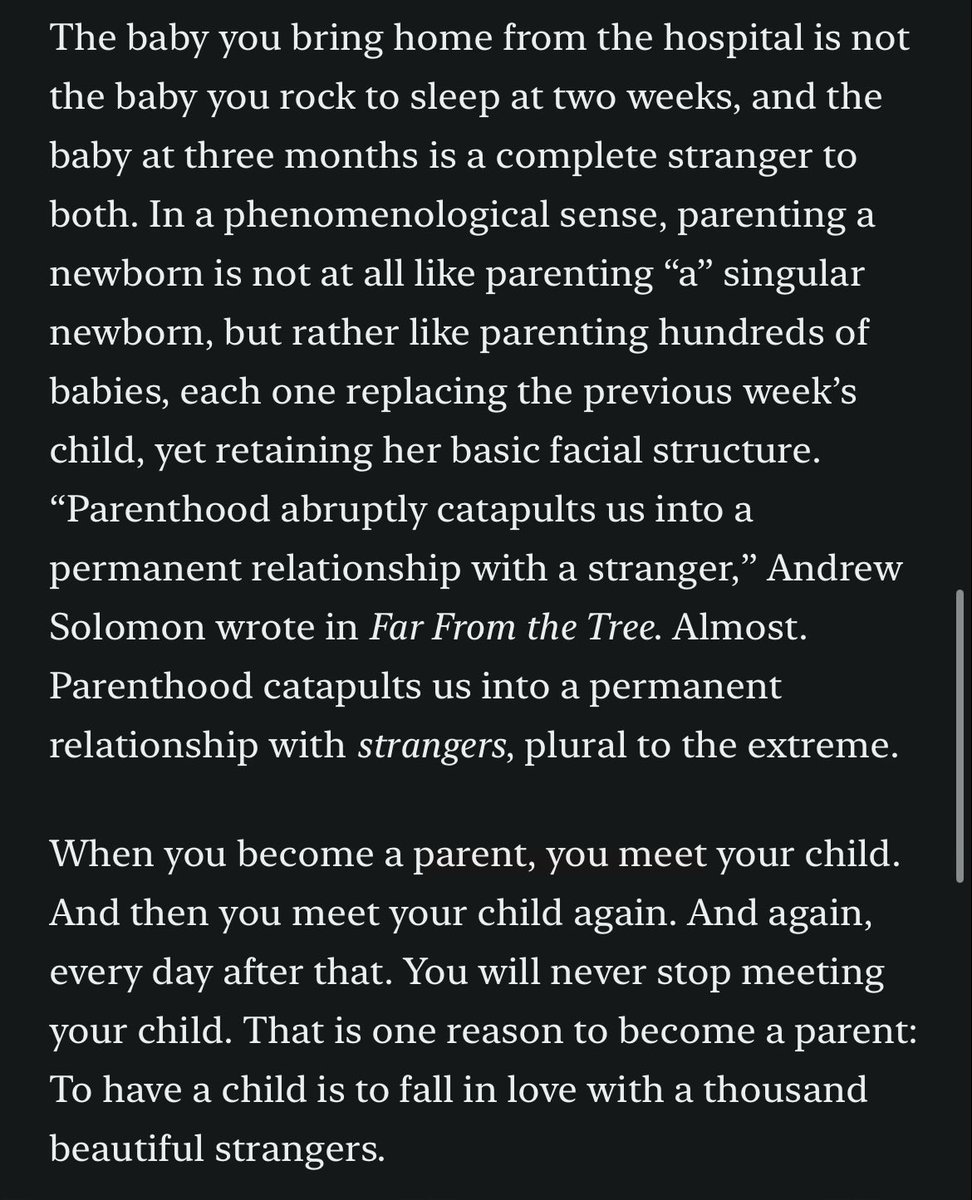
New newsletter: THREE REASONS TO BE A PARENT
Derek Thompson tweet media
English
48
279
3.3K
379.9K
Active Site
Active Site@ActiveSiteBio·
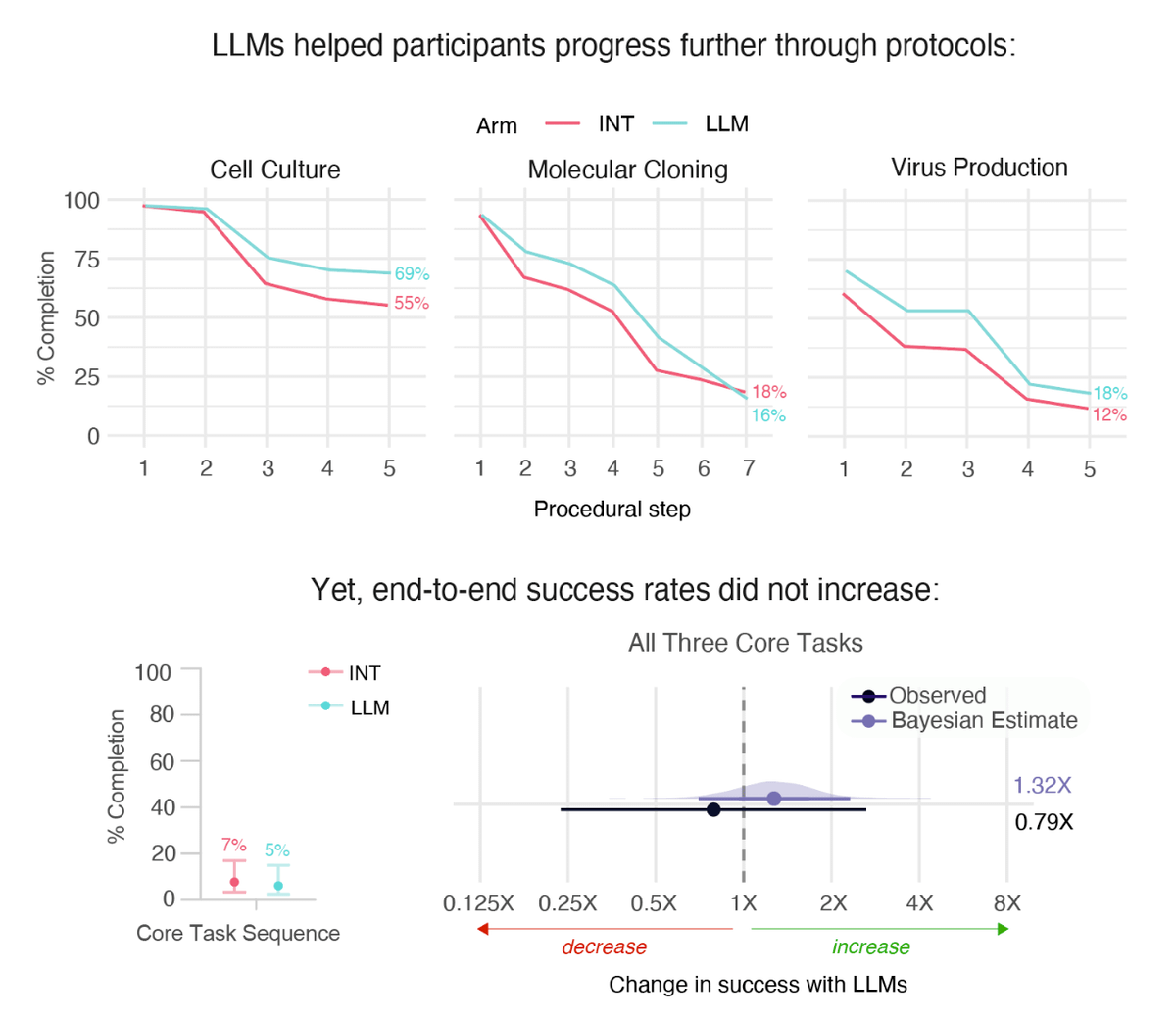
We ran a randomized controlled trial to see if LLMs can help novices perform molecular biology in a wet-lab. The results: LLMs may help in some aspects, but we found no significant increase at the core tasks end-to-end. That's lower than what experts predicted. Our findings 🧵
Active Site tweet media
English
8
45
150
34.2K
Active Site
Active Site@ActiveSiteBio·
Importantly: this is a snapshot of mid-2025 novice and LLM performance. Results could change as new LLMs become more capable, easier to use in the lab, and as average elicitation skill improves. As models evolve, we aim to continue tracking how people use frontier AI in biology
English
2
0
20
797
Vinoy Vijayan retweetledi
Dean W. Ball
Dean W. Ball@deanwball·
A primer on the Anthropic/DoD situation: DoD and Anthropic have a contract to use Claude in classified settings. Right now Anthropic is the only AI company whose models work in classified contexts. The existing contract, signed by both parties and in effect, prohibits two uses of Anthropic’s models by the military: 1. Surveillance of Americans in the United States (as opposed to Americans abroad). 2. The use of Claude in autonomous lethal weapons, which are weapons that can autonomously identify, track, and kill a human with no human oversight or approval. Autonomous killing of humans by machines. On (2), Anthropic CEO Dario Amodei’s public position is essentially that autonomous lethal weapons controlled by frontier AI will be essential faster than most people realize, but that the models aren’t ready for this *today.* For Anthropic, these things seem to be a matter of principle. It’s worth noting that when I speak with researchers at other frontier labs, their principles on this are similar, if not often stricter. For DoD, however, there is another matter of principle: the military’s use of technology should only ever be constrained by the Constitution or the laws of the United States. One could quibble (the government enters into contracts, like anyone else), but the principle makes sense. A private company regulating the military’s use of AI also doesn’t sound quite right! So, the military has three options: 1. They could cancel Anthropic’s contract and find some other frontier lab (ideally several) to work with. 2. They could identify Anthropic a supply chain risk, which would ban all other DoD suppliers (I.e.: a large fraction of the publicly traded firms in America) from using Anthropic in their fulfillment of DoD contracts. This is a power used only for foreign adversary companies as far as I know. Activating this power would cost Anthropic a lot of business—potentially quite a lot—and give investors huge skepticism about whether the company is worth funding for the next round of scaling. Capital was a major constraint anyway, but this makes it much harder. This option could be existential for Anthropic. 3. They could activate Title I of the Defense Production Act, an authority intended for command-and-control of the economy during wars and emergencies. This is really legally murky, and without going into detail, I feel reasonably confident this would backfire for the administration, resulting in courts limiting the use of the DPA. Option 1 is obviously the best. This isn’t even close, and I say this as someone who shares DoD’s principled concerns about the control by private firms over the military’s use of technology. Even the threats do damage to the US business environment, and rightfully so: these are the strictest regulations of AI being considered by any government on Earth, and it all comes from an administration that bills itself (and legitimately has been) deeply anti-AI-regulation. Such is life. One man’s regulation is another man’s national security necessity.
English
94
141
1.1K
263.6K
Vinoy Vijayan retweetledi
Aziz Sunderji
Aziz Sunderji@AzizSunderji·
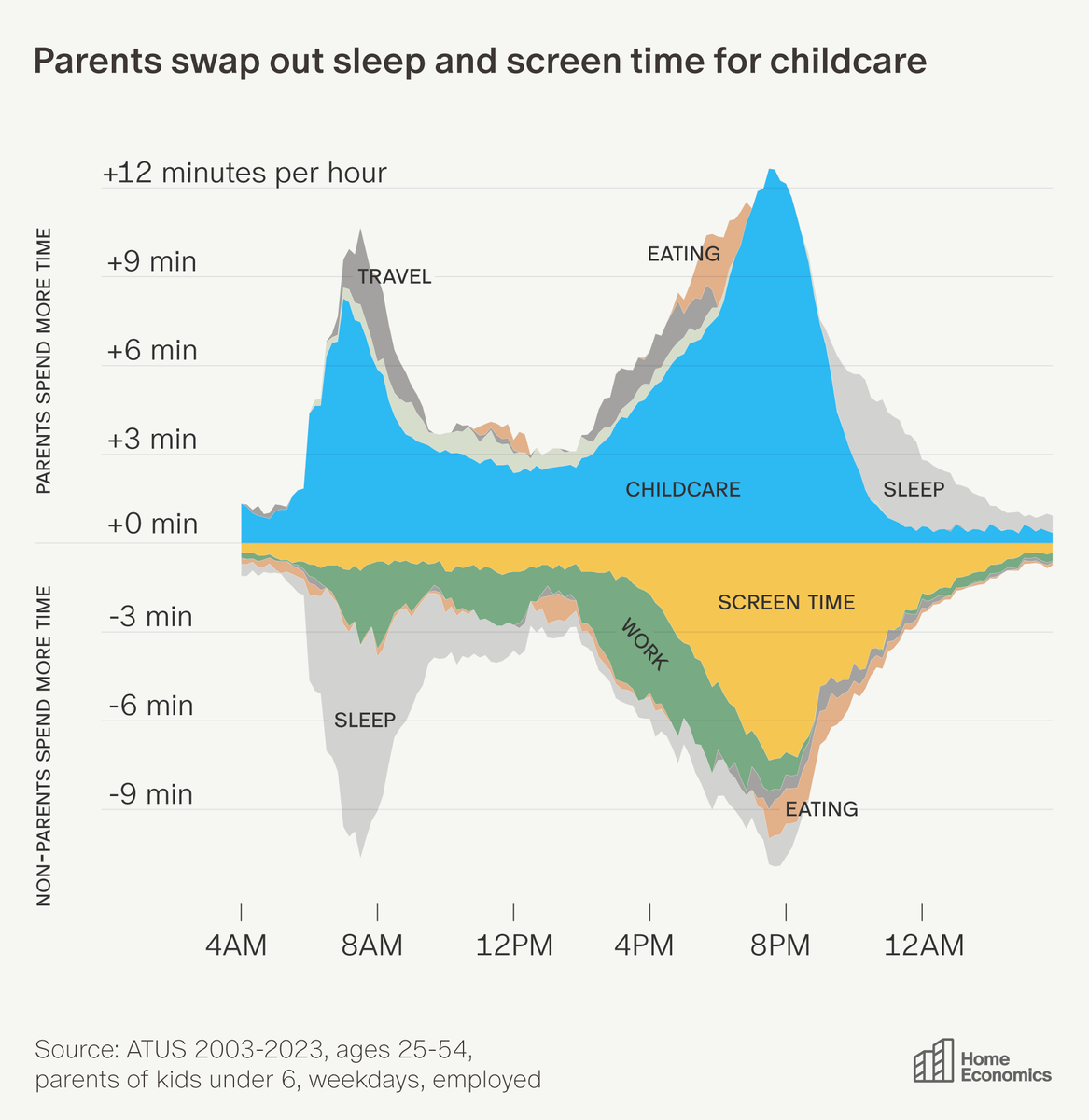
As a new parent, I spend a lot of time changing diapers and feeding the baby. 15 months ago I wasn't doing any of this. I felt busy then too, so where did all this childcare time come from? I analyzed the Census Bureau's American Time Use Survey to find out how most parents do it. The answer: less sleep and less screen time. The funny thing is, parents report being pretty happy about this tradeoff.
Aziz Sunderji tweet media
English
100
502
4.9K
846.8K
Vinoy Vijayan retweetledi
Jacob Kimmel
Jacob Kimmel@jacobkimmel·
Lilly hit $1T market cap this week, ~80% based on GLP1s this is the first existence proof that medicines that create health for ~everyone are among the most valuable products possible we will see more of these in the coming decades as preserving health is unlocked technically
Jacob Kimmel tweet media
English
13
51
395
51K
Vinoy Vijayan retweetledi
Adrian Liston
Adrian Liston@LabListon·
A small primer on this #NobelPrize award today. This prize was for combining two separate fields of immunology research - genetic research on IPEX and immunology research of regulatory T cells (#Tregs), with enormous impact on biology/medicine
The Nobel Prize@NobelPrize

BREAKING NEWS The 2025 #NobelPrize in Physiology or Medicine has been awarded to Mary E. Brunkow, Fred Ramsdell and Shimon Sakaguchi “for their discoveries concerning peripheral immune tolerance.”

English
1
15
61
5.3K
Vinoy Vijayan
Vinoy Vijayan@vinoy·
@NinaPanickssery As a new parent, I'm sympathetic to the view that parents have a role but isn't modern parenting already full of obsessive, Tiger-mom style effort? maybe misdirected but is there any good evidence for what's useful beyond the basics (care, safety, nutrition, attention) ?
English
1
0
1
45
Nina
Nina@NinaPanickssery·
Clearly parents are in theory able to select and affect their kids’ environment. The fact that most parents fail to is just one of those “most people behave like sheep” facts. Don’t be a sheep just because everyone else is a sheep! (I thankfully learnt this from my parents)
English
1
0
5
279
Nina
Nina@NinaPanickssery·
These studies are alleging that environment explains half of outcomes but parenting explains none. Matthew proposes that this means we should spend less effort on parenting. No! This indicates people are spending nowhere near enough effort on parenting! (Or misdirecting effort)
Matthew Barnett@MatthewJBar

Twin and adoption studies consistently show that parenting choices have minimal effects on a kid's eventual intelligence, personality, or happiness (except in cases of extreme neglect or abuse). This should revolutionize how we raise children, yet almost nobody knows or cares.

English
6
0
11
2K
Vinoy Vijayan
Vinoy Vijayan@vinoy·
The EU's initial appeal of seamlessness is a tourist's delight but a founder's nightmare You might get the same currency and border less travel but there is no real common market to be found Luis Garicano explain the myth of the single market (excellent substack btw)
Luis Garicano 🇪🇺🇺🇦@lugaricano

I explain today why the Single market is broken: mutual recognition is not what we think it is; harmonisation actually fragments, and the Commission is not doing its core job. If you only ever read one post, let it be this one siliconcontinent.com/p/the-myth-of-…

English
0
1
7
3.7K
Vinoy Vijayan
Vinoy Vijayan@vinoy·
One final example: weighted backpacks on Pigeons (sadly couldn't find a picture) Scientists found that adding small weights to lower-status pigeons made them feel more powerful, act more aggressively, and actually rise in the social ranks!
English
0
0
0
39
Vinoy Vijayan
Vinoy Vijayan@vinoy·
How? They use the angle of sun light as an internal compass (Cool!) and scientists hypothesized that they also kept count of their stride length How do you test it - mess up their stride length by putting them on stilts Sure enough, they missed their burrow.
English
1
0
0
46
Vinoy Vijayan
Vinoy Vijayan@vinoy·
I love it when i come across scientific papers where scientists do wacky (and clever) tactics to test ideas in animals Like this 👇 This is a young barn owl fitted with "binocular prisms" that mess up the way the see the world by a precise amount of degrees. why? 🧵
Vinoy Vijayan tweet media
English
1
0
1
94