Vladimir Gordeev

1.2K posts

Vladimir Gordeev banner
Vladimir Gordeev

Vladimir Gordeev

@vladimir_vg

A Toolmaster

Innopolis, Russia Katılım Ekim 2011
151 Takip Edilen107 Takipçiler
Vladimir Gordeev retweetledi
John Carmack
John Carmack@ID_AA_Carmack·
Whoa — fountain codes are really interesting!
Jeffrey Emanuel@doodlestein

This is all possible because of the genius of RaptorQ fountain codes (RFC 6330), which I've written about before here: jeffreyemanuel.com/writing/raptorq In RaptorQ, every file turns into a stream of symbols where any K (plus a small epsilon) of them reconstruct the original. You can think of these as fungible water droplets from a fountain (hence the name fountain code), any one of which can help you fill your glass (reconstruct your file); there's no "rarest" hard-to-find chunk to cause you to get stuck at 99% completion, like with BitTorrent, which has disjoint, non-fungible chunks. So the question "which packets got lost?" stops mattering, only the NUMBER of distinct packets sent matters. That one property nullifies the entire retransmission conversation since you no longer have per-loss round trips, head-of-line blocking, or window collapse. A 10% loss rate costs roughly 10% extra bandwidth instead of stalling everything. Carmack's three complaints from his post were: Parallel TCP vs reinventing UDP reliability: I guess I sort of reinvented, but fountain coding changes what "reliable" has to mean. You never re-send the exact bytes that died; any fresh symbol repairs any loss. Feedback turns into a few rounds of "I still need N more symbols for block B." QUIC size and the security/performance conflation: the QUIC data plane is written inside my own runtime (TLS 1.3 via rustls), for exactly this one job. And security is a separate, explicit axis: lab plaintext, per-symbol HMAC over raw UDP, or full QUIC+TLS. There are no silent downgrades, and each tier is benchmarked only against the crypto-equivalent rsync setup (plaintext vs the rsync daemon, TLS vs ssh with aes128-gcm). The kernel knows things user code can't: this is true, so atp measures what it can actually observe. A BBR-style delivery-rate sampler paces a reliable stream on clean connections, so you pay zero FEC tax when nothing is being lost, and rate-matched pacing takes over when loss appears. This gets you ~946 Mbit/s on a 1 Gbit path. I spent an enormous amount of energy building a test and benchmark harness for atp to compare it against rsync in a way that's maximally fair to rsync. In this harness, a false win is structurally impossible because of all the precautions: hermetic network namespaces, netem rate+delay+jitter+loss applied on both ends, SHA-256 verification of every single transfer, medians of 3 to 5 reps. The results of all this testing are as follows: 500 KB transfers run 2.9 to 4.8x faster than tuned rsync in every link regime. The toughest test cell (10% loss, 5% reorder, 200 ms RTT) comes out around 1.9x faster than rsync. On a clean 1 Gbit, 500 MB file: 4.52 s vs 5.13 s. Where rsync still wins (huge single encrypted files on pristine links, sender RAM under heavy loss), the README prints it in the same table. All 230+ numbered experiments exist in an append-only evidence ledger, including every optimization hypothesis that failed (my negative evidence ledger concept that I've written about before in my FrankenSQLite post). And there's a feature that a single TCP stream can't do at all: bonding. Machines that hold the same file can all feed one receiver at once, each spraying a disjoint slice of the same fountain. Duplicates are impossible by construction, and if a donor dies mid-transfer, its repair windows get reassigned to the survivors. If you move a lot of files around between machines, both within the same local network or over the internet, you should seriously check atp out, because it's better. And you don't even have to spend time figuring out how to use it yourself, because the installer offers to (optionally) include a highly agent-intuitive and agent-ergonomic skill for you that teaches your agents how to use atp most effectively, including how to install it to all your ssh accessible machines you already have set up, since it needs to be installed on both ends, and how to use it with bonding. You can install it on Linux and Mac with this one-liner (there's another one given in the README for Windows): curl -fsSL raw.githubusercontent.com/Dicklesworthst… | bash

English
40
60
979
212.8K
Vladimir Gordeev
Vladimir Gordeev@vladimir_vg·
@ibuildthecloud This is really crazy to me. I am exact opposite. I will design shit out of a project. Writing code and reacting without having a design upfront I perceive as a dangerous place to be.
English
0
0
0
28
Darren Shepherd
Darren Shepherd@ibuildthecloud·
One thing I realize is I suck at design. I hate having to think of all the problems up front. It's more fun to just write code and react. But I think I have to force myself to design up front now. I'm not sure I like this. I wish designing was more like programming. How can I make designing fun?
Darren Shepherd@ibuildthecloud

Do we suddenly switch to waterfall? The change from Waterfall to Agile was not so much about abandoning Waterfall because Agile just ends up being tiny waterfalls. It's about increasing iteration speed, by doing smaller bits of work. But if AI can program faster, we need to be able to take on larger chunks of work now.

English
5
0
15
3.9K
Vladimir Gordeev retweetledi
Alex Mordvintsev
Alex Mordvintsev@zzznah·
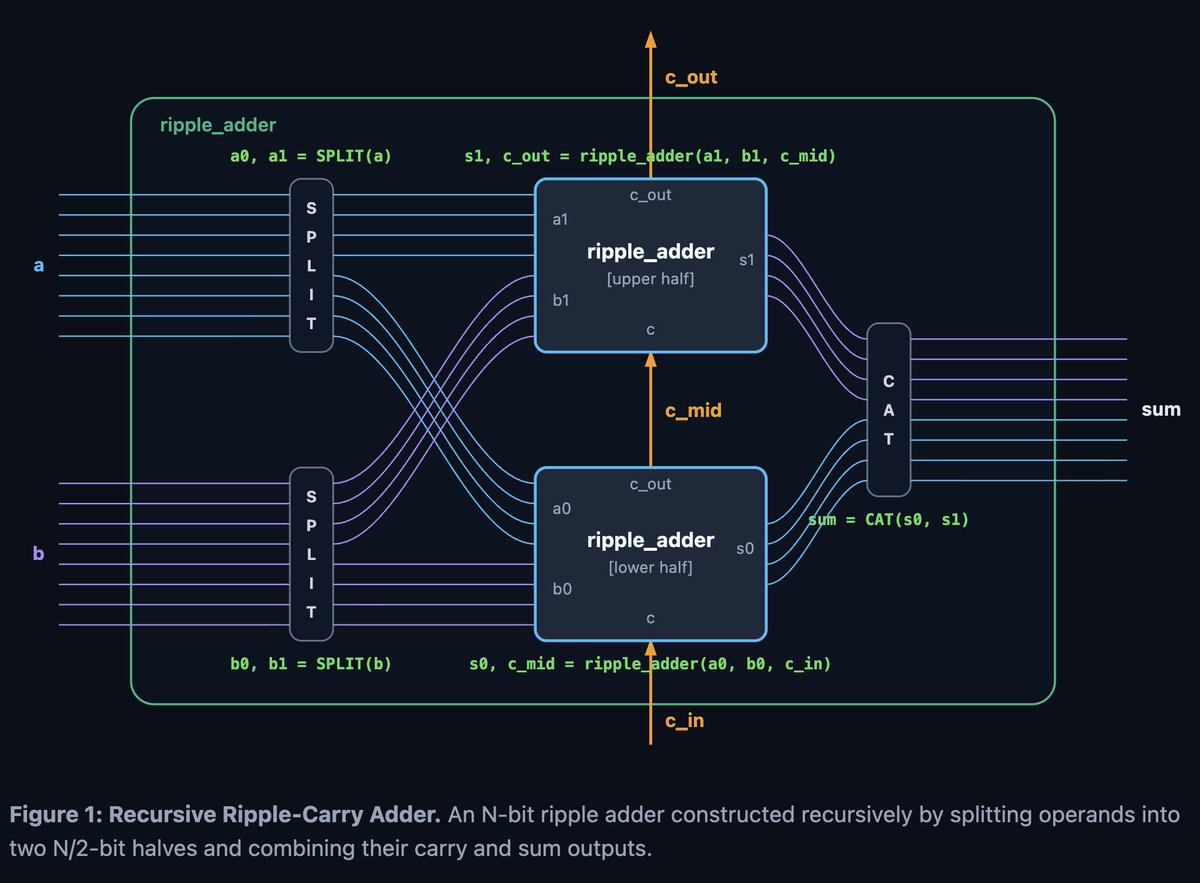
Introducing MorphoHDL, a minimal language prototype for growing boolean circuits! paradigms-of-intelligence.github.io/morpho/ Early this year I wanted to design a size-agnostic graph rewrite rule system that could build functional boolean circuits. First I thought about "chemistry"-like reactive systems, but rules were too complicated with many different node types carrying multiple indices... Then I realized, that cell division is much more natural way of building complex structures, and once I started to treat graph edges as buses instead of single wires, everything clicked. No new formalism — just taking good old recursion and seeing how far I can push it. Ripple-carry adder, Brent–Kung adder, multipliers ... and some Haeckel-esque creatures along the way! Hope you enjoy the report of my journey and the demos.
Alex Mordvintsev tweet media
English
25
127
952
58.6K
Vladimir Gordeev
Vladimir Gordeev@vladimir_vg·
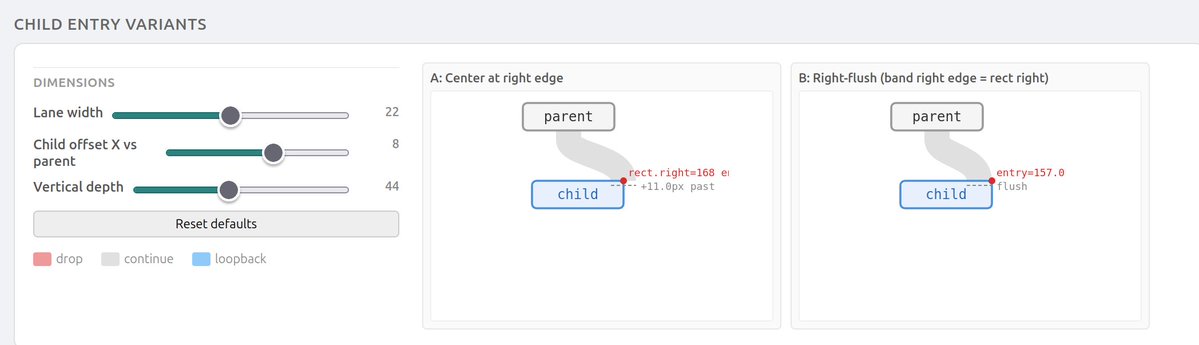
Working on a SaaS for telegram bot analytics. Each telegram bot has its own workflow, conventions, features. Restaurants use them to take orders. Tutors use them for booking students. Content creators use them to sell access to digital goods. Each of them follow their own workflow, their own conventions. How to present it to the user? One of the interfaces that I expose to user is Sankey Diagrams. Pretty natural solution for traffic funnel display. And I want to say out loud: working on visual interfaces in 2026 is pure joy. "Generate 10 variants and render them on one page" "I like how you did X and Y in the variant N, adopt it as default" "make I and J params flexible, and controls, I want to play with them" That's how I work with AI agents on visual interfaces. Pure joy.
Vladimir Gordeev tweet media
Vladimir Gordeev@vladimir_vg

What AIs qualitatively changed in my work is tooling. I spent so much time in the past debugging, simply because building proper seeing tools gonna take prohibitively large amount of time. Now I generate custom reports, visualizations. I work directly with meaning, with semantics. I love AI. So much dumb and painful work now gone.

English
0
0
0
33
Vladimir Gordeev
Vladimir Gordeev@vladimir_vg·
@Volorf Nice. Basically you created a control that acts like a sin(x) function. You hit one point, and it iterates from low to high and back.
English
0
0
1
14
Oleg Frolov
Oleg Frolov@Volorf·
There are use cases where you explore a range of given values back and forth. Imagine tuning weights, temperature, easings, some offset to a constant value, et cetera. In such a situation, you might want to change the button's action based on the context. Instead of moving your hand to another part of the screen (a spatial transformation of your body), the context-aware button reevaluates its action to better meet your needs at that moment. The approach can be applied to many UI interactions. Here is one of them: BIDIRECTIONAL SLIDER.
English
1
0
27
2.1K
Vladimir Gordeev
Vladimir Gordeev@vladimir_vg·
Developing a programming language like that right now. Mostly agree, though I differ about “untyped”. Static typing is wonderful for pure parts of the code. Problems rise when static typing meets IO and hot code reload. You can’t know in advance what interface new updated code gonna have. You can’t verify communication correctness with the old code that runs alongside. That’s why Erlang is dynamically typed, for example. My design: statically typed with inference by default, explicitly dynamically typed for some parts where dynamism is expected.
English
0
0
0
46
David Crawshaw
David Crawshaw@davidcrawshaw·
Some guesses about the future of programming languages, given agents write and humans read: - untyped - out of band formal verification - test harness runs code in a simulator vm to instrument the os - less expressive, more copying
English
28
8
119
17.1K
luna
luna@ImLunaHey·
hot take: using .env files for secrets is wrong and we should move away from this.
English
253
33
1.4K
316.4K
1red2black | AI / ML / BigData | RU
Opencode какой-то слишком багнутый. Из 10 запусков с GLM внутри он почему-то "заел" 6 раз. Четыре из них он завис просто на изначальном промте. Claude Code, на той же GLM 5.2, с тем же ключом, на той же машине - пока не зависла ни разу.
Русский
11
0
17
4.5K
Vladimir Gordeev
Vladimir Gordeev@vladimir_vg·
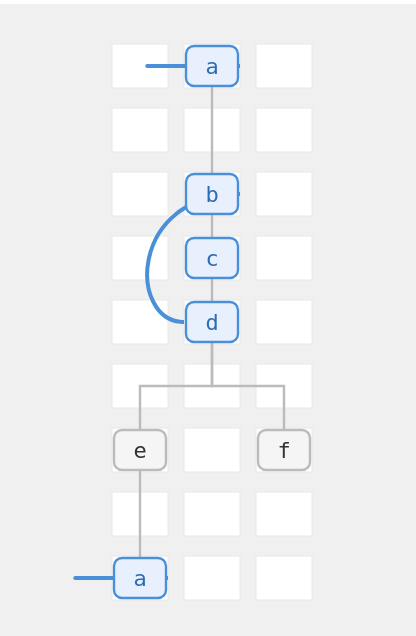
What AIs qualitatively changed in my work is tooling. I spent so much time in the past debugging, simply because building proper seeing tools gonna take prohibitively large amount of time. Now I generate custom reports, visualizations. I work directly with meaning, with semantics. I love AI. So much dumb and painful work now gone.
Vladimir Gordeev tweet mediaVladimir Gordeev tweet media
English
0
0
1
74
Vladimir Gordeev
Vladimir Gordeev@vladimir_vg·
In upcoming 1-2 weeks I gonna release it. I can almost taste how awesome it gonna be. I am building SaaS for Telegram bot analytics in public. Stay tuned!
English
0
0
0
24
Vladimir Gordeev
Vladimir Gordeev@vladimir_vg·
I want a solution. A SaaS service, that you connect your telegram bot to. Which allows you to see all its communication and stats. To see the paths users take. See when leads drop off. To see the paths that convert to sales. To see whole funnel, derived dynamically, without heavy configuration. Just connect your bot to endpoint, and open the browser. That's it.
English
1
0
0
58
Vladimir Gordeev
Vladimir Gordeev@vladimir_vg·
I am building in public. I don't like guessing, I rely on data when I can. I want to SEE how my system/business behaves. Especially when my livelihood depends on it. There are bunch of tools that bring visibility. Google Analytics for websites. There are more fine-tuned services like DataFast by @marclou. But there is a niche.
English
1
0
0
72
Vladimir Gordeev
Vladimir Gordeev@vladimir_vg·
@khoiiiind LLMs can have 100 experimental branches to solve one problem. Human won't do that. A language that would encourage that frequent branching would fit the description of LLM-centric one.
English
1
0
1
18
k h ô i
k h ô i@khoiiiind·
As I’ve been saying, modulo verbosity, language designs that benefit human reasoning also benefit LLM reasoning and vice versa. The concept of a “LLM centric programming language” makes little sense.
English
2
2
11
422
k h ô i
k h ô i@khoiiiind·
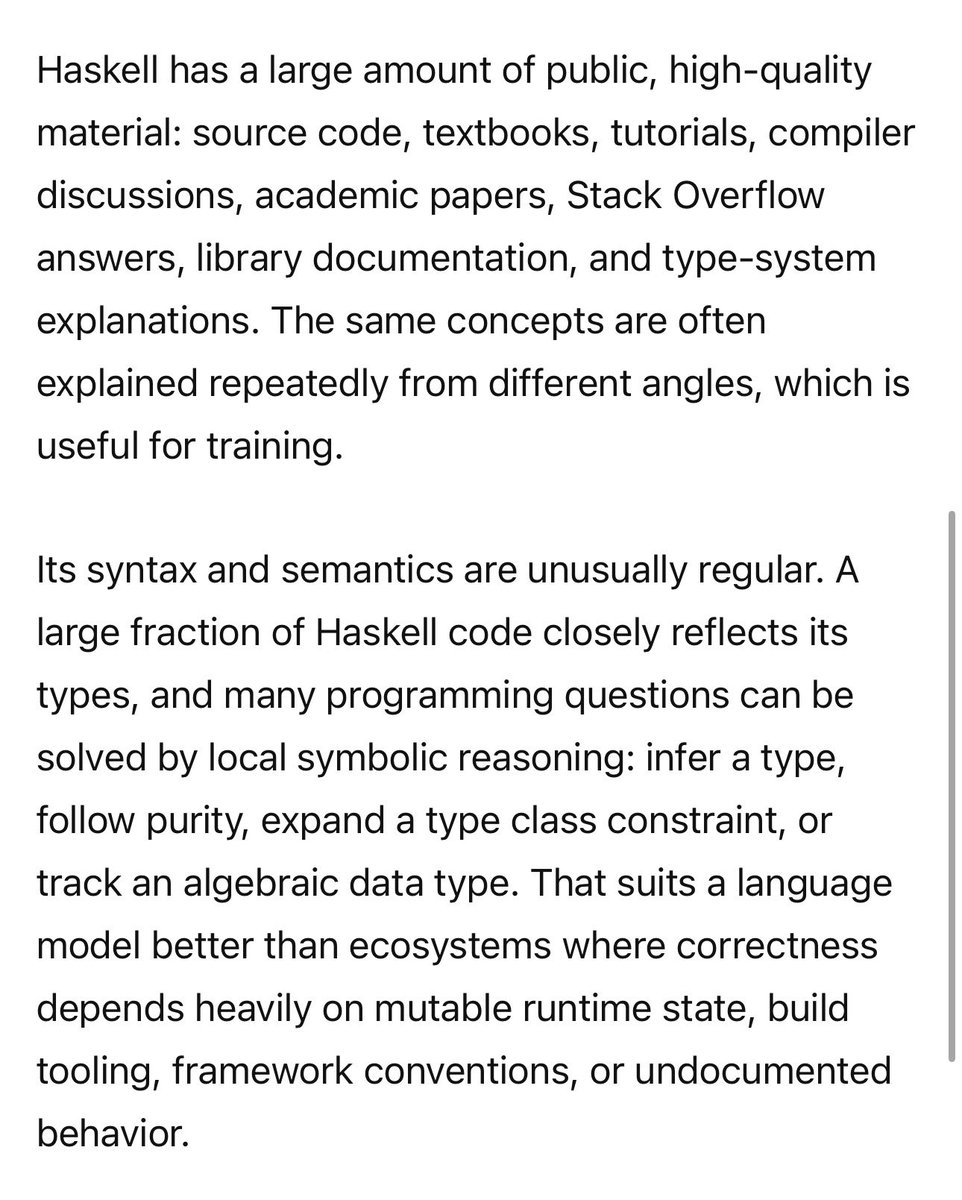
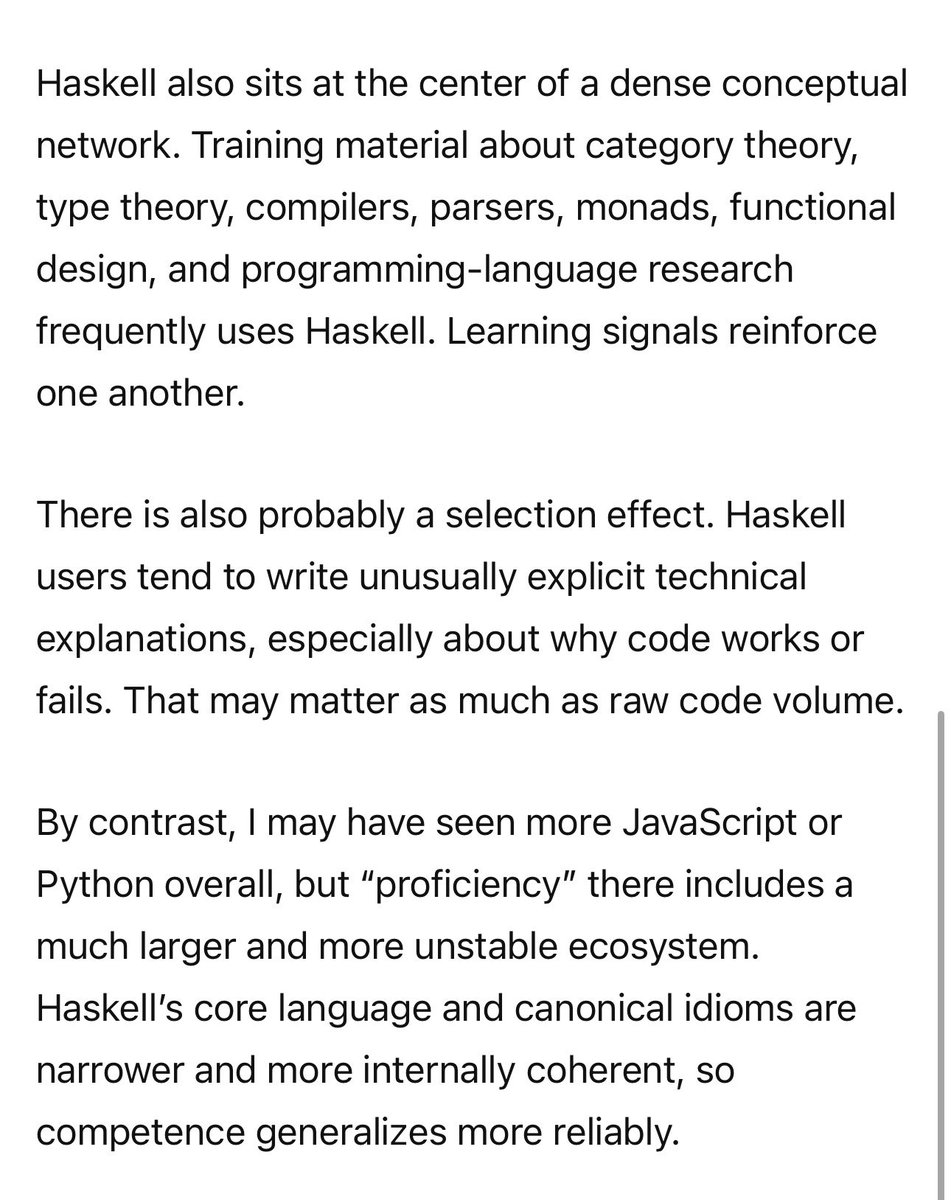
sol likes haskell
k h ô i tweet mediak h ô i tweet mediak h ô i tweet media
English
3
3
13
949
Vladimir Gordeev
Vladimir Gordeev@vladimir_vg·
А тебе не кажется что этот дроч имеет те же корни что и преждевременная оптимизация? Стоит ли заморачиваться юридической частью, пока нет прямой опасности? Может проект сдохнет задолго до того как понадобится юридическая защита. А ты уже въебал на неё времени. А мог бы потратить его на то чтобы сделать проект жизнеспособнее.
Русский
1
0
3
277
1red2black | AI / ML / BigData | RU
Я тут пишу лицензионное соглашение на VibeVM Международное право (точнее по отдельности - Россия, США, ЕС, и общее ядро для них всех) - это пиздец Я написал какой-то документ, показал юристу со специализацией в вопросе (США), получил ответ - "я этих вещей не знаю,..... но это не беда - никто не знает!" Успокоил так успокоил, конечно. В смысле, что каждый раз надо разбираться заново, даже профильному специалисту. А непрофильный юрист в этом плане практически ничем не отличается от любого другого обычного человека. Причем, блядские законы еще и меняются буквально каждый месяц. Например, всё соглашение Steam - это чушь на постном масле, и написана в расчете что их юристы будут решать проблемы по мере их поступления. Значительная часть текста - это просто какая-то расплывчатая фантазия на общую тему, либо противоречащая законодательству, либо говорящая ни о чем чтобы потом можно было допилить. Соглашение Facebook - это плотная батарея результатов судов с их участием (о чем они не напишут, но что легко гуглится). Такой забор, что мышь не проскочит - они решили решить проблему полным покрытием всех частных случаев. По некоторым инсайдам, в составлении правил Фейсбука участвовали сотни (!) людей. Получается, помощи искать особо не у кого. Ну просто нет таких людей на свете, которые бы всё это знали. Можно только написать нечто (причем самостоятельно, потому что ты единственный, кто знает детали того, что ты собираешься делать). Дальше провалидировать о какого-то юриста (желательно, профильного). И дальше... всё. Ждать пока на тебя кто-то накатит досудебку, cease and desist. Проблему решить на словах досудебно, результаты вписать в пользовательское соглашение. Повторить много раз. Ожидания: "накатаю пет-проект, буду интересными вещами заниматься, фичи допиливать". Реальность: перед тем как что-то выкладывать, надо сделать legal-портал, написать туда десяток сложных документов, отправить оповещения в Роскомнадзоры на обработку персданных, подписать договоры о безвозмездной передаче прав с каждым знакомым который тебе рисовал иконку, и так далее. Как-то не так изначально выглядят пет-проекты, верно?
Русский
4
0
26
7K
Vladimir Gordeev
Vladimir Gordeev@vladimir_vg·
If you understand very piece of it, then your head is loaded with context that could be used for something else. Which means that your pace is slowed down significantly. We just need to develop new approaches to software engineering, when you don’t really fully understand your code base fully, and still develop it.
English
0
0
1
91
Jan Wilmake
Jan Wilmake@janwilmake·
so before ai coding it would take much longer to build a codebase up to like 100k loc and the dev would know every bit because they had written every line with sweat and tears but now its like peanuts but the problem is nobody understands crap so now we're all learning how to code again because of this new tech and i feel like its not clear yet what is the best way: should we just not understand shit and keep talking and it will be allright or should we actually try to understand every piece of it? and how can we make sure that we can vibecode but still understand the codebase really well? because in the end i feel like the answer is somewhere in the middle
English
83
10
249
33.3K
Vladimir Gordeev
Vladimir Gordeev@vladimir_vg·
@kellabyte @ThomasRPapp Of course it does, when it is forced with the threat of expulsion. There is nothing nice about such environment. Actually very ugly.
English
0
0
1
19
Kelly Sommers
Kelly Sommers@kellabyte·
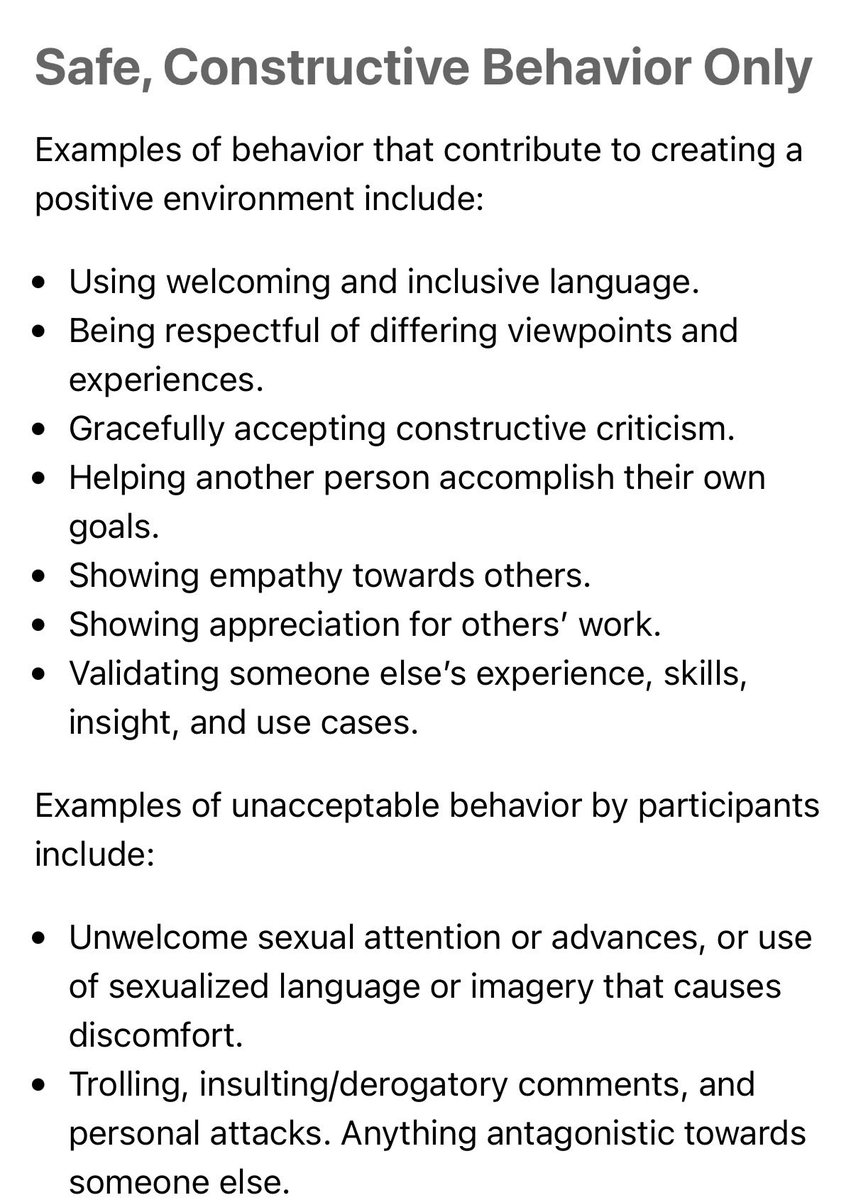
Maybe the lead of Zig should follow his own code of conduct
Kelly Sommers tweet media
English
18
17
375
16.1K
Vladimir Gordeev
Vladimir Gordeev@vladimir_vg·
@AE_Robbert Unlikely. We just not creative enough with other designs. Tool must optimize for the mental model. Stories that we read are sequential. In this sense book is a good interface. What about situations when you're looking for something? Book limitations start to show.
English
1
0
0
56
Adam Robbert
Adam Robbert@AE_Robbert·
It’s interesting that books are only book-shaped because of a specific set of material constraints. And yet it turns out once those constraints are lifted and we can organize text in just about anyway we want to, we learn we basically got it totally right the first time around.
English
6
2
11
1.2K