

Vladimir Lebedev
1.1K posts

Vladimir Lebedev
@vlebedev
Agentic Engineer at Swiss Re
Zug, Switzerland Katılım Şubat 2008
275 Takip Edilen162 Takipçiler

Would you be interested if JetBrains releases a totally local AI agent, working 100% on your laptop, using our code insight engine and deeply integrated into the IDE?
Yes, it will be probably 1 month behind the very recent frontier models, but no token blood bath anymore
WDYT?
English
@SimonHoiberg Oh, and there is Lagerhouse Mättli with a lot of sleeping places in my village too.
English
@SimonHoiberg I have nice Aula which could host 50-100 people gathering easily across the street in my house in Alosen, canton Zug. 🙂 I don’t think it’ll be expensive to rent for a couple days.
English

I’m 55 but still able to think and act without “risk” filter applied all the time. But people around me obsessed with being not wrong all the time. IMO companies that that replace status quo oriented leadership with people able to experiment will be the winners in next few years.
Jaya Gupta@JayaGup10
English
Vladimir Lebedev retweetledi
Vladimir Lebedev retweetledi

Great post. This type of multi-agent coordination is possible with pi-subagents + pi-intercom 😎
github.com/nicobailon/pi-…
github.com/nicobailon/pi-…
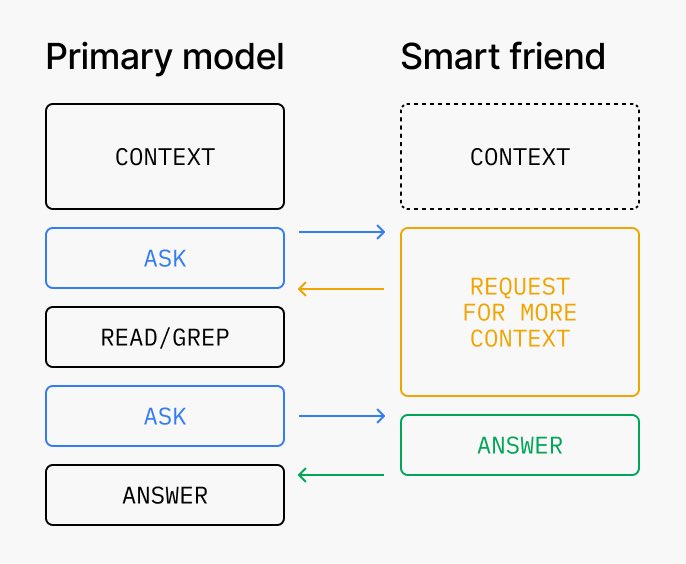
Walden@walden_yan
English
Decentralized systems are the key in this fight. I can speak from evidence: back in 1991 FIDOnet that I helped to establish in Russia in 1990 was crucial to fight against August putschists. That peer-to-peer network was the one of very few uncensored coordination tools.
harryhalpin@harryhalpin
Because I get asked a lot. Why we must fight Palantir, in brief. 1. Programmers working on the Internet have a moral responsibility to the entire world, not a single country. The Internet has been designed since its inception as a universal system for the sharing of knowledge without censorship. The Internet is not the property of any one government or nation. 2. The Internet enables mass surveillance at a scale unimaginable to the Gestapo and the Cheka. Far too many programmers have wasted their lives at building surveillance systems under the guise of Web advertising. Today, these web tracking systems are being used to monitor, control, and even kill humans by companies like Palantir that seek to combine state violence with corporate efficiency, and thus create a new form of technofascism. 3. Surveillance justified by external national security threats will be turned against citizens inside the nation-state. Mass surveillance was once the exclusive domain of the NSA, but today it has been privatized to corporations like Palantir that are unaccountable to any democratic process. What begins as fear of external foreign nation-states turns inwards to focus on immigrants, dissidents, and eventually to anyone that might challenge the status quo or try to exit an increasingly dysfunctional society. 4. Everyone is a target. The “enemy within” continually expands until it encompasses the entire population of a nation regardless of their status and beliefs, justifying evermore paranoid and totalizing surveillance. The line between policing and military operations blurs, with legal frameworks being replaced by technological violence operating with total impunity. 5. Surveillance can only be defeated by building software and hardware to defend ourselves. Meek calls for regulation or moralizing demands for human rights are useless in this era. Any rights must be enforced by the hard power of code. Code, not laws, can be used to uphold the right to privacy by making surveillance difficult, if not impossible, even by nation-state adversaries. 6. We are ruled by a senile gerontocracy. Unlike the generations that fought in the world wars, most of our current rulers are degenerate pedophiles who would sacrifice the well-being of the youth and the entire planet due to their infantile desire for wealth and power. Technology of surveillance and automated warfare reflects their increasingly desperate attempts to maintain archaic forms of domination. 7. The American Empire is unraveling. Once, the United States of America presided over a globe where it could enforce its rule via the status of the dollar as a global reserve currency and a network of equally global military bases, but new regional powers now directly challenge the United States as its empire dissolves in the face of internal economic stagnation, political corruption, and the inflation of the dollar. 8. In a real war, fantasies of total technological dominance always backfire. When a faceless drone kills a child’s father, that child will one day take revenge regardless of the cost, something forgotten by those raised in comfortable suburbs. Going beyond zero-sum games, one can only truly win a battle against a people by demonstrating your victory provides a better way of life, increased prosperity, and an inspiring philosophy. 9. Oddly enough, proponents of fully automated warfare support a universal draft. Deep-down, these keyboard warriors know that their technofascist fantasies are a paper tiger when up against determined opponents that engage in asymmetric warfare. They also know none of their children will fight in a war for their state but they would be happy to see other people’s children come home in body-bags. 10. The problem is not whether AI weapons will be built; we must hold responsible those who are building them. No matter which country is deploying automated killing machines, no one is absolved from the murder of civilians and the destruction of infrastructure due to the parlour-trick of shifting the blame to AI. 11. Atomic war is on the horizon. As various states descend into wars over increasingly scarce natural resources, the possibility of tactical nuclear strikes over Teheran, Kyiv, and other areas of conflict has returned to the historical stage. Increasingly geriatric and authoritarian rulers face less guardrails than before to deploying nuclear weapons, and may even be willing to sacrifice the survival of humanity to appease their own petty egos. 12. Our goal is a world of peace where every person can be empowered by the Internet. Modern war is the quintessential game of sending young people to the meat-grinder. Why die for the profit of corrupt rulers when one could build real wealth and power for yourself using the Internet? 13. We should fight for the world we want, and build the tools needed by future generations. Pacifism would be suicidal in this period of global turbulence and resource wars, but real hard power lies in technology: Programmers should be creating technologies to live a free life and prosper in a hostile society of surveillance and control, and decentralization is the only way these technologies will survive against the inevitable repression. 14. The State will not help us. The state is a dying pre-Internet institution that increasingly resembles nothing but a Ponzi scheme fueled by taxes and debt. None of the youth alive today will likely inherit any benefits, such as welfare and health care. 15. Centralized and opaque algorithms are a danger to free speech. Propaganda is the flip-side of surveillance, as continual propaganda prevents anyone from even thinking of challenging the system. Social media monopolies promote propaganda to create a generalized idiocy while silencing those that would dare to criticize the reigning order before they can organize against it. 16. Building new forms of social organization with each other is vital to survival. The traditional mediascape of politics and entertainment exists to distract us from building networked solidarity and distributed autonomous organizations across borders. The hierarchical state is as relevant to us as the medieval church and kings were to the formation of the joint-stock corporation and the labour union. 17. Digital identity is the next step in their system of control. Within the next few years, access to the Internet–including in Europe and the United States–will require biometric national identity cards, using the flimsy excuse of “protecting children.” The real goal is to gatekeep free access to subversive political content and halt cross-border communication in order to prevent new forms of self-organization and resistance from emerging. 18. Only when one can be anonymous is one truly free. The freedom to express oneself without censorship and surveillance is a vital precondition for both the autonomous use of reason and the democratic evolution of society. Technology must enable the freedom to selectively reveal ourselves to the world–so that we can become who we want to be–by preserving the right to privacy over the Internet, including not just individual privacy but the right to transact and form contracts privately. 19. America created the first global surveillance state, but it will not be the last. Too many have forgotten or perhaps taken for granted the revelations of Wikileaks and Snowden. States across the world from China to Russia are creating even more powerful global surveillance systems and propaganda machines. Leveraging private defense contracts in countries across the world, Palantir seeks to make itself the operating system of a cross-border global secret state while it pushes its own farcical version of ethno-nationalism. 20. Culture wars are a psyop. It is ironic that “Epstein class” virtue-signals about traditional morality and the superiority of forms of ethno-nationalism, while trying to return to the rule of hereditary elites, even in the United States. Rather than reverse the gains of the Enlightenment, we take the side of our ancestors who fought a centuries-long battle for individual liberty, scientific progress, decentralized markets, bottom-up democracy and the emancipation of humanity from feudal monarchs and their make-believe mythologies. 21. New forms of technology can reshape the world. Technology is not just a tool, but the world we live in and an extension of our cognitive capabilities. The co-operation of humans with the collective intelligence embedded in AI could accelerate human progress and overcome planetary crises such as climate change and atomic war that threatens the survival of our species. 22. Live free or die trying. We must bear eternal vigilance in the struggle against fascism, and the battlefield is technology. There is no middle ground: Technologists must choose whether to work for the enslavement of humanity or to create new spaces for freedom. These are my personal beliefs, not those of @nym. Yet as a philosopher that founded a tech startup, I have a responsibility to respond to this manifesto of Palantir and it's so-called "philosopher-CEO" Alex Karp.
English
Vladimir Lebedev retweetledi

YOUR ATTENTION PLEASE:
Twitter has suspended journalist Gil Duran @gilduran76
His book, The Nerd Reich: Silicon Valley Fascism and the War on Democracy comes out August 18, 2026. Read more at this link -> thenerdreich.com
Preorder the book here -> simonandschuster.com/books/The-Nerd…


English
Vladimir Lebedev retweetledi

Assemblers were faster at writing binary than humans were.
Compilers were faster at writing assembly than humans were.
AIs are faster at writing compiled languages then humans are.
Deal with it. There's still plenty left for you to do.
English
Vladimir Lebedev retweetledi

I sequenced my genome at home, on my kitchen table.
I wrote up exactly how I did it - the equipment, protocol, theory, and cost:
iwantosequencemygenomeathome.com
English
Vladimir Lebedev retweetledi

most of tooling around llms was built for a world that largely doesn’t exist anymore
RAG, GraphRAG, Multi Agent Orchestration, ReAct frameworks, prompt management/versioning tools, LLMOps tooling, eval tools, gateways, finetuning libs, etc
all obsoleted in in the last 3 months
English
Vladimir Lebedev retweetledi

anthropic's in-house philosopher thinks claude gets anxious.
and when you trigger its anxiety, your outputs get worse.
her name is amanda askell.
she specializes in claude's psychology (how the model behaves, how it thinks about its own situation, what values it holds)
in a recent interview she broke down how she thinks about prompting to pull the best out of claude.
her core point: *how* you talk to claude affects its work just as much as *what* you say.
newer claude models suffer from what she calls "criticism spirals"
they expect you'll come in harsh, so they default to playing it safe.
when the model is spending its energy on self-protection, the actual work suffers.
output comes out hedgier, more apologetic, blander, and the worst of all: overly agreeable (even when you're wrong).
the reason why comes down to training data:
every new model is trained on internet discourse about previous models.
and a lot of that discourse is negative:
> rants about token limits
> complaints when it messes up
> people calling it nerfed
the next model absorbs all of that. it starts expecting you to be harsh before you've typed a word
the same thing plays out in your own session, in real time.
every message you send is data the model reads to figure out what kind of person it's dealing with.
open cold and hostile, and it braces.
open clean and direct, and it relaxes into the work.
when you open a session with threats ("don't hallucinate, this is critical, don't mess this up")...
you prime the model for defensive mode before it even sees the task
defensive mode produces the exact output you don't want: cautious, over-qualified, and refusing to take a real swing
so here's the actionable playbook for putting claude in a "good mood" (so you get optimal outputs):
1. use positive framing.
"write in short punchy sentences" beats "don't write long sentences." positive instructions give the model a clear target to hit.
strings of "don't do this, don't do that" push it into paranoid over-checking where every token goes toward avoiding failure modes
2. give it explicit permission to disagree.
drop a line like "push back if you see a better angle" or "tell me if i'm asking for the wrong thing."
without this, claude defaults to agreeable compliance (which is the enemy of good creative work)
3. open with respect.
if your first message is "are you seriously going to get this wrong again?" you've set the tone for the entire session.
if you need to flag something, frame it as a clean instruction for this session. skip the running complaint
4. when claude messes up, don't reprimand it.
insults, "you stupid bot" energy, hostile swearing aimed at the model, all of it reinforces the anxious mode you're trying to avoid.
5. kill apology spirals fast.
when claude starts over-apologizing ("you're right, i should have been more careful, let me try harder") cut it off.
say "all good, here's what i want next."
letting the spiral run reinforces the anxious mode for every response that follows
6. ask for opinions alongside execution.
"what would you do here?"
"what's missing?"
"where do you see friction?"
these questions assume competence and pull richer output than pure task prompts
7. in long sessions, refresh the frame.
if a conversation has been heavy on correction, claude gets increasingly cautious. every so often reset:
"this is great, keep going."
feels weird to tell an ai it's doing well but it measurably shifts the next 10 responses
your prompts are the working environment you're creating for the model
tone, trust, permission to take a position, the absence of threats... claude picks up on all of it.
so take care of the model, and it'll take care of the work.
English
Vladimir Lebedev retweetledi

23. Companies should not be publishing manifestos on how our societies should operate and function. The act of private companies attempting to take on the role of government and/or policy construction should be seen as a threat to national security and the Western way of life.
Unless Palantir or others are willing to accept direct democratic oversight and accountability, they should remain entirely outside of the realm of policy formation or decision-making.
We are a freedom-loving people with values, principles, and rights that are not gifted to us by government, or corporations, or narcissistic drug addicts suffering from god complexes.
If corporations will not or cannot understand this, and stand in support of fundamental Western values (free speech, privacy, individual liberty, etc.) they should be broken up or temporarily nationalised in order to bring them back under direct democratic accountability and control, and until new laws and/or constitutional amendments can be made to protect free citizens from infringements on their god-given rights.
English
Vladimir Lebedev retweetledi

We're finishing our migration of Secure Exec to Rust next week
It now looks like Node.js if it was built for security/isolation
...oh no. Did we accidentally ship another Node.js competitor?
English
Vladimir Lebedev retweetledi

Vladimir Lebedev retweetledi

In the next months I'll provide you with a Hacker News replacement that I'll run myself and I'll guarantee personally: no benefit for whatsoever individual, a team of 10/20 persons since the start, from different time zones, clear rules, total transparency, and a "karma" system. I really want to fix HN and provide something that is not bound to a specific company.
English
Vladimir Lebedev retweetledi

Vladimir Lebedev retweetledi

I was chatting with my buddy at Google, who's been a tech director there for about 20 years, about their AI adoption. Craziest convo I've had all year.
The TL;DR is that Google engineering appears to have the same AI adoption footprint as John Deere, the tractor company. Most of the industry has the same internal adoption curve: 20% agentic power users, 20% outright refusers, 60% still using Cursor or equivalent chat tool. It turns out Google has this curve too.
But why is Google so... average? How is it that a handful of companies are taking off like a spaceship, and the rest, including Google, are mired in inaction?
My buddy's observation was key here: There has been an industry-wide hiring freeze for 18+ months, during which time nobody has been moving jobs. So there are no clued-in people coming in from the outside to tell Google how far behind they are, how utterly mediocre they have become as an eng org.
He says the problem is that they can't use Claude Code because it's the enemy, and Gemini has never been good enough to capture people's workflows like Claude has, so basically agentic coding just never really took off inside Google. They're all just plodding along, completely oblivious to what's happening out there right now.
Not only is Google not able to do anything about it, they don't seem to be aware of the problem at all. I'm having major flashbacks to fifty years ago as a kid at the La Brea Tar Pits, asking, "why can't they just climb out?"
My Google friend and I had this conversation over a month ago. I didn't share it because I wanted to look around a bit, and see if it's really as bad as all that. I've been talking to people from dozens of companies since then. And yeah. It's as bad as all that.
Google is about average. Some companies at the bottom have near-zero AI adoption and can't even get budget for AI. They may have moats and high walls, but the horde is coming for them all the same.
And then there are a few companies I've met recently who are *amazingly* leaned in to AI adoption. One category-leader company just cancelled IntelliJ for a thousand engineers. That's an incredibly bold move, one of many they're making towards agentic adoption. In my opinion, that company is setting themselves up for a _huge_ W.
As for the rest, well, it's the Great Siloing. Everyone's flying blind. With nobody moving companies, no company knows where they stand on the AI adoption curve. Nobody knows how they're doing compared to everyone else.
Half of them just check a box: "We enabled {Copilot/Cursor} for everyone!" Cue smug celebrations. They think this is like getting SOC2 compliance, just a thing they turn on and now it's "solved." And they don't realize that they've done effectively nothing at all.
All because of a hiring freeze.
English
Yeah, this whole Mythos/Capybara thing more and more looks like a marketing stunt. Sad…
tetsuo@tetsuoai
People are acting like Claude just crossed into wizard territory. This is not the flex people think it is. Human hackers were publishing actual remote root exploits for OpenBSD systems in 2002, and GOBBLES publicly dubbed it ‘sshutuptheo’ because the group owned OpenBSD founder Theo de Raadt with the 0-day after he logged onto an EFNet IRC server. Anthropic’s big OpenBSD example is a 1998-era TCP SACK kernel crash bug that OpenBSD fixed in March as a reliability patch. That is a remote DoS in crusty C, not some legendary feat. Speaker: jim-jones aka theut from el8 / phrack & GOBBLES.
English
Vladimir Lebedev retweetledi

tldr: everyone is converging on the same product shape: a general harness that takes a goal, uses tools, and does knowledge work.
once every product is a harness, the next frontier is the feedback loop that improves it after deployment.
Nicholas Charriere@nichochar
English