@MakrandParanspe in the pursuit of a distorted philosophical culmination of Upanishadic knowledge without giving any weight to pragmatic side of Geeta.
English
vms
111 posts

@MumukshuSavitri x.com/i/status/20387… This is Nirupama Rao's futuristic vision based on peace and restraint as strength. The fuel to this type of visions is produced, however, by a retrograde nostalgia of the kings and Queens of Lutyen domain. It is a platform and Rao is just another product.

There is a certain genre of writing that substitutes accusation for argument. It begins by assigning motive, then arranges facts,real, distorted, or imagined, to fit that conclusion. The recent commentary on my views on India-Pakistan relations follows that familiar script. Let me state the essentials clearly. To argue that India must combine deterrence with engagement is NOT to diminish the reality of terrorism, nor to excuse it. It is to recognise how serious nations manage adversaries. India has, across governments and decades, done precisely this, responding firmly to terror while retaining channels of communication where necessary to prevent escalation and miscalculation. This is not sentimentality. It is statecraft. The suggestion that engagement grants “impunity” rests on a false binary, that one must either talk or act. In practice, states do both. To collapse that complexity into a moral accusation may make for forceful prose, but it does not make for sound policy. The caricature of a women’s caucus is equally misplaced. It is not proposed as a substitute for national policy, nor as a solution to entrenched conflict. It is a modest Track II initiative, one of many possible avenues, to widen dialogue, reduce hostility, and explore areas where cooperation may still be possible. Such efforts do not require approval from those who see every form of engagement as capitulation. Invoking the suffering of victims of terrorism to argue against any form of dialogue is particularly troubling. Their loss demands seriousness, not rhetorical deployment. Accountability is not strengthened by narrowing the space for thought. The claim that an idea is discredited because it is welcomed by a Pakistani voice is also a curious standard. If the merit of an argument is to be judged by who agrees with it, then independent judgment itself is surrendered. Ideas must stand or fall on their own logic. Beyond the rhetoric lies a more fundamental question: what is India’s end game with Pakistan? If it is to reduce Pakistan to rubble, that is fantasy dressed up as toughness. It is not going to happen, and any attempt to move in that direction would risk catastrophe for the entire region, not least for India. Nuclear geography is a stern schoolmaster. It does not indulge chest-thumping. The real end game has to be containment, deterrence, internal strengthening, and selective engagement. In plain words: India’s objective should be to make Pakistan’s use of terror too costly to sustain, while preventing the relationship from sliding into permanent uncontrolled escalation. That means four things. First, raise the cost of terrorism. Through intelligence, border management, diplomatic isolation where warranted, calibrated military response when necessary, and relentless exposure of the infrastructure of proxy violence. No illusions there. Second, deny Pakistan veto power over India’s future. We should not let our growth, our diplomacy, our regional ambitions, or our internal confidence be held hostage by a single hostile neighbour. The greatest strategic answer to Pakistan is a stronger, more cohesive, more prosperous India. Third, manage the conflict, not romanticise it. There will be no grand reconciliation in the near term. But neither can every interaction be reduced to rage. Ceasefire mechanisms, back channels, water safeguards, crisis hotlines, and limited functional engagement are not signs of softness. They are instruments of control. Fourth, keep open the possibility of a different future without betting on it. That is where dialogue belongs. Not as wishful thinking, not as “aman ki asha” balloon releases, but as disciplined statecraft. You talk not because you trust, but because you must understand, signal, warn, probe, and occasionally de-escalate. So the end game is not rubble. It is a Pakistan that is deterred, constrained, denied easy success, and unable to derail India’s future. Fury is a mood. It is not a policy.

A towering bull elephant slowly sinks to his knees, trunk lowered and ears at ease—a quiet plea for peace. Instead of charging into conflict, he chooses calm over chaos, his body language soft, tired, and non-threatening. In the vast open savanna, this gentle giant shows that true strength lies in restraint 🐘✨

The women of India and Pakistan need to deploy our ingrained common sense and suggest ways forward in our relationship. We need a women’s caucus. Not to throw accusations against each other but to think calmly and sensibly about the future ahead. For the sake of our children. We need to bring in the counterpoint: without naming it, without sounding defensive, but making it impossible to dismiss. For decades, India–Pakistan engagement has been trapped in a single script: territory, terror, recrimination. We repeat it with ritual precision, but it yields diminishing returns. What if we widened the frame? In West Asia, especially the Gulf, our interests often run in parallel: energy security, diaspora welfare, maritime stability, crisis response. These are not abstractions since they affect millions of lives and the resilience of both economies. Engaging here need not dilute our positions, create false parity, or reopen familiar disputes. It can remain tightly bounded, issue-specific, and without prejudice to core differences. Skeptics will argue that Pakistan cannot compartmentalise, that any engagement risks being instrumentalised, and that peripheral cooperation has never altered core hostility. But the purpose here is not transformation, it is insulation. Not to resolve the conflict by other means, but to prevent it from defining all means. Some may also say Pakistan has found a “role” in the Iran crisis and India should not be seen as seeking one. But this is not about visibility or mediation. Our interests are structural not transitory. If anything, the moment underscores a larger truth: even adversarial states operate beyond their disputes when interests demand it. When the central track is blocked, responsible statecraft does not stand still. It explores parallel ones, carefully, deliberately, and on its own terms. Sometimes, widening the field is not weakness. It is strategy. The women must speak.
Does this man look Chinese to you? This is an authenticated contemporary painting of Emperor Akbar At a Lit Festival yesterday, @authoramish said that it was absurd that we think Akbar looked like Prithviraj Kapoor. As per him, to our eyes, he would've appeared Mongolian or Chinese Also that his language wasn't Urdu but Turkish/Persian Nobody had asked him about this! He said it on his own as an example of the historical absurdities we believe... and repeated it about three times. According to him Akbar was Central Asian, looked nothing like an Indian Now I see this as a real problem when we've left history in the hands of so called history narrators instead of history scholars, because make no mistake, it is a scholarly discipline If Mr Tripathi had done even a bit of research on either history or geography he would have come to know that while Akbar's court language was Persian, by his generation, the spoken language in the royal household was close to what is now Brij Bhasha & Haryanvi - what later evolved into Hindustani. Akbar incidentally also was very interested in Sanskrit and Sanskrit texts. Of course, he was famously illiterate so could not read/write in any language Back to geography and Prithviraj Kapoor. Mr Kapoor was born in Peshawar probably in the same mohalla my grandmother (my parents are both Peshawar born) If only Tripathi had picked up a map of Asia, he would have found that even Babar's birthplace is only about 700 km from Peshawar - about 30% less than the distance between say, Delhi and Patna. The world is, surprise surprise, a continuum where faces don't magically transform at borders of modern nation states. That is why many in Mumbai persistently mistake me for a Parsi or Irani. Or why Prithviraj's son had blue eyes 😊 The burden of Mr Tripathi's song was that all history is biased with an unstated corollary that therefore any made up version of history is as good or valid as an academic's This is a dangerous slope in any field History ultimately has to be based on original (preferably contemporary) accounts if available, as well as other sources like archaeology, architecture, sculpture etc A close friend of mine, a world renowned business strategy professor, once said to me, "I've more in common with a Ph D in History or Physics than I have with a management practitioner. My mindset is that of an academic". He has the discipline of researching everything from original research papers so much so that during Covid all of us in the batch gave up trying to keep up with the fast changing medical research & delegated it entirely to him to read the papers properly and advise us on the latest research, along with the caveats That is the discipline of #academics! This whole thinking that no rigor is required to start spouting your version of history or anything else at all makes me wince Even assuming earlier #history writings are biased they've to be refuted by proper #research, not made up stories!
@devinamehra @authoramish Sometimes we make a grave mistake of of presenting our own perspectives without first doing deep due diligence. Gets worse if our assertions are also pointing finger at specific individual or group. Your main assertion can be easily disproved. Unblock and apologize. Rise above..

Lol this is hilarious. Don’t you people have any shame being so arrogant when you are so ignorant? The so called “authentic contemporary portrait” that you shared was painted in 1850 a full 250 years after Akbar’s death! It looks nothing like his original face. Instead of endlessly spewing clueless rants about historical scholarship and arrogantly advising Amish Tripathi about his research - maybe try using an actual contemporary portrait of Akbar painted during his lifetime instead? There are plenty of portraits of Akbar painted during his lifetime or immediately after his death where his central Asian features are self evident. They clearly depict him with features that suggest Central Asian / Turko-Mongol ancestry: high cheekbones, almond-shaped eyes, a broad forehead, and a relatively flat face compared to typical South Asian phenotypes. These traits are consistent with the Timurid lineage, as Akbar was descended from the Timurids on his father's side (Babur, the founder of the Mughal Empire, traced his ancestry to Timur and Genghis Khan). Here are some real authentic portraits painted by court artists from Akbarnama and other folios. Even the last official portrait of Akbar’s son Jahangir holding a painting of Akbar after his death, shows that he had the same Turko-Mongol facial features, reflecting his foreign ancestry. Maybe go read a book and learn what real research is next time before arrogantly posturing & making up BS about history first.

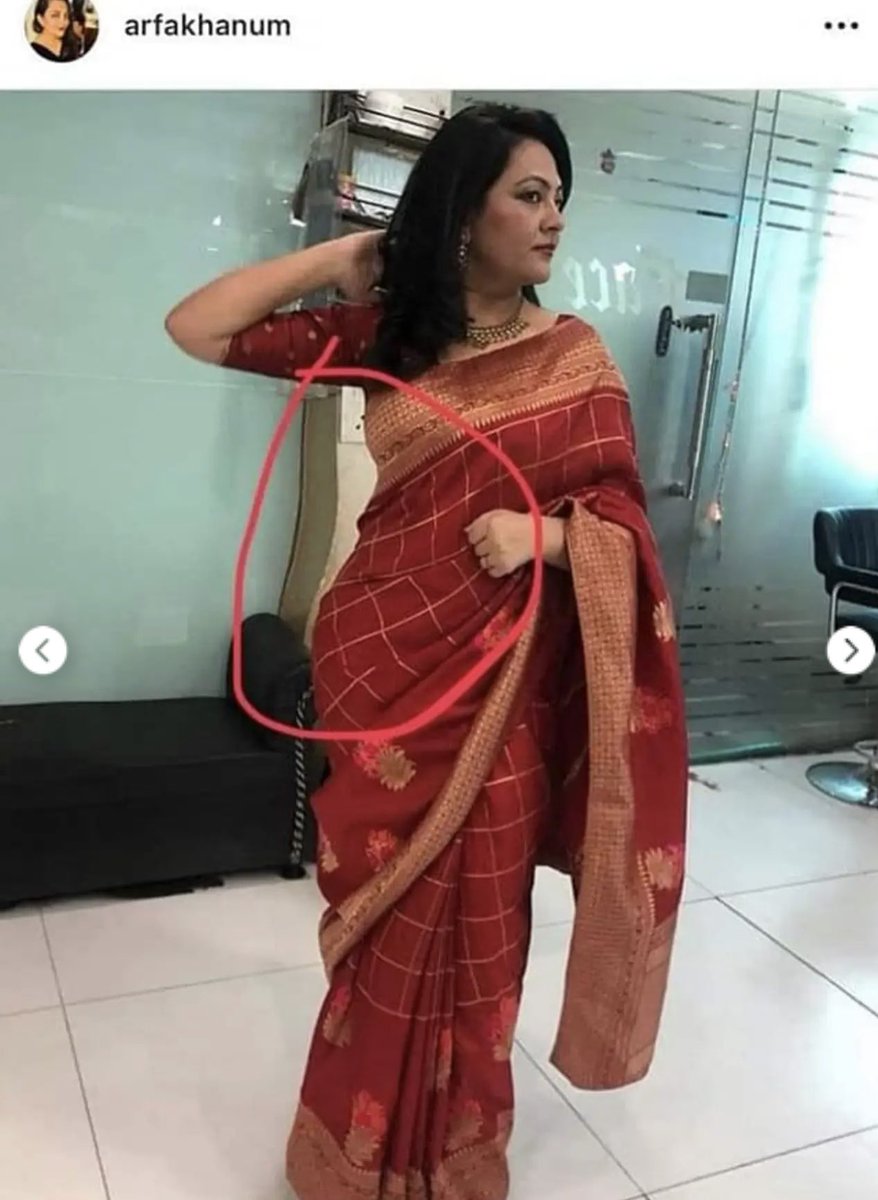

विश्व-गुरु बनने चले थे, विश्व-चेले बन कर रह गये ..
Proud to be a beef eater!
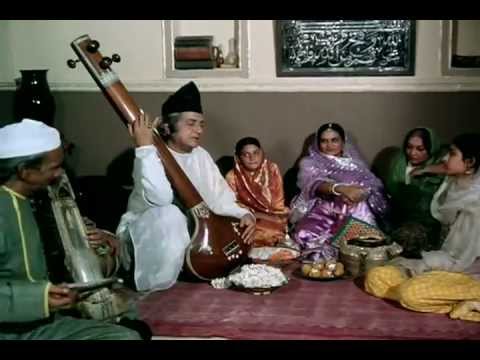

Hindustani classical music was preserved, maintained and enhanced by muslim singers, musicians and patrons for centuries. Khayal gaayaki for one took form in mughal courts and many renditions of the raags were devoted to krishna and other hindu gods. gharanas founded by muslims-

Always thought it bonkers, if unsurprising, that the literati in Britain saw this person as some kind of serious commentator on colonialism. He's an Indian political nationalist performer which is very far from anti-imperial. Annual reminder: nationalism is not decolonization.
We can like or dislike Dhurandhar, that’s fair game. What’s truly amusing, though, is the collective meltdown of LW clowns. Watching abusive people like Abhisar Sharma completely lose composure over a film is so bizarre that it’s borderline funny 🤣
DHURANDHAR 2- Full Review coming soon on my Youtube channel.


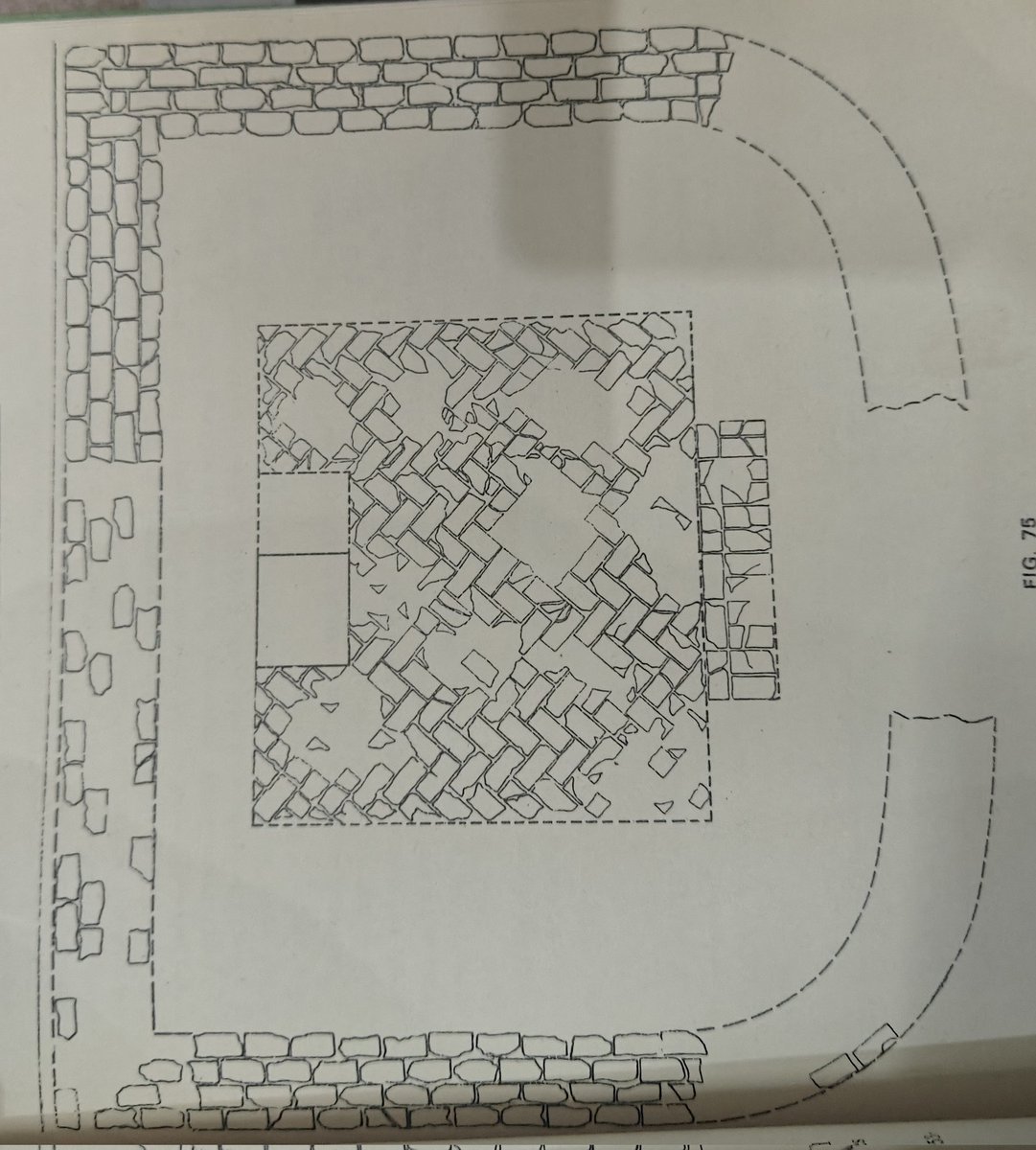

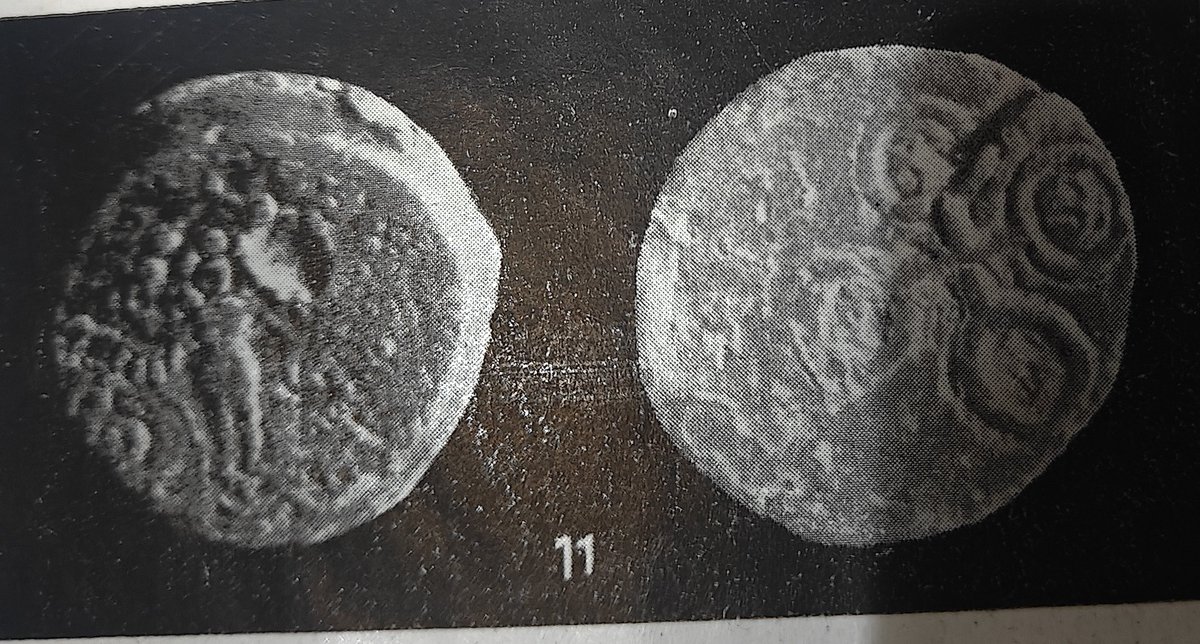


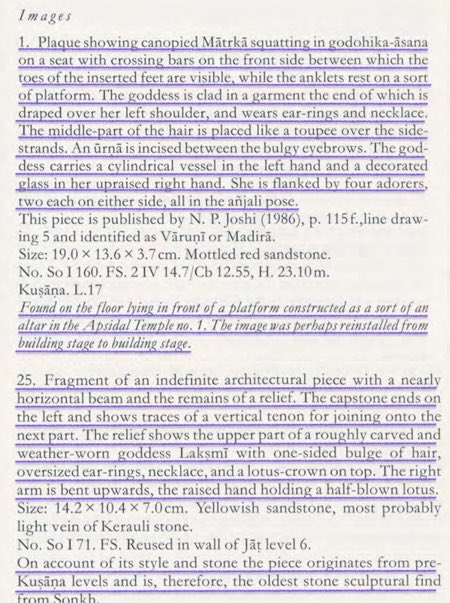

In his Arthashastra, Kautilya mentions the following temples of Gods, which are to be constructed within the city : 1. Durga ( Aparājitā), 2. Vishnu ( Aparatitha), 3. Jayanta, 4. Indra, 5. Shiva, 6. Vaisravana, 7. Asvins, 8. Lakshmi and Madirā. The above proves the presence of temples in BCE era. However, these temples are no longer there, as they were constructed of wood.