

Simon Vreeman
58.1K posts
Simon Vreeman
@vreeman
👨💻 Growth and Technical Marketing Human being. 🛠 Into: #Analytics, #CRO, & #SEO.
Amsterdam, The Netherlands Katılım Ocak 2008
1.3K Takip Edilen2.9K Takipçiler
Palantir CEO on Iran, AI Weapons and America's Advantage | a16z American Dynamism Summit youtube.com/watch?v=Wj6ttd…
YouTube
English
Simon Vreeman retweetledi

94% of AI citations come from non-paid sources. Gartner is telling CMOs to double their PR budgets by 2027.
Gartner just published their 2026 comms predictions. The headline: PR and earned media budgets will double by 2027 as LLMs replace traditional search. They're telling CMOs to reallocate spending from paid channels toward PR and earned media because that's what AI answer engines actually cite.
Data backs this up. Muck Rack analyzed over a 1M links cited by ChatGPT, Claude, Gemini, and Perplexity. Around 94% of those citations come from non-paid sources. Earned media alone accounts for 82%. Journalism makes up 20 to 30% of all AI citations depending on the time period. Paid placements and advertising barely register.
Semrush found that visitors arriving from AI search convert at 4.4 times the rate of traditional organic search visitors. That number comes from analysis of 500+ topics in digital marketing and SEO verticals specifically, so the exact multiplier will vary by industry. The direction is clear.
There is a recency factor too. Muck Rack's February 2026 update found that more than half of all AI citations come from content published in the last 12 months. The highest citation rate occurs within seven days of publication. Press release citations alone grew 5x between July and December 2025. AI systems are actively prioritizing fresh content over older material.
That recency signal matters for SEOs. This is not a one-time optimization play. It requires ongoing editorial presence.
When CMOs start doubling their earned media budgets, that money has to come from somewhere. Gartner explicitly says to reallocate from paid. But in their 2025 CMO Spend Survey, paid media was already at 30.6% of total marketing spend. If earned media doubles, the budget pressure will hit every digital channel. Including SEO.
We have spent two decades building an industry around optimizing for Google's algorithm. Now the discovery layer is fragmenting across a dozen AI systems that each weigh signals differently. And the signal they all seem to agree on is third-party editorial validation. Not backlinks. Not technical SEO. Editorial trust.
Across analytics data from hundreds of properties, the pattern is consistent. Sites gaining visibility in AI-driven discovery are the ones with genuine brand authority and regular editorial coverage. Not the ones with the cleanest technical audits.
Technical SEO is not dead. But it is no longer enough on its own. If your entire strategy is optimizing for crawlers and you are ignoring how AI systems evaluate brand trust, you are building on a foundation that is shifting.
The PR industry just got handed the playbook that used to be ours. The smartest SEOs will learn from it.
Sources:
- Gartner, Top Predictions to Inform 2026 Comms Strategies (Feb 2026)
- Muck Rack, What Is AI Reading? report (Feb 2026)
- Gartner, 2025 CMO Spend Survey (May 2025)
- Semrush, We Studied the Impact of AI Search on SEO Traffic (Jul 2025)
English
Simon Vreeman retweetledi

These guys from NYU and UV tested 35 LLMs and found something that matters for AI visibility.
When similar content competes in a retrieval context, the model’s ability to pick the right source declines log-linearly toward zero. Not toward ‘good enough.’ Toward zero.
The bottleneck isn’t context window length - they held input length constant, same result. It’s interference. More similar pages in the grounding pipeline = worse selection accuracy for all of them.
What predicts resistance? Model size. Context window? No significant effect.
They tried telling models to ‘ignore earlier info’ and ‘focus on recent updates.’ Barely moved the needle. CoT didn’t help either.
For AI visibility this means: being structurally distinct from competing content matters more than being marginally better. Read that again.
If your page looks like the other 8 in the grounding context, you’re adding to the interference problem, not solving it.
Density beats length. Distinctiveness beats comprehensiveness. And flooding a category with similar placements may actually hurt citation rates, not help.
Paper: arxiv.org/abs/2506.08184. Thank you @arxiv
English
@adriaandotcom Of kom eens naar een Measurecamp? Eg AMS in april?
Nederlands

Simple Analytics became too reactive.
We wait for customers to request features before building them. We delay infrastructure moves until a big deal demands it. And, the rebrand stays in the someday pile.
We built Simple Analytics to be privacy-friendly, simple, and actually fun to use. We nailed the first two. The fun part? We stopped pushing on that.
Last week I told the team we need to be more proactive. Yesterday Alex asked what my plans are for the next six months. I didn't have a clear answer.
That's how fast I slipped back.
I look at companies like TRMNL, Typefully, and Tally and see clear vision in what they ship. They're younger, sure. But that's not the real difference.
Looking for some business advice here: something else then rename your business to something that also starts with a T. Timpel Tanalyics?
English
AI-Slop Cleanup Crew - The Next Corner thenextcorner.net/ai-slop-cleanu…
English
Stop trying to rank for keywords jonoalderson.com/conjecture/sto…
English
@adriaandotcom GA4 is gemaakt voor G Ads.
Gokje; het wordt nog eens geïntegreerd in G Ads.
Het enige grote voordeel van GA4 is de export naar BQ. Maar goed, dat is niet echt voor de avg SMB user.
Nederlands
Attribution should help teams make decisions faster.
In GA4, it often does the opposite.
More models. More rules. More meetings debating which number is right.
Meanwhile, the actual work waits.
Here's what I've noticed: most teams don't lack attribution data. They lack the confidence to act on imperfect information.
GA4's complexity gives them an excuse to keep analyzing instead of deciding.
In the video we just shared, you can see how we approach this differently at Simple Analytics.
We show what happened without layering assumptions on top.
Does this work for everyone? No. If you're running complex B2B campaigns with 6-month sales cycles, you probably need more.
But for most teams shipping products and iterating quickly, clarity beats precision.
The goal isn't perfect attribution.
It's faster, better decisions.
English

I’m going Founder Mode on my cancer.
Below is Elliot Hershberg’s article about my cancer journey. It gave language to something I’d been doing instinctively over the past year: managing my health in Founder Mode.
Manager mode assumes that existing systems will surface the best options. When I was first diagnosed with cancer in 2022, I delegated the crucial analyses and decisions about my care to others. In late 2024, when my cancer reappeared and my doctors told me I had exhausted the standard of care and there were no trials for my situation, I realized that assumption might, quite literally, kill me. Founder Mode was my only option.
Founder Mode meant going deep on every diagnostic and treatment option. It meant assembling a team of physicians and scientists to work from first principles to understand what was possible beyond standard protocols. Together, we paved new roads to access the very cutting edge of science and technology. Today, thanks to the efforts of many people around the world and the support of my wife Karen, I currently have no evidence of disease.
But my fight with cancer is far from over. My team and I continue to develop treatments and strategies in case it returns. More importantly, I now understand firsthand the challenges patients face in order to secure their own data and necessary treatments, particularly personalized medicines. I increasingly see my role as removing structural barriers—breaking down walls that prevent data, treatments, and technologies from flowing where they’re needed.
One of the core principles of the first company I founded, GitLab, was radical transparency, and it’s a principle I am bringing to my cancer care. To that end, I am going to be sharing more about my experiences, my treatments, my data, and what I am building to make the path that I’ve been on easier for others to follow. Please subscribe to my mailing list on sytse.com to stay updated.
Lastly, I want to thank those who have been on this journey with me. There have been too many to all thank here but I appreciate every one of you. I did want to mention Jacob Stern, Alfredo Gonzalez, and Jeremiah Wala; the amazing teams at Private Health Management (shoutout to Jenn and Eva) and Willy Hoos and Pathfinder Oncology; Nima Afshar and Private Medical; Sant Chawla and the Sarcoma Oncology Center; John Connolly and his team at the Parker Institute; Will Hudson at Baylor College of Medicine; Kamil Slowikowski for his work on osteosarc.com; and Jeff Tsao, Will Gibson, Ali Samiei, Scott McConnell and the rest of the team at the Briger Foundation for Oncology Research.
Elliot Hershberg@ElliotHershberg
Going Founder Mode On Cancer centuryofbio.com/p/sid Sid Sijbrandij is a generational founder. He founded and led GitLab, one of the largest remote companies in the world, from idea-stage startup to NASDAQ-listed software giant. But in 2022, a six centimeter mass growing from his upper spine threatened to end all of that. He had cancer. What happened next is nothing short of remarkable. Sid went founder mode on his care journey. In the years since, he's deployed cutting-edge genomics to profile his disease. Based on this data, he's developed a growing armamentarium of personalized therapies. As a result, his disease is now undetectable. A simplistic version of this story could be, “Wow! A brilliant billionaire seemingly cured his cancer. Good for him!” But as I’ve gotten to know Sid, it’s become abundantly clear to me that there is more to the story than that. In an in-depth profile for The Century of Biology, I explore Sid's journey and what this might mean for the future of cancer care.
English
@grok Which classification does my account have within the X system?
English
@Quintin24 @HammersteinO ik vind het zo gek dat ondertussen EIN en RTM wel gewoon doordraaiden en niet ~%90 cancellations hadden.
Sure, de aantallen waren minder, maar toch. Je moet wel een landingsbaan schoonhouden etc.
Nederlands

@HammersteinO Afgelopen week was natuurlijk dramatisch en dat moet ook echt wel consequenties hebben maar “naar de vernieling” is niet de indruk die ik krijg als ik op Schiphol moet zijn of met de KLM vlieg
Nederlands

Zowel de directeur van Schiphol als die van KLM verdienen het dik om afgezet te worden. Twee van de belangrijkste bedrijven van Nederland zijn naar de vernieling geholpen. Het lijkt wel of Nederland alleen nog maar incompetente bestuurders heeft.
Henk Otten@hendrikotten3
Na het de-icing drama van de afgelopen dagen viel vandaag de stroom uit op Schiphol. Zelfs de noodverlichting deed het niet, de vertrekhal.👇 Nederland wordt steeds meer een derdewereldland door de vele incompetente bestuurders die consequentie loos aan kunnen blijven klooien.
Nederlands
@Quintin24 En anders zou je @tonw even moeten vragen. Die kent 100% nog veel meer goeie sprekers in deze hoek!
Nederlands
@Quintin24 Erin Weigel (ex Booking) is ook top. En Abi Hough, sprak vorig jaar bij oa Conversion Hotel (imho beste CRO conference)
Meer in de product hoek zou je kunnen kijken naar Shannon Thomas (ex VanMoof).
Nederlands
Looking for an inspiring speaker about product design and user experience for an event in Amsterdam.
If you have suggestions please let me know who and why.

English
Wat zijn jullie favoriete podcasts?
Hier de mijne;
Sport
Bureau Sport
Hard Gras
Branie
Served
Business/Economie
20VC
Acquired
Holland Gold
The Joe Pomp Show
Algemeen
Jortcast
De Nieuwe Wereld
Pivot
All-In
Nederlands
@TheNextCorner I saw a WAU slide over ChatGPT users in benedict evans latest slide deck. It was slowing down a bit.
Can't remember if I saw similar numbers of Gemini.
English

I would love to see absolute growth of MAU & DAU. Did Gemini steal from OpenAI, or did we pie increase?
Similarweb@Similarweb
First Global AI Tracker of 2026 Gen AI Website Worldwide Traffic Share, Key Takeaways: → Gemini surpassed the 20% share benchmark. → Grok surpasses 3% and is approaching DeepSeek. → ChatGPT drops below the 65% mark. 🗓️ 12 Months Ago: ChatGPT: 86.7% Gemini: 5.7% Perplexity: 1.9% Claude: 1.5% Copilot: 1.5% 🗓️ 6 Months Ago: ChatGPT: 78.6% Gemini: 8.6% DeepSeek: 4.8% Grok: 2.1% Perplexity: 1.6% Claude: 1.5% Copilot: 1.1% 🗓️ 3 Months Ago: ChatGPT: 74.1% Gemini: 12.9% DeepSeek: 3.7% Perplexity: 2.4% Grok: 2.0% Claude: 2.0% Copilot: 1.2% 🗓️ 1 Month Ago: ChatGPT: 68.0% Gemini: 18.2% DeepSeek: 3.9% Grok: 2.9% Perplexity: 2.1% Claude: 2.0% Copilot: 1.2% 🗓️ Today (January 2): ChatGPT: 64.5% Gemini: 21.5% DeepSeek: 3.7% Grok: 3.4% Perplexity: 2.0% Claude: 2.0% Copilot: 1.1% >>
English

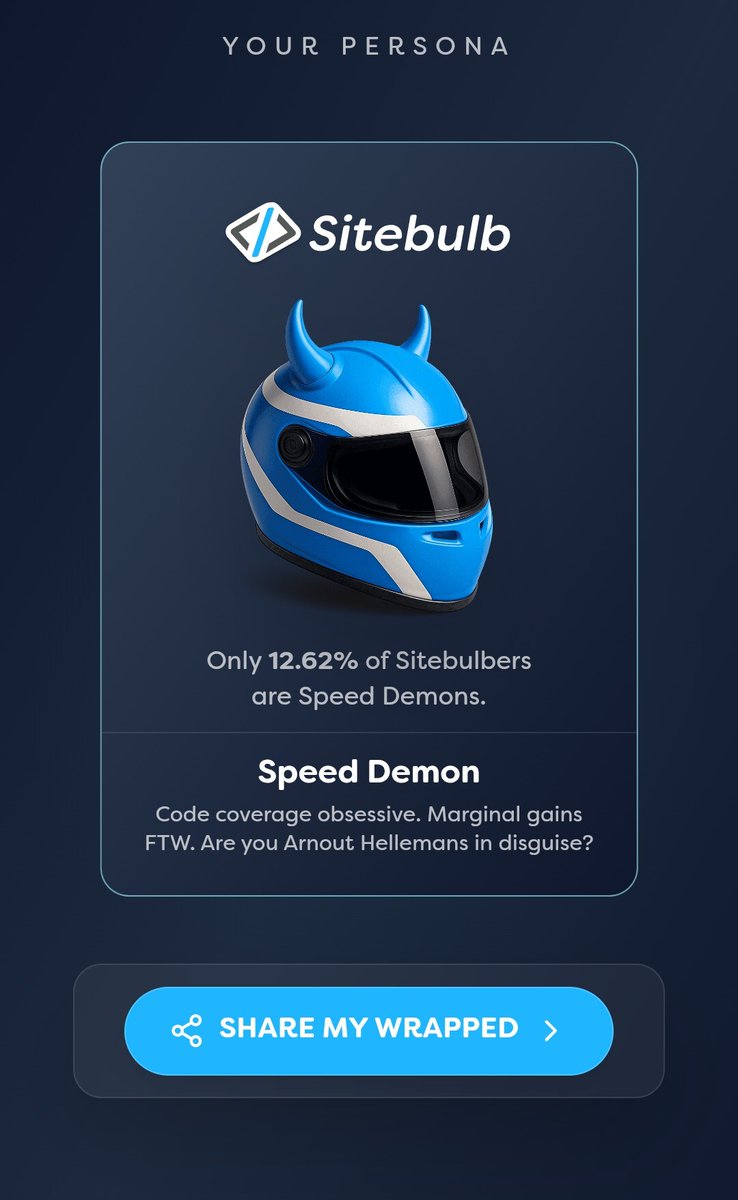
Are you @hellemans in disguise? Check your Sitebulb Wrapped to find out: sitebulb.com/wrapped/
#SitebulbWrapped
#seo
English

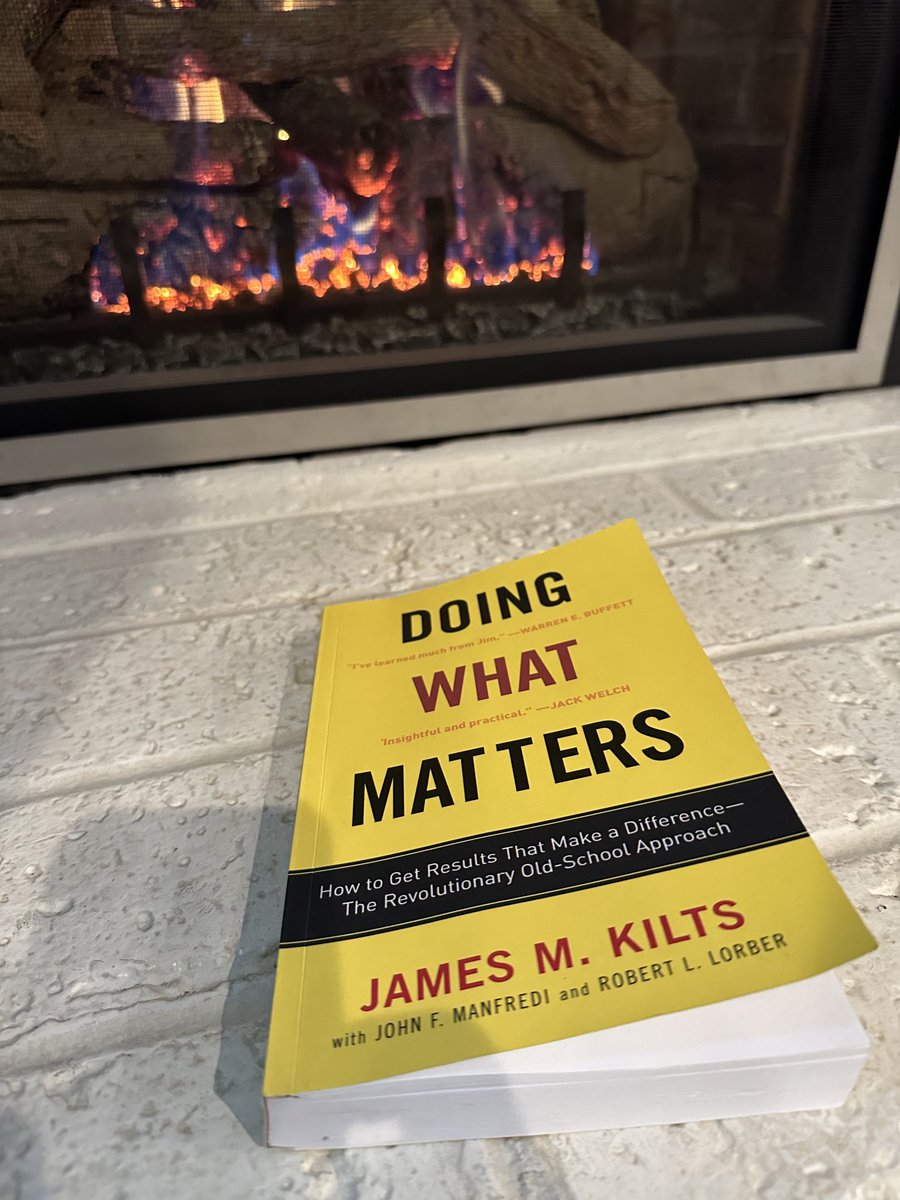
Finished this book last night: ‘Doing What Matters’. Last one of the year and a great reminder on what matters in running a business.
English