
G.
68 posts


G.
@vrkit_g
Even our thoughts not align You can politely decline, it's ok, we're good - Temple fair
Katılım Şubat 2021
143 Takip Edilen6 Takipçiler

PRX Night Mode Official Jersey 🦖
Available online now on the Paper Rex Shop
Also available locally:
- @CafeBar_RAGE_ST [1st-8th August] 🇯🇵
- VALORANT Champions Seoul 🇰🇷
- Tokopedia & Thailand [Coming soon] 🇮🇩 🇹🇭

English
G. retweetledi

Why I don’t use test IDs:
Adding test IDs all over my markup is a bad DX.
With a test ID, a test may pass when the user still doesn't see what's expected. That’s bad UX and DX. Seeing a test fail when an expected user-facing value doesn't exist is good DX.
If I think I need a test ID, it’s a sign my markup is insufficient, so I improve my markup instead.
If I think I need a test ID, it’s a sign I’m trying to test implementation details instead of UX. So I focus my test on UX instead.
Using accessible selectors encourages me to write accessible, semantic markup which enhances UX and DX.
English
G. retweetledi


G. retweetledi

frontend:
<input type="email" />
backend:
str.includes("@")
The only way to know if an email address is valid is to send an email.
Stop using regexes that don't let people use valid emails 😂
Krisha Kalola@krishakalola
Is it true? 🙄
English
G. retweetledi

PSA: Stop calling these: () brackets!
These () are parentheses
These [] are brackets
These {} are curly braces
Thanks for coming to my TED Talk.
English
G. retweetledi

Explaining 9 types of API testing.
🔹 Smoke Testing
This is done after API development is complete. Simply validate if the APIs are working and nothing breaks.
🔹 Functional Testing
This creates a test plan based on the functional requirements and compares the results with the expected results.
🔹 Integration Testing
This test combines several API calls to perform end-to-end tests. The intra-service communications and data transmissions are tested.
🔹 Regression Testing
This test ensures that bug fixes or new features shouldn’t break the existing behaviors of APIs.
🔹 Load Testing
This tests applications’ performance by simulating different loads. Then we can calculate the capacity of the application.
🔹 Stress Testing
We deliberately create high loads to the APIs and test if the APIs are able to function normally.
🔹 Security Testing
This tests the APIs against all possible external threats.
🔹 UI Testing
This tests the UI interactions with the APIs to make sure the data can be displayed properly.
🔹 Fuzz Testing
This injects invalid or unexpected input data into the API and tries to crash the API. In this way, it identifies the API vulnerabilities.
--
Subscribe to our newsletter to download the 𝐡𝐢𝐠𝐡-𝐫𝐞𝐬𝐨𝐥𝐮𝐭𝐢𝐨𝐧 𝐜𝐡𝐞𝐚𝐭 𝐬𝐡𝐞𝐞𝐭. After signing up, find the download link on the success page: bytebytego.ck.page/da4d43d0e5
GIF
English
G. retweetledi

G. retweetledi

I've just discovered that @RustUkraine maintains a comprehensive Rust bootcamp, teaching Rust from the absolute basics all the way to backend development fundamentals.
If you're thinking of learning Rust in 2024, make sure to check it out!

English
G. retweetledi

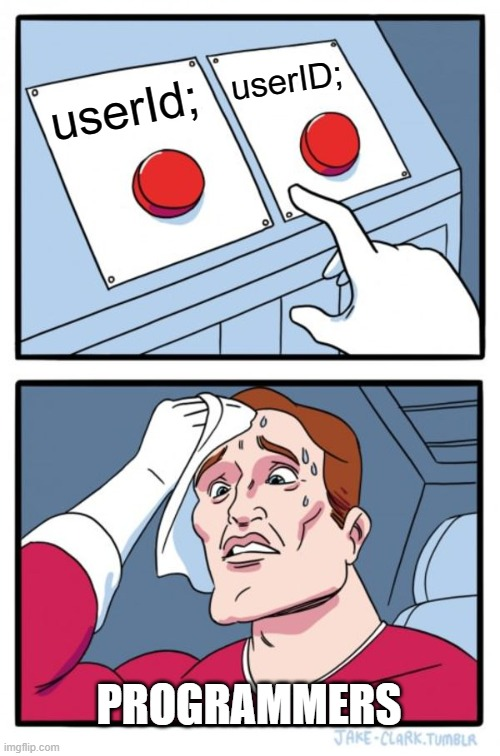
As a programmer - which one do you use? ◀️ ▶️
English
G. retweetledi

G. retweetledi

🎄 Christmas comes early! 🎄
(even if you don't care about Christmas 😉)
Because I got two exciting news to share!
👉 I released a brand-new course "Go - The Complete Guide"
It's an extremely comprehensive, 15h course that teaches you all about Go, from the ground up & in great depth, by building multiple demo projects - including a complete REST API (with user authentication & SQL database access)!
Join now for just $9.99: udemy.com/course/go-the-…
(valid until Dec 10th)
👉 I added a HUGE new section to my "NextJS - The Complete Guide" course, covering NextJS 14 & the App Router
Take a deep dive into NextJS 14, React Server Components, Server Actions & much more with my brand-new "NextJS Essentials" section (and build a new, beautiful demo project along the way)!
In addition, I completely updated the optional "React Refresher" section so that you can get started building fullstack apps with React + NextJS, even if it's been some time since you last worked with React.
Join now for the lowest price I can set on Udemy: udemy.com/course/nextjs-…
(valid until Dec 10th)
I hope you'll like this new content!
I got even more planned for next year - so stay tuned for more exciting updates! 😃


English
G. retweetledi

Unleash the power of math with Tauri, Yew, and Tailwind!
{ author: @max_t_dev } #DEVCommunity #RustLang
dev.to/maxtaylor/recr…
English
G. retweetledi

G. retweetledi

Building a complex site like YouTube requires knowledge of many different technologies.
So if you want to create something epic, this course is for you.
You'll use the T3 Stack – Next.js, TypeScript, Tailwind, and other tools – to build a YouTube clone.
freecodecamp.org/news/master-th…
English
G. retweetledi
How do companies ship code to production? The method to download the high-resolution PDF is available at the end.
The diagram below illustrates the typical workflow.
Step 1: The process starts with a product owner creating user stories based on requirements.
Step 2: The dev team picks up the user stories from the backlog and puts them into a sprint for a two-week dev cycle.
Step 3: The developers commit source code into the code repository Git.
Step 4: A build is triggered in Jenkins. The source code must pass unit tests, code coverage threshold, and gates in SonarQube.
Step 5: Once the build is successful, the build is stored in artifactory. Then the build is deployed into the dev environment.
Step 6: There might be multiple dev teams working on different features. The features need to be tested independently, so they are deployed to QA1 and QA2.
Step 7: The QA team picks up the new QA environments and performs QA testing, regression testing, and performance testing.
Steps 8: Once the QA builds pass the QA team’s verification, they are deployed to the UAT environment, where the QA team, dev team, and even the product owner perform UAT testing.
Step 9: If the UAT testing is successful, the builds become release candidates and will be deployed to the production environment on schedule. Here we might not want to deploy to all the users in one go to mitigate the change risks, so some techniques like feature toggle, canary deployment can be used.
Step 10: SRE (Site Reliability Engineering) team is responsible for prod monitoring. They leverage a bunch of log-analyzing tools and process-tracing tools like ELK stack, Prometheus, and Skywalking. They report production issues to QA and dev teams, and teams need to fix them based on defined priority.
–
Subscribe to our newsletter to download the 𝐡𝐢𝐠𝐡-𝐫𝐞𝐬𝐨𝐥𝐮𝐭𝐢𝐨𝐧 𝐏𝐃𝐅. After signing up, find the download link on the success page: bit.ly/bytebytegoship…
English
G. retweetledi

Goodbye, Test Cases!
Generate awesome test ideas without hassle using checklists.
Here's how to use checklists and create workable test ideas that actually work:
English
G. retweetledi
An interesting list of subjects that should be mandatory in schools.
While academics are essential, it's crucial to acknowledge that many elements in this diagram would have been beneficial to learn earlier.
Over to you: what else should be on the list? What are the top 3 skills you wish schools would teach?
Credit: Instagram accounts on startup_rules
–
Subscribe to our weekly newsletter to get a Free System Design PDF (158 pages): bit.ly/42Ex9oZ

English
G. retweetledi

Check out our new article about Google's growth in Rust usage during 2022! We debunk some common myths about Rust and share our experiences. Spoiler alert: it's faster to learn than you think, and the productivity and code quality are amazing! #rustlang opensource.googleblog.com/2023/06/rust-f…
English
G. retweetledi

Comprehensive Rust
This is the Rust course used by the Android team at Google. It provides you the material to quickly teach Rust to everyone.
github.com/google/compreh…
#rust #rustlang
English
G. retweetledi

Top 5 Resources to Learn DevOps in 2023
1. DevOps Courses - bit.ly/3eEV8Au
2. DevOps Tutorials - bit.ly/3TZTPwg
3. DevOps Books - bit.ly/3eEscIR
4. DevOps Questions - bit.ly/3Pgnn5b
5. DevOps RoadMap by @VrashTwt

English