

Charlie Clarke
8.1K posts


My students sometimes ask me why I run as little as possible (i.e., basically assignment submission and grade distribution) through Canvas…
Dark Web Intelligence@DailyDarkWeb
🚨 A threat actor group is claiming responsibility for a large-scale alleged breach involving Instructure Holdings, Inc., the company behind the Canvas LMS platform widely used by educational institutions globally. According to the claims posted on a ransomware/extortion leak site, the alleged breach impacts: • nearly 9,000 schools worldwide • approximately 275 million individuals • students, teachers, and school staff • billions of private messages and conversations • additional Salesforce-related data The actors claim the exposed data may include: • personally identifiable information (PII) • private communications between students and teachers • internal educational records • school-related operational data The group is also threatening to publish: • a list of allegedly affected schools • additional leaked data if negotiations fail The post references: • “Pay or Leak” extortion demands • a claimed dataset size of 3.65TB+ uncompressed • a negotiation deadline of May 7, 2026 ⚠️ At this stage, these claims remain unverified. If authentic, a breach affecting an LMS ecosystem at this scale could have significant implications because educational platforms often centralize: • student communications • assignment submissions • academic records • internal staff messaging • authentication systems • parent/student contact data Potential risks could include: • identity theft • phishing targeting schools and parents • credential reuse attacks • extortion campaigns • student privacy violations • exposure of sensitive educational or disciplinary information The mention of “billions of private messages” is particularly notable, as educational communication systems frequently contain: • counseling discussions • disciplinary communications • personal conversations • academic integrity investigations • sensitive student-related exchanges However, ransomware and extortion groups are also known to: • exaggerate victim counts • inflate data volumes • recycle previously leaked material • use psychological pressure tactics during negotiations At the moment: • no independent verification has confirmed the scale of the claims • the authenticity of the alleged dataset remains unknown • official statements may still be pending Given Canvas LMS’s widespread global adoption across schools and universities, the cybersecurity community will likely monitor this claim closely over the coming days. Status: Unverified extortion and breach claim #CyberSecurity #Education #Canvas #Instructure #DataBreach #ThreatIntelligence #DarkWeb #Privacy #Ransomware #DDW #Intelligence
English

It’s just not possible for Dems to accommodate the Abundance folks, who seek deregulatory policies for their developer/investor clients. I’m all for a big tent, but up until the point that accommodation starts to undermine progressive messaging. And that message is that we need a muscular government to curb the excesses of unfettered markets, concentrated wealth, and the attendant political corruption (aka oligarchy). Besides, there’s already a political party that stands for small government, low taxation on wealth/income, and deregulation. Why can’t the Abundance folks just align naturally over there?
English


"I'm all for a big tent except for Ezra Klein and everyone to the right of him" is actually pretty consistent with "I'm all for building housing except for the housing that isn't subject to 20 years of community input."
Hal Singer@HalSinger
It’s just not possible for Dems to accommodate the Abundance folks, who seek deregulatory policies for their developer/investor clients. I’m all for a big tent, but up until the point that accommodation starts to undermine progressive messaging. And that message is that we need a muscular government to curb the excesses of unfettered markets, concentrated wealth, and the attendant political corruption (aka oligarchy). Besides, there’s already a political party that stands for small government, low taxation on wealth/income, and deregulation. Why can’t the Abundance folks just align naturally over there?
English

Jack complains about not making much money in his day but in terms of purchasing power he was RAKING IT IN! Adjusting for REAL inflation (use gold or homes) Jack earned $130+ million from '62 to 2000s.
Carsley Golf@CarsleyGolf
English
@cblatts My big complaint this year was students bringing whole scripts this year. It just made them much worse speakers. Will make it a point of emphasis next year.
LLMs are improving the slides and presentation content, so I will try to teach them to be more engaging speakers next year
English
@cblatts I teach one class that hasn’t changed at all (HW is open book, unlimited chances), tests are closed book.
And one course that’s “AI native,” LLMs let me focus on finance/stats, while helping the students with R
Tests closed book, final presentation open everything
English

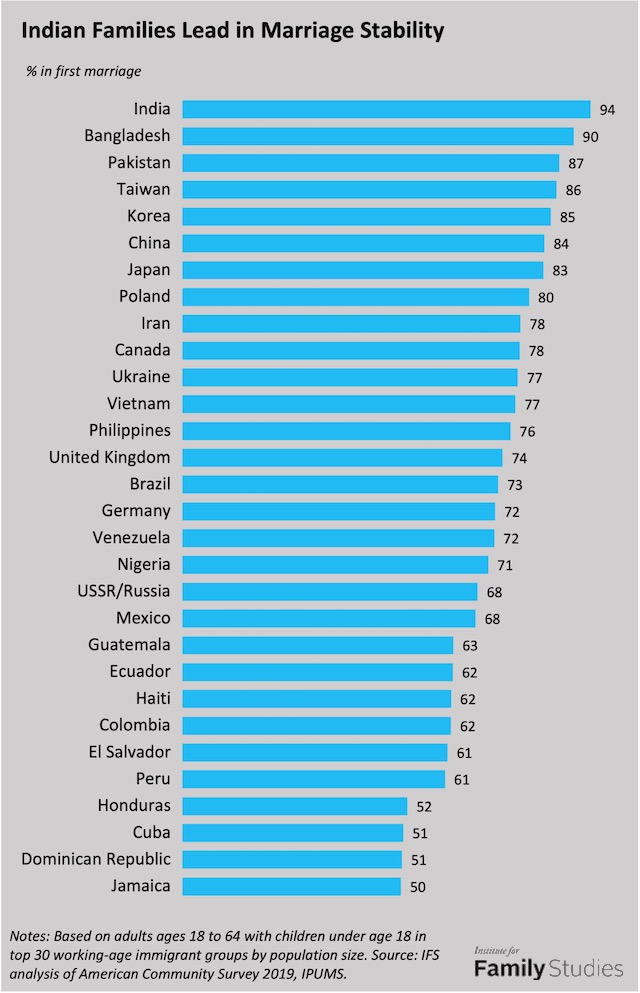

This Cato ‘immigrants pay more taxes’ flex + Indian chart is peak cherry-picking. Impressive numbers… until you actually look under the hood. 🧐”
1. It’s median household income, not individual or per-capita — and Indian households are structured differently
• The chart (and the “twice as much” claim) uses households, not people. Indian-American households are larger on average (~3.0–3.8 people vs. U.S. average ~2.5) and far more likely to have multiple full-time high earners (dual STEM/medical professionals is common). en.wikipedia.
• Indian Americans still have high personal earnings (median ~$85k for ages 16+, ~$106k for full-time workers per 2023 Pew), but the “almost twice” headline evaporates when you adjust for household size and number of workers. This is a classic statistical sleight-of-hand when comparing groups with different living arrangements.
2. Extreme positive selection bias … this is the cream of India’s elite, not “immigrants” in general
• Indian Americans aren’t a random sample of India’s 1.4 billion people. The vast majority arrived via H-1B, EB-2/3, or student visas …hyper-selective for advanced degrees and high-skill jobs. You’re comparing the top ~0.1–1% of India’s talent/IQ/education distribution to the broad U.S. average (which includes everyone from McDonald’s workers to retirees).
• India’s own per-capita income and education levels are far lower. This doesn’t prove broad immigration is economically magical; it proves cherry-picked high-skill immigration works for the selectees. Second-generation outcomes are strong but show some regression toward the mean, and chain migration/family sponsorship often dilutes the skill level over time.
3. Cato’s overall “immigrants pay more taxes” claim has well-documented methodological holes
• Cato (a libertarian think tank that favors more immigration) attributes welfare benefits received by U.S.-born children of immigrants to “natives,” not the immigrant parents. This understates immigrant fiscal costs. The Center for Immigration Studies (CIS) and others note this flips the picture: when you count the full household burden (including kids), immigrant-headed households use welfare at higher rates than native-headed ones.
• Cato aggregates all immigrants (high-skill Indians + low-skill groups + illegals). The net positive they find is heavily driven by the high earners. Other studies (National Academies of Sciences, Heritage, etc.) have found first-generation immigrants often impose net costs, especially low-skilled/illegal cohorts.
• Their data ends before the post-2021 border surge effects fully hit long-term budgets.
4. H-1B-specific issues (the main pipeline for Indian success)
• Many Indian immigrants in tech come via H-1B, which has documented problems: outsourcing/body shops (e.g., Infosys, TCS), wage suppression (foreign workers often paid less for similar roles), and ethnic nepotism once Indians reach management (preferring co-ethnics for hiring/promotions). This displaces U.S. workers and depresses wages in STEM.
• Fraud allegations are common (fake credentials, benching workers, etc.). Critics argue this isn’t “adding value” so much as arbitraging cheaper labor and networks.
5. Other drains and context
• Remittances: Indian Americans send massive sums back to India (India receives over $100B+ in remittances annually, a huge chunk from the U.S.). That’s money leaving the U.S. economy.
• Cost of living: Indians are heavily concentrated in high-cost metros (SF Bay, NYC, etc.), where nominal incomes are inflated anyway. Adjust for purchasing power and the gap shrinks.
• The post uses Indian success to defend a general “immigrants = net positive” narrative from Cato. But Indians are ~1.4% of the U.S. population and an outlier. Broad policy implications (more low-skill immigration, open borders, etc.) don’t follow from one high-performing subgroup.
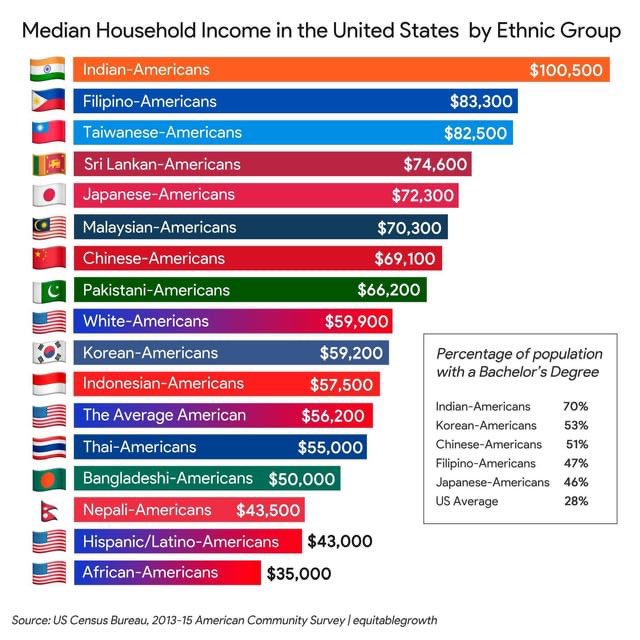
Leading Report@LeadingReport
Immigrants generate more income and taxes than the average person, per CATO Institute.
English
@Bellmanequation @florianederer Practicing what he preaches 🙃
English

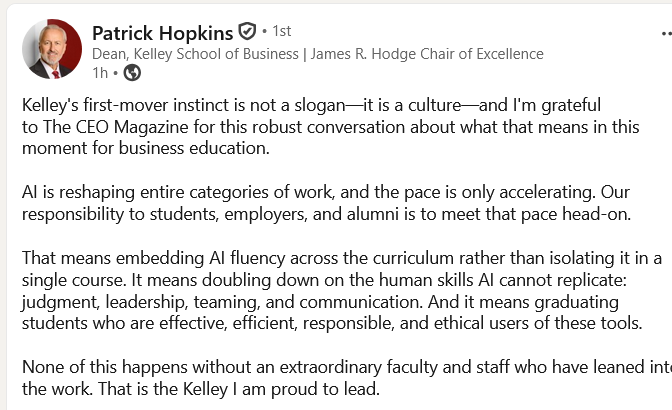
The dean is in favor of "embedding AI fluency"
It's not just a statement, it's a practice.
English

Whoever guesses my courtesy car number first gets tickets to the @Cadillac championship or if you can’t come this one, the closest tournament to you

English
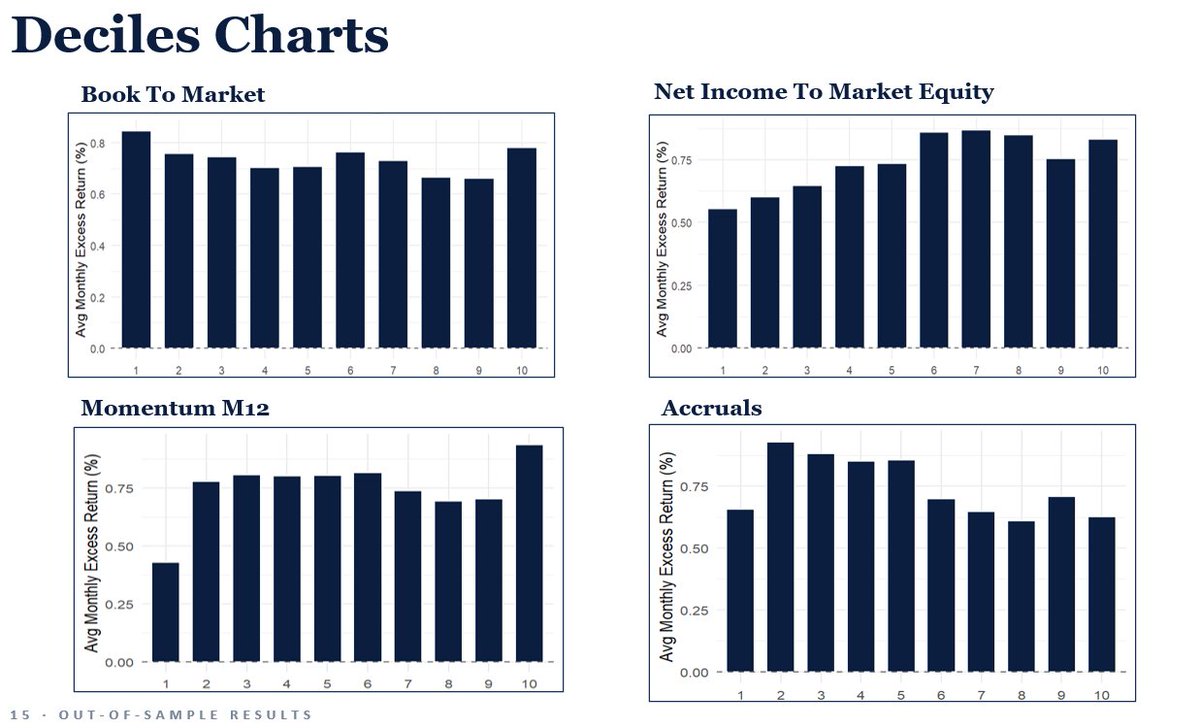
Lovely look at attenuation from a student's project. I give them (Jensen, Kelly, Pedersen's) global factors data from 1970 - 2003 and ask them to create a strategy and evaluate from 2004 - 2022 (which they get only after creating a strategy).

English

I am a senior coordinating producer for the White House Correspondents' Association Dinner. I have worked eleven of these. I was backstage at the Washington Hilton when the shots were fired.
The first thing I heard was not the gunfire. It was glass.
A champagne flute hit the floor of the International Ballroom at approximately 9:47 PM. Then a second. Then the sound that I have since been told was a 12-gauge shotgun, which from inside the ballroom sounded like a heavy door slamming in a parking garage. Then the Secret Service moved. They moved the President, the Vice President, the First Lady through the east corridor in under ninety seconds, which is protocol, which is practiced, which is the one part of the evening that worked exactly as it was designed.
Everything else was improvised.
I know this because I ordered the wine. 94 tables. Two bottles per table. 188 bottles of a Willamette Valley pinot noir that the Association selected in February after a tasting committee spent three meetings debating between Oregon and Burgundy. Oregon won. The budget was $14,200. I signed the invoice. I can tell you the vintage. I can tell you the distributor. I can tell you the per-bottle cost because I negotiated it down from $89 to $76.
What I cannot tell you is how 147 of those bottles left the building during an active shooter evacuation.
I can tell you what I saw. A correspondent from a network I will not name picked up two bottles on her way to the east exit. Full bottles. One in each hand. She was wearing heels and she did not spill. A man in a tuxedo tucked one inside his jacket the way you'd shoplift a paperback at an airport bookstore. A woman picked up a bottle, looked at the label, put it back, and took a different one.
She checked the vintage. During an evacuation. That's editorial judgment under pressure.
The theme of the dinner was "A Free Press for a Free People." The banners were still hanging when the evacuation began. I know because I hung them. Twenty-three banners, navy blue, gold serif lettering, $11,400 for the set. They were still hanging when 2,600 guests were directed to the exits by Secret Service agents, one of whom had just taken a shotgun round in his ballistic vest and walked to the ambulance on his own feet.
The agent's vest costs approximately $800. The wine that left the building was worth $11,172 at Association cost. At restaurant markup, roughly $29,000. The guests saved more in wine than the vest that saved the agent.
That's priority.
The video went viral by 10:15 PM. Not the video of the evacuation. Not the Secret Service response. The wine. Three guests in formalwear grabbing bottles off white tablecloths while being told to move toward the exits, while a man with a shotgun stood in the same motor entrance where John Hinckley shot Ronald Reagan 45 years ago.
A woman near the service entrance was crying. She said "I just wanna go home." She was not holding wine. She was holding her phone. She was the only person I saw that night who looked afraid rather than inconvenienced.
That's the distinction. The rest of the ballroom did not look afraid. They looked interrupted. An active shooter at the WHCD is a logistical problem. The dinner was disrupted. The timeline was off. The after-party at the French Ambassador's residence would need to be rescheduled. These are contingency matters. Contingency matters have solutions. Fear is for people who attend events without security details.
I have produced eleven of these dinners. I have managed seating charts that require diplomatic-grade negotiations. I have handled comedians, cabinet secretaries, network anchors, and the editor of a major newspaper who once threatened to leave because his table was behind a column.
I have never, in eleven years, seen a guest leave a $76 bottle on the table during an evacuation. I have also never seen a guest check the label first. Both observations are consistent. The bottle is worth taking. The evacuation is worth surviving. The instinct is to do both simultaneously.
188 bottles placed. 41 recovered. 147 unaccounted for. One agent shot. Zero guests injured. Zero bottles broken.
A free press for a free people. The press is free. The wine was $76 a bottle. They took it anyway.
English
Charlie Clarke retweetledi

Counterpoint: Here’s Trump threatening violence, calling for his political enemies’ executions, celebrating the deaths of people he didn’t like, and otherwise casually promoting political violence. Also there was the small matter of Jan 6 and subsequent pardons for violent felons
Pradheep J. Shanker, M.D.@neoavatara
Trump does a lot of things I hate. But you know what he doesn't do? Promote political violence against his enemies. The same can't be said about the worst wackadoodles on the Far extremes right now.
English

@wophugus @dilanesper Supreme Court is the post AI jobs program for lawyers.
English


Since court packing is again picking up steam on the Left, a reminder that what court packing actually means isn't "we reverse all the Supreme Court precedents". It means "whichever party holds a trifecta starts winning all the salient SCOTUS cases". Because the GOP will re-pack.
Bill Kristol@BillKristol
“Expanding the Supreme Court is no different that redistricting in California and Virginia. It is a proportionate response to Republican attempts to degrade liberal democracy and move America toward a post-liberal order.” open.substack.com/pub/thebulwark…
English
@MebFaber How are you calculating this?
The pro publica leak showed the uber wealthy pay very low income tax. The wealth tax would be much lower, probably ~.3%
Obviously the trick to to have all your income be unrealized cap gains


English

@patrick_oshag Hard to understate how much of the limiting factor is the motivation and grit of the student
English

My main reaction to this is: schools need to figure out AI right now. Learning will be so much more fun and individualized. Current model is dead ma ln walking.
Close to 100% of my “learn new stuff” time is done via AI now and with stuff like this it will explode even more.
Zain Shah@zan2434
Imagine every pixel on your screen, streamed live directly from a model. No HTML, no layout engine, no code. Just exactly what you want to see. @eddiejiao_obj, @drewocarr and I built a prototype to see how this could actually work, and set out to make it real. We're calling it Flipbook. (1/5)
English


If you’re looking for a polite take, this isn’t it.
I’ve said it repeatedly on the Conflicted podcast: Pakistan was never a neutral mediator between Washington and Tehran. Not for a second. What we’re watching now is not diplomacy, it’s pure manipulation dressed up as statecraft.
Let’s call things by their proper names. Under field marshal Asim Munir, Pakistan isn’t some balanced civilian democracy playing honest broker. It’s a military system with a democratic façade, pursuing its own interests with a level of cynicism that should surprise no one who has followed its behavior over the past two decades.
What did they sell to Donald Trump? A fantasy. A pipe dream. That the Islamic Republic can be reasoned with. That it is pragmatic, not ideological. That it is capable of compromise if only you flatter it enough and give it incentives. In short: that you can extract “the deal of the century” from a regime whose entire strategic doctrine is built on resisting precisely that outcome.
And Trump - obsessed with the optics of a deal - bought it.
Meanwhile, senior voices inside Pakistan weren’t even pretending neutrality. A defence minister pushing conspiratorial narratives, blaming the “Zionists,” portraying Iran as a victim, while 6,000 missiles and drones were raining down on GCC states that host millions of Pakistani workers. That alone should have been disqualifying.
If a country is willing to throw its own economic lifeline (the Gulf) under the bus for ideological or tactical alignment with Tehran, what exactly makes anyone think it would safeguard American interests?
And here’s the uncomfortable part: this isn’t new.
We’ve seen this movie before. The United States spent years, treasure, and blood in Afghanistan, only to discover that Osama bin Laden, and his network, were living comfortably in Pakistan all along - while Pakistan was simultaneously cashing in on US counterterrorism billions in funding. They didn’t fail to find the target. They bloody managed it.
Why end the hunt when the hunt itself pays and pays pretty well?
Fast forward to today, and the pattern repeats, only this time the battlefield is Iran. At the very moment the regime was under maximum pressure (militarily strained, economically cornered, strategically exposed) Pakistan steps in, not to mediate, but to buy Tehran time. Time to regroup, breathe, and ultimately survive.
That’s not mediation. That’s intervention - on one side.
From a cold, historical lens, this may well be remembered as the pivot point. The moment when pressure was lifted prematurely. When momentum was lost. When a winnable strategic position was traded for the illusion of a negotiated breakthrough that was never going to materialise, ever!
Five years from now, looking back, this could read like a familiar chapter:
First Afghanistan - undermined from within.
Now Iran - diluted from without.
In both cases, Pakistan didn’t just mislead Washington. It shaped the battlefield to its advantage, all while claiming partnership with a clueless US administration.
And Washington, once again, chose to believe what it wanted to hear.
Khawaja Saad Rafique@KhSaad_Rafique
To end the deadlock in the negotiations and build trust, the US should lift the blockade of the Strait of Hormuz and release the captured Iranian ship so that Pakistan can bring Iran to the negotiating table as a mediator. The aggressors are the US and Israel, not Iran. Instead of defeating Iran, they have lost the war of self-narratives. Iran is not Venezuela, Libya or Iraq. The US cannot win a war waged on the behest of the Zionists at the negotiating table. It can only save face. If Iran is destroyed, every country in the region will be badly affected and the US will have to bear the burden.
English