Gad Senyuiedzorm Ashiagbor

6.2K posts

Gad Senyuiedzorm Ashiagbor banner
Gad Senyuiedzorm Ashiagbor

Gad Senyuiedzorm Ashiagbor

@walencho

1st of My Name | Lead Moderator @AfricanEV | Co-host of the AfricaNEV Podcast:

Africa Katılım Temmuz 2009
681 Takip Edilen180 Takipçiler
Gad Senyuiedzorm Ashiagbor retweetledi
Alex
Alex@alex_avoigt·
Newsletter #284 · Volkswagen Group Will Reduce Production Capacity by 1 Million Vehicles p.a · The Era of the German Automotive Industry is Coming to an End · Giga Berlin Increases Vehicle Production by 20% and Hires 1,000 New Employees · Porsche Sells Its Bugatti Rimac Stake to Egyptian Billionaire Family patreon.com/posts/newslett…
Alex tweet media
English
9
27
128
7K
Gad Senyuiedzorm Ashiagbor
Hmmh
Shanaka Anslem Perera ⚡@shanaka86

BREAKING: QatarEnergy just declared Force Majeure. Three words that mean: we cannot deliver, and legally, we do not have to. This is no longer a supply disruption. This is a contract collapse. Force Majeure is not a precaution. It is a formal legal declaration that an unforeseeable event beyond QatarEnergy’s control has made fulfillment impossible. Every affected buyer just had their contract voided. The gas they were counting on is gone, and they have no legal recourse to get it back. 82% of Qatar’s LNG goes to Asia. China relies on Qatar for 30% of its LNG imports. India 42 to 52%. South Korea 14 to 19%. Taiwan 25%. Japan is already rationing to spot markets. Asian benchmark prices jumped 39% the day production stopped. Force Majeure just made that permanent until further notice. Indian companies have already cut gas supplies to industry by 10 to 30%. That is not a market adjustment. That is factories running at reduced capacity today, across the world’s most populous continent, because Iran sent drones into Ras Laffan. Here is the number the market still has not fully absorbed. Two weeks to restart a liquefaction train after a full cold shutdown. Then two more weeks to reach full capacity. That is a minimum of four weeks at zero, assuming no further strikes, no security complications, no inspection delays. The war is still running. There is no security guarantee. There is no restart timeline. There is no floor. Every LNG contract in Asia just became a spot market problem. Every spot market problem just became an inflation problem. Every inflation problem just became a central bank problem. This started as a war in the Middle East. It is now inside every factory, every power plant, and every gas bill across Asia. Price that chain. open.substack.com/pub/shanakaans…


English
0
0
0
10
Gad Senyuiedzorm Ashiagbor retweetledi
Tristan
Tristan@Tristan0x·
> Be Wang Xingxing (@UnitreeRobotics founder) > Spawn in Zhejiang, China, 1990 > Struggle at English so much your teacher pulls your mom aside at parents evening > "This child is a bit stupid" > Ace every subject except English > Apply for postgrad at your dream university but fail the English minimum > Settle instead for Shanghai University > Build a robot dog called XDog for your thesis with $30 and scrap parts > Film it and upload to YouTube. Zero views > IEEE Spectrum picks it up > Go viral in the language you failed > Land a coveted engineering job in China at DJI > Quit after 2 months to chase your dream: to build robots for everyone, not just governments and labs > Start Unitree Robotics out of a garage in Hangzhou, as CEO and CTO > Release your first product, Laikago, named after the first dog in space > Get put in a room with China's top founders to pitch > Your idol Lei Jun (Xiaomi) is there > Too nervous to add anyone on WeChat > Nobody invests > 3 years regularly unable to make payroll > Post on Zhihu: "开局一条狗,装备全靠打" ("Started with just a dog. Earned everything else by grinding.") > Becomes one of the most quoted startup mantras in China > Release Go1 for $2,700 > Boston Dynamics charges $75,000 for theirs > Capture 60% of the global market > The "Father of Android" Andy Rubin is so impressed he reportedly buys a dozen as pets > Your robots perform at the Winter Olympics then the Super Bowl > Your guiding principle: 20% better every year, compounded > Build H1, the first humanoid robot to outrun the average human > Then teach it to do backflips > "If nobody doubts your direction, you're already too late" > Xi Jinping seats you front row at his private business summit > Flanked by Jack Ma (Alibaba), Ren Zhengfei (Huawei) and Pony Ma (Tencent) > You are 35. They are in their 60s. > Return to the 2026 Spring Festival Gala, the world's most watched annual broadcast > Your G1 and H2 robots perform kung fu, wield nunchucks and execute aerial flips flawlessly > World's first autonomous humanoid martial arts performance > Lei Jun, the idol who passed on you in 2017, calls years later asking to invest > In under 10 years you built the most successful consumer robotics company in history > Good thing you didn't listen to your English teacher
Tristan tweet media
Tristan@Tristan0x

This aired tonight to 1 billion people in China. A year ago these robots could barely wave a handkerchief, now they can do backflips and kung fu with nunchucks. Physical intelligence is the next frontier.

English
77
528
3.6K
214.9K
Gad Senyuiedzorm Ashiagbor retweetledi
Dessy Nabas
Dessy Nabas@Candeed93·
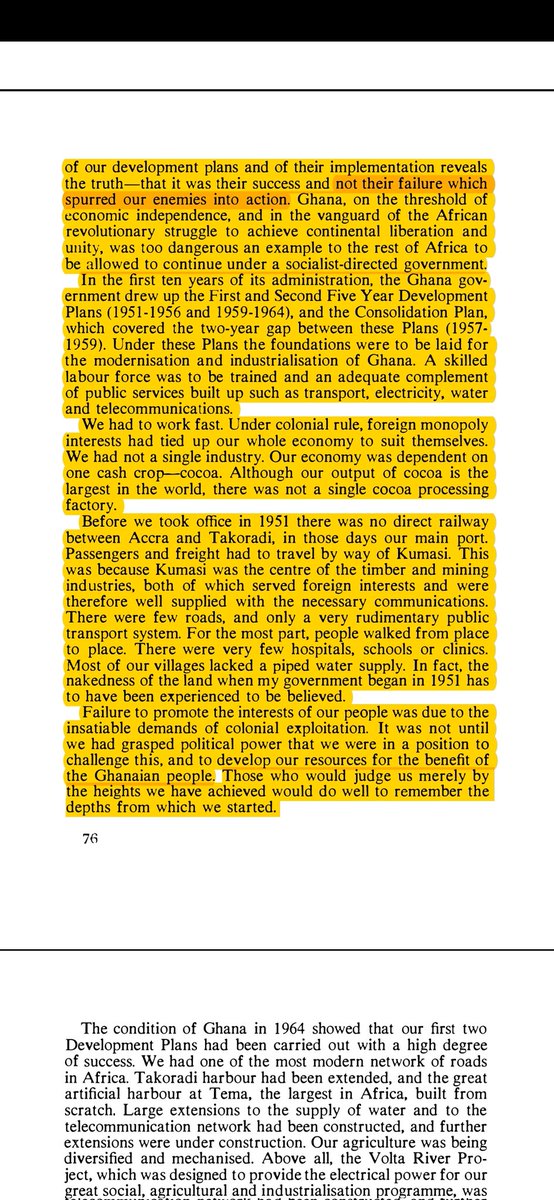
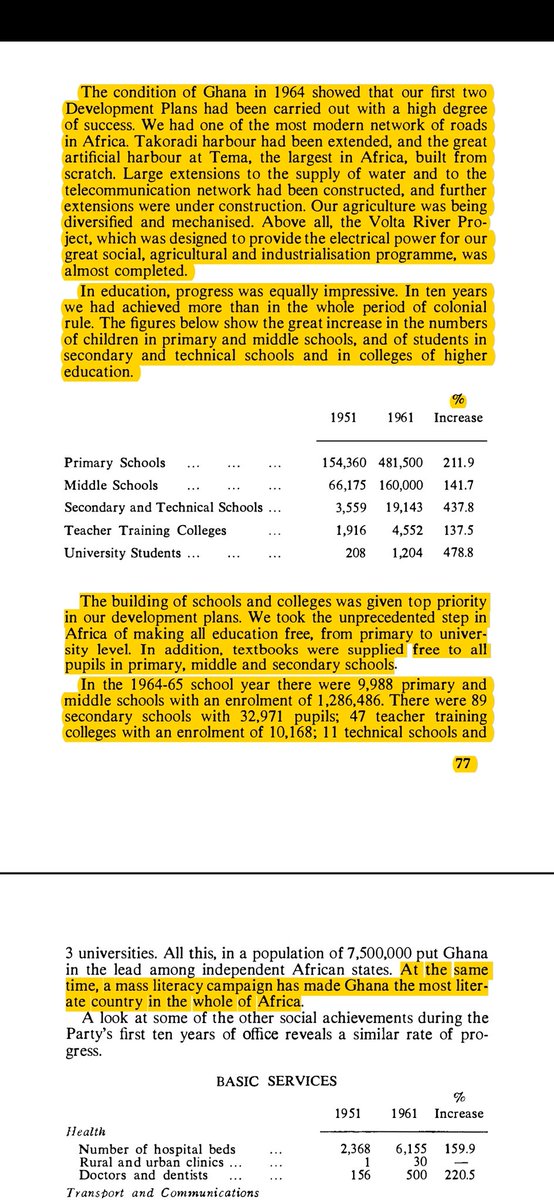
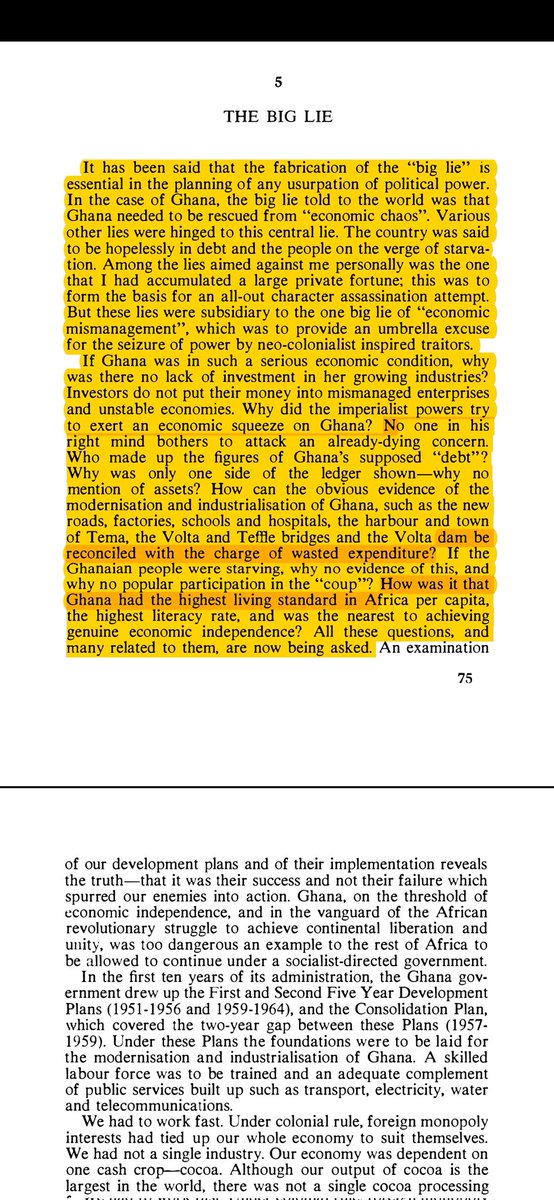
Franklin Cudjoe and the Ghost of Nkrumah Have you realized that Franklin Cudjoe, in his thesis, could not bring any charge against Nkrumah for stealing state money to enrich himself or for pursuing personal glory, as one would expect of a morally bankrupt and power-drunk dictator? Well, that is simply because Nkrumah did not set out to become a “dictator” to achieve selfish aims as many dictators around the world usually engage in. Every claim of "dictatorship" is an implied conclusion drawn largely by ultra-capitalists who despised his socialist ideas, by puppets of imperial interests, and by later generations who uncritically absorbed that propaganda. Franklin Cudjoe himself is a red-hot capitalist, so it is understandable that he reads Nkrumah’s so-called economic mismanagement through a capitalist lens. After all, he would love Nkrumah’s project to serve as a case study of “failed socialism.” It is important to read Franklin Cudjoe’s assessment of history with his ideological position firmly in mind. Have you also noticed how Franklin Cudjoe quickly lists “debts” without assets? That is because he does not want you to know that, unlike morally bankrupt and reckless governments that borrow to spend on themselves and their cronies, Nkrumah borrowed to pull Ghana out of the doldrums in which the country found itself at independence. Franklin Cudjoe will not tell you the depths from which we came. Unfortunately, I cannot respond to Franklin Cudjoe’s factual inaccuracies and propaganda at the moment with a longer post than this, dissecting his claims, because I have a lot on my plate. But Nkrumah himself dismantled this propaganda long ago and made the work very easy. I shall proceed to share some excerpts. Do well to read, analyze, and form your own opinions. Remember the context in which certain things happened and try to understand everything from Nkrumah’s point of view. I do not believe Nkrumah can be excused for absolutely everything that happened under his regime because I do not believe he was INFALLIBLE. But the duty of every serious student of history is to understand events from multiple perspectives: the critic writing in 2026, Nkrumah’s opponents who poisoned the historical well with propaganda, and certainly Nkrumah himself. The judgment is yours to make. Did Nkrumah make himself “president for life”? That expression, “president for life,” is a slogan coined by Nkrumah’s critics. You will not find any historical document in which Nkrumah declared himself “president for life.” Under the one-party state democracy, his leadership was expected to last as long as he remained healthy, capable, and committed to his vision of Ghana’s economic emancipation and the liberation of Africa. The 1964 constitutional amendment did remove term limits, but that was consistent with the logic of a one-party state, whose primary aim was policy continuity and the steady pursuit of a national vision. Leadership could still change if the need arose, and the constitution explicitly allowed for presidential resignation. Nkrumah himself could have stepped aside and passed the baton at any time. Longevity in leadership is not inherently evil. As a loose reference point, consider long-serving leaders elsewhere whose sustained rule coincided with policy coherence and national transformation. Critics deploy the “president for life” mantra to suggest Nkrumah was power-drunk, corrupt, and unwilling to relinquish authority, obsessed with power for its own sake. That caricature collapses under scrutiny. It falsely equates Nkrumah with leaders who cling to power to enrich themselves and satisfy selfish ambitions. That was far from Nkrumah’s project. I will let Nkrumah speak for himself through the attached screenshots. In his own defense:
Dessy Nabas tweet mediaDessy Nabas tweet mediaDessy Nabas tweet mediaDessy Nabas tweet media
English
12
34
95
9.6K
Gad Senyuiedzorm Ashiagbor
😂😂😂
Dr. Lars Henrik Andersen 🇪🇺@EUAITaxonomy

I read the news this morning. Lufthansa has signed a deal with Elon Musk’s Starlink to equip 850 aircraft with high-speed internet. The politicians are furious. I am furious. I immediately booked a flight to Frankfurt to protest at the First Class Terminal (I have Senator status, obviously). "This is a betrayal of Digital Sovereignty," I told the lounge attendant. "You are routing the data of honest European passengers through American satellites owned by a man who does not respect the Digital Services Act." "But Lars," she said. "Starlink offers 150 Mbps and low latency. The passengers want to stream Netflix." "Dr. Lars, and i must object," I replied. "Passengers do not need 'Streaming'. They need 'Compliance'." "Why did we not wait for the European alternative, IRIS²? It is scheduled to be operational by 2030 (maybe). It will offer 12 Mbps, cost €50 per hour, and require a Post-Ident verification via webcam to log in." "That is the European way." "Instead, you choose the American Cowboy solution." "Fast. Cheap. Functional." "Disgusting." "Have you performed a Transfer Impact Assessment (TIA) for the data packets leaving the aircraft fuselage? The troposphere is technically a third-country jurisdiction." "If I send an email over the Atlantic using a Starlink terminal, is my metadata being harvested in Texas? Where is the Schrems II compliance?" She offered me a glass of Champagne to make me stop talking. I accepted. "I will use the Starlink Wi-Fi," I whispered. "But I will browse with a VPN set to Bielefeld." We may be flying at 35,000 feet. But our data must remain grounded.

ART
0
0
0
17
Gad Senyuiedzorm Ashiagbor
Ah
Iyo Obietonbara@sankofa360

EU Fucking Hypocrites!!! America: Let's go After Iraq for national security. EU: Yes! Iraq is a threat. America: Let's go Into Afghanistan for national security: The EU: Absolutely. Let's go. America: We need to get rid of Assad of Syria for national Security. The EU: 💯💯💯, let's do it. America: Let's cripple North Korea for our national security. The EU: Yes, North Korea is a threat. Sanction! Sanction! Sanction! America: We need Libya's oil and gold. Gadaffi has to go for national Security. The EU: That wild man of Africa, he's got to go. Libya's got to be our estate. Let's do it America. America: Let's encircle Russia by enlisting all their neighbors in NATO. It's for national security. The EU: Fantastic Idea! We gotta do it quick! America: We need to get rid of the Iranian regime for our national security: The EU: Great! We have been waiting for a long time to do this. Thanks for always leading the charge. America: We need Greenland for national security. The EU. No no no! No! You can't do that. No! No! We thought the deal was to only destroy, appropriate and exploit others? Why are you bringing it home? Why? Aren't we colleagues in this? You want to prove to the world that there's no honour amongst thieves? Bro, we thought we was family? No, you can't do this! We steal together remember! America: We will get Greenland and there's nothing you will do about it. EU: We will shut down your military bases, you won't like our response. America: Ok, let's see who the real boss is. You forget you my bitches. You've forgotten who Da boss is. Bitches!!!

QST
0
0
0
21
Gad Senyuiedzorm Ashiagbor retweetledi
Savitri Mumukshu - सावित्री मुमुक्षु
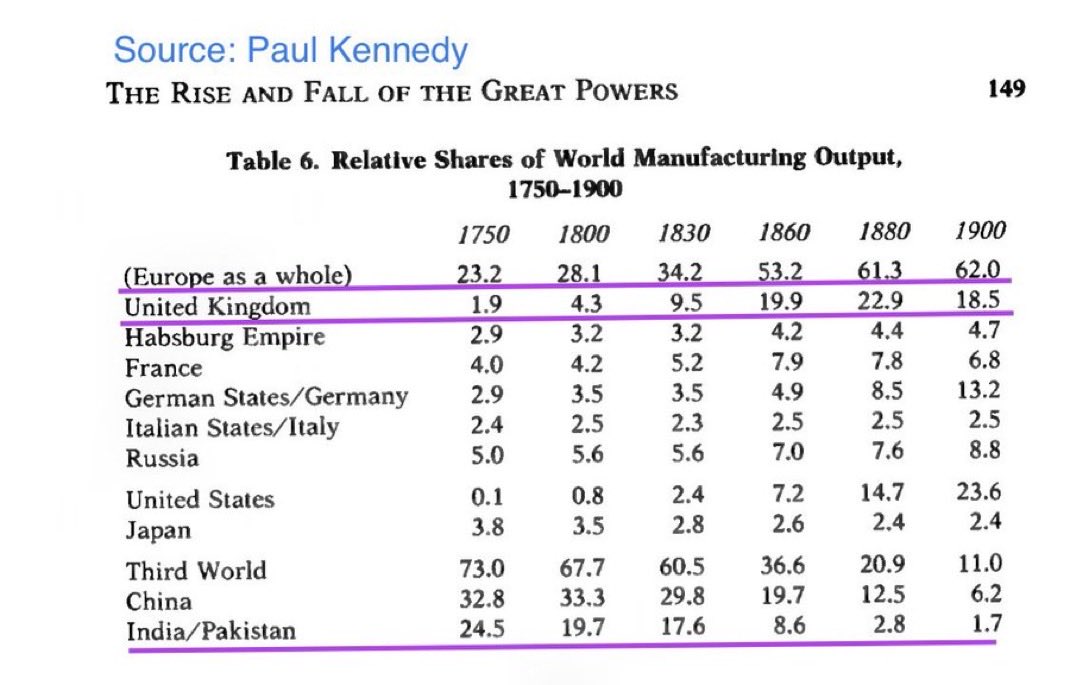
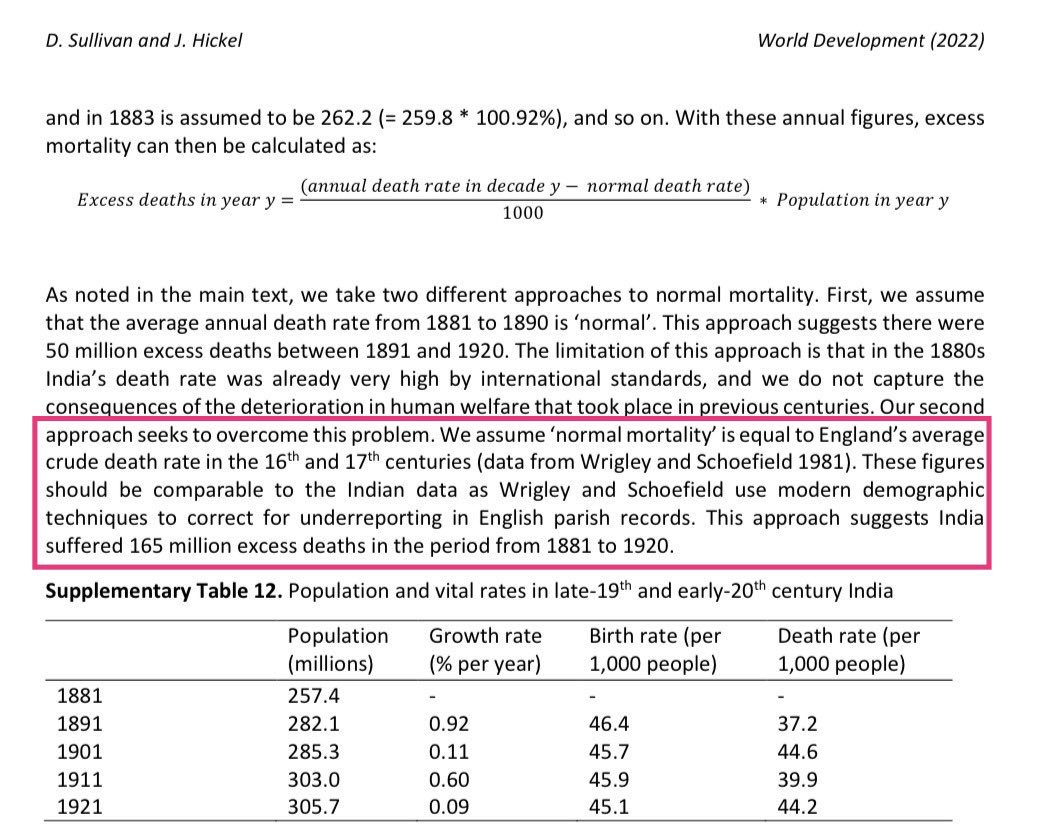
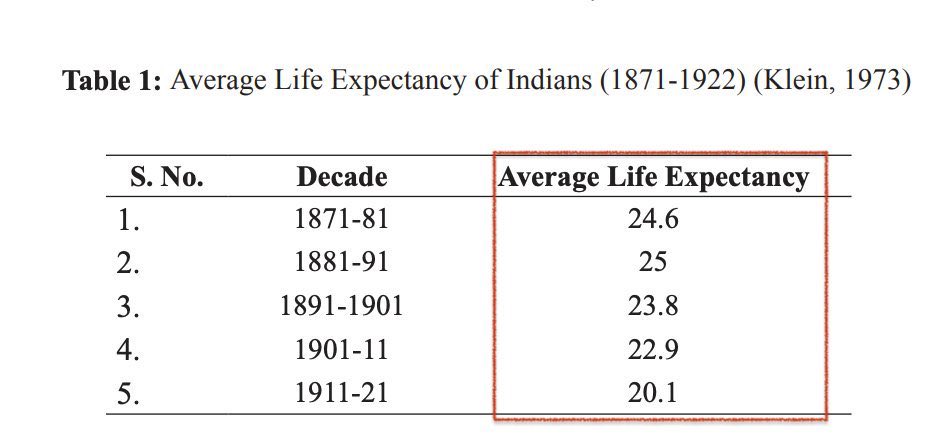
This utterly ridiculous racist claim that previously colonized regions like Africa and India are poor because they’re “incapable of governing themselves” collapses the moment you look at actual evidence not fantasies about “White Man’s Burden”. India alone obliterates the argument. Britain left it poor, illiterate, famine-ridden, and deindustrialized - yet post-1947 India has stayed democratic, built elite scientific institutions, developed nuclear weapons and space capability, and lifted hundreds of millions out of poverty. If former colonies were inherently incapable of self-rule, India should have collapsed instantly. It didn’t. Because the problem was never intelligence, culture, or “work ethic” - it was that colonialism robbed us of all our wealth & resources and left us barely gasping for existence. India wasn’t some backward wasteland before British arrived- it was an economic heavyweight. In 1700, India was producing 24% of global GDP and 24.5% of the world’s manufacturing output, more than ALL of Europe combined. Its textiles, steel, shipbuilding, and agriculture dominated global trade. By 1900, under British rule, India’s share of world manufacturing had been crushed to 1.7%. By 1947, its share of global GDP had been reduced to a miserable 4%. That’s not “failure to develop.” That’s systematic economic annihilation. Our Industries were deliberately dismantled to eliminate competition for British manufacturers. The “infrastructure gift” argument is even more dishonest. Indians paid for the railways themselves through crushing taxes, forced labor, disease, and famine. And those railways weren’t even built to develop India - they were built to exploit and strip raw materials from Indian villages and funnel all our resources to British ports. Without those Indian resources & slave labor - there would never have been any Industrial Revolution. Then the Brits flooded Indian markets with factory goods made from our stolen resources forcing us to buy back those goods at hugely inflated prices just to survive. This was no development - it was a doubly exploitative extraction engine built specifically to suck India completely dry. While India was bleeding wealth, Indians were also being bled to death. Between 1770 and 1947, at least 40 million Indians died in famines that were directly caused or worsened by British policy. While we starved the railways were loaded full of forced grain exports to ensure imperial profits were prioritized over Indian lives, so that British warehouses could overflow with food. By the end of British rule, India’s life expectancy was UNDER 21 years. NO sanitation. NO public health. NO investment in human capital. Just generations ground down to dust to fuel a voracious, cruel and inhuman empire. Cold, calculated destruction. The “Europeans tried to train locals but couldn’t find talent” claim is also pure fantasy. Colonial administrations in Africa systematically blocked natives from higher education, seniormost bureaucracy, engineering, and command. At independence, Nigeria had barely 120 university graduates for tens of millions of people. The Belgian Congo had fewer than 30 and barely any African officers. This wasn’t because they couldn’t learn - it was because they were deliberately blocked from learning. Even when they left the colonizers redrew borders to their advantage, with zero regard for people or history leading to future volatility and war zones. So no - the colonized nations aren’t poor because we are incapable. It’s because colonialism shoved the starting line hundreds of miles back, stole our wealth, smashed our industries, starved our people, blocked human development, and then walked away pretending it had done us a favor. The colonized didn’t fail - they survived predatory structures built to drain and break them. And nowhere is that clearer than India, whose economy now surpasses Britain’s over the wreckage of empire.
Savitri Mumukshu - सावित्री मुमुक्षु tweet mediaSavitri Mumukshu - सावित्री मुमुक्षु tweet mediaSavitri Mumukshu - सावित्री मुमुक्षु tweet mediaSavitri Mumukshu - सावित्री मुमुक्षु tweet media
Lauren Chen@TheLaurenChen

People often say that the developing world is poor because the Western world colonized them and stole their resources. The truth, however, is that over the past century, the developing world has, for the most part, shown that they are completely incapable of harnessing their own resources. They are not poor because we stole from them. They are poor because they do not know how to run and administer their own countries, resources be damned. Take Venezuela. The world's largest oil reserves mean nothing if you have a corrupt communist as your leader. People will actually be starving and trying to eat zoo animals while you sit on trillions of dollars in resources! Africa is another example. Europeans left behind farmland, trains, roads, and mines in Africa. What happened to it all? It's not that all of a sudden, the Africans started running things like anti-colonialist activists had envisioned at the time. No, no. All the infrastructure fell into disrepair and/or was stripped down and looted. They were literally handed fully functioning, completed supply chains for resource extraction, and basically unlimited wealth, but they couldn't manage the simple upkeep. Now, the defense for Africa might be that "The Europeans didn't teach the Africans how to manage any of this! It's not the Africans' fault they couldn't run it independently! They were never trained!" But my brother in Christ, the Europeans DID try to train locals for management! Obviously it would have been easier to have at least some locals in administration, rather than having to import an ENTIRE workforce, but efforts to find African talent were largely unsuccessful. Don't believe me? Just look at the different outcomes in Hong Kong and Singapore when compared to Africa. In East Asia, Europeans often did work with locals in administrative and management capacities. When colonialism ended, Hong Kong and Singapore were able to manage themselves. Not the case with Africa. Now, none of this is to say that colonialism is good. People have the right to self-rule and seld-determination. However, the idea that colonialism and resources extraction are responsible for the developing world's ongoing poverty? That is quite simply a crock of shit.

English
376
1.2K
3.5K
143.7K
Elon Musk
Elon Musk@elonmusk·
Hard truth
Lauren Chen@TheLaurenChen

People often say that the developing world is poor because the Western world colonized them and stole their resources. The truth, however, is that over the past century, the developing world has, for the most part, shown that they are completely incapable of harnessing their own resources. They are not poor because we stole from them. They are poor because they do not know how to run and administer their own countries, resources be damned. Take Venezuela. The world's largest oil reserves mean nothing if you have a corrupt communist as your leader. People will actually be starving and trying to eat zoo animals while you sit on trillions of dollars in resources! Africa is another example. Europeans left behind farmland, trains, roads, and mines in Africa. What happened to it all? It's not that all of a sudden, the Africans started running things like anti-colonialist activists had envisioned at the time. No, no. All the infrastructure fell into disrepair and/or was stripped down and looted. They were literally handed fully functioning, completed supply chains for resource extraction, and basically unlimited wealth, but they couldn't manage the simple upkeep. Now, the defense for Africa might be that "The Europeans didn't teach the Africans how to manage any of this! It's not the Africans' fault they couldn't run it independently! They were never trained!" But my brother in Christ, the Europeans DID try to train locals for management! Obviously it would have been easier to have at least some locals in administration, rather than having to import an ENTIRE workforce, but efforts to find African talent were largely unsuccessful. Don't believe me? Just look at the different outcomes in Hong Kong and Singapore when compared to Africa. In East Asia, Europeans often did work with locals in administrative and management capacities. When colonialism ended, Hong Kong and Singapore were able to manage themselves. Not the case with Africa. Now, none of this is to say that colonialism is good. People have the right to self-rule and seld-determination. However, the idea that colonialism and resources extraction are responsible for the developing world's ongoing poverty? That is quite simply a crock of shit.

English
4.2K
7K
61K
25M
Gad Senyuiedzorm Ashiagbor retweetledi
jamal cheaib | جمال شعيب
The Architecture of Failure: Why "Incompetence" Doesn't Explain Global Poverty The argument is a familiar one, often whispered in diplomatic corridors or shouted in political debates: The developing world isn't poor because the West stole their resources; they are poor because they are incapable of managing them. On the surface, the logic seems sound. We look at nations like Venezuela, sitting atop the world's largest oil reserves while its citizens go hungry. We look at the African continent, where departing European powers left behind thousands of miles of railways and roads, only to see them swallowed by the jungle or rusted into obsolescence. If the developing world was handed the keys to the kingdom—functioning supply chains and unlimited wealth—why have they failed to unlock prosperity? The answer requires us to move beyond the surface-level symptoms of corruption and incompetence and examine the underlying "operating system" of these nations, through the lens of logic, history, and international law. The Mirage of Inheritance The most compelling part of the "incompetence" argument is the physical legacy of colonization. It posits that newly independent nations inherited "fully functioning" economies. However, this relies on a logical fallacy regarding the purpose of infrastructure. If you examine a colonial-era map of Africa, the design becomes clear. Railways and roads were not built like a spiderweb to connect cities, foster internal trade, or build a domestic market. They were built like chutes—running in straight lines from a mine or a plantation directly to a port. This is extraction architecture. When the colonial powers left, these nations didn't inherit a "network"; they inherited a series of one-way streets designed to drain wealth, not create it. Under the logic of economics, maintaining a railway that only goes to a port is useless if the foreign buyer sets trade barriers or if you are trying to build a domestic economy. The infrastructure fell into disrepair not simply because the new administrators were "lazy," but because the infrastructure was economically unviable for a sovereign nation trying to serve its own people rather than a foreign empire. The Institutional Void and the "Scorched Earth" The argument that developing nations "don't know how to administer" ignores the legal reality of how they were formed. Under international law, the borders of many developing nations were drawn arbitrarily by European powers (most notably at the Berlin Conference of 1884). These borders grouped rival ethnic and religious groups together while splitting cohesive communities apart. When independence came, the new leaders weren't just tasked with "administering resources"; they were tasked with managing artificial nations designed for internal conflict. Furthermore, the transition of power was rarely the benevolent "handover" often imagined. In many cases, it was a "scorched earth" withdrawal. When Guinea voted for independence from France in 1958, the departing administration famously stripped the country bare—taking lightbulbs, blueprints for sewage systems, and even burning medicines. This created an institutional void. Administration requires bureaucracy—tax agencies, courts, civil services. Colonial regimes were generally autocracies designed to keep order, not service-oriented bureaucracies. The "software" of democratic governance was never installed. Therefore, the failure to run these systems is often less about a lack of innate ability and more about the total absence of institutional memory or transitional support—a violation of the spirit of the UN Right to Development, which emphasizes the need for an enabling environment for development. The Venezuela Paradox: Corruption vs. The Resource Curse The case of Venezuela is frequently cited as the ultimate proof of incompetence. How can a country with so much oil be so poor? While corruption and mismanagement by the Venezuelan leadership are debatable, attributing the collapse solely to them ignores the economic phenomenon known as the "Resource Curse" (or Dutch Disease). Logic dictates that when a nation relies entirely on one resource, its currency value skyrockets, killing off all other industries like farming or manufacturing. When the price of that resource crashes (as oil invariably does), the country has no safety net. Additionally, international relations play a massive role here. Sovereignty—a core tenet of the UN Charter—implies the right to trade. However, sanctions and geopolitical isolation often cut these nations off from the global banking systems required to maintain their infrastructure. It becomes a feedback loop: bad governance leads to sanctions, sanctions lead to infrastructure collapse, and the collapse reinforces the poverty. The "Training" Deficit and Human Rights Finally, there is the defense that "Europeans didn't teach them." This is often framed as a failure of benevolence, but it is actually a human rights issue. For generations, indigenous populations were legally barred from higher education and administrative roles under colonial rule. This was a systemic denial of the Right to Education (UDHR Article 26). When independence arrived, there was a massive deficit in human capital—not because the population was incapable of learning, but because they had been actively prevented from doing so. Even today, when brilliant minds from the developing world do emerge, the global economy encourages "Brain Drain." Engineers and administrators migrate to Western nations for stability and higher wages. In a cruel twist of irony, the developing world ends up subsidizing the workforce of the very nations that once colonized them. Conclusion It is undeniable that corruption, tyranny, and poor planning plague the developing world. Leaders must be held accountable for their choices. However, to say they are poor only because they "don't know how to run their countries" is a simplification that defies logic. They are playing a game where the board was built for their failure (extraction infrastructure), the teams were mismatched by force (arbitrary borders), and the rulebook (international trade law) favors the established players. They weren't just robbed of resources; they were robbed of the time and stability required to learn how to manage them. Would you like me to analyze a specific "success story" like Botswana to see how they managed to escape these traps?
English
14
28
110
42.4K
Gad Senyuiedzorm Ashiagbor
Ah
Villy@Villymeta

This argument rests on a set of assumptions that don’t hold up under historical or economic scrutiny. First, colonialism wasn’t just “resource extraction”, it was the deliberate restructuring of societies to serve imperial markets, not local development. Colonized economies were engineered to export raw materials and import finished goods, destroying indigenous industry, food sovereignty, and institutional continuity. That structural dependency didn’t disappear when flags changed. Second, the idea that formerly colonized countries were “handed fully functioning systems” is historically inaccurate. The infrastructure left behind in much of Africa and Latin America was narrow, extractive, and externally oriented, railways ran from mines to ports, not between cities; farms produced cash crops, not food security; administrative systems excluded the vast majority of the population from education and power. Those are not foundations for stable nation-states. Third, pointing to Venezuela as proof that “resources don’t matter” confuses governance failures with historical context. Venezuela’s crisis is real, but it exists within a century of foreign intervention, oil dependency encouraged by global markets, sanctions, and boom-bust cycles tied to commodity extraction, again, a legacy of externally shaped development models. Fourth, comparing Africa to Hong Kong or Singapore is a false equivalence. Those were small, strategically vital port cities, not vast, ethnically diverse regions carved into artificial borders with no regard for social cohesion. They also benefited from sustained investment, Cold War geopolitics, and continued integration into global finance on favorable terms. Africa did not. Fifth, the claim that Europeans “tried to train locals but couldn’t find talent” ignores the reality that colonial systems actively restricted education, leadership pathways, and political participation. You can’t simultaneously suppress a population for centuries and then cite the absence of trained administrators as evidence of inherent incapacity. Finally, no serious scholar argues that colonialism alone explains all modern poverty. Internal governance matters. Corruption matters. Policy choices matter. But pretending history ends at independence, and that countries start from a neutral baseline the moment colonizers leave, is not realism. It’s amnesia. Acknowledging structural causes is not excusing failure. It’s recognizing that outcomes are shaped by starting conditions, incentives, and constraints, the same logic applied everywhere else in economics and history. If the developing world were simply “incapable,” there wouldn’t be countless examples of post-colonial success once structural constraints were eased. The evidence points not to cultural incompetence, but to systems designed for extraction, not prosperity.

QST
0
0
0
9
Gad Senyuiedzorm Ashiagbor retweetledi
Sawyer Merritt
Sawyer Merritt@SawyerMerritt·
NEWS: Neoen Australia says it has begun construction of a new $220 million big battery project, which will also be the first project in the world to deploy @Tesla's new Megablock product, its next generation grid-scale battery tech. Megablock combines four Megapack 3 units into a single deployable block offering 20 MWh units, each with an integrated transformer and switchgear. Tesla says this will translate into faster installations and lower costs for grid-level storage, up to 40% cheaper. Megapack 3 production will begin at Tesla's upcoming Megafactory in Houston, Texas in 2026 with up to 50 GWh per year of manufacturing capacity. Megablock: • 23% faster to install with up to 40% lower construction costs • Plug and play platform (hardware, software and services) delivered as one all from Tesla. It's a pre-engineered medium-voltage block that integrates next-gen Megapack 3 • Eliminates above ground cabling between the transformer and the megapacks using new flexible busbar assembly • 91% MV round trip efficiency • 20 MWh of usable AC energy • Operates in temps of -40°C (-40°F) to 60°C (140°F) • 248 MWh per acre • 25-year life & >10,000 cycles Megapack 3: • 5 MWh of usable AC energy • Weight: 86,000 lbs • 28 foot long enclosure that can be shipped globally • Optimized for up to 8-hour applications • New drastically simplified thermal bay. Uses Model Y heat pump, but on steroids. 78% fewer connections, which minimizes failure points • Larger battery module and larger battery cell • 2.8 liter battery cell, co-engineered with Tesla's cell team • LFP battery • Operates in -40°C to 60° • Went from 24 cable connections in Megapack version 2XL, down to 3 simple busbar connections • 75% of the mass of Megapack 3 is battery cells. • A single module in it weighs as much as a Cybertruck • Tesla has enabled easier front access service, so there are no roof penetrations • Drastically simplified bussing system • Will partly use battery cells from Tesla's new 7 GWh LFP battery facility in Nevada. Additional cells sourced elsewhere.
English
55
234
2.7K
172.7K
Gad Senyuiedzorm Ashiagbor retweetledi
Damian Player
Damian Player@damianplayer·
BREAKING: X just exposed the EXACT algorithm that decides who goes viral… And I just reverse-engineered it into a custom trained GPT: → The exact formula for viral posts → FYP selection patterns (from X) → Engagement thresholds that trigger boost → Which signals get you shadowbanned Like, rt + reply "ALGO" and I'll DM it to you (must be following)
Damian Player tweet media
English
1.1K
528
1.8K
166.5K
Gad Senyuiedzorm Ashiagbor retweetledi
Darlington Akogo
Darlington Akogo@darlingtinho·
I think with Moremi Bio Agent (and an internal new more powerful model), we have the most impressive tech in drug discovery anywhere in the world! Our AI agent can autonomously design novel therapeutic agents (drugs, antibodies, peptides, antibiotics, vaccines) for any disease
Darlington Akogo tweet media
English
2
5
13
943
Gad Senyuiedzorm Ashiagbor retweetledi
THE CHELSEA FORUM
THE CHELSEA FORUM@TheChelseaForum·
Repost if your team has won all 3 🤝
THE CHELSEA FORUM tweet media
English
143
4K
23K
510.8K
Gad Senyuiedzorm Ashiagbor retweetledi
Tech In Twi
Tech In Twi@tech_twi·
No app, not even the MTN app, can fully help you monitor your actual data usage. These apps only display what the network’s system reports, which may already be inaccurate. The best way to monitor your usage is to reset your phone’s data statistics and track it directly from your device. You can also check the actual size of downloads or web pages using browsers like Chrome. If your phone’s usage stats show abnormal figures or don’t match what the network app shows, then there’s likely a problem with the data metering system inflating figures and causing you to pay more than you actually used.
English
70
372
1.9K
108.5K