Wayne Hale

6.9K posts

Wayne Hale

Wayne Hale

@waynehale

Former Space Shuttle Program Manager & Flight Director for 40 missions. Now retired from NASA after 32 years. Currently consults for SAS & a full time grandpa.
Houston, Texas, USA Katılım Haziran 2008
374 Takip Edilen16.4K Takipçiler
Wayne Hale
Wayne Hale@waynehale·
@LeahCheshier I got plenty of phone calls in Mission Control - misdialed numbers were no problem. Calls from the boss, on the other hand . . .
English
1
0
3
171
Leah Cheshier
Leah Cheshier@LeahCheshier·
On console today for an Artemis II sim & the console phone rang. This has NEVER happened to me. It was a random person who was certain she’d gotten a call from our number. She was properly shocked when I explained that wasn’t possible, as this is NASA PAO in Mission Control. 😂
English
57
84
3.1K
136.4K
Wayne Hale
Wayne Hale@waynehale·
Spectacular ISS pass this evening right beside Orion
Wayne Hale tweet media
English
0
1
20
851
Wayne Hale
Wayne Hale@waynehale·
@konstructivizm Of course the picture here is a fake - at best some AI generated version of what a side view might have looked like. It is too bad that a thoughtful written article must be ‘illustrated’ with a fanciful picture that is not even properly labeled
English
1
0
69
985
Black Hole
Black Hole@konstructivizm·
Apollo 13’s Damage Was Far Worse Than Anyone Realized The explosion of oxygen tank No. 2 in Sector 4 of the Service Module (SM) on April 13, 1970—triggered by a short circuit during a routine stir—ripped through the spacecraft with devastating force. What began as a routine mission to Fra Mauro crater became humanity's most famous near-disaster.As the crippled Apollo 13 approached Earth on April 17, 1970 (just hours before reentry), the crew jettisoned the now-useless Service Module. From the docked Command Module (Odyssey) and Lunar Module (Aquarius) "lifeboat," astronauts Jim Lovell, Jack Swigert, and Fred Haise turned to photograph the departing wreckage. What they captured was shocking: an entire outer panel (Bay 4) had been completely blown away, exposing a mangled interior of torn multi-layer insulation (MLI), dangling wires, shattered components, and debris floating in the void.The iconic images—primarily NASA frame AS13-59-8500 (and variants like AS13-58-8459)—reveal the stark reality: the explosion had vented one oxygen tank entirely and damaged the other, crippled two of the three fuel cells (leaving only one operational briefly), and severed critical plumbing and wiring. Bright MLI blankets protrude like ragged flags, while the high-gain S-band antenna and other structures show heavy damage forward of the engine nozzle. The Moon looms faintly in the background of some shots, a silent witness to the peril.Engineers on the ground had pieced together the crisis from telemetry and crew reports, but these raw photographs—taken from roughly 100–200 meters away—provided the first visual confirmation of the scale. The missing panel alone confirmed fears of widespread structural compromise, yet miraculously, the Command Module's heat shield and reentry systems remained intact, allowing the crew's safe splashdown in the Pacific.This haunting view of the mangled Service Module drifting away stands as one of the most powerful symbols in spaceflight history: a stark testament to how razor-thin the margin was between catastrophe and survival, and how human ingenuity, teamwork (both in space and on the ground), and sheer determination turned "Houston, we've had a problem" into a triumphant return home Image credits: NASA (original Hasselblad frames and remastered versions by Andy Saunders / ASU); public domain archival photos showing the severely damaged Service Module post-jettison.
Black Hole tweet media
English
5
21
99
5.4K
Bobby Braun
Bobby Braun@BobbyBraun·
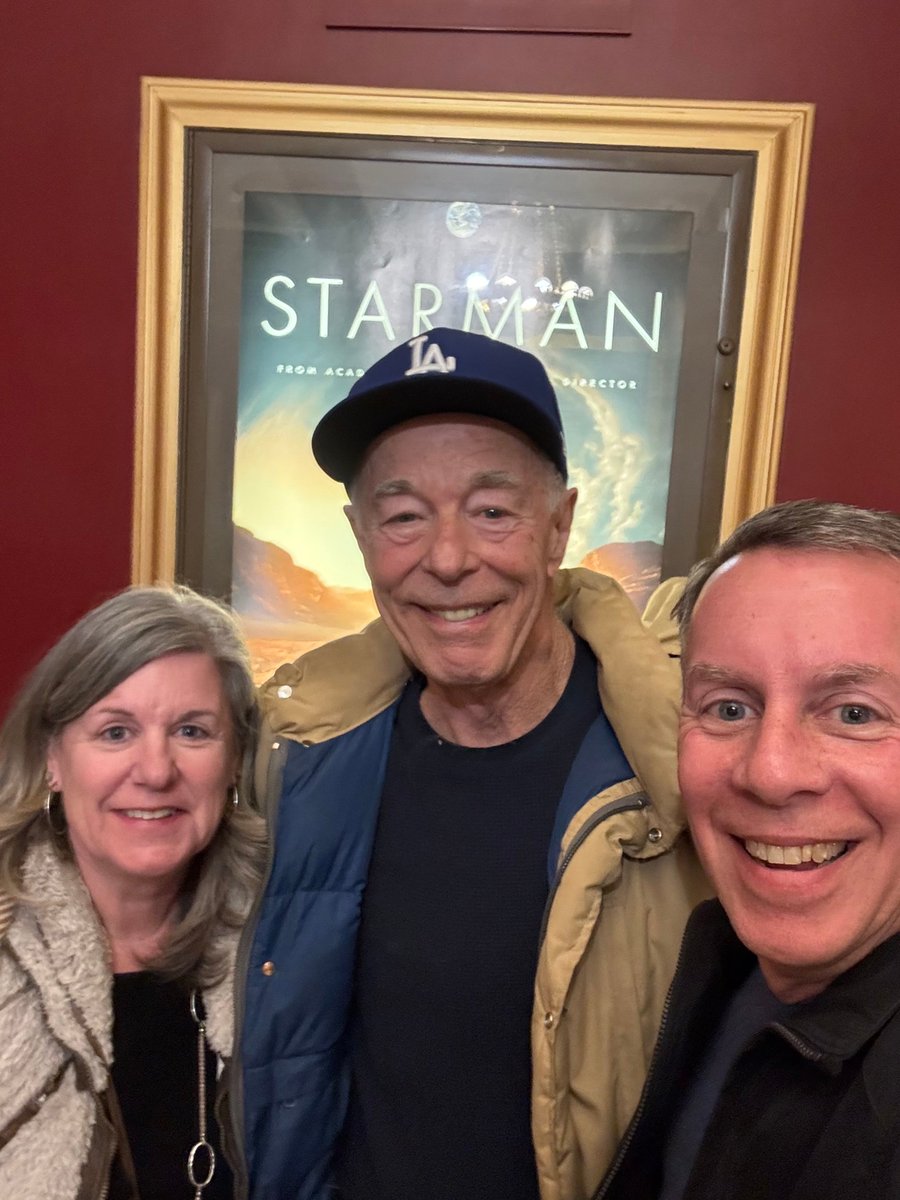
So enjoyed seeing my long- time friend Gentry Lee last night at the DC premiere of his film starmanmovie.com Well worth watching - Starman is an amazing story of wonder, inspiration, imagination and adventure!
Bobby Braun tweet media
English
3
1
11
964
National Air and Space Museum
National Air and Space Museum@airandspace·
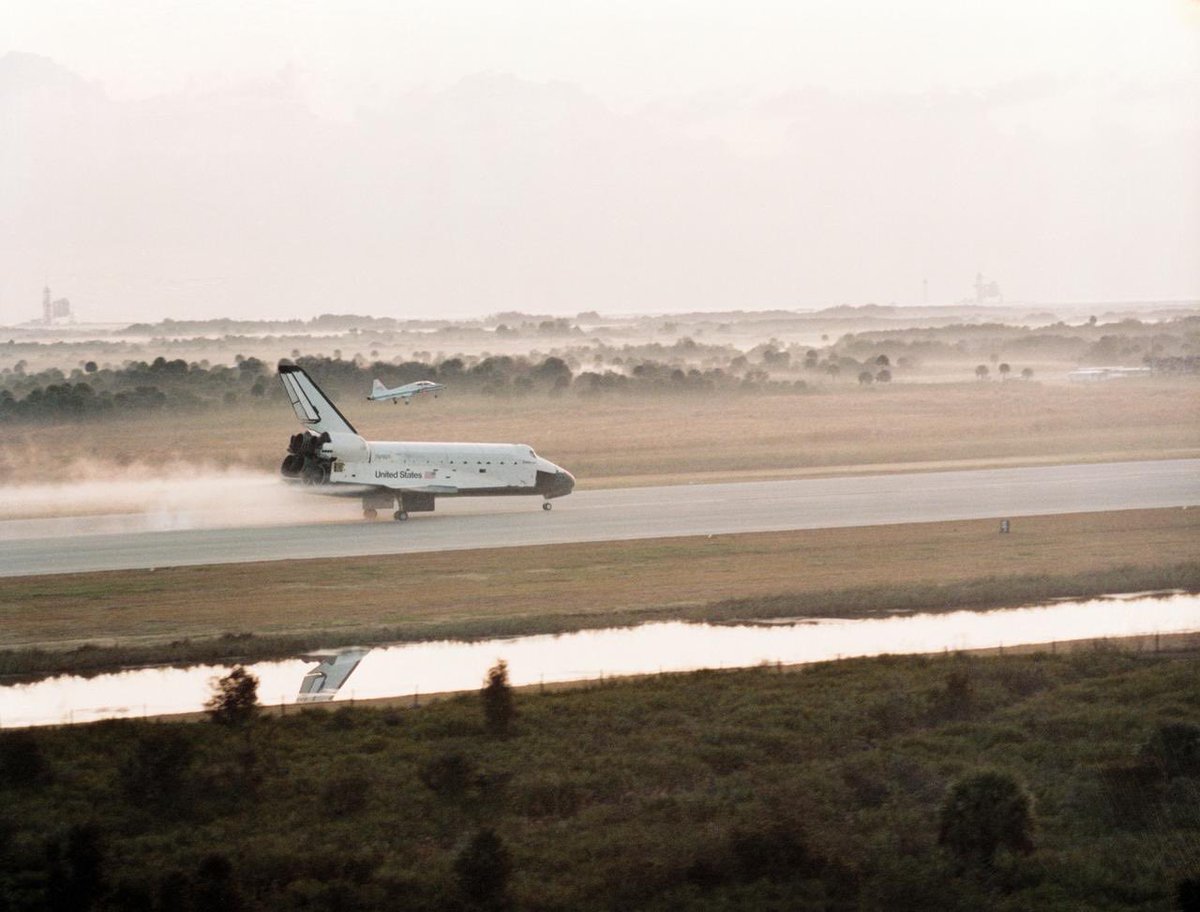
When Space Shuttle Challenger landed at Kennedy Space Center on #TDIH in 1984, it became the first space shuttle to land at KSC. Prior to this mission, Space Shuttles landed at Edwards Air Force Base in California.
National Air and Space Museum tweet media
English
4
39
249
6.7K
Wayne Hale
Wayne Hale@waynehale·
59 years since the Apollo 1 fire.
English
5
16
148
7.4K
Wayne Hale
Wayne Hale@waynehale·
@DavidV_81 @DLaneBreckenri1 @NASAAdmin For the what it’s worth - maybe nothing since you unfollowed me - the comment is completely non political. And yes, I was part of the failure of STS-107.
English
0
0
28
2K
NASA Administrator Jared Isaacman
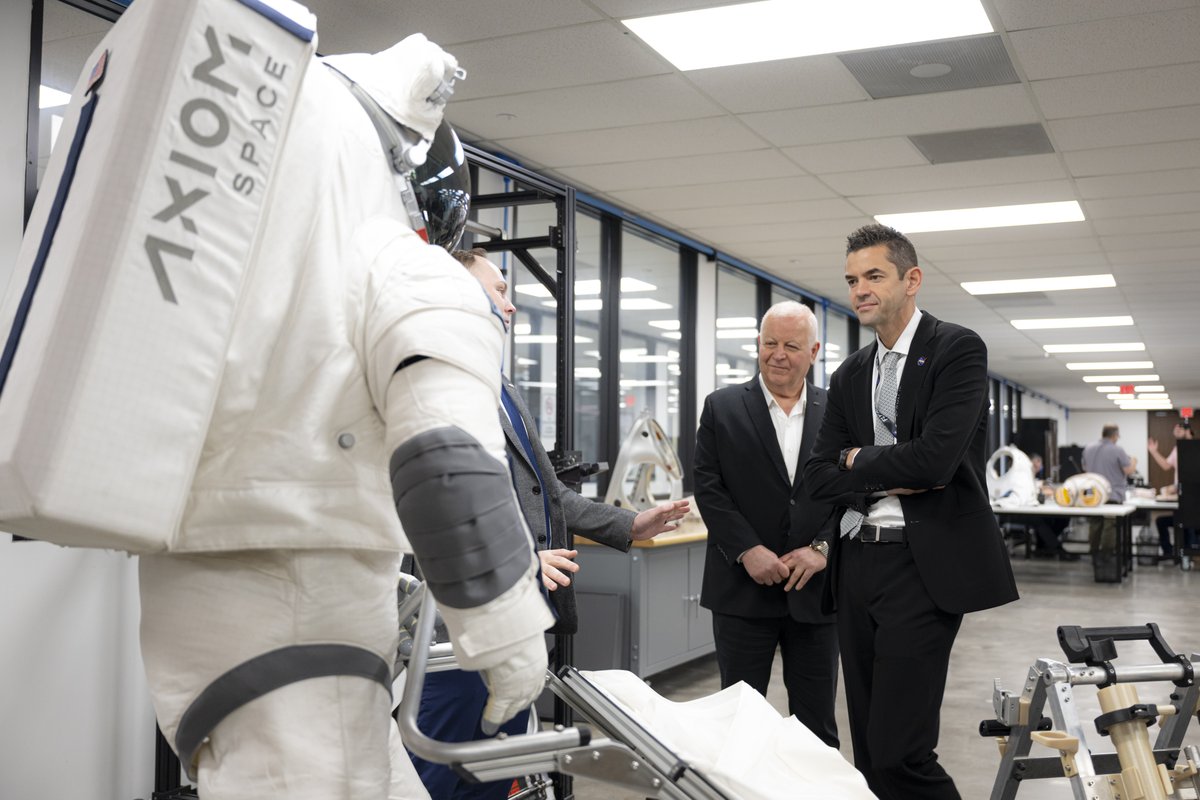
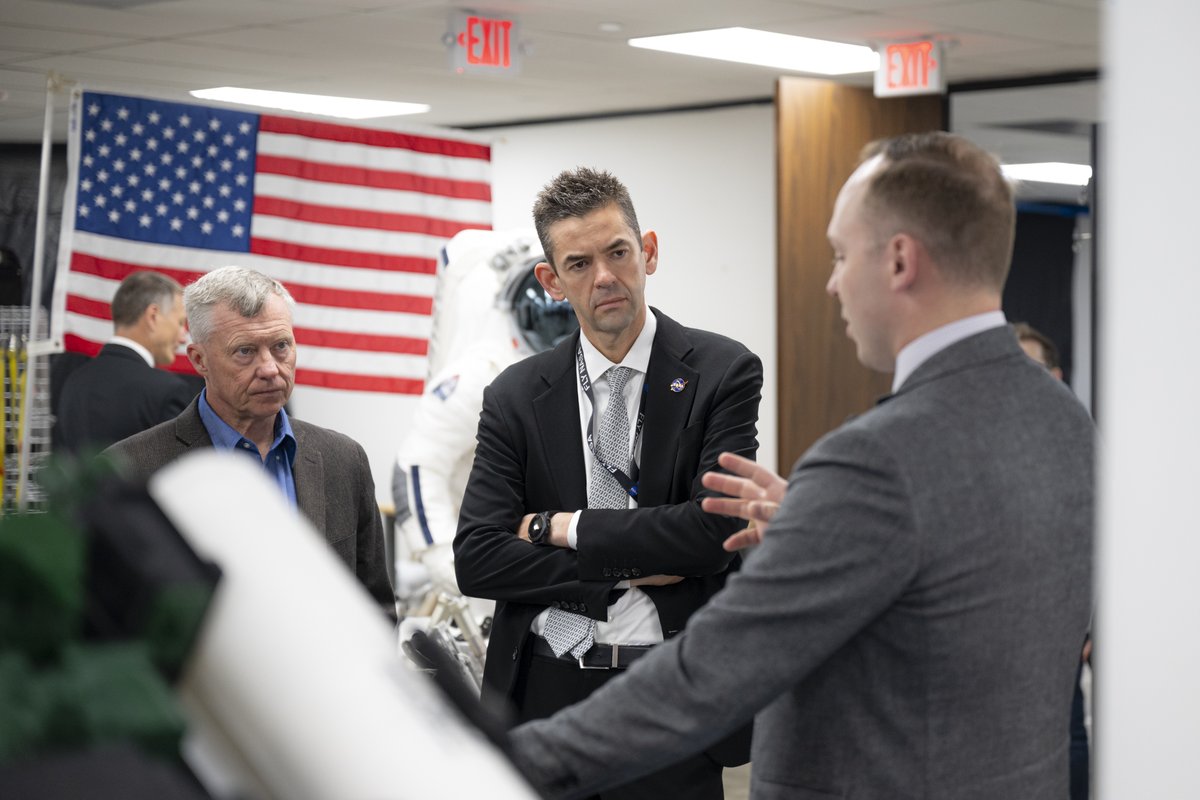
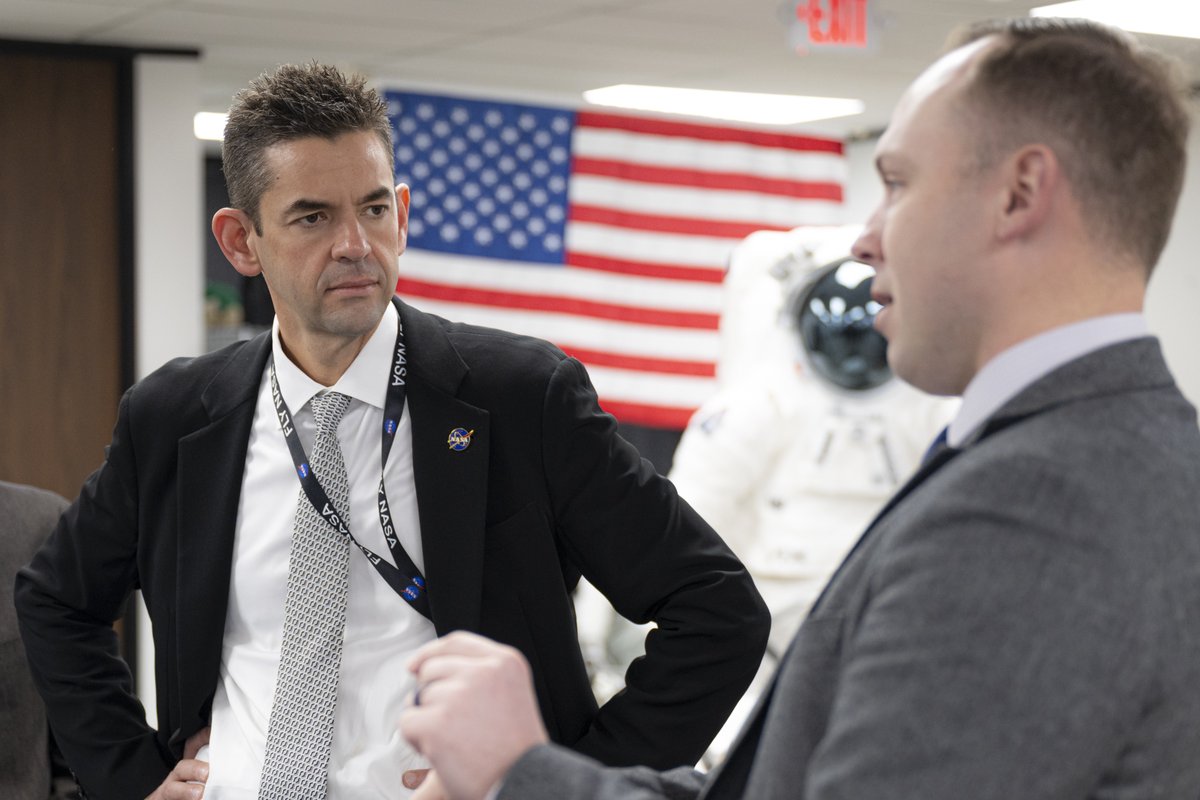
I met with leadership at Axiom Space yesterday to discuss the development of their spacesuit. It was great to see their facilities and all the progress. I shared with them exactly what I told our HLS providers: NASA will do all we can to help them accelerate and meet the timelines, with plenty of schedule margin to spare. As an agency, we must be willing to challenge the requirements and not let an hour go by on a problem we can solve today. This is imperative to achieving the President’s national space policy.
NASA Administrator Jared Isaacman tweet mediaNASA Administrator Jared Isaacman tweet mediaNASA Administrator Jared Isaacman tweet mediaNASA Administrator Jared Isaacman tweet media
English
90
312
4.3K
202.9K
Wayne Hale
Wayne Hale@waynehale·
@NASAAdmin It is possible that we are talking past each other. No disrespect meant. Your revision clarifies much.
English
40
1
276
38.1K
NASA Administrator Jared Isaacman
It is disappointing and disrespectful that you would so casually invoke the loss of Challenger on a topic related to EVA suit development. Let me rework my above post to be the opposite of what I wrote, and please tell me if it sounds safer: I shared with them exactly what I told our HLS providers: NASA should do absolutely nothing to help them accelerate and meet their timelines so there is no schedule margin to spare. As an agency, we must never be willing to challenge the requirements and let as much time go by as possible on problems. Is this better? Respectfully, do better Sir.
English
68
111
3.6K
465.1K
Wayne Hale
Wayne Hale@waynehale·
@Astro_Clay The incident you may be remembering had a long chain of errors culminating in the loss of the spacecraft as it approached the planet. The units mixup was in the ground navigation monitoring software, not onboard
English
1
0
17
2.2K
Michael Mealling -- e/acc
Michael Mealling -- e/acc@mmealling·
Wayne knows this but for the peanut gallery: safety is a range, not an absolute. Some things are worth the risk. Some people are willing to take risks that others aren't. The American people feel responsible for Government astronauts so their risk appetite is very very low. In my opinion, we should always allow people to do dangerous things if they are fully aware of the risks.
English
2
0
2
606
Ed Lu
Ed Lu@astroEdLu·
The recipe for success for @NASA and @rookisaacman : 1) become a priority for the @realDonaldTrump administration 2) make tough decisions 3) cultivate a culture of urgency and expediency 4) fly fly fly numbers 2,3,and 4 only happen if number 1 happens
English
2
3
25
2.7K
Wayne Hale
Wayne Hale@waynehale·
@mmealling @astroEdLu @NASA @rookisaacman @realDonaldTrump In spaceflight it is not to be expected that anyone is “fully aware of the risks”. Probably should not use that phrase The American public is risk averse only in hindsight - after an accident. Before that the general public only dimly understands what is happening
English
0
1
4
491
Michael L-A
Michael L-A@CommanderMLA·
This week in 2002 I launched into space on Shuttle Endeavour (STS-113) on a 13 day, 5.7 million mile journey!
Michael L-A tweet media
English
7
16
146
3.5K
Wayne Hale
Wayne Hale@waynehale·
Oh well, you can’t beat Mother Nature. Better luck another day New Glenn/Blue Origin
English
2
1
21
9.8K
Wayne Hale
Wayne Hale@waynehale·
Outstanding program on Nova tonight about building the ISS. It illustrated just a couple of the difficult problems that had to be overcome to accomplish that incredible project
English
3
1
37
9.3K
Wayne Hale
Wayne Hale@waynehale·
@SciGuySpace 32 minutes is a huge launch window Eric. We launched many shuttle missions with 5 minute windows. Some interplanetary probes on expendable rockets have instantaneous launch windows. So in my experience 32 minutes is huge. Charlie and her team can pull it off.
English
5
1
140
4.3K
Eric Berger
Eric Berger@SciGuySpace·
If Artemis II is ready to go on February 5, the launch window is just a short one: 32 minutes. It opens at 8:09 pm ET. However NASA says if the rocket and weather are good, they would attempt that window.
English
47
64
1K
89.6K