William Dekou retweetledi
William Dekou
661 posts

William Dekou retweetledi


How Discord Stores Trillions of Messages
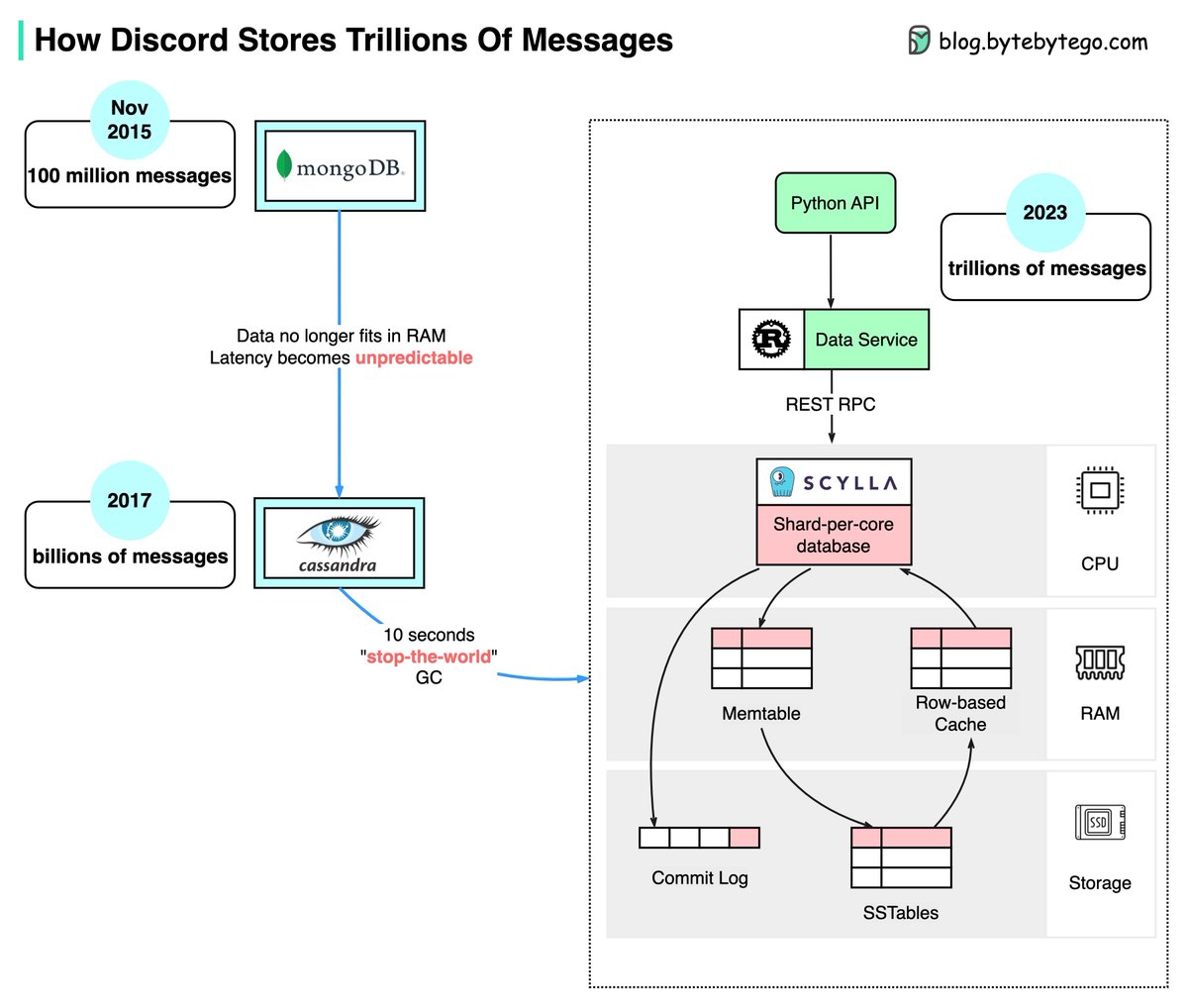
In 2015, Discord started using MongoDB to store messages. By November 2015, there were already 100 million messages that did not fit in RAM, causing unpredictable latency.
In 2017, Discord moved to storing billions of messages in a Cassandra database. By 2022, the number of stored messages had ballooned to trillions across 177 nodes.
But Cassandra was plagued by several serious issues.
- Hot partitions occurred when a small number of high traffic channels overwhelmed nodes, cascading latency across the cluster.
- Garbage collection pauses created latency spikes.
- Compactions fell behind, forcing expensive reads to query multiple SSTables.
- Maintenance like node repairs interrupted service.
Discord migrated to ScyllaDB for the following benefits:
- Written in C++ instead of Java, eliminating disruptive garbage collection pauses
- Shard-per-core model provides stronger workload isolation to prevent hot partitions from cascading latency across nodes.
- Reverse query performance optimized to meet Discord's needs
- They reduced nodes to 72 while increasing disk space per node to 9TB.
To further protect ScyllaDB, Discord:
- Built intermediary data services in Rust that limit concurrent traffic spikes
- Data services sit between the API and database, coalescing requests
- Query the database just once even if multiple users request the same data
- Rust provided fast, safe concurrency ideal for this workload
The results? Tail latencies down from 40-125ms to a steady 15ms. Database uptime improved from weekend-long outages to smooth sailing. The system easily handled World Cup traffic spikes, processing events like goals and penalties without breaking a sweat. Discord continues to scale, now reliably storing trillions of messages with ScyllaDB.
–
Subscribe to our weekly newsletter to get a Free System Design PDF (158 pages): bit.ly/496keA7

English

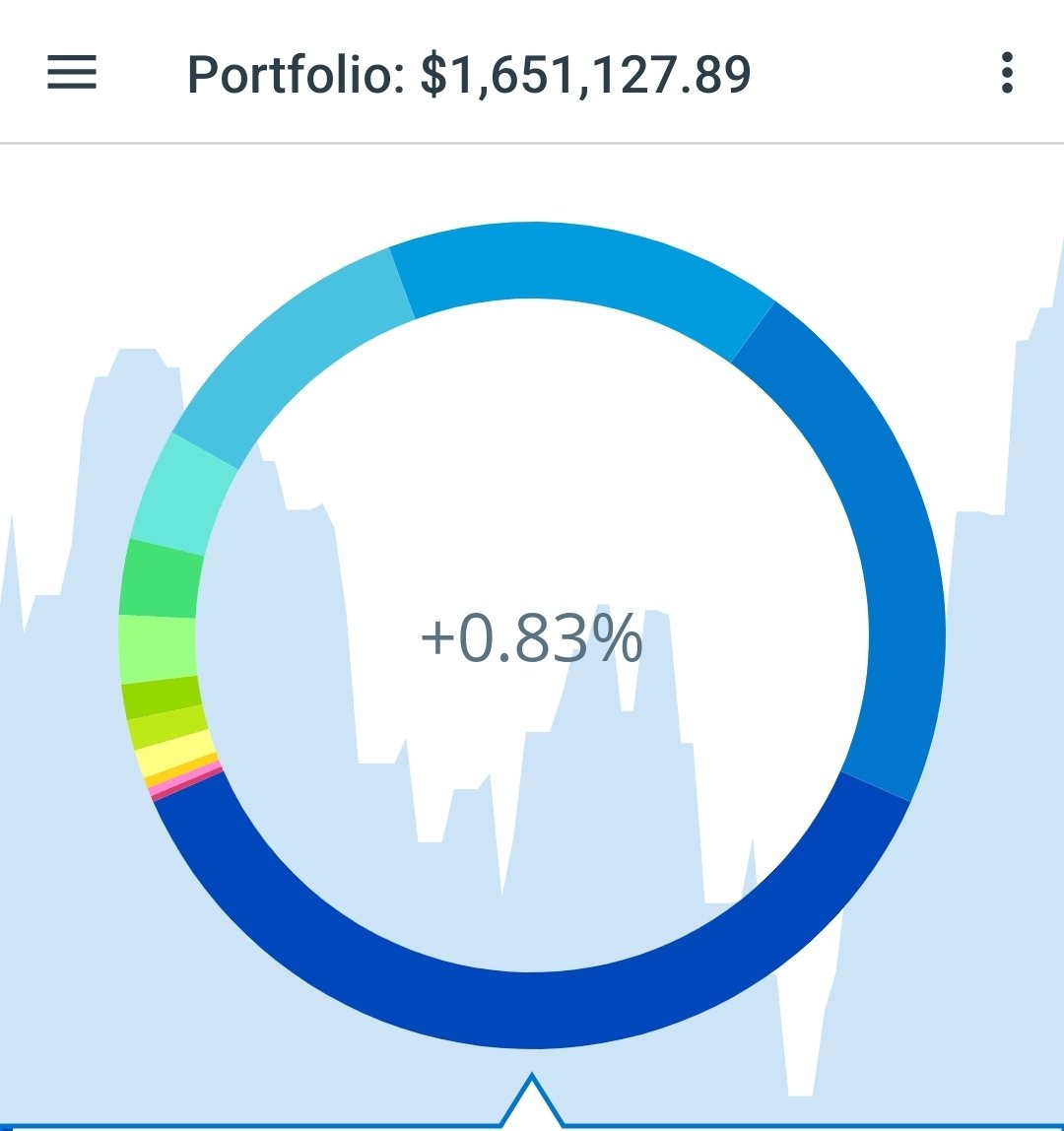
Im 41 years old. Investment accounts just passed $1.65M. This doesn't include real estate properties and other assets.
Not bad for a first-generation college graduate starting out with significant debt.
It wasn't easy, but how did I do it?
•Chose a degree with demand and salary opportunity
•Paydown bad debt quickly
•Investing
•Smart spending; this doesn't mean cheap or frugal, just smart.
•Create a monthly budget. Invest every leftover dollar each month
•Annual salary increases go into brokerage account
•Always compared me to ME
•Investing ♻️ ♻️ ♻️
You can do it too!

English
William Dekou retweetledi

How Discord Stores Trillions of Messages
In 2015, Discord started using MongoDB to store messages. By November 2015, there were already 100 million messages that did not fit in RAM, causing unpredictable latency.
In 2017, Discord moved to storing billions of messages in a Cassandra database. By 2022, the number of stored messages had ballooned to trillions across 177 nodes.
But Cassandra was plagued by several serious issues.
- Hot partitions occurred when a small number of high traffic channels overwhelmed nodes, cascading latency across the cluster.
- Garbage collection pauses created latency spikes.
- Compactions fell behind, forcing expensive reads to query multiple SSTables.
- Maintenance like node repairs interrupted service.
Discord migrated to ScyllaDB for the following benefits:
- Written in C++ instead of Java, eliminating disruptive garbage collection pauses
- Shard-per-core model provides stronger workload isolation to prevent hot partitions from cascading latency across nodes.
- Reverse query performance optimized to meet Discord's needs
- They reduced nodes to 72 while increasing disk space per node to 9TB.
To further protect ScyllaDB, Discord:
- Built intermediary data services in Rust that limit concurrent traffic spikes
- Data services sit between the API and database, coalescing requests
- Query the database just once even if multiple users request the same data
- Rust provided fast, safe concurrency ideal for this workload
The results? Tail latencies down from 40-125ms to a steady 15ms. Database uptime improved from weekend-long outages to smooth sailing. The system easily handled World Cup traffic spikes, processing events like goals and penalties without breaking a sweat. Discord continues to scale, now reliably storing trillions of messages with ScyllaDB.
–
Subscribe to our weekly newsletter to get a Free System Design PDF (158 pages): bit.ly/496keA7

English
William Dekou retweetledi


Aujourd'hui de retour pour avoir accès au service client, ça fait déjà 1h54 d'attente et toujours pas servi
@Orange_Cameroun

Français

Un service client qui n'a pas de respect du temps de ses clients @Orange_Cameroun. Quel dommage !
Le 13 Janvier 2023, il aurait fallut attendre 4 heures de temps pour se faire servir. J'ai dû partir au bout de 2 heures d'attente et utiliser la SIM d'un proche comme alternative.

Français

2 ans après, je suis entrain de me refaire le replay du Justicier de Nkoabang.
Juste un magnifique cette série camerounaise!
youtube.com/watch?v=MQHj1x…

YouTube
Français
William Dekou retweetledi

Il est hors de question que pour t’examiner au urgence, il faille d’abord aller payer les gants.
L’hôpital devrait avoir son stock de gants pour les urgences
William Dekou@wdekou
Je suis meurtri par la façon dont les urgences à l’hôpital fonctionnent. Il suffit d’y arriver inconscient ou sans argent pour y ressorti les pieds devant. Et il faut que cela change pour notre vie et celle de nos proches #cameroun #yaounde #douala
Français
William Dekou retweetledi

@Benjamin_moukan Merci, c’est chaleureux d’être prêt de ses proches. En passant, serait à Po en Mars
Français