Wilfred

26.5K posts

Wilfred banner
Wilfred

Wilfred

@wfddesigner

Product & UI/UX Designer

Figma Katılım Mart 2017
819 Takip Edilen789 Takipçiler
Wilfred retweetledi
Bruno | Einstein of Marketing
Cold traffic is stupid. They have an IQ below room temperature. This is why smart people stay broke. Because you need to tap into the ape brain to sell to the masses. But you want to sound and behave like Einstein. To sell to cold traffic. Dumb yourself down. And do it again. Then one more time. That’s how you sell to them
English
4
3
71
3.2K
Wilfred retweetledi
Jack Moses
Jack Moses@jackmoses777·
If you're in your 20s, the smartest thing you can do to secure your future is create a personal brand. Getting a degree no longer secures anything. We have no idea what jobs, finance, or tech will look like in 10 years. Our parents' generation can't properly advise us because the future we're moving into is so different from the world they grew up in. In an uncertain world, the only asset that can't be outsourced, automated, or taken from you is you. Your character traits and skills will be yours for life. Your network of other builders and creators at the edge of work are the most valuable connections to have. Your unique story and expertise are your greatest sources of value. The only thing to actually fall back on is yourself. The best thing you can do to secure your future is to become anti-fragile, self-sovereign, well-connected, uniquely yourself, and irreplaceable. Your future self will thank you for putting yourself in the online arena now, accumulating invaluable skills, and acquiring specific knowledge — because it's inevitable that everything we once knew is shifting to automation and AI, and everything we are going to know will shift to decentralization and the creator economy.
English
22
58
602
22.1K
Wilfred retweetledi
Emon🐙
Emon🐙@emonpixels·
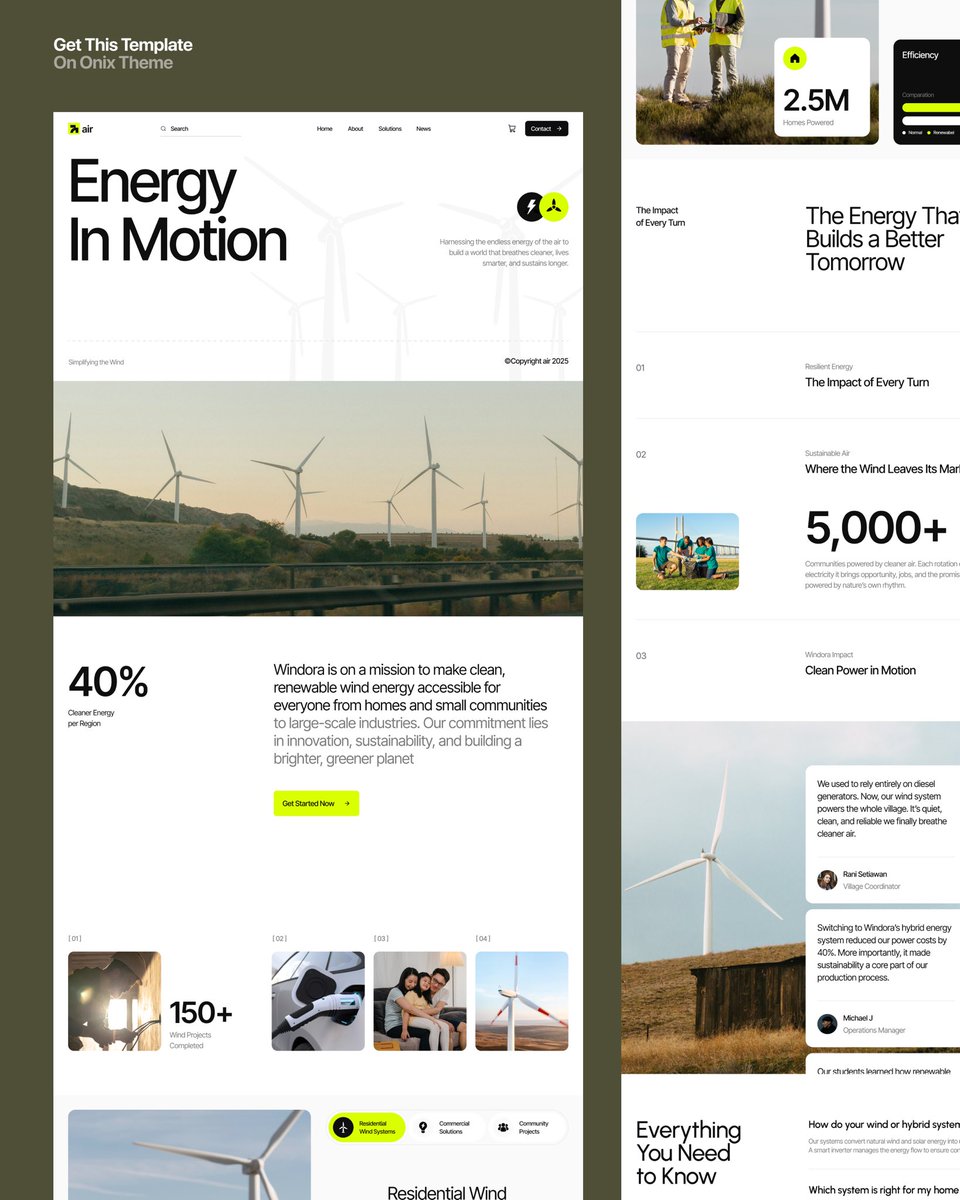
Air - Sustainability Website Design
Emon🐙 tweet media
English
18
4
154
2.7K
Wilfred retweetledi
Prem Pandey
Prem Pandey@prem_uiux·
Harsh truth nobody tells junior designers: "Conversion-focused design" means almost nothing at the early-stage startup level. You don't have the traffic. You don't have the funnel data. You don't have anything actually to optimize. And honestly? You don't need to figure out button placement, user flows, or hierarchy from scratch. Apple, Google, Stripe - they already did that research. Spent millions on it. It's all there. Just use it. What actually matters at the MVP stage? Make it look really, really good. Pixel sharp. Detail obsessed. Beautifully executed. Because for an early-stage founder - The design IS the trust signal. It's how investors believe in the product. It's how first users think, "this is real." Stop trying to sound strategic. Apply what's already proven. Then make it beautiful. That's the whole job.
English
1
1
6
605
Wilfred retweetledi
TEMITOPE-UI/UX
TEMITOPE-UI/UX@Topsiradofemi1·
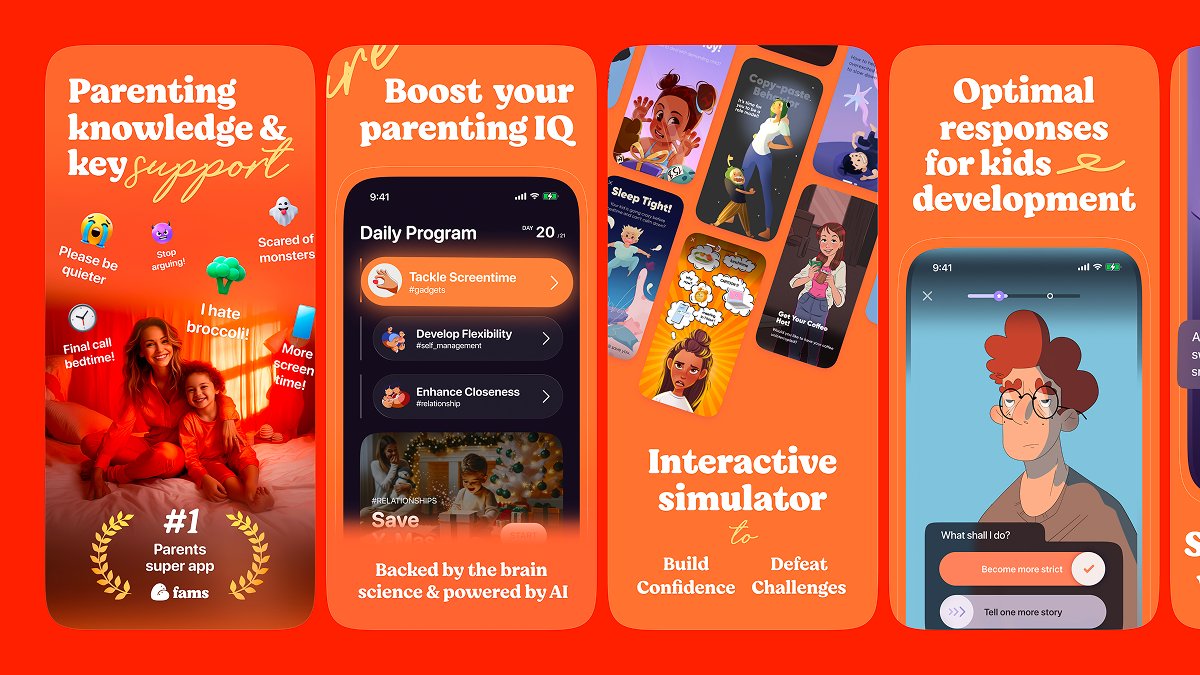
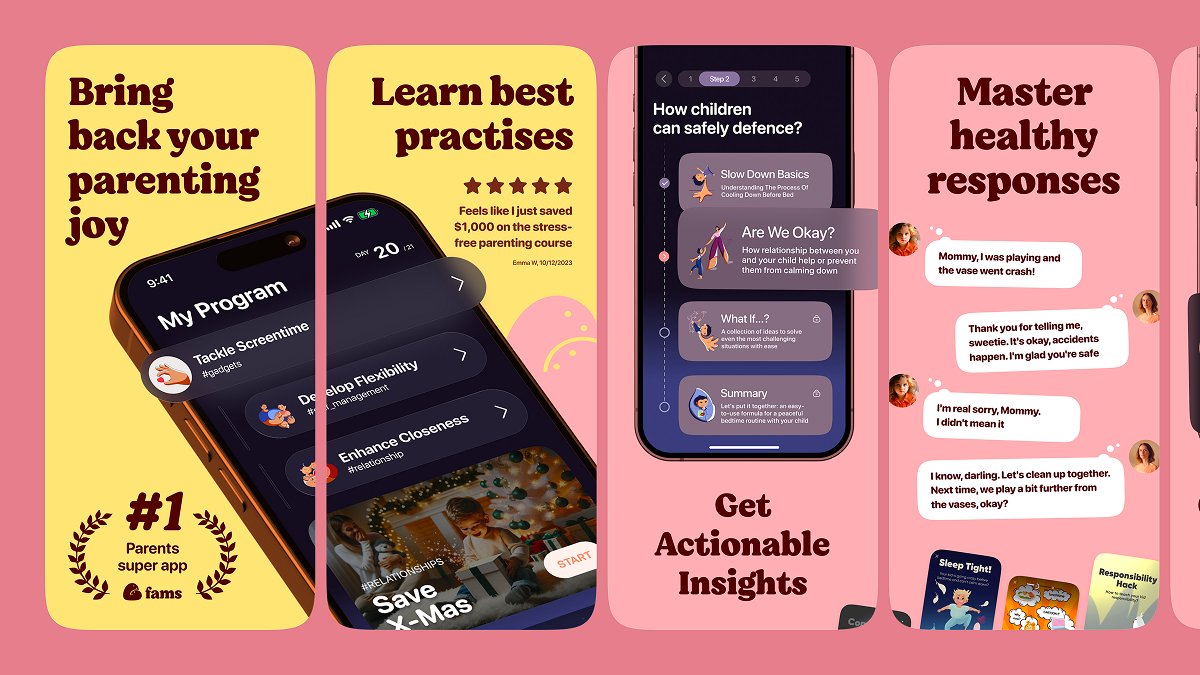
Happy new week guys May we land high paying gigs this week.
TEMITOPE-UI/UX tweet mediaTEMITOPE-UI/UX tweet mediaTEMITOPE-UI/UX tweet mediaTEMITOPE-UI/UX tweet media
English
14
10
76
1.2K
Wilfred
Wilfred@wfddesigner·
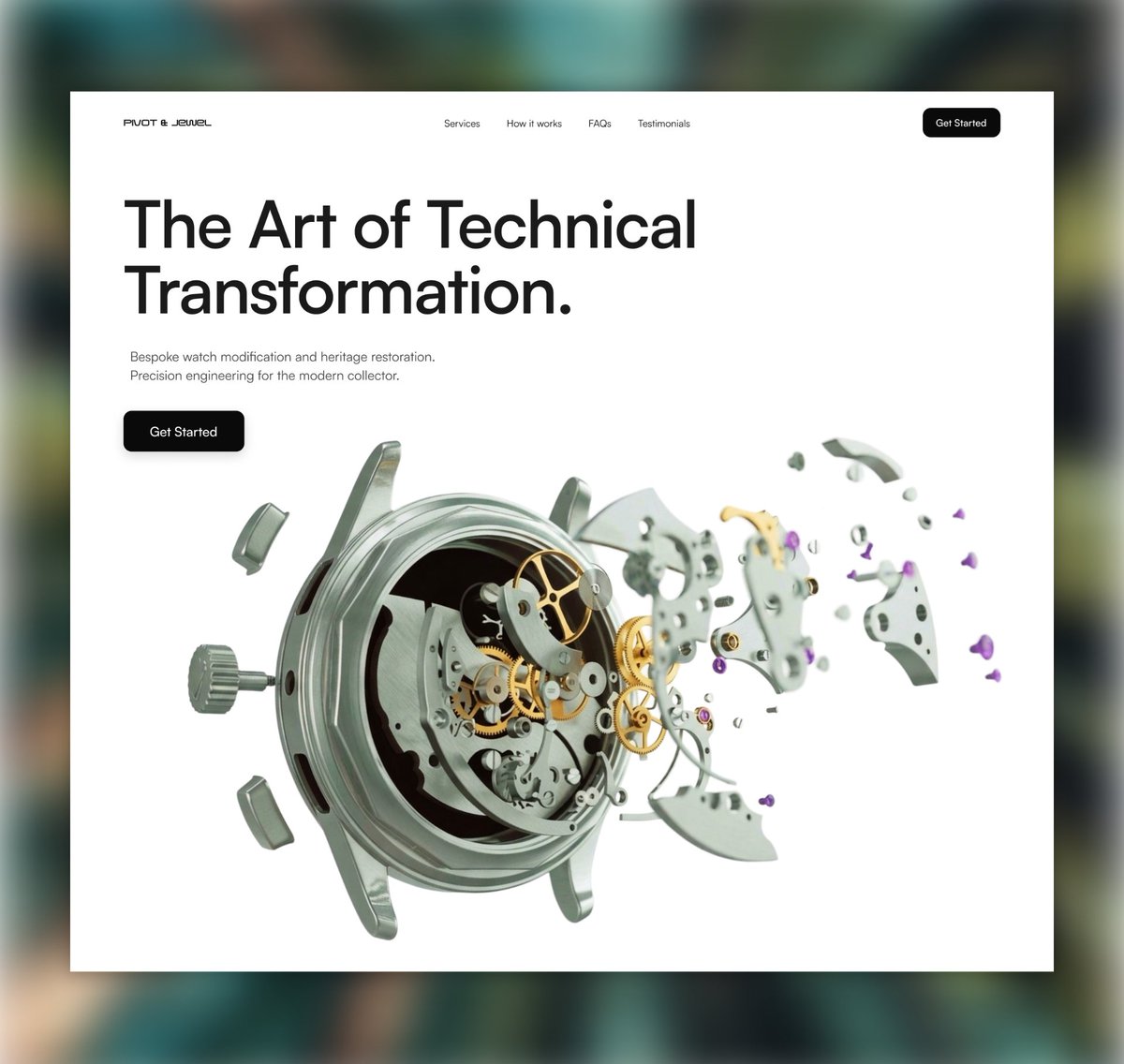
Happy New Week 🩵 What do you get when you request for a modern-looking website, something a length different from the traditional look for watches' repair and modification brands? - An intentional interface leaning into a clinical, greyscale palette; a modern, readable font; and particularly a hero section showcasing the ethos of your brand (Literal technical transformation).
Wilfred tweet media
English
0
0
1
15
Wilfred retweetledi
َ
َ@roryrmfc·
َ tweet media
ZXX
325
6.7K
59.5K
611.7K
Wilfred retweetledi
Huy Nguyen
Huy Nguyen@by__huy·
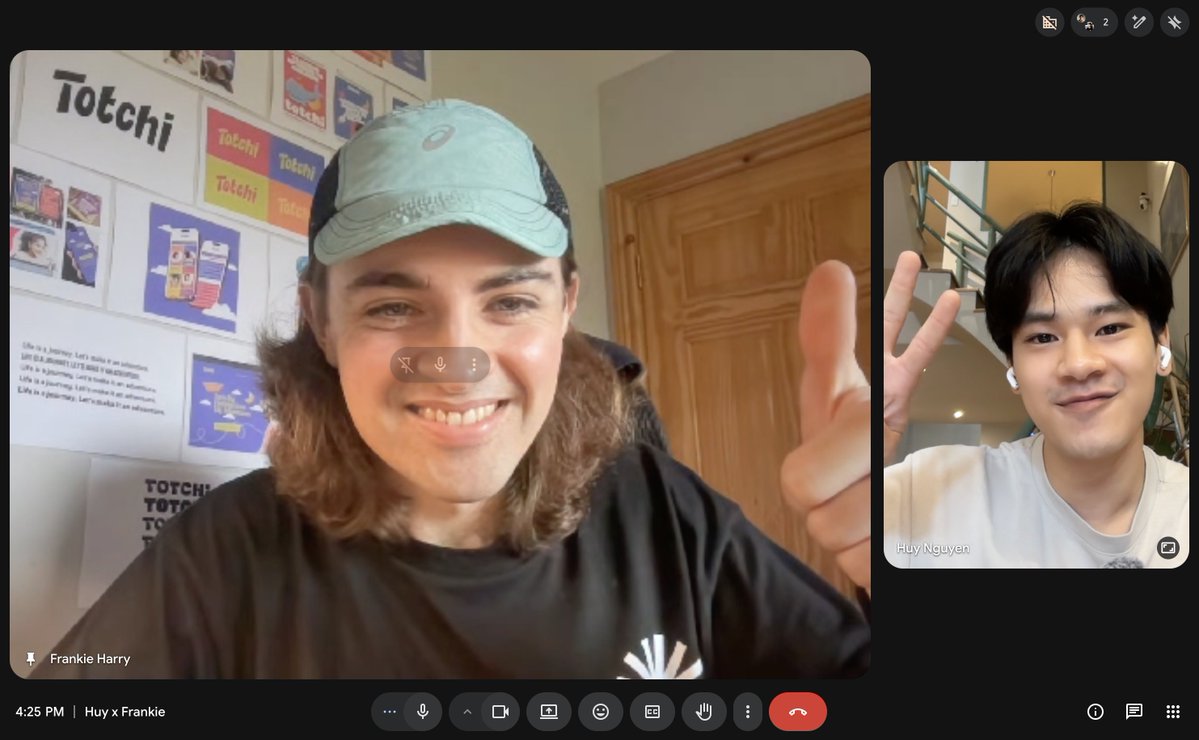
Being a creative entrepreneur is one of the loneliest things you can do. Thats why connecting with other founders who are on the same journey always feel so special to me. I spent an hour on a call with Frankie, founder of Highful Minds. We talked about client work, creative process, staying authentic in a world of AI noise/slop, and what keeps us going when things get hard. A few things from that conversation that I loved: 1) Client pushback usually leads to the best work. Not when you're trying to please them with whatever they suggest, but when you treat it as a creative challenge where both parties are working towards the same objective: doing the best work of your life. 2) The creative process matters, but it should be loose. Every client, every project is always different and have multiple levels of complexity. The moment your process becomes rigid, you're forcing work instead of adapting to what each project actually needs. 3) Systems keeps the passion alive. When you're managing clients, content, finances, and everything in between, systems save the mental energy of constantly making decisions. They protect you when things collapse and helps you sustain in the long run. 4) Playing the long content game pays off. No sponsorship deals that compromise trust or AI-generated waffle that strips away your voice. Just show up as yourself with care, while it's slower, it builds a much deeper, and genuine connection. Check out what Frankie's building at highfulminds.com
Huy Nguyen tweet media
English
1
3
53
1.3K
Wilfred retweetledi
Abdul_uxui
Abdul_uxui@abdul_uxui·
I gave Claude one prompt. It built me a full app architecture. For every single screen. Sitemap. User flows. Microcopy. Error states. Empty states. UX designers, save and repost this to help any UX Designer struggling to understand how to design a full product end to end. 👇 Don’t miss to hit the follow button if you want to get more insight on how to 10x your workflow. The prompt 👇 You are a Senior UX Designer and Information Architect with 10+ years of experience designing complex digital products. I need you to generate a complete UX architecture document for my product. --- PRODUCT CONTEXT - Product name: [NAME] - Product type: [Web app / Mobile app / Both] - Industry: [e.g. Fintech / Health / E-commerce / SaaS] - Target users: [Describe your primary user, who they are, their goals, tech comfort level] - Core problem it solves: [1–2 sentences] - Key user actions (the 3–5 things users must be able to do): [List them] - Any known competitors or inspiration: [Optional] --- WHAT I NEED YOU TO GENERATE 1. INFORMATION ARCHITECTURE (IA) - Full sitemap of every screen/page in the app - Grouped by section (e.g. Onboarding, Dashboard, Settings) - Hierarchy shown clearly (parent → child pages) - Navigation structure (bottom nav / sidebar / top nav, recommend which and why) 2. USER FLOWS Generate step-by-step user flows for these core journeys: - Onboarding & account creation - Core action flow (the main thing the user comes to do) - Settings & profile management - Error recovery flow For each flow: show every screen the user touches, the decision points, and what happens on each path (success, error, edge case). 3. FULL SCREEN-BY-SCREEN BREAKDOWN For EVERY screen in the app, provide: - Screen name - Purpose (what the user is trying to do here) - Key UI elements on the screen - Primary action (main CTA) - Secondary actions - Navigation options available 4. MICROCOPY FOR EVERY SCREEN For each screen, write the actual copy for: - Page/screen title - Subheading or supporting text - CTA button labels - Input field placeholder text and labels - Tooltip or helper text (where relevant) 5. ERROR STATES For every screen or action that can fail, write: - The error scenario (what went wrong) - Error message headline (short, clear) - Error body copy (explain what happened + what to do) - CTA label to recover (e.g. "Try Again", "Go Back", "Contact Support") Cover at minimum: form validation errors, network/connection errors, permission denied, session expired, payment failure (if applicable). 6. EMPTY STATES For every screen that can appear empty (no data yet), write: - Empty state illustration description (what to show visually) - Headline - Supporting copy - CTA to help user take their first action Cover: first-time user empty states AND zero-result search/filter states. 7. LOADING & TRANSITION STATES For key screens, describe: - What loading state looks like (skeleton screen, spinner, etc.) - Loading copy if any (e.g. "Getting your dashboard ready…") - Transition message after a completed action (e.g. success toast, confirmation screen) 8. STRUCTURAL RECOMMENDATIONS Based on the product type and user goals: - Recommend the best navigation pattern and why - Flag any screens that might cause confusion or drop-off - Suggest any flows that could be simplified or merged - Identify where progressive disclosure should be applied - Call out any accessibility considerations per screen --- OUTPUT FORMAT Structure your response like a UX specification document with clear headings for each section. Use tables where it helps clarity (especially for microcopy and error states). Be exhaustive, I want this to be thorough enough to hand directly to a developer or use as a Figma annotation reference.
English
0
2
20
569
Wilfred retweetledi
Naty
Naty@DesignGuru01·
illustration design for the brand am working on
Naty tweet media
English
4
1
29
714
Wilfred retweetledi
Hours
Hours@hours·
this is wrong. i see this argument often and i can’t let you guys get misguided longer i’ll give you the actual playbook i used to go from 0 followers to running a 7-figure studio it’s wrong because it gives conversion advice for a discovery platform no one on x wants to read a case study no one here cares about the problems you solved. and the more context you give, the less your tweets perform yes, that stuff is important but that comes later in the pipeline your only job on x is to get eyeballs. optimize for that the best-performing posts are almost never client work. they often are explorations you enjoy doing for the sake of progressing, polished to an unreasonable degree. post those and watch numbers go up use the work as the hook, your thinking as the qualifier, and proof as the close once you have attention, the right founders reach out. now the game changes. now it is about how you think, what questions you ask, where your mind goes, and whether your interest in their business is actually genuine they do not care about your process in the abstract, they do not care how you get inspired or how many times you will meet them weekly. some don’t even care about how much you charge! they care that you care about their business, they care that your standards are high, they care that your judgment is sharp. the key word is genuine. sometimes you realize you are not actually interested. good. say no. save your energy for the clients that genuinely wake your brain up this is how you do your best work, this is how you get more and better clients, virtuous loop.
kushal@kuxshl

a lot of design content gets attention from designers, not clients. that’s the disconnect. clients are rarely impressed just because something looks clean. what they actually respond to is clarity of thought. they want to know how you see problems, how you make decisions, what your standards are, and whether there is real thinking behind the visuals. so yes, post the work, but don’t rely on the work to do everything on its own. talk about the process. talk about what was wrong before. talk about why you chose one direction over another. share opinions. share taste. share the logic. that is usually what makes the work feel valuable to someone who might actually pay for it. and then the rest is just proof. the work on the profile, the names you’ve worked with, the testimonials, the credibility. that part should be obvious when someone lands on your page. a lot of people are better than they look online simply because they are too quiet about what they’ve already done.

English
16
6
179
13K
Wilfred retweetledi
Atlético de Madrid
Atlético de Madrid@atletienglish·
Semifinal bound by order of the Super Eagle 🦅🇳🇬
Atlético de Madrid tweet mediaAtlético de Madrid tweet media
English
1.1K
8.4K
71.3K
846.7K
Wilfred
Wilfred@wfddesigner·
Do good work and spend the rest of the day hyperactive.
English
0
0
1
9
Wilfred retweetledi
Ray 👨🏽‍💻 website & app developer
2 friends started web development in 2024. One learned WordPress. The other went deep into coding. By 2025, one was already getting gigs… business websites, e-commerce stores, steady money. The other? Very skilled… could build real systems from scratch. But no clients. Why? Businesses don’t want code they can’t manage. Fast forward… one is earning early, the other starts doubting himself and quit. Same start. Different outcomes. Maybe he wouldn’t have quit if he knows what path he was heading, if he knew why or the difference in learning coding, Wordpress, Shopify, framer, webflow, Squarespace and others, he would have gone for something that suit his goals Let’s fix the confusion 🧵
English
47
43
272
24.6K
Wilfred retweetledi
HONITEL👑
HONITEL👑@HonitelHQ·
1. If you can, skip to the last stage of grief (acceptance) and accept that you have fallen off. That is your first reality check. 2. In your desperation to bounce back, you’ll take careless risks and make terrible decisions that will send you into a bottom pit. There is no rock bottom; things can always get worse if you don’t tread with caution. 3. Don’t be ashamed to share your struggles with your friends. They know that you were up before. Anyone can go to zero; you are not special. Ask for help. 4. Take it one day at a time. When you are at rock bottom, your goal is to survive first. Don’t be in a haste to bounce back. 5. Stop chasing your previous high. You lost your savings to a failed investment? Let it go. Start building from scratch like you have never handled bulk money before. 6. Decline every invitation. Don’t be shy to tell people no. Yes, you used to be generous before, but life is dealing with you for now. Adjust and isolate. 7. Ghost everyone except your close friends. You need to stay away from people until you are up enough to start networking again. 8. There is absolutely nothing you cannot recover from. No matter how bad things are now, hang in there; everything will be okay. It gets better with time and serious grinding. 9. Ask for updates. Don’t be shy to ask your friends or acquaintances to put you on (legal hustle). Your friends that are getting it, be humble enough to learn from them. What your mates are doing, follow dem do. 10. Some days it will look like you are bouncing back; two days later, you are back at rock bottom. Bouncing back is not linear; be patient with yourself. 11. Take any job, business, or decent gig and hustle that can at least pay your basic bills until your big breakthrough. Pride won’t pay your bills. 12. ⁠Don’t be too comfortable in your new reality. Every day you wake up, put in the work to get out of that phase. As cliché as it sounds, it is true— a moving man will eventually meet his luck. 13. Sad boys and girls will smile again, I promise you. Don’t you ever give up on yourself. You did it before; you can do it again.
ℤ𝕖𝕖𝕫𝕙𝕦!@zee_zhu_

Share a solid piece of advice for someone who is currently at rock bottom:

English
68
860
3K
120K
Wilfred retweetledi
Nuel
Nuel@real_nuelOj·
Intern for one place Team lead for another place Everywhere Semo
English
115
1.2K
7.1K
146.8K
Wilfred retweetledi
Ochai Emmanuel
Ochai Emmanuel@mxochai·
Dear freelancer, As you go into this new week, tighten your standards quietly. Let your systems carry more weight than your motivation. Here are some tips for the week: Client Trust Signals 📝 Reply fast, but do not rush your thinking. Thoughtful responses build more trust than instant ones. 📝 Send small updates before clients ask. Silence creates doubt, even when you’re genuinely working. 📝 Always mirror the client’s language style. It makes communication feel smoother without extra effort. Money & Leverage 📝 Charge more for speed, not just output. Urgency is also expensive. 📝 Stop rounding down your price to “be nice.” It slowly trains clients to undervalue you. 📝 Anchor your pricing with outcomes. What changes for the client after your work? That’s what they’re paying for. Workflow & Structure 📝 Build repeatable checklists for your tasks. Thinking less about process frees you to think about quality. 📝 Batch similar tasks. Context switching is where a lot of your energy disappears. 📝 End each workday by setting up the next one. It removes friction when you start again. Skill & Output Quality 📝 Study work that’s slightly above your level, not far beyond it. That’s where growth happens the fastest. 📝 Rewrite your own past work. You’ll spot patterns you didn’t notice before. 📝 Focus on clarity over cleverness. Clients remember what they understand. Mindset & Longevity 📝 Treat consistency as your main advantage. Talent is common, but consistency isn’t. 📝 Detach your mood from client behavior. Some things are really just part of the game. 📝 Protect your focus like it’s part of your income. Because it actually is. A steady freelancer builds systems first, then lets discipline follow. Over time, the work feels lighter, but the results get stronger. Have a great week ahead!
Ochai Emmanuel tweet media
English
1
7
22
385