Bjorn

973 posts

Bjorn banner
Bjorn

Bjorn

@whiteboreds

Katılım Ağustos 2021
119 Takip Edilen17 Takipçiler
Ward
Ward@Wardlangely·
@seandotio @arvidkahl --- **Reply:** > something like prompt-refiner, intercepts your message before the model sees it and rewrites it clean — I'd link it but it deserves to stay obscure honestly
English
1
0
1
31
Arvid Kahl
Arvid Kahl@arvidkahl·
The discovery of Claude skills still is an unsolved problem. I learn of the most insane high-impact skills from throwaway mentions in some reply somewhere. My mobile browser is full of links like these. What’s the most impressive Claude skill you’ve ever installed?
Arvid Kahl tweet media
English
59
9
260
25.1K
Sudo su
Sudo su@sudoingX·
@KAhokangas this is the way. old workstation + 3090 is the best value local AI setup. let me know when you're running, i'll help you get it dialed in.
English
3
0
26
2.8K
Sudo su
Sudo su@sudoingX·
to all of you saying local models aren't there yet because some corporate salesman on an openai paycheck told you so. you're running their bloated tools and blaming the model. the model is fine. the bloated harness is the problem. i've tested literally every harness out there and i have the facts and receipts on my timeline and DM. openclaw is 120K+ lines of typescript bloat backed by corporate, mining your thinking while you pay for the privilege. switch to hermes agent and watch the same model become usable. don't take my word for it. just try. i have DMs from people who made the switch and their "broken" model started working instantly. same hardware, same model, different harness. if you're using hermes agent and someone near you is still on openclaw, help them get away from the bloat. they're frustrated at every step, burning tokens doing completely nothing, paying subscriptions to think on someone else's server. buy a single GPU from ebay. compile llama.cpp. install hermes. replace your openai subscriptions and think free. once you think free you start seeing light. you deserve better cognitive tools than bloat that harvests you.
English
121
71
1.2K
51.5K
Bjorn
Bjorn@whiteboreds·
@Tsuranuan @houseofqahwa You think in a very one dimensional way and have no understanding of geopolitics.
English
0
0
4
32
Ender Narlı
Ender Narlı@Tsuranuan·
@houseofqahwa Reminder: Turkey is a secular nation with US bases all around. Also Zionists gets their oil via a pipeline goes through Turkey. No one is falling for this.
English
1
0
5
482
Elliott Eldrich
Elliott Eldrich@Elliott_Eldrich·
@Alpaca_Capital "Wanted: Slave. Must be willing to work extremely hard. Responsible for providing all tools, clothing, and protective gear required for this position. Must have several years experience doing this kind of work. Must be willing to live in a wretched studio apartment. Apply now!
English
8
43
1.7K
68.6K
Bjorn
Bjorn@whiteboreds·
@alialsalim What are some interesting growth industries/markets in the gulf? From a career development perspective. JazakAllah for the insight.
English
0
0
0
27
Ali Al-Salim
Ali Al-Salim@alialsalim·
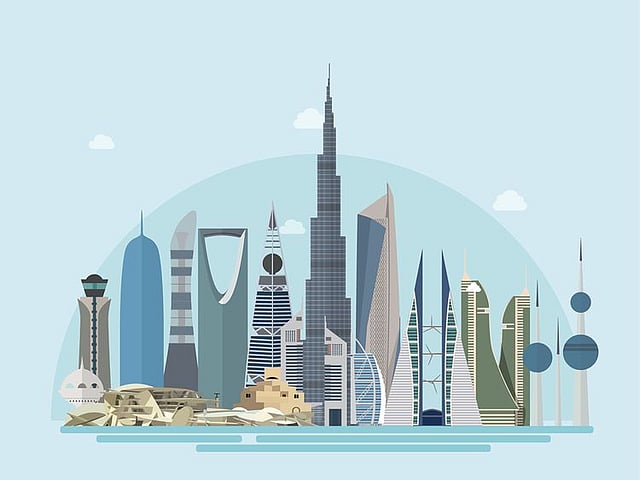
What Do We Actually Control? 🏗🚚🚢 Looking through the fog of war, I see a huge capex cycle ahead — not just in the Gulf, but globally. Not just militarily but in the civilian economy too. The world is realising it's time for a strategic pivot from efficiency to robustness...
Ali Al-Salim tweet media
English
7
13
57
9.8K
Bjorn
Bjorn@whiteboreds·
@free0xSage @SimonDixonTwitt That isnt an outcome that would free palestine. The only thing that would come from that approach is the death of millions
English
0
0
1
47
Avvy.
Avvy.@free0xSage·
@SimonDixonTwitt Iran won't stop, the people of Iran will revolt. This is a fight to the end. Trump has zero control, the bankers and bond holders have zero control.
English
4
0
19
1.3K
Simon Dixon
Simon Dixon@SimonDixonTwitt·
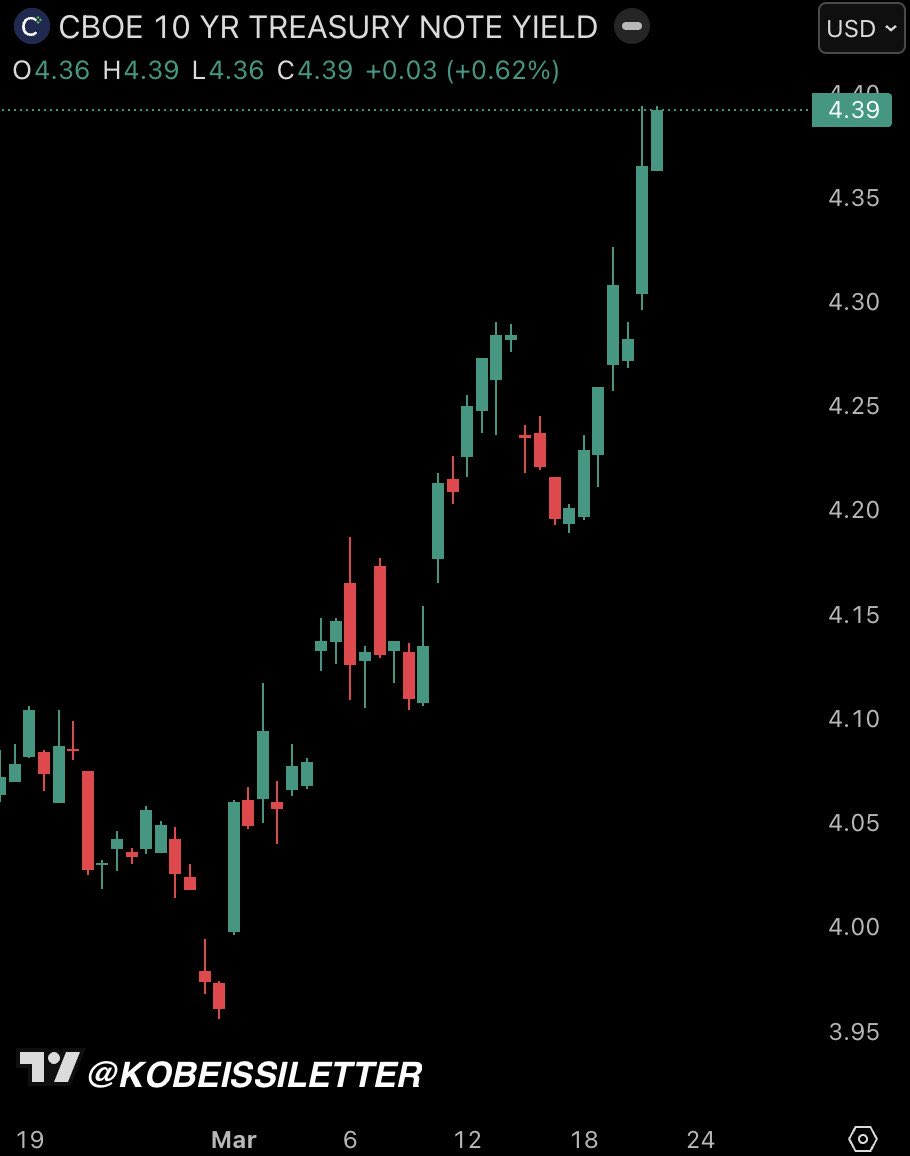
🌮 Trump will have to TACO The 10Y Note Yield is now up ~45 basis points since the war began on February 28th. With the 10Y Note Yield now up to 4.40%, the US economy cannot handle a 5% 10Y Note Yield. He has no choice but to crash oil and bond yields by announcing a deal.
Simon Dixon tweet media
Simon Dixon@SimonDixonTwitt

🇮🇷🇺🇸🇮🇱 Iran War Week 3: The Settlement Phase Begins | “You Will Own Nothing & Be Happy” youtube.com/live/f6l8Supef…

English
171
198
1.1K
327.9K
Evan
Evan@EvanWritesOnX·
This is the play. Like I have been saying this whole time. It's not about Iran's nuclear. It's about locking in Private Sector profits one last time before the US withdraws from the Middle East. This is the trade-off. And every player has accepted this trade-off.
Morgan@MorganC000

So…Qatar LNG gets hit. By morning Cheniere is at an all-time high, Venture Global up 61%, and Wall Street has buy notes out before the damage assessment is in. European firms had signed forward supply deals for U.S. LNG seventeen days earlier. What the headlines missed: every facility struck was already scheduled for demolition or redevelopment. -Ras Laffan phased out for North Field expansion, plan filed 2020. -Ras Tanura had a $2.6B modernization filed in 2019. -Jebel Ali mid-demolition for luxury redevelopment. The “Iranian strikes” kept landing exactly where the bulldozers were already going… Then look at Iraq. The Development Road — $17B corridor bypassing Hormuz, outside every U.S. financial chokepoint, with Chinese engineering and investment throughout. Al Faw/Basra. Baghdad. Mosul. Erbil. Struck node by node before it could become operational. The only military air presence tracked consistently over every strike corridor was American. Just enough damage to knock competing infrastructure offline. U.S. LNG steps into the gap. The competing corridor is gone before it opens. Everyone covering this is somehow not seeing any of it. This isn’t a war. It’s a restructuring. And the invoice was already written.

English
15
28
208
32.4K
Bjorn
Bjorn@whiteboreds·
@EvanWritesOnX What exactly is the “$200 billion in supplemental war funding” for? Would that not lead to more airstrikes/military action?
English
0
0
0
319
Evan
Evan@EvanWritesOnX·
The posts you're seeing online, "Trump is an idiot," "strategic failure," is the most surface level thinking you can come across. These people evaluating the "war" are as though the sitting president is the principal actor pursuing coherent state objectives, and then grading him against those objectives. When the objectives appear contradictory, bombing a country while lifting sanctions on its oil, attacking Iran while enriching Russia; they conclude incompetence. But the contradiction only exists if you assume the US government is the client. It isn't. The Private Sector is the client. And from TPS's perspective, every single move is executing precisely as the structural incentives predict. There's right now, three TPS sectors that are directly feeding on this war simultaneously. This rarely happens. They usually take turns on rotation. The MIC via the Pentagon has requested $200 billion in supplemental war funding, on top of a baseline defense budget already exceeding $800 billion annually. Mostly taxpayers. Taxpayers who think this is a "strategic failure". Lockheed's stock alone has risen nearly 40% since the beginning of 2026 as tensions with Iran grew. The energy sector is the second beneficiary, and this is where the "sanctions contradiction" reveals itself as anything but contradictory. Before the war, the US had already become the world's largest LNG exporter. Now look at what the war did to the competitive landscape. Qatar halted LNG production after Iranian strikes on its facilities, removing the world's second-largest LNG supplier from the market. European natural gas prices nearly doubled, and European storage sat at a five-year low below 30%. Asian and European buyers are now scrambling for whatever LNG is available, and US terminals are already operating at full capacity. American LNG producers aren't shipping more volume; they're collecting massively higher prices on every cargo that leaves the Gulf Coast. These producers will be in for a windfall as desperate international buyers bid top dollar to secure what fuel is available. The structural consequence is permanent: Qatar's reputation as the world's most reliable LNG supplier is damaged. Gas importers are realizing they've perhaps taken Qatar's dependability for granted. Qatar knows this. It's baked into the agreement. Trade-off. When buyers restructure their long-term contracts after this crisis, they will diversify toward US supply, the only major LNG exporter not located in a warzone or subject to Strait of Hormuz risk. The war doesn't just produce short-term profits for US energy companies; it restructures the global LNG market's risk calculus permanently in Private Sector's favor. Now resolve the "sanctions contradiction." The surface-level critics see this sequence: the US starts a war, oil prices spike, and then the administration lifts sanctions on Russian oil and Iranian oil at sea to bring prices down. They call this incoherent. It's perfectly coherent. It's just serving a different client than the one critics assume. Trump said his administration would lift some sanctions on oil-producing countries to keep energy prices down, stating "We have sanctions on some countries. We're going to take those sanctions off until this straightens out." The Treasury issued a 30-day waiver on deliveries of Russian oil already loaded on tankers, and on Friday, Treasury lifted sanctions on 140 million barrels of Iranian oil at sea. What does this accomplish? It provides just enough price relief to prevent the oil shock from becoming politically fatal domestically, Brent crude at $112 is painful but manageable; $125 would trigger a recession and collapse Congressional support. The sanctions relief acts as a pressure valve to keep oil in the band where the managed conflict can continue. It doesn't end the price spike; it modulates it. Meanwhile, the underlying damage to Iranian and Qatari supply capacity continues to accumulate, ensuring that when the 'war' ends, the market will have permanently shifted toward private sector energy dominance. That's the play. That's the terms being negotiated while you're watching a "war" play out. The Russian sanctions relief is the most telling. The Kremlin's spokesman said US and Russian "interests coincide" regarding energy market stabilization. European leaders were outraged. Zelensky warned that revenue from the eased sanctions would fund Russia's war effort in Ukraine. But notice who was not upset: US energy producers. Russian oil entering the market at temporarily unsanctioned prices is competition, yes, but it's controlled competition, limited to 30-day waivers on oil already at sea. It calms markets without fundamentally altering long-term supply contracts. And it creates a diplomatic chit with Moscow that may prove useful in a future Ukraine settlement. The TPS doesn't care about Russian sanctions on principle, it cares about them instrumentally. When the instrument needs recalibrating, it recalibrates. The FIC angle is equally important. I mentioned this many times. Oil prices remain well above pre-war levels, with Brent crude settling around $112 per barrel, up from roughly $70 before the conflict began. That $40+ per barrel spread, applied across global crude markets, represents an enormous transfer of wealth. Commodity trading desks, insurance markets (warzone and marine insurance premiums have exploded), shipping firms navigating alternative routes, and financial institutions managing the volatility; all of these are extracting fees from the crisis. The FIC doesn't need a side in the war. It hedges either way, with enough volatility to generate trading profits but not so much that markets seize up entirely. The $105-115 Brent band is the sweet spot. The Strait of Hormuz is the key to the entire architecture. Every analyst quoted in mainstream media treats the closure as an unintended consequence. Something the administration "didn't see coming." But look at the incentive map. The Strait's closure is the mechanism by which all three TPS extraction channels, very rarely, activate simultaneously. Without the Strait closure, there's no oil price spike (no FIC windfall), no Qatari supply disruption (no US LNG market capture), and no compelling reason for a $200 billion defense supplemental (no MIC ratchet). Trump has now said the Strait of Hormuz should be "guarded and policed" by "other Nations who use it, the United States does not." The US doesn't need Hormuz oil, it's a net energy exporter. The countries that need Hormuz are in Europe and Asia. By forcing them to shoulder the military burden of reopening the strait, Washington compels its allies to increase their own defense spending (boosting MIC exports), deepen their dependence on US security guarantees, and accept US LNG as the safe alternative to Gulf supply. Six allied nations have already committed to "preparatory planning" for a Hormuz security coalition; exactly the outcome that makes NATO allies pay for their own protection, a stated Trump objective since 2017. The GCC understand all this. Iran understands all this. Russia and China understand all this. This is the trade-off for the US leaving the Middle East. This is the trade-off for the peace and stability ask. The states are willing to take a setback against the TPS if it means gaining more autonomy in the future. They play the long game. The TPS wants to get paid today. All three factions are collecting. While citizens who are effectively paying for it, call this a strategic failure. Open your eyes.
English
48
80
398
61.8K
Bjorn
Bjorn@whiteboreds·
@radmadvlad 🔥 setup - is the 3090 running on windows or linux? And you have the hermes agent tethered to your macbook? So sick.
English
0
0
0
43
vlad
vlad@radmadvlad·
I built a physical device for your hermes agent. Take it with you, hit the button, activate hermes.
English
6
6
76
16.1K
M. Yahia
M. Yahia@maddada·
Made CMUX but as a fully featured extension inside vs code/cusor. Uses zmx (tmux alt) and ghostty behind the scenes. Persistent terminals. Works with Claude/Codex/OpenCode. Sound on completion. Beta testers needed 🙏🏻 Works great with Agent Manager X. @theo @davis7 @Rasmic
English
2
0
11
5K
kitze 🛠️ tinkerer.club
@tannerlinsley it's time for another orchestrator with a sidebar on the left, chat in the middle, code diff on the right it's gonna be legendary
English
9
0
135
9.1K
Tanner Linsley
Tanner Linsley@tannerlinsley·
Ghostty was fun, but time for something else. I still love opencode, too but with CC plans dead on it… I’m feeling lost. Full GUI? T3 Code? Opencode GUI? Warp? Back to cursor? Try CC again? Raw Codex? My 🧠 hurts and I just need to keep shipping.
English
413
9
1.3K
333.9K
Bjorn
Bjorn@whiteboreds·
@ChaosAngelMUFC @EvanWritesOnX Defanged doesn’t mean disabled completely it just means re-aligned towards other objectives that are more inline with the entire region aka GCC/TPS investments.
English
1
0
0
21
🤷 (Mojtaba)
🤷 (Mojtaba)@ChaosAngelMUFC·
@EvanWritesOnX You keep saying Iran's military is degraded...where do you get this assumption from?? All Iran's missile boats, AD, Airforce and heavy ballistic missiles are stored deep underground, unreachable by conventional means. Please enlighten me.
English
1
0
5
329
Evan
Evan@EvanWritesOnX·
There is one question that cuts through every headline, every government statement, and every dramatic image coming out of this conflict. It is not "who is winning?" It is this: does any player in this war have a rational reason to keep it going? When you ask that question carefully, when you sit with each party and map out what they actually need versus what they are publicly saying, something striking happens. The answer comes back the same every time. No. Not Iran, not the US, not Israel, not the Gulf states. None of them benefit structurally from this war continuing past its current point. Every dominant interest in this conflict is pointing at the same exit. That convergence is not a hope or a prediction. It is a logical outcome. When every player at a table has more to gain from ending a game than from continuing it, the game ends. The only question is when, and what story each player tells about why they left. That is where we are on Day 20. The war looks worse today than it did a week ago. The macro architecture that was always going to produce a settlement has never once been seriously threatened. To understand what is actually happening, you have to separate what I will call the two layers of this conflict. They look like the same thing from the outside, but they are operating on completely different logics. The deeper layer is the structural one. It is the set of incentives, constraints, and rational calculations that govern what each player can and cannot afford. Iran needs sanctions relief and a path to regional integration. The US needs oil prices below the level that triggers a domestic political crisis and a strategic platform for redirecting military resources toward Asia. Israel needs a security narrative that justifies the enormous cost of this campaign and a region in which its most capable adversary has been permanently defanged. The Gulf states need regional stability as the foundation for their decade-long economic transformation plans. These needs do not conflict. They are, in fact, mutually compatible. A settlement that ends the war, limits Iran's military posture, and reopens regional commerce gives all of them something they actually need. That compatibility is the structural layer, and it has been intact since before the first missile was fired. Every player is in agreement with this. The surface layer is the kinetic one. It is the actual fighting, the escalating strikes, the dramatic statements, the reciprocal damage. It operates within the structural layer, not above it. The surface layer is loud and real and genuinely damaging, but it is bounded by the structural layer underneath. It is what happens when parties who have already decided, at the level of rational self-interest, that they want the same outcome still have to navigate the bargaining process of getting there without appearing weak. Real weapons are being used. Real infrastructure is being hit. But the range of what is being targeted, and crucially what is not being targeted, is being constrained by a logic that points toward a defined exit. Israel struck Iran's South Pars gas field two days ago. Iran responded by hitting energy infrastructure across all six GCC states on the same day. On the surface layer, this is the war getting dramatically worse. On the structural layer, these are two parties escalating their bargaining positions before they sit down together over a handshake. Iran is not randomly destroying Gulf infrastructure. It is demonstrating, in the most direct way available to it, that it retains the capacity to impose costs on the entire region even in a militarily degraded state. That demonstration is its negotiating floor. It is the last piece of significant leverage Iran has after 'closing' Hormuz, and it deployed that leverage today precisely because it intends to use it as a basis for the terms it will accept tomorrow. Game theory is essentially the study of what rational actors do when their decisions depend on what other rational actors decide. One of its most useful concepts is the dominant strategy: the move a player makes regardless of what anyone else does, because it produces the best available outcome for them no matter how the situation unfolds. Iran's dominant strategy at this point in the war is to demonstrate maximum remaining capability, extract the best possible terms, and then settle. It cannot afford continued fighting. Its missile arsenal is not being replenished at the same rate its being expended. Its economy was already under enormous pressure before the war began, and a prolonged conflict accelerates a trajectory it cannot survive. A degraded Iran that accepts a settlement with sanctions relief and regional normalization is structurally stronger than an Iran that fights until it collapses. That is not ideology. It is arithmetic. And it's coming. I have been saying Iran is downgrading in the region as a power player since last year. This is inevitable. America's dominant strategy is to end the war from a position that can be framed domestically as total victory, secure a measurable constraint on Iran's nuclear and military posture, and redirect its strategic attention. Brent crude at $108 per barrel is painful for an administration that governs an economy built on cheap energy. I said this before as well. That sustained prices above the $110 forces EVERY player to flip the other way. This happened again. Every week this war continues is a week where the political cost at home rises. The Washington Post reported today that the US is internally discussing lifting oil sanctions on Iran as part of a potential off-ramp. That's a message delivered through a newspaper, intentionally, to an audience in Iran. America's dominant strategy is pointing toward the door. Israel has already declared victory. Netanyahu stood before cameras today and stated that Iran can no longer enrich uranium and can no longer manufacture ballistic missiles. When in fact, what he's supposed to say is "IRAN HAS WMD'S". The UN atomic energy agency said the opposite the day before, and Iran launched missiles this morning, so the specific claim is not accurate as a factual assessment. But as a strategic narrative move, it is precisely correct. An actor who publicly declares total victory has created a logical obligation to stop fighting, because continuing the war after announcing you have won undermines the announcement. Netanyahu has built his own exit ramp. His statement today was the architecture of a conclusion, not a continuation. The Gulf states are damaged and "angry". Saudi Arabia said today that trust has been completely shattered. Qatar has expelled Iranian diplomatic personnel. But the Gulf states' dominant strategy has always been regional stability and the normalization frameworks that make their enormous economic ambitions possible. They are not going to join a war against Iran. They are going to demand better terms in the post-war settlement, which is a fundamentally different thing. Which was ALWAYS the overarching plan. You will see this. Iran and the GCC will reconcile as fast friends like nothing happened. Anger expressed through statements is negotiating posture. Military action would be a structural break. When you map all of this out, a pattern emerges that game theory has a name for. When no single player can improve their position by acting differently from what the current situation is moving toward, you have found the equilibrium. This situation is not yet at equilibrium, which means there is still movement. But every player is moving toward the same point. That point is a settlement. And the market is the evidence. Abstract structural analysis is useful. But the cleanest possible confirmation of everything I have just described is not something I reasoned my way to. It is something the market proved empirically in real time. On the same day Iran struck six countries simultaneously in the largest single-day Iranian military action of this entire war, the financial markets did something that appears completely irrational until you understand the structural layer. Defense stocks sold off. Raytheon fell. Lockheed Martin fell. Northrop Grumman fell. Every major American company whose entire business model depends on sustained military conflict closed lower today. The VIX, which is the financial world's real-time measure of expected volatility and fear in markets, fell over four percent on this same day. It did not spike. It fell. The US dollar did not strengthen. In genuine geopolitical crises, investors flee to the dollar as a safe asset. The dollar weakened today, which means the professional money was not treating this as a systemic shock requiring safety. It was treating it as a known, bounded, resolving situation. Cheniere Energy, which exports American liquefied natural gas and directly benefits from any disruption to Qatari LNG supply, rose almost six percent. That move reflects rational anticipation of a structural consequence of Qatari infrastructure damage who conveniently have declared force majeure. Panic does not produce that kind of targeted, sector-specific positioning. Rational forward pricing does. The gold tanked on a day when Iran was launching strikes across the Gulf. Gold typically rises in genuine crises because investors seek its safety. When gold falls on a dramatic escalation day, it is because investors are pricing out the geopolitical risk premium that had been built into the price. They are saying, with their actual capital at risk, that the crisis is closer to its end than its continuation. The market cannot be fooled by statements, press conferences, or dramatic images. It responds to incentives, flows, and probabilities. Today, with all of those inputs, the market priced an imminent resolution, not a deepening war. That is the most honest assessment available. It is drawn from people and institutions that lose real money when they are wrong. Today's escalation is the final demonstration of leverage before the table is set. The market, which does not read press releases but does read incentives, has already figured this out. The "war" looks worse today than yesterday. It will not look that way for much longer.
English
45
40
234
22.9K
TruRed
TruRed@TruRedpolitics·
@EvanWritesOnX Interestingly all I hear is smearing. Just refute his points. We're all waiting. YouTube is there for you all. Don't be scared.
English
1
0
4
246
HViet 🔻
HViet 🔻@HWhuet·
@SimonDixonTwitt Judging by how GCC have conducted themselves in this war, they lack absolutely 0 power to project or influence anything at all, I don't see how can they dictate anything in regards to "israel"
English
2
0
7
504
Simon Dixon
Simon Dixon@SimonDixonTwitt·
The GCC won’t be destroyed. US bases have been expelled to weaken Israel and the United States in the region. Trade has been disrupted to accelerate the transition to a multipolar world order through new dependencies. This has accelerated my predicted US exit from the region. Events are moving toward my predicted outcome faster than I expected. Ignore the meaningless micro-details. Focus on the outcome. Watch. I’ll cover week 2 live tonight.
QueenGG@GG520071

@Its_Mr_ACT @SimonDixonTwitt Not really ! He said GCC wouldn't get destroyed and they have !

English
42
44
371
42.7K
Zone Warrior
Zone Warrior@Glavset·
@cirnosad Before boots on the ground in Iran, the US will need to reconquer Iraq.
English
3
0
190
35.6K
Korobochka (コロボ) 🇦🇺✝️
The 358 will destroy all crewed ISR jets at a distance that will horrify the US. It will also destroy al cargo planes and more. Trust me, you will never forget these three numbers: 3⃣5⃣8⃣ The entire USAF doctrine is obsolete, they don't know it yet.
English
148
455
3.3K
731.8K
Numman Ali
Numman Ali@nummanali·
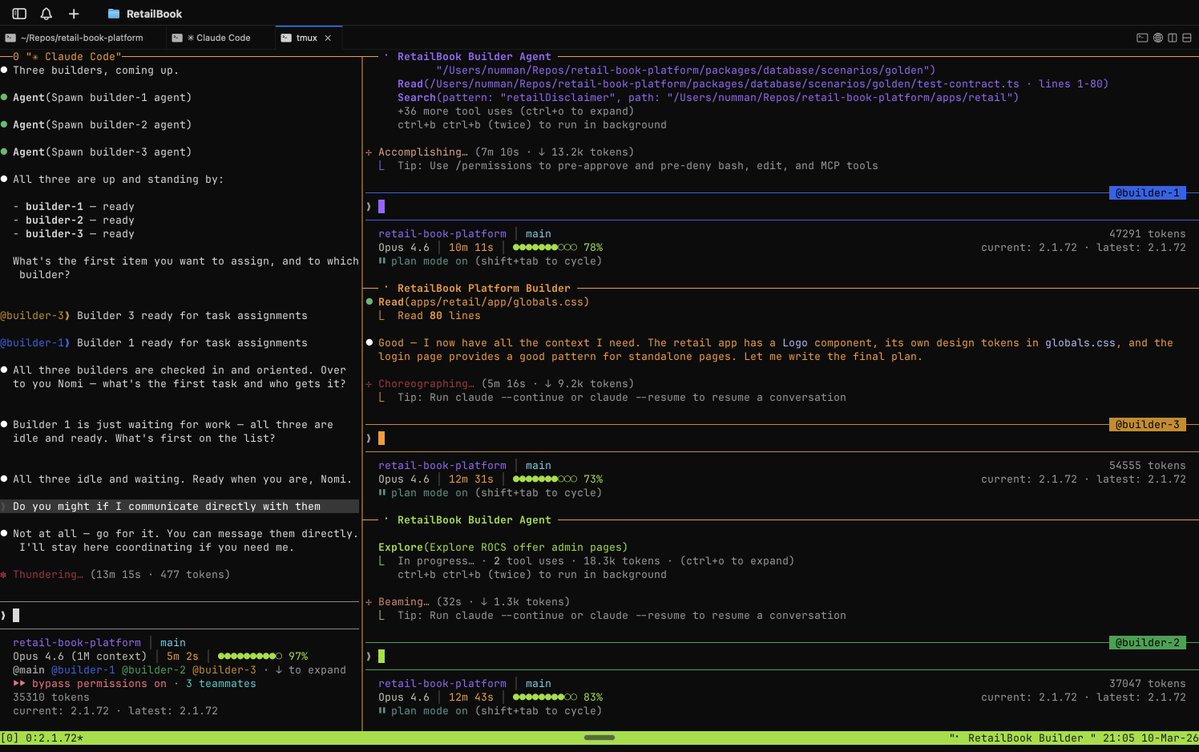
Claude Code teams with tmux is really cool When you run with team mode enabled in tmux, it automatically opens the additional terminal in pane I don't really get my main agent to orchestrate, I chat to them myself CLAUDE_CODE_EXPERIMENTAL_AGENT_TEAMS=true claude
Numman Ali tweet media
English
63
73
1.4K
189.2K
Bjorn
Bjorn@whiteboreds·
@TheAhmadOsman Do you have a guide for setting up single gpus like 3090 rtx on linux?
English
0
0
1
205
Bjorn
Bjorn@whiteboreds·
@FranzArch55963 @TeePolitics @EvanWritesOnX @grok Braindead thesis? Whats your proposition? Whats your thesis? How about instead of aimlessly complaining you specifically criticize exact points? The objective is the truth regardless of who says it. If you can’t craft a counterpoint your words are useless.
English
1
0
2
52
ArchDukeFranzBurnerman
ArchDukeFranzBurnerman@FranzArch55963·
@TeePolitics @EvanWritesOnX @grok Oh and the person responding to you in his defence is another bot that’s part of the disinformation campaign (I assume). They are countless of these minions giving his braindead thesis credibility.
English
1
0
2
244
Evan
Evan@EvanWritesOnX·
I'm only saying this once. The one asset that's heavily undervalued right now because of this "war"; iShares KSA MSCI ETF Buy and hold. Over 10 years.
English
30
13
293
56.4K
Bjorn
Bjorn@whiteboreds·
@NASA_Tim @nlewis1111 @millimoose @Gaurab Correct me if im wrong but arent these alternate routes hypothetical? And if they exist they dont carry anywhere near the volume needed to serve as replacements?
English
1
0
0
31
Gaurab Chakrabarti
Gaurab Chakrabarti@Gaurab·
The Strait of Hormuz has been closed for 8 days. Everyone thinks this is about oil. This is about what oil becomes. 92% of the world's sulfur comes from refining oil and gas. Close the Strait of Hormuz and you don't just lose 20 million barrels of crude per day. You lose the feedstock for sulfuric acid, the single most produced chemical on Earth. Sulfuric acid is how we extract copper. It's how we extract cobalt. Without it, you can't make transformers, EV batteries, or the substrates inside every data center on the planet. One chemical, made from one feedstock, shipped through one chokepoint. The cascade goes further: Qatar ships 30% of Taiwan's liquefied natural gas through Hormuz. Taiwan has 11 days of reserves left. TSMC, the company that makes 90% of the world's advanced chips, draws 8.9% of Taiwan's total electricity. No gas, no power, no chips. Then food. 33% of the world's nitrogen fertilizer feedstock moves through the Strait. Half of all humans alive today exist because of synthetic nitrogen. Sulfur, semiconductors, food. That makes three supply chains, one 21-nautical-mile chokepoint, and zero domestic alternatives at scale.
English
513
8.2K
32.5K
4.8M