

Mahesh
199 posts

Mahesh
@whymahesh
Full-stack dev. Shipping real projects. DSA is bullying me. Still not outsourcing my code to bots
Mysore, India Katılım Mayıs 2023
365 Takip Edilen195 Takipçiler
@shivambhadani_/system-design-for-beginners-everything-you-need-in-one-article-c74eb702540b" target="_blank" rel="nofollow noopener">medium.com/@shivambhadani…
ZXX
Mahesh retweetledi


Mahesh retweetledi


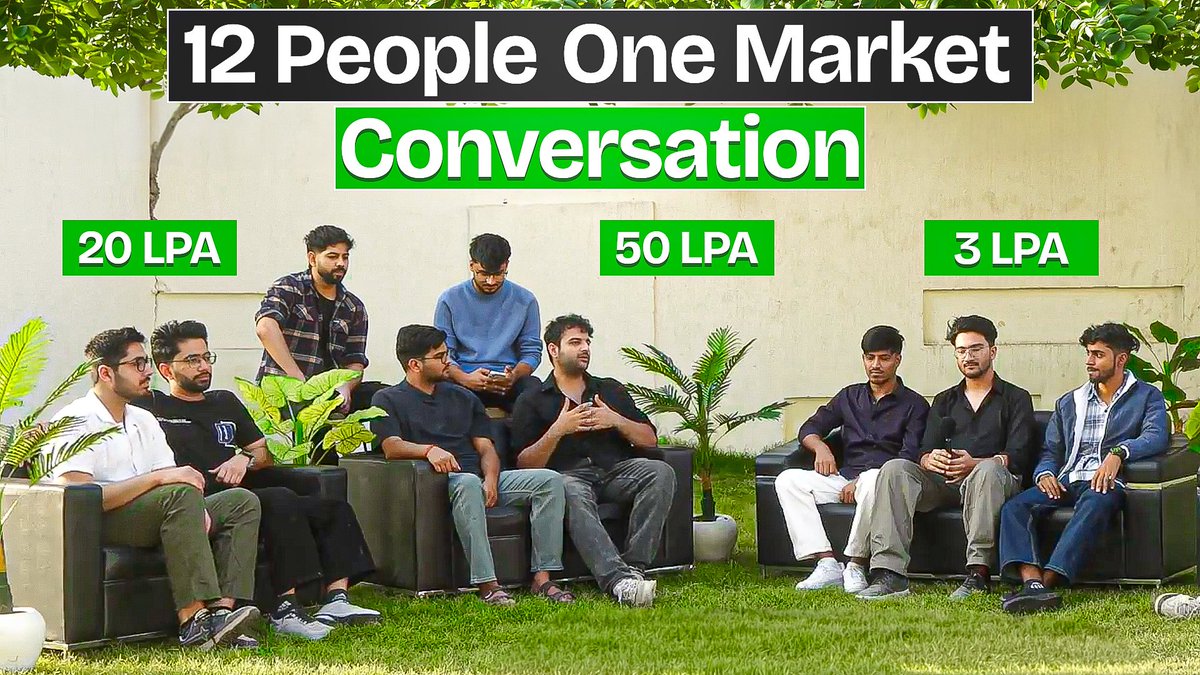
Imagine a video that dives deep into some of the most uncomfortable but real questions about Indian tech education and careers today:
1. Why do students from Tier-3 colleges often lag behind?
2. Why are traditional degrees slowly becoming obsolete?
3. The AI era is already here so why aren’t colleges moving fast enough?
4. The biggest question: If I refer you for an interview today, are you truly confident you can crack it?
5. A raw discussion featuring 12 individuals, some already working in the industry, others aspiring to enter it, sharing their honest perspectives on navigating the current job market.
This 72-minute conversation is an attempt to address real problems, real skill gaps, and real market insights without filters or sugarcoating.
Releasing today 7 pm.
Ft. @rishabh10x @kirat_tw @100xschool
English
Mahesh retweetledi

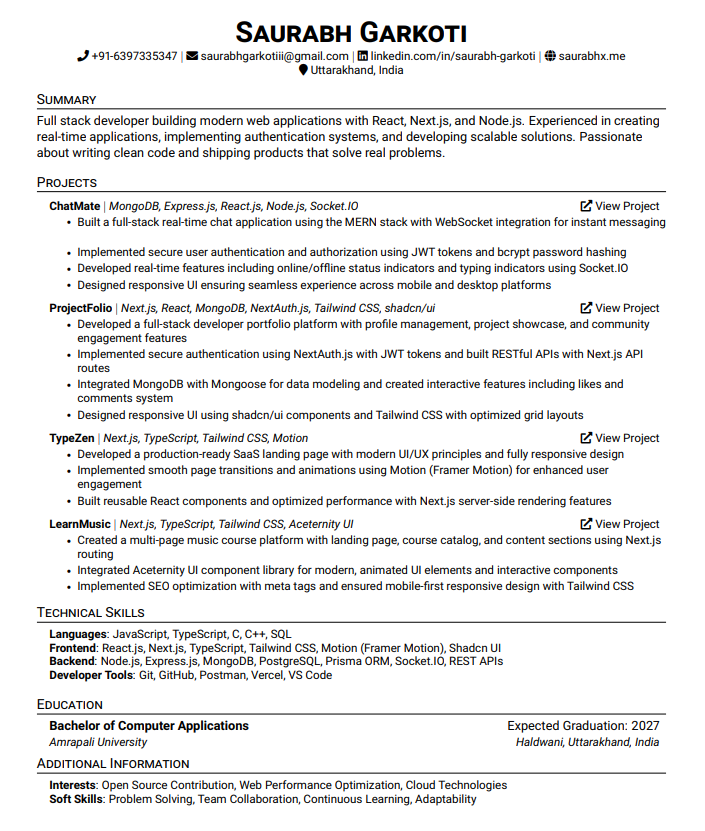

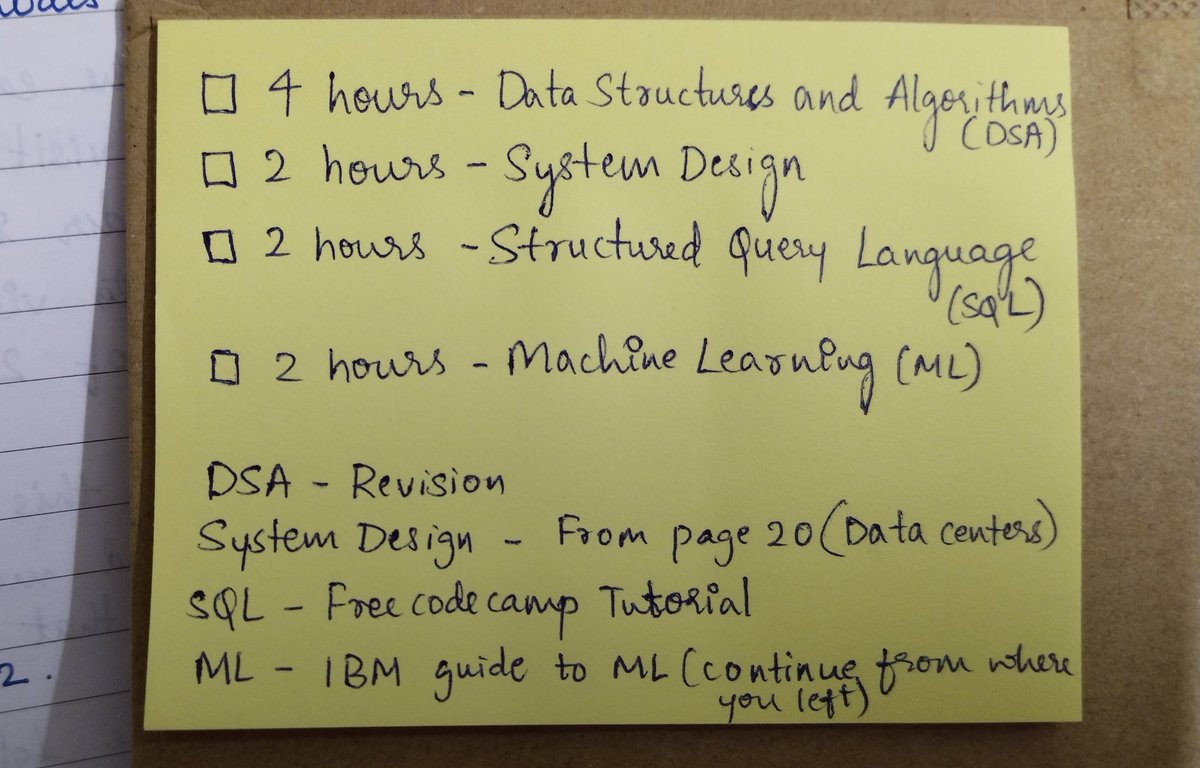

I applied to at least 50 companies on Wellfound and LinkedIn.
Literally got zero responses.
I genuinely thought I wouldn’t get any internship, but God had different plans. I got an internship on campus at a really nice company where I get to learn a lot and work on a real product.
English
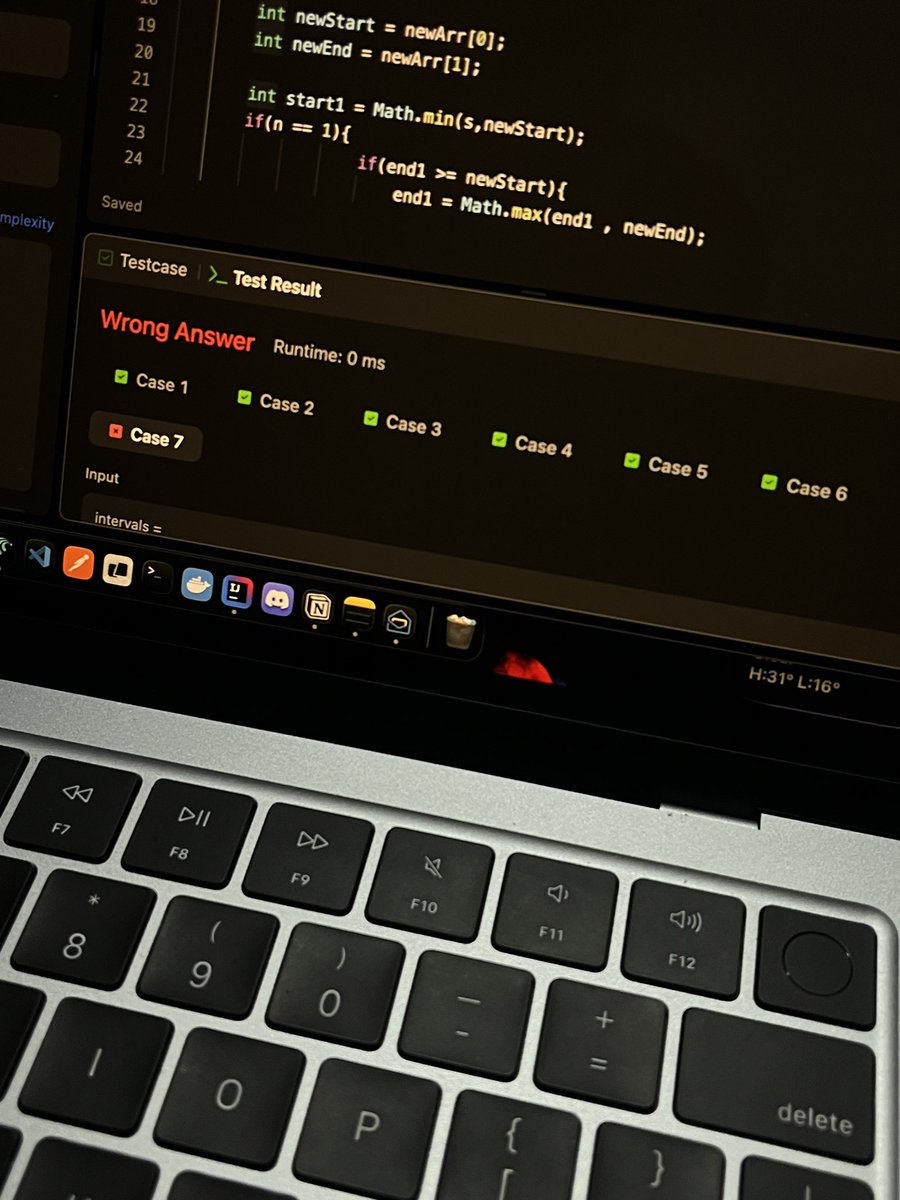
@rrrautela @kunalstwt Sounds great! I’m thinking of starting this playlist as well. Let me know the best way to catch up and make the most out of it for the best learning outcomes.
English





twitter is cool.
but it’s 100x better when your timeline is full with people who code and build things.
if you’re into tech, AI, startups, design, web dev, web3, or programming, say hi 👋
English
@kartik_singhhh @kirat_tw @rohit_negi9 Good going! How’s the LLD playlist? Would you recommend this?
Btw you are watching cohort 3 right?
English
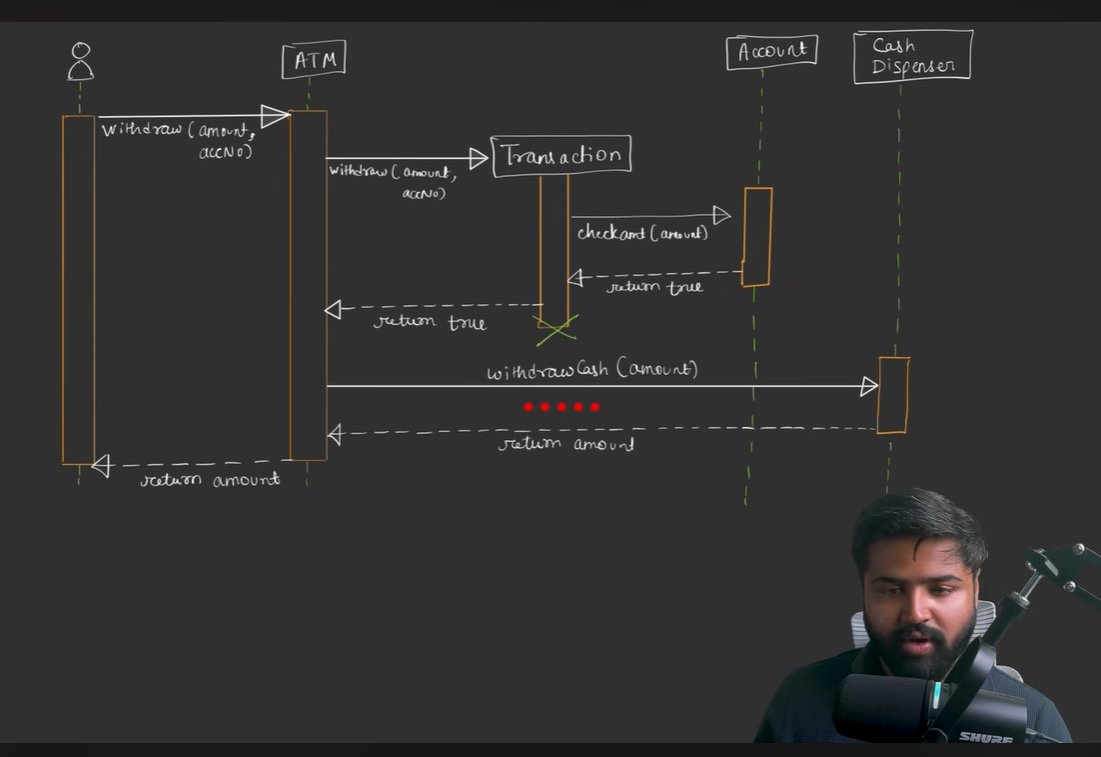
Done with today’s TODO ✅
• Learnt CI/CD pipelines
• Dev, Staging & Prod server setup
• System Design –UML diagrams lecture
• LeetCode POTD done
• Course Schedule I & II solved
• Built 1 hr of full-stack project
#FullStack #DSA #LearningInPublic
@kirat_tw @rohit_negi9

English
@Looozzer @striver_79 How it’s going?
Check out this youtube.com/playlist?list=…
Lemme know the best
English


Mahesh retweetledi

If I Had 6–12 Months to Become a Backend Engineer in the AI Era, I’d Do This
Stage 1 — Programming & AI Foundations
Start with strong fundamentals
• Choose one backend language (Java / JavaScript / Python / Go / Rust)
• Syntax, data types, control flow, functions
• OOP and design basics
• How AI supports backend engineers (code review, debugging, testing)
• Using AI responsibly without skipping fundamentals
Stage 2 — How the Backend Works
Understand what happens behind the scenes
• How servers work
• HTTP and request–response lifecycle
• REST APIs fundamentals
• JSON and status codes
• Client–server architecture
• Visualizing backend flows with AI
Stage 3 — Backend Frameworks
Learn one production-grade framework
Java → Spring Boot
JavaScript → Node.js (Express / Fastify)
Python → Django / FastAPI
Go → Gin / Fiber
Rust → Actix-Web / Axum
Learn:
• Routing
• Controllers and services
• Middleware
• Dependency Injection
• Configuration management
• AI-assisted boilerplate generation
Stage 4 — Databases & Data Modeling
Master data storage and access
• SQL (PostgreSQL / MySQL)
• NoSQL (MongoDB / Redis)
• Schema design
• Relationships and constraints
• Indexing
• Transactions
• ORMs and query builders
• AI-assisted query optimization
Stage 5 — Authentication & Security
Build secure backend systems
• Password hashing
• JWT and sessions
• OAuth 2.0 basics
• Role-based access control
• CORS and CSRF
• Rate limiting
• Environment variables and secrets
• AI-assisted security reviews
Stage 6 — Building Real Backend Services
Practice through real APIs
• Authentication service
• User management system
• CRUD-based APIs
• File upload service
• Background job processing
• Logging and error handling
• AI-assisted test generation
Stage 7 — Advanced Backend Engineering
Think beyond CRUD
• Caching with Redis
• Pagination and filtering
• WebSockets and real-time systems
• Message queues (Kafka / RabbitMQ)
• Event-driven architecture
• API versioning
• AI-assisted performance analysis
Stage 8 — System Design & Scalability
Design systems that grow
• Monolith vs microservices
• Load balancing
• Horizontal and vertical scaling
• Database scaling strategies
• Stateless services
• Failure handling
• Using AI to simulate design scenarios
Stage 9 — DevOps & Deployment
Ship reliable backend services
• Linux basics
• Git workflows
• Docker and Docker Compose
• CI/CD pipelines
• Cloud deployment (AWS / GCP / Azure / Render)
• Reverse proxies (Nginx)
• Monitoring and alerting
• AI-assisted infrastructure troubleshooting
Stage 10 — Production-Grade Projects
Build backend systems that feel real
• Scalable REST API
• Authentication and permissions
• Database + caching
• Background workers
• Cloud deployment with CI/CD
• Logs, metrics, and monitoring
• Clear documentation
Stage 11 — Portfolio & Engineering Readiness
Show backend depth, not just features
• 3–5 production-quality backend projects
• API documentation
• Architecture diagrams
• Database schemas
• Load and performance considerations
• Explanation of AI-assisted workflows
Stage 12 — Career & Interview Preparation
Get job-ready as a backend engineer
• Backend interview fundamentals
• System design interviews
• Database and API questions
• Scalability discussions
• Problem-solving practice
• Continuous learning in the AI era
Grab the Backend Engineering Handbook;
Backend Engineering: From Fundamentals to Scalable Systems
codewithdhanian.gumroad.com/l/ungqng

English
Mahesh retweetledi

Noted Taken:
> Be consistent
>Code minimum 3 hours a day
>Find some force which doesn't let u be lazy
>Track ur time and productivity

English
Mahesh retweetledi

Mahesh retweetledi

Claude has 200k+ context window but forgets everything the moment you close the session.
I built a plugin that fixes this. one file in your project, claude reads it on start, writes to it as you work.
Next day it actually knows what happened yesterday. you can git commit the file too.
Literally version control claude's brain. #claudecode
I open sourced, here is the code github.com/memvid/claude-…
English
@pankajkumar_dev Bro, I really wanna learn system design that did you learn through the projects by building or have you watched some kind of videos at starting and practiced while building ..if you have watched some videos, please let me know the resources. If Kirat’s c3 lemme know the part pls
English


Build a Video Transcoding Pipeline
I built a video transcoding pipeline that automatically processes uploaded videos into multiple resolutions using an event-driven, cloud-native architecture.
What it does
- Automatically processes videos as soon as they are uploaded
- Transcodes videos into 360p, 480p, and 720p variants
- Stores optimized outputs in S3, ready for production use
How it works
- Video upload to S3 triggers an event
- Event is pushed to SQS for decoupled processing
- A containerized FFmpeg job runs on AWS ECS (Fargate)
- Transcoded videos are uploaded back to S3
- Designed to scale without blocking application servers
Tech stack : Node.js, Docker + FFmpeg, AWS S3, SQS, ECS (Fargate)
What I learned
- Designing event driven backend systems
- Running heavy workloads using containers
- Building scalable, cloud-native pipelines on AWS
Next steps
- Add HLS support for adaptive streaming
GitHub: github.com/PankajKumardev… ⭐️
English
Mahesh retweetledi
