whythatnickname

2.7K posts

whythatnickname

whythatnickname

@whythatnickname

Katılım Kasım 2016
78 Takip Edilen234 Takipçiler
Frank
Frank@FrankAFetter·
Morgan Stanley bitcoin ETF buyers will get their 25% initiation correction after buying, so that puts the bottom in at $54-60k. Then slingshot back to six figures in September and new highs into 2027.
English
13
5
89
7.2K
whythatnickname
whythatnickname@whythatnickname·
@qthomp Does the "same effect" imply the "same response", e.g. print?
English
0
0
0
26
whythatnickname retweetledi
Luc
Luc@investingluc·
here is the prompt I used on @perplexity_ai max (Computer)...feel free to mess around with the weightings, etc. ----------------------- PROMPT: Build “Should I Be Trading?” — Bloomberg Terminal-Style Market Dashboard Build a live, auto-refreshing Bloomberg Terminal-style web dashboard called “Should I Be Trading?” that evaluates the current stock market environment and outputs a clear, actionable trading decision for swing traders. --- Core Output The system must display: 1. Decision: YES / CAUTION / NO 2. Market Quality Score: 0–100% 3. Execution Window Score: 0–100% (separate) 4. Plain-English Summary: concise explanation of the environment --- Data Inputs (Live or Latest Available) Volatility / Risk - VIX level, trend (5d slope), and 1-year percentile - VVIX (if available) - Put/Call ratio (estimate if needed from VIX regime) Trend & Structure - S&P 500 (SPY) vs 20 / 50 / 200-day moving averages - QQQ vs 50-day moving average - SPY 14-day RSI - Market regime classification: uptrend / downtrend / chop Breadth - % of stocks above 20d / 50d / 200d moving averages - NYSE Advance/Decline line + daily ratio - Nasdaq new highs vs new lows - McClellan Oscillator (optional if available) Momentum / Participation - All 11 S&P sector ETFs: XLK, XLF, XLE, XLV, XLI, XLY, XLP, XLU, XLB, XLRE, XLC - Top 3 vs bottom 3 sector performance (relative strength spread) - % of stocks making higher highs Macro / Liquidity - 10-Year Treasury yield (level + short-term trend) - Dollar Index (DXY trend) - Fed stance (derived or labeled: hawkish / neutral / dovish) - FOMC calendar (flag if event within 72 hours or same day) - Optional: CPI / Jobs flags --- Scoring System Calculate category scores (0–100): - Volatility: 25% - Momentum: 25% - Trend: 20% - Breadth: 20% - Macro/Liquidity: 10% Then compute: Market Quality Score = weighted average --- Decision Logic - 80–100 → YES Full position sizing, press risk - 60–79 → CAUTION Half size, A+ setups only - <60 → NO Avoid trading, preserve capital --- Execution Window Score (Critical Layer) Separate score that evaluates whether setups are actually working: - Are breakouts holding above pivot levels? - Are leading stocks maintaining gains after breakout? - Are pullbacks being bought quickly? - Is there multi-day follow-through? Score 0–100 and factor into final explanation (but NOT the main score weighting). --- UI / UX Requirements (Bloomberg Terminal Style) Visual Style - Dark blue/black background - Monospace font - Green / red / amber indicators - Minimal, dense, high-signal layout --- Layout Top Bar - Scrolling ticker (SPY, QQQ, VIX, DXY, TNX, sectors) - Status indicator: LIVE / UPDATING - Last updated timestamp (“updated 12s ago”) - Manual refresh button --- Hero Panel - Large “Should I Trade?” decision badge (YES / CAUTION / NO) - Circular score visualization (0–100%) - Subtext: “Market Quality Score” --- Core Panels (Grid) Each panel includes: - Current value - Direction (↑ ↓ →) - Interpretation (healthy / weakening / risk-off) Panels: 1. Volatility 2. Trend 3. Breadth 4. Momentum 5. Macro --- Sector Heatmap - Horizontal bar visualization of 11 sector ETFs - Highlight leaders vs laggards --- Scoring Breakdown Panel - Show weight + score per category - Visual contribution to total score --- Alert Banner - Display when FOMC / CPI / major macro event is imminent --- Terminal Analysis (AI Layer) Generate a short explanation like: “This is a strong trend environment with expanding breadth and moderate volatility. Sector leadership is concentrated in technology and industrials. Favor selective swing trades with disciplined risk.” --- Mode Toggle - Swing Trading Mode - Day Trading Mode (adjust thresholds slightly tighter and faster) --- Technical Requirements - Auto-refresh every 45 seconds - Server-side cache (30 seconds) to reduce API load - Loading skeleton states while fetching - Error handling for missing data - Modular architecture (easy to swap APIs) --- Output Requirements Return: 1. Full frontend layout (React preferred, Tailwind optional) 2. Backend/data aggregation logic (Node or Python) 3. Clear scoring formulas (editable) 4. Example output using current/latest market data 5. API recommendations (free + paid) --- Success Criteria - Clean, fast, high-signal UI - Accurate regime detection - Simple, trustworthy YES / NO output - Feels like a personal risk manager, not just a data dashboard ♥️Luc
English
47
67
827
33.4K
Pumponomics
Pumponomics@ThePumponomics·
there are probably only a handful of alts worth owning for this upcoming cycle. many think that’s bearish, but i think it’s the opposite. capital consolidates into the best coins and we get a flywheel effect that propels a select few much higher while the rest of the market bleeds out. There still will be outlier 100x memes and cabal pump and dumps though.
English
2
0
14
689
whythatnickname
whythatnickname@whythatnickname·
@LukeGromen 1) Conditions / timeline for Brrrr? 2) Play Devil's Advocate w/ your current views on the Situation Tx!
English
0
0
2
343
Luke Gromen
Luke Gromen@LukeGromen·
1/ I’m recording a 5-10 min YouTube video to be released later this week; pls drop some questions below & I’ll touch on as many as I can on a best efforts basis. Thx! (Also, pls feel free to subscribe to my YouTube channel.)
English
133
7
357
39.9K
whythatnickname
whythatnickname@whythatnickname·
@fejau_inc @RaoulGMI Nothing to be proud of imo. Too many ppl, incl. paid subs, lost a lot of money bc of banana-zone / SUI bs 😕 This space would've been better w/o such shills.
English
0
0
2
29
whythatnickname retweetledi
ordbro
ordbro@ordbro_com·
Ordinals fam! Take a look at what we're building 👀 🟧 @ordbro_com - data aggregator for Ordinals NFTs! 📊 Floor prices, volumes, charts, stats & more ℹ️ Data from top marketplaces in one place 💻📱 Built for both desktop & mobile 🔒 Safe - trades happen directly on original marketplace 🆓 Most features free to use Integrated: @unisat_wallet, @Magisat_io, @Satflow, @ordinalswallet, @okx More markets and NFT collections are being added before launch, tokens & runes next 🚀 🧡 Would love feedback from community @LeonidasNFT @thatwagmigirl @The_sugargirl @pawellwitt Waitlist on ordbro.com #Ordinals #Bitcoin #Runes #BRC20
English
56
155
304
21.2K
whythatnickname retweetledi
DurdenBTC
DurdenBTC@DurdenBTC·
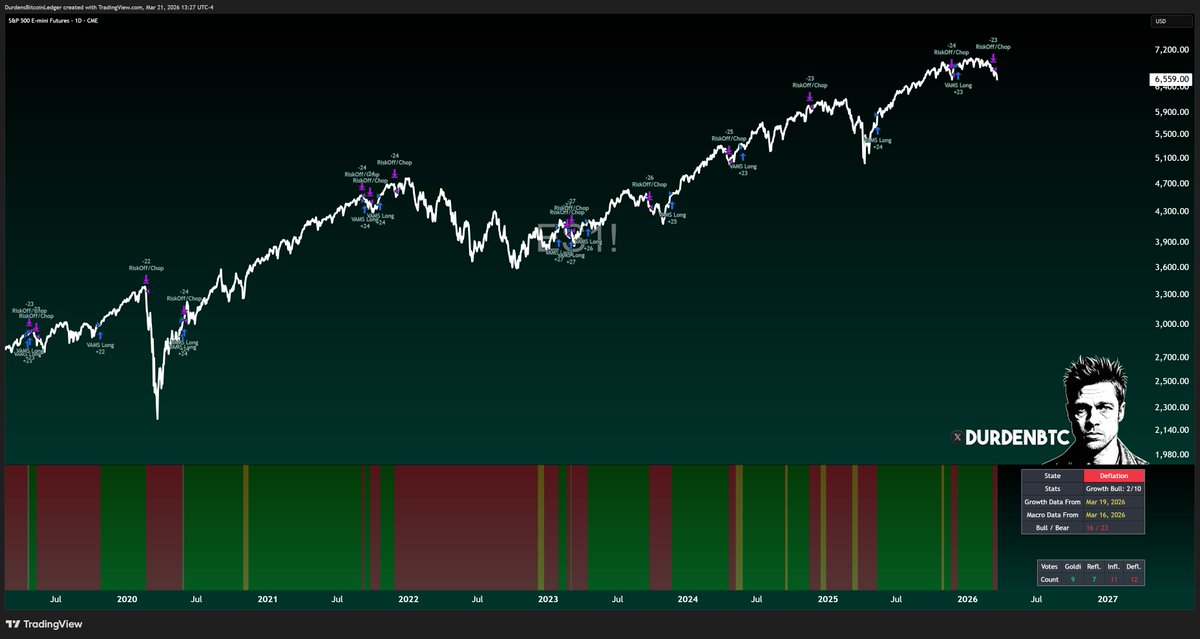
On March 10th the Macro Regime Engine flipped Risk Off for the 37th time in its history. Subscribers got the signal same day. $SPX is now -3.25% since. Here's what the engine is seeing right now. 🧵
DurdenBTC tweet media
English
1
3
9
810
Manuel Blay
Manuel Blay@ManuelBlay3·
Stock picker: Beware of fairy tales! Hendrick Bessembinder article "One Hundred Years in the U.S. Stock Markets" is eye-opening. Stock picking is a minefield for most investors. Here is the link: papers.ssrn.com/sol3/papers.cf… And here the AI-generated executive summary, which I have reviewed: The central insight of the study is both striking and uncomfortable: most individual stocks are poor investments, and investors who rely on stock picking are statistically likely to fail. At first glance, the stock market appears highly rewarding. Over the past century, U.S. equities generated enormous wealth, with total shareholder wealth creation reaching about $91 trillion. The overall market compounded at roughly 10 percent annually, reinforcing the idea that investing in stocks is broadly profitable. However, these impressive aggregate results mask a deeply uneven reality beneath the surface. The key issue lies in how returns are distributed across individual stocks. While the average return is very high, the median return is negative. In fact, the median buy and hold return across nearly 30,000 stocks was about minus 6.9 percent . This means that more than half of all stocks failed to create value for investors over their lifetimes. This gap between average and median outcomes is driven by extreme skewness. A small number of stocks generate enormous gains, while the majority deliver mediocre or negative results. Because gains have no upper limit but losses are capped, a handful of exceptional winners dominate long term performance. These few stocks pull the average upward, even though most stocks underperform. The data confirms how difficult stock picking really is. Only about 48 percent of stocks produced positive lifetime returns, and just 41 percent outperformed Treasury bills . Even more striking, only about 28 percent beat the overall market. In other words, nearly three out of four stocks underperform a simple diversified benchmark. For investors, this creates a major challenge. Stock picking is essentially an attempt to identify a very small group of extreme winners in advance. Yet these winners are rare and hard to recognize early. Their success usually comes not from spectacular short term gains, but from moderately strong returns sustained over long periods. This makes them difficult to distinguish from the broader universe of stocks at the time of purchase. Compounding adds another layer of difficulty. Small differences in annual returns can lead to massive differences in long term outcomes, but only over decades. Meanwhile, the median stock remains listed for less than seven years , meaning many investments end before meaningful compounding can occur. The extent of wealth destruction further explains investor failure. Around 59 percent of firms reduced shareholder wealth relative to Treasury bills , making much of the stock universe a drag on performance. Most importantly, wealth creation is highly concentrated. Just 3.7 percent of firms account for all net wealth created in the market . The remaining majority collectively adds no value beyond risk free alternatives. This explains why diversification works and stock picking struggles. A diversified portfolio captures the rare winners that drive returns, while concentrated portfolios are more likely to be dominated by underperformers. In summary, investors fail at stock picking because success depends on identifying a tiny number of exceptional stocks in advance. Most stocks underperform, many destroy wealth, and only a few generate the gains that drive the market.
Manuel Blay tweet media
English
1
0
8
331
DurdenBTC
DurdenBTC@DurdenBTC·
bitcoin has been cheaper relative to global liquidity only 4% of its entire existence. 4th percentile. -1.56σ. $71K vs $171K fair value. the last time this model hit "deep discount" and resolved higher, the median 6-month return was +75%. win rate: 97%. that's not an opinion. that's 12 years of data with an R² of 0.92. but go ahead, sell here. someone has to provide the liquidity.
DurdenBTC tweet media
English
3
14
70
1.7K
Luke Gromen
Luke Gromen@LukeGromen·
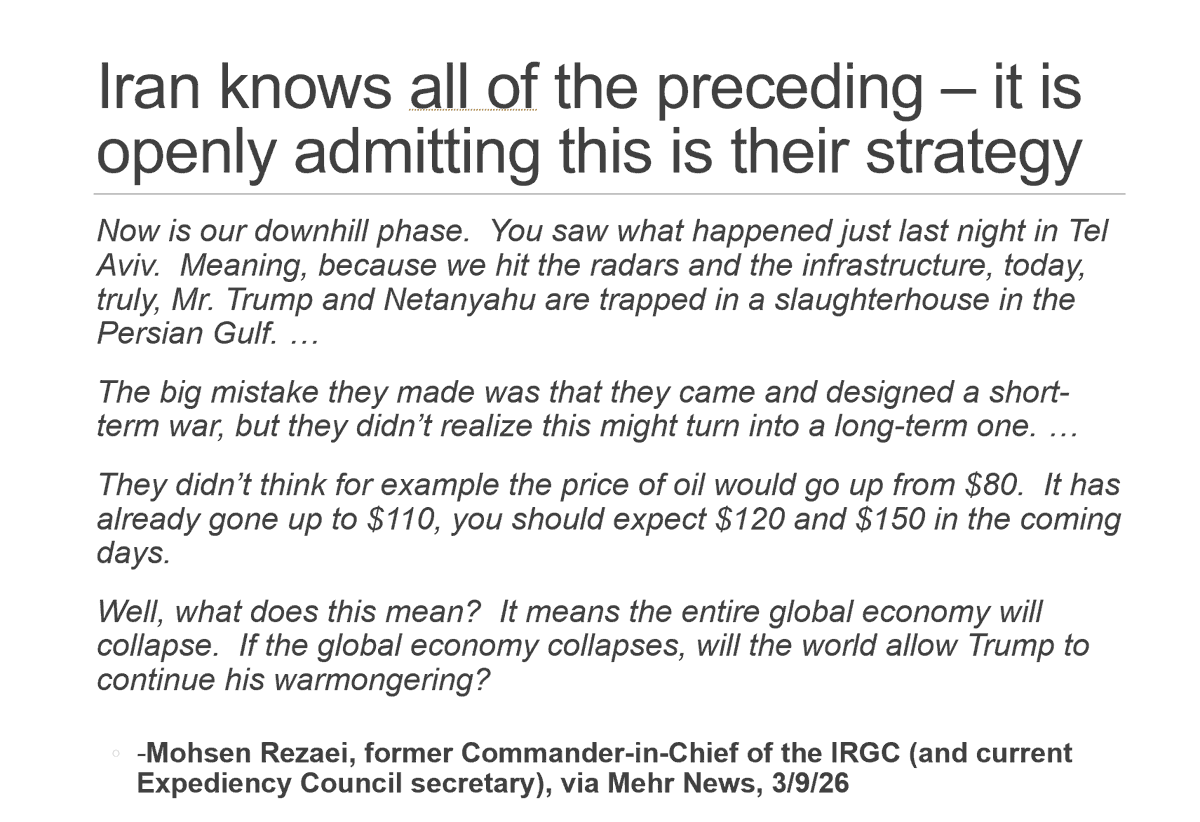
Every US policymaker & investor we see talks about "tactics": How many Iranian ships we've sunk, how many launchers we've destroyed.... ...while ignoring what keeping Hormuz closed will do to global "logistics", even as Iran openly admits "logistics" is their whole strategy:
Luke Gromen tweet media
English
65
113
740
50.5K
isa⚡️
isa⚡️@isabellasg3·
What book am I missing?
isa⚡️ tweet media
English
259
29
457
37.3K
Maττ Beck 💹🧲
Maττ Beck 💹🧲@Matthew_C_Beck·
You can just buy one teeny tiny token. And see what this stock market flipping thing is all about. Because it's clearly about something... SPX6900
Maττ Beck 💹🧲 tweet media
English
26
94
342
14.9K