Suresh

195 posts

Suresh

Suresh

@wil1b3rb

Konkani brahmin, GSB 🌊

Goa, 🇮🇳 Katılım Eylül 2022
117 Takip Edilen28 Takipçiler
Suresh retweetledi
Deepak Prabhu
Deepak Prabhu@ragiiing_bull·
No five star food or curated food or any buffet will give you the holistic pleasure of savoring our desi homemade food. 😋😋😋😋 It is said that homemade food has the blessings of Annapurna Devi. Have you heard of any food poisoning after homemade meals Pic: sourced from the web.
Deepak Prabhu tweet mediaDeepak Prabhu tweet mediaDeepak Prabhu tweet mediaDeepak Prabhu tweet media
English
17
22
216
9.5K
Suresh retweetledi
Agarkar stan
Agarkar stan@sandman1306·
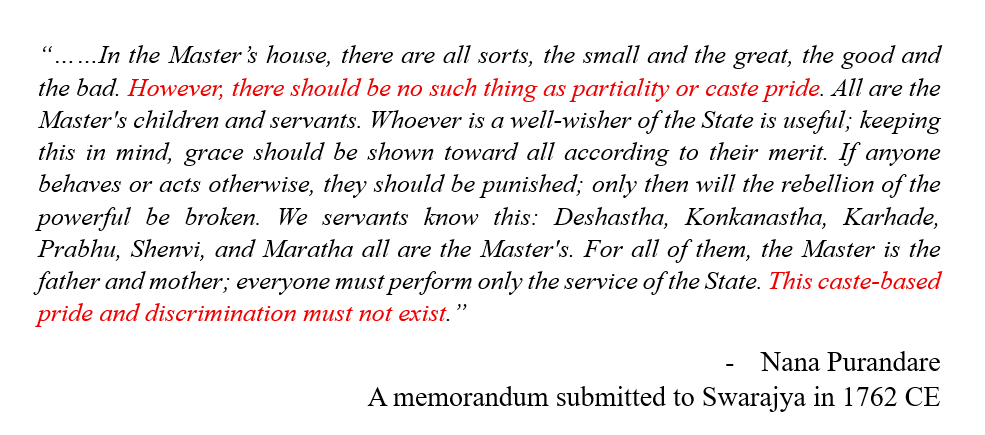
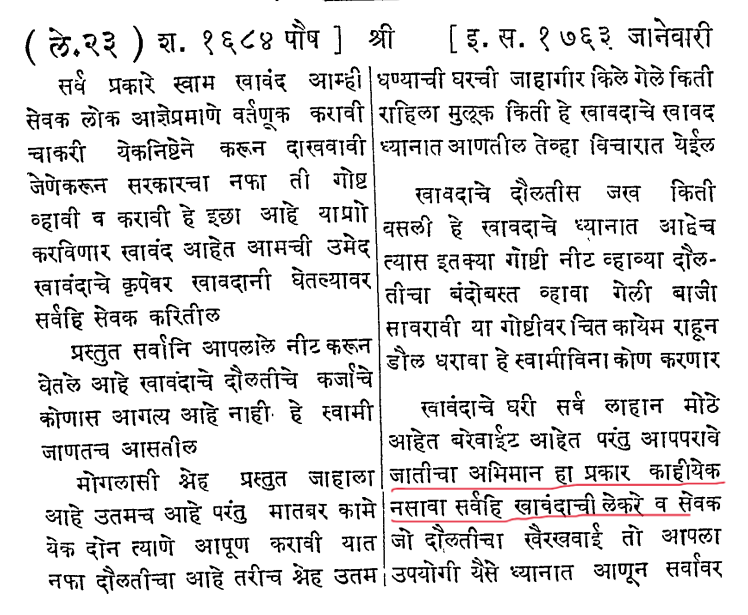
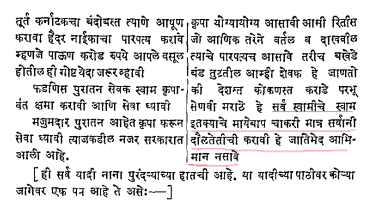
With X consumed by caste kanging these days, in 1763 CE a memorandum to Swarajya explicitly urged individuals against engaging in caste pride and partiality. The idea that being caste agnostic is a modern invention dissolves quickly. Translation of the relevant passage attached
Agarkar stan tweet mediaAgarkar stan tweet mediaAgarkar stan tweet media
English
12
122
396
14.6K
Suresh retweetledi
Indian Tintin
Indian Tintin@IndianTintin_·
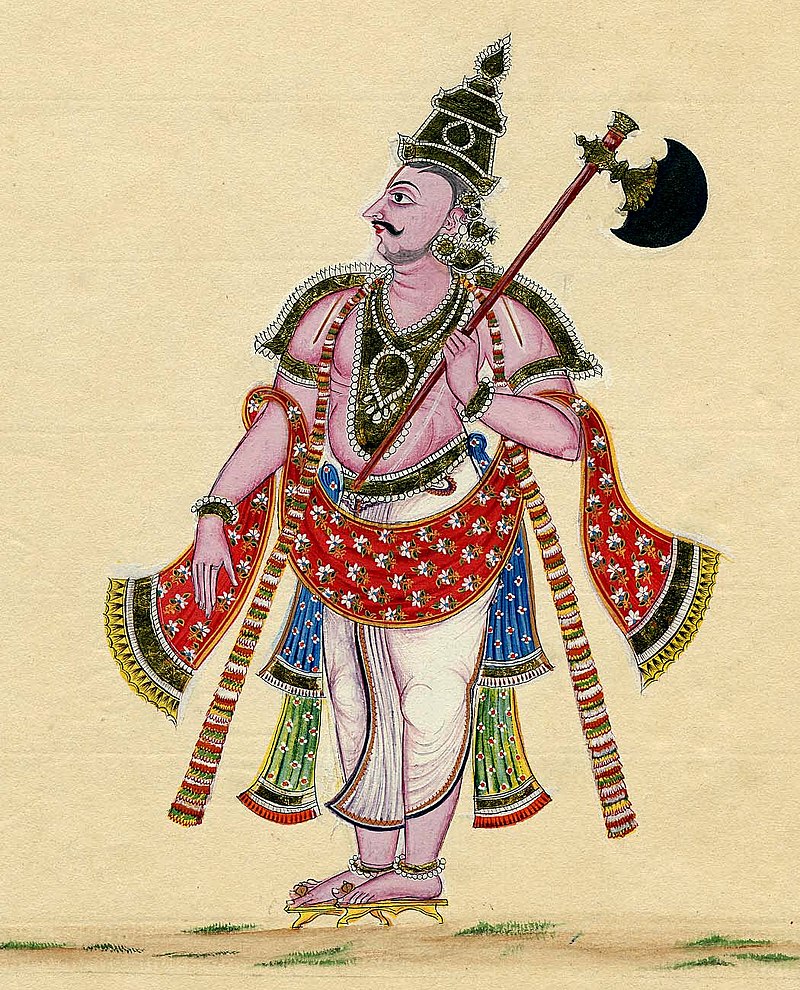
A very happy Parashuram Janmotsav 2026 to all Biraadars especially Vaishnavites, Brahmins and South-Westerners.
Indian Tintin tweet mediaIndian Tintin tweet mediaIndian Tintin tweet mediaIndian Tintin tweet media
English
7
61
553
5.8K
Suresh retweetledi
Truth Seeker
Truth Seeker@TruthSeeke007·
@thejantrack @ChauthYaMaut11 Conclusion: when Naro ram became one in astapradhan ,Wagle(refer that book) clearly tells about animosity(rivalry) between the deshastha,chitpavan,karhade and Saraswat for administrative Posts.All the above caste claimed superiority and denied others,(2/2) Stop pan stay healthy😂
English
0
1
2
127
Suresh retweetledi
Truth Seeker
Truth Seeker@TruthSeeke007·
@thejantrack @ChauthYaMaut11 2. Under the Kadamba Dynasty of Goa (c. 960–1340 CE), GSBs reached the zenith of their political power, often controlling the state's foreign policy and treasury. The Marcella Copper Plates (1038 CE) issued by King Shasthadeva II appointed GSBs to the highest cabinet posts.(1/2)
English
1
1
4
178
Ezekiel
Ezekiel@Ezekiel16920·
@TruthSeeke007 @wil1b3rb Here, I have unblocked you. If you delete all of your comments under my pinned post (which will remain online because it does not disrespect Shenvis, just debunks the SKh) then all of my replies will also become invisible. Rest assured I will also delete them.
English
1
0
0
105
Ezekiel
Ezekiel@Ezekiel16920·
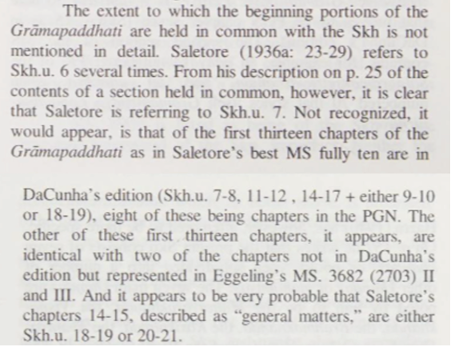
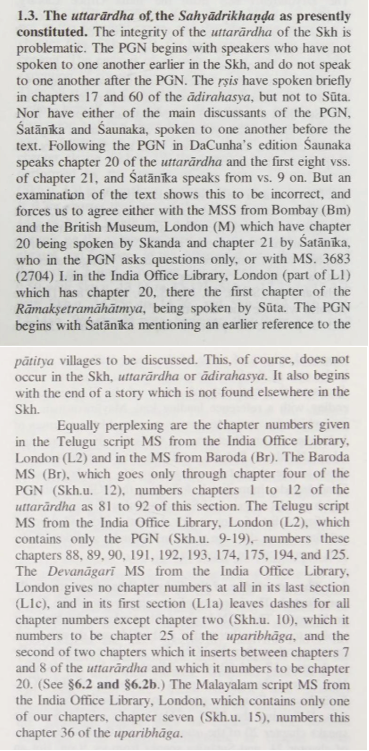
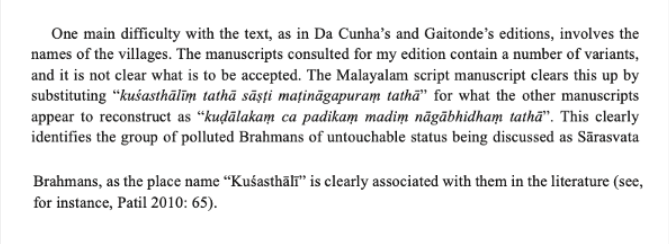
🧵The Uttarārdha of the Sahyādrikhaṇḍa, a thread. The Sahyādrikhaṇḍa is split into two parts: Pūrvārdha also known as the ādirahasya (41 of the 62 total chapters) and Uttarārdha (21 chapters). The pūrvārdha bears resemblance to a classic puranical text, the "Jnanayogakhanda" while also having an additional section on the treatment of local Ksatriyas. The uttarārdha however, is our main topic of focus as it is essentially a 'jati-purāṇa' focusing on the ethnogenesis of various Konkani brahman communities. In the Uttarārdha, adhyāyas (1-6) contain the scandalous "Citpāvanabrāhmaṇotpattiḥ" followed by the "Kārāṣṭrabrāhmaṇotpatti". Later adhyāyas (9-19) are grouped together and called Pātityagrāmanirṇaya(PGN). Dating the sections of the uttarārdha: The PGN, in comparison to the first 6 chapters, is a very sombre depiction of the villages & communities of “fallen” brahmans. In line with texts of the time, these brahmans are not referred to by their subcastes but by gotra or patrilineal descent. According to Levitt, a stalwart in Purāṇic studies, the first six adhyāyas of the uttarārdha are later additions to the Mahārāṣṭrian variety of the text. Levitt provides a critically examined terminus ante quem for the uttarārdha: most of the Pātityagrāmanirṇaya (chapters 9-19) would have been written in and around the mid-13th century; the 15th adhyāya in particular is theorized to have been composed by the 10th century A.D. at the very latest. According to O'Hanlon, the polemic nature of the first six adhyāyas, along the fact that they use vernacular labels and regional attributes instead of gotra and ancestral villages to identify communities of Brahmanas, points to a much later origin. Biased critical editions: The first edition of a "complete" Sahyādrikhaṇḍa was published in the 1870s by the Luso-Indian indologist Gerson Da Cunha. This was a highly biased text with most of the published manuscripts either being un-named or taken from “several gentlemen in Bombay”. Most notably however, Da Cunha had compiled this edition of the Sahyādrikhaṇḍa with the help of 3 Shenvi aides, which seems to explain the very biase selection of manuscripts. Neither does Da Cunha include the plethora of different sthalapurāṇas and māhātmyas found across Konkan. Later publications of the Sahyādrikhaṇḍa by Gaitonde (1971 and 1992) excises a lot of the offensive parts, probably out of consideration or to reduce tensions among the brahman subcastes following the Da Cunha edition. Counter-parts and supplementaries to the Sahyādrikhaṇḍa: Laypeople are generally unaware of the Sahyādrikhaṇḍa's regional counterparts found across the Konkan coast. These are the Tuluvagrāmapaddhati and the Kērala Māhātmya. Among these, the most well-preserved and prolific is the Tuluvagrāmapaddhati, which does not contain adhyāyas (1-6), as found in the Da Cunha version. Furthermore, Levitt’s best manuscript of the uttarārdha, written in the Telugu language, only contains adhyāyas (9-19). Various local sthalapurāṇas in the Canarese, Malayalee, and Telugu languages do not seem to mention the Chitpavan or Karhade brahmans, while others provide alternate accounts to the ethnogenesis of the Chitpavans. A case in point is the account of Mayūraśarman in the sthalamāhātmya of Vānavāsī written in Haḷegannaḍa (Old Kanarese), the capital of the Kadamba dynasty, in which Paraśurāma settles brahmans from Ārya-Nāḍ (Aryan country) called 'Chittapavanar'. The event is said to occur after Chandrangaten, son of Mayūraśarman, settled Brahmans in Kerala, Tuluva, Haigaira, Concana, and Carada. This would place the arrival of the Chitpavans later than that of the Havyakas from Ahichatra, contradicting the chronology given in the Sahyādrikhaṇḍa. Renditions of the Sahyādrikhaṇḍa: As we have already discussed in the previous sections, the first 6 adhyāyas of the uttarārdha are later additions to the Sahyādrikhaṇḍa. The "Citpāvanabrāhmaṇotpattiḥ" itself along with a single reference to it appear on 3 separate occassions in the uttarārdha: namely in the 1st, 6th, and 7th adhyāyas. The 7th adhyāya (which is considered by many to be an 'authentic' chapter) contains a reference to a similar event: that Paraśurāma had once made Brahmanas out of “kaivarttān”s, this however, does not mention a particular subcaste by name. The 7th adhyāya is further corroborated by the Tuluvagrāmapaddhati as well as the Kērala-Māhātmya. Remarkably, all of these regions have fables of fishermen being sanskritized into brahmans: In Tulunad, it was a certain "Vadiraja Acarya" who sanskritized a group of fishermen from Matti village into brahmans sometime between the 14th to 15th centuries. The Sthanika brahmans commonly accuse the Shivalli brahmans of being born of Mogera (fisherwomen) and therefore being degraded. In Kerala, a lot of the older brahman subcastes accuse the Namboothiri brahmans, known for producing the highly venerated Ādi Śaṅkarācārya, of being sanskritized fishermen(Nalillakaran). There also exist subtle changes in the word(s) used when comparing the 1st / 6th adhyāyas, and the 7th adhyāya, that references a similar incident. While the former uses the word “kaivartāka” or fisherman (progeny of a kṣatriyā woman and a hunter); the 7th adhyāya uses the word “kaivarttān” which could mean a fisherman OR a sailor. The latter interpretation was used by many 19th – 20th century historians to justify the western phenotypes often exhibited by the Citpāvanas. Adhyāya 15, the Koṅkaṇākhyāna, and the Shenvis: Of the PGN: adhyāyas 7, 8, and 15 are supposed to be the oldest, and among these select adhyāyas, number 15 in particular is said to be rather suspiciously fragmented and/or corrupted. The names of the villages containing the un-touchable brahmans and the reason behind their falling to a 'pātitya' status was not clearly detailed in both, the Da Cunha and the Gaitonde edition(s). However, a manuscript containing two additional verses along with the entire 15th adhyāya in the Malayalee language, according to Levitt, seems to clearly state the modern names of these villages populated by Pātityabrāhmaṇas. The villages are: "Kuśasthālī", "Maṭhagrāma", "Kardalīpura", "Lotāli" which are, even to this day, known as the native places of various Konkani Shenvi subcastes. They are said to have become pātitya due to their consumption of seafood, which is vehemently disallowed for brahman communities residing below the Vindhyas. The edited Sahyādrikhaṇḍa manufactures the concept of "deṣadoṣa"s which states that certain pañca-gauḍa brahman communities are prone to specific sinful acts- in the case of the Trihotrā brahmans i.e. the Shenvis, their dietary habits for which they are said to have been "pardoned". The reason behind the fragmentation of this adhyāya is probably due to the uttarārdha of the Sahyādrikhaṇḍa being in Shenvi hands for a period of time, it is within this time-frame that we can safely assume the first six adhyāyas were manufactured and canonized in order to denigrate the highly prosperous and ritually superior Chitpavan and Karhade brahmans. The Koṅkaṇākhyāna is a Shenvi authored document dated to 1721 CE encapsulating the development of the Goan Shenvi populace. It provides reasons for the splitting of the various subcastes (Pednemkar, Kudaldeshkar etc.) and tries to legitimise their standing among other brahmans by citing cases of inter-marriages with Karhade and Padye brahmans. Interestingly enough, the Koṅkaṇākhyāna does not contain a single instance of Chitpavan or Karhaada brahman denigration despite being written at a much later date. This is either due to the Marathi version of the uttarārdha 1-6 not being codified or the author relying on an oral account of the tale. The Brahmasābha of Satara in 1749 A.D. substantiates the former theory. When the Parbhu class requested the right to recite the Gāyatri mantra and perform the Ṣaṭkarmas, the Sahyādrikhaṇḍa was said to be consulted as a reference; its contents revealed no hostile references to either Brahman group. Who authored adhyāyas 1 to 6? The polemic nature of said adhyāyas as well as the corruption of the oldest 15th adhyāya points to a Shenvi influence in the uttarārdha. Gunjikar and a few others have previously argued that the reverence of Kolhapur as a city, along with the deification of Deshasthas suggests a Deshastha author of the adhyāyas. However, as M. Deshpande rightly points out: "Even granting the dislike for the Citpāvan and Karhāḍe Brahmins on the part of the Deśastha Brahmins, there was no love lost among the Deśasthas for the Sārasvatas, and one would not expect a Deśastha Brahmin writing an avowedly pro-Sārasvata text like the Sahyādrikhaṇḍa". Various authors on the purāṇas as well as dakhani history like (Levitt, Deshpande, O'Hanlon) seem to conclude that the text was, in fact, manufactured by a Shenvi. Furthermore, it is almost undeniable that the later critical edition of this text by Da Cunha, cited by many at face-value as a manuscript, was highly biased in its selection of material. Supplementary Brahman migrations to Koṅkaṇa: - From Ahichatra the capital of Pañcāla: brought south by Mayūraśarman or his son settled in 32 villages of South Kanara. Some scholars claim that Ahichatra is the Adisatroi described by Ptolemy, which is located in the western portion of Hyderabad state as opposed to Rohilkhand. - From Ballabhī: not explicitly noted in any of the manuscripts. Said to have been settled in Gomantak. - From Trihotrā (tirhut) in Behar: the Shenvis settled in the village of kuśasthālī. Originally 10 families. Some claim the region to be Bengal since the ancient name of Bengal was “Gauḍadeśa”. References: 1. The Pātityagrāmanirṇaya: a Puranic history of some Brahman communities by S. H. Levitt 2. Reflections on THE SAHYĀDRIKHAṆḌA’S UTTARĀRDHA by S. H. Levitt 3. Conflict, Identity and Narratives: the Brahman communities of Western India from the Seventeenth to the Nineteenth centuries by U. R. Patil 4. Oriental Manuscripts by W. Taylor III
Ezekiel tweet mediaEzekiel tweet mediaEzekiel tweet mediaEzekiel tweet media
Suomi
6
2
3
2.2K
Suresh
Suresh@wil1b3rb·
@Ezekiel16920 @padh39892 bro I don't understand why you have upvoted this tweet. Here's my main objection the patitagramanya text doesn't mention any sub caste by name on further inspection. And I don't find concrete evidence for skh stories fabricated by gsb except for story glorifying gsb.
English
0
0
2
95
Ezekiel
Ezekiel@Ezekiel16920·
I'm willing to delete all my replies if the nameless spam account deletes all of his seethe under my pinned post as well as any distasteful replies. If you read my post, nowhere have a disrespected the Shenvis- it's just a post debunking the myths being peddled in the SahyadriKhanda.
English
1
0
1
171
Suresh
Suresh@wil1b3rb·
@Ezekiel16920 @TruthSeeke007 I hope you do not carry any dislike and believe the things you have said here against us as well. That would be a tragedy
English
1
0
1
58
Ezekiel
Ezekiel@Ezekiel16920·
@wil1b3rb @TruthSeeke007 Modern day? Who? Sachin Tendulkar and? PS- When I say being disrespectful, this is what I meant. Alluding to myths about Arab Sailors and what not, all untrue.
Ezekiel tweet media
English
1
0
0
105
Suresh
Suresh@wil1b3rb·
@Ezekiel16920 @TruthSeeke007 Yes those are quite distasteful and not in the good faith. Anyway I don't want to continue I was only responding in response to certain comments made by you. I do not carry any inherent dislike against your community
English
1
0
0
99
Ezekiel
Ezekiel@Ezekiel16920·
@wil1b3rb @TruthSeeke007 Making references to the Bene Israeli and Kaivarttan myths isn't disrespectful? Look at Adarkar's replies, and if you don't see how disrespectful they were then you're part of the problem as well...
English
1
0
0
92
Suresh
Suresh@wil1b3rb·
@Ezekiel16920 @TruthSeeke007 Low level polemics was started by you , which one of us said anything disrespectful of your community? Do you really think we are bothered about you in the real world.. Wake up buddy this isn't 1800s
English
1
0
3
92
Ezekiel
Ezekiel@Ezekiel16920·
@wil1b3rb @TruthSeeke007 Oh, I knew the original owner of this account. He was a good acquaintance of mine- which is why I was wondering why would he engage in such low level polemics when the fault clearly lies with the nameless spam account and Adarkar. Anyways...
English
1
0
0
83
Suresh
Suresh@wil1b3rb·
@Ezekiel16920 @TruthSeeke007 You're dwelling in the past I'm talking about modern day . Colonial indologists from the 1800s or early 1900s aren't relevant to my point. Like I said you had your cake in that period
English
1
0
3
94
Ezekiel
Ezekiel@Ezekiel16920·
@wil1b3rb @TruthSeeke007 Yeah sure buddy! Cittapavanas as a singular subcaste (not even counting other Marathi brahmans) outdo the Shenvis 10x over, and that's me being nice! Plenty of colonial indologists also concur btw
English
1
0
0
77
Suresh
Suresh@wil1b3rb·
@Ezekiel16920 @TruthSeeke007 Likewise there exists names of personages with the titles used by gsb groups being patronized by rulers such as the kadamba. Why were you spreading blatant lies that we were originally sanitation workers
English
1
0
2
71
Suresh
Suresh@wil1b3rb·
@Ezekiel16920 @TruthSeeke007 Where did northern saraswats feature in this conversation a couple of our sub castes in the gsb group are enough to undo you
English
1
0
3
96
Ezekiel
Ezekiel@Ezekiel16920·
@wil1b3rb @TruthSeeke007 Really? Do you actually believe that? and are you willing to go band for band without harping on the actual Northern Saraswats?
English
2
0
0
87