gwandr

11.1K posts

gwandr

gwandr

@wittgs0

Banker. loves Econ & Finance. Dad. - loves basketball, WFU sports, Vikings

Katılım Nisan 2013
977 Takip Edilen201 Takipçiler
gwandr retweetledi
Gandalv
Gandalv@Microinteracti1·
The Wrong Side of History Has a Very Specific Smell By Gandalv / @Microinteracti1 Ben Hodges is not a man who wastes words. The former commanding general of US Army Europe has spent the better part of three years telling anyone who would listen that Ukraine was going to win, that Russia was going to lose, and that the only real question was how much unnecessary dying would happen in between. He has now added a postscript, and it is not a comfortable one: America, he says, is going to deeply regret what it failed to do. He is, of course, absolutely right. Ukraine is not merely surviving this war. It is industrialising it. The country that Russia expected to fold in 72 hours has spent three years building one of the most sophisticated drone warfare ecosystems on the planet, developing long-range strike capabilities that have genuinely rattled the Kremlin, and producing battle-hardened soldiers who have forgotten more about modern combined-arms warfare than most NATO generals have ever learned. When this war ends, Ukraine will not be a grateful, shell-shocked recipient of Western charity. It will be the single most capable and battle-tested defence industry in the World. Full stop. And the United States, which spent the last stretch of this conflict flirting with the aggressor, slow-walking ammunition, blocking long-range strikes, and sending its president to Mar-a-Lago to take phone calls from Putin like a middle manager hoping to avoid a performance review, will have precisely zero claim on any of that. Now imagine the day it ends. Imagine a billion people in the streets. Kyiv, Warsaw, Tallinn, Berlin, London, Tokyo, Seoul, every city that understands what it means when a free country refuses to die. The flags, the tears, the noise of it. The sheer, thunderous relief of a world that held its breath for years and can finally exhale. It will be one of those moments that gets burned into the collective memory of a generation, the kind that people will tell their grandchildren about with the particular pride of having been on the right side. And America will watch it on television. Not as a liberator. Not as the arsenal of democracy, the role it once played and once deserved. It will watch as the country that looked at the greatest struggle for freedom in a generation and decided, at the critical moment, to see which way the wind was blowing before quietly backing the wrong horse. The Stars and Stripes will not be waving in Maidan that day. Ukrainian children will not be naming their sons after American presidents. The defence contracts, the partnerships, the strategic relationships, the soft power that the United States spent eighty years accumulating as the world’s indispensable nation: all of it auctioned off for nothing. There is a particular kind of shame that comes not from doing something terrible, but from failing to do something obvious. The historical record does not grade on a curve, and it has no sympathy for anyone who says they were confused about which side was which. Russia invaded. Ukraine bled. The rest of the world chose. America, under its current management, is choosing badly. And when that billion people starts dancing, the silence from Washington will be the loudest sound in the room.
Kate from Kharkiv@BohuslavskaKate

HODGES: We are going to regret that we, United States, didn’t do more to help Ukraine, because Ukraine going to win this war. Ukraine’s defeat of Russia is in best interests of all of us. Ukraine will become dominant defense industry power in Europe. America will be left behind.

English
80
1.3K
3.1K
80.9K
gwandr retweetledi
Darius Dale
Darius Dale@DariusDale42·
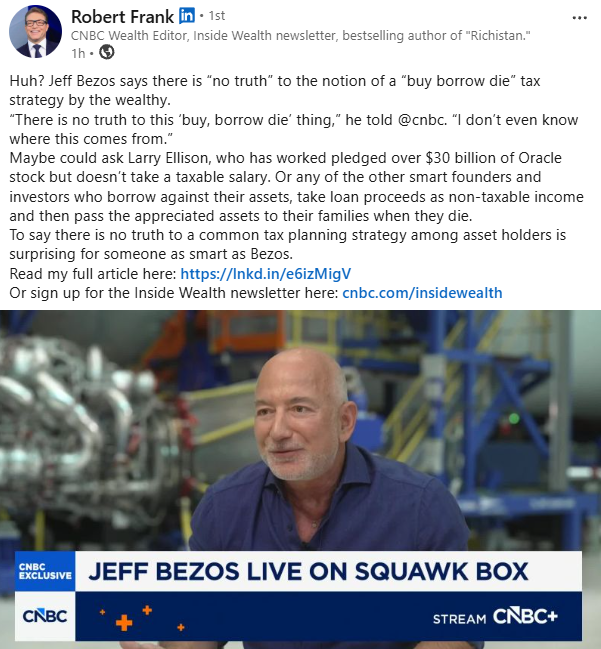
ALTERNATIVE VIEW: He’s being dishonest and doesn’t want the public to know how rigged the tax code actually is after decades of wealthy people paying billions of dollars in campaign financing to rig elections and legislation on their behalf. Don’t watch this if you don’t want to find out the truth and get freaked out as a result: youtu.be/mX5U5DNUfBc?si…. Since Citizens United in 2010, federal election spending has totaled well over $100 billion cumulatively across presidential, congressional, party, PAC, Super PAC, and outside-group activity. Do you think some of the smartest people in world history spent well over $100 billion for poops and giggles, OR do you think this was intentional capex designed to capture a high-ROIC opportunity similar to the current spending on AI infrastructure? Wake up. h/t @robtfrank at @CNBC P.S. I’m not anti-billionaire; I may become one someday. I am, however, against people cheating to rig the system disproportionately in their favor at the expense of others. It shouldn’t be this easy to corrupt our democracy, nor should it be this hard for working-class families to get ahead.
YouTube video
YouTube
Darius Dale tweet media
English
19
19
127
6.3K
gwandr
gwandr@wittgs0·
@biancoresearch @ProfSteveKeen Trump is transparently incompetent … the interdiction of the strait by Iran was warned by every credible analyst but Trump attacked anyway … worst decision by a president in the modern era
English
0
0
2
68
Jim Bianco
Jim Bianco@biancoresearch·
Trump is VERY transparent. That post perfectly expresses his utter frustration. Opening the Strait of Hormuz is not just a matter of will. We don’t have a sustainable military answer right now because we don't have a defensive shield against asymmetric warfare (cheap drones and missiles), as Ukraine has against Russia. When the U.S. launched Project Freedom roughly two weeks ago, three guided-missile destroyers were sent through the Strait to escort commercial shipping. The Navy came under a sustained barrage of Iranian drones and missiles and intercepted 100% of the attacks. Yet the defensive effort after just two days was extraordinarily resource-intensive. It nearly depleted the missile magazines of two Guided-Missile Destroyers and required support from more than 100 aircraft (F-35 fighters and attack helicopters). It costs an estimated $50–100 million to get just two commercial ships through safely over two days. This model is completely unsustainable beyond a brief demonstration. The U.S. cannot realistically guarantee a perfect interception record against repeated sustained barrages. All it would take is one drone or missile getting through, and the images of a burning American warship would be a major political disaster. Below, Trump isn’t raging at the media alone. He’s raging because we don't have a cost-effective Military solution (money and lives at risk) to opening the Strait.
zerohedge@zerohedge

Trump with the longest sentence of the day

English
306
292
2K
492.8K
gwandr retweetledi
Peter Zeihan
Peter Zeihan@PeterZeihan·
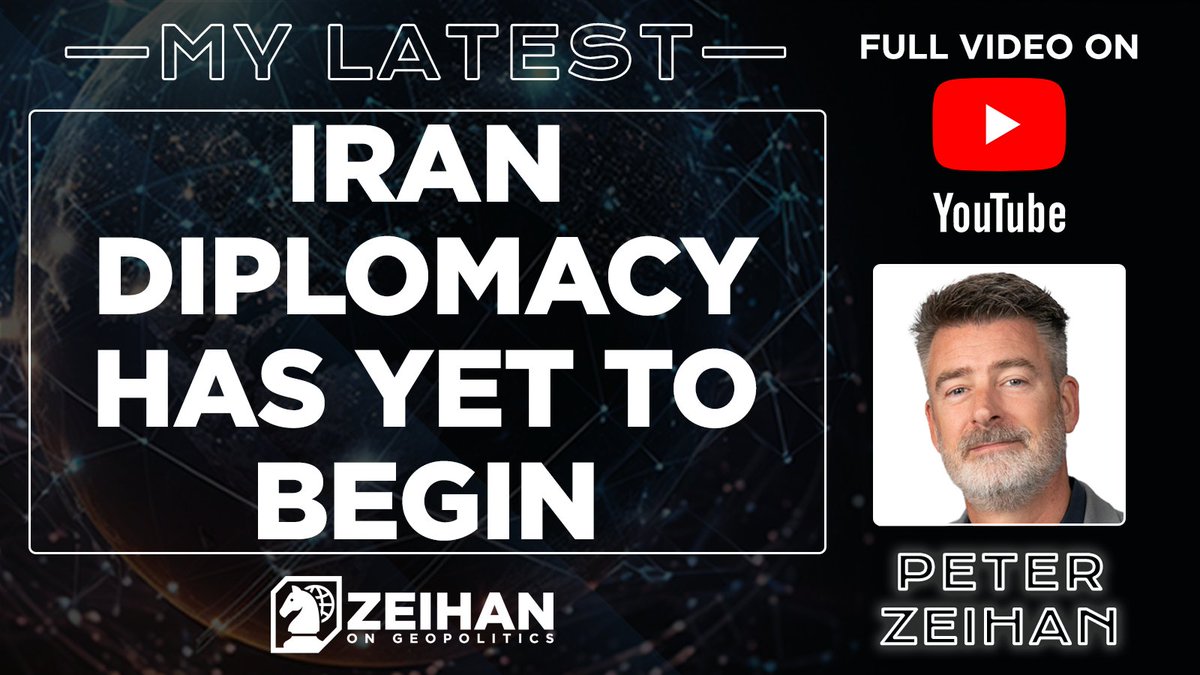
The administration’s centralized and personalized approach to foreign relations has collapsed U.S. diplomacy across multiple fronts... Full Newsletter: bit.ly/432Ubrs #iranwar #trump #geopolitics
Peter Zeihan tweet media
English
4
7
23
8.1K
gwandr
gwandr@wittgs0·
@essexthayer7 You know what is dollar & talent agnostic? Defense - that’s all effort & commitment & clearest reflection of coaching. Forbes doesn’t do this effectively - that needs to change
English
0
0
0
143
gwandr retweetledi
Simon Ree
Simon Ree@simon_ree·
"Inflation is always and everywhere a monetary phenomenon" It's one of those lines that's so elegant it became doctrine. Thanks, Milton It’s It’s quotable. It fits on a coffee mug. It’s about 60% right...and 100% over-applied Friedman wrote that when money velocity was stable and banking was tightly regulated. In that world, "money supply up = prices up" was a decent rule of thumb That world hasn’t existed for a while The Fed tripled its balance sheet after 2008. Inflation barely twitched for over a decade. If money supply was really the only driver, that stretch should’ve looked like Weimar It didn’t The bigger drivier of prices nowadays is availability of credit. Banks don’t lend out reserves. They create deposits when they make loans. The Bank of England wrote about this in 2014 ("Money Creation in the Modern Economy"). Quietly torches a lot of monetarism It’s why Sydney, Canada and Singapore property went vertical. Not M2. It was banks structurally incentivised to fire-hose mortgage credit into a supply-constrained asset class. Endogenous credit...not helicopter money On to oil The monetarist comeback is "higher oil prices aren’t inflationary, they’re just a relative price change". Tidy in theory. Useless when your grocery bill is up 20% and the central bank is telling you it doesn’t count Oil is an input into transport, agriculture, plastics, fertiliser, electricity...basically the whole economy. When crude spikes, costs ripple through every supply chain at once. Businesses pass them through. Wages eventually catch up. Expectations reset That’s...inflation The 1970s are sold as Friedman’s strongest case. They’re actually his weakest. OPEC pulled the trigger, not the Fed. Volcker only ended it by engineering one of the most brutal recessions in living memory. Not a policy triumph. More like necessary surgery without anaesthetic The more accurate (if less quotable) version of the dictum would be: "Inflation is a multi-causal phenomenon that monetary policy can amplify, accommodate, or painfully suppress...but rarely causes or cures in isolation" Not going on a bumper sticker though, is it?
English
8
7
80
6.1K
gwandr retweetledi
David Stockman
David Stockman@DA_Stockman·
I can't cover everything in every post. I was there in Washington as a GOP Congressman from Michigan when it happened. The reason for the student uprising at the US embassy was that Jimmy Carter foolishly gave the Shah sanctuary in the US after he was overthrown, and did so on the advice of David Rockefeller and other Council on Foreign Relations poobahs. The students who took over the embassy only wanted: 1) the Shah sent back to Iran to face justice after 25 years of thieving the wealth of the country and brutally suppressing dissent via his gestapo like secret police; 2) return of upwards of $20 billion that had been stolen by the Shah and hidden abroad; 3) an apology by Washington for the CIA coup in 1953 which overthrew the country's duly elected prime minister in order to protect British Petroleum and other oil interests. These demand were reasonable under the circumstances and could have been agreed to in a heartbeat by Carter. But his warmongering chief advisor, Zbigniew Brzezinski, persuaded him to try the midnight rescue of Desert One, instead. That was a disaster and the rest is history---47 years of utterly unecessary conflict with Tehran. Actually, in the context of the entire so-called War on Terrorism, the badder guys were Sunni Muslims, not Iranian Shiites. The latter actually rallied to the support of the US after the Sunni-inflicted attack on 9-11. Of course, Donald Trump and his MAGA HAT minions know none of this history, nor none of much else.
Nat@Nat45672

@DA_Stockman The beginning was when Iran broke into the US Embassy in Tehran and took hundreds of Americans hostage. Why did you choose to leave that part of the story out?

English
105
701
1.7K
81.6K
gwandr retweetledi
Echoes of War
Echoes of War@EchoesofWarYT·
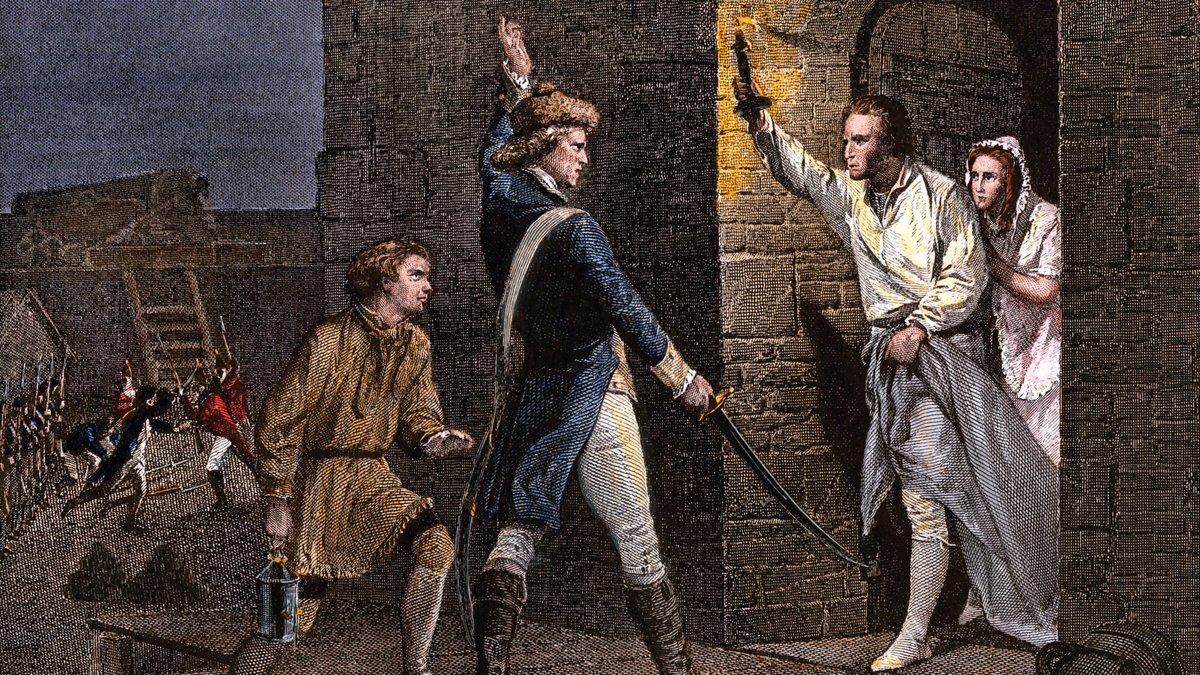
251 years ago this week, a 6'2" Vermont moonshiner with no military experience and no authorization from anyone captured the most strategically important fort in North America at dawn, and accidentally won the Revolutionary War before it had really started. It's May 1775. Lexington and Concord happened three weeks ago. The colonies have muskets but almost no cannon. The British, sitting in Boston, have plenty. Everyone knows that without artillery, the rebellion is over by autumn. Everyone also knows where to get artillery: Fort Ticonderoga. A stone star-fort on Lake Champlain, bristling with roughly 80 heavy guns. The British call it "the Gibraltar of America." It's the bottleneck of the entire continent. Whoever holds it controls the invasion route between Canada and New York. ​What the rebels don't know, but Ethan Allen has heard, is that "the Gibraltar of America" is, by 1775, mostly held together by moss. The walls are crumbling. The garrison is 48 men, many of them invalids and pensioners. The commander hasn't even been told a war started. Allen is not a soldier. He's a frontier land speculator who runs an armed militia called the Green Mountain Boys, originally formed not to fight the British, but to beat up New York surveyors trying to seize Vermont farms. New York has literally put a bounty on his head. He decides to go take the fort anyway. Halfway there, a man named Benedict Arnold shows up on horseback with a Massachusetts colonel's commission, waving paperwork, demanding command of the expedition. The Green Mountain Boys threaten to go home if Arnold is in charge. Allen and Arnold agree to "joint command," which mostly means walking next to each other in furious silence. They reach the lake at midnight. Problem: they have 200 men and exactly two leaky boats. By 3 AM only 83 have made it across. Dawn is coming. Allen decides to attack with what he has, meaning roughly 1 American for every half-cannon inside the fort. ​A lone British sentry sees them coming through the wicket gate, levels his musket at Allen's chest, and pulls the trigger. The musket misfires. He runs. The Americans pour in. Total resistance to the capture of British North America's most important inland fortress: one wet flintlock. Allen pounds on the officers' quarters with the flat of his sword. Lt. Jocelyn Feltham stumbles out half-dressed, asking by what authority Allen is there. Allen, by his own later account, roars: "In the name of the Great Jehovah and the Continental Congress!" (Other witnesses remembered the wording as substantially more profane. The Continental Congress, for its part, had no idea any of this was happening.) Captain Delaplace, the actual commander, emerges still buttoning his trousers and surrenders the fort, its 78 cannons, its garrison, and roughly 30,000 musket flints without a shot fired by either side. Casualties: zero. Time elapsed: about ten minutes. But here's the part that actually changed history. Those cannons sat at Ticonderoga for six months until a 25-year-old, 280-pound Boston bookseller named Henry Knox, who had learned artillery from books in his own shop, volunteered to go get them. In the dead of winter, Knox and his men dragged 59 cannons weighing 60 tons across 300 miles of frozen rivers, the Berkshires, and unbroken snow, on 42 ox-drawn sleds. One gun fell through the ice of the Hudson. They fished it out and kept going. It took 56 days. On the night of March 4, 1776, those cannons were hauled silently up Dorchester Heights overlooking Boston Harbor. The British woke up on March 5 to find every ship in the harbor and every redcoat in the city under the muzzles of guns that, six months earlier, had belonged to them. Eleven days later, the British evacuated Boston. They would never hold it again. An unauthorized raid by 83 backwoodsmen, led by a wanted man and a future traitor, against a fort defended by a captain in his pajamas, became the artillery that drove the British army out of the largest city in the American colonies. Easiest W in American history. Possibly the most consequential ten minutes of the 18th century.
Echoes of War tweet media
English
133
1.4K
8K
216.6K
gwandr retweetledi
zostaff
zostaff@zostaff·
The founder of Renaissance Technologies - the hedge fund that makes 66% a year, runs the most secretive trading floor on Earth, and has never accepted outside money - once stood in front of 500 mathematicians and explained exactly how he did it. Jim Simons. The Einstein Lecture. American Mathematical Society. 1 hour 20 minutes.They left it on a small university channel. Almost nobody knows it exists. No one's talking about it. Bookmark it before they do. Then read the article below.
zostaff@zostaff

x.com/i/article/2050…

English
41
288
2.4K
523K
gwandr retweetledi
Vatnik Soup
Vatnik Soup@P_Kallioniemi·
Andy Serkis reading Trump's tweets in Gollum's voice is the best thing you'll see on social media today.
English
202
5.3K
20.2K
867.7K
gwandr
gwandr@wittgs0·
@smalleychris @Scaramucci lol, you had to hit below the belt didn’t you. Dems can’t get out of their own way. I’d be a Republican if yall were halfway sane.
English
0
0
1
4
Chris Smalley
Chris Smalley@smalleychris·
@wittgs0 @Scaramucci Well thankfully you all are still for open borders, sanctuary cities, defund the police, boys in girls locker rooms and sports, free healthcare for all illegals, free trans surgery for all, oops out of room to keep typing
English
1
0
0
78
gwandr retweetledi
Anthony Scaramucci
Anthony Scaramucci@Scaramucci·
Trump ripped up a working agreement, fought a war, took a billion barrels off the market, tanked his own approval, and is now negotiating roughly the same deal from a weaker position.
English
386
1.7K
7.9K
136K
gwandr retweetledi
Arnaud Bertrand
Arnaud Bertrand@RnaudBertrand·
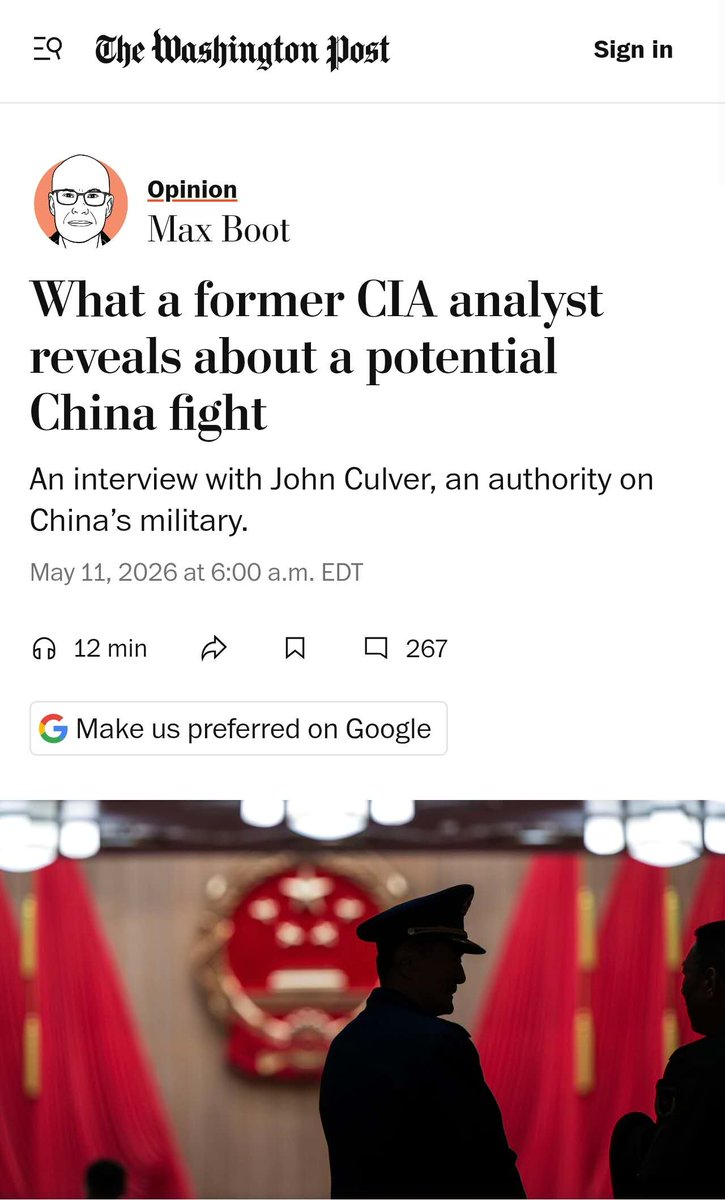
What's going on? Are neocons having a come-to-Jesus moment? After Bob Kagan writing an article on how the U.S. is facing "total defeat" in Iran (see x.com/RnaudBertrand/…), you now have Max Boot - the very author of “The Case for American Empire” and one of the most vocal advocates for the Iraq war - publishing a Washington Post interview explaining that China has surpassed the U.S. in most military domains. If anything, Boot’s interview is even more devastating than Kagan's piece, because it's not editorial opinion - he’s interviewing John Culver, a former top CIA analyst (he was national intelligence officer for East Asia) and one of the world’s foremost authorities on the Chinese military which he’s been studying since 1985. This isn't a pundit opining - this is someone who spent decades inside the intelligence community staring at the actual data. So what is Culver saying? 1) In case of war with Taiwan, the U.S. will flee the theater This is undoubtedly the single most stunning revelation in the entire piece. Culver says that - as far as he is aware - the Pentagon’s plan in case of war with Taiwan is… flee! This is the exact quote: "I think some of the thinking in the Pentagon, and it may have evolved since I retired, is that when we think there’s going to be a war, we need to get our high-value naval assets out of the theater, and then we would have to fight our way back in. From where, it’s not clear. Guam is no bastion either." Why? Because, as he explains, any high-value U.S. assets would be sitting ducks in the entire area. China can strike U.S. forces deployed to Japan, Australia, or South Korea “in a way that Iran really can't” and, given that Iran has hit at least 228 targets across U.S. bases in the Middle East - forcing the U.S. to evacuate most of them - that's saying something. Also, U.S. aircraft carriers would need to operate within 1,000 miles of the fight to matter, which - given it’s well within range of Chinese missiles - they won’t. As Culver bluntly puts it: “There's really no safe spaces.” 2) China leads in most military domains - and it's not even close Culver says that “it’s hard to not be hyperbolic” about China’s military capabilities and that, at this stage, “it’s hard to point to an area other than submarines and undersea warfare and say the United States still has an advantage.” In some critical areas, such as advanced munitions - which, when it comes to war, is pretty damn relevant - his assessment is that China leads by “magnitudes.” As a reminder, an order of magnitude means 10x so, by assuming he knows that and meant what he said, “magnitudes” means at least a hundred times more, meaning U.S. capabilities would be less than 1% those of China. At the same time, Culver also says that “whichever side runs out of bullets first is going to lose.” So if China produces “magnitudes greater than our industrial base could produce” - as he puts it - then you don't need a PhD in military strategy to put two and two together… The picture, if anything, is even more damning in shipbuilding capabilities. He reminds that a single shipyard in China - Jiangnan Shipyard, on Changxing Island near Shanghai - “has more capacity than all U.S. shipyards combined.” Put all Chinese shipyards together and China’s broader naval shipbuilding capacity is 232 times larger than that of the United States (and this is from a leaked U.S. Navy briefing slide). Culver helpfully adds that China “deploys enough ships every year to replicate the entire French navy” - which, as a Frenchman, hurts a little, but at least we'll always have the cheese (I hope). 3) Despite this, a war in Taiwan is highly unlikely If your only window into China is Western media coverage, you'd naturally assume all of the above means war over Taiwan is about to break out. After all, if China is so powerful and the U.S. so outmatched, why wouldn't it just take Taiwan and be done with it? Culver’s assessment - and mine, incidentally - is the exact opposite: China’s increasing relative strength vis-a-vis the U.S. makes war less likely, not more. How so? As Culver explains Taiwan is “a crisis Xi Jinping wants to avoid, not an opportunity he wants to seize.” The stronger China gets, the less it needs to fight: why launch a war when you can simply wait for the military balance to become so lopsided that the U.S. quietly drops its security guarantee on its own? Culver himself foresees a future “when Americans might start to say, maybe Taiwan is a war we don’t want to get involved in.” That would almost automatically mean peaceful reunification, which has always been China’s primary objective. This doesn't mean China views the U.S. as harmless. Quite the contrary - Culver says Beijing sees America “as a very militarily aggressive country” that is “declining in power and becoming more violent” as a result. Which he says is one further reason why “war over Taiwan is not something that Xi Jinping is looking for.” China doesn't want to hand a pretext to a dangerously trigger-happy power - all the more when patience alone delivers what it wants. 4) The game is up Last but not least, perhaps the most revealing aspect of the interview is that Culver doesn’t seem to see a way out: this is structural and irreversible. Asked by Boot whether “the Trump administration’s $1.5 trillion defense budget, assuming it’s approved, [would] change the trend lines” (which, as a reminder, would constitute a 50% increase in defense spending), his reply is that “it would probably help to some extent, but I worry that we could be throwing good money after bad.” Not exactly brimming with optimism… Similarly, when asked why the U.S. keeps investing billions in aircraft carriers and even “Trump-class battleships,” his answer is that it's because “the military services have a nostalgia for the things that meet their expectations for how you get promoted.” In other words, wasted money. Same thing for the Pentagon's much-hyped “Hellscape” drone strategy to defend Taiwan. Culver asks the obvious question: “What drones are you talking about launching from where?” He points out that they’d “have to pre-deploy them if not on Taiwan itself then on Luzon or the Japanese southwest islands, all of which can be struck by the Chinese.” He adds that this is “the tyranny of time and distance when you look at war in the Pacific.” The picture that emerges, both from Boot’s Culver interview and Kagan’s article, is remarkably consistent: the U.S. is “checkmate” in the Middle East, would need to entirely flee the Pacific theater before a war even starts, cannot produce enough weapons, cannot keep its supposed “allies” safe, and has no strategy to reverse any of it - nor can one even be produced given the structural nature of the gap. Even a 50% increase in defense spending, Culver says, would be “throwing good money after bad.” That's not my assessment - that's theirs. Two of America's most prominent hawks, in two of its most establishment outlets, in the space of 48 hours, have essentially published the obituary of American military primacy. Yesterday I concluded my post by saying that even the arsonists now smell the smoke. Today I'll say: the arsonists are now writing the fire report.
Arnaud Bertrand tweet media
Arnaud Bertrand@RnaudBertrand

There’s no overstating how extraordinary this Atlantic article is, given the author and the outlet. As a reminder Bob Kagan is: - The co-founder of Project for the New American Century, probably the single most imperialist Think Tank in Washington (which is quite a feat) - A man who spent his entire life advocating for American military interventions, especially in the Middle East, and a vocal advocate of the Iraq war. He started advocating for intervention in Iraq before 9/11, which speaks for itself... - The husband of Victoria Nuland, an extremely hawkish former senior U.S. official (a key architect of U.S. policy in Ukraine, with the consequences we all witness today) - The brother of Frederick Kagan, one of the key architects of the Iraq surge In other words, we ain’t exactly looking at some sort of anti-imperialist peacenik. This is quite literally the guy Dick Cheney called when he needed a pep talk. And the man is writing in The Atlantic, the most reliably pro-war mainstream media outlet in the U.S. (also quite a feat). So when HE writes that the U.S. “suffered a total defeat” in Iran that has no precedent in U.S. history and can “neither be repaired nor ignored,” it’s the functional equivalent of Ronald McDonald telling you the burgers aren’t great: it means the burgers really, really aren't great. Extraordinarily (and somewhat worryingly, for me), his arguments for why this is such a defeat are virtually the same as those I laid out in my article “The First Multipolar War” last month (open.substack.com/pub/arnaudbert…). Here they are 👇 1) Vietnam/Afghanistan were survivable, this isn't He agrees that this war - and the U.S. defeat - is fundamentally different in nature from previous U.S. interventions. Where I wrote that the wars in Vietnam and Afghanistan didn’t change the equation much in terms of power dynamics (“in the grand scheme of things, the giant walked away with little more than a bruised ego”), Kagan writes that “the defeats in Vietnam and Afghanistan were costly but did not do lasting damage to America's overall position in the world.” And when I wrote that “it’s painfully obvious that the Iran war is of a qualitatively different nature” from these, he writes that “defeat in the present confrontation with Iran will be of an entirely different character.” Same point. 2) Iran will never relinquish Hormuz and uses it as selective leverage When I wrote that Iran has turned “freedom of navigation” on its head by establishing “a permission-based regime” through the Strait of Hormuz, Kagan arrives at the same conclusion: “Iran will be able not only to demand tolls for passage, but to limit transit to those nations with which it has good relations.” He also agrees that “Iran has no interest in returning to the status quo ante,” when I myself cited Iran’s parliament speaker Ghalibaf in my article, saying: “The Strait of Hormuz situation won’t return to its pre-war status.” Same point and virtually the same words. 3) Gulf states will have to accommodate Iran He agrees that most Gulf states will have no choice but to accommodate Iran, effectively making Iran into a, if not THE, dominant regional power. Kagan writes “the United States will have proved itself a paper tiger, forcing the Gulf and other Arab states to accommodate Iran.” On my end, I wrote that “the Gulf monarchies will eventually have to choose between two security propositions. One where they stay aligned with a distant superpower that [can’t protect them]. The other proposition being: make peace with the regional power that just proved it can hit [them] whenever it wants.” Which is not much of a choice… 4) Military impossibility to reopen Hormuz Kagan writes that “if the United States with its mighty Navy can't or won't open the strait, no coalition of forces with just a fraction of the Americans' capability will be able to, either.” On my end, in my article I cited Germany’s defense minister Boris Pistorius: “What does Trump expect a handful of European frigates to do that the powerful US Navy cannot?” The exact same argument. 5) Global chain reaction Kagan agrees that this is a global strategic failure that fundamentally changes the U.S.’s position in the world. As he puts it: “America's once-dominant position in the Gulf is just the first of many casualties… America's allies in East Asia and Europe must wonder about American staying power in the event of future conflicts.” You’ll have guessed it, I wrote essentially the same thing: “Think about what it says if you’re Saudi Arabia, quietly watching your American-built defenses fail to protect your own refineries. Or any European country now facing the worst energy shock since 1973, caused not by your enemy but by your ally, and realizing that said ‘ally,’ supposedly in charge of ‘protecting’ you, couldn’t even protect Israel’s most strategic sites - when it’s the country with which it’s joined at the hip. I’m not even speaking about China or Russia who are seeing their worldview being validated on almost every axis simultaneously.” 6) Weapons stocks depleted, credibility shattered Kagan: “just a few weeks of war with a second-rank power have reduced American weapons stocks to perilously low levels, with no quick remedy in sight.” Me: “America’s most advanced weapons systems are much more vulnerable than previously thought - not theoretically, but in actual combat.” Kagan: “America's allies… must wonder about American staying power in the event of future conflicts.” Me: “The U.S. security guarantee has been empirically falsified in real time.” ----------- So, yup, Bob Kagan and I agree on nearly everything. I need a shower 🤢 Reassuringly though, we still differ on a few fundamental aspects. First of all, arguably the most important one, the moral aspect. In typical neocon fashion, his article contains not a word about the human cost of this war - not the 165 schoolgirls, not the devastation inflicted on Iranians during 37 days of bombing, not the toll this war is taking on the entire world through its devastating economic consequences (the economic devastation on ordinary people worldwide is referenced only as a political problem for Trump). For him, this is purely a strategic chess problem, morality and people don’t figure in his mental map. For me, the moral bankruptcy of this war isn't separate from the strategic failure - it is the strategic failure. Much like Gaza can only be a failure because of its sheer abjectness. Secondly, there is not an instant of reflection in the article on how we got there. Which is unsurprising because he personally, alongside his wife, his brother, and every co-signatory of every PNAC letter, spent a generation pushing for exactly this kind of confrontation. The man spend 30 years advocating for military dominance in the Middle East and hostility towards Iran, thereby forging them as an adversary and facilitating this very war that he now says has “checkmated” America. I know introspection has never been the neocon forte but at some point you have to stop setting houses on fire and then writing op-eds about how surprising the smoke is. Last but not least, we differ on what should be done. This is the funniest part of Kagan’s article - showing that the man is decidedly beyond salvation. On one hand he calls this a “checkmate” by Iran, and a U.S. defeat that can “neither be repaired nor ignored,” yet an the other hand his solution for it is… surprise, surprise… a bigger war still! He writes that what’s to be done is “engage in a full-scale ground and naval war to remove the current Iranian regime, and then to occupy Iran until a new government can take hold.” The arsonist's solution to the fire is a bigger fire ¯\_(ツ)_/¯ For my end, this was the conclusion of my previous article: "There is almost a Greek tragedy quality to U.S. actions lately where every move taken to escape one’s fate becomes the mechanism that delivers it. The U.S. went to war to reassert dominance - and proved it could no longer dominate. It demanded allies send warships - and revealed it had no real allies. It waged forty years of maximum pressure to break Iran before this moment came - and instead forged the very adversary now capable of meeting it. It started the war in part to have additional leverage over China - and handed the world the spectacle of begging China for help. The prophecy was multipolarity. Every American action to prevent it reveals it instead." I wouldn’t change a word. The only thing that's changed since I wrote it is that even the arsonists now smell the smoke. Src for the Atlantic article: theatlantic.com/international/…

English
157
1.2K
3.4K
404.4K
gwandr
gwandr@wittgs0·
@smalleychris @Scaramucci The only good is the midterms are coming and the GOP will get deservedly defeated & hopefully destroyed as the cancer it is
English
1
0
0
8
gwandr
gwandr@wittgs0·
@smalleychris @Scaramucci The strait, revealed to collapse of U.S.’s hard & soft power w allies & inability to guarantee maritime commerce - it’s been a win for China who’s not so secretly refilling Iran missle/drone supplies - here’s a conservative take flip.it/8xFCMU
English
1
0
0
30
Tony Greer
Tony Greer@TgMacro·
Just back from University of South Carolina graduation. My 2nd daughter graduated Magna Cum Laude from the Darla Moore School of Business and wanted to go to Waffle House. She rules. @Moore_ExecEd @UofSC
Tony Greer tweet media
English
85
3
764
27.2K
Stephen A Turner
Stephen A Turner@StephenATurner·
I’m in the 1% of fans who believe NINE can give Kyler a run for his money at training camp. #SKOL
GIF
English
144
47
1.1K
19.5K
gwandr retweetledi
Sprinter Press Agency
Sprinter Press Agency@SprinterPress·
The former British intelligence officer and geopolitical expert Alastair Crooke recently stated: Iran has given Trump 30 days to accept a new agreement with Iran on Iran's own terms. The geopolitical situation is changing rapidly. Iran demands Trump's complete surrender - something Trump's consciousness is unable to understand or accept. Iran has concluded that a new military attack is imminent and has fully prepared for it. During Trump's recent phone conversation with Putin, Putin told Trump that if military actions against Iran resume, Iran will escalate the situation on a very large scale; this will drag everyone into war and cause chaos in the global economy. Putin also stated that new elements will appear in the war if an attack on Iran takes place. China recently activated the "2021 Blocking Law" against US extraterritorial sanctions. This law prohibits Chinese banks, companies, and oil refineries from recognizing US sanctions, as according to the law, submitting to these sanctions is considered illegal. China has also announced that from now on, any commercial entity using the Panama Canal will be denied access to Chinese ports anywhere in the world. The Panama Canal was mainly used for shipments to China, and now China has closed this route. 🚫 More than 70-75 percent of American ships use the Panama Canal. 🚫 These are extremely serious measures that China is taking against the US. 🚫 These are China's extraterritorial measures. 🚫 The meeting between Trump and Xi, if it ever takes place, will be extremely difficult.
English
23
290
585
33.8K