Writing Snake

6.8K posts

Writing Snake banner
Writing Snake

Writing Snake

@writing_snake

Screaming into the void.

Katılım Ağustos 2022
279 Takip Edilen31 Takipçiler
Writing Snake retweetledi

Sci-Fi Archives
Sci-Fi Archives@SciFiArchives·
Soviet VKK flight suit
Sci-Fi Archives tweet mediaSci-Fi Archives tweet media
Nederlands
48
1.2K
19.5K
322.3K
Writing Snake retweetledi
Missileman
Missileman@MinuteofZombie·
What the armed forces never denied in practice but politicians deny for cultural reasons is that combat fitness standards were not derived by scientifically calculating how fast or strong or enduring you have to be to survive the battlefield. They have ALWAYS been calculated by looking at population distributions and selecting a value that gives you the force size you want. So if a 6:00 mile yields only 5% of recruits and the average Ranger indoc class size is 200 and you want about 10 guys per class to graduate because of the force size you want, you choose the standard to be a 6:00 mile. That’s literally how they do it. Has nothing to do with “what it takes to survive”.
Tom Cotton@SenTomCotton

Battlefields are equally dangerous for men and women. @USArmy is rightfully returning to a single, mission based physical fitness standard.


English
91
168
4.2K
452.2K
Writing Snake retweetledi
Jennifer Keesmaat
Jennifer Keesmaat@jen_keesmaat·
Who is still having kids? People in dense, lower-rise, walkable neighbourhoods, according to The Economist. Maybe less personal space isn’t the disaster suburban housing apologists claim it is. Turns out shorter commutes, parks, transit, and walkable daily life are actually pretty appealing when raising kids. Who knew 😉
Alicia, Courtyard Urbanist@UrbanCourtyard

The fertility bump detailed in the Economist is in Park Slope, Brooklyn, and Wicker Park, Chicago. These are precisely the kind of low-rise, high-density, fine-grained neighborhoods that everyone wants but no one builds anymore (thanks to anti-scientific building codes and misguided development norms)

English
39
66
602
65.4K
Writing Snake retweetledi
big_pedestrian
big_pedestrian@big_pedestrian·
Driving is one of the most subsidized things we do. Harvard estimated $12K/yr in subsidies: every aspect of land use (parking mandates, LOS), oil subsidies and military action to procure it, police and fire, and insurance that only requires the driver cover $25K in bodily injury.
Dominic Pino@DominicJPino

D.C. transit ridership has recovered from the pandemic better than most U.S. transit systems, after falling further. Yet taxpayers who don’t take the train or bus are increasingly subsidizing those who do, and it’s not sustainable. 🧵

English
7
13
149
9.3K
Writing Snake retweetledi
Mæster Gekko
Mæster Gekko@MGecko117·
Druk spec ops unit. Druks are known for their extremely long lifespans, a result of their ultra-stable, nitrogen-polymer-based cold biochemistry. Some of these elite soldiers have served in their emperor’s royal army for close to a millennium. They are the living embodiment of the phrase, “fear the old man in a profession where men die young.”
Mæster Gekko tweet media
Mæster Gekko@MGecko117

Druk Yul is a cryovolcanic moon orbiting a Class I gas giant and the homeworld of the Druk species. Not much is known about its detailed characteristics, as permission to land on its surface is rarely granted to outsiders by the Druk Emperor

English
11
130
1.1K
19.9K
Writing Snake retweetledi
Humanoid History
Humanoid History@HumanoidHistory·
Syd Mead's 1975 concept for the Kentucky Derby of the future. Take note of the anti-gravitational comms hub floating over the infield with signage that reads INTRNET. (The term "Internet" was coined in 1974.)
Humanoid History tweet media
English
4
213
1.3K
35.4K
Writing Snake retweetledi
Law in Japan
Law in Japan@Colin_P_A_Jones·
I worked on one stage of the JR privatization and this is greatly oversimplifies what actually happened and ignores some important realities. First, three of the seven JR companies (Hokkaido, Shikoku, Cargo) are still 100% government owned, and were probably never expected to be viable as public enterprises. I was surprised that JR Kyushu was successfully privatized completely - and got Shinkansen - because at the time I was involved (in another company) the conventional wisdom was that only the Honshu companies could succeed as private enterprises. Second, the privatization also involved parking a large chunk of liabilities in a special entity that was NOT privatized. In fact the part of the privatization I worked on was delayed because the government unilaterally decided the new JR companies had not taken enough of the JNR pension liabilities on their books and added some more. Probably one of the most significant aspects of the privatization was the public service workforce reduction it entailed but that was a problem for the government, not the JR companies. Third, the JR companies became private (but first government-owned) companies with valuable assets (the commuter and HSR rail networks) build with public funds as well as a portfolio of highly desirable real estate (high traffic train stations) in choice locations. Fourth, as far as I know any new HSR train lines built since the privatization were publicly funded, since new JR company could afford to build them on a commercially viable basis otherwise. Fifth, train fares are still regulated, and JR East only recently increased fares for the first time in decades… Thus, rather than a simplistic public > private transformation, the whole exercise involved a rebalancing of assets, liabilities and risks between the public and private sector, but both remain important to the whole construct. In any case there was serious planning and government decisions around what was necessary to have at least three commercially-viable JR companies (East, West and Tokai) as a result. So probably more an example of a successfully executed privatization with continuing government involvement, rather than a “private enterprise good, government bad” story.
English
36
144
1.4K
39.5K
Writing Snake retweetledi
Hayden
Hayden@the_transit_guy·
In order for Amtrak to replicate Japan, you have to: 1) Nationalize the railways 2) Give them eminent domain authority 3) Let them own and build density around their stations 4) Give them money for capital expenses All of which the “privatize trains” people don’t support.
Handre@Handre

The Japanese railway privatization of 1987 stands as one of the most devastating defeats ever dealt to statist transportation mythology. The government split the bloated Japan National Railways into seven regional companies, sold them off, and watched private ownership transform a bankruptcy-bound disaster into the world's most efficient rail system. JNR hemorrhaged money for decades before privatization. By 1987, the state railway carried debt equivalent to $200 billion in today's money while delivering mediocre service plagued by strikes and inefficiency. Politicians treated it as a jobs program rather than a transportation service. The predictable result: chronic losses, deteriorating infrastructure, and customer service that reflected government monopoly arrogance. Private ownership changed everything overnight. The new JR companies slashed operating costs by 40% within five years while dramatically improving service quality. JR East alone now generates annual profits exceeding $3 billion. These companies invest billions in cutting-edge technology, maintain punctuality rates above 99%, and operate the world's most advanced high-speed rail networks. They achieved this without a single yen of operational subsidies. The transformation reveals a core dynamic of transportation infrastructure: private companies must satisfy customers to survive, while government monopolies need only satisfy politicians. JR companies diversified into real estate, retail, and hospitality around their stations, creating integrated profit centers that cross-subsidize rail operations. Government railways never innovate this way because bureaucrats face no market pressure to generate returns. Meanwhile, Amtrak burns through $2 billion in annual subsidies while delivering third-world service across most routes, and European state railways require massive taxpayer bailouts every few years to stay solvent.

English
110
654
5.5K
269.6K
Writing Snake retweetledi
phriendly photog
phriendly photog@phriendlyphotog·
This is how NIMBYs of public transit or other such projects should be handled. If they force you back to the drawing board, you enhance the project, not scale it back. Make them regret taking you to court, and send a message that delay-tactic litigation will not be tolerated.
Streetsblog New York City@StreetsblogNYC

After an anti-bike lane lawsuit sent the Department of Transportation back to the drawing board on 31st Street in Astoria, the agency is responding… with a plan for an even longer bike lane on the deadly corridor. nyc.streetsblog.org/2026/04/15/mam…

English
7
231
2.2K
51.6K
Writing Snake retweetledi
FactPost
FactPost@factpostnews·
15 Chicago wards experienced zero traffic fatalities in 2025 under Mayor Brandon Johnson's Complete Streets initiative.
FactPost tweet mediaFactPost tweet media
English
92
487
4.3K
2.3M
Writing Snake
Writing Snake@writing_snake·
@LimeOvrPortland @GwenpostingTTV Because there is one train a day and you’re trying to get on it tomorrow. Meanwhile four months from now, a ticket on the silver meteor is 186 for a coach seat and 680 for a private room. But that’s a slow long-distance train for holidaymakers, not a fast regular commuter.
English
1
0
0
14
Johnjeet
Johnjeet@LimeOvrPortland·
@GwenpostingTTV It costs over $1,000 to take a one way train from Philadephia to Miami.
English
1
0
1
218
Writing Snake retweetledi
Mark R. Brown, AICP, CNU
Mark R. Brown, AICP, CNU@CompletedStreet·
For a few short years America had the best architecture in the world.
Mark R. Brown, AICP, CNU tweet media
English
24
139
1.2K
237.9K
Writing Snake retweetledi
Mæster Gekko
Mæster Gekko@MGecko117·
Close quarters combat is Apollyon’s specialty
Mæster Gekko tweet media
English
22
195
2.1K
18.7K
Writing Snake retweetledi
Alex Armlovich
Alex Armlovich@aarmlovi·
@mattyglesias Chicago grew from a village of 30,000 to one of the world's largest cities, with 1.7M people, in just 50 years If we'd had modern "housing needs" planners and "incrementalist zoners" in charge, Chicago would simply not exist. What a diaster. x.com/aarmlovi/statu…
Alex Armlovich@aarmlovi

@seth_zeren @PEWilliams_ Chicago and NYC's slum-ending expansion after the first Els & subways are my favorite era Imagine watching Chicago grow from a frontier town in your childhood into literally Paris by the time you retire nationalreview.com/magazine/2020/…

English
8
39
414
28.9K
Writing Snake retweetledi
Austin Tunnell
Austin Tunnell@AustinTunnell·
I always come back to Steve Job’s on design philosophy: start with the human experience—in the built environment “how we want to live”—and then back into the hardware (and the rules, regs and incentives).
Chris Powers@fortworthchris

"We build our American cities around fire trucks… …We should design our cities, then make the fire trucks fit." In America, we have the largest fire trucks in the world— and they’re quietly shaping how our cities look, feel, and function. In this clip with @AustinTunnell , we break down how one overlooked policy is leading to worse urban design.
English
7
40
311
22.7K
Writing Snake retweetledi
Mark R. Brown, AICP, CNU
Mark R. Brown, AICP, CNU@CompletedStreet·
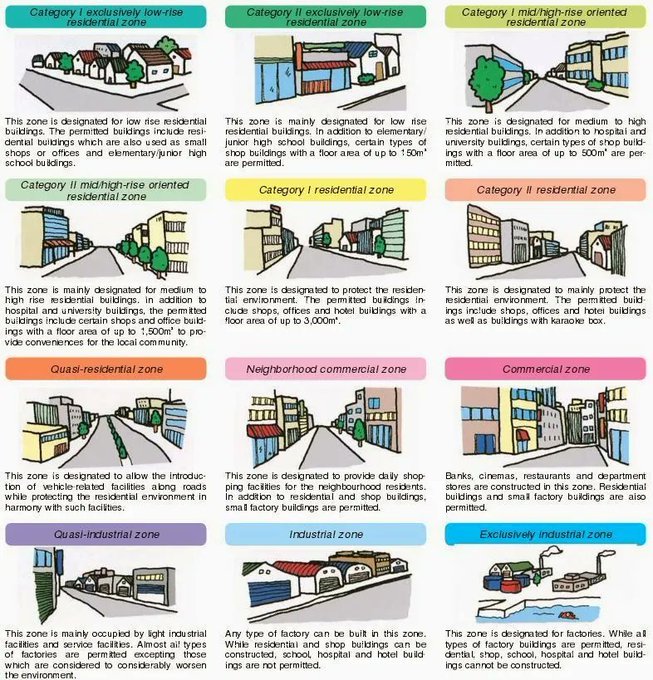
A gentle reminder that Japan has only 12 national zoning codes and they're all mixed use and wonderful. (Link in reply)
Mark R. Brown, AICP, CNU tweet media
English
6
44
255
13.2K