Deelan Jariwala
11.6K posts

Deelan Jariwala
@WxTca
Incoming graduate student at the University of Alabama - Huntsville, likes the tropics (a lot) UM ‘26 (meteorology, mathematics)


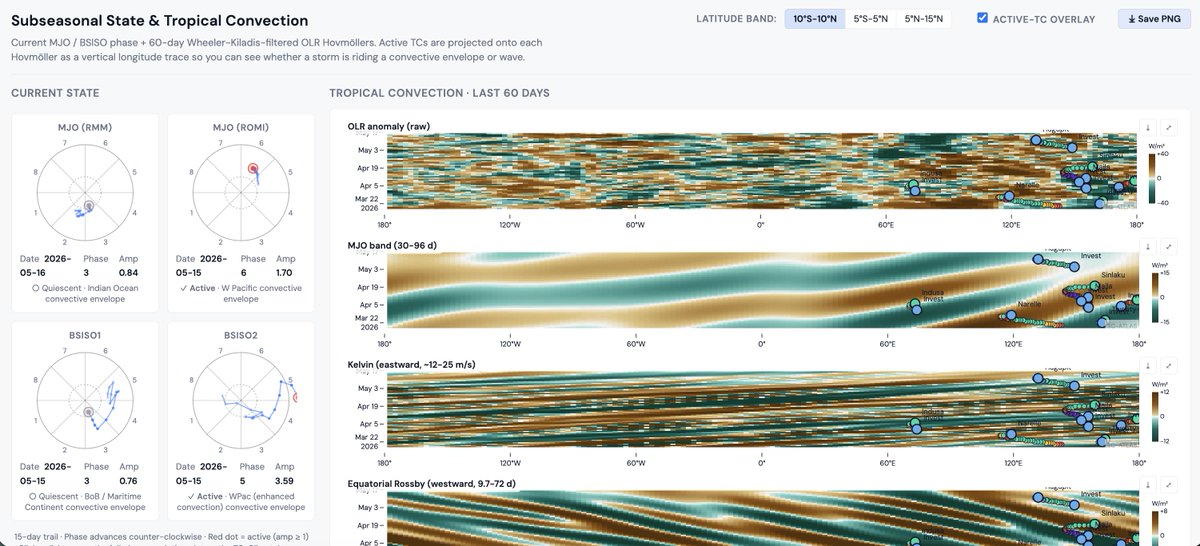
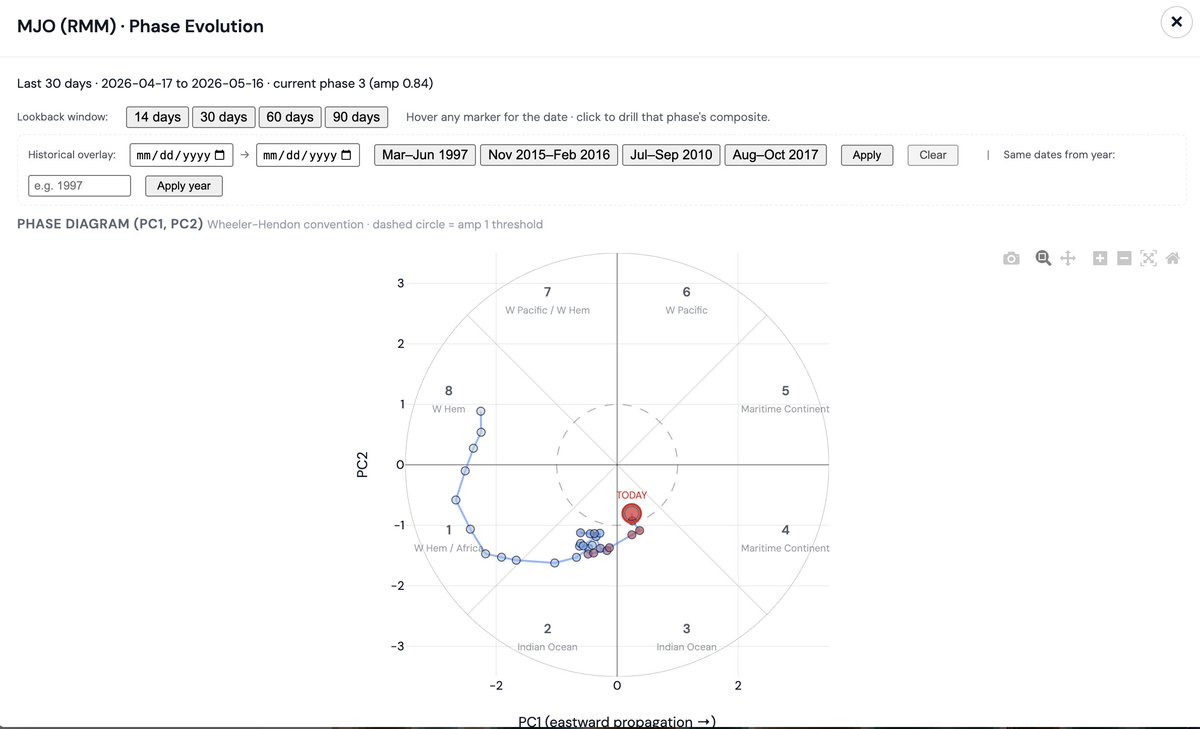
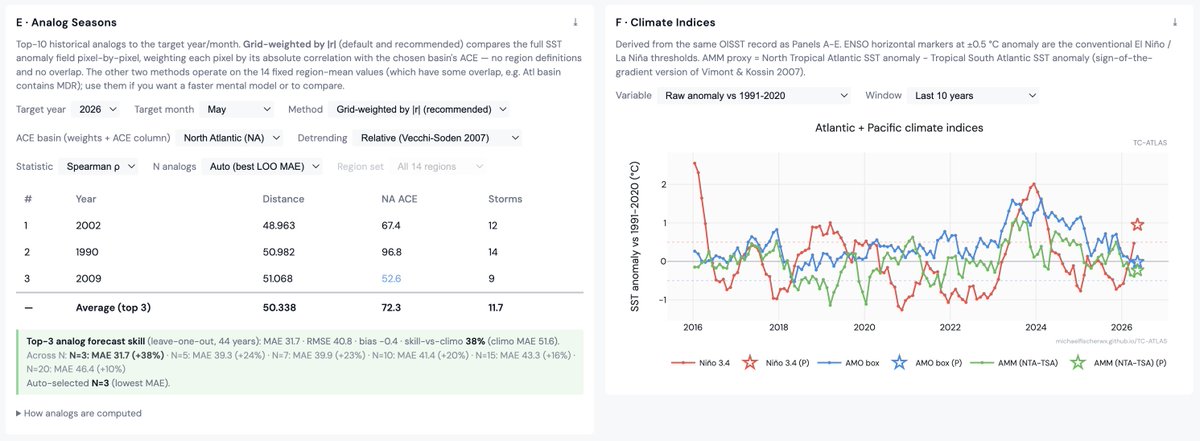
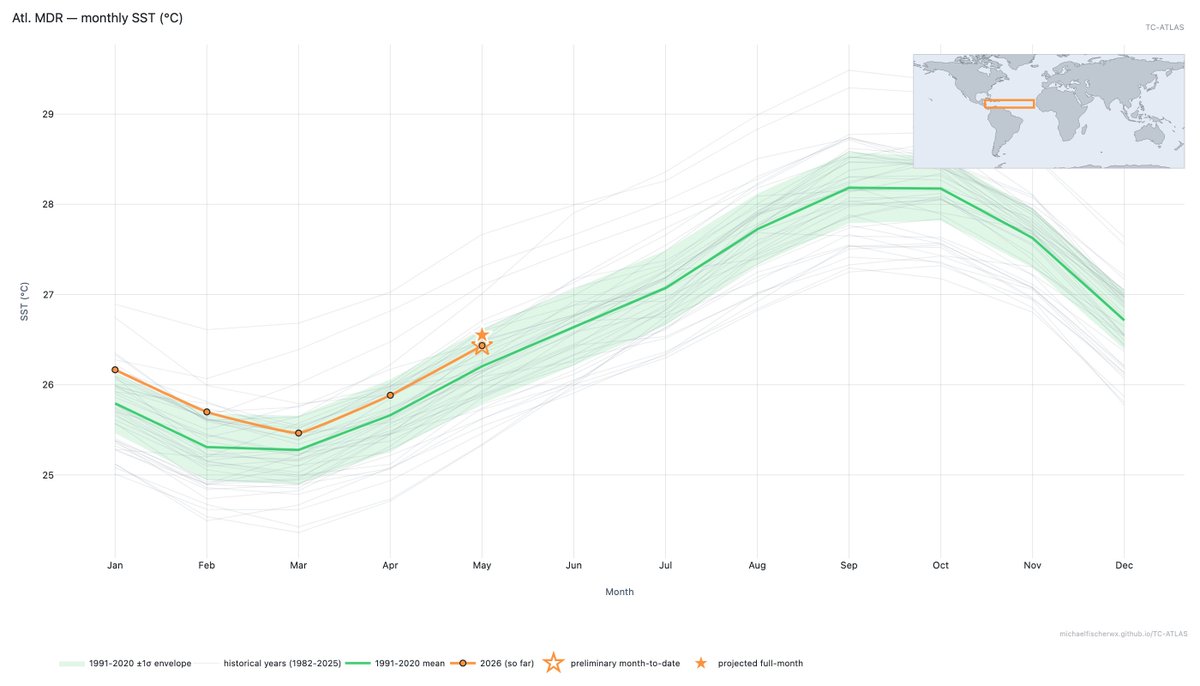
TC-ATLAS now features real-time subseasonal and seasonal monitoring pages with interactive diagnostics. Compare how the ongoing evolution differs from historical events and discover their impacts on hurricane activity here: #seasonal" target="_blank" rel="nofollow noopener">michaelfischerwx.github.io/TC-ATLAS/realt…


Interested in hurricanes? I want to introduce TC-ATLAS: the Tropical Cyclone Analysis Tool for Live and Archived Structure. Explore live or past storms without writing a line of code or downloading a data file, building on the capabilities of TC-RADAR: michaelfischerwx.github.io/TC-ATLAS/index…


MONDAY, May 18 has the makings of a potential Great Plains tornado outbreak. Severe weather risk will extend into the Upper Midwest and Corn Belt as well. Now is the time to review your severe weather plan. Current indications are that extreme thunderstorm fuel will be present ahead of a dryline/cold front combination. The air mass will be primed for explosive development. One uncertainty across Iowa/southeast Minnesota/Wisconsin is whether Sunday night's storms leave behind cool air that reduces thunderstorm fuel. That may ensue, reducing severe weather risk north. Sunday night's storms could also leave behind an outflow boundary (exhaust/wind shift) that would serve as a focal mechanism for storms Monday. TBD. But in southeast Nebraska, central/eastern Kansas, western Missouri and Oklahoma, we expect an upper-echelon severe weather outbreak, with a few significant/strong tornadoes likely. A high-altitude jet stream disturbance will serve as the afternoon trigger for storms. A pulse of jet stream energy will be swinging overhead at 40-45 knots. Jet streak translation speeds over 40 knots are frequently associated with significant tornado events. Beyond the general risk area outlined by the Storm Prediction Center, @MatthewCappucci is especially concerned about southern Kansas and northern Oklahoma. That's where there will be slightly fewer storms since the trigger is only "fringing" the region. But fewer storms = less competition = stronger storms = higher-end supercells. Any supercells that are isolated/discrete around 6 or 7 p.m. Monday will be invigorated by the low-level jet stream, which will ramp up later in the day. That could lead to isolated intense (EF3+) tornado potential. We have a LOT to iron out, but we'll be doing so in the days ahead. Please stay tuned and stay safe.


@Sekai_WX @xiaoqianWX Don't forget @WxTca, he's the one who actually contacted JMA and got the data initially.