Wanyu Zhao

17 posts

Wanyu Zhao

Wanyu Zhao

@wynlla

UIUC CS PhD

Urbana, IL Katılım Mart 2021
171 Takip Edilen23 Takipçiler
Wanyu Zhao retweetledi
OptimaLab
OptimaLab@optimalab1·
The AI research paradox we're all living: 📚 Hundreds of papers hit ArXiv daily. Keeping up = impossible. Two paths: 🎯 Follow your genuine ideas (risk: get scooped) 🏃‍♂️ Chase what "big dogs" do (risk: lose your soul) I'm jealous of researchers from eras when ideas could breathe without market pressure, when "boring" wasn't death. But honestly? Can't complain. AI/ML is Disneyland for researchers - infinite fascinating problems everywhere you look. The real skill isn't keeping up with everything. It's learning which noise to ignore while catching the meaningful signals. How do you navigate this? 🤔 #AI #Research #MachineLearning
OptimaLab tweet media
English
0
2
11
616
Wanyu Zhao retweetledi
Alex Dimakis
Alex Dimakis@AlexGDimakis·
github.com/mlfoundations/… I’m excited to introduce Evalchemy 🧪, a unified platform for evaluating LLMs. If you want to evaluate an LLM, you may want to run popular benchmarks on your model, like MTBench, WildBench, RepoBench, IFEval, AlpacaEval etc as well as standard pre-training metrics like MMLU. This requires you to download and install more than 10 repos, each with different dependencies and issues. This is, as you might expect, an actual nightmare. (1/n)
Alex Dimakis tweet media
English
8
40
234
147.6K
Wanyu Zhao retweetledi
Charith Mendis
Charith Mendis@charith_mendis·
📢📢We are thrilled to release TGLite, a high-performance programming framework built on top of PyTorch for Temporal Graph Learning. The key design ideas will appear in our upcoming #ASPLOS24 paper, while the optimizations appear in our #PPOPP23 paper. github.com/ADAPT-uiuc/tgl…
English
2
4
24
1.8K
Wanyu Zhao retweetledi
Matei Zaharia
Matei Zaharia@matei_zaharia·
Interesting trend in AI: the best results are increasingly obtained by compound systems, not monolithic models. AlphaCode, ChatGPT+, Gemini are examples. In this post, we discuss why this is and emerging research on designing & optimizing such systems. bair.berkeley.edu/blog/2024/02/1…
English
29
255
1.1K
318.9K
Wanyu Zhao retweetledi
Dimitris Papailiopoulos
Dimitris Papailiopoulos@DimitrisPapail·
Whoever tells you “we understand deep learning” just show them this. Fractals of the loss landscape as a function of hyperparameters even for small two layers nets. Incredible
Jascha Sohl-Dickstein@jaschasd

Have you ever done a dense grid search over neural network hyperparameters? Like a *really dense* grid search? It looks like this (!!). Blueish colors correspond to hyperparameters for which training converges, redish colors to hyperparameters for which training diverges.

English
48
355
2.7K
496K
Wanyu Zhao retweetledi
Andrew Akbashev
Andrew Akbashev@Andrew_Akbashev·
This is how I advise my #PhD students to write research manuscripts (in case someone finds it helpful). General points: 1. Research questions addressed by your manuscript are key and should guide you. 2. Don’t view your manuscript as an article. See it as a STORY. 3. Pick the writing style that is easily understood by a broader community. Make reading easy. 4. Most of data should get into the paper. If some doesn’t support the hypothesis, it still must be in the Suppl. Information. It must show the reproducibility limits. 5. Make the paper shorter, not longer. Cut out things that may sound like ‘bluff’ or ‘decoration’ of the story. Use well-defined terminology, don’t invent it unless clearly necessary. 6. Focus on reporting & explaining the numbers. Minimize discussions of qualitative outcomes and your imagination. ▫️ Specific steps: 1️⃣ First, formulate and polish the key questions that your study addresses. It may take hours or even days (even though you've been doing research in this area for years). A single study should address no more than 1-3 key questions. It’s your perfect start for writing. 2️⃣ Write down the structure of your STORY first: Sections and Subsections that will answer those questions. Into each subsection, put 1-2 sentences that formulate the message(s) from this subsection. It will hugely help you navigate the manuscript later and save a lot of time. 3️⃣ Write approximate messages in the conclusion section. Usually, no more than 1-4 sentences. ▫️ At this point, SHARE your [structure+questions+messages] document with your advisor for feedback. Toss it back and forth until you both converge. You can also include major collaborators if needed. ▫️ 4️⃣ Write the introduction part. Put down the paragraphs that introduce a reader into the key question(s) of the manuscript and the background of your story. 5️⃣ Write the main text for each section, smoothly and firmly. Each paragraph should add a separate value and end with a message-like sentence. Follow the “First… Second… Third…” structure for paragraphs when possible, it gives rigor and readability to your story. 6️⃣ Write the conclusions. Add a broader perspective that is justified and not generic. 7️⃣ Write the abstract. It must have simple terminology and clearly explain what readers can find inside the paper. It also should contain the key conclusions. 8️⃣ Write up 4-5 different titles and spend >30 mins with your team discussing which title sounds best. Finally, iterate on the resulting draft within your team. The number of drafts can easily exceed 20. ▫️ ❗In addition, I always emphasize that a high quality of your research paper: - sharpen your writing and analytical skills. - shapes your reputation. - shows who you are as a researcher and communicator. ▫️ p.s. Everyone has a different style of advising and writing. You can adopt only some specific steps if you find them helpful. p.p.s. Another way that we sometimes use is by starting with figures ('story in figures' style). #AcademicTwitter #AcademicChatter
English
62
1.3K
5.7K
859.2K
Wanyu Zhao
Wanyu Zhao@wynlla·
@alugupta 😆Lucky to see, your name didn’t show up in system’s faculty list.
English
0
0
0
0
Wanyu Zhao retweetledi
Udit Gupta
Udit Gupta@alugupta·
If you are interested in joining my lab, I strongly encourage you to apply to the Cornell ECE PhD program (ece.cornell.edu/ece/programs/g…). Please also email me with a copy of your CV, transcript, and brief summary of research areas that excite you!
English
1
3
4
0
Udit Gupta
Udit Gupta@alugupta·
Actively recruiting for multiple PhD students for Fall 2023 @cornell_tech. My research bridges systems, computer architecture, and ML to design high-performance, efficient, and env. sustainable computing platforms! More info: ugupta.com RT appreciated!
English
4
57
99
0
Wanyu Zhao retweetledi
Lin Ma
Lin Ma@Lin_Ma_·
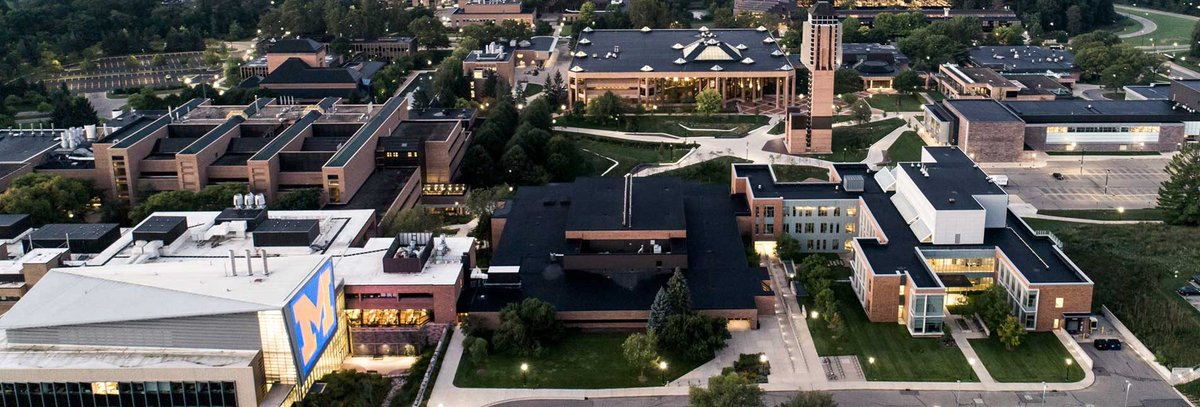
I'm recruiting PhD students for my lab @UMichCSE on applied ML for databases, starting Fall 2023. My research and industry experience convinces me that database automation and simplification are more important than ever, and ML/AI can play a big role. Please apply and reach out!
Lin Ma tweet media
English
3
18
71
0
Wanyu Zhao retweetledi
Neeraja Yadwadkar
Neeraja Yadwadkar@NeerajaJY·
📢Prospective grad students: I'm hiring PhD students for my research group at UT ECE. If you want to work with me in Computer/Networked Systems, Cloud/Serverless Computing, ML, Systems for ML & ML for Systems, please apply with my name in your application and send me an email!
GIF
English
0
10
22
0
Wanyu Zhao retweetledi
Daniel Kang
Daniel Kang@ddkang·
🚨 I'm recruiting PhD students for 2023! 🚨 If you're excited about building tools to make ML-based analytics accessible to everyone or verifying ML inference, apply to the CS PhD program at UIUC and mention my name. Please retweet and share! 👇 are examples of my research
English
8
40
189
0
Wanyu Zhao retweetledi
bingoostars
bingoostars@lbb_zhao·
👋, this is Wanbing Zhao, a physics undergraduate from @ShandongU interested in the interface between quantum physics and computer science. Looking for a summer undergraduate research and a PhD in 2023 Fall.
English
0
2
2
0
Wanyu Zhao retweetledi
Andrej Karpathy
Andrej Karpathy@karpathy·
New blog post!⬆️ Deep Neural Nets: 33 years ago and 33 years from now karpathy.github.io/2022/03/14/lec… we reproduce what I think may be the earliest real-world application of a neural net trained end-to-end with backprop (LeCun et al. 1989), try improve it with time travel, and reflect.
Andrej Karpathy tweet media
English
36
393
2.2K
0