Accelerator Media 501(c)3

163 posts

Accelerator Media 501(c)3 banner
Accelerator Media 501(c)3

Accelerator Media 501(c)3

@xceleratormedia

Inspiring long-term thinking about our shared future.

Global Katılım Eylül 2024
195 Takip Edilen54 Takipçiler
Accelerator Media 501(c)3 retweetledi
Stefan Schubert
Stefan Schubert@StefanFSchubert·
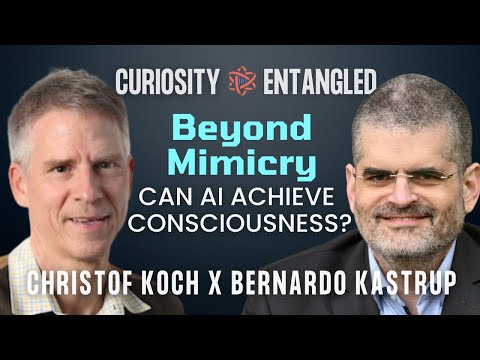
It's pretty amazing that we now have filmed conversations between leading thinkers, free for anyone to watch. A shame people don't take advantage of it more (this has 338 views now). youtube.com/watch?v=s4qMJw…
YouTube video
YouTube
Stefan Schubert tweet media
English
17
36
301
24K
Accelerator Media 501(c)3
Accelerator Media 501(c)3@xceleratormedia·
Bernardo Kastrup and Christof Koch explore whether consciousness and physical reality are two perspectives on a single informational substrate, and whether this bridge between mind and matter can be tested experimentally. youtu.be/0GjWq2UEyg0
YouTube video
YouTube
Accelerator Media 501(c)3 tweet media
English
0
0
0
44
Accelerator Media 501(c)3
Accelerator Media 501(c)3@xceleratormedia·
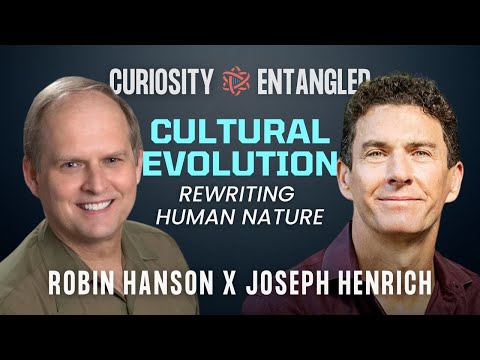
Cultural evolution has shaped what we think of as fixed human nature far more than we realize, and ignoring this force leads to catastrophically flawed policies and institutions. @robinhanson and @JoHenrich discuss the slow burn of cultural evolution and why it matters for everything from innovation to institutional design. youtu.be/s4qMJwmL9cU
YouTube video
YouTube
Accelerator Media 501(c)3 tweet media
English
1
4
19
6.3K
Accelerator Media 501(c)3 retweetledi
Suzanne Gildert
Suzanne Gildert@suzannegildert·
Bernardo Kastrup and Christof Koch on quantum consciousness: Christof: So in terms of connectivity - intuitively it seems like given all these all these gates are entangled with all other gates that this should give rise in principle to high amount of integrated information. Now it may be tiny compared with compared to your or my integrated information in my brain but I cannot exclude that it does feel an itsy bitsy bit like [something to be] a quantum computer. Bernardo: It wouldn't be an aggregate of ontological dust anymore. Precisely because it's entangled. So are you open to [the idea that] it could be something it is like to be a quantum computer? Christof: Yes, yes. Source: youtube.com/watch?v=0GjWq2…
YouTube video
YouTube
English
19
13
87
12.7K
Accelerator Media 501(c)3
Accelerator Media 501(c)3@xceleratormedia·
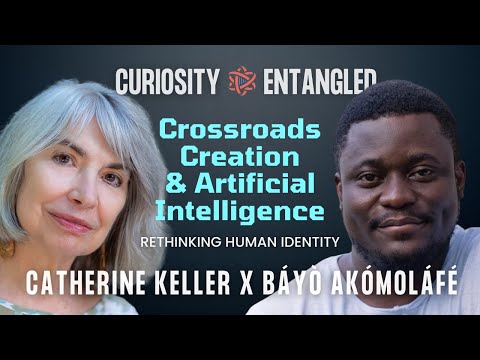
youtu.be/FqHRgIIMfFc In this episode of Curiosity Entangled, philosopher and psychologist Báyò Akómoláfé joins theologian Catherine Keller for a searching dialogue on artificial intelligence, theology, and what it means to be human at the crossroads of technology. What begins with the question of AI’s place in creation unfolds into a meditation on race, mortality, authority, and the fragile line between the natural and the artificial. Bayo invokes the Garden of Eden, crossroads in Yoruba cosmology, and his idea of “becoming dust” to reimagine AI not as a tool but as a disruptive force unsettling human identity and mastery. Catherine draws from process theology and her work on apocalyptic hope to probe whether AI is a new instrument of denial or a chalice through which unexpected solidarities and forms of life might emerge. Together, they wrestle with risk, death, and transformation, asking whether we are witnessing the end of “the human” or the unveiling of new ways of being entangled with each other and the more than human world . 5 Questions This Episode Might Leave You With 1. Is AI a threat to human identity, or an invitation to rethink what being human means? 2. What can Yoruba crossroads, biblical dust, and apocalyptic theology teach us about decision and risk in an age of AI? 3. Does naming the world bring care, or does it foreclose possibility? 4. Can AI be a tool for denying death, or a companion in embracing finitude? 5. How might solidarity and possibility be cultivated at the crossroads of technology, theology, and ecological crisis? Learn More About the Guests Bayo Akomolafe Philosopher, Psychologist, Poet | Author, These Wilds Beyond Our Fences Founder, The Emergence Network emergencenetwork.org bayoakomolafe.net Catherine Keller Theologian | Author, Facing Apocalypse: Climate, Democracy, and Other Last Chances Professor of Constructive Theology, Drew University catherineekeller.com Timestamps 00:00:27 - Opening and the invitation to speak about AI 00:03:05 - Creation and destruction as a single intensifying moment 00:05:27 - Eden, naming, and taxonomy as care or closure 00:13:09 - Crossroads versus intersectionality and the risk of decision 00:20:14 - Becoming dust, mortality, and species level vulnerability 00:27:13 - Transhumanist dreams, immortality quests, and denial of death 00:31:13 - Entanglement, weathering bodies, and the work of solidarity 00:40:16 - Authorship and authority reimagined in the age of AI 00:51:24 - AI as chalice, poetics, and naming the unnamable 01:07:02 - Regulation, safety, and the reinforcement of colonial dynamics
YouTube video
YouTube
English
0
0
0
79
Accelerator Media 501(c)3
Accelerator Media 501(c)3@xceleratormedia·
On this episode of Go! For Launch, hosts Audrey and MacKenzie are joined by two extraordinary high school leaders, Sophia and Michelle, who serve as Chief Science Officers through SciTech Institute’s international CSO program. From organizing STEM fairs to meeting with elected officials, these student changemakers are redefining what youth leadership looks like—and showing how young people can spark real impact in their communities. Sophia and Michelle share how they each found their way into STEM, what it means to be a Chief Science Officer, and why creating action plans has transformed their perspective on leadership, communication, and possibility. Whether they’re designing healthcare innovations or presenting at national conferences, these two are walking proof that curiosity, initiative, and collaboration can unlock powerful opportunities—at any age. You’ll also hear how the CSO program prepares students to lead, travel, and advocate for issues that matter, and how Sophia and Michelle are already thinking ahead to futures in biomedical research, AI, and regenerative medicine. If you’re a student (or know one) who’s looking to lead with purpose, this is the episode to press play on. In this episode, you’ll learn: 1. What the Chief Science Officers program is—and how to get involved 2. How action plans help students build real-world leadership and technical skills 3. The power of student voice in shaping schools, policy, and community engagement 4. Why exposure to conferences, travel, and networking is critical for young scientists 5. What regenerative medicine and AI in healthcare could mean for the future Timestamps: 00:00:34 – Meet Sophia and Michelle: future biomedical innovators 00:01:29 – What a Chief Science Officer is—and what they do 00:03:10 – How they each discovered STEM and the CSO program 00:05:45 – How to start a CSO chapter at your school 00:08:11 – What is an “action plan” and why it matters 00:10:11 – Favorite projects and building momentum across schools 00:12:19 – Real-world lessons in leadership and professional growth 00:14:38 – From Florida to Chicago to D.C.: learning to lead on the road 00:16:05 – Talking with elected officials and advocating for STEM 00:17:40 – Reflections on growth and community impact 00:20:19 – Opportunities that emerged because of the CSO program 00:22:35 – Advice for students who want to lead and make a difference 00:25:32 – What’s next: colleges, careers, and continuing the mission 00:31:07 – What excites them most about biotech and healthcare 00:34:17 – Curiosities that keep them up at night—from environmental justice to unknowable science Helpful Links: • SciTech Institute’s Chief Science Officers Program – scitechinstitute.org/chief-science-… • National STEM Ecosystems – stemecosystems.org • MIT InvenTeams – lemelson.mit.edu/inventeams Follow Accelerator Media: x.com/xceleratormedia instagram.com/xcelerator.med… linkedin.com/company/accele… ⸻ This podcast is produced by volunteers at Accelerator Media, a nonprofit educational media organization. Our work is supported by listeners and viewers like you. If you’d like to help us ignite curiosity and inspire long-term thinking about our shared future, please consider volunteering with us or making a donation: acceleratormedia.org/donate/
English
0
0
0
65
Accelerator Media 501(c)3
Accelerator Media 501(c)3@xceleratormedia·
On this episode of Go! For Launch, science policy fellow Dr. Natasha Dacic joins hosts Audrey and MacKenzie for a compelling look at how scientific research intersects with government decision-making—and how young scientists can help shape the future. Dr. Dacic shares her journey from a small liberal arts college in Idaho to earning a PhD in environmental science at the University of Michigan, with research stops at NASA and fieldwork deep in the Idaho wilderness along the way. Now serving as a science and technology policy fellow through the AAAS on Capitol Hill, she offers an inside view of how science informs legislation—and why it often doesn’t. Together, they explore the difference between fellowships and internships, how to communicate science to policymakers, and what it was like to help pass her first piece of legislation recognizing World Migratory Bird Day. This episode is a must-listen for anyone curious about using science for public good, bridging policy and research, or just wondering how to make an impact without having it all figured out at once. In this episode, you’ll learn: 1. What a science and technology policy fellowship actually is—and what fellows do on Capitol Hill 2. How Natasha navigated an unconventional path from physics and fieldwork to policy and politics 3. Why science often doesn’t drive policy, and how that can (and should) change 4. Practical advice for students and early-career scientists who want to make a difference 5. What it takes to pass a bipartisan piece of legislation—about birds Timestamps: 00:00:34 – Natasha’s background and introduction to the AAAS fellowship 00:02:09 – Her journey from Idaho to NASA and the University of Michigan 00:08:21 – Discovering the NASA Student Airborne Research Program 00:14:25 – What drew her to science policy: environmental philosophy and beyond 00:16:35 – What science policy really means—and why it’s not all about data 00:20:39 – Why relationships, politics, and timing shape legislation more than science alone 00:26:41 – The role of science communication in influencing policy 00:29:21 – Internships vs. fellowships: what’s the difference? 00:34:17 – Natasha’s two NASA internships and how she landed them 00:36:46 – What it’s really like working in the Senate as a science fellow 00:41:00 – How she helped pass legislation for World Migratory Bird Day 00:46:51 – What’s next after the fellowship—and why it’s a tough time for science jobs 00:48:55 – Advice for young people wanting to use science to change the world 00:54:43 – Do phone calls to Congress matter? (Yes!) 00:55:08 – Natasha’s final reflections and what she’s most curious about today Helpful Links: • AAAS Science & Technology Policy Fellowships – aaas.org/programs/scien… • NASA Student Airborne Research Program – science.nasa.gov/earth-science/… • U.S. Congressional Research Service – usa.gov/agencies/congr… • World Migratory Bird Day – migratorybirdday.org Follow Accelerator Media: x.com/xceleratormedi… linkedin.com/company/accele… This podcast is produced by volunteers at Accelerator Media, a nonprofit educational media organization. Our work is supported by listeners and viewers like you. If you’d like to help us ignite curiosity and inspire long-term thinking about our shared future, please consider volunteering with us or making a donation: acceleratormedia.org/donate/
English
0
0
1
48
Accelerator Media 501(c)3
Accelerator Media 501(c)3@xceleratormedia·
Can we reimagine our material world—from the clothes we wear to the creams we use—using biology as our blueprint? What if the materials of tomorrow were hiding in the natural world—and all we needed was a way to grow them? In this episode of Ignition Sequence, host Dylan Bohbot speaks with Dr. David Breslauer, co-founder of Bolt Threads, about the science and promise of bioengineered materials—from spider silk and mycelium leather to proteins designed for personal care. Dr. Breslauer shares how decades of obsession with spider silk turned into a company making real-world products with custom-designed biomaterials. From sustainable textiles to fungus-based leather alternatives, and even proteins that replace microplastics in face creams, Breslauer reveals how biology, evolution, and biotechnology can come together to solve some of our biggest material challenges. They also explore the role of AI in designing new proteins, the future of regenerative materials, and the deeper mystery of how human learning actually works. In this episode, you’ll learn: 1. Why spider silk is one of the most powerful natural materials—and so hard to replicate 2. How microbes are engineered to produce proteins like spider silk at scale 3. What Bolt Threads is doing with mushroom-based leather and beauty products 4. Why microplastics and synthetic additives in clothing and cosmetics are a growing concern 5. How AI is helping design better proteins for next-generation biomaterials Timestamps 00:00:27 – Meet Dr. David Breslauer: bioengineer and co-founder of Bolt Threads 00:02:11 – Discovering spider silk and launching a biomaterials company 00:04:39 – The problem with synthetic materials and microplastics in clothing 00:07:29 – Why biodegradable, bio-based materials are the future 00:10:20 – Making spider silk from microbes: how it works 00:17:20 – Spinning silk into fibers, films, and more 00:20:05 – What are B-Silk, Microsilk, and Mylo? Product breakdown 00:21:44 – Replacing toxic chemicals in skincare with bioengineered proteins 00:24:09 – How genome databases unlock new silks from bees, crickets, and more 00:26:31 – Why spider silk is so difficult to manufacture 00:32:02 – Spider silk for wound healing and medical applications 00:34:02 – The challenge of bringing bio-based apparel to market 00:38:12 – Using AI to design new proteins and biomaterials 00:41:42 – Color without pigment: the next frontier of natural dyes 00:44:01 – Milo: Bolt Threads’ fungus-based leather alternative 00:47:09 – Curiosity beyond silk: how do humans actually learn? Helpful Links 🔹 Bolt Threads: boltthreads.com 🔹 Accelerator Media: acceleratormedia.org
English
0
0
1
53
Accelerator Media 501(c)3 retweetledi
Gurcharan Das
Gurcharan Das@gurcharandas·
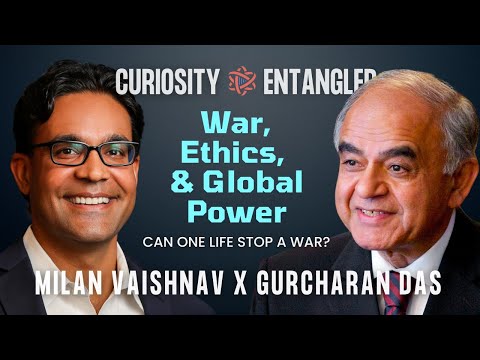
Here is a special videocast. It is a leisurely discussion with the charming and thoughtful Milan Vaishnav, who has a way of taking one seamlessly on unexpected paths. This one moves from an AI book on the Gita, to the ethics of present wars and more. youtu.be/tjv2tJVXp2U
YouTube video
YouTube
English
0
1
1
1.9K
Accelerator Media 501(c)3
Accelerator Media 501(c)3@xceleratormedia·
In this episode of Curiosity Entangled, author and philosopher @gurcharandas joins political economist @MilanV for a wide-ranging conversation on the ethics of war, the future of liberalism, and the enduring tensions between statecraft and morality. What begins as a thought experiment—could the targeted assassination of a tyrant prevent a full-scale war?—unfolds into a rich dialogue spanning geopolitics, ancient Indian philosophy, and the fragile norms holding the global order together. Gurcharan draws on the Bhagavad Gita, his utilitarian leanings, and his new AI-powered book project to explore modern warfare, drone ethics, and whether Gandhi and Himmler could really have drawn wisdom from the same sacred text. Milan weaves in contemporary case studies—from Gaza to Gujarat, from Tamil Nadu’s manufacturing boom to the shortcomings of India’s liberal opposition—offering sharp analysis on state capacity, democracy, and economic reform. Together, they examine what it means to wield power responsibly in an era of deep polarization and technological acceleration. 5 Questions This Episode Might Leave You With 1. Could targeted assassinations of wartime instigators reduce human suffering—or create dangerous moral precedents? 2. Can the Bhagavad Gita guide ethical decision-making in modern warfare and politics? 3. Is the liberal international order unraveling, or are we taking its historic gains for granted? 4. What lessons can India learn from Tamil Nadu’s manufacturing success and China’s bureaucratic incentives? 5. Can moral imagination and institutional reform revive democracy in an age of cynicism? Learn More About the Guests Gurcharan Das Author, India Unbound and The Difficulty of Being GoodHarvard-Educated Philosopher | Former CEO, Procter & Gamble India gurcharandas.org x.com/gurcharandas Milan Vaishnav Director, South Asia Program, Carnegie Endowment for International Peace Author, When Crime Pays | Host, Grand Tamasha carnegieendowment.org/people/milan-v… x.com/milanv Timestamps 00:00:27 – Introducing the concept: AI book on the Bhagavad Gita and modern warfare 00:05:31 – Drone strikes, utilitarian ethics, and the seduction of surgical warfare00:11:49 – What if the Buddha had guided Arjuna instead of Krishna? 00:16:20 – Gandhi, Himmler, and the duality of interpreting the Gita 00:20:23 – The moral hazards of targeted assassinations 00:24:46 – Kant’s Perpetual Peace and the UN’s mixed legacy 00:30:11 – Why liberalism still matters—despite its critics 00:34:54 – The need for community: liberalism and the rise of nationalism 00:37:17 – India’s economic reforms: missing political champions? 00:41:29 – India’s missed industrial revolution—and hope in Tamil Nadu 00:45:17 – iPhones, incentives, and the future of Indian manufacturing 00:50:27 – Education reform and the politics of short-term thinking 00:54:10 – A silent education revolution underway? 00:58:16 – Institutions, norms, and fragile democracies 01:03:28 – When (if ever) is assassination justifiable? 01:07:32 – The need for global legitimacy in precision warfare 01:10:46 – Is this the best period in human history—and will we realize it too late?
English
0
0
1
82
Accelerator Media 501(c)3
Accelerator Media 501(c)3@xceleratormedia·
@NTFabiano We just had an interesting conversation with a biophysicist exploring this x.com/xceleratormedi…
Accelerator Media 501(c)3@xceleratormedia

Your support helps fuel our mission to ignite curiosity and empower future world changers around the world. Learn more at AcceleratorMedia.org. What if your cells could talk—not just through molecules, but through light? In this episode of Ignition Sequence, host Dylan Bohbot sits down with Dr. Nirosha Murugan, Canada Research Chair and biophysicist at Wilfrid Laurier University, to explore how the body emits and responds to light, magnetism, and electricity—and why that may be key to detecting disease, regenerating limbs, and even decoding consciousness itself. Dr. Murugan unpacks her pioneering work measuring ultra-weak light emissions from living cells, detecting cancer noninvasively, and using electric and magnetic fields to kickstart regeneration in non-healing species. From the physics of life to brain photonics and quantum biology, this episode dives into emerging frontiers that challenge our deepest assumptions about how biology communicates, heals, and perceives the world. Is light just a metabolic byproduct—or could it be a fundamental language of life? In this episode, you’ll learn: 1. Why living cells and tissues emit ultra-weak light—and how to detect it 2. How magnetism, electricity, and photonics may help us regenerate limbs 3. The surprising role of mitochondria in cellular light production 4. How Dr. Murugan’s lab detects early-stage cancer using light patterns 5. What it means to think of biology not just as chemistry, but as energy Timestamps 00:00:27 – Meet Dr. Nirosha Murugan: biophysicist studying light, magnetism, and life 00:03:17 – How cells emit light—and how her lab detects it using astrophysics tools 00:06:01 – Bio-photon emissions vs. bioluminescence: what’s the difference? 00:09:22 – Regenerating limbs using electricity, magnetic fields, and silk-based scaffolds 00:17:06 – Detecting cancer noninvasively by reading cellular light patterns 00:21:03 – Brain light emissions: are they a form of communication or consciousness? 00:27:30 – Can light in the brain travel like fiber optics? Early research insights 00:31:15 – Intelligence without neurons: what slime molds reveal about cognition 00:34:14 – Rethinking biology as an energetic—not just chemical—landscape 00:38:07 – Altered states, psychedelics, and surprising findings about brain light 00:44:16 – Scientific resistance, open inquiry, and the future of interdisciplinary biology 00:49:06 – Off-topic reflections: why aviation, nature, and creativity still matter 🔗 Helpful Links 🔹 Exploring ultraweak photon emissions as optical markers of brain activity paper: sciencedirect.com/science/articl… 🔹 Accelerator Media: acceleratormedia.org @msahsorin

English
0
0
0
10