Zhenze Yang 杨镇泽

20 posts

Zhenze Yang 杨镇泽 banner
Zhenze Yang 杨镇泽

Zhenze Yang 杨镇泽

@yang_zhenze

LLM, AI for science Currently at @xAI, prev @ByteDance, prev @ MIT

Katılım Nisan 2020
132 Takip Edilen91 Takipçiler
Zhenze Yang 杨镇泽 retweetledi

Markus J. Buehler
Markus J. Buehler@ProfBuehlerMIT·
Nature has severely outpaced humans in developing #multifunctional, #hierarchical #materials that access impressive material properties, all the while being fully #degradable and part of native #ecosystems. But how can we effectively model the intricate time and length scales in biological systems to translate design principles to meet engineering demands? Multi-agent #GenerativeAI is enabling us to develop rigorous strategies to learn complex design principles from biology and translating them towards engineering design. In a new white paper co-authored with @rachelkluu, Sofia E. Arevalo, Wei Lu, Bo Ni, Zhenze Yang, Sabrina Shen, Jaime Berkovich, Yu-Chuan Hsu, Stone Zan, & Markus J. Buehler we discuss how this new technology empowers critical new strategies essential for addressing contemporary materials design challenges to address higher functionality, more diverse raw materials as input, and sophisticated target material properties. We also discuss societal and ethical implications of this new technology. "Learning from Nature to Achieve Material Sustainability: Generative AI for Rigorous Bio-inspired Materials Design": doi.org/10.21428/e4bae… The paper is part of MIT's open access collection of papers about Generative AI from interdisciplinary teams of faculty and researchers across the Institute to explore the transformative potential of generative AI. Our contribution was a wonderful collaboration with a selection of members from our lab @LAMM_MIT who each contributed their unique perspectives. Pushing the frontier  Human-AI collaborations or multi-agent systems show intriguing results that exceed those that have been generated by human intelligence alone. AI, engendered by its radically different modes of cognition, could push against the limitations of established thought and provide insight into an as-of-yet unimagined future. Future artificial general intelligence could come to be seen as another milestone in human evolution, helping us to overcome barriers thought to be impenetrable today. We postulate that generative artificial intelligence (AI) can play a crucial role in solving this interdisciplinary challenge, translating insights across disparate knowledge domains and forming the basis for a new sustainable materials economy. The emerging next generation of AI systems surpasses limitations imposed by original training data, actively exploring new understanding. Bio-inspired generative AI notably widens the design space, fostering natural scientific discovery while departing from cyclical human-centric design, pushing the frontier of biomateriomic research. Generative AI can not only address complex forward and inverse tasks but also develop ontological knowledge that offers interpretability using graph theory, facilitating the translation of knowledge across diverse scientific domains. #GenerativeAI #Science #Engineering @mitpress
English
0
5
24
4.5K
Zhenze Yang 杨镇泽
Zhenze Yang 杨镇泽@yang_zhenze·
Thanks @MaterHoriz for selecting our review paper "Artificial intelligence and machine learning in design of mechanical materials" in the Materials Horizons 10th anniversary regional spotlight collection: The Americas.
English
1
1
4
605
Zhenze Yang 杨镇泽 retweetledi
Markus J. Buehler
Markus J. Buehler@ProfBuehlerMIT·
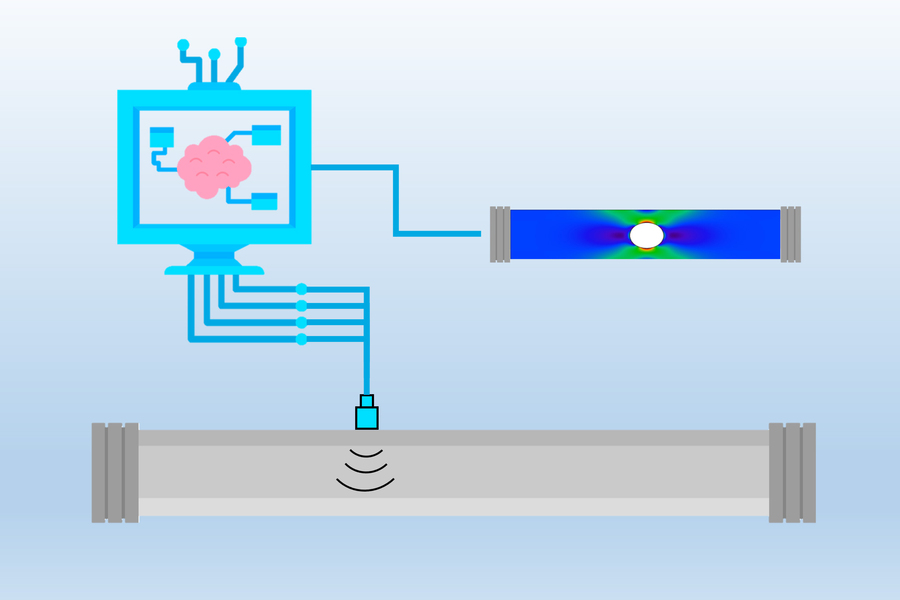
You can't necessarily judge a book by its cover, but you may now be able to do the equivalent for materials of all sorts, from an airplane part to a medical implant. In new research published in #AdvancedMaterials @AdvSciNews, we report a deep-learning system that explores materials’ interiors from the outside. By feeding only surface data, or incomplete information about a material's state, the model predicts detailed information about internal structures, stresses, voids, and cracks. The method has implications as a tool for nondestructive testing, materials analysis and design, and research tasks where data is scarce or we can only acquire partial measurements. Read more on this on MIT News: news.mit.edu/2023/deep-lear… Paper: lnkd.in/ekYMSKCd
Markus J. Buehler tweet media
English
1
4
32
6.2K
Zhenze Yang 杨镇泽 retweetledi
Markus J. Buehler
Markus J. Buehler@ProfBuehlerMIT·
After a 3 year hiatus we held our 2022 Lab Holiday Party last night. It was special that many of our earliest members of the @LAMM_MIT family (2006 onwrds) could attend & meet current members. It's a blessing to be able to work with so many amazing people @MIT. Thank you! #F22MRS
Markus J. Buehler tweet media
English
0
5
72
0
Zhenze Yang 杨镇泽 retweetledi
Markus J. Buehler
Markus J. Buehler@ProfBuehlerMIT·
Biology provides many interesting material designs, & proteins in particular are rich in complex structure-function relationships. In our latest paper we develop a set of proteome-inspired molecular & architected materials w/ unique mechanical properties authors.elsevier.com/a/1fzyP57Zk1WH5
Markus J. Buehler tweet media
English
1
5
23
0
Zhenze Yang 杨镇泽 retweetledi
Markus J. Buehler
Markus J. Buehler@ProfBuehlerMIT·
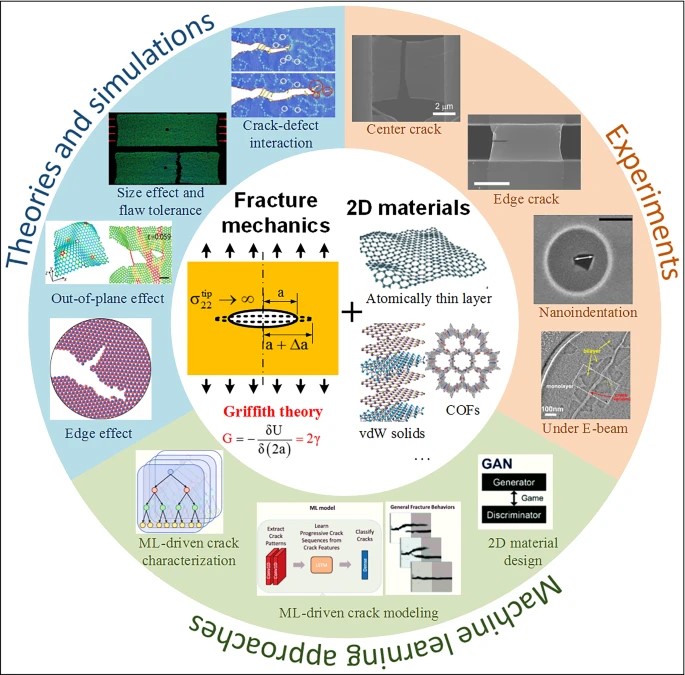
What are the physical laws that govern fracture at the extreme limit when materials consist only of few atomic layers? We review progress in this field in a new paper with @JunlouRice in @MRSBulletin: rdcu.be/cV328
Markus J. Buehler tweet media
English
1
7
34
0
Zhenze Yang 杨镇泽
Zhenze Yang 杨镇泽@yang_zhenze·
Excited to share our new work of implementing a graph neural network for translating structural defects to atomic properties for crystalline solids such as graphene and metals.
Markus J. Buehler@ProfBuehlerMIT

The rise of #nanotechnology promises atomistically precise materials, but we lack efficient tools to explore the huge design space. We solve this challenge with an end-to-end neural net to rapidly relate atomic designs to mesoscale properties. Paper: nature.com/articles/s4152…

English
0
1
3
0
Zhenze Yang 杨镇泽 retweetledi
Markus J. Buehler
Markus J. Buehler@ProfBuehlerMIT·
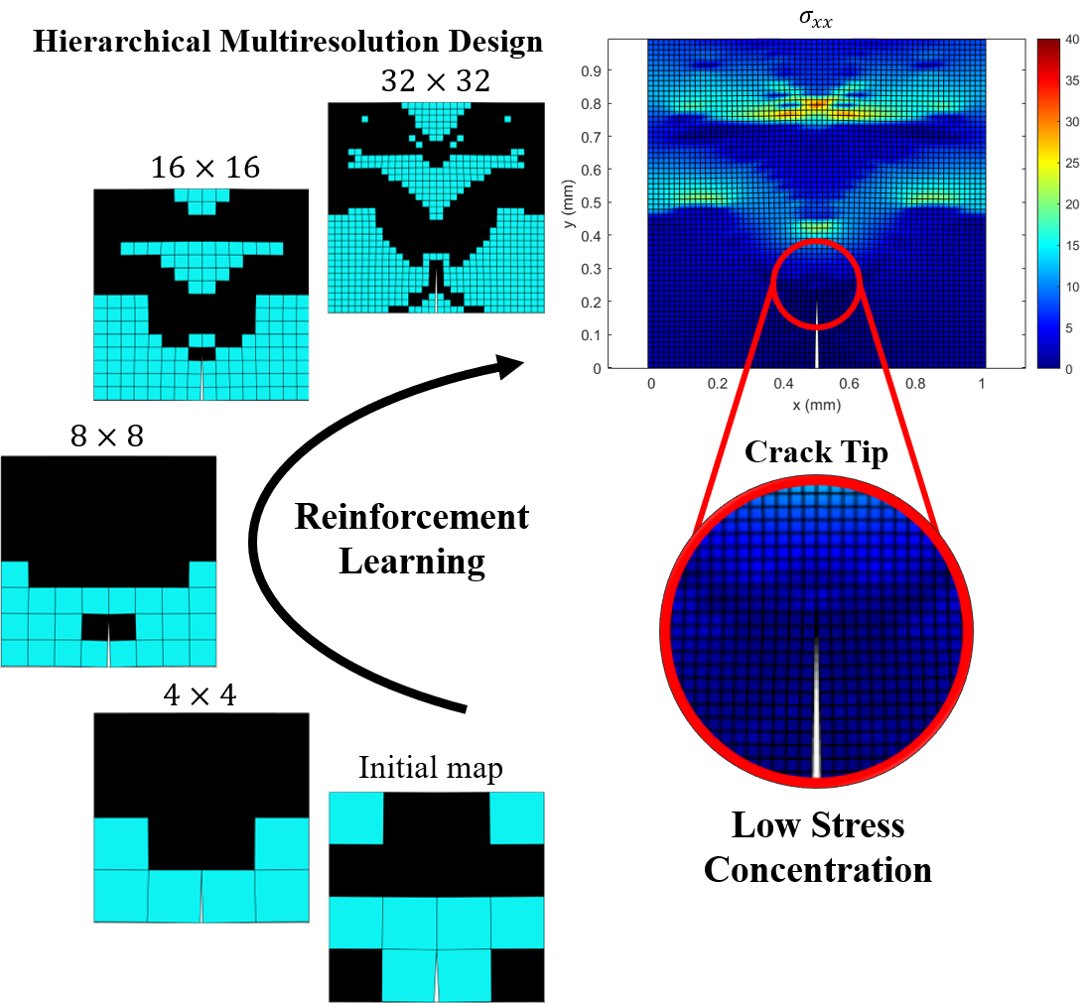
How to prevent fracture? Excited to share new work: Hierarchical Multiresolution Design of Bioinspired Structural Composites Using Progressive Reinforcement Learning, just published in Adv. Theory. & Sim. @AdvSciNews Read the full paper here: doi.org/10.1002/adts.2…
Markus J. Buehler tweet media
English
1
6
44
0
Zhenze Yang 杨镇泽 retweetledi
Markus J. Buehler
Markus J. Buehler@ProfBuehlerMIT·
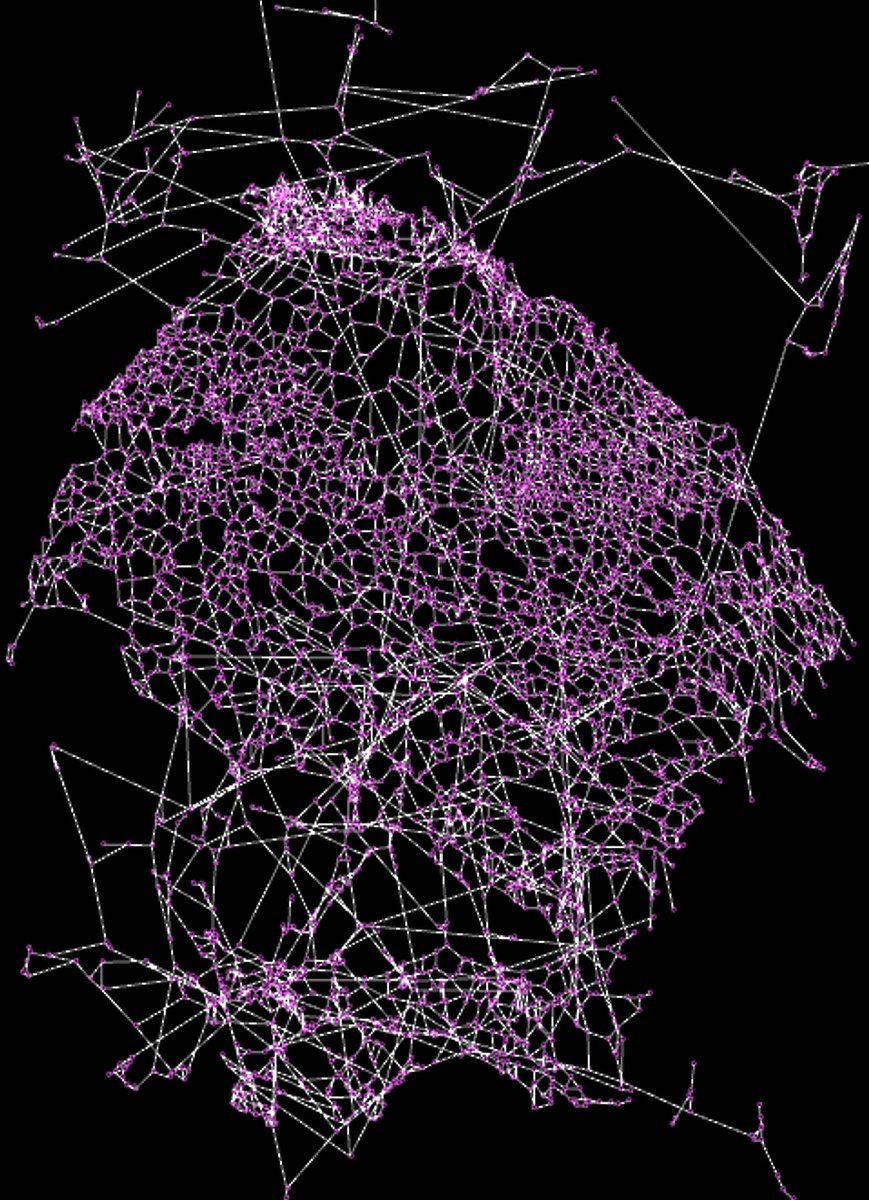
In new research from our lab reported in the J. Appl. Phys., led by grad students Wei Lu & Zhenze Yang, we report a new computational method to create synthetic 3D spider webs using a combination of multiscale modeling, graph & transformer neural networks aip.scitation.org/doi/10.1063/10…
Markus J. Buehler tweet media
English
2
13
58
0
Zhenze Yang 杨镇泽
Zhenze Yang 杨镇泽@yang_zhenze·
@KSnKickstart Why don't you talk about the higher ping they have? You are just trying to find an excuse before losing the game.
English
0
0
1
0
FLC Kickstart
FLC Kickstart@KSnKickstart·
We don’t get to touch a PC until the 15th. That’s one day before the tournament meanwhile China is streaming from PNC setups with 24/7 access. They really have accepted those disadvantages though.
English
47
36
392
0
Zhenze Yang 杨镇泽
Zhenze Yang 杨镇泽@yang_zhenze·
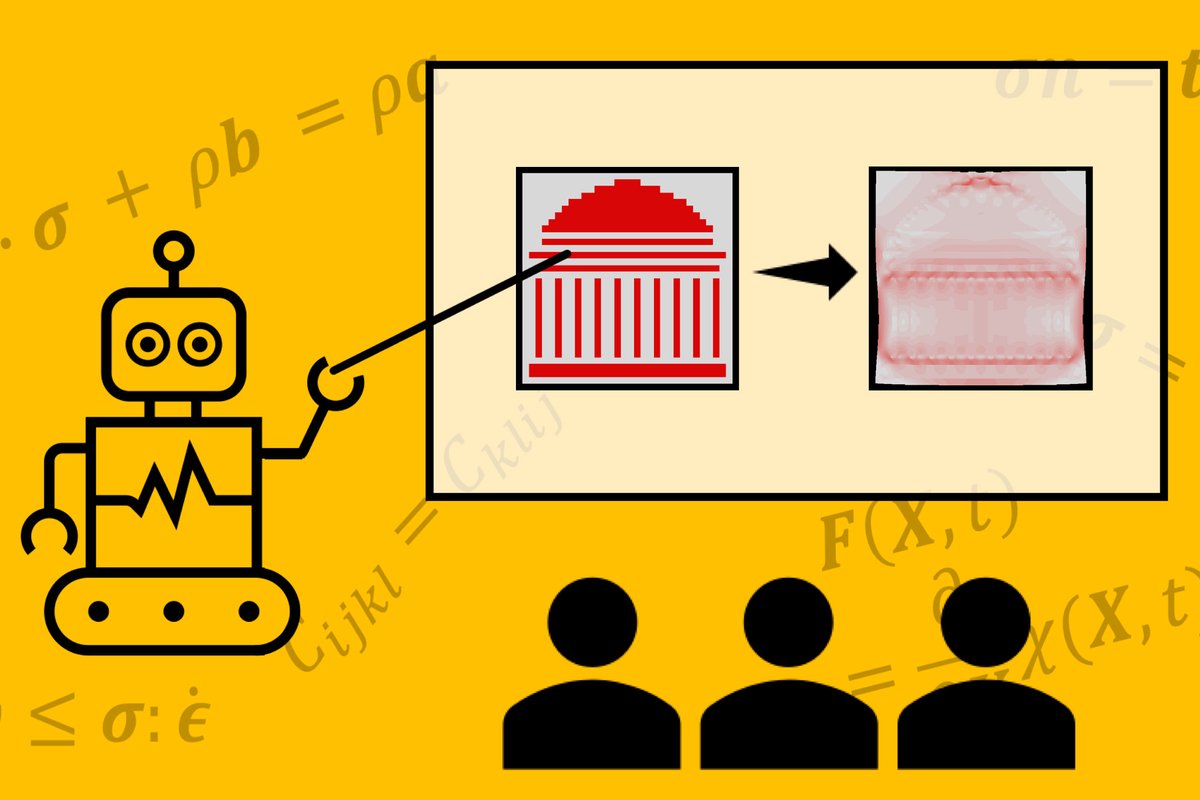
Next Monday, I will present at USNCCM16 about our work on using deep learning methods to predict strain and stress fields in composites.
Zhenze Yang 杨镇泽 tweet media
English
0
0
0
0