

Yasitha Charman
217 posts

Yasitha Charman retweetledi

Netflix, Wikipedia, Airbnb, Dropbox ~ all run on the same web server.
One quiet Russian engineer wrote it alone. For free. 🤯
Meet Igor Sysoev 🇷🇺
> Russian software engineer. Born 1970 in Soviet Kazakhstan.
> Failed his first university entrance exam.
> Joined Rambler in 2000 as a system administrator.
> 2002 ~ started writing a new web server in his free time. Alone.
> Goal: handle 10,000 simultaneous users on one machine ~ a problem Apache (the dominant web server at the time) couldn't solve.
> 2004 ~ released nginx publicly. Free. Open source.
> Zero marketing. Zero PR. Just the code.
> 2008 ~ nginx was serving 500 million requests per day at Rambler.
> 2011 ~ founded Nginx Inc. with co-founder Maxim Konovalov.
> 2013 ~ Netflix scaled its streaming CDN to 40 Gbps per server using nginx.
> 2019 ~ F5 acquired the company for $670 million.
> December 2019 ~ Russian police raided his Moscow office over a fake copyright claim.
> The Russian tech community publicly defended him. Charges were dropped.🚀
> 2021 ~ nginx overtook Apache as the #1 web server on Earth.
> 2022 ~ left F5 quietly. No farewell tour. No book deal.
> Today nginx powers Netflix, Wikipedia, Airbnb, Dropbox, Cloudflare, WordPress.
> 33% of every website on Earth runs on his code. Apache trails at 26%. Microsoft's IIS isn't even close.
> Still 100% open-source. Still free.
One man wrote it alone, in his free time, for free.
He never sought publicity. He never asked for credit.
A third of every website on Earth still runs on his work.
Webserver GOAT. 🐐


English
Yasitha Charman retweetledi
Yasitha Charman retweetledi

මේ ඉන්නෙ මගෙ දරුවගෙ බව්වා එයා මානසිකව වැටිලා දැන් රෝහලේ ප්රතිකාර ලබමින් ඉන්නවා ගත්තු කෙනෙක් ඉන්නවනම් කරුණාකරලා මගෙ දරුවගෙ ජීවිතේ ගැන හිතලා මගෙ දරුවගෙ බව්වව ගෙනත් දෙන්න ඔයාලගෙත් දරුවො ගැන හිතලා මෙ අහින්සක සතාව ගෙනත් දෙන්න එයා හැදුනෙ වැඩුනෙ මේ බව්වා එක්ක පොඩි කාලෙ ඉදම් මගෙ දරුවා වෙනුවෙන් අනුකම්පා කරලා මනුස්සකමක් ඇතුව ගෙනත් දෙන්න දොම්පෙ ආසනේ නාගස්හදිය මන්ඩාවල ප්රදේශය 0719859442 - 0775596499 - 0770653350
copied from FB...please retweet


SI
Yasitha Charman retweetledi

දන්න යාලුවෙක් ඉන්නවා. උතුරන්න සල්ලි නැතිවුනත් ජීවත්වෙන්න ඕනෙ තරම් තියනවා. පොර වයිෆ්ට හරි ආදරෙයි.හැබැයි ෂෝ ඕෆ් නෑ. පොඩ්ඩක් බීල වැඩි වුනොත් ඌ වයිෆ්ට කොච්චර ආදරේද කියල බලාගන්න පුලුවන්. පොඩි එකෙකුත් ඉන්නවා. හැබැයි වයිෆ් හෙන ඉන්ඩිපෙන්ඩන්ට් ලයින් එකක් දීල තමයි වැඩ කරන්නෙ.අවුරුදු 5-6 කට
SI
Yasitha Charman retweetledi

I wake up at 4am on Saturday.
I brew some coffee.
I write C++
Life is good.

English
Yasitha Charman retweetledi

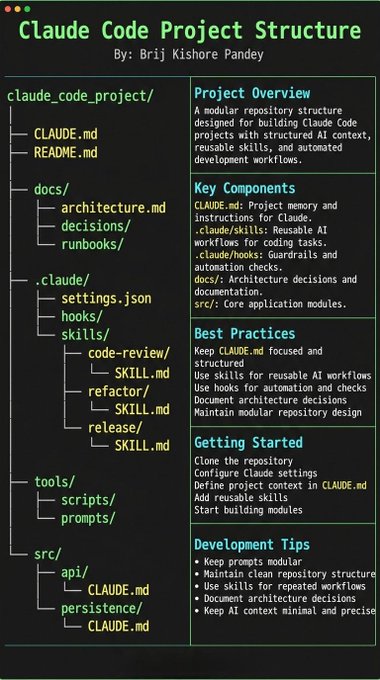
Most people treat CLAUDE.md like a prompt file.
That’s the mistake.
If you want Claude Code to feel like a senior engineer living inside your repo, your project needs structure.
Claude needs 4 things at all times:
• the why → what the system does
• the map → where things live
• the rules → what’s allowed / not allowed
• the workflows → how work gets done
I call this:
The Anatomy of a Claude Code Project 👇
━━━━━━━━━━━━━━━
1️⃣ CLAUDE.md = Repo Memory (keep it short)
This is the north star file.
Not a knowledge dump. Just:
• Purpose (WHY)
• Repo map (WHAT)
• Rules + commands (HOW)
If it gets too long, the model starts missing important context.
━━━━━━━━━━━━━━━
2️⃣ .claude/skills/ = Reusable Expert Modes
Stop rewriting instructions.
Turn common workflows into skills:
• code review checklist
• refactor playbook
• release procedure
• debugging flow
Result:
Consistency across sessions and teammates.
━━━━━━━━━━━━━━━
3️⃣ .claude/hooks/ = Guardrails
Models forget.
Hooks don’t.
Use them for things that must be deterministic:
• run formatter after edits
• run tests on core changes
• block unsafe directories (auth, billing, migrations)
━━━━━━━━━━━━━━━
4️⃣ docs/ = Progressive Context
Don’t bloat prompts.
Claude just needs to know where truth lives:
• architecture overview
• ADRs (engineering decisions)
• operational runbooks
━━━━━━━━━━━━━━━
5️⃣ Local CLAUDE.md for risky modules
Put small files near sharp edges:
src/auth/CLAUDE.md
src/persistence/CLAUDE.md
infra/CLAUDE.md
Now Claude sees the gotchas exactly when it works there.
━━━━━━━━━━━━━━━
Prompting is temporary.
Structure is permanent.
When your repo is organized this way, Claude stops behaving like a chatbot...
…and starts acting like a project-native engineer.
English
Yasitha Charman retweetledi


Yasitha Charman retweetledi

It's sad to see how many women with boyfriends, husbands, and even kids are willing to sell their souls and risk their futures, relationships, and health for $200.




English
Yasitha Charman retweetledi

14 must-know Data Structures for coding interviews:
1. Array
2. Queue
3. Deque
4. Matrix
5. Stack
6. Binary Tree
7. Linked List
8. Doubly Linked List
9. HashMap
10. Binary Search Tree (BST)
11. Heap (Priority Queue)
12. Trie
13. Graph
14. Union Find
♻️ Repost to help others in your network

English
Yasitha Charman retweetledi
Yasitha Charman retweetledi

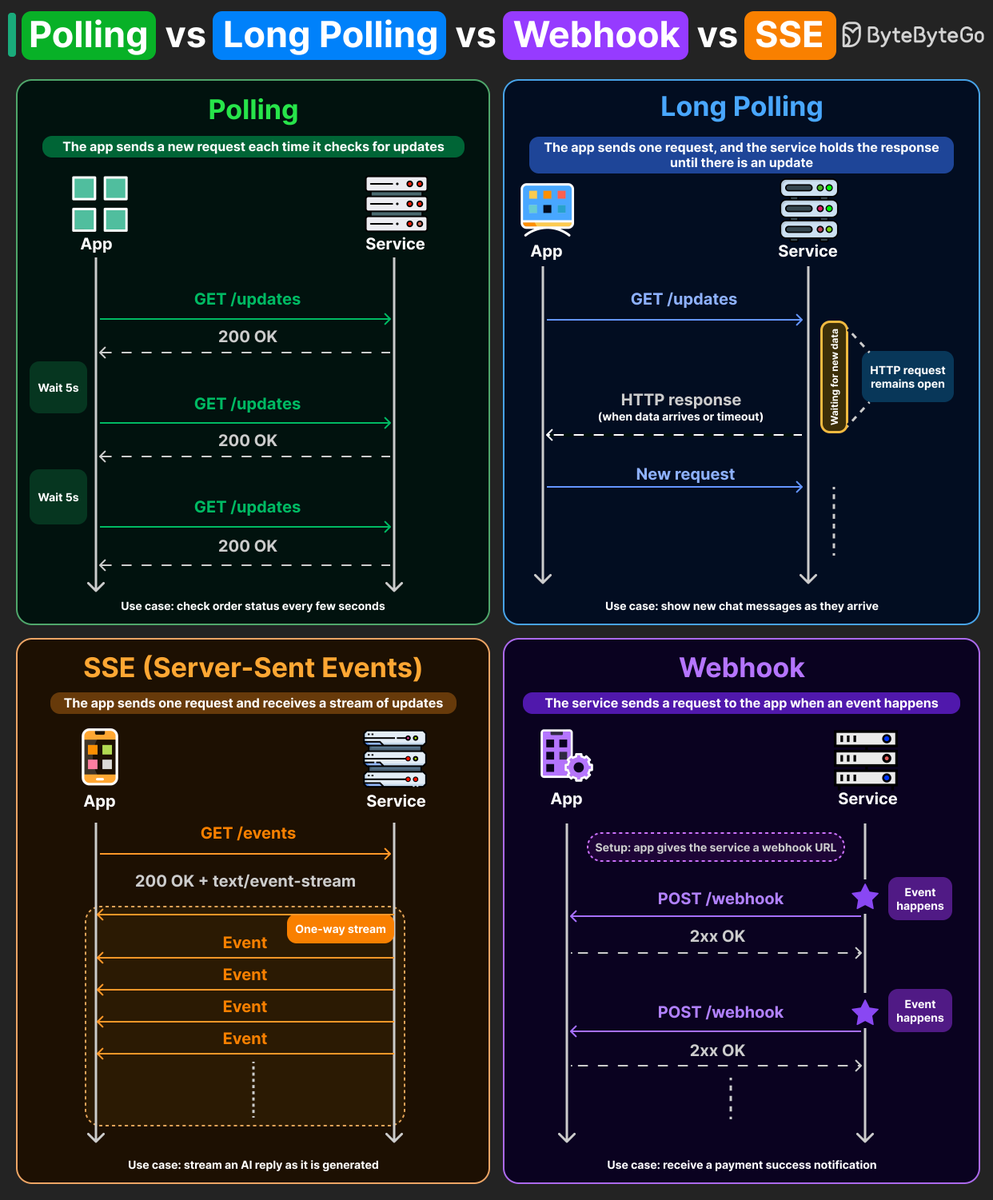
Polling vs Long Polling vs Webhooks vs SSE
Four ways to get updates from a server. Each one makes a different tradeoff between simplicity, efficiency, and real-time delivery.
Here's how they compare:
- Polling: The client sends a request every few seconds asking "anything new?" The server responds immediately, whether or not there's new data. Most of those requests come back empty, wasting client and server resources. For use cases like an order status page where a small delay is acceptable, polling is the simplest option to implement.
- Long Polling: The client sends a request, and the server keeps the HTTP connection open until new data is available or a timeout occurs. This means fewer empty responses compared to regular polling. Some chat applications used this pattern to deliver messages closer to real-time communication.
- Server-Sent Events (SSE): The client opens a persistent HTTP connection, and the server streams events through it as they're generated. It is one-way, lightweight, and built on plain HTTP. Many AI responses that appear token by token are delivered through SSE, streaming each chunk over a single open connection.
- Webhooks: Instead of the client asking for updates, the service sends an HTTP POST to a pre-registered callback URL whenever a specific event occurs. Stripe uses this for payment confirmations. GitHub uses it for push events. The client never polls or holds a connection open, it just waits for the server to call.
Many systems don't rely on a single pattern. You may use polling for order status, SSE for streaming AI responses, and webhooks for payment confirmations.
English
Yasitha Charman retweetledi

Best YouTube Playlists to learn Programming:
🔸C
youtube.com/playlist?list=…
🔸C++
youtube.com/playlist?list=…
🔸 Python
m.youtube.com/playlist?list=…
🔸Java
youtube.com/playlist?list=…
🔸C#
m.youtube.com/playlist?list=…
🔸SQL
m.youtube.com/playlist?list=…
🔸 Go
m.youtube.com/playlist?list=…
🔸PHP
youtube.com/playlist?list=…
🔸Swift
youtube.com/playlist?list=…
🔸Kotlin
m.youtube.com/playlist?list=…
🔸Dart
youtube.com/playlist?list=…
🔸Ruby
youtube.com/playlist?list=…
🔸Rust
youtube.com/playlist?list=…
🔸TypeScript
youtube.com/playlist?list=…
🔸R
youtube.com/playlist?list=…
🔸React
youtube.com/playlist?list=…
🔸Next.js
m.youtube.com/playlist?list=…
🔸Node.js
youtube.com/playlist?list=…
🔸HTML/CSS
youtube.com/playlist?list=…
🔸Machine Learning
youtube.com/playlist?list=…
🔸Deep Learning
youtube.com/playlist?list=…
🔸DSA
youtube.com/playlist?list=…
Follow @techxutkarsh for more such content.

English
@elisabethdev_ So far, so good using chat pt and gthub copilot
English

Yasitha Charman retweetledi

JAVA PROJECTS TO BUILD IN THIS MODERN ERA
FOUNDATIONS: CORE JAVA DEVELOPMENT
→ Build a CLI-based task manager using core Java
→ Create a file-based note-taking application
→ Develop a custom logging framework
→ Build a multithreaded file downloader
→ Create a basic HTTP server from scratch
→ Implement a custom JSON parser
→ Build a terminal-based chat application (Sockets)
→ Create a Java-based password manager (encrypted storage)
→ Develop a mini JVM-like interpreter (advanced)
→ Build a plugin-based application system
BACKEND & API DEVELOPMENT
→ Build a RESTful API using Spring Boot
→ Create a JWT authentication system
→ Develop a full user management system (RBAC)
→ Build a URL shortener service
→ Create a scalable API gateway (Spring Cloud)
→ Develop a microservices architecture (Spring Boot + Eureka)
→ Build a GraphQL API with Spring Boot
→ Create a real-time notification system (WebSockets)
→ Develop a rate limiting system
→ Build a backend for a SaaS product
DATABASE & DATA SYSTEMS
→ Build a custom ORM (like Hibernate basics)
→ Create a database migration tool
→ Develop a caching layer (Redis integration)
→ Build a distributed ID generator (Snowflake-like)
→ Create a search engine with indexing (Lucene)
→ Develop a data pipeline (Kafka + Java consumers)
→ Build a time-series data storage system
→ Create a database connection pool
→ Develop a multi-tenant database system
→ Build a data synchronization service
CLOUD, DEVOPS & DISTRIBUTED SYSTEMS
→ Build a distributed logging system (ELK integration)
→ Create a CI/CD pipeline automation tool
→ Develop a containerized Java app (Docker + Kubernetes)
→ Build a service discovery system
→ Create a configuration management server
→ Develop a fault-tolerant system with circuit breakers
→ Build a job scheduler (like cron service)
→ Create a distributed cache system
→ Develop a monitoring system (metrics + alerts)
→ Build a resilient messaging system (Kafka/RabbitMQ)
AI, MODERN APPS & INTEGRATIONS
→ Build an AI chatbot using Java + OpenAI API
→ Create a document summarization tool
→ Develop a recommendation engine
→ Build a voice assistant (speech-to-text integration)
→ Create a fraud detection system (ML integration)
→ Develop a code analysis tool
→ Build an AI-powered email responder
→ Create a semantic search system
→ Develop a RAG-based knowledge assistant
→ Build an AI-powered resume screening system
FULL-STACK & PRODUCT-LEVEL PROJECTS
→ Build a full-stack e-commerce system (Spring Boot + React)
→ Create a social media platform backend
→ Develop a real-time collaboration tool (like Google Docs)
→ Build a project management tool (like Jira)
→ Create a SaaS billing and subscription system
→ Develop a blogging platform (CMS)
→ Build a learning management system (LMS)
→ Create a fintech transaction processing system
→ Develop a ride-sharing backend system
→ Build a scalable video streaming backend
To master Java by building real-world, production-grade systems, get the complete handbook here:
codewithdhanian.gumroad.com/l/werbcj

English
Yasitha Charman retweetledi
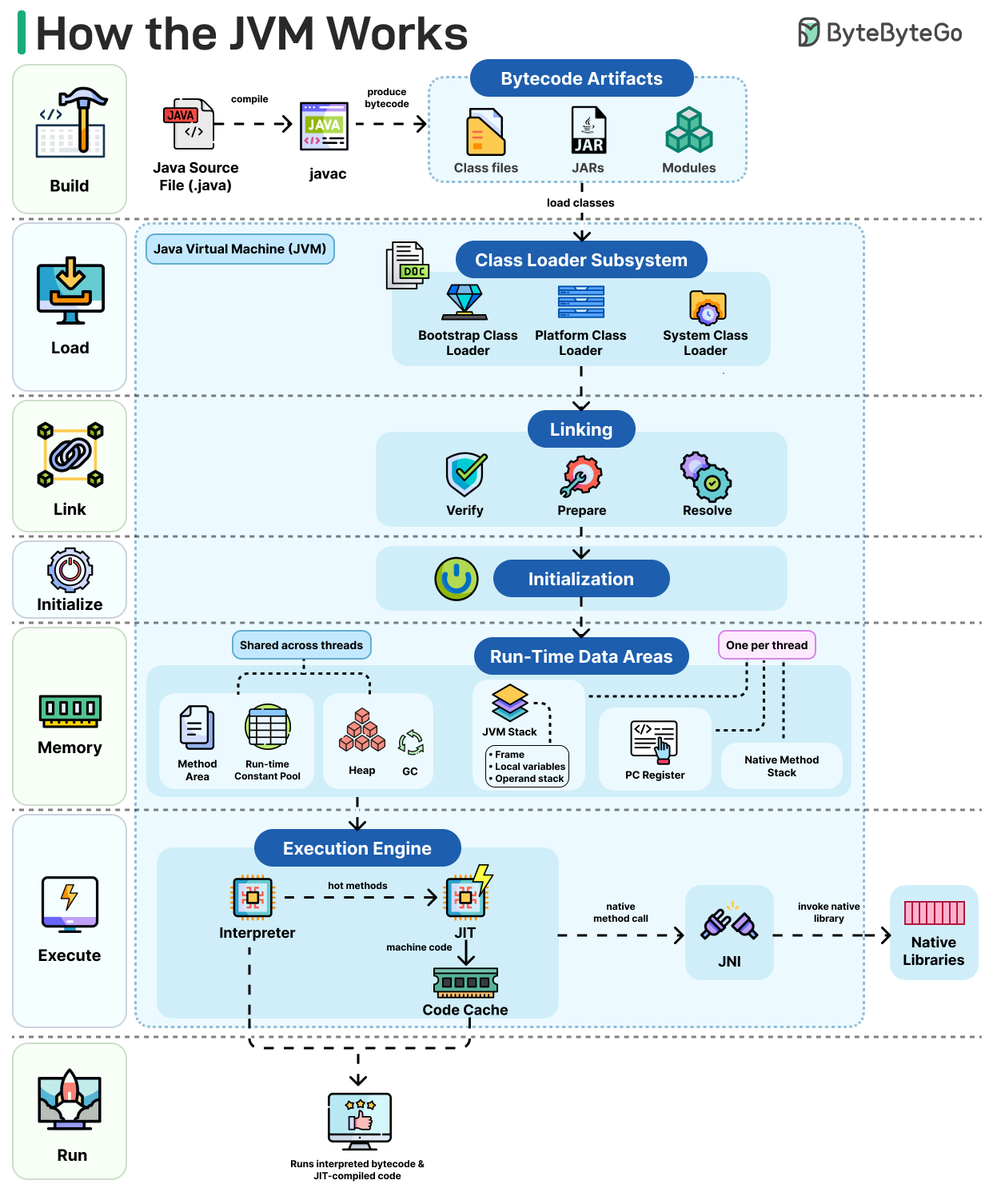
How the JVM Works
We compile, run, and debug Java code all the time. But what exactly does the JVM do between compile and run?
Here's the flow:
Build: javac compiles your source code into platform-independent bytecode, stored as .class files, JARs, or modules.
Load: The class loader subsystem brings in classes as needed using parent delegation. Bootstrap handles core JDK classes, Platform covers extensions, and System loads your application code.
Link: The Verify step checks bytecode safety. Prepare allocates static fields with default values, and Resolve turns symbolic references into direct memory addresses.
Initialize: Static variables are assigned their actual values, and static initializer blocks execute. This happens only the first time the class is used.
Memory: Heap and Method Area are shared across threads. The JVM stack, PC register, and native method stack are created per thread. The garbage collector reclaims unused heap memory.
Execute: The interpreter runs bytecode directly. When a method gets called multiple times, the JIT compiler converts it to native machine code and stores it in the code cache. Native calls go through JNI to reach C/C++ libraries.
Run: Your program runs on a mix of interpreted and JIT-compiled code. Fast startup, peak performance over time.
English

I'm deleting this soon because it's a legit cash-printing formula.
𝗣𝗮𝗶𝗱 𝗖𝗼𝘂𝗿𝘀𝗲 𝗙𝗥𝗘𝗘 (PART - 3)
1. Artificial Intelligence + Data Analyst
2. Machine Learning + Data Science
3. Cloud Computing + Web Development
4. Ethical Hacking + Hacking
5. Data Analytics + DSA
6. AWS Certified + IBM COURSE
7. Data Science + Deep Learning
8. BIG DATA + SQL COMPLETE COURSE
9. Python + OTHERS
10 MBA + HANDWRITTEN NOTES
(72 Hours only ) Cost About - $500
To get: -
1. Follow (So I can DM you )
2. Like & retweet
3. Reply " Send "
English
@Rimash_shan I saw this on a Sri Lankan forum, one individual pointed out this, the mentality of those who impose tax on automobile, goes like this. “Just because we own a vehicle does not mean everyone else should have one.”
English

Yasitha Charman retweetledi
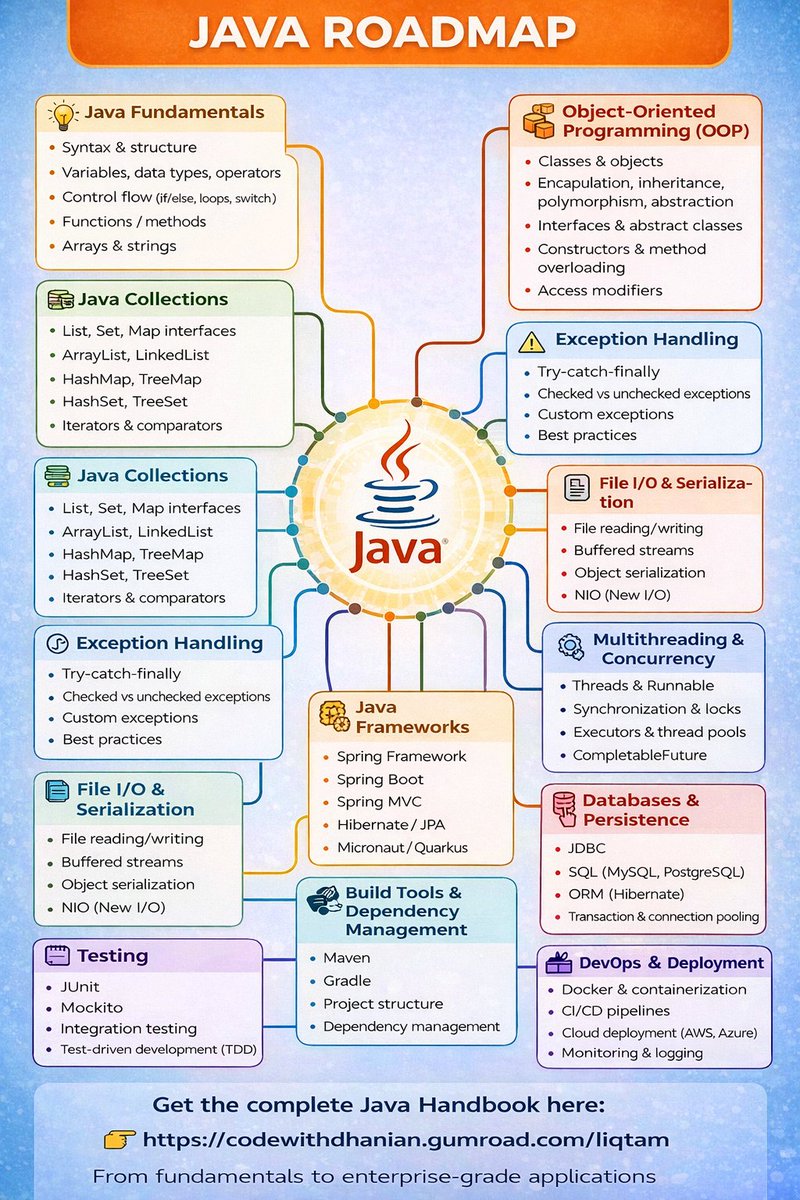
𝗝𝗮𝘃𝗮 𝗥𝗼𝗮𝗱𝗺𝗮𝗽 𝟮𝟬𝟮𝟲
𝗝𝗮𝘃𝗮 𝗙𝘂𝗻𝗱𝗮𝗺𝗲𝗻𝘁𝗮𝗹𝘀
Start with the core building blocks of Java programming.
🔹 Syntax & structure
🔹 Variables, data types, operators
🔹 Control flow (if/else, loops, switch)
🔹 Functions / methods
🔹 Arrays & strings
𝗢𝗯𝗷𝗲𝗰𝘁-𝗢𝗿𝗶𝗲𝗻𝘁𝗲𝗱 𝗣𝗿𝗼𝗴𝗿𝗮𝗺𝗺𝗶𝗻𝗴 (𝗢𝗢𝗣)
Java is built on OOP — master it deeply.
🔹 Classes & objects
🔹 Encapsulation, inheritance, polymorphism, abstraction
🔹 Interfaces & abstract classes
🔹 Constructors & method overloading
🔹 Access modifiers
𝗝𝗮𝘃𝗮 𝗖𝗼𝗹𝗹𝗲𝗰𝘁𝗶𝗼𝗻𝘀
Work efficiently with data structures.
🔹 List, Set, Map interfaces
🔹 ArrayList, LinkedList
🔹 HashMap, TreeMap
🔹 HashSet, TreeSet
🔹 Iterators & comparators
𝗘𝘅𝗰𝗲𝗽𝘁𝗶𝗼𝗻 𝗛𝗮𝗻𝗱𝗹𝗶𝗻𝗴
Write robust and fault-tolerant applications.
🔹 Try-catch-finally
🔹 Checked vs unchecked exceptions
🔹 Custom exceptions
🔹 Best practices
𝗙𝗶𝗹𝗲 𝗜/𝗢 & 𝗦𝗲𝗿𝗶𝗮𝗹𝗶𝘇𝗮𝘁𝗶𝗼𝗻
Handle data storage and transfer.
🔹 File reading/writing
🔹 Buffered streams
🔹 Object serialization
🔹 NIO (New I/O)
𝗠𝘂𝗹𝘁𝗶𝘁𝗵𝗿𝗲𝗮𝗱𝗶𝗻𝗴 & 𝗖𝗼𝗻𝗰𝘂𝗿𝗿𝗲𝗻𝗰𝘆
Build high-performance applications.
🔹 Threads & Runnable
🔹 Synchronization & locks
🔹 Executors & thread pools
🔹 CompletableFuture
🔹 Concurrent collections
𝗝𝗮𝘃𝗮 𝗙𝘂𝗻𝗰𝘁𝗶𝗼𝗻𝗮𝗹 𝗣𝗿𝗼𝗴𝗿𝗮𝗺𝗺𝗶𝗻𝗴
Modern Java (Java 8+) features.
🔹 Lambda expressions
🔹 Streams API
🔹 Functional interfaces
🔹 Optional class
🔹 Method references
𝗝𝗮𝘃𝗮 𝗙𝗿𝗮𝗺𝗲𝘄𝗼𝗿𝗸𝘀
Build scalable applications faster.
🔹 Spring Framework
🔹 Spring Boot
🔹 Spring MVC
🔹 Hibernate / JPA
🔹 Micronaut / Quarkus
𝗗𝗮𝘁𝗮𝗯𝗮𝘀𝗲𝘀 & 𝗣𝗲𝗿𝘀𝗶𝘀𝘁𝗲𝗻𝗰𝗲
Store and manage application data.
🔹 JDBC
🔹 SQL (MySQL, PostgreSQL)
🔹 ORM (Hibernate)
🔹 Transactions & connection pooling
𝗕𝘂𝗶𝗹𝗱 𝗧𝗼𝗼𝗹𝘀 & 𝗗𝗲𝗽𝗲𝗻𝗱𝗲𝗻𝗰𝘆 𝗠𝗮𝗻𝗮𝗴𝗲𝗺𝗲𝗻𝘁
Manage and build projects efficiently.
🔹 Maven
🔹 Gradle
🔹 Project structure
🔹 Dependency management
𝗧𝗲𝘀𝘁𝗶𝗻𝗴
Ensure code quality and reliability.
🔹 JUnit
🔹 Mockito
🔹 Integration testing
🔹 Test-driven development (TDD)
𝗗𝗲𝘃𝗢𝗽𝘀 & 𝗗𝗲𝗽𝗹𝗼𝘆𝗺𝗲𝗻𝘁
Take your Java apps to production.
🔹 Docker & containerization
🔹 CI/CD pipelines
🔹 Cloud deployment (AWS, Azure)
🔹 Monitoring & logging
𝗦𝘆𝘀𝘁𝗲𝗺 𝗗𝗲𝘀𝗶𝗴𝗻 𝗳𝗼𝗿 𝗝𝗮𝘃𝗮
Design scalable backend systems.
🔹 REST APIs & microservices
🔹 Caching (Redis)
🔹 Message queues (Kafka, RabbitMQ)
🔹 Load balancing & scaling
𝗥𝗲𝗮𝗹-𝗪𝗼𝗿𝗹𝗱 𝗣𝗿𝗼𝗷𝗲𝗰𝘁𝘀
Apply your knowledge practically.
🔹 RESTful API with Spring Boot
🔹 E-commerce backend system
🔹 Authentication system (JWT)
🔹 Microservices architecture project
🔹 Banking or payment system
Mastering this roadmap will take you from beginner to a professional Java developer capable of building scalable, production-ready applications.
Get the complete Java Handbook here:
👉 codewithdhanian.gumroad.com/l/iqtam
English
Yasitha Charman retweetledi

Linux is free
Docker is free
Kubernetes is free
Git is free
GitHub is free
Python is free
Node.js is free
Go is free
PostgreSQL is free
MySQL is free
MongoDB is free
Redis is free
Terraform is free
Ansible is free
Jenkins is free
Prometheus is free
Grafana is free
NGINX is free
Apache is free
VS Code is free
Postman is free
Figma is free
Vercel is free
Netlify is free
AWS is free tier
GCP is free tier
Azure is free tier
ChatGPT is free
Claude is free
Gemini is free
Perplexity is free
Hugging Face is free
Ollama is free
Stable Diffusion is free
TensorFlow is free
PyTorch is free
LangChain is free
What’s stopping you to build and ship?

English