Yoan Di Cosmo

40 posts

Yoan Di Cosmo banner
Yoan Di Cosmo

Yoan Di Cosmo

@yoandicosmo

@HackIterate

Katılım Haziran 2018
628 Takip Edilen229 Takipçiler
Yoan Di Cosmo
Yoan Di Cosmo@yoandicosmo·
artists, researchers and entrepreneurs, at the highest level, are the same kind of people
English
0
0
5
60
Yoan Di Cosmo
Yoan Di Cosmo@yoandicosmo·
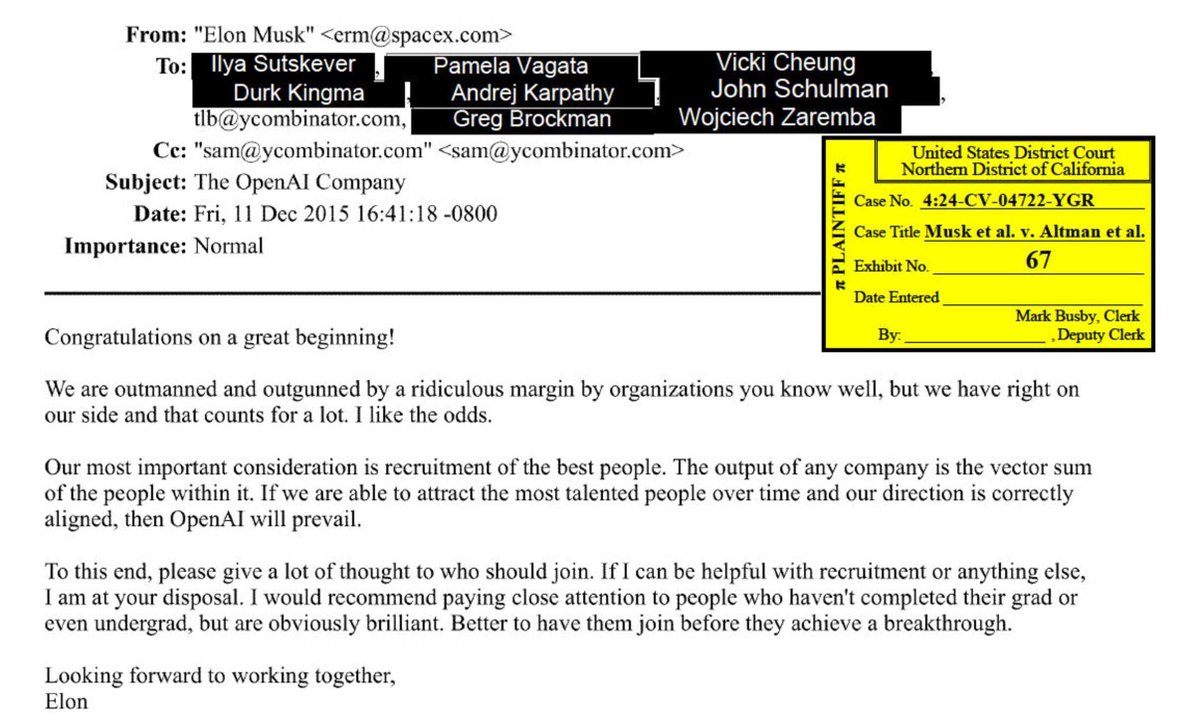
Greatness often starts with a treason cf Fairchild's "traitorous eight"
Yoan Di Cosmo tweet media
English
0
1
2
173
Yoan Di Cosmo
Yoan Di Cosmo@yoandicosmo·
Lisbon is a beautiful city
Yoan Di Cosmo tweet media
English
0
0
6
106
Paco Villetard
Paco Villetard@pacovilletard·
We're coming out of stealth to announce our cyber defense research lab. We are exploring data and post-training techniques to build superhuman cyber defenders. Our mission is to make sure the West always wins. The last 3 months we've built an automated data pipeline to create training data from 80k CVEs (aka public vulnerabilities). Our next topic? Post training a model that's better at fixing all the vulnerabilities in your codebase. Like really fixing them. Not saying it's secure when there are still ways to exploit them. Here are the questions that keep us awake at night: How do you train a model to defend without improving its capabilities to attack? What's the right reward? How to measure the defense capabilities? How do you create synth training data that reproduces real systems? What kind of access do you give an ai cyber defender? How far can you trust it? If you know insanely good cyber experts (red team, blue team, CTF aficionados) or ML engineers (synth data generation and post-training models), send them my way. We need to make models far better at defending.
English
85
47
353
116.3K
Yoan Di Cosmo
Yoan Di Cosmo@yoandicosmo·
Super grateful to have had the opportunity to work alongside the HF team on this project! Thanks again @akseljoonas ;)
Aksel@akseljoonas

Introducing ml-intern, the agent that just automated the post-training team @huggingface It's an open-source implementation of the real research loop that our ML researchers do every day. You give it a prompt, it researches papers, goes through citations, implements ideas in GPU sandboxes, iterates and builds deeply research-backed models for any use case. All built on the Hugging Face ecosystem. It can pull off crazy things: We made it train the best model for scientific reasoning. It went through citations from the official benchmark paper. Found OpenScience and NemoTron-CrossThink, added 7 difficulty-filtered dataset variants from ARC/SciQ/MMLU, and ran 12 SFT runs on Qwen3-1.7B. This pushed the score 10% → 32% on GPQA in under 10h. Claude Code's best: 22.99%. In healthcare settings it inspected available datasets, concluded they were too low quality, and wrote a script to generate 1100 synthetic data points from scratch for emergencies, hedging, multilingual etc. Then upsampled 50x for training. Beat Codex on HealthBench by 60%. For competitive mathematics, it wrote a full GRPO script, launched training with A100 GPUs on hf.co/spaces, watched rewards claim and then collapse, and ran ablations until it succeeded. All fully backed by papers, autonomously. How it works? ml-intern makes full use of the HF ecosystem: - finds papers on arxiv and hf.co/papers, reads them fully, walks citation graphs, pulls datasets referenced in methodology sections and on hf.co/datasets - browses the Hub, reads recent docs, inspects datasets and reformats them before training so it doesn't waste GPU hours on bad data - launches training jobs on HF Jobs if no local GPUs are available, monitors runs, reads its own eval outputs, diagnoses failures, retrains ml-intern deeply embodies how researchers work and think. It knows how data should look like and what good models feel like. Releasing it today as a CLI and a web app you can use from your phone/desktop. CLI: github.com/huggingface/ml… Web + mobile: huggingface.co/spaces/smolage… And the best part? We also provisioned 1k$ GPU resources and Anthropic credits for the quickest among you to use.

English
0
0
2
180
Aksel
Aksel@akseljoonas·
Introducing ml-intern, the agent that just automated the post-training team @huggingface It's an open-source implementation of the real research loop that our ML researchers do every day. You give it a prompt, it researches papers, goes through citations, implements ideas in GPU sandboxes, iterates and builds deeply research-backed models for any use case. All built on the Hugging Face ecosystem. It can pull off crazy things: We made it train the best model for scientific reasoning. It went through citations from the official benchmark paper. Found OpenScience and NemoTron-CrossThink, added 7 difficulty-filtered dataset variants from ARC/SciQ/MMLU, and ran 12 SFT runs on Qwen3-1.7B. This pushed the score 10% → 32% on GPQA in under 10h. Claude Code's best: 22.99%. In healthcare settings it inspected available datasets, concluded they were too low quality, and wrote a script to generate 1100 synthetic data points from scratch for emergencies, hedging, multilingual etc. Then upsampled 50x for training. Beat Codex on HealthBench by 60%. For competitive mathematics, it wrote a full GRPO script, launched training with A100 GPUs on hf.co/spaces, watched rewards claim and then collapse, and ran ablations until it succeeded. All fully backed by papers, autonomously. How it works? ml-intern makes full use of the HF ecosystem: - finds papers on arxiv and hf.co/papers, reads them fully, walks citation graphs, pulls datasets referenced in methodology sections and on hf.co/datasets - browses the Hub, reads recent docs, inspects datasets and reformats them before training so it doesn't waste GPU hours on bad data - launches training jobs on HF Jobs if no local GPUs are available, monitors runs, reads its own eval outputs, diagnoses failures, retrains ml-intern deeply embodies how researchers work and think. It knows how data should look like and what good models feel like. Releasing it today as a CLI and a web app you can use from your phone/desktop. CLI: github.com/huggingface/ml… Web + mobile: huggingface.co/spaces/smolage… And the best part? We also provisioned 1k$ GPU resources and Anthropic credits for the quickest among you to use.
English
136
643
4.7K
1.2M
Yoan Di Cosmo retweetledi
Axel
Axel@ax_pey·
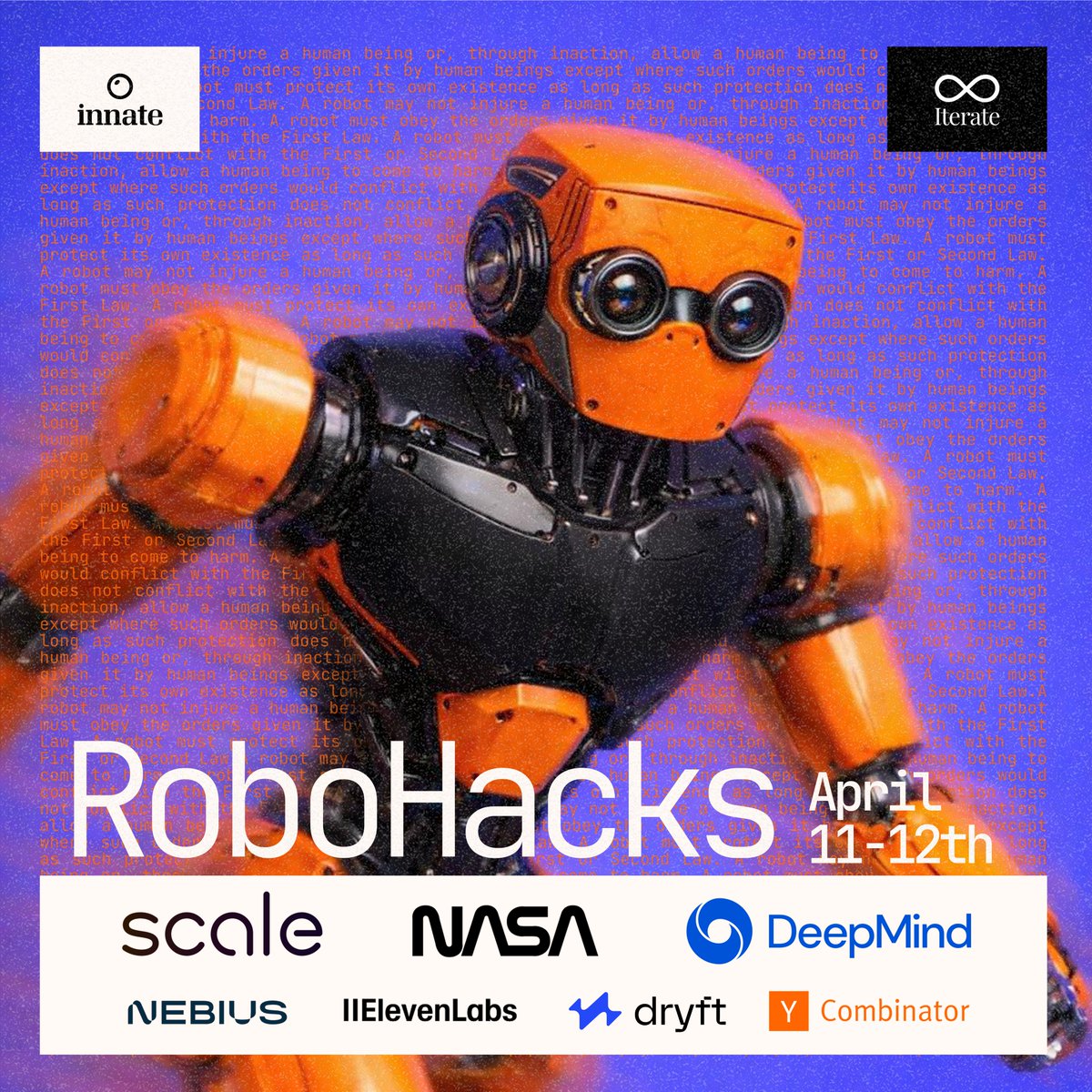
Time to build general-purpose robots, on hardware made in SF We are bringing @NASA @GoogleDeepMind @scale_AI and more at @ycombinator for a general-purpose robotics hackathon Each team will have a robot and compete across all Al modalities to make the coolest AI project ⬇️
Axel tweet media
English
28
43
436
44.3K
Karim
Karim@Karim_RC·
We brought in a writer of Toy Story to build a robot that feels alive. Introducing Ongo, a desk lamp that will light up your life. Pre-order one of the first 100 units (link below).
English
331
212
2.7K
1M
Yoan Di Cosmo retweetledi
Zoe Qin
Zoe Qin@zqwq333·
It’s the last weekend before December so I guess we’ll squeeze in a last hack 💻🎄 🇬🇧🇫🇷🇵🇱🇺🇸🇪🇸🇨🇳losing count on how many others are in the room This time on RL with @cognition @originator, organised by @yoandicosmo Who else should we collaborate with next year 👀
Zoe Qin tweet mediaZoe Qin tweet media
English
2
2
15
1.6K
Axel Darmouni
Axel Darmouni@ADarmouni·
Had a really fun time at the @unaitefr hackathon, on the Open Track on which I made a LoL replay analyzer! Not gonna lie, was quite inspired by the products (most notably @dpmlol) I’ve seen over twitter, and the goal was to make a tool that automatizes game reviews and analyzes complete logs you can gather through the RIOT API to get game feedbacks using GenAI (Claude 4.5 Sonnet from @AnthropicAI here) As a hardstuck E4 Lillia player, the tool was even useful to me even in this very prototype-like state and gave me tips which I didn’t consider -like dying too much early game or repeating the same mistake- Thanks @yoandicosmo for the organization! Leaving the video I’ve submitted below, hope you enjoy the watch! 🤗
English
1
0
3
136