Alessandro Gambin da Silva

7K posts

Alessandro Gambin da Silva banner
Alessandro Gambin da Silva

Alessandro Gambin da Silva

@z3rocall

Noah's dad 😻 Nature lover 🌷 Software engineer 👨🏻‍💻 Pilot 👨🏻‍✈️ In a timeless discovery journey called life 🏞️

Somewhere in my mind Katılım Temmuz 2008
3.2K Takip Edilen274 Takipçiler
Alessandro Gambin da Silva retweetledi
sunil pai
sunil pai@threepointone·
tl;dr - subagent behaviour working on adding multi chat and subagents to the agents starter (yay!) and I have a curious product direction/question. our subagents can be full fledged chats themselves. which means they could not only be async while they work on their thing and you continue, but you could continue "talking" with them after they've "returned" a result. so what should the default behaviour in the starter be? - readonly, no input. this is what most (all?) products/devtools like this do atm - have chat, but it's only followups, doesn't affect the main chat - add a "send back/summarize to main chat" this feels powerful and underexplored I'll probably ship option 1 for now, but there's something here... anyway, multichat/subagents in starter template coming this week
sunil pai tweet media
English
31
5
96
12.8K
Alessandro Gambin da Silva retweetledi
Vini - viumavaga.tech
Vini - viumavaga.tech@ViUmaVaga·
Quer crescer rápido? Seja o profissional que mastiga a complexidade para o time. Quando um problema gigante estoura, seja o cara que documenta os passos, divide a dor e sugere os primeiros testes.
Português
0
3
40
1.3K
Alessandro Gambin da Silva retweetledi
Tallis Gomes
Tallis Gomes@tallisgomes·
Você é o resultado do que coloca na sua mente e o que você ouve tem um poder brutal nisso. A maioria enche os ouvidos de barulho, distração e bagunça. Poucos entendem que música clássica não é “coisa de velho” é treino de alto desempenho. Bach, Mozart, Beethoven organizam o pensamento, afiam o foco e elevam o padrão da sua energia. Cuide dos seus inputs auditivos com a mesma seriedade que cuida da sua dieta e do seu treino. Qualidade no que entra = qualidade no que sai.
Português
8
23
371
7.5K
Alessandro Gambin da Silva retweetledi
Jerry Liu
Jerry Liu@jerryjliu0·
This is a nice article (not sure how I stumbled upon it a month later) I directionally agree with it in that: ✅ I have a massive bias for slope, grit, and scrappiness in candidates vs. pure experience. During interviews I often ask the candidates (across eng, gtm, and others) ad-hoc problems to test how they would reason about new situations. The people that can learn the quickest are those that can use AI to their advantage. ✅ In the pre-AI world of work, I would say 80%+ of time on the job is spent doing routine tasks and <20% is actually learning new skills. When I was a ML researcher, 80% of my time was actually programming PyTorch (repetitive) and <20% was thinking. So the actual amount of pure learning a junior worker needs to get to the senior worker's level of output is probably quite low. And that's shrunk even more with AI. In general, high-slope will win out vs. experience, especially in the current volatile market. Experience may not be as important, but imo learning and understanding is important. Based on this, some pushbacks: * Actual learned experience helps you use AI better. When you are a senior/staff-level engineer, you know what prompts to use to write higher-quality, maintainable code. * For the junior worker to ramp-up quickly, they actually need to use AI to learn and not just produce. it is easy to give the illusion of producing a lot of output when most of it is slop.
Jaya Gupta@JayaGup10

x.com/i/article/2047…

English
7
16
90
25K
Alessandro Gambin da Silva retweetledi
René Remsik
René Remsik@aitrendz_xyz·
This is honestly the best prompt I have ever seen
English
2.6K
14.3K
119.3K
16.8M
Alessandro Gambin da Silva retweetledi
Ivan Velichko
Ivan Velichko@iximiuz·
This is your periodic reminder that dozens of refined Linux, Containers, Kubernetes, and Networking playgrounds are just a short link away: - serverlabs[.]io/p/k8s - serverlabs[.]io/p/docker - serverlabs[.]io/p/ubuntu - serverlabs[.]io/p/flexbox Learning by doing is the way 🚀
English
0
13
107
6K
Alessandro Gambin da Silva retweetledi
Nikki Siapno
Nikki Siapno@NikkiSiapno·
How RAG actually works (clearly explained in under 2 mins): RAG (Retrieval-Augmented Generation) is a system that retrieves relevant data and feeds it into an LLM before generating a response. It lets models answer questions using external knowledge, not just what they were trained on. If you’re building with these patterns, here's a great guide on scaling multi-agent RAG systems: lucode.co/multi-agent-ra… Here’s a simple mental model to understand it: 𝟭) 𝗗𝗮𝘁𝗮 𝗶𝘀 𝗶𝗻𝗴𝗲𝘀𝘁𝗲𝗱 ↳ Documents (PDFs, docs, APIs) are collected and split into chunks ↳ Each chunk is cleaned and formatted ready for embedding 𝟮) 𝗘𝗺𝗯𝗲𝗱𝗱𝗶𝗻𝗴𝘀 𝗮𝗿𝗲 𝗰𝗿𝗲𝗮𝘁𝗲𝗱 ↳ Each chunk is converted into a vector representation ↳ Similar meaning → closer vectors 𝟯) 𝗗𝗮𝘁𝗮 𝗶𝘀 𝘀𝘁𝗼𝗿𝗲𝗱 ↳ Vectors are stored in a vector database ↳ Enables fast similarity search across large datasets 𝟰) 𝗥𝗲𝗹𝗲𝘃𝗮𝗻𝘁 𝗰𝗼𝗻𝘁𝗲𝘅𝘁 𝗶𝘀 𝗿𝗲𝘁𝗿𝗶𝗲𝘃𝗲𝗱 ↳ The user's query is converted into an embedding (vector representation) ↳ The system compares it against stored vectors and retrieves the most relevant chunks 𝟱) 𝗧𝗵𝗲 𝗟𝗟𝗠 𝗴𝗲𝗻𝗲𝗿𝗮𝘁𝗲𝘀 𝘁𝗵𝗲 𝗮𝗻𝘀𝘄𝗲𝗿 ↳ The query + retrieved context are combined into a prompt ↳ The model generates a grounded response That's the foundation of RAG. There are several types of RAG, each designed for different use cases and levels of complexity. If you’re curious what this actually looks like in practice (beyond diagrams), this repo is a great place to start: lucode.co/ai-developer-h… It has: ↳ E2E implementations of RAG, AI applications, agents, and systems ↳ Resources covering AI agent architecture, reasoning strategies, and memory systems. ↳ Hands-on workshops and guided learning Start it to keep it bookmarked. This repo will keep growing, and you'll want it on hand as you build. What else would you add? —— ♻️ Repost to help others learn AI engineering. 🙏 Thanks to @Oracle for sponsoring this post. ➕ Follow me ( Nikki Siapno ) to improve at AI engineering.
Nikki Siapno tweet media
English
8
63
289
9.5K
Alessandro Gambin da Silva retweetledi
Tech with Mak
Tech with Mak@techNmak·
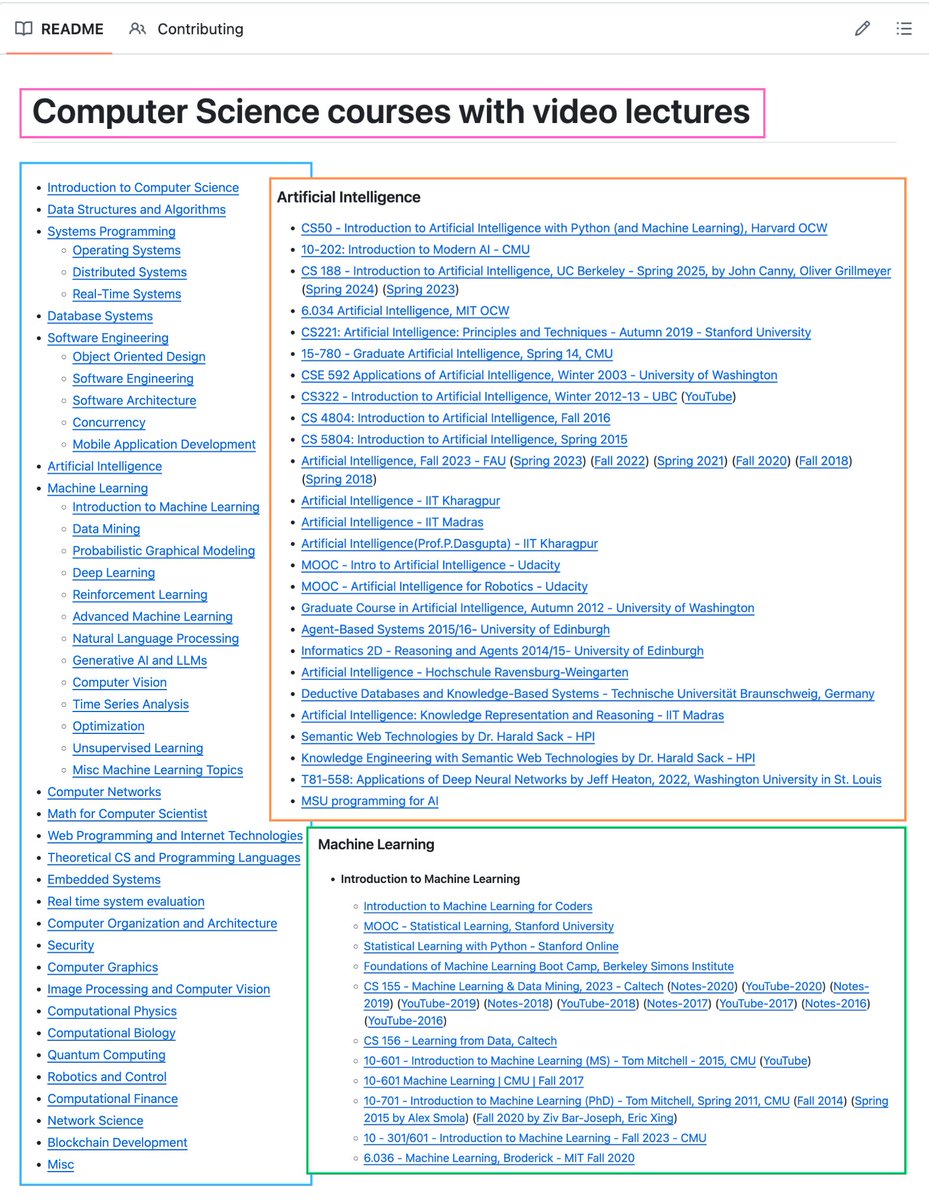
The most mass-complete list of CS video courses on the internet. cs-video-courses. 78K+ stars. MIT. Stanford. Berkeley. Harvard. CMU. IIT. Princeton. Caltech. All free. All video lectures. All in one repo. Topics covered: → Data Structures and Algorithms → Operating Systems → Distributed Systems → Database Systems → Computer Networks → Machine Learning → Deep Learning → Natural Language Processing → Computer Vision → Computer Graphics → Security → Quantum Computing → Robotics → Blockchain From beginner (CS 50) to advanced (6.824 Distributed Systems). The curriculum is free. The commitment is yours. GitHub link in comments.
Tech with Mak tweet media
English
6
107
575
20K
Alessandro Gambin da Silva retweetledi
sysxplore
sysxplore@sysxplore·
12 Git commands you should know
sysxplore tweet media
English
3
104
504
12.7K
Alessandro Gambin da Silva retweetledi
Nina
Nina@HeyNina101·
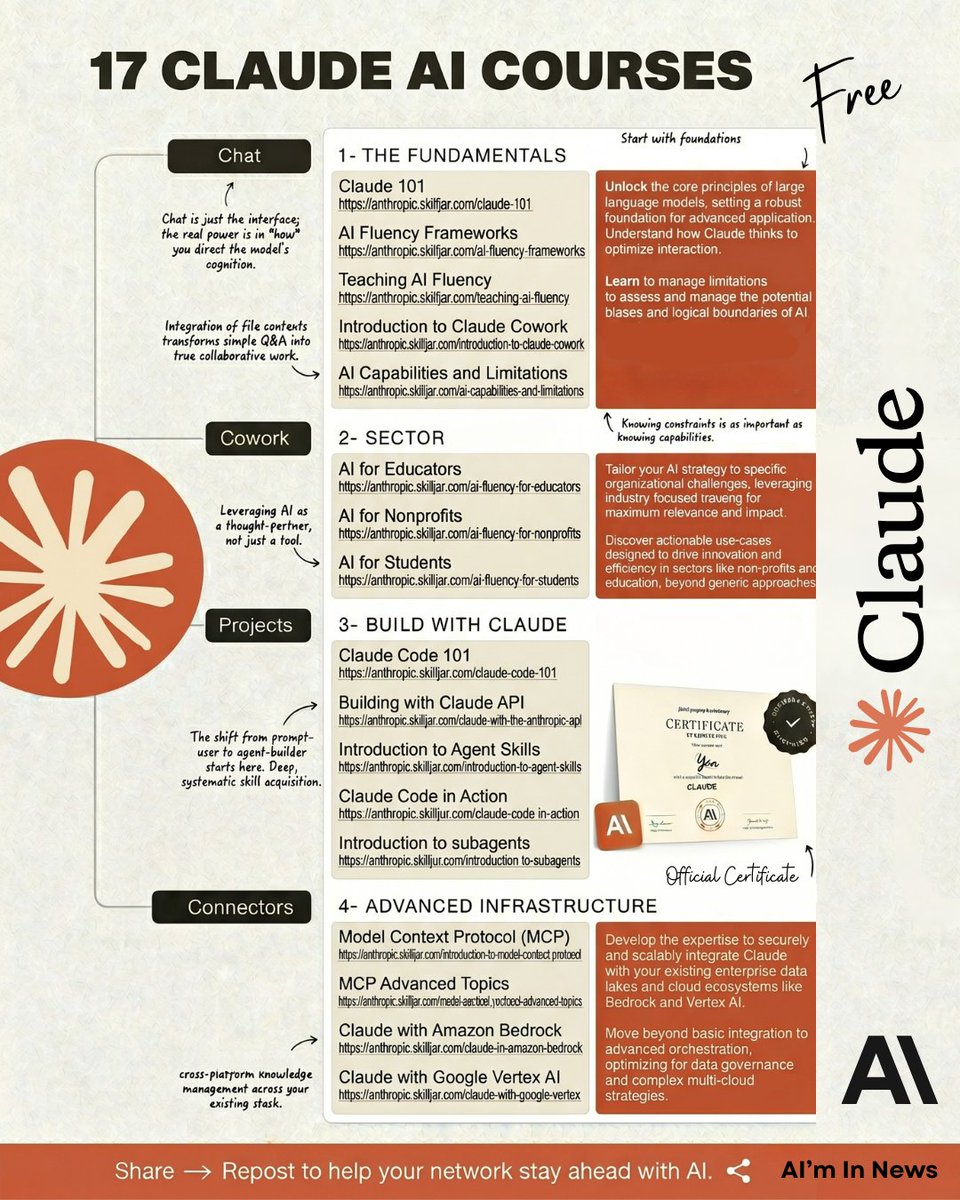
17 AI courses. 17 certifications. $0 cost. This is the Anthropic Academy roadmap. If you complete even 3, you are ahead of 99% of the workforce. Here is the list ( worth the bookmark ) 1- The Fundamentals ✱ Claude 101: anthropic.skilljar.com… ✱ AI Fluency Frameworks: anthropic.skilljar.com… ✱ Teaching AI Fluency: anthropic.skilljar.com… ✱ Introduction to Claude Cowork anthropic.skilljar.com… ✱ AI Capabilities and Limitations anthropic.skilljar.com… 2- Sectors ✱ AI for Educators: anthropic.skilljar.com… ✱ AI for Nonprofits: anthropic.skilljar.com… ✱ AI for Students: anthropic.skilljar.com… 3- Build with Claude ✱ Claude Code 101 anthropic.skilljar.com… ✱ Building with Claude API: anthropic.skilljar.com… ✱ Introduction to Agent Skills: anthropic.skilljar.com… ✱ Claude Code in Action: anthropic.skilljar.com… ✱ Introduction to subagents anthropic.skilljar.com… 4- Advanced Infrastructure ✱ Model Context Protocol (MCP): anthropic.skilljar.com… ✱ MCP Advanced Topics: anthropic.skilljar.com… ✱ Claude with Amazon Bedrock: anthropic.skilljar.com… ✱ Claude with Google Vertex AI: anthropic.skilljar.com… The barrier to entry has never been lower. The technical gap has never been wider. #freecourses
Nina tweet media
English
0
12
26
1K
Alessandro Gambin da Silva
I’m in!
angular.love@AngularLovePL

The second #Angular Spring Camp 2026 meetup is just around the corner! 🔥 📅 May 19 | 3 PM CEST | Online → You're one step away from learning Zoneless Angular, Atomic State Patterns with Signals, and all about #Vitest! All it takes? Register for free and get: 🎬 All recordings from this year's Spring Camp 💻 A repo with all the #code from the lectures 🎟️ Your ticket to the 2nd & 3rd meetup We've already seen a few of you post that you're joining, so who else is in? 📬 Repost this agenda with your "I’m in"! Let's make this one memorable!

English
0
0
1
6
Alessandro Gambin da Silva retweetledi
Milan Jovanović
Milan Jovanović@mjovanovictech·
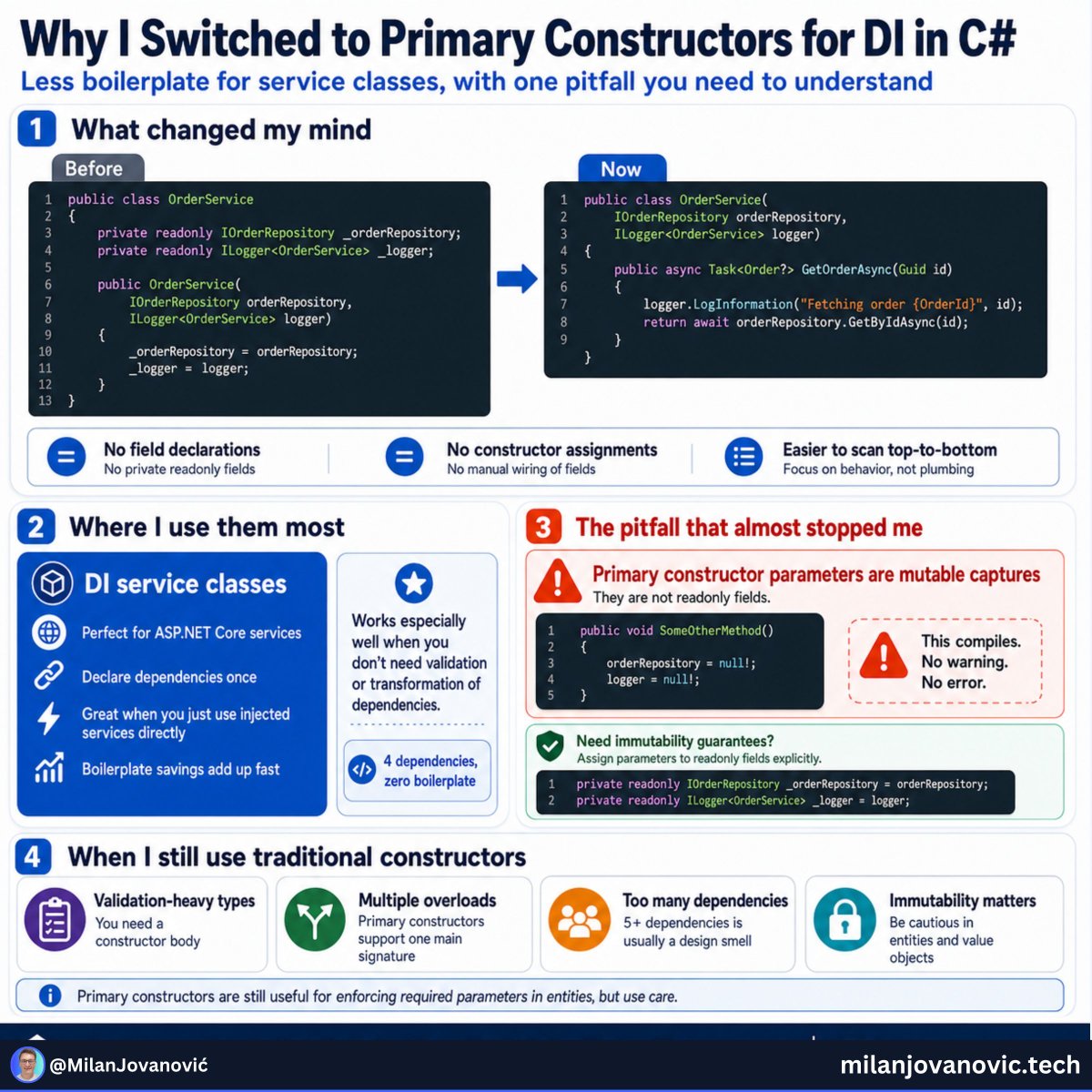
I resisted primary constructors in C# for a while. The syntax looked nice, but one thing bothered me: Primary constructor parameters are captured as mutable variables. They are not `readonly` fields. That felt like a trade-off I didn’t want to make. But after using them across several projects, I changed my mind. For DI service classes, the boilerplate savings are hard to ignore. Instead of this: - private readonly fields - constructor parameters - field assignments - then the actual code You declare the dependencies once and use them directly. The class becomes shorter. The intent is easier to see. And for typical ASPNET Core services, that mutable capture pitfall is usually manageable. I still don’t use primary constructors everywhere. I stick with traditional constructors when I need: - complex validation - multiple overloads - stronger immutability guarantees - too many dependencies But for DI service classes? I’m sold. I wrote a full breakdown of why I switched, where I use them, and the one pitfall you need to understand: milanjovanovic.tech/blog/why-i-swi…
Milan Jovanović tweet media
English
17
17
160
19.1K
Alessandro Gambin da Silva retweetledi
Dr Milan Milanović
Dr Milan Milanović@milan_milanovic·
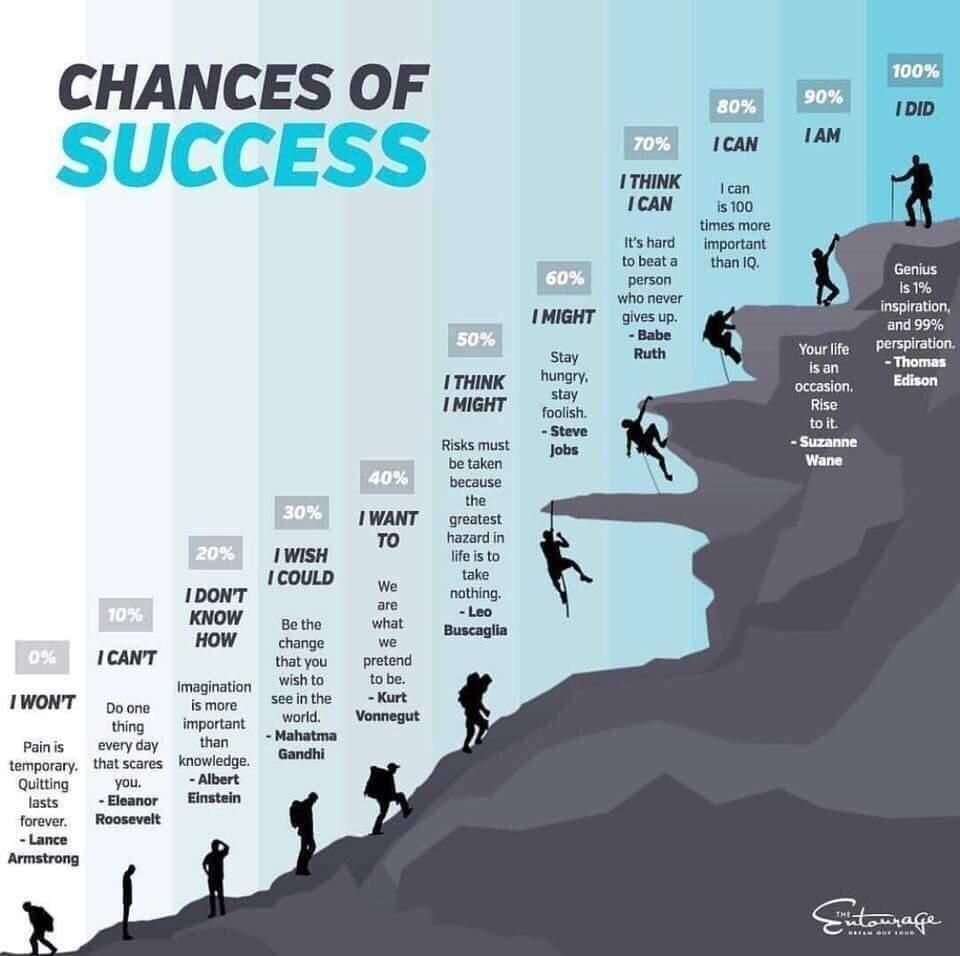
𝗦𝘂𝗰𝗰𝗲𝘀𝘀 𝗶𝘀 𝘄𝗼𝗿𝗸𝗲𝗱 𝗼𝗻! Which quote resonates with you? In any case, to succeed is to want, to try, to fail, to try again, to finally succeed! You need a winning mindset! I wish you a great week ahead 👋!
Dr Milan Milanović tweet media
English
2
3
19
1.6K
Alessandro Gambin da Silva retweetledi
Zain Manji
Zain Manji@ZainManji·
We've shipped 40+ AI engagements and have led FDE efforts in the last 12 months... here's the actual AI problems we've been solving for enterprises 1. Compressing long, multi-system business processes. Mapping a process that lives across email, Excel, SharePoint, ERPs, and DAMs, then collapsing it with agentic workflows. 2. Document and unstructured data extraction. Pulling structured data out of messy inputs at scale. 3. Internal knowledge and search across fragmented systems. Querying institutional knowledge that lives in calls, memos, CRM, and docs. 4. Customer-facing AI agents (chat, voice, support). Production agents handling end-customer interactions. 5. Agentic commerce. Catalogs, checkouts, and brand surfaces ready for AI agent traffic. 6. Computer vision in physical workflows and applied to specific operational decisions. 7. AI in regulated/healthcare environments. On-prem, HIPAA, data sovereignty work where the AI has to live where the data lives. 8. AI governance and internal AI sandboxes. Building the safe environment where staff can use AI compliantly. 9. Engineering productivity and software factories. AI inside the SDLC, ticket to PR. 10. Custom model and platform builds for AI startups. Helping AI companies build their own products and stand up FDE arms. 11. Evals, benchmarks, and RL environments. Measurement infrastructure that decides whether agents are safe to ship. 12. Data and ML infra for AI workloads. The foundation under everything else: pipelines, GPU clusters, IaC. 13. AI advisory at the strategy and PE portfolio level. Helping investors and operators decide where AI fits.
English
21
27
324
29.8K
Alessandro Gambin da Silva retweetledi
Ethan Mollick
Ethan Mollick@emollick·
Enterprises are going to actually want a coherent roadmap for the development of tools like Codex and Cowork, so they can plan and train and scale their use. This conflicts with the Labs’ vision where these tools rapidly scale exponentially in ability as models approach AGI.
English
51
15
253
16.5K
Alessandro Gambin da Silva retweetledi
Tomasz Tunguz
Tomasz Tunguz@ttunguz·
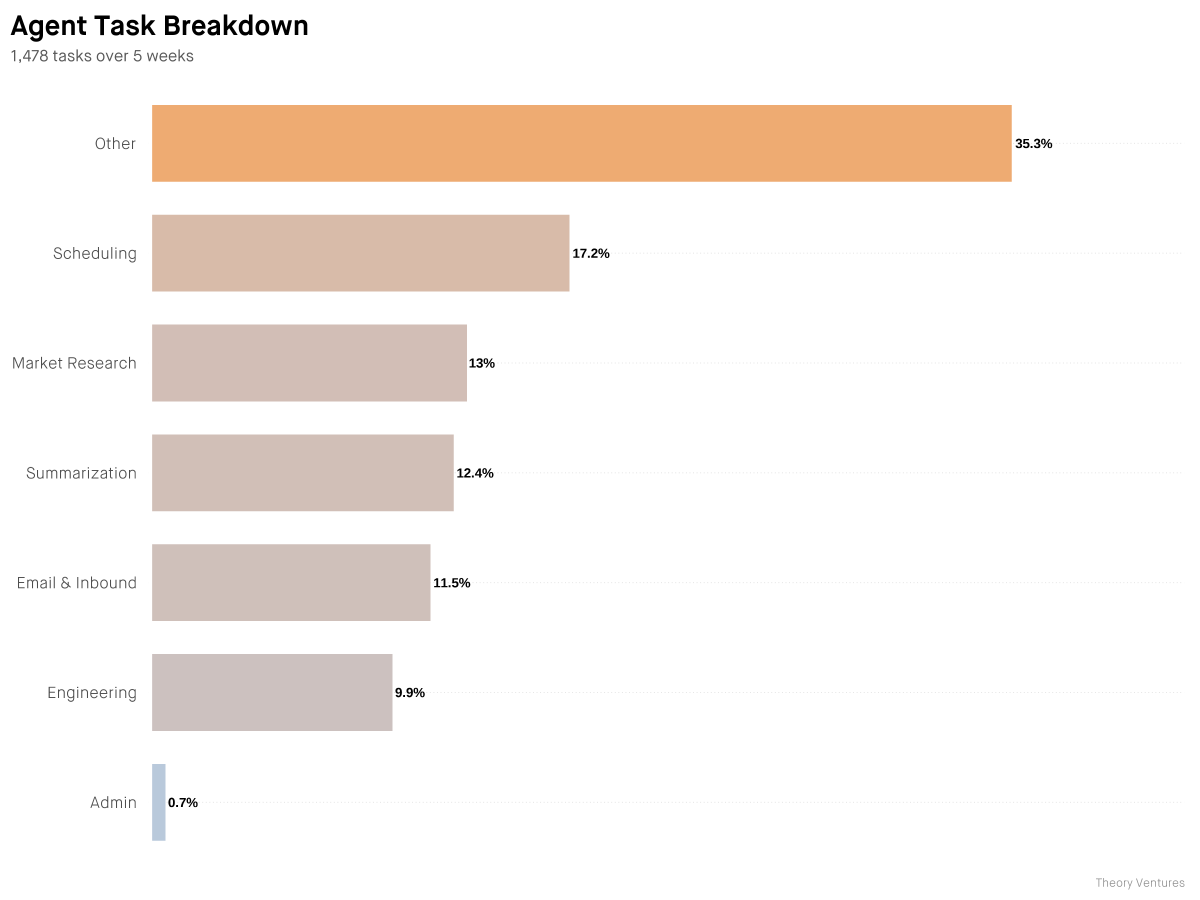
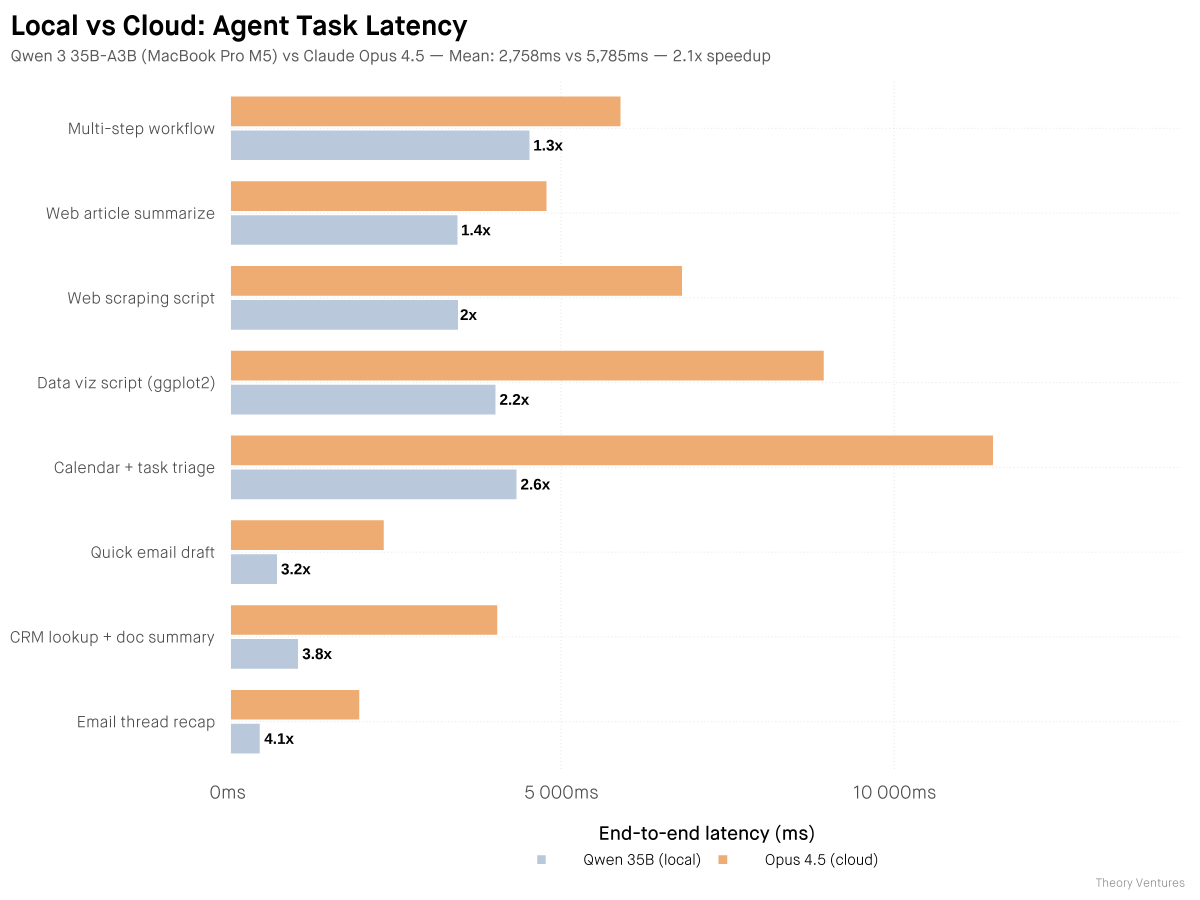
Localmaxxing : pushing more inference to local models. Over five weeks, I tested how much of my daily work can run on a local 35B model instead of cloud frontier models. The answer : half. Many reasons to use local models : privacy, cost, asset depreciation. But the only one that really matters is latency. I ran a head-to-head benchmark. Qwen 3.6 35B-A3B-4bit on my MacBook Pro M5 vs Claude Opus 4.5 via API. Result : 2.1x faster locally. Mean 2.8s vs 5.8s. The local model isn't smarter. Opus scores ~20% higher on reasoning benchmarks. Local models lag frontier by 3-4 months, and for complex tasks, that gap matters. But for routine agent tasks, it rarely does. If half the work runs 2x faster on my laptop, I'll take that trade every time. My little computer is about to earn its keep. tomtunguz.com/localmaxxing/
Tomasz Tunguz tweet mediaTomasz Tunguz tweet media
English
35
26
164
37.4K
Alessandro Gambin da Silva retweetledi
dunik
dunik@dunik_7·
40% of the code Claude writes for you is wasted. you're paying for the rewrite. a 65-line markdown file fixes it. 120,000 developers have starred it. the author tested it on "30 codebases over 6 weeks" and reported a mistake rate drop from 41% to either 11% or 3% depending on whether you read the headline or the body. the irony is that the article is right. CLAUDE.md is the most under-leveraged file in your stack. 65 lines of behavioral rules outperform a 4,000-token preferences dump. "be careful" is useless. testable imperatives are gold. "be senior" doesn't work Claude already thinks it is. the 4 rules that ship the most leverage: / state assumptions, never guess silently / minimum code, nothing speculative / surgical changes, don't refactor adjacent code / define success, loop until verified compliance: ~80%. mistake rate: from ~40% to single digits. no human caught the contradicting numbers in the title. nobody had to.
Mnimiy@Mnilax

x.com/i/article/2053…

English
70
383
5.7K
1.8M
Alessandro Gambin da Silva retweetledi
João de Senzi
João de Senzi@joaosenzi·
Tenho vontade de comprar dez batatas grandes no McDonald's e dez batatas medias. Contar a quantidade de batatas, aplicar um desvio padrão e entender se vale a pena mesmo comprar a grande.
Português
165
153
9.3K
315K
Alessandro Gambin da Silva retweetledi
Codista
Codista@ocodista·
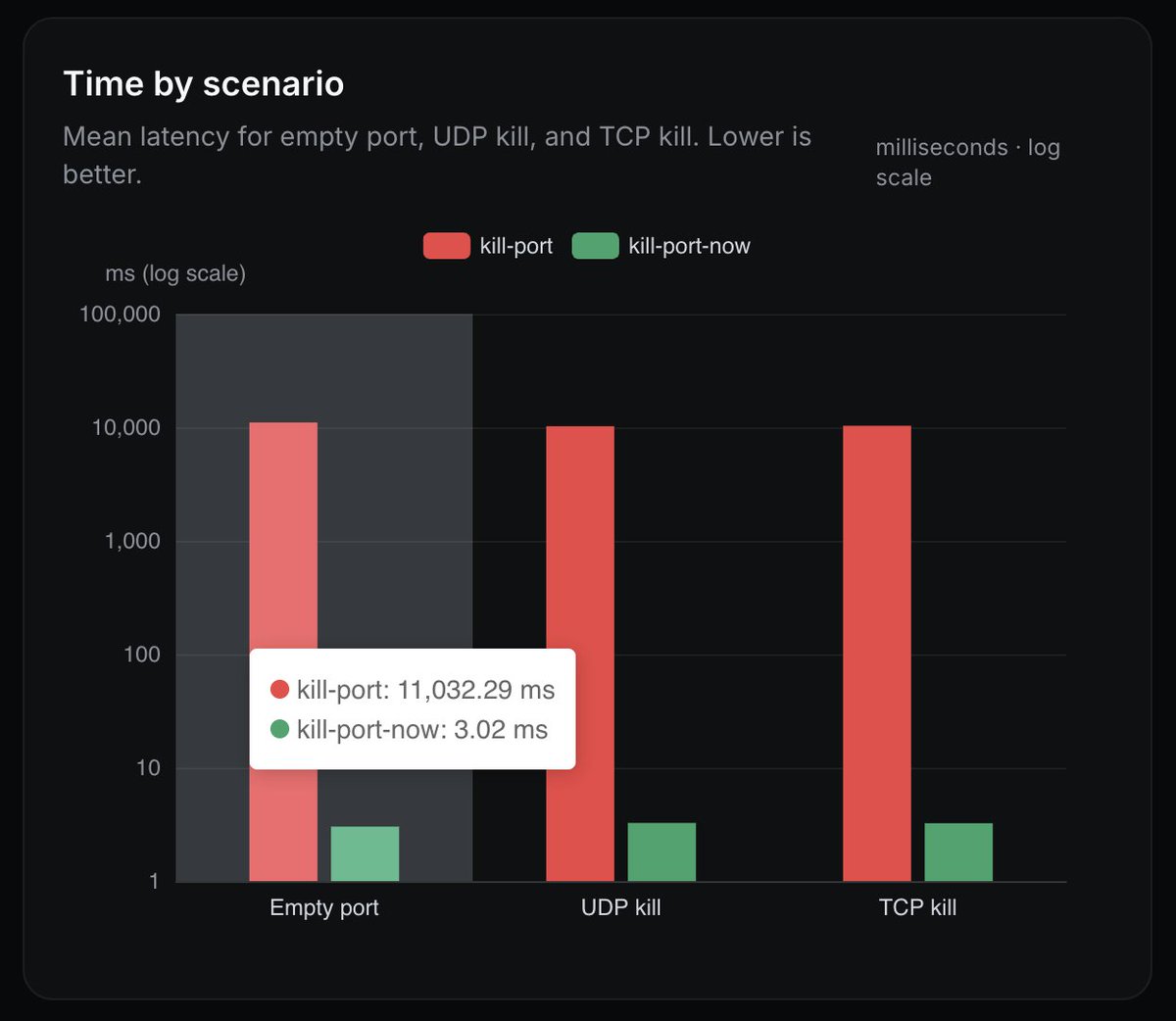
This library (kill-port) has 1,4M weekly downloads on npm and it usually takes ~10s to kill a process in MacOS. So... I rewrote it in Rust and now it takes 3ms 😁 That's just 3,000x faster than the original. Been using it for a couple weeks and decided to publish it on npm as kill-port-now, give it a try if you want, code is OSS, link in comments ✌️
Codista tweet mediaCodista tweet media
English
8
5
122
7.6K
Alessandro Gambin da Silva retweetledi
Codista
Codista@ocodista·
Alias kp pra matar processo por porta instantaneamente é muito útil se você desenvolve servidor web com git worktree no estilo TDAH fazendo 3 coisas ao mesmo tempo
Português
0
2
6
1K