Boris Renski

1.1K posts

Boris Renski

Boris Renski

@zer0tweets

Founder at https://t.co/pGdnoz9BOX. Co-Founder at Mirantis. Founder at FreedomFi (acquired by Helium)

San Francisco Bay Area Katılım Kasım 2007
367 Takip Edilen3K Takipçiler
Boris Renski
Boris Renski@zer0tweets·
Looks like US companies are doing to China now what China used to do to US
Aakash Gupta@aakashgupta

Cursor is raising at a $50 billion valuation on the claim that its “in-house models generate more code than almost any other LLMs in the world.” Less than 24 hours after launching Composer 2, a developer found the model ID in the API response: kimi-k2p5-rl-0317-s515-fast. That’s Moonshot AI’s Kimi K2.5 with reinforcement learning appended. A developer named Fynn was testing Cursor’s OpenAI-compatible base URL when the identifier leaked through the response headers. Moonshot’s head of pretraining, Yulun Du, confirmed on X that the tokenizer is identical to Kimi’s and questioned Cursor’s license compliance. Two other Moonshot employees posted confirmations. All three posts have since been deleted. This is the second time. When Cursor launched Composer 1 in October 2025, users across multiple countries reported the model spontaneously switching its inner monologue to Chinese mid-session. Kenneth Auchenberg, a partner at Alley Corp, posted a screenshot calling it a smoking gun. KR-Asia and 36Kr confirmed both Cursor and Windsurf were running fine-tuned Chinese open-weight models underneath. Cursor never disclosed what Composer 1 was built on. They shipped Composer 1.5 in February and moved on. The pattern: take a Chinese open-weight model, run RL on coding tasks, ship it as a proprietary breakthrough, publish a cost-performance chart comparing yourself against Opus 4.6 and GPT-5.4 without disclosing that your base model was free, then raise another round. That chart from the Composer 2 announcement deserves its own paragraph. Cursor plotted Composer 2 against frontier models on a price-vs-quality axis to argue they’d hit a superior tradeoff. What the chart doesn’t show is that Anthropic and OpenAI trained their models from scratch. Cursor took an open-weight model that Moonshot spent hundreds of millions developing, ran RL on top, and presented the output as evidence of in-house research. That’s margin arbitrage on someone else’s R&D dressed up as a benchmark slide. The license makes this more than an attribution oversight. Kimi K2.5 ships under a Modified MIT License with one clause designed for exactly this scenario: if your product exceeds $20 million in monthly revenue, you must prominently display “Kimi K2.5” on the user interface. Cursor’s ARR crossed $2 billion in February. That’s roughly $167 million per month, 8x the threshold. The clause covers derivative works explicitly. Cursor is valued at $29.3 billion and raising at $50 billion. Moonshot’s last reported valuation was $4.3 billion. The company worth 12x more took the smaller company’s model and shipped it as proprietary technology to justify a valuation built on the frontier lab narrative. Three Composer releases in five months. Composer 1 caught speaking Chinese. Composer 2 caught with a Kimi model ID in the API. A P0 incident this year. And a benchmark chart that compares an RL fine-tune against models requiring billions in training compute without disclosing the base was free. The question for investors in the $50 billion round: what exactly are you buying? A VS Code fork with strong distribution, or a frontier research lab? The model ID in the API answers that. If Moonshot doesn’t enforce this license against a company generating $2 billion annually from a derivative of their model, the attribution clause becomes decoration for every future open-weight release. Every AI lab watching this is running the same math: why open-source your model if companies with better distribution can strip attribution, call it proprietary, and raise at 12x your valuation? kimi-k2p5-rl-0317-s515-fast is the most expensive model ID leak in the history of AI licensing.

English
0
0
0
149
Boris Renski
Boris Renski@zer0tweets·
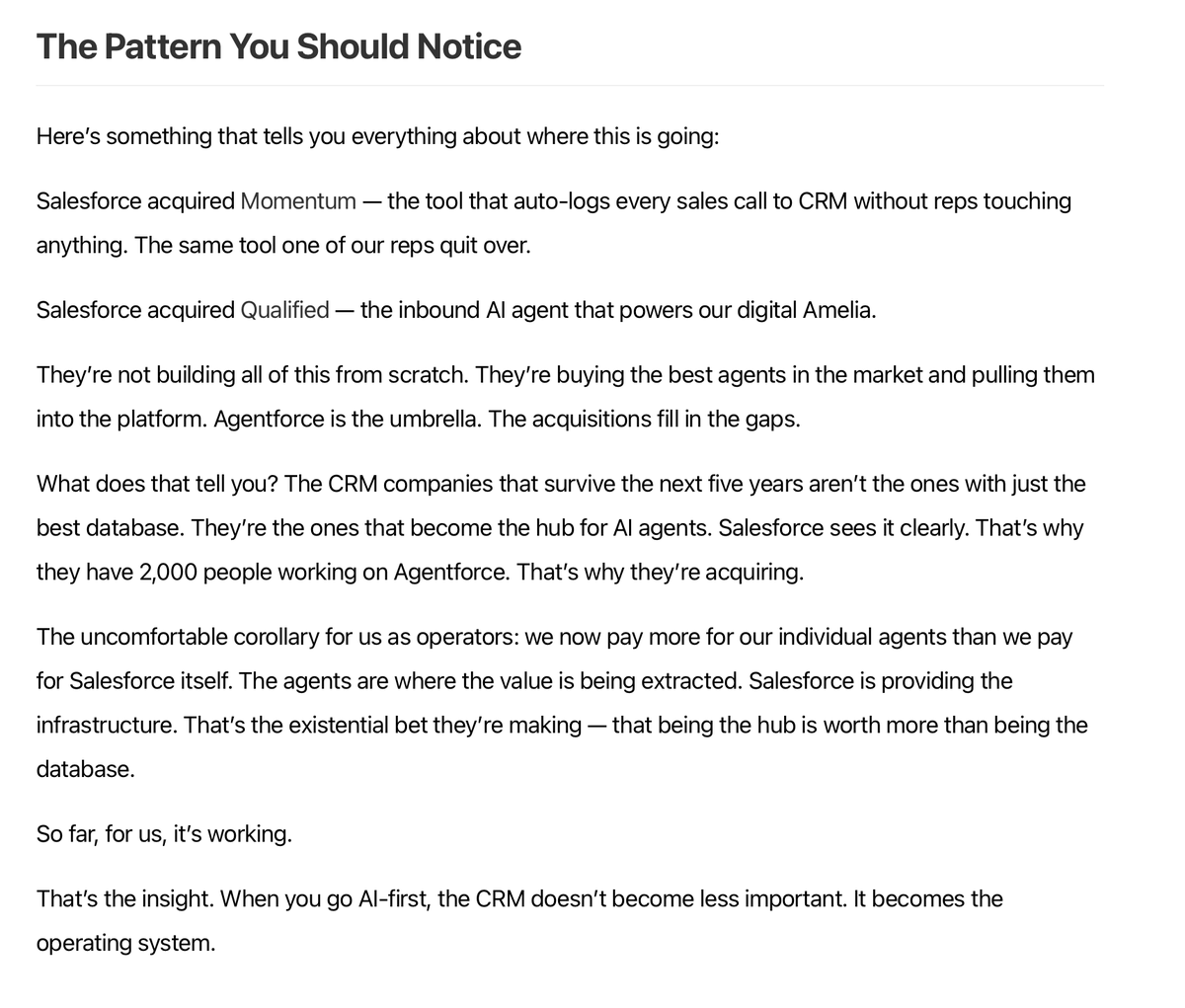
@JasonSCui Context-layer pure plays make sense since most orgs will have many-to-many relationships between agents and data sources. But monetization is tricky cuz LLM-wrapper play doesn’t work and tech moats are thin. We’ve engaged customers through services. youtube.com/watch?v=iIiTf5…
YouTube video
YouTube
English
0
0
0
110
Chris Ferebee 🎈🚀
Chris Ferebee 🎈🚀@chrisferebee·
@zer0tweets @KyleSamani That’s a lot of friction for people who aren’t AI-native. Do they want the mental load of keeping a general-purpose agent focused on critical metrics?
English
1
0
2
45
Boris Renski retweetledi
Andy Wojcicki
Andy Wojcicki@pretendsmarts·
You take the blue pill, the story ends. You take the red pill 🦞, you wake up to a $420 API bill from Anthropic.
Andy Wojcicki tweet media
English
0
1
3
203
Boris Renski
Boris Renski@zer0tweets·
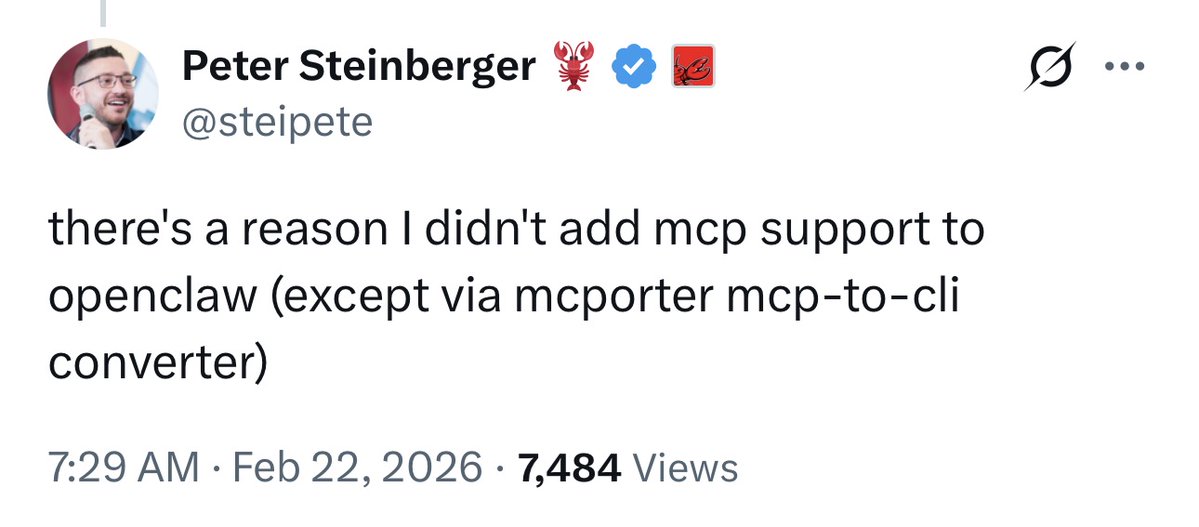
@chrysb @openclaw Mostly agree. One useful thing about MCP vs. CLI is that whoever owns the API/MCP side can get visibility into how agents are using their service and learn how to evolve it.
English
0
0
0
53
Chrys Bader
Chrys Bader@chrysb·
unpopular (maybe?) opinion: MCP is dead in the water @openclaw has shown me that api & cli will win. every MCP server you connect loads its tool definitions into your context window. name, description, parameter schema, all of it. connect 10 servers with 5 tools each and you've burned 50 tool definitions worth of tokens before your conversation even starts. context bloat will never be a good thing - performance-wise or economically. i assume this is why @steipete left it out of @openclaw. the "exec" tool paired with on-demand skills is all you need. it can run any command invented since the beginning of computers. a resurgence of glory for ancient, but powerful tools like curl, sed, awk, grep. command line tools once mastered by the greats, but long forgotten and buried underneath abstractions developed for us lesser mortals. now available to us all, piloted by the smartest models on earth. every founder gets their own mass army of greybeards. the inertia required for MCP adoption, imo, is too great to overcome the momentum @openclaw has breathed into api + cli + skills. the common defenses people bring up: • "MCP gives you typed schemas and validation" — so does a well-documented CLI • "MCP gives you explicit permissions" — so does a sandbox with an allowlist • "MCP is a standard" — a standard that scales poorly is still a standard that scales poorly lastly, i've heard many MCP servers are just wrapping existing APIs - that kind of redundancy and unnecessary indirection should be a red flag. so, let's drop it and redirect our efforts into cli tools & apis with accompanying skills.
Chrys Bader tweet media
English
283
89
1.6K
330.9K
Boris Renski
Boris Renski@zer0tweets·
@nicbstme I actually had that very same conviction initially, but after a fair number of "please change first sentence of second paragraph" prompts started missing the google docs comment feature
English
0
0
1
60
Boris Renski
Boris Renski@zer0tweets·
@nicbstme I disagree with "Learned Interfaces → Destroyed.” Chat interfaces are limited and won’t replace vertically-specific UX experiences. SaaS companies with interface lock-in have a real opportunity to lean into this, re-define AI-native UX and preserve a moat around it.
English
0
0
1
115
Boris Renski retweetledi
amir 🇺🇸
amir 🇺🇸@amirhaleem·
internally we've built a pretty awesome MCP that allows us to run all kinds of interesting queries and gather new types of data, all in plain english @claudeai even built this nice looking infographic for us 🔥
amir 🇺🇸 tweet media
English
8
6
63
3.1K
Boris Renski
Boris Renski@zer0tweets·
Rumor has it senzary.com has a ton of FreedomFi gateways passed down from calchip; those could be perfect @openclaw gateways now
English
1
0
3
203
Boris Renski retweetledi
Mario Di Dio 🎈
Mario Di Dio 🎈@didiomario·
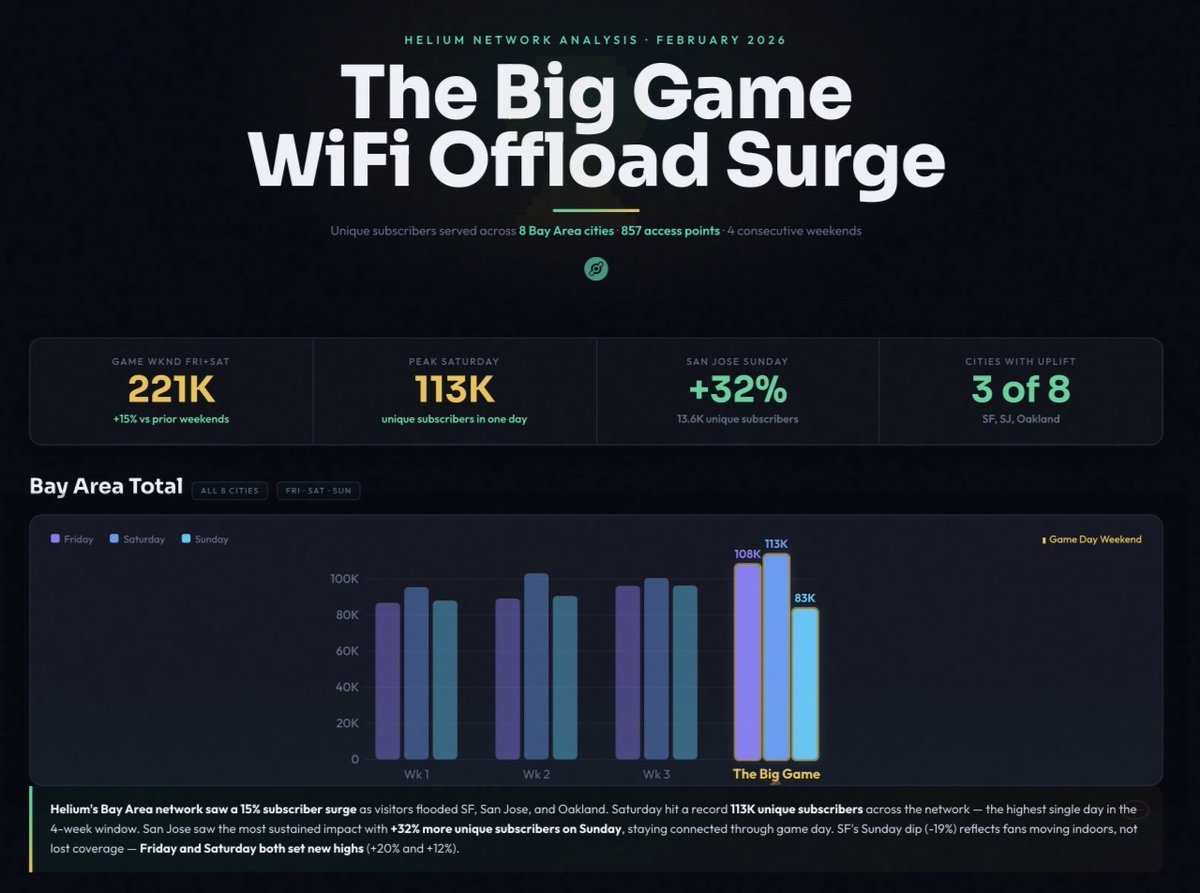
I am beyond bullish about this new partnership we are unveiling today! The Brazilian market is one of the fastest-growing markets with more than 260 million mobile subscribers. The @helium, through this partnership with @mambowifi will be able to expand coverage for millions of users. We already have active trials with MVNOs that total more than 5 million users and MNOs with over 50 million users, all engaged to expand wireless connectivity to their users throughout the entire country. 2026 is shaping up good, very good
Helium🎈@helium

We’re excited to partner with Mambo WiFi to bring people-powered coverage to Brazil!🇧🇷 Mambo WiFi supports major carriers with 40K access points across the country that will become the foundation for Helium expansion to millions of users. This is just the start.

English
2
11
73
4K
Boris Renski retweetledi
a16z crypto
a16z crypto@a16zcrypto·
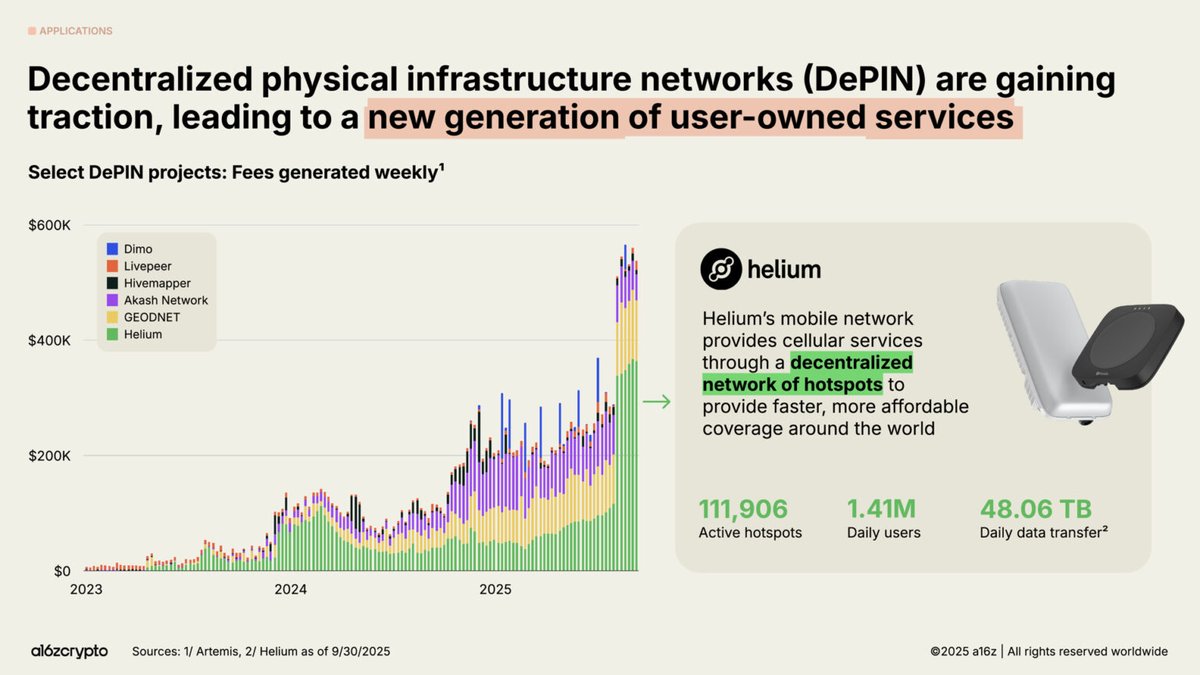
DePIN is reimagining physical infrastructure, including telecom and transportation networks, energy grids, and more. The opportunity is huge: The World Economic Forum projects the DePIN category will grow to $3.5 trillion by 2028. The Helium network is the best-known example. The grassroots wireless network now provides 5G cellular coverage to 1.4 million daily active users across more than 111,000 user-operated hotspots.
a16z crypto tweet media
English
73
104
514
66.1K