Jim

7.6K posts

Jim

Jim

@zerothworld

Innovation, design, global challenges. Inventor "cloud computing spot market". Food System Game Changers Lab 2021 alum.

TX Katılım Aralık 2010
2.5K Takip Edilen841 Takipçiler
Jim
Jim@zerothworld·
@HeidiHmoretti Interesting. Seems nearly opposite of ZOE advice to get 30+ plants per week (including herbs/spices) to promote diverse strains of gut microbes. Focuses on addition, not subtraction. I suppose one could do ZOE first, then MRT to check for what to subtract. A 2 pronged strategy?
English

0
0
0
5
TheHealthyRD
TheHealthyRD@HeidiHmoretti·
If I could change one thing about how the world talks about food and inflammation, it would be this: we need to stop labeling foods as universally "anti-inflammatory" or "pro-inflammatory." Those labels come from population averages. They are not you. In 25+ years of clinical practice and testing, here's what I see over and over: → Turmeric and ginger, the two most-hyped anti-inflammatory spices on the internet, are common triggers on individual testing. → Broccoli, onions, and garlic show up reactive constantly. → Rice and quinoa, the "safe" staples of every elimination diet, can be highly reactive too. → Dairy, recommended for its probiotics, is the single most common inflammatory food I see in practice, and my mentor of 30+ years says the same. → Meanwhile pork, treated as a dietary villain, is often someone's LOWEST inflammatory food. Research backs this up. The PREDICT study out of King's College London found inflammation from identical meals varied up to 10-fold between people. Nutrient content alone explains less than 25% of your response to a meal. Chronic inflammation sits underneath most of the chronic disease we treat: cardiovascular disease, autoimmune conditions, cancer, metabolic disease, even mood. Food is one of the biggest levers we have over it. But you can't find your levers from a generic list. You find them by testing your own body. Every client I've run through MRT testing, not one has wished they hadn't. They don't just feel better. Their cravings for their own reactive foods quietly fall away. Test, don't guess. Read more: thehealthyrd.com/why-anti-infla…
TheHealthyRD tweet media
English
5
3
16
696
Jim
Jim@zerothworld·
@BiggestComeback I make sourdough bread & pizza crust with freshly milled wheat, rye, & barley grains, salt, water, ambient fermentation microbes, nothing else. Tastes great & no digestive issues. I think fast food & ultra processed food is harming our health.
English
0
0
1
17
Chris S. Cornell
Chris S. Cornell@BiggestComeback·
For years, I thought stomach aches were just part of life. I even had a name for them: “Friendly’s stomach aches,” honoring the chain restaurant where we frequently dined. I’d often leave the restaurant doubled over in pain, and on the ride home I’d wonder if I’d make it to a bathroom in time. It happened so often that it became normal. The strange part? I never blamed the foods that were actually causing the problem. Like so many people, I was told the real culprit was too much meat and fat. So I’d try to cut back on those while continuing to eat the foods that were almost certainly driving the problem. On January 14, 2018, I switched to a therapeutic low-carb diet. Over the past 8+ years, I could probably count on one hand the number of times I’ve had any meaningful digestive distress. Not once a week. Not once a month. Sometimes not even once in an entire year. There are dozens of reasons I’ll never go back to the way I used to eat—losing 80 pounds, reversing countless health issues, having more energy, getting stronger in my 60s. But simply living without constantly wondering if my stomach is about to revolt? That alone has been worth the price of admission.
Chris S. Cornell tweet media
English
12
10
155
5.5K
Jim
Jim@zerothworld·
@ScottAppliedSci @osker75297317 I recall seeing study which found that 2 consecutive days of oatmeal 3 meals per day, and not much else, increased insulin sensitivity; and the benefit lasted for weeks.
English
2
0
1
16
Andrew Scott
Andrew Scott@ScottAppliedSci·
That message seems to be getting out these days. There are courses in the UK for newly diagnosed patients about diet and lifestyle and, in my experience, doctors are less dogmatic about “chronic and progressive”. The real difficulty seems to be stop people bring captured by these anti-science low carb cults/tribes and their associated brainwashing. Once people fall for that, it’s very hard to get them to eat a healthy diet again.
English
2
0
1
96
Andrew Scott
Andrew Scott@ScottAppliedSci·
Metformin has been the default first medication for type 2 diabetes for decades. A new trial is finally testing whether that assumption holds up. The SMARTEST trial in Sweden has randomized over 2,000 people with early type 2 diabetes to either metformin or the SGLT2 inhibitor dapagliflozin, tracking heart attacks, stroke, heart failure, microvascular complications, and death. This is one of the first large trials to directly compare metformin against a newer medication class for preventing organ complications, not just blood sugar numbers. Early interim data (about 19 months in, not yet the final results) shows a surprisingly high rate of microvascular complications overall, more than cardiovascular events or death, at this early stage. The trial isn't finished, full results are expected as it completes. I'll be watching this closely: metformin has been the assumed first-line option for so long that it's easy to forget it was never actually proven superior to newer options for preventing complications. This trial might finally give us a real answer. pubmed.ncbi.nlm.nih.gov/41311237/ Want more research breakdowns like this? Join my newsletter — link in bio.
English
8
2
36
2.2K
Jim
Jim@zerothworld·
@DrKristieLeong Thanks. I’m taken with how delicious barley foods are; no sense of unfamiliar. With pizza a US national dish (13+ billion servings per year), could 25% barley crust move the CVD needle?
English
1
0
1
13
Kristie Leong M.D.
Kristie Leong M.D.@DrKristieLeong·
Jiim, barley is one of the densest dietary sources of beta-glucan,. Also, spreading intake across meals, as it sounds like you're doing, likely creates a more sustained metabolic effect. And barley doesn't just lower LDL cholesterol. There's data showing that a diet that include barley and legumes can improve apolipoprotein B (a major risk factor for cardiovascular disease) and diastolic BP too. pubmed.ncbi.nlm.nih.gov/24063257/
English
2
0
2
71
Kristie Leong M.D.
Kristie Leong M.D.@DrKristieLeong·
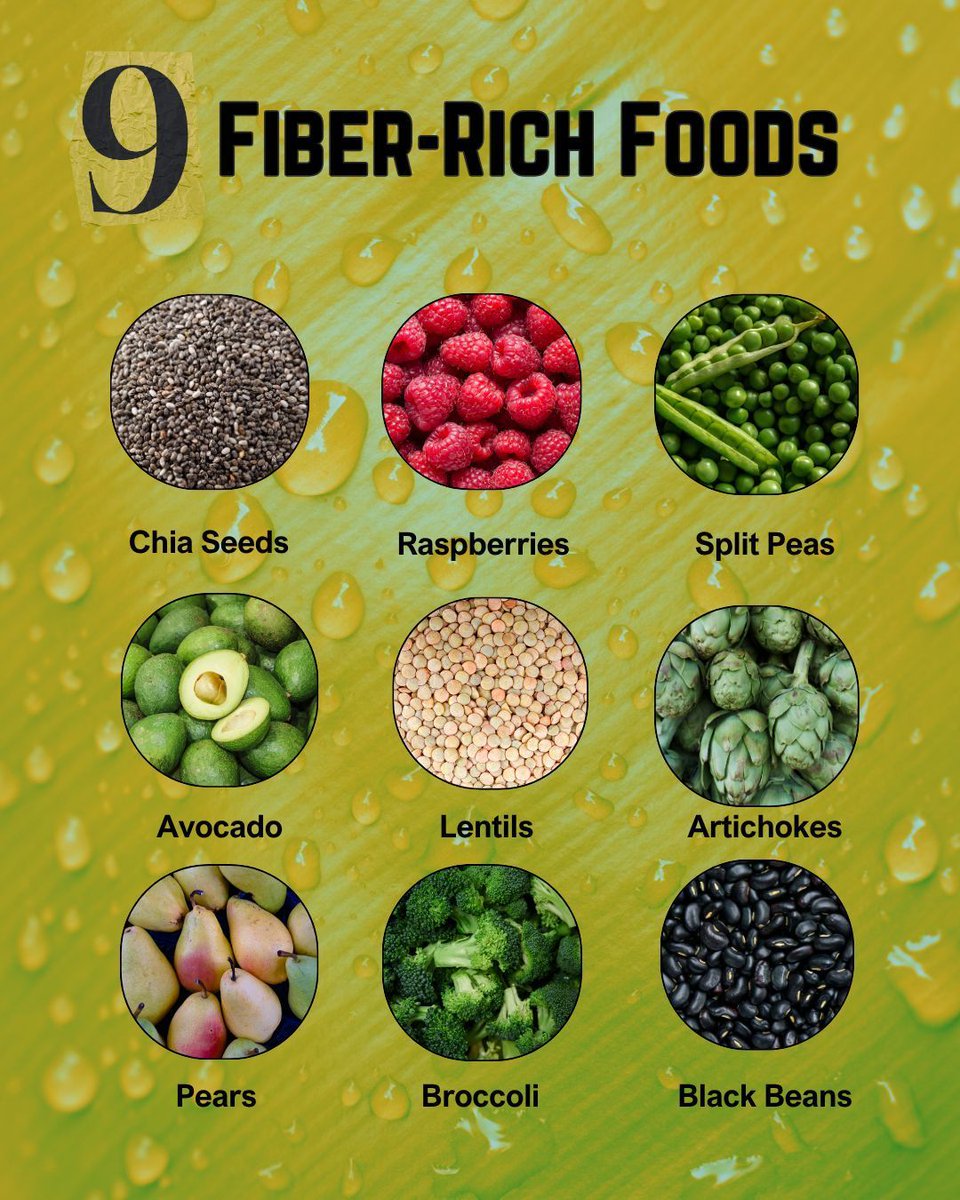
What if one simple daily habit could slash your risk of dying early, heart attacks, strokes, diabetes, AND colorectal cancer by 15–30%? No trendy superfood. No expensive pills. Just more fiber. 👉 Every extra 7g of fiber daily = 9% lower cardiovascular risk 👉 Every extra 10g = 10% lower colorectal cancer risk 👉 Soluble fiber drops LDL cholesterol ~5.6 mg/dL per 5g and trims systolic BP by ~1.4 mmHg (even more if you have hypertension) It works by slowing carb absorption for better blood sugar control, feeding your gut microbes to produce protective short-chain fatty acids, and breaking the vicious cycle of inflammation and metabolic chaos. Strongest benefits hit around 25–29g daily (with room for more upside). Prioritize beans, lentils, vegetables, fruit, nuts, seeds, and intact whole grains. For targeted wins, psyllium and oat/barley beta-glucan shine for cholesterol. Start gradually, drink plenty of water, and watch your body thank you. Doctor tip: Small consistent increases beat perfectionism every time. What’s one high-fiber food you already love (or want to try more of)? Drop it below 👇 #fiber #guthealth #metabolichealth The Lancet. 2019;393(10170):434-445. doi:10.1016/s0140-6736(18)31809-9 ‌
Kristie Leong M.D. tweet media
English
9
32
176
4.5K
Jim
Jim@zerothworld·
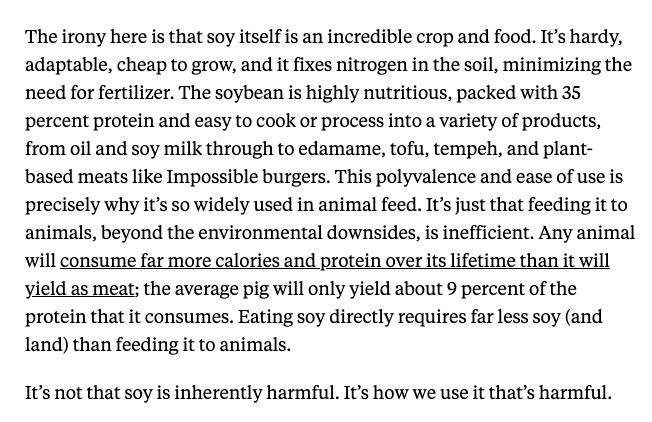
@jan_dutkiewicz @beansandbikes I assume US soy yields could be even higher with Mariangela Hungria’s seed inoculation methods. She identified elite nitrogen fixing soil bacteria strains (superstars). Some Brazil locales now beat US avg yields without chemical N. The elite strains might be different for US.
English
0
0
2
37
Jim
Jim@zerothworld·
@Diet0Nutrition The 2015 Tobias, Ludwig… review of weight loss trials lasting 1+ years found avg loss on low carb was 1 kg more than low fat diets. Basically a draw. Better to move on & focus on CVD, fiber, gut health, less UPF, oat & barley benefits, healthier pizza, exercise, etc.
English
0
0
0
26
Diet & Nutrition
Diet & Nutrition@Diet0Nutrition·
Dietary Fat doesn't make you gain Weight. Insulin triggering foods Do.
English
8
3
43
1.4K
Diet & Nutrition
Diet & Nutrition@Diet0Nutrition·
Something is deeply wrong🧵⬇️ We are the most medicated society in human history despite spending more on healthcare than any civilization in history Children are developing diseases once seen only in the elderly. Yet The medical cartel is obsessed with looking to cure diseases that are caused by diets, instead of adressing the root cause Let’s talk about what’s actually happening🧵
Diet & Nutrition tweet media
English
4
11
32
3.4K
Jim
Jim@zerothworld·
@Diet0Nutrition Japan research on primate umami receptors… Monkeys respond to free nucleotides in bugs etc in their diet. Great apes respond to free amino acids plentiful in leaves. Human umami savory taste is triggered by both free nucleotides & amino acids. We’re omnivores.
English
0
0
1
38
Diet & Nutrition
Diet & Nutrition@Diet0Nutrition·
The strongest evidence that humans evolved to eat meat isn't one fossil. It's the pattern. Highly acidic stomach acid. Protein-digesting enzymes. Mixed dentition. A relatively small colon. A large small intestine. Rapid brain expansion alongside greater meat consumption. No single feature proves the case. Together, they paint the same evolutionary picture. Your body still carries the blueprint of your ancestors.
English
1
4
28
890
Jim
Jim@zerothworld·
@LiveAncestral Wasn’t this a study of butter versus hydrogenated margarine full of trans fats? Everyone now agrees, trans fats are worse than saturated fats.
English
0
0
1
288
Maxine Pye
Maxine Pye@LiveAncestral·
Ramsden CE, Zamora D, Majchrzak-Hong S, et al. “Re-evaluation of the traditional diet-heart hypothesis: analysis of recovered data from Minnesota Coronary Experiment (1968-73).” BMJ 2016;353:i1246. DOI: doi.org/10.1136/bmj.i1…
English
7
61
260
11.4K
Maxine Pye
Maxine Pye@LiveAncestral·
In 1968, researchers ran the largest randomised trial ever done on saturated fat. Over 9,000 people in Minnesota state hospitals were split between animal fat and corn oil for years. The corn oil group’s cholesterol dropped hard. The full results never got published. The raw data sat on magnetic tapes in a basement for over forty years. A researcher named Christopher Ramsden tracked those tapes down in 2013 and ran the numbers the original team never released. For every 30 point drop in cholesterol, death risk rose 22 percent. The lower the cholesterol fell, the faster people died. In the over 65s, each drop of roughly half a point on the cholesterol scale carried a 35 percent higher death risk within two years. The trial is real. It was double blind. It was the gold standard design. And it found the exact opposite of what dietary guidelines were about to be built on. It sat unpublished for over forty years while the low fat, high vegetable oil advice became national policy. This was not a small study lost in the noise. It was the largest of its kind. And the finding that mattered most never reached a single doctor’s desk for four decades.
Maxine Pye tweet media
English
174
2.5K
5.9K
257K
Jim
Jim@zerothworld·
@Diet0Nutrition Agreed. How do we fix this? US eats 13 billion servings pizza yearly. A shift to healthier pizza has potential to improve diets at scale. It takes human palate 2 to 3 weeks to acclimate to new tastes such as 100% whole grain. An ~18 day hurdle to cross.
English
0
0
0
12
Diet & Nutrition
Diet & Nutrition@Diet0Nutrition·
The food industry doesn't sell nutrients. It sells hyper-palatability. Scientists engineer combinations of sugar, refined starch, fat, salt, and flavor compounds that encourage overeating. The American food environment is saturated with these products. Many European diets still rely more heavily on minimally processed staples. The difference isn't willpower. It's exposure.
English
2
3
26
798
Jim
Jim@zerothworld·
@Alexleaf I’m intrigued with idea that food traditions that have been around for millennia provide evidence (but not proof) of healthfulness. Like 4000 years of Crete sourdough fermented barley bread rich in beta-glucan. One grain shift in US pizza could move the CVD needle.
English
0
0
0
17
Alex Leaf
Alex Leaf@Alexleaf·
I think one of the funniest things in health is how many people use the phrase “evidence-based” as if it automatically means they’re being scientific. The "evidence-based bros" if you will 😂 A lot of the time, “evidence-based” just means, “I found a study that supports what I already think.” Or, “The institutions I trust haven’t approved this yet, so it must be nonsense.” Or, “This goes against my established beliefs, so I’m going to by hypercritical and dismiss it before actually looking into it.” It's funny because a lot of the self-proclaimed evidence-based crowd can be just as ideological and dogmatic as the alternative health people they love to make fun of. Two sides of the same coin, and both are obnoxiously lazy due to their hidden biases.
English
6
0
14
1.5K
Jim
Jim@zerothworld·
@DrKristieLeong I wonder if US school lunch pizza affects gut microbiome. I think reduced fat mozzarella doesn’t melt well, & modified starch or such is added so it behaves like regular. I hope someone is checking this, with kids eating a billion servings a year.
English
0
0
0
13
Kristie Leong M.D.
Kristie Leong M.D.@DrKristieLeong·
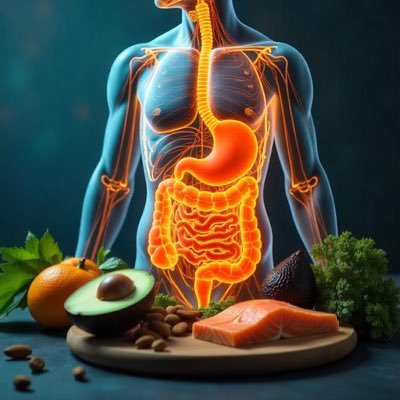
🚨 Forget the $200 gut tests and miracle probiotics—your microbiome doesn't need a fancy fix. Microbiome science keeps confirming it: there's no shortcut pill. The real power comes from unglamorous basics: 1. Diverse fiber from whole foods 2. Slashing ultra-processed junk high in additives and refined oils 3. Deep consistent sleep that supports digestion and gut repair 4. Moving your body regularly - walking, stretching, strength training 5. Managing stress before it disrupts your gut Why it matters: Ultra-processed foods tank microbial diversity and fuel inflammation, while eating 30+ different plant foods weekly dramatically boosts it (American Gut Project data). Your gut ecosystem thrives on what you consistently feed it, not hype. Action plan: • Add 1–2 gut-supportive foods daily, such as yogurt, kimchi, sauerkraut, miso, kombucha, or almonds. • Build the rest of your plate around rainbow vegetables, beans, nuts, seeds, and other fiber-rich whole foods. • Cut back on ultra-processed foods, move your body consistently, and protect your sleep so your gut has the best environment to thrive. #GutHealth Microbiome #FiberIsKing
Kristie Leong M.D. tweet media
English
14
28
105
3.4K
Jim
Jim@zerothworld·
@Olivergill4B @HL10PM @EYazembiaku6gl @NBPTROCKS @violin4all @rhosking252 @MrsKladybug @Blueoceanarctic @Zero @CaliforniaActi2 @tentacle_pup @andrea @Neferast @Child_Of_Adam @DeborahMeaden @i_must_sing @Autismmother1 @grannysidney @JonJonAnimation @LiberateNDs @JCNiklas @LeahRebeccaUK @Britishscifi @vargasmoni @MenTourPilot I’m more enthused by steel wheels on steel rails; the bearings are also steel rolling on steel. One of most energy efficient ways to move stuff around. No tire shed raining down.
English
1
2
4
104
Jim
Jim@zerothworld·
@MichaelAlbertMD I think John Walker’s 1991 Hacker’s Diet got it right. Log daily waking weight; plot 10-day moving average & gradual target loss line. Do whatever works for you to stay on track. It’s adaptive system control engineering, suited to systems we don’t fully understand.
English
0
0
0
19
Michael Albert, MD
Michael Albert, MD@MichaelAlbertMD·
For those wondering, yes, this is satire. The point is that obesity is often presented as though there is a single, elegant physiological explanation and one dietary solution. History tells a different story. Every era has had its "master theory" of obesity—and every era has eventually encountered evidence that the biology is more complex than originally proposed. Low-carbohydrate diets can be an effective tool for many people. So can Mediterranean diets, high-protein diets, meal replacements, bariatric surgery, anti-obesity medications, and other evidence-based approaches. None is a universal solution. The best treatment is the one that is effective, sustainable, and individualized—not the one attached to the loudest ideology.
English
2
2
19
797
Michael Albert, MD
Michael Albert, MD@MichaelAlbertMD·
Obesity is simple. Just cut out carbs and fix your insulin : glucagon ratio. What's wrong with you people? 😜🤦🏼‍♂️ Just follow the teachings of Atkins, Fung, Westman, Unwin, Hallberg, Kalayjian, Berry, Mason, Fettke, Volek, Phinney, Ludwig, Taubes, Teicholz, and Moore.
Michael Albert, MD tweet media
English
11
2
19
11.6K
Jim
Jim@zerothworld·
@jan_dutkiewicz The ancient Mediterranean barley bread with about 3 : 1 barley/wheat ratio is full of beta-glucan, the magic substance that makes oats heart healthy. A grain shift to barley in US pizza could have big health impact.
English
0
0
0
41
Jim
Jim@zerothworld·
@jan_dutkiewicz Agree NOVA has issues. Just read US school meal Smart Slice pizza ingredients. Sounds like chemistry project. Crete sourdough bread has barley & wheat grains, water, ambient microbes. 4000 yr track record. Great topped with tomato, feta. Why not study US school pizza vs ancient?
English
1
0
0
50
Jan Dutkiewicz
Jan Dutkiewicz@jan_dutkiewicz·
The Nova / "ultra-processing" schema is not fit for purpose for adjudicating the healthfulness or sustainability of foods.
Jan Dutkiewicz tweet media
English
2
5
25
808